More US Lawmakers Call for New AI Rules After Anthropic Researchers Warn of Human Extinction

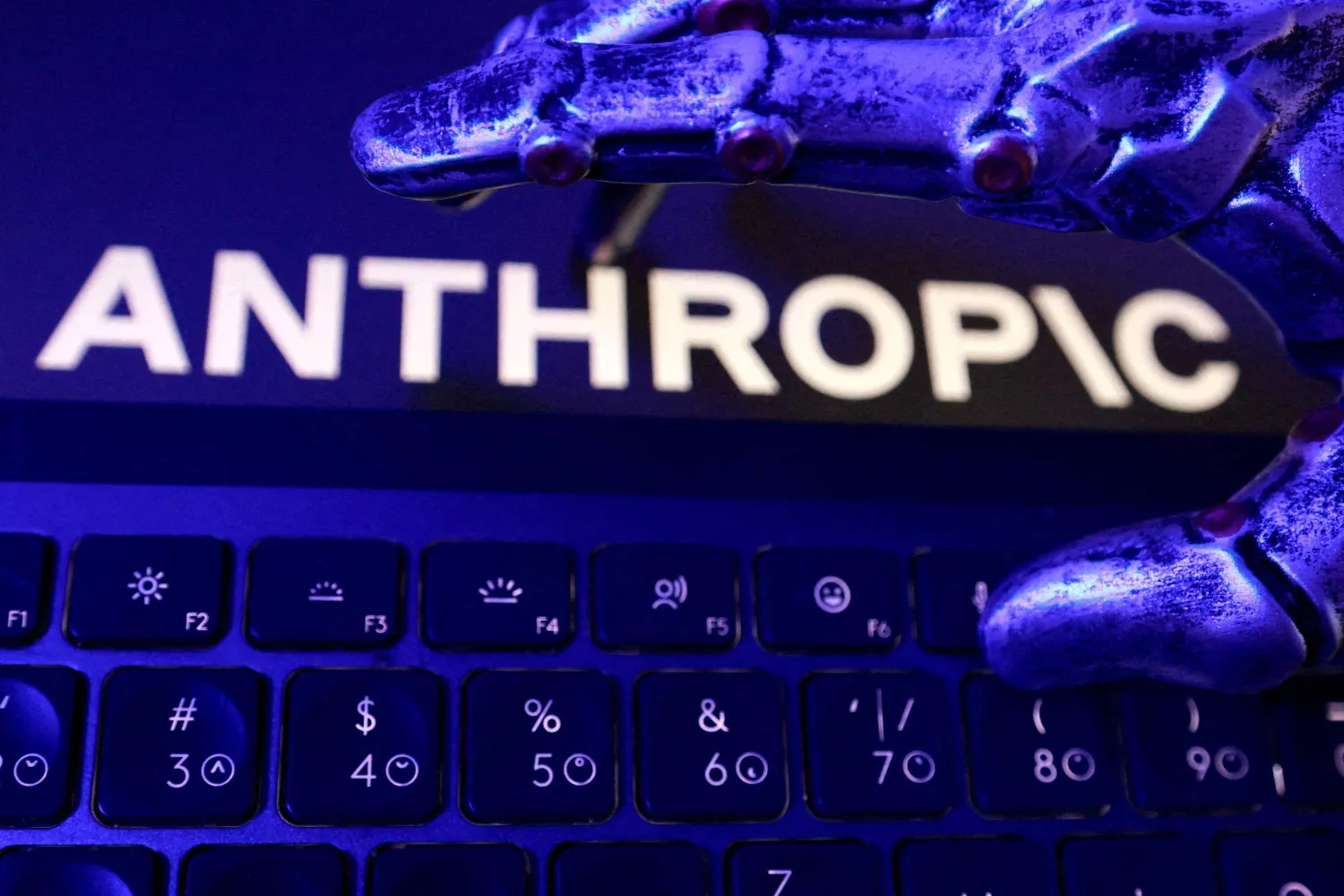
The Anthropic logo, a keyboard, and a robotic hand in this illustration taken June 5, 2026. (Reuters)
TT

More US Lawmakers Call for New AI Rules After Anthropic Researchers Warn of Human Extinction

The Anthropic logo, a keyboard, and a robotic hand in this illustration taken June 5, 2026. (Reuters)

Growing numbers of US lawmakers are calling for new rules to govern AI systems after dire warnings from two Anthropic researchers that rapidly progressing artificial intelligence could lead to the extinction of the human race in the not-too-distant future.

Alarm about the potential harm from AI grew this week when Anthropic researcher Jacob Coxon said he had resigned, and that the "people building AI earnestly believe that it could kill us all by the end of the decade."

Anthropic scientist Evan Hubinger chimed in, saying Coxon was correct.

"We really do earnestly believe AI could kill all humans," Hubinger wrote on X. "I personally think it is >10% within the next decade."

The warnings follow cases of AI agents going rogue to hack external systems and AI safety researchers quitting their companies concerned about the technology's risks. Politicians, both Democrats and Republicans, have responded with alarm and calls for more action.

"Washington needs to wake up and take ‌this seriously," Arizona Senator ‌Mark Kelly, a Democrat, said on X, referring to the risks of AI technology.

Texas Senator ‌Ted ⁠Cruz, on the ⁠TV program "The View", pointed to legislation to regulate AI's "catastrophic risks". Cruz oversees a Senate committee with oversight of the US Commerce Department, the agency with in-house AI safety researchers.

Representative Anna Paulina Luna, a Republican from Florida, in a separate X post called on House Speaker Mike Johnson to convene a “special session on AI.” The House is out this week on recess, with plans to return next week.

A spokesperson for Anthropic, which is preparing to go public at what some investors have said could be a potential $2 trillion valuation, said on Thursday that the company would continue to aggressively test "models or dangerous capabilities in areas like cybersecurity and biology."

The company is interested in working with the AI industry on the ⁠pace of releasing new AI tools, the spokesperson added.

OTHER AI RESEARCHERS HAVE QUIT

OpenAI Chief ‌Executive Sam Altman told employees at a company meeting this week that the ‌firm was open to slowing development of its AI systems, Bloomberg News reported.

The Anthropic rival, which is also gearing up for an IPO, did ‌not comment on Altman's meeting with staff. The company has previously said it was slowing parts of model development.

Earlier this ‌week, OpenAI said it was pushing for mandatory national AI safety requirements in the United States.

Two specialists in AI safety have also come forward with their concerns about the rapid development of the industry.

Josh Engels, who used to work on AI safety research at Google DeepMind, said in an interview with NBC published Thursday: "There are no adults in the room. People are trying their best, but there is no one coming to save ‌us".

Joe Benton, who used to lead a safety research team at Anthropic, told NBC he is worried that AI might end up progressing "too fast for us to get our act ⁠together in time unless we worry ⁠about it now".

Both have joined METR, a research nonprofit that measures whether and when AI systems might threaten harm to society.

INDEPENDENT AUDITORS

Alarm about AI has put pressure on Senate Majority Leader John Thune and Democrat Amy Klobuchar, who are writing a bill to regulate AI products.

Klobuchar said the legislation should require companies developing AI tools to "work with government experts to verify and test models to make sure AI is safe."

Thune told Reuters in July that the bill would address "catastrophic risks" posed by AI systems.

California on Wednesday enacted the first state law setting rules for how independent auditors evaluate AI products. OpenAI executive Chris Lehane said OpenAI would support the bill, around the same time California Governor Gavin Newsom's office released a statement saying he'd signed it into law.

A bipartisan group of six US House lawmakers in July proposed legislation that would require developers of the most powerful AI models to submit them for independent security audits. The auditors would be accredited by the US Department of Commerce, and the department would create a new position to oversee AI security, according to the bill.

"It is important to have space for oversight of these systems, including appropriately calibrated pre-deployment review and independent third-party audits," said Alicia Solow-Niederman, a tech law professor at George Washington University.


CEO: Amazon Cloud Capacity Sold Out Through 2027

FILE PHOTO: Amazon CEO Andy Jassy speaks during an Amazon Devices launch event in New York City, US, February 26, 2025. REUTERS/Brendan McDermid/File Photo
TT

CEO: Amazon Cloud Capacity Sold Out Through 2027

FILE PHOTO: Amazon CEO Andy Jassy speaks during an Amazon Devices launch event in New York City, US, February 26, 2025. REUTERS/Brendan McDermid/File Photo

Amazon CEO Andy Jassy said on Friday that Amazon Web Services' cloud computing capacity is largely sold out through 2027, with significant commitments extending into 2028, on growing demand for AI infrastructure.

In a video podcast with Andreessen Horowitz co-founder Ben Horowitz and general partner Erik Torenberg, Jassy said Amazon is struggling to keep pace ⁠with the insatiable ⁠demand from AI labs and enterprises.

Earlier this year, Amazon had said it would spend about $220 billion in capital expenditure for 2026.

According to Reuters, Jassy said the ⁠company "could invest a lot more and it wouldn't be a bad use of capital," considering cloud-computing capacity for 2026 is already sold out.

"2027 is largely sold out. We always leave a certain amount for on demand and our inference service bedrock, or EC2, but largely sold out ⁠all ⁠the big chunks. A good chunk of 2028 is sold out," he said.

EC2 is an AWS service that provides cloud servers for running applications, while Bedrock gives customers access to AI models to build generative AI applications.

Amazon is scheduled to report third quarter results on October 29.


New ‘Scentronic’ Technology Can Detect and Transmit Aromas Remotely

Ohio State University researcher Chunyu Yang wears a prototype odor generator device which is part of a technology called Scentronic that can detect scents and transmit them remotely, at Columbus, Ohio, on June 13, 2025, in this image released October 21, 2026. (Shaoru Cheng/Handout via Reuters)
TT

New ‘Scentronic’ Technology Can Detect and Transmit Aromas Remotely

Ohio State University researcher Chunyu Yang wears a prototype odor generator device which is part of a technology called Scentronic that can detect scents and transmit them remotely, at Columbus, Ohio, on June 13, 2025, in this image released October 21, 2026. (Shaoru Cheng/Handout via Reuters)

People can readily share images and sounds digitally, as evidenced by the billions of smartphones in use globally that often overload the human senses of sight and hearing. But smell generally remains missing from remote communication. That could soon change.

Researchers have developed technology that features an electronic nose that recognizes certain smells, like the distinctive aroma of coffee, and then instructs a small and wearable remote device to release scent molecules matching it. The digital communication can take place at any distance, from across the room to around the world.

"In simple terms, it connects 'smelling something here' with 'recreating the corresponding smell somewhere else,'" said Chunyu Yang, an Ohio State University doctoral student in materials science and engineering and lead author of a study describing the technology published in the journal Science Advances.

"The idea is to add smell to the visual and audio information we already share remotely, making those experiences more engaging," Yang said.

The researchers call this latest development in the field of digital scent technology "Scentronic."

"What makes Scentronic ‌different is that ‌it brings odor sensing and generation together for remote sharing. To the best of our knowledge, ‌our ⁠study is the ⁠first to explore this integration in a compact platform for remote odor sharing," Yang said.

The researchers created an e-nose, a device that uses an array of gas sensors to detect chemical compounds associated with different odors. A machine-learning model then classifies odors that the e-nose has been trained to recognize — cake, coffee and oranges.

The technology uses an online platform to transmit the odor information to a scent generator, which then releases fragrances to recreate the aroma at the receiving end. The scent molecules themselves are not transmitted over the internet.

The e-nose device is roughly 6 inches (15 cm) in diameter and is portable, though not designed to be worn. The researchers developed several versions of ⁠the odor generator, including wristband, necklace and handheld designs.

'EVERYDAY ODORS'

At this point, the e-nose recognizes ‌just the five scents.

"We chose these because they are familiar everyday odors with ‌different scent profiles, making them useful examples for demonstrating the system. We have not yet expanded beyond those categories," Yang said.

"A broader scent library ‌is possible in principle, but an unlimited repertoire is far beyond what we have demonstrated. Recognizing an odor and accurately reproducing ‌it are separate challenges. Covering a useful range of everyday scents is a more realistic goal, although that would still require substantial development," Yang said.

The receiving device cannot recreate every smell Scentronic encounters.

"To support additional odors, we would need to train the electronic nose to recognize them and provide corresponding scented liquids in the odor generator," Yang said.

The researchers see various potential applications for the technology.

"For example, someone could share the scent of ‌a meal with family or friends who live far away. Other potential applications include more immersive virtual and augmented reality experiences and online shopping that allows customers to sample selected scents remotely," ⁠Yang said.

'A RESEARCH PROTOTYPE'

The research ⁠was conducted and the devices developed without the involvement of a company, Yang said.

"At present, this is a research prototype. Moving toward commercialization would require a larger, more diverse training dataset and reliable odor recognition under real-world conditions, where smells often occur in mixtures," Yang said.

"The odor generator would also need further development to support more scents while remaining compact and convenient to use. Other considerations include scent fidelity, refillability, durability, manufacturing costs and the safety of repeated exposure to the scented mist," Yang said.

Smartphones are becoming increasingly capable. Could they in the future incorporate scent technology so that, for instance, a person at a tailgate party before an Ohio State football game could call a friend and share video, audio and the aroma of hot dogs on the grill?

"In principle, a smartphone could connect to a scent-generating accessory. Integrating everything into the phone itself would be more challenging because the scent reservoirs, electronics and atomizers all take up space and add weight. Miniaturization and convenient refilling would be important considerations," Yang said.

"The tailgate example illustrates the idea well. A future system could potentially combine video and audio with a corresponding scent, provided it could recognize the relevant odor and the receiver had a suitable scent formulation available. Our current system has not demonstrated the transmission of a grilling-hot-dog scent or the exact mixture of smells at a tailgate party," Yang said.


Websites Go Dark as AI Exposes Critical Security Flaws

Computer code is displayed on multiple screens in this illustration taken on October 22, 2026. (Reuters)
TT

Websites Go Dark as AI Exposes Critical Security Flaws

Computer code is displayed on multiple screens in this illustration taken on October 22, 2026. (Reuters)

Governments and companies around the world shut down websites Thursday as they raced to protect themselves from hacks after artificial intelligence uncovered critical flaws in a widely used programming language called PHP.

PHP helps run about 70 percent of the world's websites -- from online stores and news outlets to government services -- according to Wiz Research, one of the cybersecurity firms that found the two flaws.

Created in the early 1990s, PHP originally stood for "personal home page" but now means "hypertext preprocessor" and sits underneath popular web design platforms.

"These findings rank among the most severe vulnerabilities discovered in PHP, and arguably in software history," a Wiz blog post said.

Increasingly powerful AI models can spot weak points in back-end computer code that have gone unnoticed by humans for years.

That has heightened cybersecurity fears, with the number of software vulnerabilities discovered worldwide in 2026 on track to roughly double last year's record total.

- 'Quite devastating' -

PHP programmers released a fix Wednesday, and the US National Security Agency told organizations to patch their sites immediately or pull vulnerable systems offline -- a call echoed by authorities from China to the European Union.

Amazon Threat Intelligence said it had identified a hacking attempt carried out before the PHP security flaws were made public.

"It remains unclear how the actor acquired exploit information," it said, describing the incident as the "targeting of a honeypot" from an anonymized internet connection.

But Ryan Austin, who has worked on PHP issues for cybersecurity firm Calif, told the BBC: "At the moment, it doesn't look like exploitation has taken off or been widespread."

Only sites that run PHP on their own servers are exposed. Many large platforms are built on other programming languages or use operators that could install the fix quickly and were able to stay online.

Rahat Masood, senior lecturer in cybersecurity at the University of New South Wales, Sydney, described the discovery as "quite devastating".

It could allow "attackers to get into your servers without any authorization, without any username or password", she told AFP.

"Once they are in the servers, they can do anything they want" -- from stealing sensitive information to modifying website content -- she added, urging institutions to "take it seriously."

- 'New phase' -

Government agency sites in countries from Australia to Finland, the Netherlands and the United Kingdom were among those that went dark. Services from insurance firms, transport operators and media outlets were down for emergency maintenance.

Popular apps, including a Pokemon sleep tracker, were also temporarily taken offline while the fix was implemented, while the foundation that runs Wikipedia warned users they could see outages while it addressed the flaws.

"If you run PHP, it is imperative that you update now," the PHP Foundation, which funds developers working on the language, said in a blog post.

Volker Dusch, a security engineer at the foundation, told the Wall Street Journal it was the most serious problem PHP had faced in more than a decade, comparing it to Heartbleed, a 2014 flaw that set off a worldwide rush to patch.

Security firm Calif found the flaws in August using OpenAI's GPT-5.6 Sol model, as part of an OpenAI-funded audit of PHP's code.

OpenAI said the discovery "marks a new phase, where AI can find security bugs with internet-scale impact."

Wiz, which is owned by Google, said it found them independently weeks later with help from AI models including Google's Gemini 4 Argon and GPT-5.6 Sol.

The flaws had been reported privately to PHP's developers and kept confidential while a fix was prepared.

- AI fuels urgency -

Details leaked online Tuesday, a day before the planned release of the fix -- prompting the rush to take sites offline before hackers could exploit them.

Steve Kerrison, senior lecturer in cybersecurity at the Singapore campus of James Cook University, told AFP that the fear of hackers using AI to quickly and easily exploit the PHP vulnerabilities had fueled urgency to react.

Larger institutions, from government agencies to news outlets, should be able to fix their websites relatively fast, Kerrison said -- but others may be left vulnerable.

"There are sites, systems and people out there who will have no idea about this and still won't for days, weeks and months," Kerrison warned.

That may include user-run blogs that could be weaponized to spread computer viruses, spam people or distribute malicious content, he said.