
How Israel Abducted a Senior Hamas Security Official from the Heart of Gaza

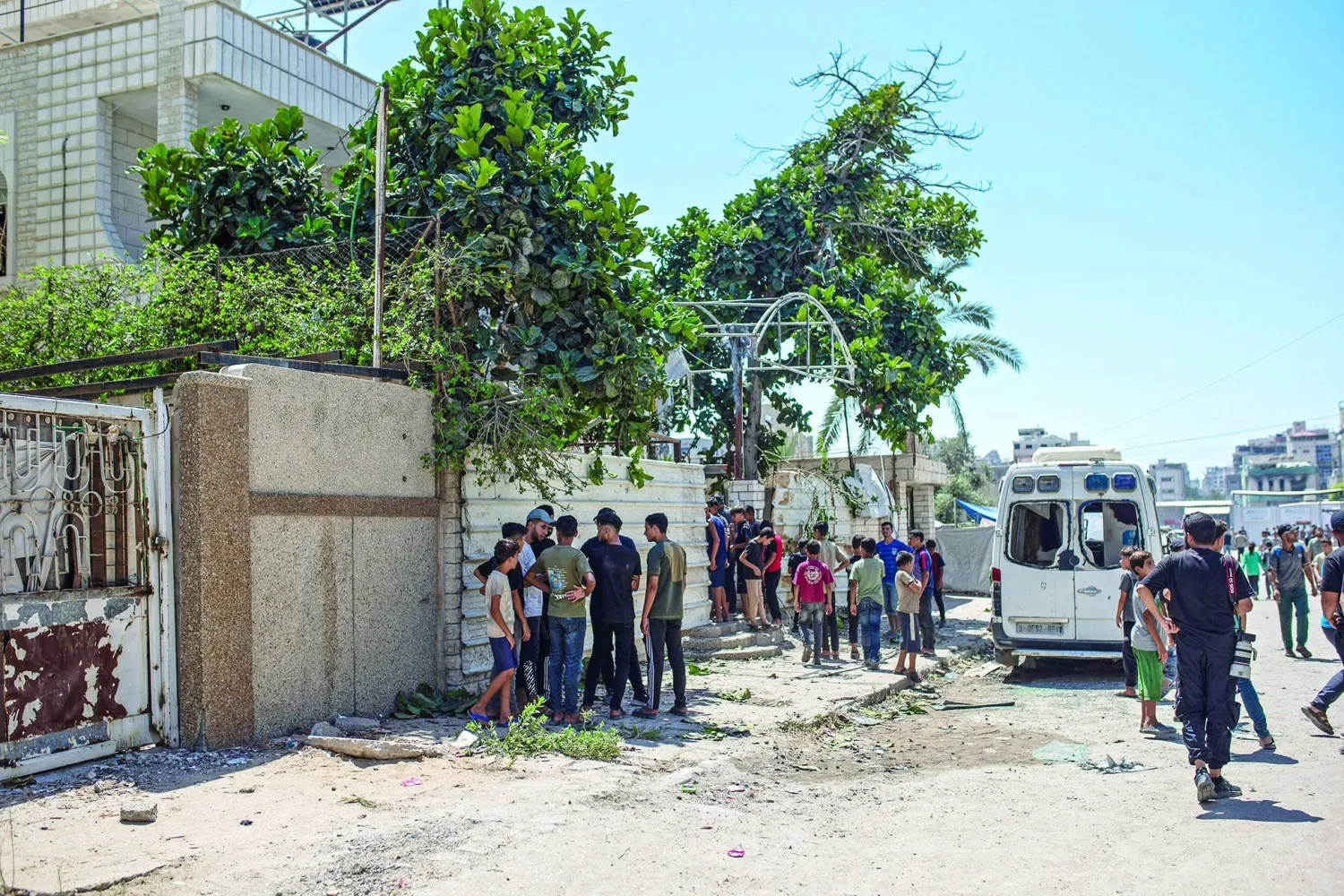
 Locals gather at the site of an Israeli airstrike in Gaza City, 01 September 2026. According to the Ministry of Health in Gaza, at least four Palestinians were killed in Israeli air strikes on 01 September.  EPA/MOHAMMED SABER
Locals gather at the site of an Israeli airstrike in Gaza City, 01 September 2026. According to the Ministry of Health in Gaza, at least four Palestinians were killed in Israeli air strikes on 01 September. EPA/MOHAMMED SABER
TT

How Israel Abducted a Senior Hamas Security Official from the Heart of Gaza

 Locals gather at the site of an Israeli airstrike in Gaza City, 01 September 2026. According to the Ministry of Health in Gaza, at least four Palestinians were killed in Israeli air strikes on 01 September.  EPA/MOHAMMED SABER
Locals gather at the site of an Israeli airstrike in Gaza City, 01 September 2026. According to the Ministry of Health in Gaza, at least four Palestinians were killed in Israeli air strikes on 01 September. EPA/MOHAMMED SABER

On September 1, an Israeli special forces unit abducted Moeen Al-Arabid, a senior security official with Hamas and its security apparatus, from the heart of an area controlled by the group in western Gaza City. The operation caused shock and disbelief within Hamas and among other Palestinian factions.

The area turned into a battlefield at the time of the operation, which was carried out in the morning. Israel used various types of aircraft, including warplanes, helicopters, and drones with different missions, to provide cover for the special forces unit affiliated with the Israeli General Security Service, known as the Shin Bet, ensure the operation's success, and facilitate the unit's withdrawal.

How the Operation Began

Sources familiar with the ongoing investigation into the operation told Asharq Al-Awsat that Israeli forces carried out intensive intelligence and military movements for more than a week before the attack. These movements were clearly visible, but the prevailing belief was that they were part of efforts to locate leaders or operatives from Palestinian factions in order to assassinate them, or part of military movements intended to demonstrate the forces' control inside the Gaza Strip.

The sources said that on several separate days over a period of roughly 10 days, military operations were carried out around what is known as the new road at the Netzarim Junction, which separates the northern, central, and southern parts of the Gaza Strip. Israel occupied the area during the war and constructed the road there.

Israeli military vehicles made incursions into the area almost daily during that period. Their movements, accompanied by gunfire, resulted in the complete closure of Salah Al-Din Road, the main thoroughfare, while Israeli forces maintained fire control over the area and its surroundings to prevent any movement by Palestinians.

The investigation shows that the Israeli special forces unit that carried out the operation entered and exited the Gaza Strip via this road under heavy protection from military vehicles conducting incursions in the area. The unit repeated the entry and exit scenario several times to monitor and reconnoiter the target site in western Gaza City, roughly no more than 4 kilometers away.

The special forces unit used the advancing military vehicles as cover to infiltrate through the new road near the Netzarim Corridor. This occurred on the morning before the operation, allowing the unit at times to reach the western side via the central coastal Al-Rashid Road, or through side streets leading to Street 10 and from there into the heart of Gaza City.

Intelligence Cover

The sources revealed that the operation was not limited to military movements on the ground. Israeli forces also intensified their intelligence cover by flying a large number of drones over wide areas. At least eight drones a day were operating for more than a week over the Katibah area where the attack took place, as well as the coastal road and its surroundings.

The sources said that the movement and density of the drones were continuously monitored. Those conducting the surveillance, whether members of the "resistance" or government security agencies, would send urgent reports about them. However, all assessments pointed to the possibility of an airstrike assassination, as had usually been the case.

No unusual movement by any armed party, such as special forces, armed gangs, or others, was detected on the ground. In the Katibah area, the situation appeared to be completely secure.

A Vital Location

One of the most significant findings to emerge recently came after security cameras, as well as cameras belonging to homes, commercial shops, and other locations installed along some streets and in certain areas, were tracked.

The Israeli special forces unit was identified through its use of a small bus. By tracking footage showing the vehicle, investigators determined that the unit had been present at a vital and strategically important location inside Gaza City on the day before the attack.

According to the findings, as revealed by Asharq Al-Awsat sources, the unit spent the night inside Gaza City before moving in the morning to carry out its security mission. It emerged that other members of the force were also present at the site, posing as vegetable vendors and others around the house where the senior Hamas security official was staying. He had been preparing for his son's wedding ceremony.

The investigation shows that the Israeli special forces unit used more than one vehicle during its infiltration, including on the day of the operation and when it withdrew. Those inside the bus were the ones who abducted Al-Arabid.

It also emerged that they had been moving around the area alongside other members of the force, indicating that the unit consisted of a large number of personnel, no fewer than 30. They withdrew in vehicles and on motorcycles under heavy aerial fire. Aircraft struck one of the vehicles belonging to the force, which was carrying a Palestinian license plate, while military vehicles moved into the area and closed Salah Al-Din Road toward the new road at the Netzarim Corridor to secure their safe passage and transport them into an Israeli-controlled position.

Earlier Details

Sources told Asharq Al-Awsat days earlier that the security operation had begun roughly two months ago, when Shin Bet officers assumed the identity of an international relief organization that would provide assistance to Palestinians by establishing small businesses, including stalls selling vegetables, drinks, and other goods in the area where the operation took place.

According to the sources at the time, Shin Bet used Palestinian operatives, including women, to carry out the project and supply them with vegetables every day, presenting them as aid from the organization. The proceeds from the sales were supposedly to benefit those taking part in the project. The operatives later asked them to monitor certain homes and the movements of specific individuals in the area, including Al-Arabid.

The sources said at the time that those running the project were later found, following the operation, to have been collaborators working for the Israeli Shin Bet. On the day of the operation specifically, new individuals appeared at some of the stalls, while others had been there since the previous day selling vegetables. They were later found to be Shin Bet operatives who had arrived in the area and concealed their weapons inside the stalls. When the time came to launch the attack, they took part in the operation before disappearing and withdrawing from the area.

Following the attack, Hamas security agencies succeeded in arresting collaborators and people who had benefited from the project run by the fictitious relief organization for questioning.

This is not the first time Israel has used the guise of international organizations to conduct operations inside the Gaza Strip. One such case occurred when an Israeli special forces unit infiltrated the Al-Shifa Medical Complex in March 2024, before military reinforcements arrived at the site. The operation subsequently continued for two weeks, during which Hamas operatives and members of its various security apparatuses were killed or captured, including commanders from the Al-Qassam Brigades.


Houthi Expansion in Western Yemen Brings Arrests and Crackdowns

Trees became a refuge for those fleeing Houthi reprisals (local media)
TT

Houthi Expansion in Western Yemen Brings Arrests and Crackdowns

Trees became a refuge for those fleeing Houthi reprisals (local media)

With little time to think, thousands of civilians in western Taiz province and southern Hodeidah found themselves facing a choice between staying or leaving after the Houthis carried out raids and arrests in the villages and population centers they entered, amid fears of reprisals and looting targeting residents and their property.

Residents recorded distressing scenes of thousands of families fleeing villages and areas in western Taiz and southern Hodeidah. Some fled on foot, while others traveled in cars and on motorcycles, with some taking whatever livestock and belongings they could save.

Residents told Asharq Al-Awsat that for many families, displacement was not a planned decision but an urgent escape from fear, leaving behind their homes, land, and livelihoods.

Those unable to leave found themselves trapped in a state of panic and anxiety as raids and arrests continued, alongside reports of residents' property being looted and stolen.

According to accounts from local residents, areas including Al-Wazi'iyah, Hays, Al-Khokha, Al-Zuhari, Al-Haymah, Yakhtul, and Mokha, as well as the areas stretching along the coast between Al-Haymah and Mokha, have been experiencing turmoil and displacement since the Houthis entered them.

The accounts said Houthi fighters carried out raids and arrested a number of residents, while property was also looted and stolen. Other accounts reported that families were being held hostage and pressured to force relatives who were fighters to return and surrender themselves and their weapons.

According to the sources, the Houthis have carried out reprisals against residents in Mokha district in Taiz province and the city of Al-Khokha in Hodeidah province, accusing them of supporting the internationally recognized government. Others were targeted based on allegations made by Houthi operatives seeking to settle old scores with some of those targeted in the campaign.

The sources said Abdullah Al-Fadhli and Alaa Al-Omaisi, two Houthi security and intelligence officials in the area, are leading part of these campaigns.

Fleeing into the Unknown

In Al-Wazi'iyah district, residents said thousands of people were displaced as the Houthis entered the district, fleeing what they described as the group's brutality and arrests in difficult humanitarian conditions. Displacement from the district and other areas is still continuing.

Abdul Jabbar Ali Hadi, a resident of the area, said the events unfolded suddenly, leaving residents with little time to absorb what was happening.

"No one understood what had happened. Within moments, it was as if the whole district had erupted, and everyone wanted to leave," he told Asharq Al-Awsat.

Abdul Jabbar described a scene in which fear and chaos became intertwined. While some residents tried to save their children, others attempted to take their livestock with them. Women were crying as everyone searched for a way out. He added that those who could not find a vehicle had to leave on foot, wearing nothing but the clothes they had on.

Abdul Jabbar was among those who left the area in search of a safe place, but he was initially unable to take his family with him. He said he reached safety in the clothes he was wearing after his mother insisted on not leaving without her sheep.

His mother was forced to walk on foot with her sheep until evening, when she reached the Al-Sabriyah area, where she spent the night. At 10 p.m., Abdul Jabbar took a motorcycle to look for her. After finding her, he returned to his location, and the family continued their journey the following morning.

The man described those moments as filled with sorrow, saying the departure left behind "pain, memories, a life, land whose soil we loved, homes, belongings, love and loyalty."

Along the way, he saw vehicles carrying displaced families moving without pause, motorcycles, and hundreds of displaced people walking on foot, alongside sheep, cows, camels, and donkeys, in a scene reflecting the scale of the chaos and suffering accompanying the flight.

Lost Children and Displaced People Without Shelter

After Abdul Jabbar contacted his family, he was told that fuel had become scarce in Al-Wazi'iyah, raising fears about their ability to continue the journey. He was forced to rent a motorcycle from a distant area and send a fuel container to his family. Once it arrived, the family was able to set out on a journey lasting several hours along rough roads before reaching a safe place.

The risks accompanying the displacement went beyond the loss of property. Abdul Jabbar recalled that a girl no older than five became separated from her family during the journey. After her disappearance was reported through social media groups, her family spent hours anxiously searching for her before she was reunited with them the following day.

The girl's story was one of many manifestations of the fear experienced by families, at a time when keeping family members together and getting them to safety had become a priority above everything else.

Abdul Jabbar summed up the experience of displacement in words reflecting the scale of what displaced families lost within a matter of hours. He said they left without money, provisions, or extra clothes, carrying nothing but what he described as "a person's determination, resilience, patience, and dignity."

He added that they were prepared to endure anything, even if they had to live under trees. But what hurt him most, he said, was seeing the tears of the elderly and "the humiliation of men."

The displacement journey is not simply a move from one place to another. For families forced to leave, it is a sudden uprooting from an entire way of life, including homes, memories, livelihoods, and possessions, and replacing it with an unknown road marked by fear and hardship.

Urgent Need

As displacement continues, families who have fled their areas remain in urgent need of safety, shelter, food, water, and fuel, as well as protection and the reunification of families separated during their flight, particularly children and elderly people.

Against the backdrop of this suffering, the harshest reality is that many civilians did not leave in search of a better life. They left because staying was no longer a safe option.

In a related development, local authorities in the interim capital Aden and the provinces of Abyan and Lahj issued a joint statement saying that the armed forces had overcome the state of shock and confusion, regained their balance, and were fully prepared to confront any challenges, amid what they described as popular support and social momentum to confront the Houthis and thwart the ambitions of "Iran's project in the region."

The statement said authorities would continue to monitor security and public services, ensure state institutions continued to perform their duties, confront terrorist threats, protect citizens and property, and maintain security and stability in coordination with the relevant government, security, and military authorities.

The authorities called on residents to remain calm and vigilant, ignore rumors, obtain information from official sources, cooperate with the relevant authorities, and report any suspicious movements or activities.

They pledged to make the security and stability of citizens their highest priority, affirming that they would continue to fulfill their duties and responsibilities to safeguard security in Aden, Abyan, and Lahj and ensure that state institutions continued to carry out their functions.


Aoun from Nabatieh: No New Negotiations with Israel at Present

Smoke rises in Mansouri following Israeli strikes as seen from Naqoura, Lebanon, September 11, 2026. REUTERS/Raghed Waked
TT

Aoun from Nabatieh: No New Negotiations with Israel at Present

Smoke rises in Mansouri following Israeli strikes as seen from Naqoura, Lebanon, September 11, 2026. REUTERS/Raghed Waked

Lebanese President Joseph Aoun visited the country's south on Saturday, in a surprise trip to Nabatieh, a city close to the strategic Ali al-Taher ridge captured from Hezbollah and blown up by Israel.

Official Lebanese media said he arrived in Nabatieh unannounced and accompanied by security officials.

The National News Agency (NNA) quoted Aoun as saying that there would be no new negotiations with Israel at present, stressing that the withdrawal of Israeli forces, the return of prisoners and displaced people, and reconstruction remain national principles that Lebanon is committed to upholding.

Aoun expressed solidarity with locals who greeted him, according to footage broadcast by Lebanese media.

He praised staff at Nabatieh Governmental Hospital, saying they were risking their lives to provide medical services in the area, which most people have fled.

He spoke a day after a senior US diplomatic official said a new round of US-brokered talks between Israel and Lebanon, initially scheduled for next week, had been pushed back to October.

Fighting between Israel and Hezbollah had eased off between late June and last week, thanks to a US-sponsored framework agreement between the two countries as well as a memorandum of understanding between the United States and Iran in the wider Middle East war.

But the Israeli army has in recent days stepped up attacks again, particularly in the Nabatieh region.

On Thursday it blew up underground fortifications on Ali al-Taher ridge after seizing the site, which lies a few kilometers from Nabatieh city.

The explosion was large enough to trigger a tremor detected by seismic monitoring agencies.

Israeli strikes in the area have killed at least 29 people in the last few days, including 12 members of the same family.

The Lebanese army, which has deployed in Nabatieh city, warned on Wednesday that Israel's actions threatened the implementation of the framework agreement.

The agreement involves the disarmament of Hezbollah, a gradual withdrawal of Israeli forces from Lebanon's south and the deployment of the Lebanese army to the region, starting in test areas known as "pilot zones.”


Lebanon Moves to Protect Land Ownership in Occupied South

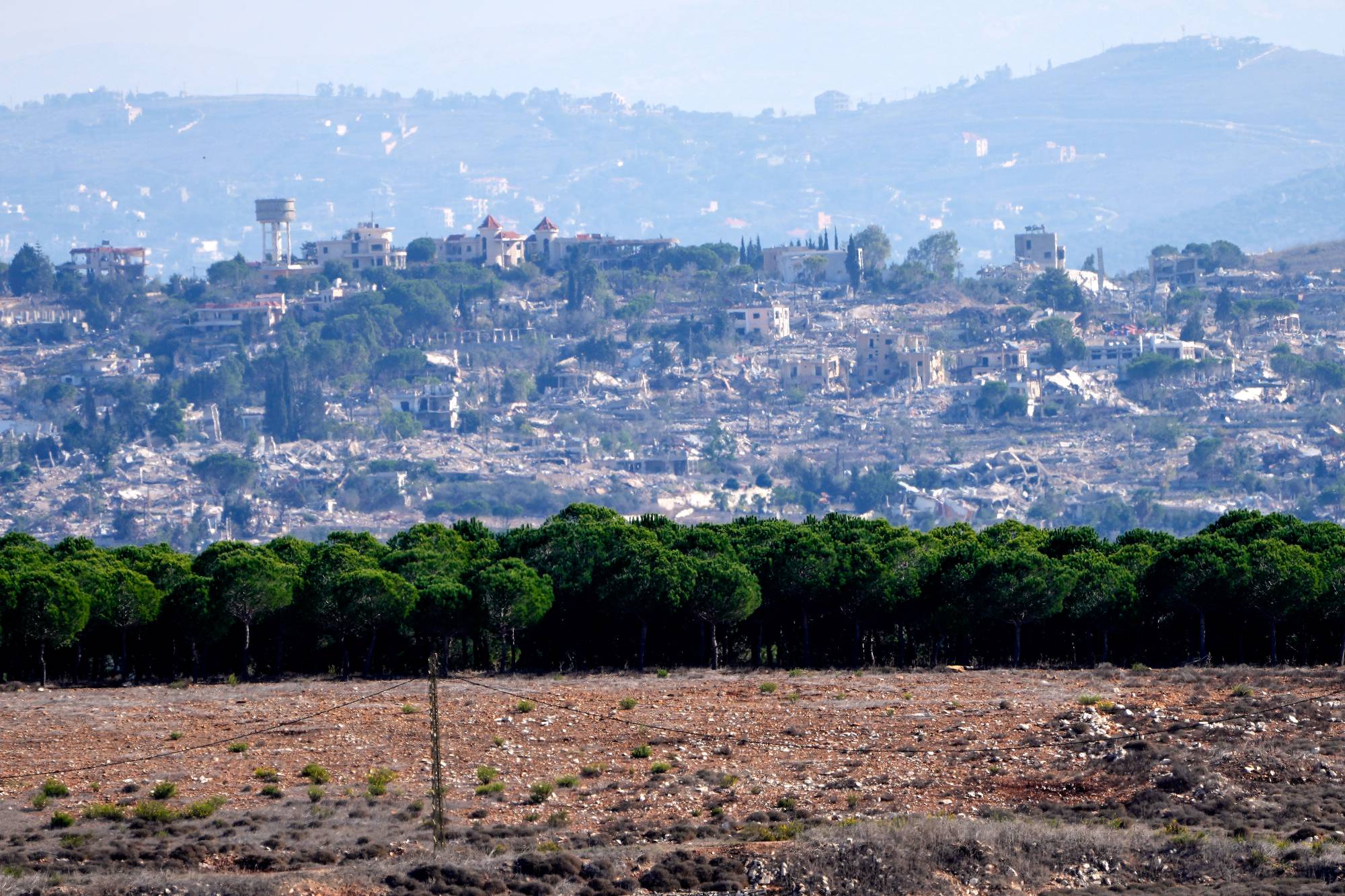
Smoke rises after Israeli demolition operations targeted the occupied southern Lebanese town of Khiam (AFP)
TT

Lebanon Moves to Protect Land Ownership in Occupied South

Smoke rises after Israeli demolition operations targeted the occupied southern Lebanese town of Khiam (AFP)

Lebanon’s government has approved a draft law banning property sales in Israeli-occupied parts of the south, seeking to prevent wartime displacement and destruction from being exploited to transfer land through intermediaries, front companies, or fictitious buyers.

The cabinet approved on Thursday, at the Finance Ministry’s request, “a ban on real estate sales in areas occupied by the Israeli army.”

Lebanese Finance Minister Yassine Jaber told Asharq Al-Awsat that the government’s decision to ban land sales in occupied southern areas was intended to protect property rights and prevent any attempt to transfer ownership to parties linked to the occupation.

He said the preventive measure would protect the land from sales conducted through indirect or deceptive means.

“The government was keen to take a clear measure in light of the concerns raised about this issue, preventing any sales that could effectively lead to land ownership being transferred indirectly to undisclosed parties,” Jaber said.

The aim, he added, was to prevent sales “to fictitious individuals or companies,” referring to the potential use of names or corporate entities as fronts for indirect purchases.

Jaber linked the decision to efforts to preserve and protect land ownership in the south, saying it was part of “strengthening the resilience of southern communities, preserving and protecting the land in every respect, and safeguarding coexistence.”

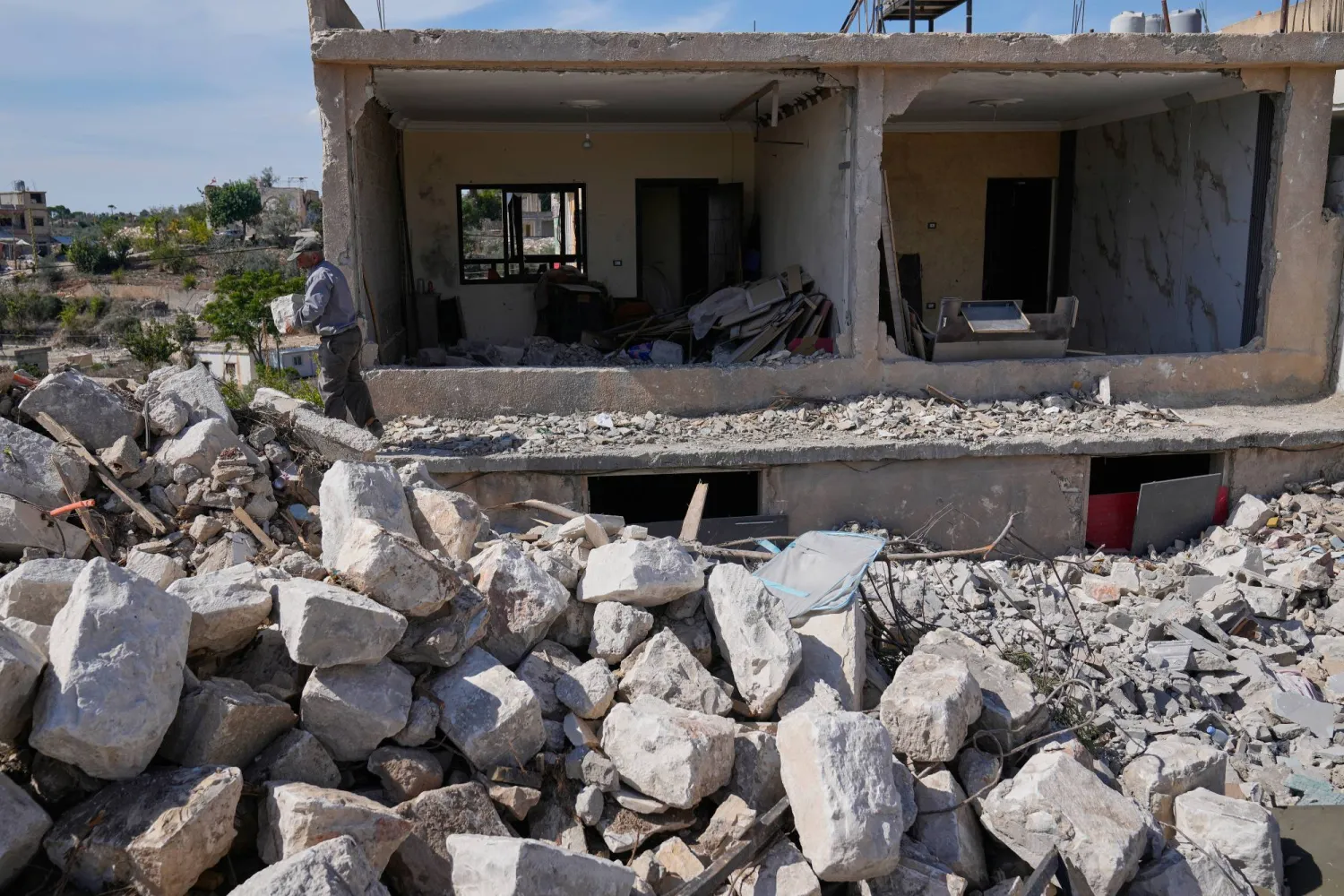
The draft law comes as southern areas face widespread destruction, while residents remain displaced and some are unable to return to their towns. The situation has raised concerns extending beyond physical damage to the future of property ownership and residents’ ability to return.

Lebanese MP Abdel Rahman al-Bizri said the protection of property ownership was part of an effort to prevent the destruction and displacement from becoming permanent.

“It is clear that the Israeli occupier is pursuing a scorched-earth policy and working to eliminate every possibility for people and communities to return to the occupied territories in southern Lebanon,” al-Bizri told Asharq Al-Awsat.

“The systematic destruction it is carrying out — whether of homes, infrastructure, crops, schools, clinics, shelters or hospitals — targets every element people need to live and build a functioning community.”

“This indicates a deliberate plan to ensure that these lands remain unfit for the residents’ return, even if the Israeli occupier withdraws from them,” he added, pointing to “repeated visits and tours of Lebanese territory by extremist groups from within Israeli society.”

“This recalls similar scenes in the Syrian Golan Heights and the West Bank,” al-Bizri said. “Despite the Israeli government’s denials, it raises concerns about possible parallel activity by the Israeli authorities and extremist movements.”

Al-Bizri said the Lebanese government had prohibited land sales as a pre-emptive and preventive measure, barring the sale of property in occupied areas to Lebanese and non-Lebanese buyers alike.

The measure was intended to prevent such transactions from becoming “an entry point for a broader process that could later be exploited,” he said, recalling “what happened historically in Palestine before the Nakba.”

“Sovereignty does not mean only the deployment of the Lebanese army and security forces. It also means the return of the state, with all its services, to those areas — from municipalities and schools to healthcare and social protection,” al-Bizri said, adding that a substantial part of the responsibility rested with the government itself.

“Preventing land sales is part of the confrontation and part of our insistence that this land is Lebanese and that we want to keep it Lebanese,” he said. “This must go hand in hand with the state’s return and presence across all Lebanese regions.”

Ayoub Hmayed, an MP from the Development and Liberation parliamentary bloc, told Asharq Al-Awsat that the government’s decision was a “precautionary measure” aimed at protecting the land and closing any loophole that Israel could exploit.

The measure “reinforces Lebanese sovereignty over Lebanese territory,” he said.

Hmayed said the decision’s importance stemmed, “as a matter of principle,” from the need to prevent sales or transfers of ownership that could be exploited under occupation.

On the demographic implications, Hmayed said the problem extended beyond land sales to the conditions created by the war and occupation, including residents’ displacement and the inability of some to return to their towns. If the situation persisted, he warned, it would “certainly produce a different reality” on the ground.

He said the ban provided additional protection to landowners even when their homes had been destroyed and they were unable to return.

“Preventing land sales protects these people, just as it reinforces Lebanese sovereignty over Lebanese territory,” Hmayed said.