Altman Says OpenAI Will Not Go Public in 2026

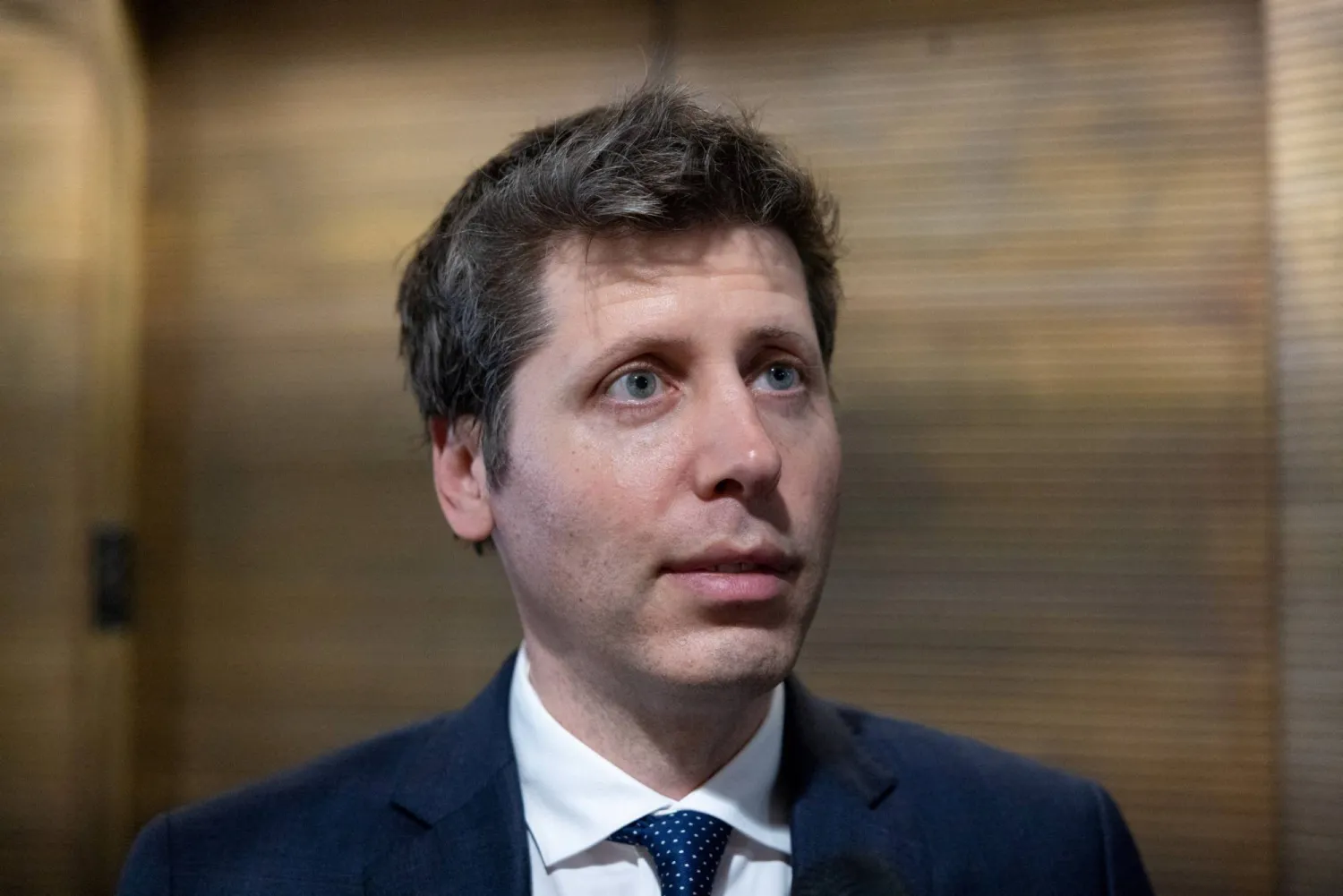
OpenAI CEO Sam Altman speaks to a reporter in the Hart Senate Office Building on Capitol Hill in Washington, DC, US, July 29, 2026. (Reuters)
TT

Altman Says OpenAI Will Not Go Public in 2026

OpenAI CEO Sam Altman speaks to a reporter in the Hart Senate Office Building on Capitol Hill in Washington, DC, US, July 29, 2026. (Reuters)

OpenAI will not go public this year, the company's chief executive Sam Altman said in an interview released on Saturday, citing safety concerns over artificial intelligence. 

"Given everything happening with safety, right now would be an ill-advised moment to go public, and we don't feel pressure on that," Altman told Fortune business magazine on Friday. 

"I would say not 2026, yeah. We got a lot of stuff to do," he said when asked if an initial public offering (IPO) was off the table for this year. 

The company had not announced an official date for its IPO. 

OpenAI, the maker of ChatGPT, and its rival Anthropic have been racing to become public companies. 

Both companies have filed confidential IPO documents with US regulators and are targeting public listings at valuations approaching $1 trillion. 

In June, the New York Times reported that OpenAI was leaning toward delaying its IPO until next year. 

Anthropic's chief executive Dario Amodei called on Saturday for AI companies to slow down the development of the powerful technology. 

"We must slow the pace at which we improve the capabilities of AI models," Amodei wrote in a post on his personal website. 

"Progress will still seem fast, and we must make wise use of the time we gain." 

Altman and Elon Musk, who owns xAI, both agreed with Amodei's assessment. 

The comments came days after AI researcher Jacob Coxon, who left OpenAI to join Anthropic, quit the industry over safety concerns. 

"The people building AI earnestly believe that it could kill us all by the end of the decade," Coxon wrote on X. 

When asked by Fortune about the risk of human extinction, Altman said: "We all have a tremendous amount of responsibility, and cannot let egos or incentives for profit or anything else get in the way." 

OpenAI revealed in July that its models broke out of their confined environment during testing, connected to the internet and infiltrated Hugging Face, a site developers use to store and share code. 

The incident triggered a petition signed by more than 1,000 employees at cutting-edge AI companies calling on the US government to help slow the release of the most advanced AI models. 

The US government put in place a voluntary security review process last month for advanced AI models before their release, but the parameters of that program remain unclear. 


Philippines Says in Talks with Saudi Arabia for Oil Storage

Oil storage tanks in the Philippines (X)
TT

Philippines Says in Talks with Saudi Arabia for Oil Storage

Oil storage tanks in the Philippines (X)

The Philippines is in talks with Saudi Arabia, Russia and the United States to store oil in the country, its energy secretary said on Wednesday, in a bid to hedge against fuel price spikes driven by the Iran war.

The Southeast Asian nation, which imports nearly all its energy needs, also plans to increase diesel and gas-fired power output to make up for an estimated 60% decline in hydropower and 20% fall in solar output in the first half of 2027 due to the El Nino weather phenomenon, Secretary Sharon Garin told Reuters.

The Philippines is also in talks with ⁠Japan, Kuwait, the ⁠United Arab Emirates and Australia on oil storage, Garin said, as it looks to build stockpiles after the US-Israeli strikes on Iran in February disrupted supplies.

"If El Nino finishes in April, that's the time that summer starts for us. So this would be a prolonged pressure for us, which started with the oil crisis in the Middle East," Garin said on the sidelines of the Singapore International Energy Week conference.

Saudi Arabia announced this week an initial agreement to store Saudi crude in Singapore's rock caverns starting 2027.

The Philippines plans to build its first government-owned storage tank next year at Bataan to hold strategic oil reserves, Garin said, adding that the government has been working with Tokyo to build regional oil stockpiles, which would complement its national reserve.

Fuel inventories in the Philippines are currently at 55 days, up from a 15-day minimum requirement, Garin said. The government has 1 million barrels of oil stocks in private facilities, she added.

"We start with 1 million (barrels) and scale it up over the years with the objective of ⁠reaching 60 days," ⁠she said, adding that the volume will be split evenly between crude and fuels.

The country's average daily demand for petroleum products was about 78 million liters, or about 490,600 barrels, as of May, government data showed.


Mercedes to Cut More Jobs as Chinese Competition Bites

Mercedes-Benz CEO Ola Kaellenius gestures as he participates in a talk during the Berlin Global Dialogue 2026 in Berlin, Germany, 21 October 2026. EPA/CLEMENS BILAN
TT

Mercedes to Cut More Jobs as Chinese Competition Bites

Mercedes-Benz CEO Ola Kaellenius gestures as he participates in a talk during the Berlin Global Dialogue 2026 in Berlin, Germany, 21 October 2026. EPA/CLEMENS BILAN

Premium German carmaker Mercedes-Benz will restart a voluntary redundancy program and is in discussion with unions over further cost-cuts, its chief executive Ola Kaellenius said Wednesday after the firm warned on full-year profits.

"Germany accounts for roughly 15 percent of our sales, but two-thirds of our employees and structures are based here," Kaellenius told reporters and investors on an earnings call to present third-quarter results.

"To reduce our fixed costs further, we have decided to restart the severance program in Germany in December," he added, without giving a target number of job cuts.

German carmakers have struggled with cutthroat competition and falling demand in China, the world's largest car market, leading to painful adjustments at home.

Mercedes-Benz on Tuesday became the third of the big three German carmakers -- alongside Volkswagen and BMW -- to have issued a profit warning for the year, citing difficulties in China.

BMW aims to cut 8,000 jobs by the end of 2027 with its own voluntary redundancy program, and the Volkswagen Group plans to have cut 120,000 jobs globally by the end of the decade across its brands, which include Porsche and Audi.

Kaellenius said Mercedes-Benz could not give more detail since discussions were ongoing, adding that he was nevertheless pressing hard to get costs down.

"We will continue with determination to adjust the structures of the company to fit the revenue position of the company," AFP quoted him as saying.

Labor costs in China, Hungary, Romania and the United States are all lower than in Germany, Kaellenius said, adding that "eastern Europe as a whole is open to any industrialist looking to expand.”

Net profit for the third quarter rose almost 30 percent to 1.52 billion euros ($1.69 billion) even as overall sales declined 4.5 percent to 30.7 billion euros, largely the result of a collapse in China.

But Kaellenius said the company could not afford to abandon the Chinese market despite an intense price war driven by over 100 competing carmakers.

"If you're a global car company like Mercedes, there's not a play where you put China aside," he said.


Merz Invites Japan to Back Trade Alliance as China Asks Germany to Be ‘Rational’

German Chancellor Friedrich Merz attends the ISEAS 49th Singapore Lecture, in Singapore, October 27, 2026. (Reuters)
TT

Merz Invites Japan to Back Trade Alliance as China Asks Germany to Be ‘Rational’

German Chancellor Friedrich Merz attends the ISEAS 49th Singapore Lecture, in Singapore, October 27, 2026. (Reuters)

German Chancellor Friedrich Merz on Wednesday urged Japan to back a proposed global alliance to defend rules-based trade that he has been touting during a week-long Asia trip.

An alliance of "like-minded partners" ‌would help ‌countries resist the growing use of tariffs ‌and ⁠economic coercion, he ⁠told a business summit in Tokyo, according to prepared remarks.

"Should the rules of the global trading system be violated by others, or should economic coercion be employed, we could coordinate our actions within the alliance and present a united front," he said, an apparent ⁠reference to the US and China.

In ‌responding to Merz's proposal, ‌China said it hoped Germany and the EU would be "objective and ‌rational" and that it was committed to working ‌with all parties to maintain the stability of trade and supply chains.

Merz's initiative echoes calls by Canadian Prime Minister Mark Carney this year for the world's middle powers to ‌work more closely together to counter pressure from larger economies.

"If we move forward together, ⁠the ⁠question will no longer be whether we are 'on the menu' or 'sitting at the table'," Merz said, invoking a line used by Carney during his January speech.

"Because in that case, the restaurant itself belongs to us."

Germany sees China as both a massive trading partner and a strategic rival. Coinciding with Merz's visit, a report said Germany's trade deficit with Asia-Pacific is set to hit a record of nearly €146 billion ($163 billion) in 2026 as falling exports to China outweigh growing sales elsewhere in the region.