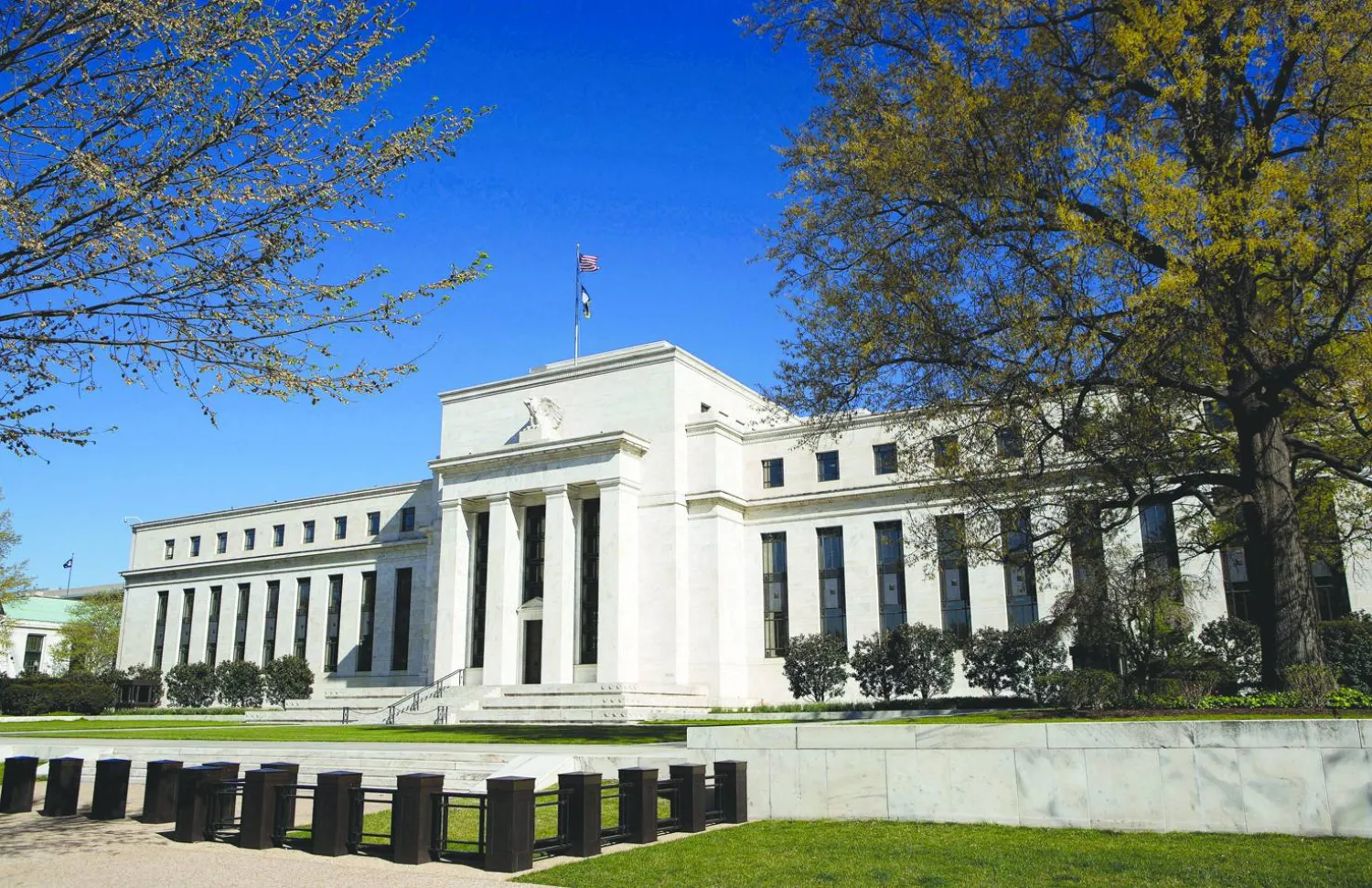
Goldman Sachs, JP Morgan Expect September Fed Hike as Inflation Lingers

Federal Reserve building in Washington (Reuters)
TT

Goldman Sachs, JP Morgan Expect September Fed Hike as Inflation Lingers

Federal Reserve building in Washington (Reuters)

Goldman Sachs and J.P. Morgan now expect the US Federal Reserve to raise interest rates this week after a string of stronger-than-expected inflation readings challenged hopes that price pressures would continue to ease without additional policy tightening.

The Wall Street banks joined a growing number of forecasters turning more hawkish after data last week showed ‌US consumer ‌and producer prices rose more than expected in August, ‌while ⁠oil prices climbed ⁠above $100 a barrel due to renewed hostilities in the Middle East, reported Reuters.

In a note on Friday, Goldman Sachs abandoned its previous call for rates to remain unchanged and now expects a 25-basis-point increase at the US Fed's September 15-16 meeting. J.P. Morgan, meanwhile, forecasts quarter-point hikes in both September and December.

The latest data have revived concerns that progress toward the Fed's ⁠2% inflation target could stall after months of moderation.

"We ‌think that the FOMC will be ‌reluctant to surprise," Goldman Sachs economist David Mericle said.

J.P. Morgan struck a similarly ‌hawkish tone following the inflation reports.

"The week that saw rising ‌bond yields and energy prices and a firm enough set of inflation readings to make a rate hike at next week's FOMC meeting more likely than not," J.P. Morgan economists led by Michael Feroli said in a note.

The outlook ‌for further Fed tightening will be in focus this week as policymakers conclude their meeting on Wednesday, ⁠while investors ⁠also watch the Bank of Japan for policy signals.

J.P. Morgan said the latest inflation data cast doubt on a sustained disinflation trend, leading it to forecast another Fed rate hike this year and raise its estimate of the long-run policy rate to 3.25%.

Markets are pricing in an 87% chance of a quarter-point Fed rate hike this month, up from about 70% before the latest inflation data, with another increase expected in December, according to CME's FedWatch Tool.

In a separate note on Sunday, Goldman Sachs said it still expects two Fed rate cuts in 2027, though later than previously forecast, as it sees this week's expected hike as driven more by market pricing than inflation fundamentals.


Saudi Stocks Rise 0.2%, Supported by Aramco Gains

An investor monitors stock market data on a screen at the Saudi Exchange (Tadawul) in Riyadh (Reuters)
TT

Saudi Stocks Rise 0.2%, Supported by Aramco Gains

An investor monitors stock market data on a screen at the Saudi Exchange (Tadawul) in Riyadh (Reuters)

Saudi stocks ended Thursday's session with modest gains amid mixed performance among heavyweight shares, as Saudi Aramco and several other companies advanced, offsetting declines in banking stocks and shares affected by third-quarter earnings.

The benchmark Tadawul All Share Index (TASI) rose 0.2% to close at 10,326 points, gaining 18 points, with total trading value reaching approximately SAR 4.1 billion ($1.09 billion).

Saudi Aramco shares climbed 1.5% to SAR 26.40, with around 12 million shares changing hands in trades worth more than SAR 300 million.

Meanwhile, Al Rajhi Bank shares declined 0.6%, while ACWA Power fell 0.5%.

United Carton Industries Company (UCIC) jumped nearly 6% after announcing a cash dividend distribution to shareholders. Shares of Al-Omran Industrial Trading, Azm and Saudi Industrial Development Company (SIDC) also rose between 5% and 8%.

On the losing side, Raoom led the decliners, falling 8% to SAR 73.90, with approximately 2.2 million shares traded for a total value of SAR 170 million.

Among stocks affected by third-quarter 2026 financial results, Saudi Arabian Refineries Company dropped 4.6%, Ladun Investment fell 3.9%, and Al Jouf Cement declined 0.7%.


AI Powers UK Economic Growth in Third Quarter

Growth was driven by the services sector, particularly computer programming.  Brook Mitchell / AFP
Growth was driven by the services sector, particularly computer programming. Brook Mitchell / AFP
TT

AI Powers UK Economic Growth in Third Quarter

Growth was driven by the services sector, particularly computer programming.  Brook Mitchell / AFP
Growth was driven by the services sector, particularly computer programming. Brook Mitchell / AFP

Britain's economy expanded 0.7 percent in the third quarter, official data showed Thursday, as spending on the AI boom helped offset higher energy prices and other disruptions caused by the US-Iran war, AFP reported.

The July-September reading for gross domestic product was an acceleration from 0.5 percent growth in the second quarter, the Office for National Statistics said in a statement.

The third-quarter figure, in line with market expectations, was the fastest quarterly growth rate since the first three months of 2024, the ONS said.

It said the latest growth was driven by strength of the services sector, particularly computer programming, which has helped lift economic output throughout the year.

"Many of the businesses reporting the largest increases in turnover are involved in activities related to artificial intelligence and cloud computing," the ONS said.

GDP grew 0.4 percent in July before stalling in August, then returning to a 0.2 percent expansion in September.

"Growth was unusually concentrated in AI-related sectors," said Ruth Gregory, deputy chief UK economist at Capital Economics.

"The latest monthly data suggests the economy is entering into Q4 with more momentum than we expected," she said.

The Bank of England last week lifted its economic growth forecast for this year and next, citing strength in business investment linked to AI-related demand.

The central bank delivered its forecasts as it raised its benchmark interest rate for the first time in more than three years as soaring energy costs push up global inflation.

- 'Resilience' -

Along with Ukraine's strikes on Russian refineries, disruptions to energy supplies owing to the US-Iran war have caused record-high diesel prices around the world.

"The Middle East conflict has hit growth worldwide, yet Britain is showing stand-out resilience," finance minister John Healey said in response to Thursday's figures.

However, the Bank of England expects in its central forecast for UK inflation to peak at 4.9 percent in the second quarter of next year.

In its worst-case scenario, where oil prices soar far beyond $100 a barrel, the bank warned that UK inflation risked hitting 6.2 percent in the third quarter of next year from 3.5 percent currently.

Millions of Britons face a jump in energy bills from the start of 2027, even after the Labor government offered some assistance in its annual budget announcement last month.

Oil prices have eased to around $90 a barrel in recent weeks on hopes for diplomatic talks aimed at ending the US-Iran war.

"The economy continues to show resilience but there are fears it will lose momentum just as energy-driven inflation is keeping pressure on interest rates," said Kit Rees, investment strategist at wealth management firm Quilter.


Britain Seeking EU Deal Where Benefits Outweigh Trade-offs, Healey Says

British Finance Minister John Healey (AFP)
TT

Britain Seeking EU Deal Where Benefits Outweigh Trade-offs, Healey Says

British Finance Minister John Healey (AFP)

British finance minister John Healey said on Thursday the government would pursue closer cooperation with the ‌European Union ‌at next ‌week's ⁠UK-EU summit in areas ⁠where the benefits to businesses and consumers outweigh the costs.

Asked ⁠by the ‌BBC ‌whether efforts ‌to improve ‌post-Brexit ties risked creating fresh uncertainty, Healey said Britain ‌was seeking agreements on areas including ⁠food ⁠and farming that would reduce red tape, ease costs for businesses and help bring down prices.