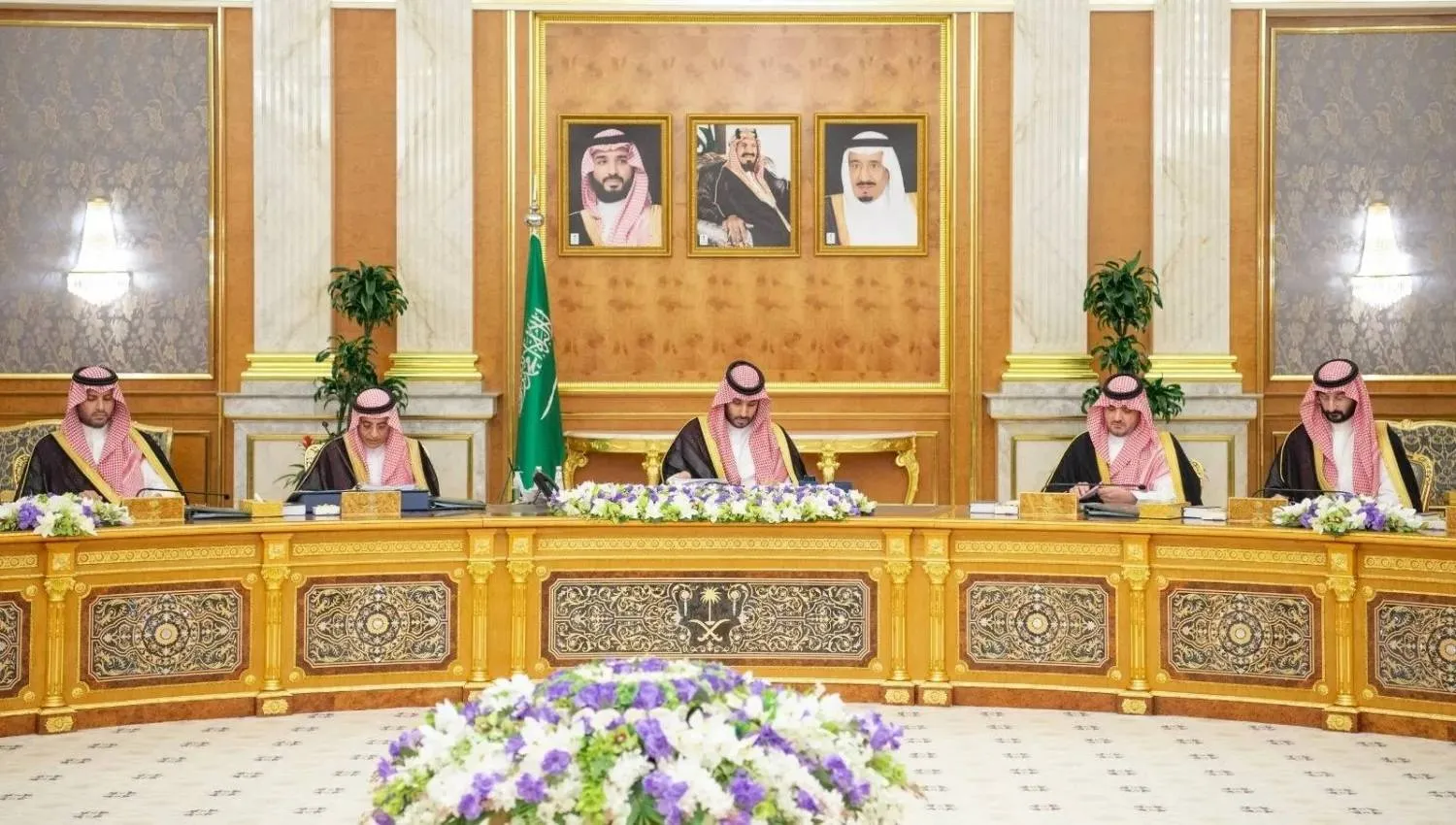
Saudi Arabia Bets on Small Businesses to Drive Its Next Growth Phase

Crown Prince and Prime Minister Mohammed bin Salman during the Cabinet meeting in Jeddah (SPA)
TT

Saudi Arabia Bets on Small Businesses to Drive Its Next Growth Phase

Crown Prince and Prime Minister Mohammed bin Salman during the Cabinet meeting in Jeddah (SPA)

Saudi Arabia is entering a new phase in its economic diversification drive, placing small and medium-sized enterprises and entrepreneurship at the heart of growth.

The shift follows the Cabinet’s Tuesday approval of a new national strategy for the sector at a meeting chaired by Crown Prince Mohammed bin Salman.

The kingdom aims to turn SMEs from a broad base of business activity into a stronger force in production, investment, and job creation. The strategy seeks to widen access to financing and markets while helping businesses scale up and compete.

It reflects a Saudi bet on a new generation of growing companies that can help build a more diversified and resilient economy—one less reliant on large corporations alone to drive economic activity.

GDP Contribution

Commerce Minister Majid bin Abdullah Al-Qasabi, chairman of the Small and Medium Enterprises General Authority, known as Monsha’at, said the strategy would develop the entrepreneurship ecosystem, help businesses grow and expand, and increase their contribution to the national economy.

The goal is to raise SMEs’ share of gross domestic product to 35%, in line with Saudi Vision 2030, he said.

The strategy comprises 13 initiatives within an integrated framework. They aim to improve access to financing and markets, strengthen businesses’ operational readiness and capabilities, develop the regulatory and innovation environment, and make it easier to do business.

Together, the measures are designed to create a more efficient environment for business growth and expansion.

The strategy also aims to help create more than 500,000 direct and indirect jobs and propel Saudi Arabia to first place in the Entrepreneurial Skills and Knowledge Index by 2030, Al-Qasabi said.

Access to Megaprojects

“The strategy reflects the attention and support the government gives to entrepreneurship and small and medium-sized enterprises,” Al-Qasabi said.

It translates that support into “a more integrated and efficient ecosystem that opens wider avenues for businesses to grow and increases their contribution to economic development,” he added.

Implementation will depend on coordination among the relevant entities, enabling SMEs to capture opportunities across sectors, expand their roles in value chains and megaprojects, and reach new markets in Saudi Arabia and abroad.

Beyond Growth in Numbers

The number of SMEs in Saudi Arabia exceeded 1.83 million by the end of the second quarter of 2026, Monsha’at Deputy Governor for Entrepreneurship Saud Al-Subhan told Asharq Al-Awsat.

“The ecosystem has achieved significant growth in recent years, with considerable opportunities for further growth and expansion,” he said.

The strategy marks a shift away from focusing primarily on the number of businesses toward sustainable growth, higher productivity, and greater capacity to scale up and enter new markets.

It also seeks to strengthen competitiveness, increase SMEs’ contribution to the national economy, and support promising, established, and new businesses in key and emerging sectors.

The broader aim is to build an enabling ecosystem that firmly establishes a culture of entrepreneurship, Al-Subhan said.

Twelve Priority Challenges

A comprehensive assessment of the sector identified 12 priority challenges, ranked according to their impact and how readily they could be addressed.

They include limited support for commercializing innovations, a heightened fear of failure linked to a weak entrepreneurship culture, and a shortage of specialized talent needed by businesses and entrepreneurs across sectors and regions.

Other challenges include weak infrastructure and purchasing power in outlying regions, high and difficult-to-predict business costs, limited access to financing, and a shortage of market data needed for decision-making.

SMEs also struggle to retain talent amid competition from large companies and the public sector, while manufacturing and supply chains face weaknesses in infrastructure and support services.

“The strategy does not stop at identifying the challenges,” Al-Subhan said. “It links them to initiatives designed to address them directly.”

Monsha’at prepared the national strategy and will oversee its implementation in coordination with relevant public, private, and nonprofit sector entities, in accordance with their respective regulatory responsibilities.

Execution will not rest with a single body, but on complementary roles across an integrated ecosystem, Al-Subhan said.

The strategy’s 13 core initiatives directly address the obstacles SMEs face and cover several areas critical to their growth.

They include developing open commercial innovation, increasing participation in government procurement, supporting exports and international expansion, improving access to financing, and reducing business costs.

The initiatives also call for a comprehensive sector database and a framework to monitor implementation and assess its impact.

The intended effect on Vision 2030 indicators is clear: SMEs contributing 35% of GDP, more than 500,000 direct and indirect jobs, and placing Saudi Arabia first in the Entrepreneurial Skills and Knowledge Index.

Empowering the Private Sector

The new strategy is part of a wider set of national strategies supporting Vision 2030.

Together, they form a long-term road map for empowering the private sector and directing efforts toward ambitious economic and development priorities. The aim is to strengthen Saudi Arabia’s position and competitiveness as a more diversified, innovative, and sustainable economy.

The initiatives include supporting open commercial innovation and enabling SMEs and startups to operate and grow in industrial cities and special economic zones.

They also seek to support exports and international expansion, increase SME participation in government procurement and purchases by large corporations, and create a comprehensive sector database linked to other relevant databases across the ecosystem.

Further measures include attracting global innovative startups and encouraging them to establish operations in Saudi Arabia, reviewing minimum Saudization requirements by sector, and reducing the cost of doing business.

The strategy also aims to strengthen financial awareness and literacy, develop financing enablers, and provide incentives for SME financing institutions, creating a business environment better equipped to support the sector’s expansion and sustain its economic impact.


Oil Shipped Through Hormuz Falls 15% as Iranian Attacks Increase

In this handout photo provided by the Lewis Pugh Foundation, British endurance swimmer and UNEP Patron of the Oceans Lewis Pugh dives into the Strait of Hormuz, off the Musandam Peninsula, Oman, Wednesday, Nov. 18, 2026. (Lewis Pugh Foundation via AP)
TT

Oil Shipped Through Hormuz Falls 15% as Iranian Attacks Increase

In this handout photo provided by the Lewis Pugh Foundation, British endurance swimmer and UNEP Patron of the Oceans Lewis Pugh dives into the Strait of Hormuz, off the Musandam Peninsula, Oman, Wednesday, Nov. 18, 2026. (Lewis Pugh Foundation via AP)

The amount of oil being shipped through the Strait of Hormuz has begun to drop in the face of near-daily Iranian strikes on ships, the Financial Times reported.

It quoted the UK Maritime Trade Operations as saying on Friday that a total of 263 vessels passed in and out of the crucial waterway in the week to November 18— some 15 percent fewer than the previous week and 20 percent less than the week before that.

Of those vessels, 37 were oil tankers, down from 52 a week earlier, but on a level with the week before that. Preliminary data from commodities platform Kpler, measured in barrels, showed that oil flows through the strait in the second week of November were close to half those in the first week.

The figures may be revised higher as more vessels undertaking “dark transits” are identified, but the lower volumes suggest Iran’s latest campaign of strikes on merchant shipping is starting to reduce oil exports.

Some analysts had pointed to increased flows of crude out of the Gulf in October as evidence that Middle Eastern producers had found ways to get their product to international buyers. On six days in October, shipments through the strait exceeded pre-war levels.

But Giovanni Staunovo, a strategist at UBS, said in a note on Friday that “the recovery in Middle Eastern exports is looking increasingly fragile.”

Iran’s strikes on shipping began to rise in October after a period of relative calm. They have continued despite ongoing diplomatic efforts to find a resolution to the conflict and restore shipping flows. At least seven tankers have been hit in the past week, while at least three vessels have sunk since the conflict started.

About 135 ships used to pass through the narrow strait each day before the US-Israeli strike on Iran at the end of February, carrying about a fifth of global oil and gas supplies, among other products.


Saudi Arabia Signs 12 Aviation Agreements at ICAO Conference in Montreal

 Saudi Arabia signed bilateral air transport services agreements during the conference - SPA
Saudi Arabia signed bilateral air transport services agreements during the conference - SPA
TT

Saudi Arabia Signs 12 Aviation Agreements at ICAO Conference in Montreal

 Saudi Arabia signed bilateral air transport services agreements during the conference - SPA
Saudi Arabia signed bilateral air transport services agreements during the conference - SPA

Saudi Arabia, represented by the General Authority of Civil Aviation (GACA), has concluded its participation in the 7th Worldwide Air Transport Conference (ATConf/7), organized by the International Civil Aviation Organization (ICAO) in Montreal, Canada, from November 16 to 20.

Led by GACA President Abdulaziz Al-Duailej and comprising 44 representatives from 18 national entities, the delegation achieved key outcomes, including signing 12 agreements, memoranda of understanding, and records of discussion, submitting eight working papers, holding over 32 bilateral meetings, and hosting a special edition of the Future Aviation Forum, SPA reported.

During the conference, Saudi Arabia signed bilateral air transport services agreements with Belize, Samoa, Cambodia, and Jordan; MoUs with Saint Lucia, Antigua and Barbuda, Montenegro, Cabo Verde, and Türkiye; and records of discussion with Macau, the Congo, and Equatorial Guinea to expand international cooperation and air connectivity. The delegation also presented eight working papers addressing economic regulation, sector resilience, investment, innovation, and sustainable growth, while participating in ICAO deliberations shaping the future of global air transport.

Al-Duailej and the delegation held bilateral talks with ICAO Council President Toshiyuki Onuma, ICAO Secretary General Juan Carlos Salazar, Airports Council International (ACI) representatives, Bombardier, and 24 national delegations to explore sector development and exchange expertise. Additionally, in his capacity as Chair of the Executive Council of the Arab Civil Aviation Organization (ACAO), Al-Duailej presided over the eighth coordination meeting of regional civil aviation organizations to align positions ahead of upcoming assembly proceedings.

On the sidelines of the event, Al-Duailej—who also chairs the Steering Committee of the Riyadh-based Regional Safety Oversight Organization for the Middle East and North Africa (MENA RSOO)—received the formal accession documents from Syria and Lebanon, bringing the organization's membership to 10 states.

GACA also organized a special edition of the Future Aviation Forum in Montreal ahead of its next edition in Riyadh from April 19 to 21, 2027, further cementing the Kingdom's standing as a global aviation hub in line with Saudi Vision 2030.


EU Proposes Tax on Big Tech to Boost Budget

European Council President Antonio Costa arrives at the EU Council for a EU-UK Summit, in Brussels on November 20, 2026. (Photo by NICOLAS TUCAT / AFP)
TT

EU Proposes Tax on Big Tech to Boost Budget

European Council President Antonio Costa arrives at the EU Council for a EU-UK Summit, in Brussels on November 20, 2026. (Photo by NICOLAS TUCAT / AFP)

The EU put forward plans to tax the world's biggest digital companies to fund its next budget Saturday, as it seeks to bridge divisions among member states over the bloc's long-term funding.

European Council President Antonio Costa unveiled a new spending proposal that slashes by 204 billion euros ($224 billion) a plan initially put forward by the European Commission, which some countries had slammed as too onerous.

"I believe this proposal can bring us closer to a final agreement," Costa told a press conference in Brussels.

EU countries have been squabbling over the size of the next budget, with Germany leading calls for major cuts after the commission last year proposed a two-trillion-euro budget for the 2028-2034 period.

Berlin criticized a revised proposal published last month that suggested slashing the bloc's future seven-year budget by 140 billion euros.

Costa, who represents the EU's 27 states, is seeking to reach a deal by the end of the year balancing contributions from member states with new sources of revenue for the bloc.

Among these could be a tax on digital firms that the draft Costa presented Saturday says will concern companies with an annual turnover for digital activities of at least 50 million euros in the EU as well as a global turnover of more than 750 million euros.

They would be subjected to "an annual contribution corresponding to 3 percent of the annual net turnover from online advertising, digital intermediation services and user-generated data", according to documents shared by the council.

The plan is likely to provoke US President Donald Trump's ire since his administration has reacted angrily to EU fines and moves against Big Tech under its content and competition rules in recent years.

The draft also includes plans for a levy on electronic waste and higher tobacco taxes, AFP reported.

The document will be at the center of hours of fraught talks when EU leaders meet in Brussels next week.

Costa is pushing for a deal in December, amid EU fears that a delay would push talks into a fraught election year in 2027 with worries about what potential Eurosceptic victories in France and elsewhere would mean for future dealmaking.

Once EU states find an agreement, they will have to negotiate with parliament -- a task that also promises to be difficult.

Key budget lawmaker Siegfried Muresan warned the EU Parliament would block the spending plan if member states continued to ignore its concerns.

"We think that the debate... is focused too much on cuts," he said this week.

Germany is part of a grouping with five other so-called "frugal" EU members, including Sweden, which expressed skepticism this week over new taxes.

"It's money taken from somewhere else. It won't solve the financial equation," Swedish Europe Minister Jessica Rosencrantz said.

"The focus should be on the expenditure side, where the volume needs to go down" and the national contribution "needs to go down", she added on Thursday.

Costa does not only have to contend with the frugals' demands.

France, the second-biggest EU economy and a net contributor to the budget, argues the bloc needs sufficient means to match the rising challenges it faces.

Meanwhile, 17 countries from southern, central and eastern Europe have formed a group known as the "Friends of Cohesion" and are pushing for greater funding to support agriculture and regional development.