Saudi Defenses Intercept Drone that Attempted to Enter Makkah Airspace

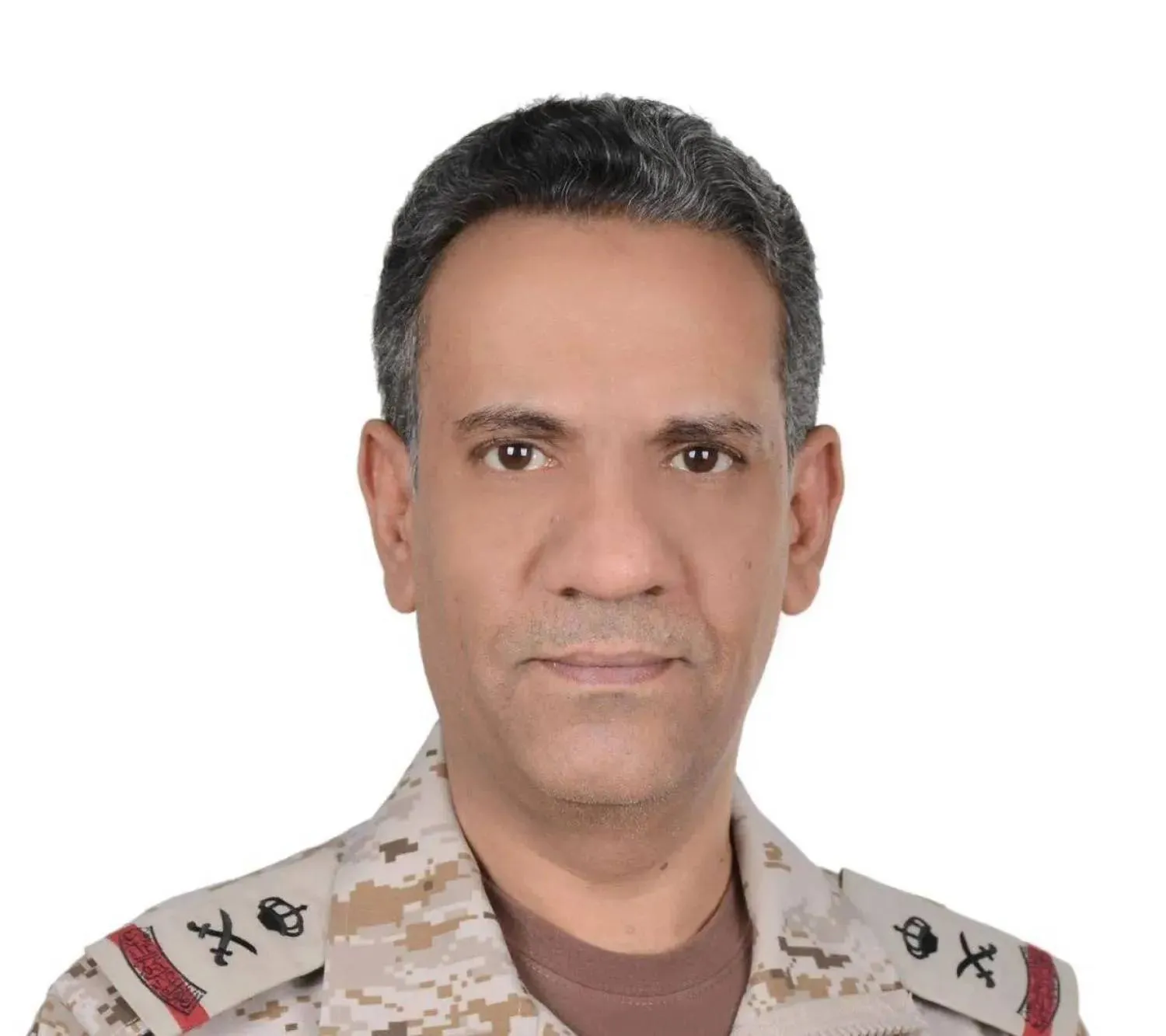
Official Spokesperson of the Coalition to Restore Legitimacy in Yemen Major General Turki Al-Malki. (Asharq Al-Awsat)
TT

Saudi Defenses Intercept Drone that Attempted to Enter Makkah Airspace

Official Spokesperson of the Coalition to Restore Legitimacy in Yemen Major General Turki Al-Malki. (Asharq Al-Awsat)

Saudi defenses intercepted on Tuesday a hostile drone fired by the terrorist Houthis in Yemen before it entered the prohibited airspace area of the holy city of Makkah.

Official Spokesperson of the Coalition to Restore Legitimacy in Yemen Major General Turki Al-Malki revealed that this was the second hostile and terrorist attempt to target Makkah.

The first took place on July 27, 2017.

“This can only be described as a disgraceful act, an attempt to target the birthplace of revelation, the land of the message, and the destination that draws the hearts of millions of Muslims from around the world,” Al-Maliki continued.

“It was also an attempt to terrorize the Umrah performers visiting the Grand Mosque in peace and to harm citizens and residents,” he noted.

“This hostile attempt will remain a mark of shame on the record of violations committed by the extremist terrorist Houthi militia, as it was a deliberate act intended to provoke the feelings of millions of Muslims,” he added.

“The security of the Two Holy Mosques and the Umrah performers is a red line, and the Joint Forces Command of the Coalition will not hesitate to take the necessary and deterrent measures against the terrorist Houthi militia and its hostile and terrorist behavior,” Al-Malki stressed.

Repeated attacks

The repeated attacks on houses of worship highlight the stark contradiction between the Houthi militia's declared rhetoric and its conduct on the ground.  

While the Iran-backed group seeks to hide behind religion and adopt sectarian slogans to advance its military agenda, its practices prove that it is executing regional agendas that destabilize the security of the region and target its religious and civil foundations. 

The pace of attacks by the Houthis has witnessed a systematic escalation targeting Islamic holy sites and civilian objects within Saudi Arabia. This included attempted attacks toward the cities of Makkah and Madinah, as well as causing material damage to a mosque and injuring civilians in the Jazan region, in flagrant violation of the principles of international humanitarian law. 

According to Islamic law, mosques possess a sanctity guaranteed by explicit texts that mandate their protection and prohibit targeting them or transforming them into arenas of conflict, in times of both peace and war alike. 

The recent attack that caused damage to a mosque in the Jazan region is more evidence of the militia’s violation of Islamic legal tenets and values. This exposes its use of religious cover as a tool for political deception and to mask its violations against civilian objects and houses of worship. 

Dr. Qais Al-Mubarak, a former member of the Saudi Council of Senior Scholars, said: “The preservation of life is one of the fundamental, essential interests for creation, and a Muslim is commanded to safeguard it and everything that ensures its preservation. Muslims have reached a consensus on this, and this meaning is further reinforced if the killing takes place in houses of worship.” 

Dr. Al-Mubarak stressed that what the Houthis have done in Yemen, including harming the Yemeni people and demolishing houses, is among the greatest evils.  

He added: “Today, they are targeting the holy sites in the Two Holy Mosques, without any consideration for their visitors and what might befall them from these indiscriminate attacks.” 

“This is a great evil that no nation would accept, is prohibited by all divine laws, and is only committed by those who hold no value or respect for human life; for the preservation of life is universally agreed upon among Muslims,” he added. 

Dr. Youssef Al-Rumaih, security advisor and professor of crime and terrorism counter-measures at Qassim University, stated that the Houthis’ terrorist targeting of holy sites inside Saudi Arabia demonstrates their disregard for the most basic Islamic principles.  

Despite pretending to uphold Islamic law, the group's actions never rise above mere rhetoric, exposed by the reckless projectiles they fire at the holiest sanctuaries of Islam, he remarked. 

“This terrorist group is beholden to regional agendas,” he said, pointing to the negative impacts that subservience to regional agendas has brought upon many countries in the Arab region, leaving them vulnerable to divisions and undermining their stability and social peace. 

Dr. Mohammed Al-Omari, a researcher in the history of Islamic legal sciences, said the recent Houthi attacks have gone beyond the military and security dimensions to become a direct assault on the sanctity of Islamic holy sites and a provocation to the sentiments of more than two billion Muslims around the world. 

“Makkah is not merely a geographical location, but rather the Holy City and the unifying Qibla for Muslims. Compromising its security or targeting the mosques of God in any region are an assault on the Islamic faith and collective conscience,” he stressed. 

“Saudi Arabia, its leadership and people, remains dedicated to the honor of protecting and caring for the Two Holy Mosques, and safeguarding the security of these holy sites against any threat,” he added. 


Custodian of the Two Holy Mosques Receives Written Message from Emir of Qatar

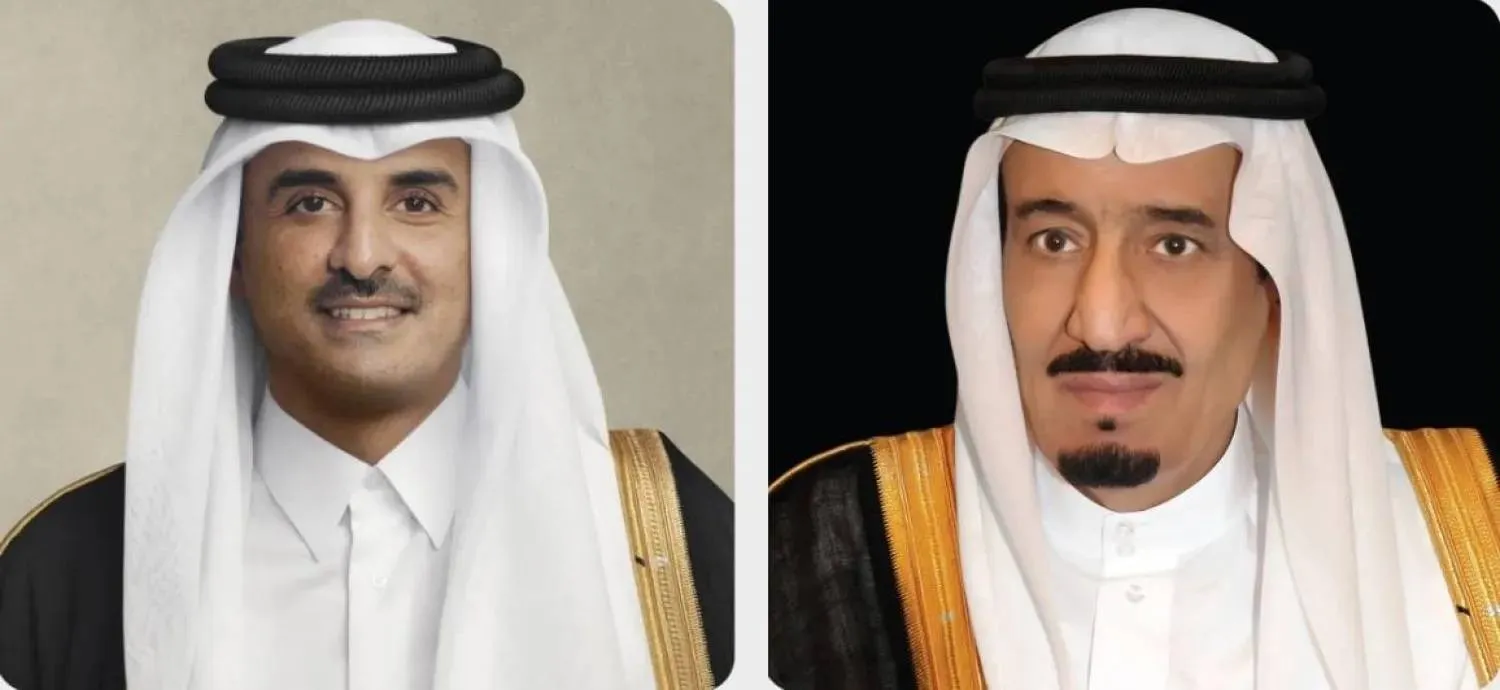
Custodian of the Two Holy Mosques King Salman bin Abdulaziz Al Saud and Emir of Qatar Sheikh Tamim bin Hamad Al Thani. (Asharq Al-Awsat)
TT

Custodian of the Two Holy Mosques Receives Written Message from Emir of Qatar

Custodian of the Two Holy Mosques King Salman bin Abdulaziz Al Saud and Emir of Qatar Sheikh Tamim bin Hamad Al Thani. (Asharq Al-Awsat)

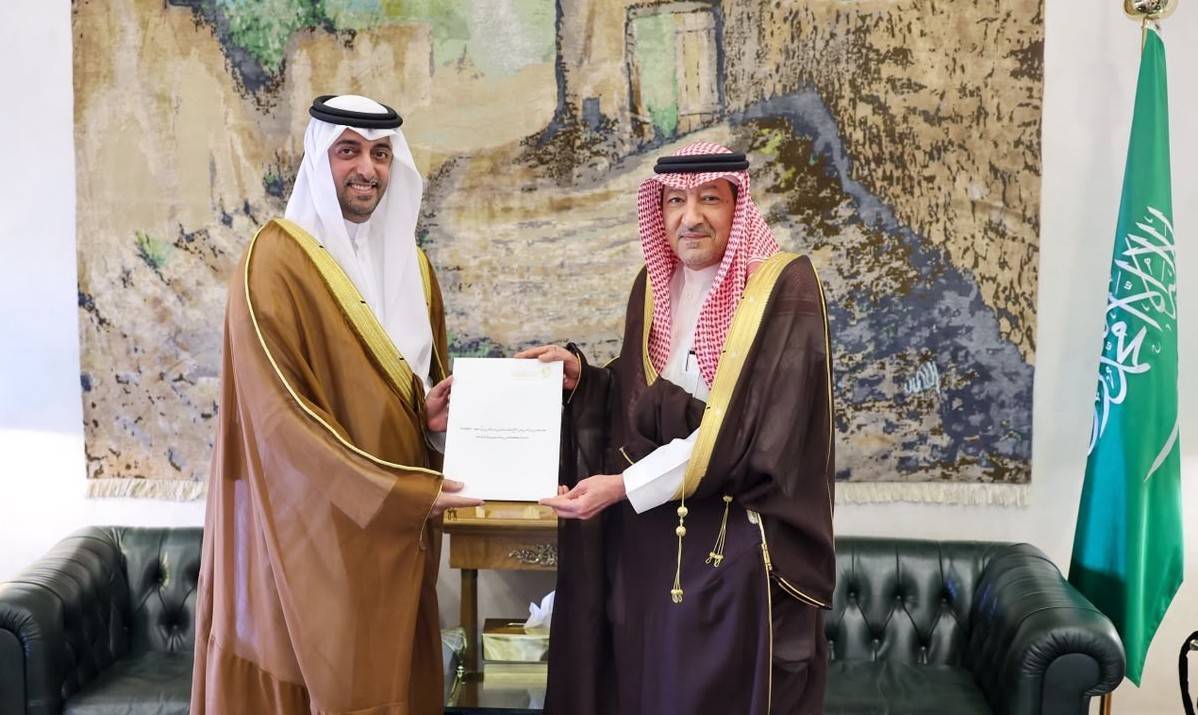
Custodian of the Two Holy Mosques King Salman bin Abdulaziz Al Saud received on Monday a written message from Emir of Qatar Sheikh Tamim bin Hamad Al Thani on bilateral relations between their countries.

The message was received by Vice Minister of Foreign Affairs Waleed Elkhereiji during a meeting with Ambassador of Qatar to Saudi Arabia Bandar bin Mohammed Al Attiyah at the ministry's headquarters in Riyadh.

Vice Minister of Foreign Affairs Waleed Elkhereiji meets with Ambassador of Qatar to Saudi Arabia Bandar bin Mohammed Al Attiyah in Riyadh on Monday. (SPA)

The meeting reviewed bilateral relations between their countries, ways to boost them in various fields. They also discussed issues of common interest.


Qatar Calls for Non-Aggression Pact with Iran, Announces Plans to Strengthen Defense Industry

Qatari Deputy Prime Minister and Minister of State for Defense Affairs Sheikh Saoud bin Abdulrahman Al Thani attends the opening of the eighth Global Security Forum in Doha on Monday.
TT

Qatar Calls for Non-Aggression Pact with Iran, Announces Plans to Strengthen Defense Industry

Qatari Deputy Prime Minister and Minister of State for Defense Affairs Sheikh Saoud bin Abdulrahman Al Thani attends the opening of the eighth Global Security Forum in Doha on Monday.

Qatar has called for a regional dialogue involving the Gulf Cooperation Council (GCC) states and Iran, with the participation of Türkiye and Pakistan, aimed at reaching security understandings based on confidence-building measures and a non-aggression agreement.

The proposal comes as Doha prepares to unveil new defense partnerships and plans to establish a domestic military production center, part of efforts to strengthen its ability to counter missile threats, drones and cyberattacks.

The announcements were made by Sheikh Saoud bin Abdulrahman Al Thani, Qatar's Deputy Prime Minister and Minister of State for Defense Affairs, during the opening of the eighth Global Security Forum in Doha on Monday.

The forum, which runs through October 21 under the theme "The Future of Alliances", brings together officials and experts in international security and politics.

The Qatari minister said achieving lasting peace with Iran would require addressing mutual security concerns and building economic relationships that could help prevent renewed conflict.

He stressed that Qatar continues to maintain contact with Tehran despite the attacks it has suffered and supports mediation efforts led by Pakistan, in cooperation with Oman and other partners, to seek a settlement to the conflict between the United States and Iran.

On defense security, Sheikh Saoud revealed that Qatar is preparing to announce a partnership with regional parties to develop its air defense, counter-drone and cybersecurity capabilities.

He also announced plans to establish a domestic defense production center in cooperation with a regional partner and countries including the United States, the United Kingdom and France, either by localizing certain military industries or investing in specialized companies.

The minister explained that a defense review conducted by Qatar had identified air defense, cybersecurity and electronic warfare as priorities, following the threats witnessed across the region during the recent conflict.

He said Doha would soon announce the establishment of the domestic defense production center, explaining that Qatar is working with a regional partner, alongside the United States, Britain and France, to develop local defense capabilities or invest in companies operating in the sector.

Asked about the threats facing Qatar and other Gulf countries, particularly ballistic missiles, drones and cyberattacks, Sheikh Saoud said a new partnership with regional parties would be announced soon to launch an initiative aimed at building capabilities in those three areas and others.

The minister emphasized the importance of Qatar's military partnership with the United States, noting that defense cooperation and exchanges of expertise had helped intercept more than 90 percent of attacks during the conflict.

He also reaffirmed Qatar's commitment to the continued development of Al Udeid Air Base, describing it as a Qatari facility that hosts allied forces and supports multiple missions, including counterterrorism operations.

On energy security, Sheikh Saoud warned that the economic repercussions of disruptions to oil and gas supplies had not yet reached their peak, and that their effects on prices and consumers could continue over the coming months.

He also rejected the imposition of fees on vessels transiting the Strait of Hormuz, stressing the need for an agreement guaranteeing freedom of navigation and stability in energy markets.

The minister addressed the Israeli attack on Qatar, arguing that targeting a country engaged in mediation undermines confidence in diplomatic efforts.

He also referred to the apology issued by the Israeli prime minister following the attack.

Discussing Iranian attacks on Qatari facilities and interests, Sheikh Saoud said Doha had drawn lessons from the incidents to strengthen its defense preparedness, without abandoning dialogue with Tehran.

He stressed that mediation and military readiness are not mutually exclusive, explaining that preventing wars requires sustained diplomatic engagement alongside the development of capabilities necessary to protect national sovereignty.

The Global Security Forum, organized by the Soufan Center and the Qatar International Academy for Security Studies, is being held under the patronage of Sheikh Mohammed bin Abdulrahman Al Thani, Qatar's Prime Minister and Minister of Foreign Affairs.

The forum is examining the future of alliances and defense partnerships, maritime security and supply chains, cybersecurity challenges, and de-escalation diplomacy amid ongoing shifts in international relations.


Saudi Arabia, France Discuss Relations and Regional Developments

Saudi Minister of Foreign Affairs Prince Faisal bin Farhan bin Abdullah holding talks with Minister for Europe and Foreign Affairs of the French Republic Jean-Noël Barrot - SPA
TT

Saudi Arabia, France Discuss Relations and Regional Developments

Saudi Minister of Foreign Affairs Prince Faisal bin Farhan bin Abdullah holding talks with Minister for Europe and Foreign Affairs of the French Republic Jean-Noël Barrot - SPA

Saudi Minister of Foreign Affairs Prince Faisal bin Farhan bin Abdullah met with Minister for Europe and Foreign Affairs of the French Republic Jean-Noël Barrot.

During the meeting, they reviewed bilateral relations and the existing partnership across various fields, exploring ways to further strengthen them to serve mutual interests and support the aspirations of both friendly nations.

The ministers also discussed regional developments and efforts to mitigate the repercussions of ongoing events. Barrot expressed his country’s condemnation of the terrorist attacks carried out by the Houthi militia and affirmed France’s solidarity with Saudi Arabia.

The two sides also underscored the importance of intensifying diplomatic efforts to ensure the security and safety of regional waterways and freedom of navigation, as well as supporting diplomatic efforts to achieve comprehensive and sustainable solutions to ongoing regional crises, thereby enhancing security and stability across the region.