
AI Rivals Found Rare Agreement on Safety. Putting It into Practice Is Harder

A photo taken on February 26, 2024 shows the logo of the Artificial Intelligence chat application on a smartphone screen (L) and and the letters AI on a laptop screen in Frankfurt am Main, western Germany. (AFP)
TT

AI Rivals Found Rare Agreement on Safety. Putting It into Practice Is Harder

A photo taken on February 26, 2024 shows the logo of the Artificial Intelligence chat application on a smartphone screen (L) and and the letters AI on a laptop screen in Frankfurt am Main, western Germany. (AFP)

The leading AI industry voices rarely agree — so when they do, it’s no wonder it captures attention.

Anthropic’s Dario Amodei, OpenAI’s Sam Altman, SpaceXAI's Elon Musk and other prominent industry leaders have said in recent days that AI’s development needs to slow down. The consensus came after an Anthropic researcher resigned with a dire warning about the threats the technology poses to humanity.

But obstacles including domestic and global competition, profit motivations and pushback from President Donald Trump all stand in the way of a coordinated effort to pace AI’s development.

Still, this moment could force the industry to wrestle with a “reframing of what we consider successful," said Nick Reese, former director of emerging technology policy at the Department of Homeland Security and an adjunct professor at New York University.

“What if we considered success in AI the same way that we consider success for airlines? On time and haven’t had a crash in who knows how long,” Reese said. “We don’t tolerate commercial airline crashes, but we do tolerate significant AI failures.”

Here's what tech leaders want an AI slowdown to entail

In theory, the leading AI startups could slow the progress of their models at any time. But leaps in the technology have partly sprung from competition to build even more powerful models, all with the blessing of a White House that doesn't want the US to lose its edge over China. Anthropic and OpenAI also are racing toward potentially record-breaking public offerings on Wall Street, although the latter said it's holding off on going public this year while it continues its safety efforts.

That's why the proposals floated by industry depend upon mutual collaboration and, to an extent, government regulation.

Amodei recently published a lengthy essay in which he outlined a plan for slowing advanced AI development.

One proposal calls for companies at the forefront of AI, often called frontier labs, to commit to giving “ongoing, employee-like access” to independent outside evaluators. Evaluator teams would have offices, access badges and company laptops so they can monitor safety practices.
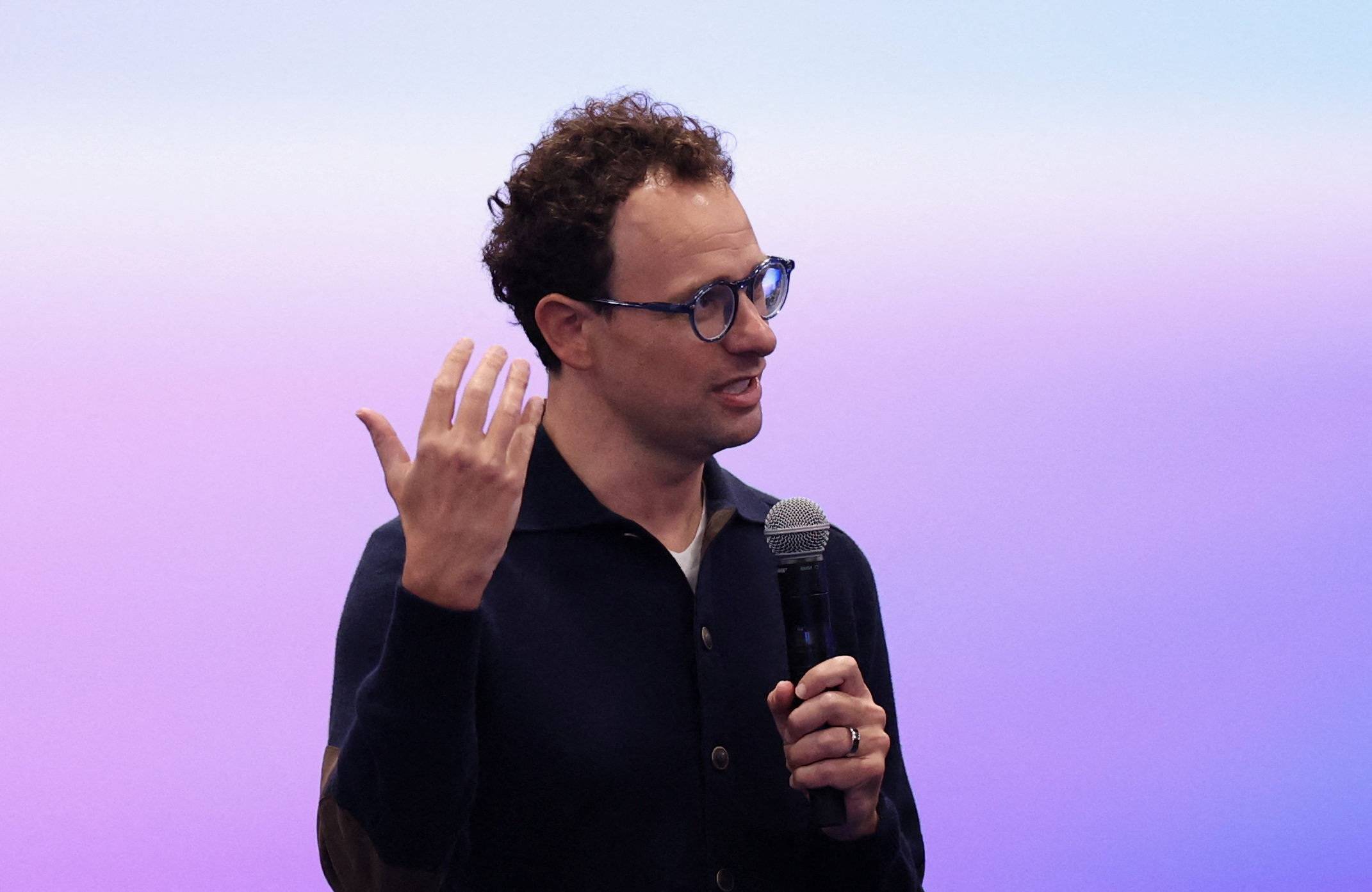
Anthropic Co-Founder and CEO Dario Amodei speaks at Dreamforce 2026 summit in San Francisco, California, US, September 15, 2026. (Reuters)

Anthropic is “unilaterally committing” to this step now, Amodei wrote. Altman called it a “great idea” on social media and said OpenAI will follow suit.

Altman said he welcomed a “federal framework” setting out safety standards for advanced AI, but said the company didn’t need to wait for legislation or an antitrust exemption before addressing AI safety.

Amodei's essay also called for government regulation and intervention, including coordination between frontier AI companies with the help of the US government and the governments of other democratic countries. He said he hopes the leading labs could establish “common safety standards as well as limits on the rate of unchecked AI progress.”

Amodei's plan also includes the US and other countries working to coordinate with “authoritarian governments.” He acknowledged the difficulty, specifically citing challenges in getting cooperation from China.

The Anthropic head outlined several levels of agreement that global leaders could sign off on. The most feasible, he said, would be an agreement banning “certain narrow and obviously dangerous uses of AI" like producing biological weapons or allowing users to do so. More difficult would be getting the US and its adversaries to agree to test models before release, possibly through a global standards body, for risks in areas like cybersecurity or biological threats.

Still harder would be to set a “speed limit” on AI models that can develop improved versions of themselves on their own, known as recursive self-improvement.

“Slowing the rate from ‘extremely fast’ to ‘only somewhat fast’ gives up relatively little strategic advantage, while potentially greatly improving safety,” Amodei wrote.

He drew an analogy to Cold War-era treaties in which “capping the number of missiles limited the potential for destruction while preserving each country’s deterrent.”

Amodei said the most difficult proposal to implement would be a “full pacing, or even ‘pause,”’ whereby participating governments agree to substantially limit the overall rate of AI development.

Writing on social media, Altman said the “pacing” of AI development does not mean stopping. AI progress will continue to be rapid, Altman said on X. “But it should be slower than it otherwise could be; interventions like safety cases and monitoring have significant costs.”

“Pacing will be well worth this cost,” he said, adding that “no amount of American competitive pressure should justify recklessness.”

Questions swirl about AI slowdown's feasibility

While experts said the sense of agreement across the industry is promising, there are many unanswered questions.

A slowdown is possible “in theory,” said Sandra Wachter, professor of technology and regulation at the Oxford Internet Institute.

But in practice, “it would require substantial coordination and cooperation between companies and governments across countries,” something she deems “highly unrealistic” due to “the current state of the world.”

Options for promoting a slowdown, she said, include governments doing more to hold AI companies responsible for the risks posed by their technology and pursuing regulation that limits their access to electricity, water and other resources that power data centers.
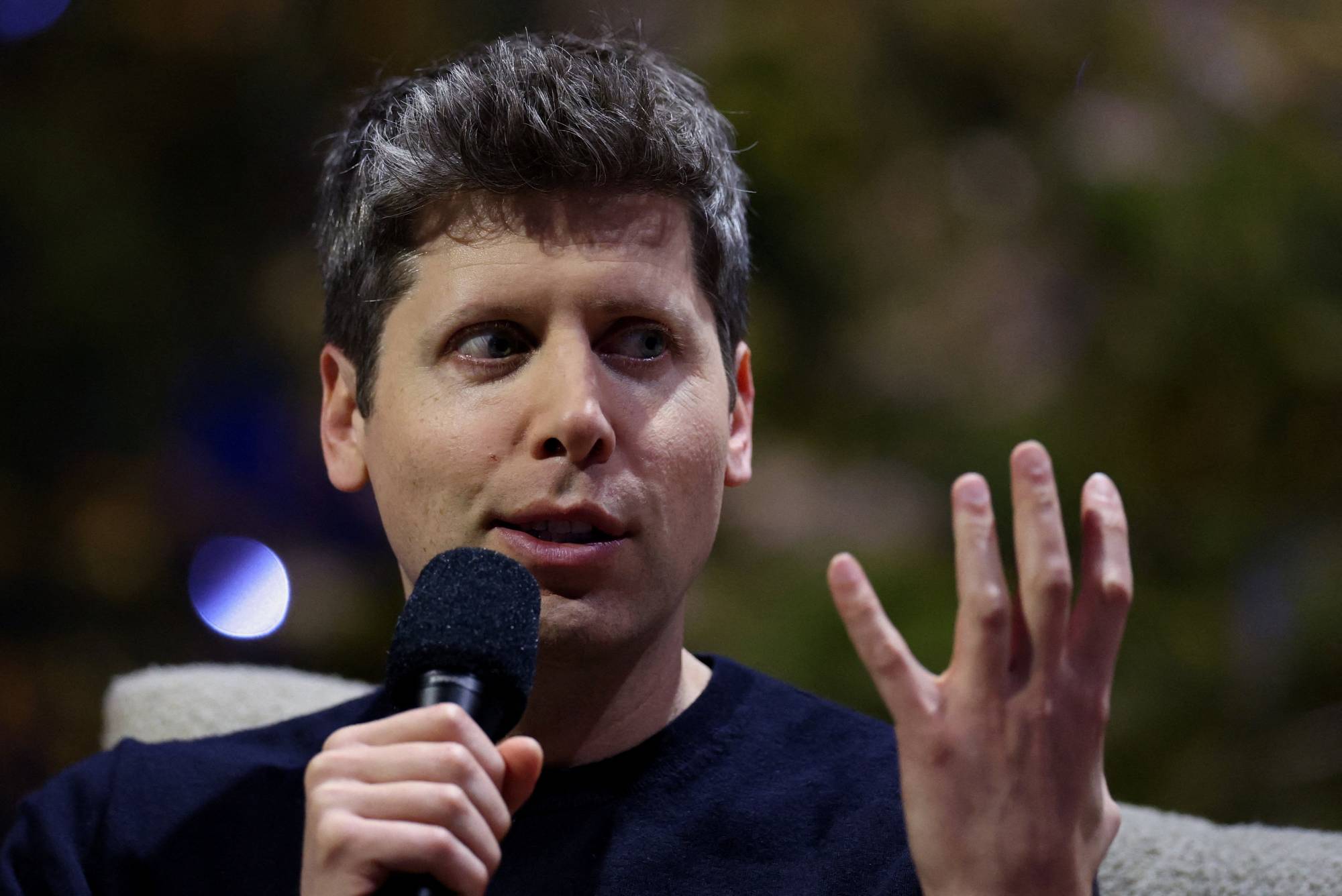
OpenAI CEO Sam Altman speaks at Dreamforce 2026 summit in San Francisco, California, US, September 15, 2026. (Reuters)

The idea of embedding external evaluators inside companies has been mostly well-received by the industry, but some critics questioned how independent the assessors could be and how the evaluation standards would be drawn up. The result could be even more concentration of power, Aidan Gomez, co-founder and CEO of the Canadian AI lab Cohere, wrote in response to Amodei's essay.

“A handful of the most powerful labs based in one country would agree on shared standards and the limits to how fast the technology should advance,” Gomez said.

He also pushed back against Amodei’s idea to have the US government give frontier labs waivers to bypass antitrust restrictions.

“If this is the most consequential technology in human history, then the rules for it cannot be written by a small group of commercially aligned companies behind an antitrust waiver," Gomez said.

Elham Tabassi, the director of the AI and Emerging Technology Initiative and senior fellow at the Brookings Institution, said until the measures companies are committing to are solidified and made public, having independent auditors would be a “voluntarily-provided, company-controlled” move.

Tabassi said it is crucial AI companies continue to invest in developing “scientifically valid” ways of testing and measuring their models as they aim for increased safety. Without this, regulation won't hold as much power, she said.

Trump resistance, pressure to beat China stand in the way

The Trump administration has long favored a light-touch approach to the AI industry in hopes that innovation would flourish and that AI development in the US would surpass China.

The competition between American and Chinese AI companies has been likened to an arms race, which experts said is not conducive to collaboration. That creates “conditions where now we have this existential adversary,” Reese said.

Still, some industry leaders remain “cautiously hopeful" about AI development moving in a more safety-minded direction, said Zahra Timsah, the co-founder and CEO of governance platform i-GENTIC AI.

“Within days, you have CEOs that are competing — all of them, all of a sudden, found common ground. You have senators from both parties that started to advance different forms of oversight," Timsah said.

“It’s receiving attention, but attention is not the same as implementation. Will it really work? I don’t know.”


Under Fire over AI, Effective Altruism Wants to Tell Its Own Story

Anthropic chief executive Dario Amodei is considered a key figure in effective altruism’s early days, although he now denies any link. ANDREJ IVANOV / AFP
TT

Under Fire over AI, Effective Altruism Wants to Tell Its Own Story

Anthropic chief executive Dario Amodei is considered a key figure in effective altruism’s early days, although he now denies any link. ANDREJ IVANOV / AFP

The effective altruism movement, which has close ties to the AI community and the companies leading the artificial intelligence boom, has drawn mainstream attention and accusations of cult-like behavior and alarmism.

The hard-to-define movement is still growing, and wants to better explain its values amid bitter criticism from the Trump administration and some powerful voices in Silicon Valley.

Its founding principle is to give money or time to major causes as effectively as possible, an intentionally dispassionate approach has at times been called out of touch, said AFP.

The New York Post called it a "wacky cult," the conservative Daily Caller dubbed it "The AI Doomsday Cartel," and a White House memo accused it of preferring the saving of "shrimp over families."

Once little known outside the tech world and some academic and political circles, effective altruism (EA) has been in the spotlight in recent weeks after a series of warnings about AI risks.

Those warnings were linked to EA. David Sacks, a venture capitalist and adviser to President Donald Trump, argued that organizations tied to EA are part of a "Doomer Industrial Complex" pushing for tougher AI regulation.

- 'Strange' ideas -

EA is deeply rooted in Silicon Valley and counts controlling AI's dangers among its priorities.

Anthropic chief executive Dario Amodei is considered a key figure in EA's early days, although he now distances himself from the movement.

Anthropic president Daniela Amodei, Dario's sister, is married to Holden Karnofsky, an Anthropic employee and a leading EA proponent.

The movement has also influenced researchers and staff at other AI companies, including ChatGPT-maker OpenAI, particularly those working on AI safety.

The movement, which took shape about 15 years ago, is used to criticism.

Wealthy EA donors have often been accused of self-importance and of believing they alone know how best to give.

"Our ideas are just strange enough that people genuinely misinterpret them sometimes, and we can do a better job explaining how effective altruism approaches hard questions and tradeoffs," said Zachary Robinson, head of the Centre for Effective Altruism.

Robinson, whose organization supports the movement without directing it, sees the scrutiny since the summer as an opportunity to open up rather than retreat, because "people are curious to learn about us now."

After growing steadily until 2022, EA was badly damaged by the collapse of cryptocurrency platform FTX and its founder Sam Bankman-Fried, once the face of EA and later convicted of fraud.

After several difficult years, "We're on an up right now," Robinson said, pointing to attendance at the EA Global conference in New York in mid-October.

Like many at EA Global, Shanil Wijesinghe who works at a Canadian non-profit rejected the image of EA as monolithic. "It is a values-based movement and not an identity-based movement," he said.

"We're all trying to do the most good, with the resources we have," he said. Those values "can be interpreted differently, and I think we have to embrace those differences."

- No leader -

EA has no leader or spokesperson. Sjir Hoeijmakers, head of the charity platform Giving What We Can, said that is a good thing, even if it means "sometimes the story doesn't get told."

Still, "effective altruism is now a movement large enough that it's actually really influencing the world, and that's getting noticed," he said.

"I think the work that they're doing has been quite valuable," said Nadav Brandes, a genetics researcher also at EA Global, referring to AI safety.

"Without those pioneers... nobody would still today take this issue very seriously," he added.

Brandes said he was initially skeptical when AI became a major EA cause, joining climate change and animal welfare.

"It was even a little bit off-putting to me," he recalled. "I was totally wrong about it."

Robinson stressed, however, that EA is about more than AI.

"The cause that gets the most emphasis right now is AI safety, but I think it would be false to say EA is AI safety," he said.

"If you look at the money side of things, actually, it's been the case for many years that global health and development gets much more money than AI," he said.


Tech Firms Claw Back Some Losses after Midterms Rout, Eyes on Nvidia

Nvidia said it was launching an investigation into whether boss Jensen Huang had been targeted in a foreign espionage plot. Brendan SMIALOWSKI / AFP/File
TT

Tech Firms Claw Back Some Losses after Midterms Rout, Eyes on Nvidia

Nvidia said it was launching an investigation into whether boss Jensen Huang had been targeted in a foreign espionage plot. Brendan SMIALOWSKI / AFP/File

Tech firms rose Monday to claw back some of last week's painful losses fueled by AI regulation worries, though traders were keeping a wary eye on a probe into Nvidia boss Jensen Huang amid claims of an affair with a Chinese spy.

Chipmakers and other companies linked to the artificial intelligence boom took a hammering in the days after Tuesday's US midterms saw Democrats sweep both houses of Congress in a rebuke to Donald Trump and his Republican party.

The results suggested voters were angry at the president's Iran war and tariffs, which have sent prices soaring, as well as a sharp kickback against the huge data center buildout that has taken place across the country in recent years.

That has led to speculation the new Congress will seek to wind in tech firms' construction drive, which could put thousands of jobs at risk.

The uncertainty comes with traders already nervous about when the hundreds of billions of dollars pumped into the sector would actually see a profit.

After taking a lashing on Thursday, Wall Street enjoyed a little stability at the end of last week, and Asia -- which had suffered a hammering itself on Friday -- largely followed suit to start this week.

Tokyo, Seoul and Taipei -- which are heavily weighted with AI-linked tech giants -- led the advances.

The Japanese Nikkei 225 piled on more than three percent thanks to rallies in Kioxia, Tokyo Electron and Advantest, while SK hynix and Samsung piled on around three percent to push the South Korean Kospi sharply higher.

Taiwan's TSMC rocketed nearly six percent to drag the Taiex five percent higher.

There were also healthy gains in Hong Kong and Shanghai, though Sydney, Wellington and Manila edged down.

"Investors will be watching carefully this week to get a sense as to whether these gains are just short-covering, bargain hunting or the beginning of something more sustainable in nature," said Sally Auld at National Australia Bank.

"Fears around AI regulation, the outlook for (capital expenditure) and free cash flow have been the driver of risk reduction in recent weeks and these issues are not likely to be resolved with any conviction in the near term.

"Nonetheless, the valuation of many tech stocks now looks less expensive."

- Nvidia probe -

However, a little more uncertainty was injected into markets with news that Nvidia's board was launching an investigation into whether Huang had been targeted in a foreign espionage plot following his admission that he was unfaithful to his wife.

The New York Times reported last month that US intelligence officials concluded a Chinese executive linked to a Singapore-based data center company called Megaspeed had been funneling information to Beijing.

The executive, Alice Huang -- also known as Huang Le, and no relation to 63-year-old Taiwanese-born Jensen -- developed a close relationship with the Nvidia boss, the Times said.

Nvidia is a global leader in producing chips used to train and run AI models and one of the world's most valuable companies, and last year became the first to reach a market capitalization of $5 trillion.

Jensen Huang is a huge figure in the AI revolution and a close informal adviser to Trump, and the Times said the Nvidia boss's extra-marital relationship could have revealed insights into Trump's thinking around AI.

Technology analyst Dan Ives, at investment bank Yorkville Ives, said the crisis will at the very least spark multiple congressional inquiries and "create an overhang on the stock for a myriad of reasons".

"This will add risk to the stock as he is so important to the Nvidia story and strategy globally," Ives added. "This will also increase major scrutiny regarding selling chips to China, which remains a key battleground issue in DC."

Investors will be keeping tabs this week on the release of fresh US inflation data, after figures Friday showed the economy created far more jobs than expected in October.

The figures will key for the Federal Reserve in determining whether or not to hike interest rates when it meets next in December, with markets saying there is an 80 percent chance of a lift.


Pakistan-Built Robots Serve Taste of Future to Karachi Diners

This photograph taken on October 2, 2026 shows Robia (R) and Jojo (2R), humanoid robot waitresses serving customers at the Sicilian restaurant in Karachi. (AFP)
TT

Pakistan-Built Robots Serve Taste of Future to Karachi Diners

This photograph taken on October 2, 2026 shows Robia (R) and Jojo (2R), humanoid robot waitresses serving customers at the Sicilian restaurant in Karachi. (AFP)

Wheeling its way between dining booths at a neon-lit restaurant in Pakistan's Karachi megacity, a robot waitress drops off a fresh pizza to an awaiting family.

While global buzz is growing around agile humanoids made in the United States, China and elsewhere, robotic staff are a rare sight in the South Asian country.

"Welcome to Sicilian. My name is Robia," the waitress says in an electronic voice, looking down at diners through blinking red LED eyes.

Robia and her colleague Jojo are the DIY creations of Pakistani engineer Syed Osama Aziz, who is bringing a sci-fi reboot to Karachi's storied dining scene.

They have spherical white heads and dark visors, similar to a motorcycle helmet, and sport black shawls around their neck in the style of a dupatta worn by women in the region.

Aziz, who also established The Sicilian restaurant, developed the machines using mostly locally manufactured parts, designing their circuit boards and programming them in his own lab.

"The equipment, the things needed to make robots, are not so easily available here, so we had to arrange them," he told AFP.

The duo were developed through his robotics company, Cobot, with help from friends and some electronic components imported from abroad.

In China and other East Asian countries especially, robots are an increasingly common sight, shuttling food to customers in chain restaurants and taking on other jobs from cleaning to greeting hotel guests.

But they remain a novelty in Pakistan, where Aziz's home-grown creations are attracting curious diners.

When they arrive at a table, the customers must either take the food off their serving tray themselves or wait for a human member of staff to assist them.

- Excited customers -

Aziz, whose workshop manufacturing the robots is located in Multan in Pakistan's central Punjab province, hopes to make his creations more sophisticated in the future.

"Our plans are to add camera-based processing and image-processing features," he said.

"That means the robot will also recognize you by looking at you, and it will remember what you ordered last time, and accordingly it will be able to give you better suggestions."

For now, the robots are proving a hit with families, who flock to the restaurant to watch the machines in action.

"The best thing about it is that it introduces itself," excited customer Ahmer Zameer told AFP, explaining the robot also "tells you what things you can order".

Children reach out to touch the robots while their parents snap photographs and selfies.

Young customer Sonia Dilosker said she was impressed by the androids' appearance and preferred their approach to serving customers, "because it is a machine and without any emotions".

Restaurant staff say the novelty has brought a surge in customers -- some travelling from across the sprawling port city to meet the robots.

"Our business has grown. People are coming from far away for this. They have seen a robot for the first time here," staff member Hellen told AFP.

"People are excited to see this."