


Al-Alimi Orders Field Investigation to Document Houthi Violations

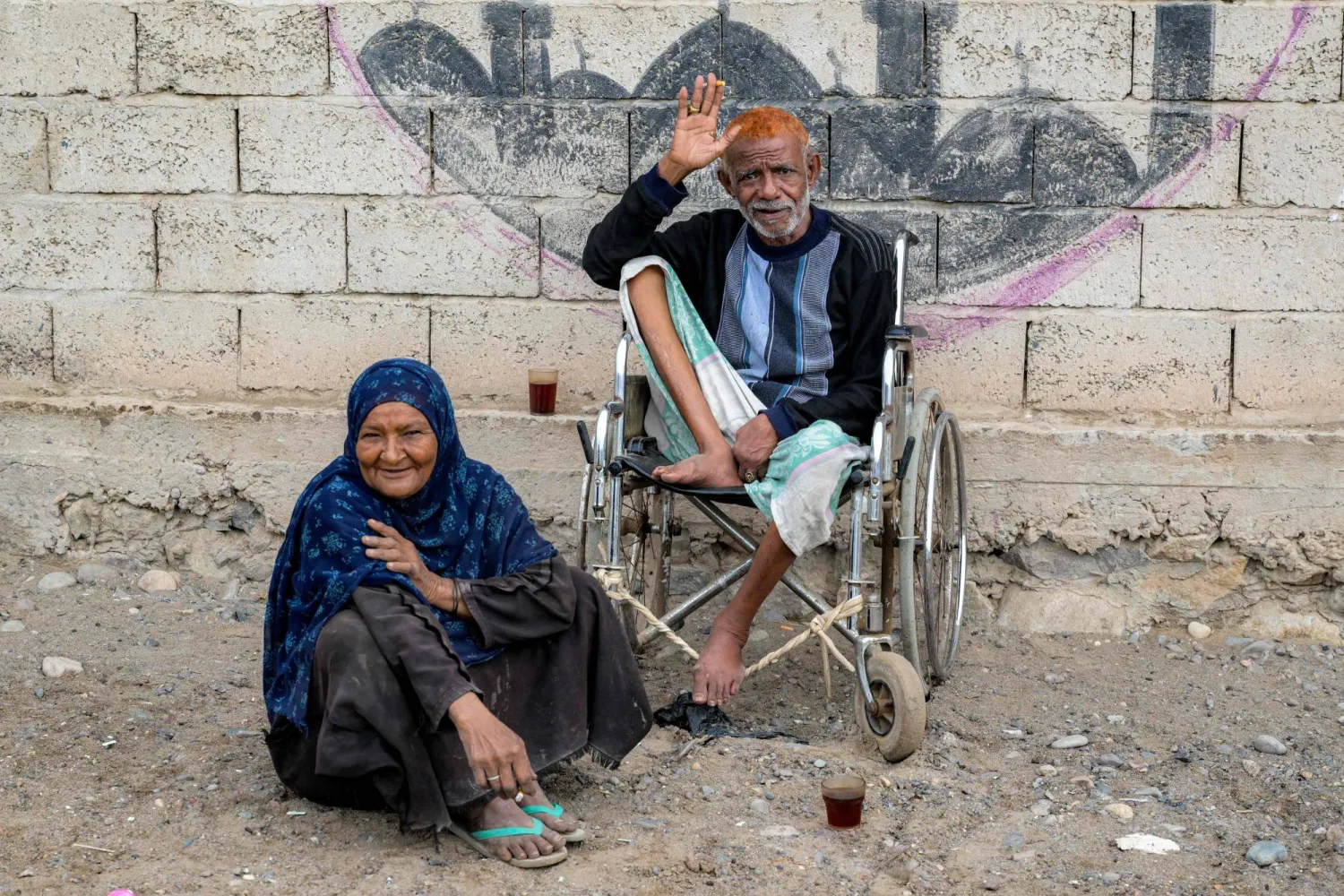
An elderly man sits on a wheelchair next to a woman at a temporary shelter for internally displaced people (IDPs) at the Shawkani school, north of Aden in southern Yemen, on September 15, 2026. (Photo by AFP) /
TT

Al-Alimi Orders Field Investigation to Document Houthi Violations

An elderly man sits on a wheelchair next to a woman at a temporary shelter for internally displaced people (IDPs) at the Shawkani school, north of Aden in southern Yemen, on September 15, 2026. (Photo by AFP) /

Yemeni Presidential Leadership Council Chairman Rashad Al-Alimi directed the National Commission to Investigate Alleged Human Rights Violations to intensify field monitoring and investigations in Taiz, Hodeidah, Marib, and areas affected by Houthi attacks, as a Yemeni rights network documented the deaths and injuries of dozens of civilians and hundreds of violations in Taiz Governorate in less than two weeks.

During a meeting with the chairman and members of the National Commission to Investigate Alleged Human Rights Violations, Al-Alimi said that the developments witnessed in the country in recent days, particularly in Taiz, Hodeidah, and the western coast, had been accompanied by widespread displacement and attacks on civilian facilities and objects protected under international law.

He noted that the affected sites included warehouses belonging to the United Nations and international organizations, as well as the King Salman Humanitarian Aid and Relief Centre.

Al-Alimi called on the commission, within the framework of its mandate and independence, to intensify monitoring and investigations into incidents related to the recent events, including the killing and starvation of civilians, displacement, forced displacement, attacks on homes and civilian, medical, and educational facilities, damage to displacement camps, the planting of landmines, and any other violations of international humanitarian law or human rights law.

661 Violations

In a separate report, the Yemeni Network for Rights and Freedoms said it had documented 661 crimes and violations that it said were committed by the Houthi group against civilians in Taiz Governorate between September 3 and 15.

According to the report, the incidents included killings, injuries, field executions, shelling of civilian objects, abductions, arrests, raids on homes, destruction of property, and attacks on vital facilities and infrastructure.

The network reported that 51 civilians were killed and 62 others injured, most of them children and women, as a result of sniper fire, artillery and mortar shelling, drones, and ballistic missiles.

It also said the Houthis carried out the field execution of nine military personnel in front of their children in the districts of Al-Wazi'iyah, Maqbanah, and Al-Kadaha.

According to the report, the violations included 167 cases of abduction and arrest, most of them in districts under Houthi control, as well as raids on 213 homes in Al-Wazi'iyah, Maqbanah, and Al-Kadaha.

The network also documented attacks on five mosques, six health facilities, 16 electricity stations and generators, and nine communications networks and stations, as well as two bridges and two main roads, including the Hija Al-Abed road linking Aden and Taiz, in addition to 34 civilian means of transportation.

Displacement and Vulnerable Groups

The rights network said the figures reflected the widening scope of violations over a short period, noting that attacks on homes, health facilities, mosques, communications and electricity networks, roads, and means of transportation affect not only individuals but also the basic foundations of civilian life, making access to food, water, healthcare, and transportation more difficult.

It added that the latest clashes had led to a deterioration in the humanitarian situation in Taiz, with thousands of families displaced from various areas and severe shortages of food, water, and medicines, along with a decline in basic services, particularly electricity and water.

In another development, the network's field monitoring team said it had documented widespread recruitment operations that it said affected large numbers of African refugees and migrants, as well as Yemeni children.

The network said some of them were lured or forced to join the Houthi ranks and sent to the front lines in Taiz Governorate. It considered this a violation of international rules concerning the protection of children and civilians and said it exposed the most vulnerable groups to direct risks.

The Yemeni Network for Rights and Freedoms warned of the continued deterioration of the humanitarian situation in Taiz, calling on the international community and human rights organizations to document violations, protect civilians, and pressure for an end to attacks on civilians and civilian objects, while ensuring that aid and essential services reach those affected and displaced.

Operation ‘Dawn of Yemen’ Clears Bab al-Mandab and its Islands of Remaining Houthi Forces

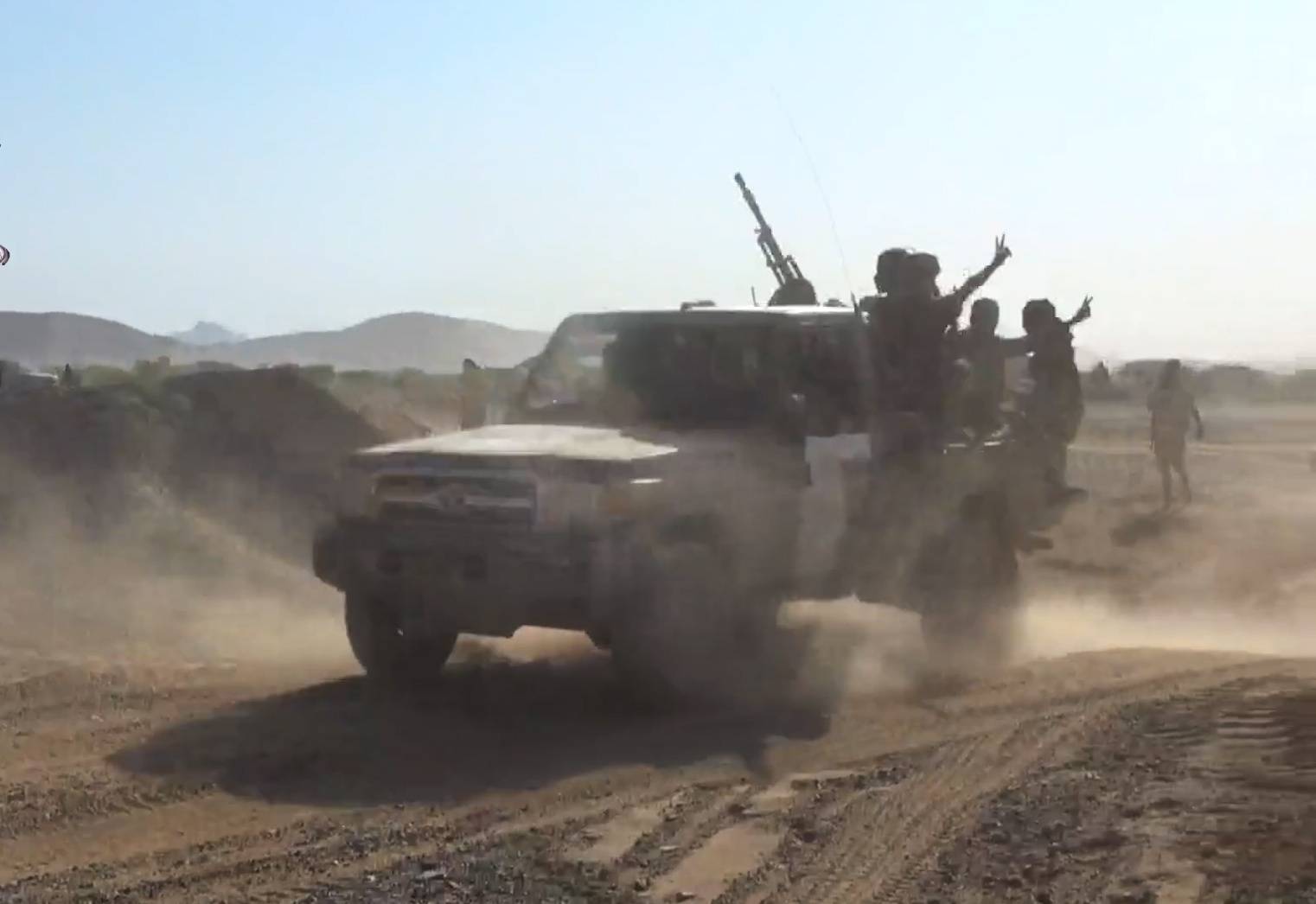
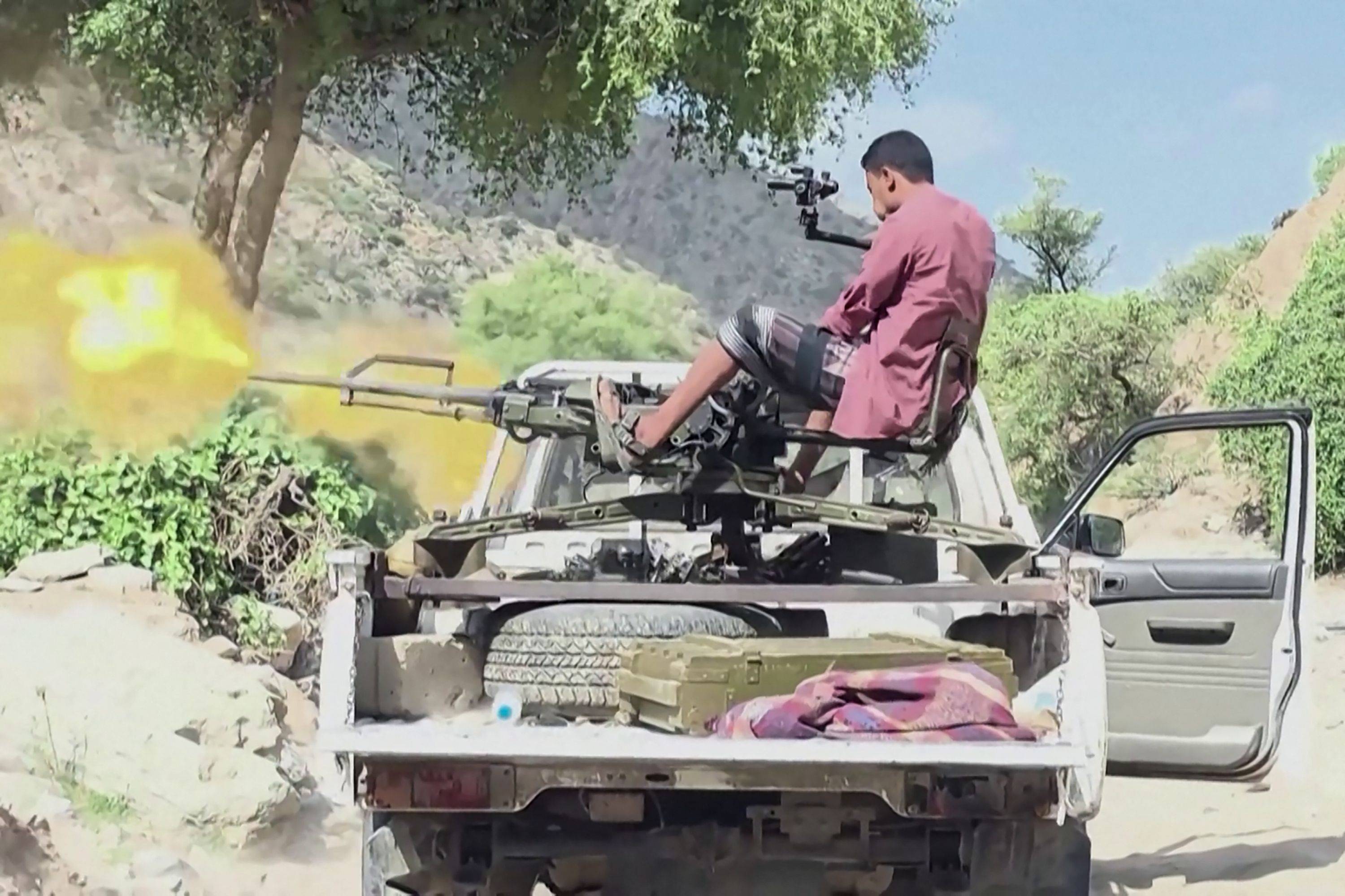
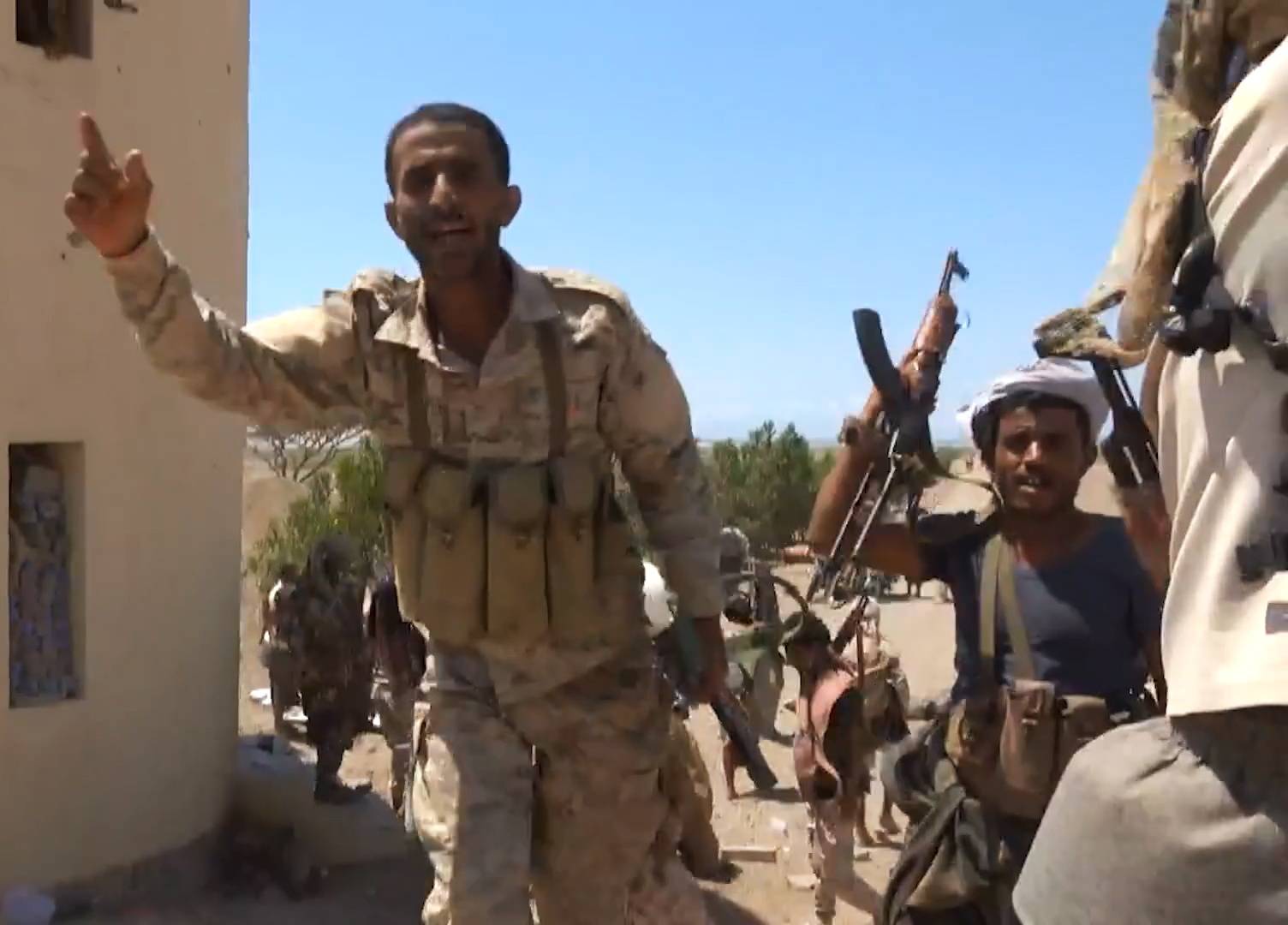
Members of Yemeni government forces during confrontations with the Houthis (AP)
TT

Operation ‘Dawn of Yemen’ Clears Bab al-Mandab and its Islands of Remaining Houthi Forces

Members of Yemeni government forces during confrontations with the Houthis (AP)

The military operation “Dawn of Yemen” entered its fifth day on Friday, as government forces completed the clearing of the Bab al-Mandab Strait and the strategic Mayyun Island, while consolidating their positions on the highlands overlooking the international shipping route.

The development strengthens government gains along the western coast, even as fighting continues in the southern and western countryside of Taiz, alongside an expanding aerial campaign targeting Houthi militia positions and movements across several parts of the country.

Military sources said that the Giants Brigades and Nation Shield Forces, backed by air support from the coalition supporting Yemen’s internationally-recognized government, had established full control over Bab al-Mandab, the Al-Ardi military camp, coast guard observation posts, Mayyun Island, and the mountain ranges surrounding the strait, including positions overlooking the vital maritime corridor.

Yemeni government forces advance in Al-Wazi'iyah and push to complete the cleansing of Bab al-Mandab (EPA)

According to the sources, government forces carried out a surprise maneuver that bypassed the Houthis’ frontline defenses and reached their newly established trenches and tunnels. The clashes reportedly resulted in dozens of Houthi fighters being killed, while others surrendered.

If the announced control is maintained, securing the strait and Mayyun Island would mark a significant turning point in operations along the western coast, given the area’s strategic location at the southern entrance to the Red Sea and its importance to international navigation.

The latest developments follow the government forces’ announcement that they had seized the Kahboub Heights, which overlook vast areas surrounding Bab al-Mandab.

A member of Yemeni government forces on the southern Taiz fronts (AFP)

Advance Toward Al-Wazi’iyah

After consolidating their new positions, Yemeni government forces continued operations on the Al-Wazi’iyah front west of Taiz, aiming to secure the district’s eastern highlands and tighten the encirclement of Houthi positions around Dhubab and Al-Omari Camp, paving the way for a broader advance toward Mokha, according to field reports.

The operations were accompanied by airstrikes targeting Houthi military sites and movements in Al-Wazi’iyah, Al-Shamayatayn, and Jabal Habashi, as well as positions in Sharjab, Al-Turbah, and Jabal Qaham, which overlooks the districts of Al-Maqatirah and Al-Ahkoum along the border between Taiz and Lahj.

Field sources reported that Houthi vehicles and reinforcements were targeted in the Al-Haql and Al-Qahaf areas of Jabal Habashi district. Meanwhile, the media center of the government’s Taiz Military Axis stated that one airstrike neutralized or wounded 23 Houthi fighters. Additional strikes hit positions in the Numan Mountains, Al-Saybara, Al-Harthah, and Jardad in Al-Shamayatayn district.

On the other hand, Houthi forces continue to pressure rural areas south and west of Taiz in an effort to retain their positions. Local sources reported that the group had taken control of Al-Mahsha, Al-Adaf, and Al-Armah in Jabal Habashi district on the western front and was advancing toward the Al-Shariq area. A schoolteacher was reportedly killed in Al-Mahsha.

Fighters from the Giants Brigades on the Bab al-Mandab front (EPA)

1,729 Military Strikes

In a sign of the widening scope of military operations, Colonel Majed Al-Nuzaili, spokesman for the Yemeni Armed Forces, announced on Thursday that 1,729 precision strikes had been carried out against Houthi military targets across various fronts as part of Operation Dawn of Yemen.

Al-Nuzaili said the operations resulted in the neutralization of 1,370 Houthi fighters and the destruction or disabling of 300 military vehicles and pieces of equipment, in addition to strikes against military positions, observation posts, command-and-control centers, weapons depots, supply lines, and reinforcements.

At the same time, airstrikes expanded into eight governorates: Taiz, Ibb, Al-Bayda, Abyan, Saada, Sanaa, Raymah, and Al-Hodeidah, according to local reports. Targets included sites in the Houthi-held capital Sanaa, a Houthi camp in Yarim in Ibb, positions in Al-Siyani district, sites in Bani Matar west of Sanaa, locations in Kismah district in Raymah governorate, and positions in the Jamil, Jarjarah, and Al-Nasreen mountain areas of Al-Bayda. Other strikes targeted Tharah Pass and locations in Al-Hodeidah and Saada.

In Lahj, government forces announced that they had repelled a Houthi attack targeting the areas of Al-Aghbarah, Al-Muhawalah, and Al-Mashamirah northwest of Al-Mudarabah district, and had regained positions on Jabal Saif with the support of tribal reinforcements. Meanwhile, clashes, reciprocal shelling, and drone operations continued on the fronts south of Marib and in Al-Jawf, while airstrikes targeted Mas Camp and positions in the Al-Labanat area.


Palestinians Set to Delay Legislative Elections Due to Worsening Conditions, Letter Says

Palestinian vice president Hussein al-Sheikh attends a meeting with ambassadors in Ramallah, in the occupied West Bank, on February 10, 2026. ZAIN JAAFAR/Pool via REUTERS
TT

Palestinians Set to Delay Legislative Elections Due to Worsening Conditions, Letter Says

Palestinian vice president Hussein al-Sheikh attends a meeting with ambassadors in Ramallah, in the occupied West Bank, on February 10, 2026. ZAIN JAAFAR/Pool via REUTERS

Palestinian Vice President Hussein Al Sheikh has informed France that a Palestinian legislative election planned for November 28 will be postponed for several months because of worsening ‌conditions throughout the ‌Palestinian territories, ‌according ⁠to a letter ⁠seen by Reuters.

"The assessment concluded that the anticipated political, security and economic conditions, on which ⁠the scheduling of ‌the legislative ‌elections for 28 ‌November 2026 was ‌based, have not materialized," said according to the letter, which was ‌addressed to French Foreign Minister Jean-Noel Barrot ⁠and ⁠dated October 8.

It added that "holding them under the current circumstances faces fundamental obstacles affecting their inclusiveness, freedom of participation, and the integrity of the electoral process."


Gaza Rescuers Say Israeli Fire Kills Seven

Palestinians walk along a street surrounded by buildings destroyed in Israeli military strikes during the Israel-Hamas war in Gaza City, Tuesday, Oct. 6, 2026. (AP Photo/Jehad Alshrafi)
TT

Gaza Rescuers Say Israeli Fire Kills Seven

Palestinians walk along a street surrounded by buildings destroyed in Israeli military strikes during the Israel-Hamas war in Gaza City, Tuesday, Oct. 6, 2026. (AP Photo/Jehad Alshrafi)

Gaza's civil defense rescue service said Thursday that seven people were killed in separate Israeli strikes through the day, while the Israeli army said three of the victims were "military operatives".

Six of the seven were killed in various parts of Gaza City.

Two people were killed in a drone strike on a car, while one was killed in a drone attack on a tent in an encampment for displaced people, the rescue service and al-Shifa hospital said.

The Israeli army told AFP that the three targeted were "military operatives in terrorist organizations."

"Two people, a woman and a child, were killed and others were wounded when Israeli aircraft bombed a residential building" in Gaza City, the civil defense said.

A woman was also killed by artillery shelling in Gaza City, health officials reported.

The civil defense reported that "one person was killed by Israeli fire southeast of Deir al-Balah in central Gaza."

Contacted by AFP, the Israeli army said it was checking the reports about the other four victims.

The war began after Hamas launched an unprecedented attack against Israel on October 7, 2023.

Hamas on Thursday denied Israeli claims that it uses Gaza hospitals for military activities, after the army said Wednesday that militants "advanced attacks from within (Kamal Adwan) hospital" in northern Gaza.

Hamas in a statement called the accusations "criminal incitement".

Israel's military offensive against the group has displaced nearly all the population of Gaza and killed more than 74,200 people, according to Gaza's health ministry, which is under Hamas authority and whose figures are considered reliable by the United Nations. They do not distinguish between militants and civilians.

Since a ceasefire was declared in October last year, Israeli forces have killed at least 1,450 people in Gaza, according to the ministry.

The Israeli military has declared the deaths of five soldiers and one civilian contractor in the same period.
