Baby Orangutans in India Expose 'Frightening' Scale of Trafficking

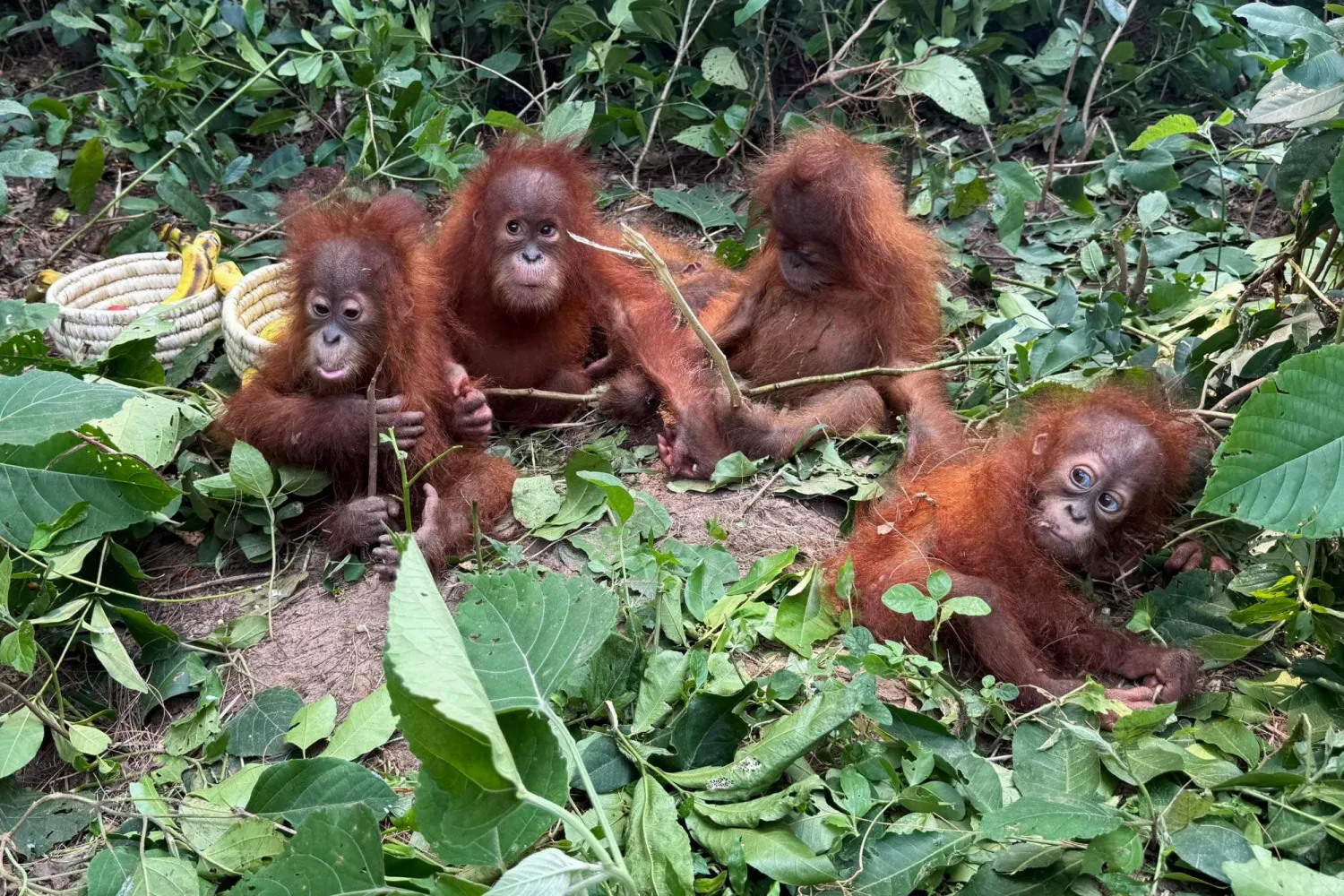
This handout photograph taken on September 8, 2026 and released by the Odisha Forest Department shows orangutans sitting next to bananas upon their rescue by officials at the Ranakatha Protected Reserved Forest in Balasore district, in India's Odisha state. (Photo by Handout / Odisha Forest Department / AFP)
TT

Baby Orangutans in India Expose 'Frightening' Scale of Trafficking

This handout photograph taken on September 8, 2026 and released by the Odisha Forest Department shows orangutans sitting next to bananas upon their rescue by officials at the Ranakatha Protected Reserved Forest in Balasore district, in India's Odisha state. (Photo by Handout / Odisha Forest Department / AFP)

Five baby orangutans abandoned in an Indian forest have exposed a "massive" exotic wildlife trade, with traffickers smuggling increasingly rare species into the country, experts say.

They warn of a growing multi-million-dollar trade in endangered animals, including apes smuggled through war-torn Myanmar to feed demand among wealthy Indians seeking exotic status symbols to flaunt on social media.

"There have been several instances of exotic wild animals being found or seized across the country, said Sumanth Bindumadhav of Humane World for Animals India. "The scale is massive."

Critically endangered orangutans are native only to Indonesia's Sumatra island and Borneo, which it shares with Malaysia and Brunei.

Yet the five tiny orangutans were found by rangers in Balasore, in India's eastern Odisha state.
Aged around one-and-a-half years old, they are being cared for at a zoo. Indonesia has requested their return.

Bindumadhav's group, in a June 2026 report, detailed what it called a "rising trade in exotic wildlife", demonstrated by a "steep increase in seizures" that reflected a "surge in illegal trade".

The report estimated India's exotic-pet market at $42.6 million in 2024.

Orangutans and gibbons, small apes, were being "increasingly trafficked into India" from Southeast Asia's rainforests, it added.

A senior official at India's Wildlife Crime Control Bureau said "thousands of social media influencers" were promoting exotic species as pets online, fueling demand among followers.

"It is a huge market," said the official, who requested anonymity because they were not authorized to speak to the media. "Rich people keep them in their homes."

Under a government voluntary disclosure scheme, more than 40,000 people had registered exotic animals by February 2021, government data shows.

The figure is likely only a fraction of those in private hands, analysts say.

"This is a figure from only those who registered themselves, so the true volume of it is potentially much larger and remains unknown," said Bindumadhav.

"The true scale of it is actually quite frightening."

Former India head of global anti-wildlife-trade group TRAFFIC Shekhar Kumar Niraj said the surge in trafficking was also linked to a "rising number" of animals held in private hands.

"Private zoos have violated laws at a very alarming scale across the country," said Niraj.

"Primates are very popular in zoos because they are very intelligent, like to interact with humans, the kind of thing zoos want."

Indian federal authorities did not respond to AFP's requests for comment.
The World Wide Fund for Nature-India (WWF-India) documented 56 seizures involving about 4,000 exotic animals in 2022 alone.

In October 2025, Mumbai customs officers arrested a passenger carrying two endangered gibbons stuffed inside a checked bag.

Other seizures in Mumbai last year included lizards, tree-climbing possums and dozens of venomous vipers.

In 2024, forest officials recovered a trafficked orangutan from a flat in Maharashtra state.
But such seizures represent only a fraction of the trade, experts warn.

"The scale of it is much, much bigger than what we see actually based on the seizure data," said Jimmy Borah of the environmental advocacy group Aaranyak.

Experts have previously raised concerns over Vantara, a vast wildlife rescue and conservation center in Gujarat founded by Anant Ambani, son of billionaire Mukesh Ambani, over its intake of endangered species.

Vantara has consistently denied any wrongdoing.

In August, it said it was taking "bold steps to reset its operations", had withdrawn all applications to import live animals, and named former head of the global wildlife watchdog CITES, John Scanlon, to chair its governing council.

Exactly how the orangutans were brought to Odisha -- more than 2,000 kilometers (1,200 miles) by sea, and 7,000 kilometers by land (4,500 miles) -- is not clear. Police have launched a criminal investigation.

Experts say that in addition to airports and formal cargo routes, the land border between Myanmar and India's northeast is a key trafficking route.

"The northeast is important for seizures of live exotic animals, linked to cross-border movement from Southeast Asia," AFP quoted Dipankar Ghose of WWF-India as saying.

Authorities have seized other exotic primates in the region in recent years, smuggled on jungle routes across the frontier.

"We are talking about miles and miles of a very porous border," said Borah of Aaranyak.


Challenging Scientific Assumptions: Blood Remnants Found in 115-Million-Year-Old Dinosaur Bones

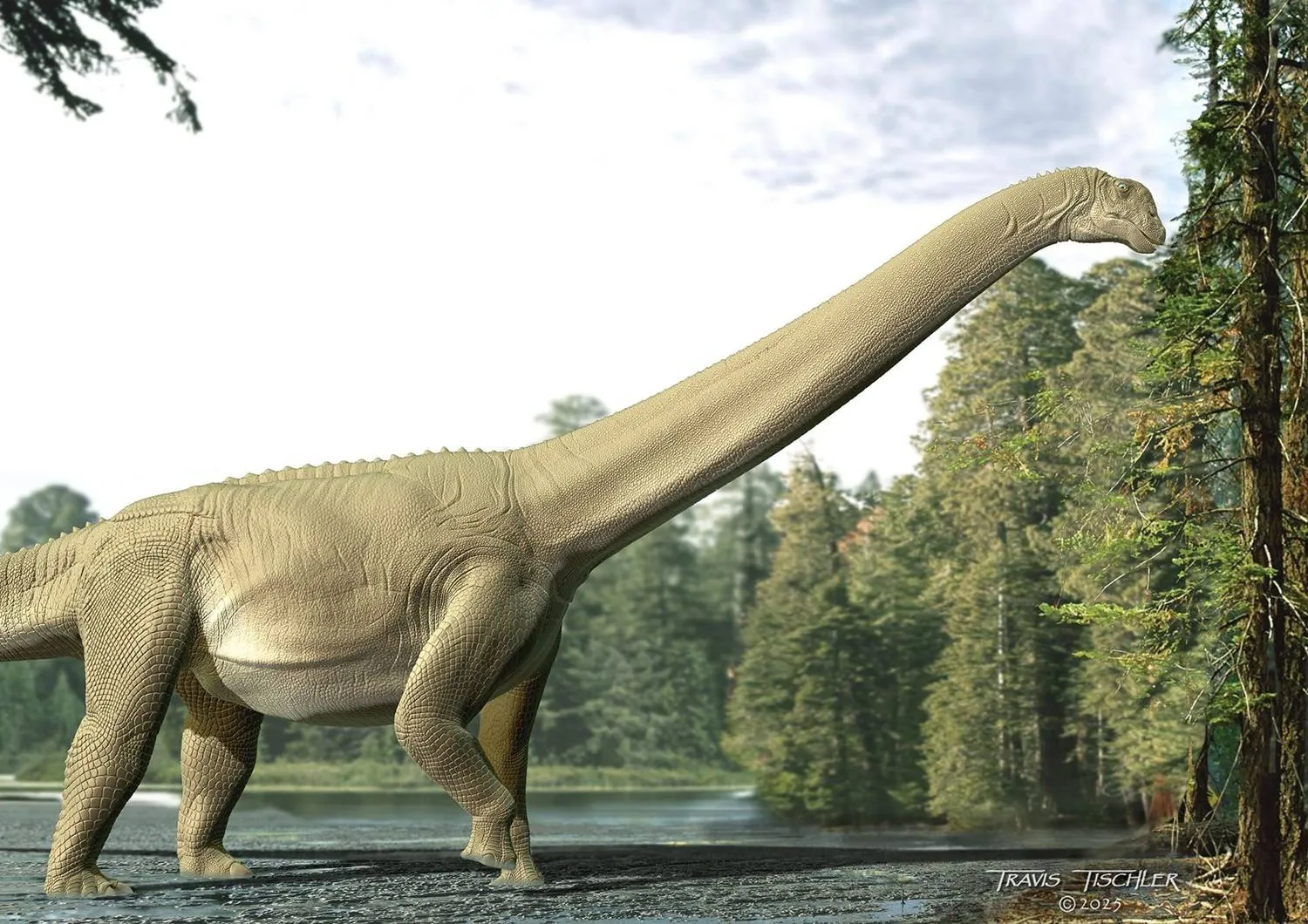
An artist's impression of a giant dinosaur (Curtin University, Australia)
TT

Challenging Scientific Assumptions: Blood Remnants Found in 115-Million-Year-Old Dinosaur Bones

An artist's impression of a giant dinosaur (Curtin University, Australia)

An international research team has discovered fossilized red blood cells, hemoglobin-derived biomolecules and amino acids from collagen protein inside the bones of a dinosaur that lived approximately 115 million years ago in Brazil. The unprecedented discovery opens new avenues for studying ancient life and challenges existing assumptions about how long fossils can preserve their biological components.

The researchers, led by Australia's Curtin University, said the remains were discovered inside the limb bones of a theropod dinosaur known as Aratasaurus museunacionali, whose fossils were found in northwestern Brazil. The findings were published Monday in the journal Proceedings of the National Academy of Sciences (PNAS).

Analyses revealed large numbers of preserved red blood cells within the bones' vascular canals. For the first time, researchers were able to establish the presence of hemoglobin-derived chemical compounds inside these cells by detecting heme, the component of hemoglobin responsible for binding and transporting oxygen.

The finding provides confirmed chemical evidence of fossilized blood remnants, unlike previous studies that identified structures resembling red blood cells in fossils but could not conclusively establish their chemical nature.

The discovery surprised researchers because the preservation of delicate biological components, such as red blood cells and hemoglobin molecules, over 115 million years challenges scientific assumptions about how long these materials can survive degradation.

The researchers described the identification of heme-derived molecules within red blood cells of such extraordinary age as a remarkable discovery and a significant milestone in paleontology.

They added that the findings not only expand the fossil record of blood remnants but also provide a direct molecular window into the physiological characteristics of extinct animals, helping scientists better understand their biology and the environments in which they lived.

The study explained that the red blood cells had been mineralized by hausmannite, a mineral that acted as a natural time capsule, helping stabilize cellular structures and biological components, including amino acids associated with collagen protein, and protecting them from degradation over millions of years.

Researchers believe this exceptional preservation resulted from the dinosaur's carcass being rapidly buried after death in a low-oxygen environment rich in microorganisms. These conditions may have helped preserve the biological components within the bones.

The researchers said the findings challenge long-standing scientific assumptions that biomolecules such as hemoglobin could not survive over extended geological timescales.

They also open new avenues for investigating the evolution of blood and metabolic processes, potentially offering insights into the activity levels of ancient animals.

According to the team, the study redefines the limits of molecular preservation across vast periods of time, even under harsh environmental conditions.

The findings may also have implications for astrobiology, potentially helping scientists develop methods to search for evidence of ancient life beyond Earth.


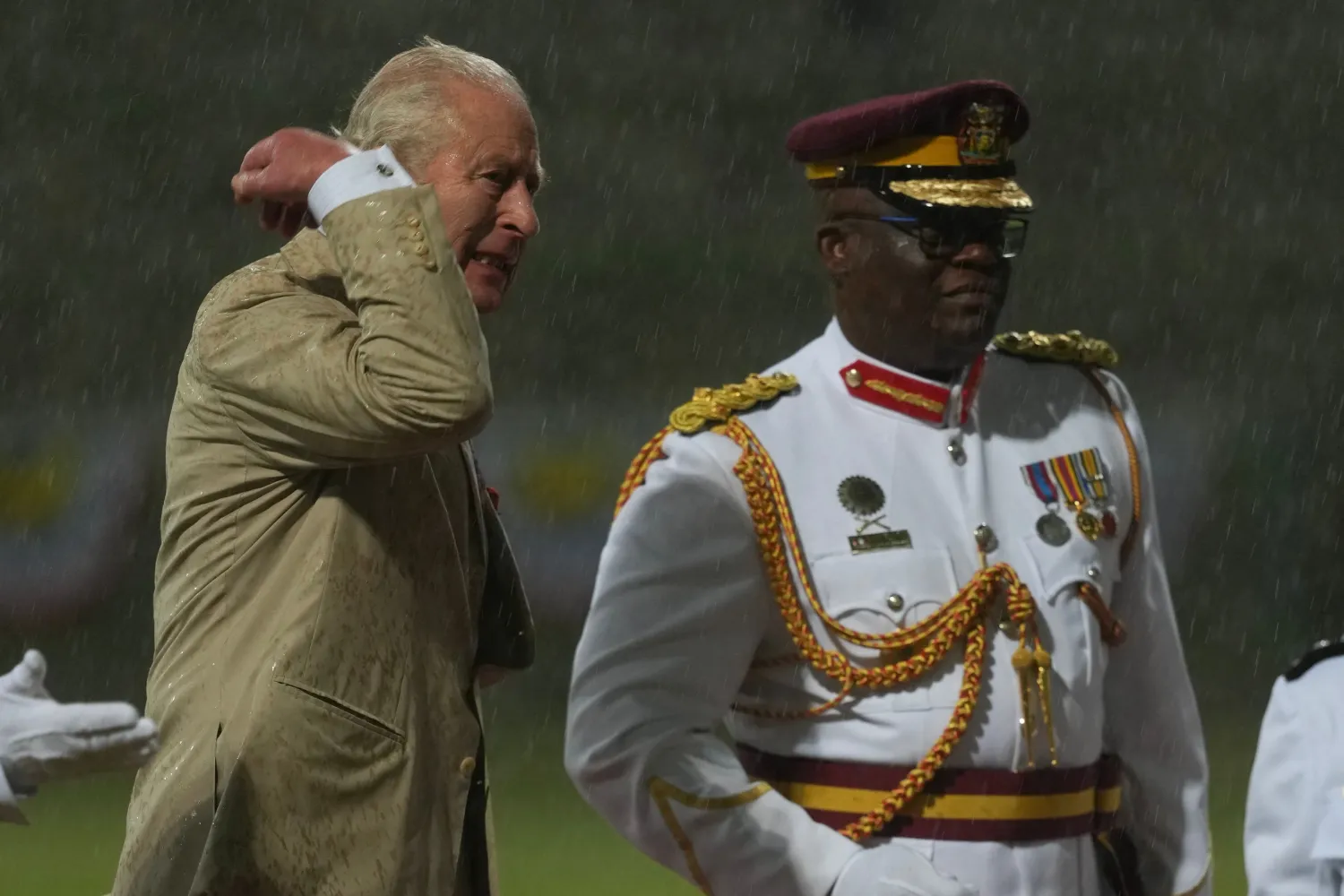
Charles Left without Umbrella in Rainstorm Fit for a King

Britain's King Charles III arrives alongside Chief of Defense Staff, Brigadier General Telbert Benjamin in the rain for a military parade marking Antigua and Barbuda's 45th Independence anniversary at the Sir Vivian Richards Stadium, Antigua and Barbuda, on November 1, 2026. (AFP)
TT

Charles Left without Umbrella in Rainstorm Fit for a King

Britain's King Charles III arrives alongside Chief of Defense Staff, Brigadier General Telbert Benjamin in the rain for a military parade marking Antigua and Barbuda's 45th Independence anniversary at the Sir Vivian Richards Stadium, Antigua and Barbuda, on November 1, 2026. (AFP)

King Charles flung up his hands in despair as he was caught in a tropical rainstorm in Antigua, while his wife Queen Camilla strolled off with the only available umbrella.

The couple's Caribbean tour has been dominated by the debate over Britain's role in the slave trade, but it was the sight of the soaked monarch which made headlines on Sunday.

As the rain hammered down on Charles, ‌77, he ‌was seen gesturing and turning round to ‌try ⁠to attract the ⁠attention of someone who might help, while Camilla was shielded from the downpour.

Locals taking part in the Antigua and Barbuda independence day parade did not flinch as they were lashed by the storm.

Charles was eventually given an umbrella and was seen joking about ⁠his experience with Prime Minister Gaston ‌Browne. "I think I'm about to ‌grow watercress on my suit," he said in a ‌video posted on the royal family's Instagram account.

It ‌is not the first time the frustration of the famously short-fused Charles has been captured in public.

Not long after he became king in 2022 in an incident which went ‌viral on social media, he reacted grumpily when a pen leaked ink onto ⁠his ⁠hand at an event in Northern Ireland.

"Oh God, I hate this," he cursed.

"I can't bear this bloody thing... every stinking time," he continued.

He has since made fun of himself, quipping at a subsequent event, "I'm hoping that my pen is going to work. It doesn't usually."

He is due to make a speech to Commonwealth leaders on Tuesday. Since becoming king, he has expressed sorrow for the suffering caused by slavery without crossing a line that Britain has long resisted: an apology.


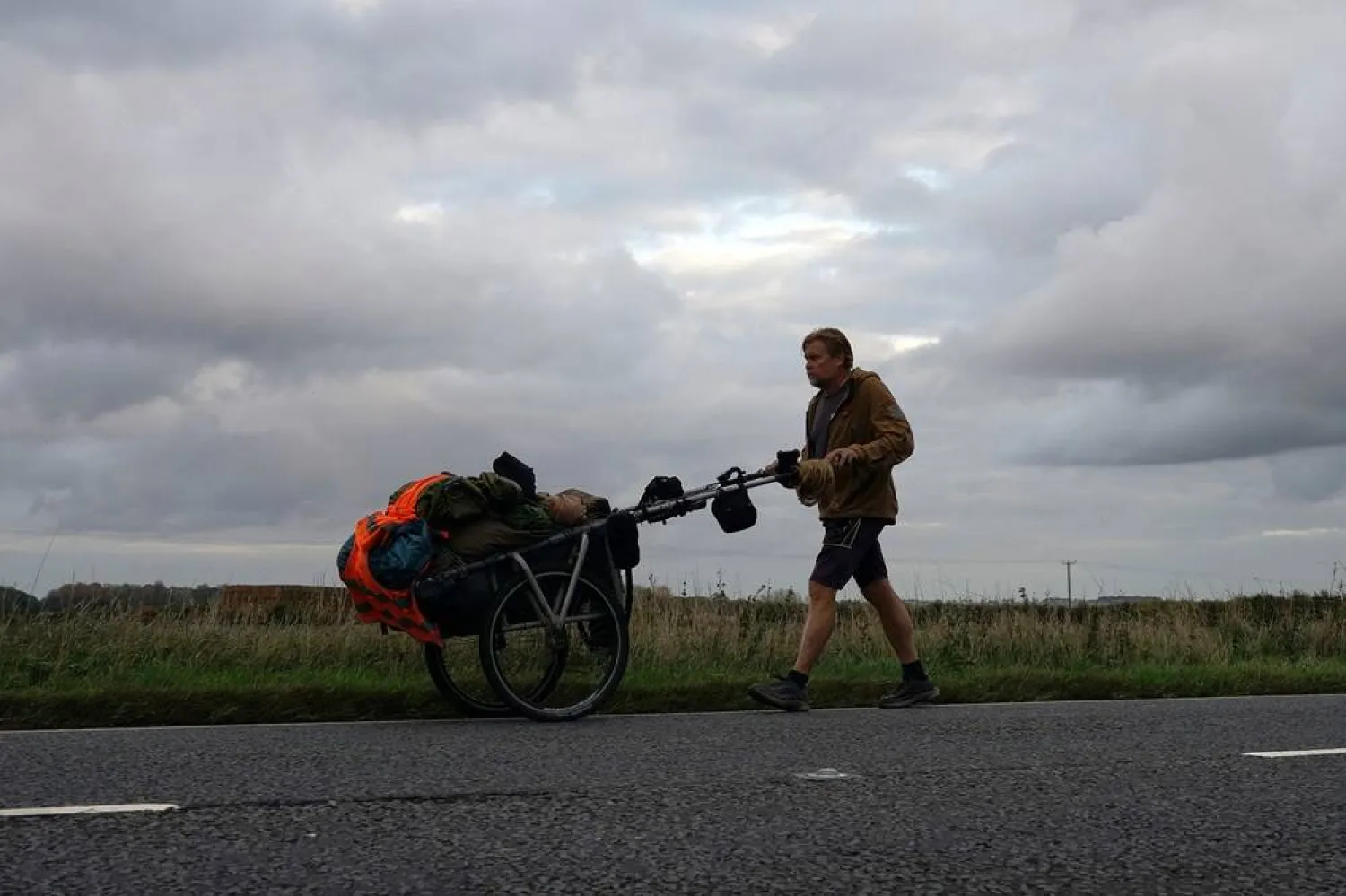
UK Adventurer Ends Epic 28-Year Journey Across Jungles, Mountains and a Frozen Sea

 British adventurer Karl Bushby walks near Market Rasen, Lincolnshire, England, Wednesday, Oct. 28, 2026, on the final stretch of his 28-year walk around the world to get back to his mother's home in Hull. (AP)
British adventurer Karl Bushby walks near Market Rasen, Lincolnshire, England, Wednesday, Oct. 28, 2026, on the final stretch of his 28-year walk around the world to get back to his mother's home in Hull. (AP)
TT

UK Adventurer Ends Epic 28-Year Journey Across Jungles, Mountains and a Frozen Sea

 British adventurer Karl Bushby walks near Market Rasen, Lincolnshire, England, Wednesday, Oct. 28, 2026, on the final stretch of his 28-year walk around the world to get back to his mother's home in Hull. (AP)
British adventurer Karl Bushby walks near Market Rasen, Lincolnshire, England, Wednesday, Oct. 28, 2026, on the final stretch of his 28-year walk around the world to get back to his mother's home in Hull. (AP)

After 28 years, British adventurer Karl Bushby on Monday ends a 50,000-kilometer (31,000-mile) trek home from Chile across four continents without using any transport.

Bushby, who set off on his odyssey from south America in 1998, had two golden rules for his journey -- he should avoid all forms of transport to advance and not return until he completed his challenge.

The route back to his home city of Hull in northeastern England has seen him walk the length of the Americas, across the Bering Strait from Alaska to Russia and then through parts of central Asia and Europe covering jungles, mountains, deserts and a frozen sea.

People on Sunday applauded him as he crossed the Humber Bridge near Hull in thick mist, ahead of his final push into the city center and then on to his mother's home.

The 57-year-old former paratrooper, who pushed his belongings with him on a metal-framed cart, told BBC radio he was "absolutely overwhelmed" by the reception.

He will be given a civic welcome Monday by the city's mayor and members of the public.

"So many people have followed Karl on his epic journey. We have all felt inspired by his spirit, tenacity and dogged determination," said Hull's mayor Maria Coward, adding the city took "pride in his incredible achievement".

He will then embark on the very final leg of his journey to north Hull to be reunited with his mother Angela, his 36-year-old son Adam and a 12-year-old granddaughter he has never met.

- 'UK soil' -

Bushby began his odyssey adventure when he was 29 after his marriage broke down and his wife returned to Northern Ireland with their son.

He paused the journey several times, including when Moscow refused him a visa. The 2008 financial crisis and then the Covid-19 pandemic proved to be other hold-ups.

At those times, he stepped away from the journey, living notably at a base in Mexico, then once the situation had been resolved, he would resume from the exact spot where he had left off.

He reached Britain early last month by swimming across the busy English Channel from northern France.

A small gathering of friends and family including his father greeted him on the beach near Dover in southern England.

"Feels good to have UK soil under my feet after all these years," he said afterwards in a statement, adding his journey "hadn't been easy, and that's part of the point -- proving I'm more capable than I give myself credit for".

"All of us can accomplish more than we will ever imagine," he said.

Legendary German filmmaker Werner Herzog and a film crew are accompanying Bushby on his homecoming.

Herzog is making a feature-length documentary about the journey entitled "Walk of Life".

The production company behind the film has been supporting Bushby's progress for the past 16 years, providing financial and logistical assistance.

In an interview with AFP from northern France in September, Bushby voiced some apprehension about returning to a more normal life back in Britain.

"I've got to try and get established in the grown-up world again," he said.