AI Doomsday Warnings Unlikely to Slow IPOs but Questions Linger

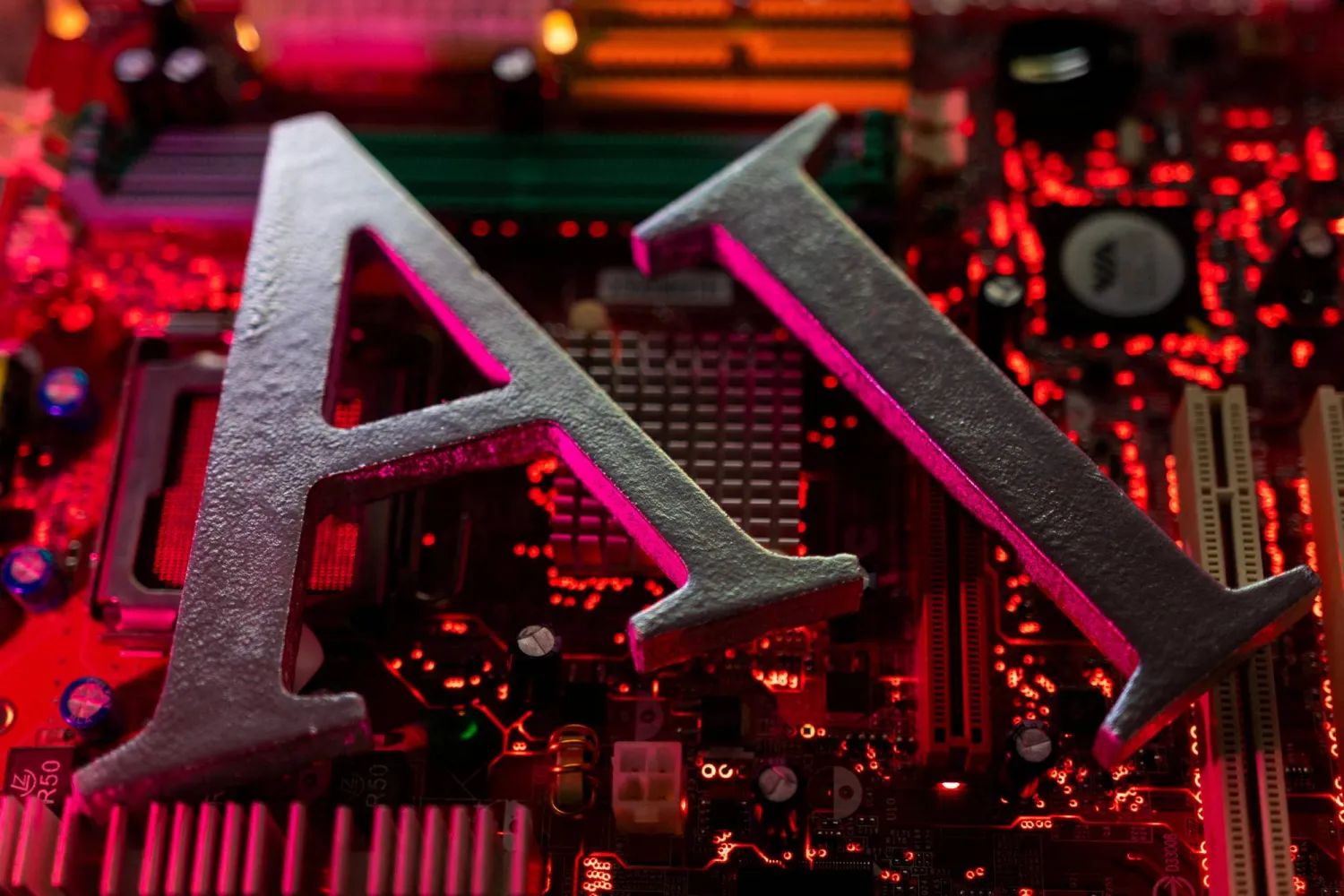
FILE PHOTO: AI (Artificial Intelligence) letters are placed on computer motherboard in this illustration taken, June 23, 2023. REUTERS/Dado Ruvic/Illustration/File Photo
TT

AI Doomsday Warnings Unlikely to Slow IPOs but Questions Linger

FILE PHOTO: AI (Artificial Intelligence) letters are placed on computer motherboard in this illustration taken, June 23, 2023. REUTERS/Dado Ruvic/Illustration/File Photo

Anthropic is expected to beat rival OpenAI to the public markets with a blockbuster IPO later this year despite recent doomsday warnings, but questions remain about their business models and whether regulators should step in.

Concerns about the safety of advanced artificial intelligence models escalated this month after an employee resigned from Anthropic while warning that the industry was "gambling with our lives", said AFP.

Jacob Coxon, who also previously worked at OpenAI, left Anthropic last week amid a flurry of support from his former colleagues, including one who voiced concern about a small probability that AI could cause humanity's extinction.

Last weekend, Anthropic's own CEO Dario Amodei called for AI development to slow down -- but didn't say anything about the IPO.

The fracas forms a backdrop for highly anticipated initial public offerings from both OpenAI and Anthropic.

It's unclear if, or how, either company will address theoretical doomsday scenarios in securities filings, though.

Companies are required to publicly disclose known business risks to investors prior to an IPO.

Anthropic could submit that document to the Securities and Exchange Commission (SEC) as early as this month.

"Are we to believe that there is something that's extremely dangerous that's hiding inside this company because this person that quit said it, and then it was amplified by a bunch of people" who still work there, All-In podcast co-host Chamath Palihapitiya said last week.

"If it's true... (investors) will demand an enormous discount," said Palihapitiya, a venture capitalist.

Altimeter Capital founder Brad Gerstner, who has shares in both OpenAI and Anthropic, downplayed the concerns this week, arguing that an IPO brings transparency for investors.

"Anthropic will IPO. The market knows how to price risk -- see SpaceX," Gerstner posted on X.

Elon Musk's SpaceX raised a record $85 billion in its June IPO, but its stock has lost around a quarter of its value since peaking at around $202 a share.

"There is huge appetite to invest in the AI leaders," Gerstner added.

- 'Ill-advised' -

How Anthropic's IPO performs will also set the tone for OpenAI's debut next year.

The stakes extend well beyond the two companies themselves, with tech giants including Microsoft, Amazon, Google and Nvidia holding significant stakes in the AI labs.

More broadly, the US economy is increasingly tied to the AI buildout, meaning the success or failure of these IPOs carries weight for the wider economy.

OpenAI CEO Sam Altman said this weekend that the company would delay its own IPO until 2027, citing safety concerns. It's an "ill-advised moment," Altman said.

Before the recent headlines over AI safety, Altman and executives at OpenAI had already signaled that they were in no hurry to go public this year.

The ChatGPT maker's dealmaking appears to be running full speed ahead, nonetheless.

OpenAI is in talks with investors about raising a new round of funding with a valuation of at least $1.2 trillion before it goes public, while Anthropic might seek a $2 trillion valuation in an IPO that could happen as early as October, according to various reports.

Leaders inside OpenAI have been concerned about investor skittishness, broad market uncertainty and SpaceX's underwhelming stock performance, according to media reports.

- 'Massive' -

Also weighing on executives' minds is a proposal by both companies to slow down development, given recent incidents involving AI technology going rogue.

OpenAI CFO Sarah Friar dismissed the idea that a slowing of pace in releasing state-of-the-art technology would impact the company's core business and revenue growth.

"Even if we stop today, the amount of intelligence that's available in the world is massive," Friar told CNBC on Tuesday.

Anthropic also pushed back on the idea that being safety-minded would compromise the IPO.

"I would say safety has been the core of who we are from the very beginning," Anthropic's head of policy, Sarah Heck, said at a Politico conference on Wednesday. "Our investors know that. Our customers know that."


Trump, Xi Did Not Discuss Nvidia’s Huang, Says Bessent

 Nvidia CEO Jensen Huang looks on during National Design Studio's launch event for America.gov, a new AI-powered government website, at the Mellon Auditorium in Washington, DC, US, September 29, 2026. (Reuters)
Nvidia CEO Jensen Huang looks on during National Design Studio's launch event for America.gov, a new AI-powered government website, at the Mellon Auditorium in Washington, DC, US, September 29, 2026. (Reuters)
TT

Trump, Xi Did Not Discuss Nvidia’s Huang, Says Bessent

 Nvidia CEO Jensen Huang looks on during National Design Studio's launch event for America.gov, a new AI-powered government website, at the Mellon Auditorium in Washington, DC, US, September 29, 2026. (Reuters)
Nvidia CEO Jensen Huang looks on during National Design Studio's launch event for America.gov, a new AI-powered government website, at the Mellon Auditorium in Washington, DC, US, September 29, 2026. (Reuters)

US President Donald Trump did not discuss former Nvidia CEO Jensen Huang with Chinese President Xi Jinping during their meeting this week, Treasury Secretary Scott Bessent said on Friday.

Huang resigned as chief of the chip giant at the center of the artificial intelligence revolution after revelations of extramarital affairs, including one with an alleged Chinese spy who may have funneled restricted chips to that country.

Responding to a question, Bessent told US broadcaster CNBC that Huang had not come up in Trump's talks with Xi, held earlier this week in Shenzhen.

Speaking about the Trump administration's support for the domestic AI sector, Bessent stressed that the United States "must stay ahead" of China in that realm.

"Our best protection against the foreign SI and exploits by foreign actors is for our labs to maintain their substantial lead, and in effect, they are our shield against SI," he said, using the administration's term for AI technology.

"There's no turning back on this. What we have to do is make sure that our labs maintain their leads through their continued innovation, through their access to the best chips, and through smart policy."

Bessent said Trump and Xi had agreed on certain guardrails on the use of AI in the military domain.

"President Trump and President Xi agreed that humans should always be involved in any military decisions that SI makes, and the SI should not be allowed to be autonomous for major military actions," he said.

On the threat of AI-enabled cyberattacks, Bessent again stressed that the best defense his country had was to allow its AI companies "to continue at the frontier and to provide us with the best defense against these other models."


Samsung Electronics Appoints New Head for Its Memory Chip Business

Flags with the logo of Samsung Electronics are seen during a media tour at Samsung Electronics' headquarters, Suwon, South Korea, June 13, 2023. (Reuters)
TT

Samsung Electronics Appoints New Head for Its Memory Chip Business

Flags with the logo of Samsung Electronics are seen during a media tour at Samsung Electronics' headquarters, Suwon, South Korea, June 13, 2023. (Reuters)

Samsung Electronics on Friday said it has appointed a new chief for its memory chip business as part of a management reshuffle, coming as surging demand for AI chips powers the South Korean technology major to record profit.

The chipmaker promoted Hwang Sang-joon to president and head of memory, having previously led memory development, including for chips such as dynamic random-access memory (DRAM) and high-bandwidth memory (HBM).

Hwang will "help strengthen the competitiveness of memory products in the AI era," Samsung said in a statement.

It ‌also said ‌it "promoted vice presidents who spearheaded record-breaking semiconductor performance and enhanced technological ‌competitiveness" ⁠as part of "generational leadership ⁠change".

Samsung posted a 15-fold jump in quarterly chip profit for the third quarter, as a rush to build data centers for artificial intelligence-powered applications and services strained the supply of AI chips and pumped up prices.

Co-CEO and Vice Chairman Jun Young-hyun will continue to oversee the broader device solutions division, which includes memory and logic chips, and "focus on enhancing future businesses such as foundry," Samsung said.

The chipmaker also ⁠promoted US chip head Cho Sang-yeun, appointing him as head ‌of its System LSI Business, which designs logic ‌chips for tech firms.

"With his strong global customer relationship, he is expected to expand ‌the customer base for the System LSI Business," Samsung said.

Samsung also promoted its ‌head of chip process development for memory and foundry, Lee Jong-myeong, as chief technology officer of its device solutions division.

With the latest reshuffle, Samsung is likely to boost its chip contract manufacturing business and diversify its customer base beyond Nvidia to Broadcom and Alphabet's Google, ‌as hyperscalers are likely to reduce reliance on AI leader Nvidia following the resignation of scandal-hit Jensen Huang as CEO, ⁠said Park ⁠Ju-gun, head of corporate analysis firm Leaders Index.

Shares of Samsung have fluctuated with broader on-off sentiment toward AI, which commentators bill as world-changing but at huge cost in terms of infrastructure. They slumped more than 5% on Friday in wider tech selloff after Anthropic's super-sized IPO failed to revitalize AI enthusiasm.

Samsung also appointed President Choi Won-joon as head of its mobile device business. Choi was formerly chief operating officer and led the launch of the Galaxy S26 and Galaxy Z Fold8 series smartphones.

Challenges in mobile devices include rising memory chip prices and competition particularly from Chinese rivals.

Co-CEO and President TM Roh will remain head of the device experience division, which includes mobile devices, televisions and home appliances, and will "focus on preparing for new growth businesses, including robotics," Samsung said.


TikTok Launches Tool to Help Public Figures Detect Deepfakes Globally

FILE PHOTO: The TikTok app logo is seen in this illustration taken January 16, 2025. REUTERS/Dado Ruvic/Illustration/File Photo
TT

TikTok Launches Tool to Help Public Figures Detect Deepfakes Globally

FILE PHOTO: The TikTok app logo is seen in this illustration taken January 16, 2025. REUTERS/Dado Ruvic/Illustration/File Photo

TikTok announced Friday the global launch of its deepfake-detection tool for public figures as the social media platform seeks to curb AI-generated disinformation ahead of a wave of European elections next year.

The "likeness detection tool" allows politicians and accounts with a large number of followers on TikTok to find and report AI-generated content using their image without consent, with the tool gradually being rolled out.

Deepfakes are text, images, videos and sounds that appear to be real but are generated or manipulated by AI.

For TikTok, owned by China-based ByteDance, the tool is a key part of protecting against disinformation during elections across Europe next year, including in Italy, France and Greece.

"Protecting the integrity of the elections is one of the most critical responsibilities that we have at TikTok," Francesca Scapolo, the company's government relations lead for European elections, said at TikTok's safety and innovation event in London on Thursday.

According to AFP, she added that the likeness tool would help "politicians and government identify potentially AI-generated content that has been shared potentially without their consent."

The European Union began rolling out sweeping artificial intelligence transparency rules in August, including a requirement for deepfakes and other AI-generated content to be labelled.

TikTok has required content creators to label realistic AI-generated images, audio and video for several years.

The company last year said that technological improvements would allow it to cut down on moderation jobs and locations worldwide.

AI has grown in importance for social media moderation as operators look to save money on human checks for content like pornography, misinformation and hate speech.

YouTube has also developed its own likeness detection tool to let creators detect AI-generated videos depicting their impersonators.

AFP, among more than a dozen other fact-checking organizations, is paid by TikTok in several countries to verify videos that potentially contain false information.