EU Urges US to Reconsider Visa Denial to Palestinian Delegation for UN Meeting

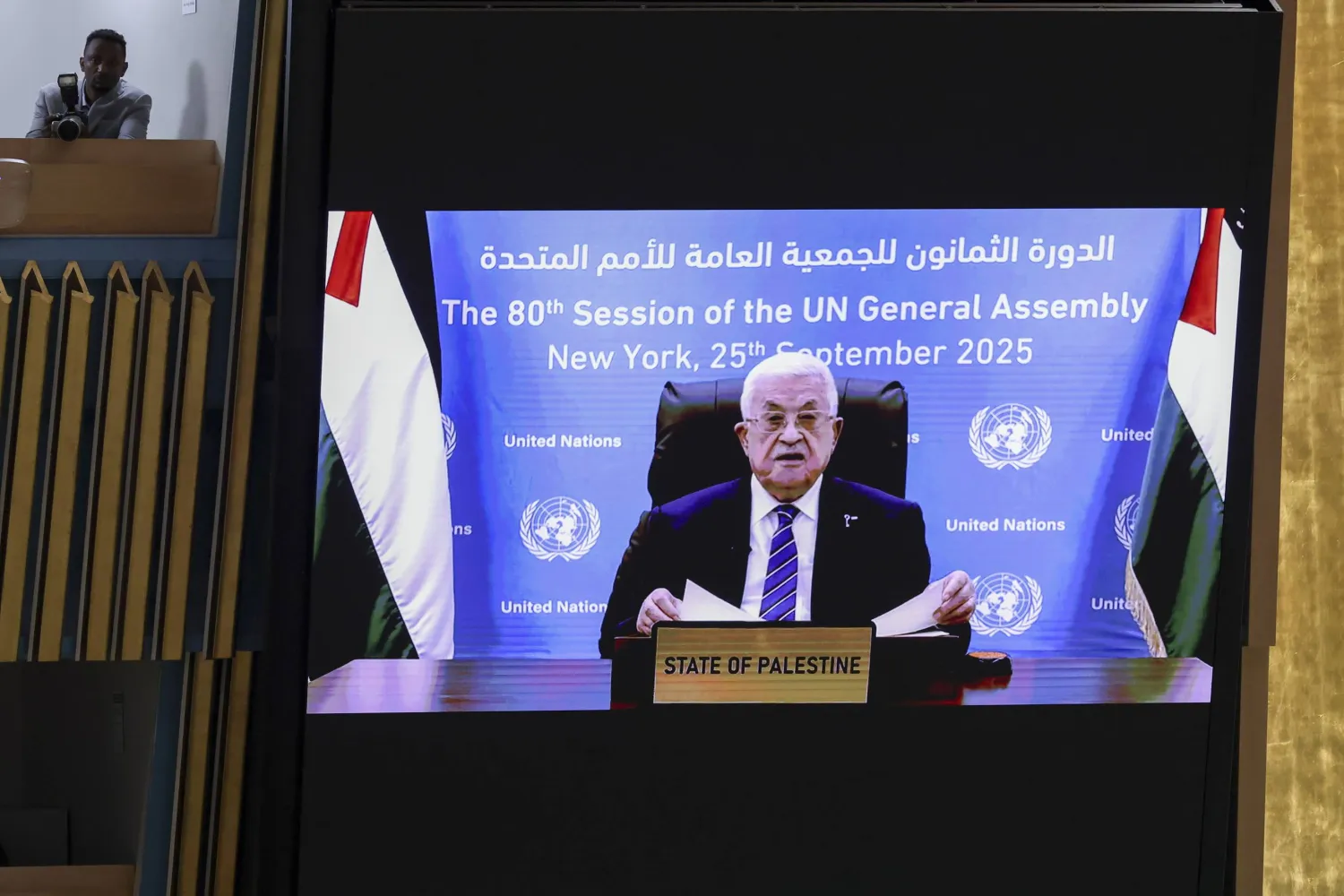
President of the State of Palestine Mahmoud Abbas speaks via video conference during the General Debate of the 80th session of the United Nations General Assembly at United Nations headquarters in New York, New York, USA, 25 September 2025.  EPA/SARAH YENESEL
President of the State of Palestine Mahmoud Abbas speaks via video conference during the General Debate of the 80th session of the United Nations General Assembly at United Nations headquarters in New York, New York, USA, 25 September 2025. EPA/SARAH YENESEL
TT

EU Urges US to Reconsider Visa Denial to Palestinian Delegation for UN Meeting

President of the State of Palestine Mahmoud Abbas speaks via video conference during the General Debate of the 80th session of the United Nations General Assembly at United Nations headquarters in New York, New York, USA, 25 September 2025.  EPA/SARAH YENESEL
President of the State of Palestine Mahmoud Abbas speaks via video conference during the General Debate of the 80th session of the United Nations General Assembly at United Nations headquarters in New York, New York, USA, 25 September 2025. EPA/SARAH YENESEL

The European Union said on Saturday it regretted Washington's decision to deny visas for the second year running to Palestinian officials seeking to attend the UN General Assembly, urging a rethink, AFP said.

The US State Department said this week it was refusing to grant visas to Palestinian leader Mahmoud Abbas and other members of his delegation ahead of next week's meeting in New York.

"We regret the decision to extend the denial of entry visas for members of the Palestinian delegation for a second year in a row," said Anouar El Anouni, a spokesman for the EU's diplomatic service.

"In light of its existing headquarters agreements with the UN and its obligations as host state, we urge the United States for this decision to be reconsidered."

The administration of US President Donald Trump denied visas for the Palestinian delegation also last year, forcing Abbas, a regular at the UN General Assembly, to address the body of global leadership by video.

The General Assembly voted 152-3 on Thursday for Abbas to be able to appear virtually once again this year.

As it stands, only members of the Palestinian mission to the UN will be able to attend the meeting, which begins Tuesday.

On Friday, UN Secretary-General Antonio Guterres also expressed regret at Washington's decision, adding he was concerned about its impact "on the ability of the State of Palestine to participate fully in the work of the United Nations".

The United States and Israel have objected to the Palestinian Authority's historical payments to families of imprisoned or slain Palestinians, including those who carried out attacks against Israelis.

The PA recently reformed this system, allocating welfare payments to families on a needs basis rather than political affiliation or prisoner status.

The State Department said Washington also opposed Palestinian "actions to internationalize the Israeli-Palestinian conflict including through the International Criminal Court (ICC) and International Court of Justice (ICJ), seeking to bypass negotiations through seeking unilateral recognition".

They accused them of "continuing to pay stipends to terrorists and to glorify acts of terrorism and terrorists in public pronouncements and school textbooks".

The United States is at odds with the 142 UN member states that recognized a Palestinian state at the United Nations last year.

The decision to deny Abbas a US entry visa comes as violence by Israeli settlers against Palestinians has escalated in recent months in the West Bank.

Lebanon’s Aoun Says Israeli Attacks Obstruct Agreement, US Efforts Yield No Results

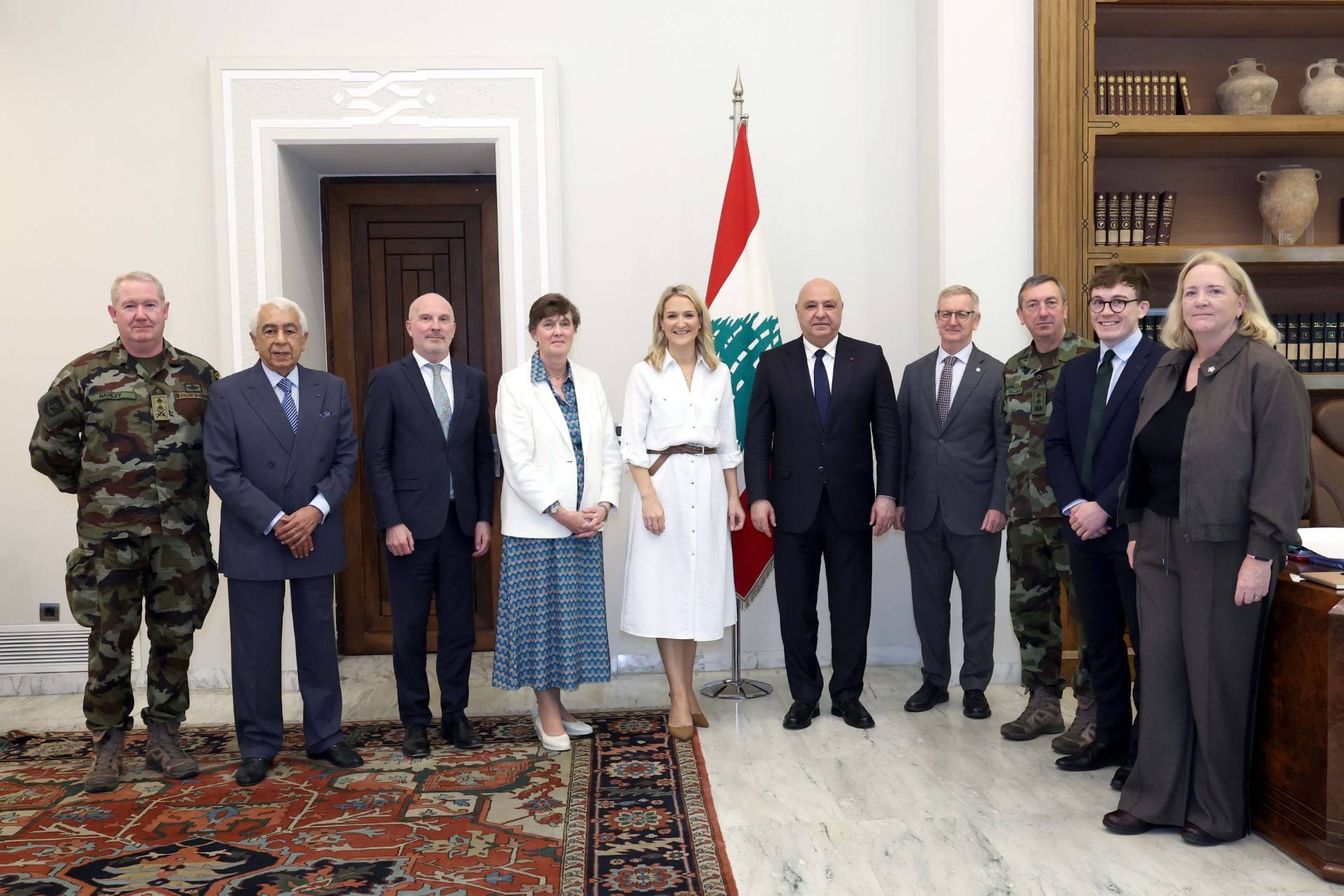
Lebanese President Joseph Aoun receives Irish Foreign Affairs and Defense Minister Helen McEntee (Lebanese Presidency)
TT

Lebanon’s Aoun Says Israeli Attacks Obstruct Agreement, US Efforts Yield No Results

Lebanese President Joseph Aoun receives Irish Foreign Affairs and Defense Minister Helen McEntee (Lebanese Presidency)

Lebanese President Joseph Aoun accused Israel of obstructing the implementation of a US-brokered agreement through continued attacks on southern Lebanon, saying Beirut’s contacts with Washington to halt the strikes have so far yielded no results.

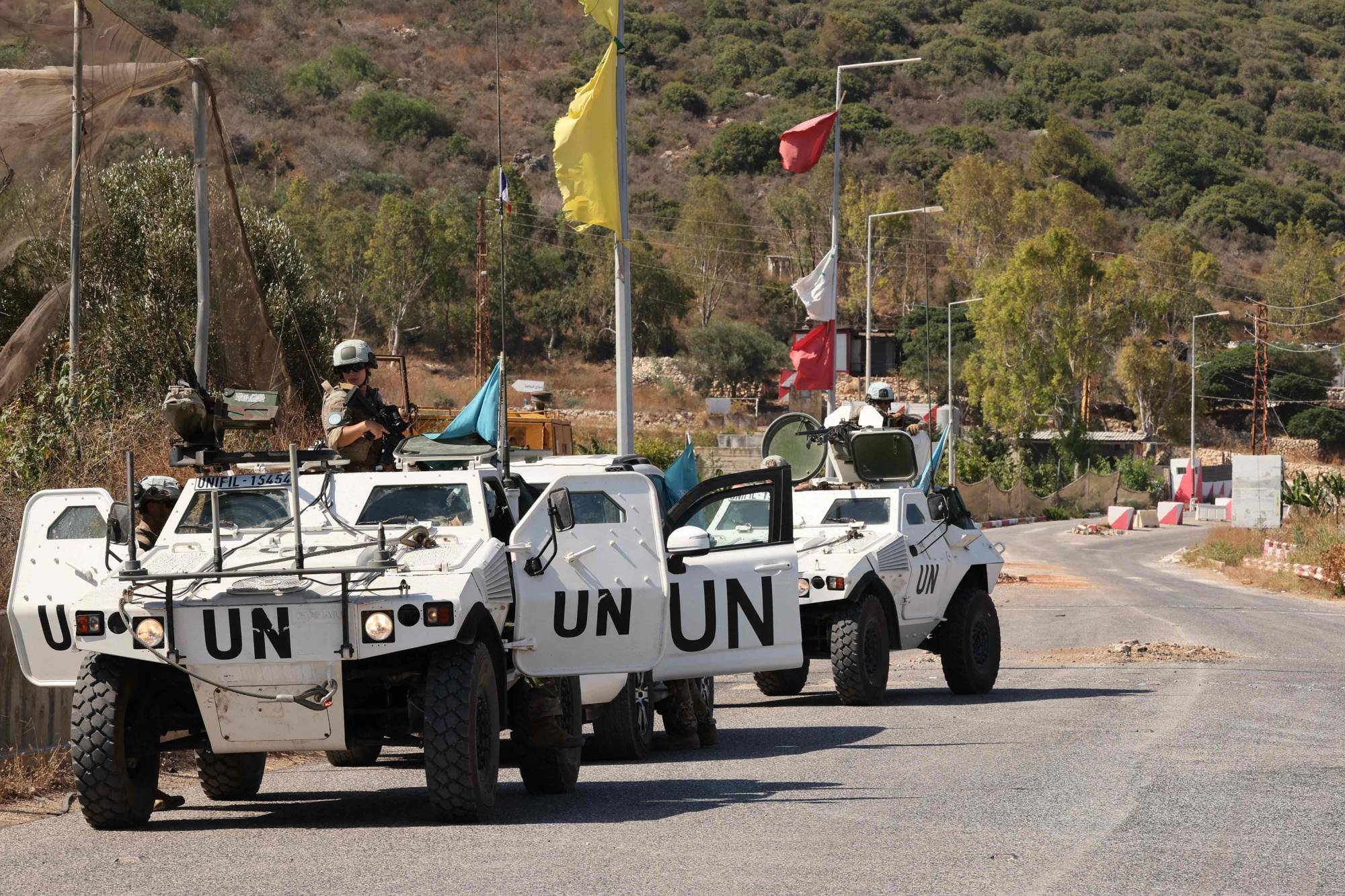
The president also reiterated Lebanon’s desire to extend the mandate of the United Nations Interim Force in Lebanon (UNIFIL) beyond this year, expressing openness to a European replacement force and warning that an international security vacuum in the south could threaten regional stability.

A photograph taken during a media tour organised by the French Catholic charity L'Oeuvre d'Orient shows peacekeepers with the United Nations Interim Force In Lebanon (UNIFIL) patrolling near the southern Lebanese village Biout es Sayed on July 20, 2026. (Photo by Anwar AMRO / AFP)

During a meeting with Irish Minister for Foreign Affairs and Trade and Minister for Defence Helen McEntee, Aoun accused Israel of failing to honor the agreement reached during negotiations in Washington.

He said Israeli forces continued to bombard southern villages and towns, destroy property and bulldoze homes.

The Lebanese leader stressed that Israel’s actions were preventing the Lebanese Army from extending state authority to the international border, ending the presence of armed groups and restoring stability.

He called on friendly countries, including Ireland, to press Israel to end its attacks, withdraw from South Lebanon and release Lebanese prisoners.

Such steps, he noted, would allow the Lebanese state to rebuild devastated communities and enable displaced residents to return home.

Warning Against Security Vacuum in South Lebanon

Turning to UNIFIL’s mandate, which expires at the end of the year, the president reaffirmed Lebanon’s wish for the peacekeeping force to continue its operations throughout 2027.

He emphasized its role in monitoring developments in South Lebanon and supporting the Lebanese Army as it deploys to the international border following an Israeli withdrawal.

UNIFIL also provides humanitarian, social and healthcare assistance to residents of southern villages, he underlined.

If an extension proves impossible, Beirut would welcome the participation of a European force under arrangements agreed with the European Union or individual European countries, in cooperation with the United Nations.

The Lebanese head of state warned that UNIFIL’s departure without a replacement could leave a security vacuum in the south, with potentially damaging consequences for regional stability.

He added that logistical and technical assistance from an alternative force could facilitate the army’s mission and improve living conditions for southern communities.

Aoun receiving Irish Foreign Affairs and Defense Minister and the accompanying delegation (Lebanese Presidency)


Government Presses Ahead With Reforms

On domestic affairs, Aoun affirmed that the government was pursuing economic and financial reforms in cooperation with parliament despite the difficult circumstances facing Lebanon.

He welcomed potential Irish assistance in the humanitarian, social, military and educational sectors.

The president also thanked Ireland for its contribution to international peacekeeping operations in South Lebanon since 1978 and paid tribute to Irish soldiers killed while serving there.

McEntee welcomed the opportunity to visit Lebanon, assess conditions firsthand and meet Irish troops deployed in the south.

She reaffirmed Ireland’s commitment to participating in peacekeeping operations, supporting the Lebanese Army and civil society, and working with public institutions to deliver needed assistance.

The Irish minister stressed that her country would continue supporting Lebanon despite the difficult circumstances facing the region.


Jordanian Source: Areas Outside Govt Control in South Syria Are Haven for Terrorists, Drug Traffickers

 Men inspect the aftermath of a Jordanian airstrike in Al-Tuff, in the countryside of Daraa province in southern Syria, Tuesday, Oct. 27, 2026. (AP)
Men inspect the aftermath of a Jordanian airstrike in Al-Tuff, in the countryside of Daraa province in southern Syria, Tuesday, Oct. 27, 2026. (AP)
TT

Jordanian Source: Areas Outside Govt Control in South Syria Are Haven for Terrorists, Drug Traffickers

 Men inspect the aftermath of a Jordanian airstrike in Al-Tuff, in the countryside of Daraa province in southern Syria, Tuesday, Oct. 27, 2026. (AP)
Men inspect the aftermath of a Jordanian airstrike in Al-Tuff, in the countryside of Daraa province in southern Syria, Tuesday, Oct. 27, 2026. (AP)

An informed Jordanian source confirmed that “areas near the northern border with Syria have provided, and continue to provide, a haven for terrorists and drug traffickers.”

The source told Asharq Al-Awsat that “numerous targets inside Syria are not under the control of the Syrian government,” noting that these gatherings “have served as a launchpad to target Jordanian security.”

Jordanian security asserted that it “seeks to protect its borders from sites that serve as a launchpad for operations targeting its security and stability, which are areas outside the control of regular Syrian security forces.”

Meanwhile, Jordan has found itself “at the forefront of confronting the risks of terrorist activity on its borders,” according to the source.

The source stated that the death toll from Jordanian airstrikes targeting ISIS operatives in southern Syria has risen “to at least 24 terrorists.”

The same source linked “ISIS to drug trafficking networks, which have recently resumed their operations in southern Syria.”

The Jordanian source maintained that the strikes were based on precise intelligence.

Amman also expressed its willingness to cooperate with Damascus on security assessments, intelligence sharing and border protection.

Syria, however, condemned the bombardment, denied any prior coordination with Jordan and accused Amman of carrying out strikes that killed several civilians.

Jordanian sources disputed that account, insisting the operation had been coordinated with Syrian authorities and targeted locations identified through confirmed intelligence.

They linked the ISIS operatives targeted in the strikes to the cell behind last Friday’s attack at a church in the village of Hammoud, in Jordan’s Karak governorate.

The Jordanian source noted that the kingdom had largely secured its northern border through its own efforts since 2012, confronting militias and militant groups operating in southern Syria that have repeatedly threatened Jordanian civilians.

The airstrikes destroyed warehouses holding large quantities of weapons and narcotics near Sweida and in the Syrian desert, according to intelligence information obtained by Asharq Al-Awsat.

The intelligence also pointed to cooperation between militant groups in southern Syria and smuggling networks along the Jordanian border.

An informed source described the links, coupled with a recent rise in intercepted smuggling attempts, as a dangerous development for the kingdom’s security.

Jordanian forces have intercepted 160 infiltration and smuggling attempts along the Syrian border since the beginning of the year, including 22 infiltration attempts and 138 operations involving drugs and weapons.

Seized contraband included large quantities of narcotic pills and other drugs, weapons, explosives, drones, GPS devices and communications equipment.

Smugglers have increasingly used drones and balloons, complicating border surveillance and efforts to trace the origins of cross-border operations.

Jordanian Minister of Government Communication Mohammad Momani warned that his country’s patience was running out over militant activity threatening national security.

Between 2024 and 2026, Jordan carried out several airstrikes against drug-traffickers, arms smugglers and militant groups under security and intelligence-sharing arrangements with the Syrian government.

The operations were aimed at protecting civilians on both sides of the border from militant and criminal networks.


Two Drones Shot Down Near US Embassy in Baghdad, Sparking Security Alert

The US Embassy building in Baghdad. (Iraqi News Agency)
TT

Two Drones Shot Down Near US Embassy in Baghdad, Sparking Security Alert

The US Embassy building in Baghdad. (Iraqi News Agency)

Air defenses at the US Embassy in Baghdad shot down two suspected reconnaissance drones over the heavily fortified Green Zone on Tuesday, Iraqi security sources said, triggering a security alert in the capital.

The sources said the drones were believed to be unarmed and intended for surveillance.

The embassy sounded its alarms as the aircraft flew over the Green Zone, which houses government buildings and foreign diplomatic missions.

Iraq’s Security Media Cell, however, reported the interception of only one unidentified drone.

“The sound heard in Baghdad resulted from the interception of an unidentified aircraft near the Green Zone,” Lieutenant General Saad Maan, head of the cell, said in a statement.

Witnesses told Asharq Al-Awsat they heard two loud explosions near the interception sites, while residents reported finding drone wreckage near Al-Rasheed Street in Baghdad’s old city center.

Reuters cited two security sources as saying the embassy’s air defenses were activated after detecting the drones approaching the Green Zone. Both were shot down, with wreckage recovered at separate locations.

Security forces were investigating their origin and intended destination, the sources added.

The US Embassy has faced rocket and drone attacks since the United States and Israel launched strikes on Iran.

Sources told Asharq Al-Awsat that debris was scattered around the Green Zone, the Shorja market, Al-Rasheed Street and the Kadhimiya district. No civilian casualties or injuries were reported.

The incident marked the first breach of its kind in the area in many months. In previous years, the Green Zone had repeatedly come under attacks targeting the US Embassy and other diplomatic missions, often blamed on Iran-backed armed factions.

Motives

The incident came less than a month after the withdrawal of US-led coalition forces from Iraq, whose presence armed factions had long cited to justify attacks on diplomatic and military facilities.

The purpose of the drone flights remains unclear.

Some observers linked the incident to tensions between Washington and Tehran, while others suggested it could be political signaling between rival groups within the Coordination Framework and armed factions.

Baghdad launched a campaign months ago to bring factional weapons under state control and integrate armed groups into the security forces.

The initiative was initially due to be completed by September 30, coinciding with the coalition’s withdrawal, but the government later postponed the deadline until June 2027.

While some factions have complied, others continue to oppose the plan, including the Iran-backed Kataib Hezbollah.

The group calling itself the Islamic Resistance in Iraq had previously pledged to support Iran if the United States resumed its war in the region.