IFAD President to Asharq Al-Awsat: Sanctions Are the Biggest Challenge for Remittance Channels

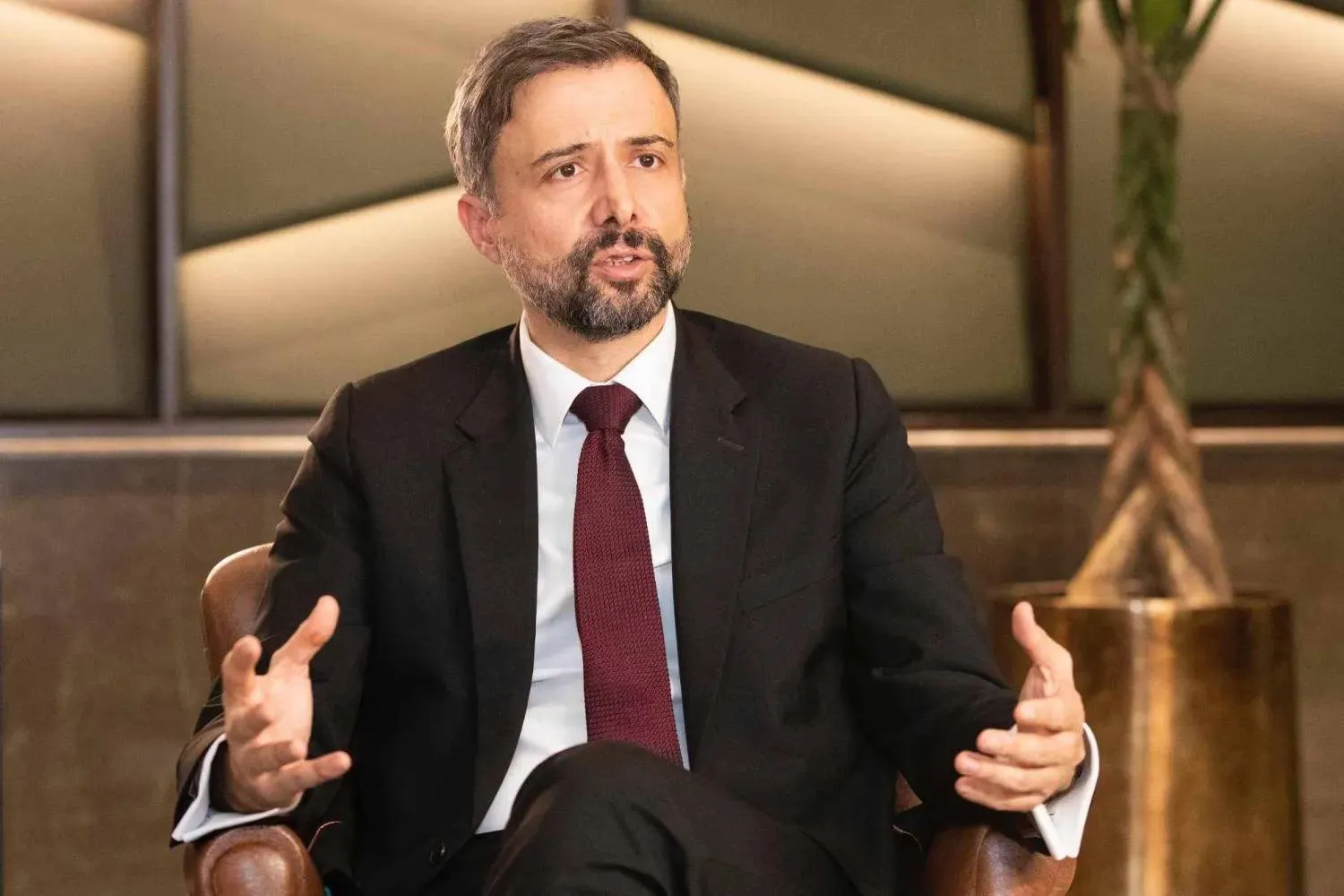
Alvaro Lario, President of the International Fund for Agricultural Development (IFAD) (Asharq Al-Awsat)
TT

IFAD President to Asharq Al-Awsat: Sanctions Are the Biggest Challenge for Remittance Channels

Alvaro Lario, President of the International Fund for Agricultural Development (IFAD) (Asharq Al-Awsat)

Money sent by migrants to their families is no longer simply a means of covering living expenses. In many low- and middle-income countries, these flows have become a financial safety net for households during crises, a source of savings and investment, and a channel whose effects extend to rural economies and local markets.

Remittances to low- and middle-income countries reached $728.6 billion in 2025, an increase of 94 percent since 2016, making them larger than foreign direct investment in these countries and more than four times the amount of global official development assistance in the same year, according to the latest report by the International Fund for Agricultural Development (IFAD).

But the scale of these flows does not necessarily mean that households can access them more easily. As sanctions and financial compliance requirements have tightened in some markets, remittance channels face a dual challenge: maintaining the integrity of the financial system on the one hand, while ensuring that legitimate funds continue to reach households at the lowest possible cost on the other.

Alvaro Lario, President of the International Fund for Agricultural Development, told Asharq Al-Awsat that, from the perspective of remittances and financial inclusion, the main challenge posed by US economic sanctions is maintaining safe, low-cost and transparent channels for legitimate family remittances, while complying with sanctions and requirements to combat money laundering and terrorist financing.

He added that access to regulated financial channels becomes increasingly important in fragile and conflict-affected countries, where many families depend on money sent by relatives living abroad.

Sanctions and De-risking

Lario explained that the impact of sanctions on remittance flows varies depending on the country, the nature of the sanctions and the financial channels being used. The concern, he noted, is not limited to sanctions themselves, but also extends to how financial institutions respond to regulatory, compliance and reputational risks.

He said that even in cases where personal remittances are permitted, financial institutions may impose stricter measures when processing transactions connected to certain countries. Restrictions on correspondent banking relationships may also make it difficult for money transfer companies to maintain banking services.

This broader phenomenon is known as de-risking. It can reduce the number of formal channels available and increase remittance costs and waiting times, making it more difficult for households to access their money.

Lario warned of another possible consequence: making formal channels excessively difficult, costly or unavailable could push some transactions into informal channels, reducing rather than strengthening transparency and consumer protection.
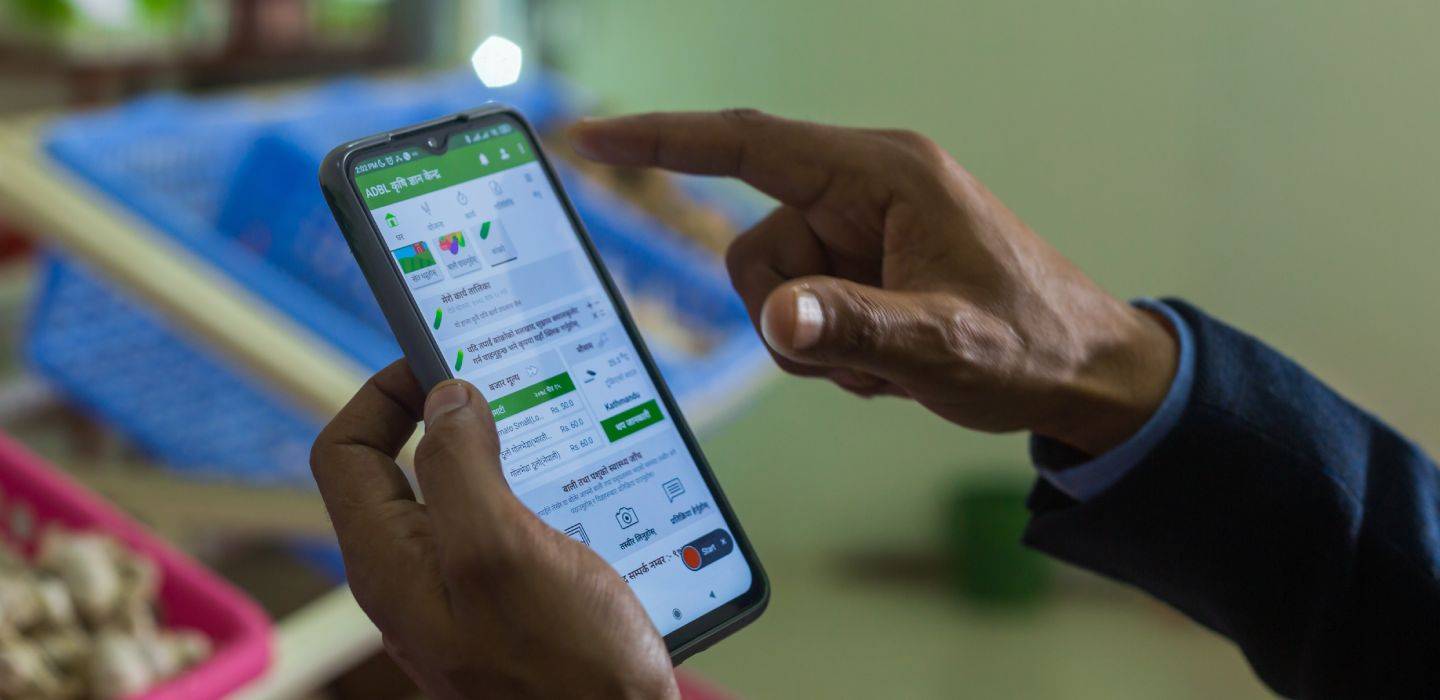
Remittances have become a vital source of household resilience in many countries affected by conflict and economic crises (IFAD).

A Safety Net During Conflict

The importance of these channels is particularly evident in the Middle East, where some countries are experiencing protracted conflicts and economic crises.

Lario said that in many countries affected by conflict and economic crises, remittances have become a vital source of household resilience. Family members living abroad are often among the first to provide support when employment opportunities, public services, social protection networks and local economies are disrupted.

The importance of remittances lies not only in the regularity of their flow, but also in their ability to respond quickly to changing circumstances. Migrants may increase the frequency or adjust the amount of their transfers according to their families' needs, making this money, according to Lario, a first line of defense against shocks.

The funds are primarily used to cover basic needs such as food, housing, healthcare and education. But they can also give families an opportunity to build savings, obtain insurance and credit, and invest.

In Syria, a World Bank analysis found that receiving international remittances was associated with a 12-percentage-point reduction in the extreme poverty rate and an 8-percentage-point reduction in the overall poverty rate, according to Lario. In Lebanon, remittances have likewise become an increasingly important economic safety valve for households amid the prolonged crisis.

But the ability to send money is not enough. Families need financial infrastructure capable of receiving and using those funds. This becomes more complicated during conflicts, when financial infrastructure is damaged, liquidity and cash become scarce, displacement increases, people's ability to move around declines, payment systems are disrupted, or financial service providers withdraw.

1.1 Billion People Connected to Remittances

IFAD figures reveal the scale of the social economy behind these flows. The report estimates that 220 million migrants and members of the diaspora support around 1.1 billion relatives, meaning that roughly one in every six people worldwide is connected to remittances.

Since 2016, flows have increased by 94 percent, outpacing population growth and migration from low- and middle-income countries.

This money does not go only to cities. Roughly one out of every three dollars migrants send home, or about $233 billion, reaches rural areas, which often suffer from limited formal employment opportunities, financial services and infrastructure.

IFAD estimates that households receiving remittances invest around $22 billion each year in rural agrifood systems, supporting agricultural production, rural enterprises and employment opportunities.

Lario said that the impact of this money extends beyond recipient households to local businesses, jobs and food systems. For millions of rural households, he added, remittances can represent the starting point for building savings, obtaining insurance and accessing suitable credit.

Remittances Enter the Digital Age

The shape of the remittance market is changing alongside the growth in its value. IFAD estimates that more than half of remittances now originate through a digital channel, a shift that has helped reduce sending costs and made the process faster and easier.

But the digital transition is not yet complete. Only 35 percent of the services measured in 2025 were fully digital on both the sending and receiving sides, while cash remains widely used across many remittance corridors.

The report argues that the next step is not simply digitization, but also the ability of households to use the financial system more broadly. It therefore calls on governments, regulators, financial institutions and development partners to reduce remittance costs, increase transparency, improve services in rural areas, strengthen financial and digital capabilities, and expand access to savings, insurance, credit and investment.

Asia Leads as Africa Accelerates

Asia and the Pacific remain the global center of the remittance economy, receiving $384.9 billion, or 53 percent of the total flows covered by the report over the past decade.

Latin America and the Caribbean recorded the fastest growth over the decade, with remittances rising 132 percent to $168.6 billion, while flows to Africa increased 86 percent to $124.2 billion.

These figures reflect significant differences in how heavily economies depend on money from their diasporas. In 23 countries, remittances account for more than 10 percent of GDP, while in nine countries their value exceeds total exports of goods and services.

For IFAD, maximizing the impact of these flows does not mean turning them into a substitute for public investment, social protection or climate finance. Rather, it means building a financial environment that allows households to use the money they receive more safely and efficiently, and to transform part of it from a tool for meeting urgent needs into a means of saving, investing and building resilience.


Saudi Arabia Leads G20 with 7.9% Growth Forecast in 2027

King Abdullah Financial District in Riyadh (Asharq Al-Awsat)
TT

Saudi Arabia Leads G20 with 7.9% Growth Forecast in 2027

King Abdullah Financial District in Riyadh (Asharq Al-Awsat)

Saudi Arabia is projected to lead the G20 countries in economic growth forecasts for 2027, according to International Monetary Fund (IMF) estimates. The IMF projects the Kingdom's real GDP to grow by 7.9 percent, the highest rate among the group's economies, as shown in data published by the Saudi Ministry of Investment.

The Fund had previously raised its projections for the Kingdom's real GDP growth to 7.9 percent, compared to 5.5 percent in its July estimates, an increase of 2.4 percentage points.

This revision comes amid expectations of economic activity regaining momentum as regional conflict-related disruptions subside, and oil production and exports gradually return to normal levels.

India ranked second among G20 countries with a projected growth rate of 7 percent, followed by Indonesia at 5.1 percent, then China at 4 percent, and Türkiye at 3.6 percent, according to IMF data reviewed by the Ministry.

Argentina came in sixth with projected growth of 3.5 percent, followed by South Korea at 2.8 percent, then the United States at 2.3 percent. Projections for Brazil stood at 1.9 percent, Mexico at 1.8 percent, Canada at 1.7 percent, Australia at 1.6 percent, South Africa at 1.3 percent, and the United Kingdom at 1.2 percent.

Germany registered projected growth of 1.1 percent, Russia 0.9 percent, while projections for France and Japan were 0.7 percent each, with Italy coming in last at 0.6 percent.

Growth Forecasts Revised

In an assessment of the recovery path, the Fund noted that the diversification of Saudi energy export routes limits the Kingdom's vulnerability to geopolitical disruptions compared to some regional economies. This is due to the the East-West Pipeline's ability to divert some oil exports to Yanbu Port on the Red Sea, away from the Strait of Hormuz.

The IMF's estimates align with the World Bank's projections, which also raised its forecast for Saudi economic growth in 2027 to 7.9 percent, compared to 4.9 percent in its April estimates, while anticipating a 2 percent contraction in GDP during 2026.

Globally, the IMF expects the world economy to grow by 3.1 percent in 2026 before rising to 3.4 percent in 2027, placing Saudi Arabia's growth forecast at more than double the projected global rate for the coming year.

The Saudi Ministry of Investment said that the Kingdom’s leading growth outlook among G20 countries reflects the strength and resilience of its economy and opens up broader prospects for investment and growth.

This is supported by strong private-sector momentum and the expansion of non-oil activities, reinforcing the Kingdom’s shift toward a more diversified, sustainable, and investment-friendly economy.


Saudi Arabia to Host Global Water Innovation Conference in Jeddah

 Participants at a previous edition of the Innovation Driven Water Sustainability Conference. (Saudi Water Authority)
Participants at a previous edition of the Innovation Driven Water Sustainability Conference. (Saudi Water Authority)
TT

Saudi Arabia to Host Global Water Innovation Conference in Jeddah

 Participants at a previous edition of the Innovation Driven Water Sustainability Conference. (Saudi Water Authority)
Participants at a previous edition of the Innovation Driven Water Sustainability Conference. (Saudi Water Authority)

Saudi Arabia will host water industry experts from more than 140 countries in Jeddah from December 14 to 16 for a conference focused on harnessing innovation to tackle growing water security challenges.

Organized by the Saudi Water Authority, the Innovation Driven Water Sustainability Conference (IDWS 2026) is expected to draw more than 10,000 participants and 250 speakers, with an exhibition featuring over 150 international brands.

Bringing together researchers, investors, technology companies and water utility operators, the event aims to bridge the gap between scientific advances and the practical needs of the industry, helping promising solutions reach commercial markets.

Tariq Al-Ghafari, the authority’s vice president for research and emerging water technologies, described the conference as an opportunity to connect new technologies with financing and operational expertise, paving the way for wider adoption.

The gathering comes as pressure on water resources intensifies, creating growing demand for investment in infrastructure and technology.

The global market for water security and infrastructure management is estimated at $303.8 billion, while planned construction and engineering projects in the water and wastewater sectors exceed $1.2 trillion.

Meeting the UN Sustainable Development Goals for clean water and sanitation will require an additional $131 billion to $140 billion annually, highlighting the scale of investment needed to expand access and modernize infrastructure.

According to the World Health Organization and UNICEF, around 1.8 billion people live in households without water supplies on the premises.

Agriculture alone accounts for approximately 72% of global freshwater withdrawals, according to the UN Food and Agriculture Organization, underscoring the importance of improving efficiency in water-intensive sectors.

Against this backdrop, the conference will explore ways to expand treated wastewater reuse, promote circular economy practices and apply artificial intelligence, digital technologies and data analytics to water management.

Discussions will also examine how regulation, financing and workforce development can speed up the adoption of new technologies, while improving efficiency across the water cycle, from production and treatment to resource recovery.

The program includes the MiyahThon innovation competition, startup showcases and the fourth edition of the Global Prize for Innovation in Water.

These initiatives are designed to bring innovators together with investors and water operators, giving emerging technologies a clearer path from development to commercial deployment.

By connecting research with investment and industry needs, the conference aims to help turn promising ideas into practical solutions as countries seek more efficient, resilient and sustainable water infrastructure.


Arada Enters Saudi Property Market with $13.3 Billion Portfolio

The Saudi capital, Riyadh (SPA)
TT

Arada Enters Saudi Property Market with $13.3 Billion Portfolio

The Saudi capital, Riyadh (SPA)

Property developer Arada is entering Saudi Arabia through a partnership with local firm XTOPIA, gaining access to a SAR 50 billion ($13.3 billion) land and development portfolio as the Kingdom continues to attract international investment despite global economic uncertainty.

The new venture, Arada KSA, will launch its first project in Riyadh’s Al Rimal district, a SAR 14 billion residential development comprising around 3,500 villas and townhouses.

Arada KSA Chairman Mohammed AlDhabaan told Asharq Al-Awsat that the investment reflected long-term confidence in Saudi Arabia’s economic prospects, supported by Vision 2030 reforms, infrastructure development and growing housing demand.

The Kingdom’s clear economic policies, sustained reforms and improving investment environment provide the certainty needed for long-term commitments, he explained.

“Our investment in the Kingdom is not tied to temporary market conditions but rests on firm confidence in its future and the economic transformation driven by Vision 2030 with government support,” AlDhabaan said.

He described the Riyadh development as an investment in the future rather than simply a response to current demand, marking the beginning of a lasting commitment to the Saudi market.

Arada KSA Chairman Mohammed AlDhabaan (Asharq Al-Awsat)

Housing demand and prices

AlDhabaan expressed optimism about the sector’s prospects, citing population growth, the formation of new households, urban expansion and government initiatives to increase homeownership and improve quality of life.

The next phase of growth, he argued, would be measured not only by the number of homes built but also by developers’ ability to create communities that meet residents’ everyday needs.

Location, affordability, access to financing, infrastructure and confidence in developers would shape demand, while land and construction costs would remain key factors influencing prices.

“No single project can determine market prices. They are influenced by supply and demand, land and construction costs, and financing,” he noted.

“However, increasing supply, diversifying housing products and improving development efficiency can strengthen competition and give buyers more options.”

Developers that combine quality design and construction with integrated facilities and reliable delivery would have a competitive advantage, he added.

First project in Riyadh

Arada KSA’s inaugural development in northeastern Riyadh will feature approximately 3,500 villas and townhouses alongside educational, retail and sports facilities, a community center and green spaces incorporating around 100,000 trees.

The company will work with relevant government authorities to prepare a master plan aligned with the capital’s urban development requirements.

The project will be financed through an investment structure regulated by Saudi Arabia’s Capital Market Authority and managed by a licensed financial company. Construction and sales are scheduled to begin in 2027.

Design model for one of the company’s projects in Saudi Arabia (Asharq Al-Awsat)

Partnership and expansion

Established with XTOPIA, Arada KSA will have access to a 10 million-square-meter land portfolio across Riyadh, Jeddah and Makkah, providing opportunities for further residential developments in the coming years.

AlDhabaan, who also chairs XTOPIA, will lead the new company, bringing together Arada’s international experience in developing residential communities and its Saudi partner’s knowledge of the local market.

He believes the combination will allow the venture to build a lasting presence in the Kingdom while contributing to Vision 2030’s housing and quality-of-life objectives.

The Saudi expansion forms part of Arada’s broader international strategy. Its development portfolio is valued at approximately SAR 189 billion ($50.4 billion) across five markets: Saudi Arabia, the United Arab Emirates, the United Kingdom, Australia and Syria.

The company has more than 70,000 residential units in its portfolio, including around 17,000 already completed, according to its figures.

Green Riyadh initiative

The Al Rimal development also aligns with Saudi Arabia’s efforts to improve urban living standards and expand green spaces.

Through the Green Riyadh initiative, the Royal Commission for Riyadh City aims to plant 7.5 million trees across the capital and increase green space per resident from 1.7 square meters to 28 square meters by 2030.

Arada’s entry comes as local and international developers compete to meet rising housing demand and offer buyers a wider range of residential options.