Museums Commission Marks Saudi National Day with Cultural Programs

The Museums Commission logo
TT

Museums Commission Marks Saudi National Day with Cultural Programs

The Museums Commission logo

The Museums Commission has announced a special program of celebrations marking Saudi National Day across its museums, with the National Museum of Saudi Arabia in Riyadh, the Red Sea Museum and Tarek Abdulhakim Museum in Jeddah hosting dedicated events starting Wednesday.

The programs invite families and visitors of all ages to celebrate the national occasion through the stories, traditions and cultural expressions held within the Kingdom’s museums.

Inspired by this year’s Saudi National Day identity, “Our Pride in Our Nature,” the celebrations reflect the commission’s vision of museums as living national spaces, places where the Kingdom’s past is not only displayed, but experienced, shared and carried forward.

Each museum has developed a program rooted in its own identity: the National Museum guides visitors through the story of the Kingdom’s unification and the making of its national identity, the Red Sea Museum celebrates the occasion through the lens of Jeddah and the Red Sea, and Tarek Abdulhakim Museum brings the celebration to life through music, learning and creative family experiences.

From September 23 to 26, the National Museum will present an interactive journey that takes visitors through a series of stations across the museum, each revealing a different part of the story that shaped the Kingdom’s identity.

The journey opens with a shadow-theater performance telling the story of King Abdulaziz’s vision and the unification of the Kingdom, before leading visitors through stations dedicated to national figures who left their mark on the Kingdom’s history, the diversity of its regions, and the symbols, customs, and traditions passed down through generations.

Throughout the celebration, the museum lobby will feature live folk-art performances from across the Kingdom’s regions, presented in collaboration with the Theater and Performing Arts Commission.

Families can also enjoy interactive games and creative activities, alongside a new sensory discovery wall designed especially for the museum’s youngest visitors and a dedicated recording station where visitors can share their own messages about the Kingdom and its future.

On Wednesday, the Red Sea Museum, housed in the historic Bab Al-Bunt building in Jeddah, will host a full day of celebrations from morning until night. Families and children will be welcomed with all-day activities including national-themed face painting, creative coloring sessions and guided tours exploring the museum’s building, collections and stories connected to the Kingdom.

Coinciding with the International Day of Sign Languages, the museum will present “A Nation’s Story,” an inclusive storytelling experience delivered with Saudi Sign Language interpretation and open to Deaf children and people with disabilities, inviting children to reflect on the meaning of homeland, belonging and national identity.

The celebration will also mark the launch of Minaa Encounters, a new recurring platform supporting emerging Saudi photographers, artists and creative talent. Its first edition, “Between Sea and Stone,” invites visitors to rediscover Jeddah and its port through the work of emerging Saudi photographers, who will be present to discuss their work with the public from September 23 to 25. The showcase will remain on display until September 30.

Also from September 23 to 25, Tarek Abdulhakim Museum will celebrate Saudi National Day through a series of musical workshops and interactive experiences for children and families.

Held daily from 4:00 p.m. to 10:00 p.m., the program invites visitors to explore the Kingdom’s rich musical traditions through hands-on activities.

Designed to encourage participation and discovery, the workshops offer visitors of all ages an opportunity to engage with music as an important part of Saudi Arabia’s cultural heritage.

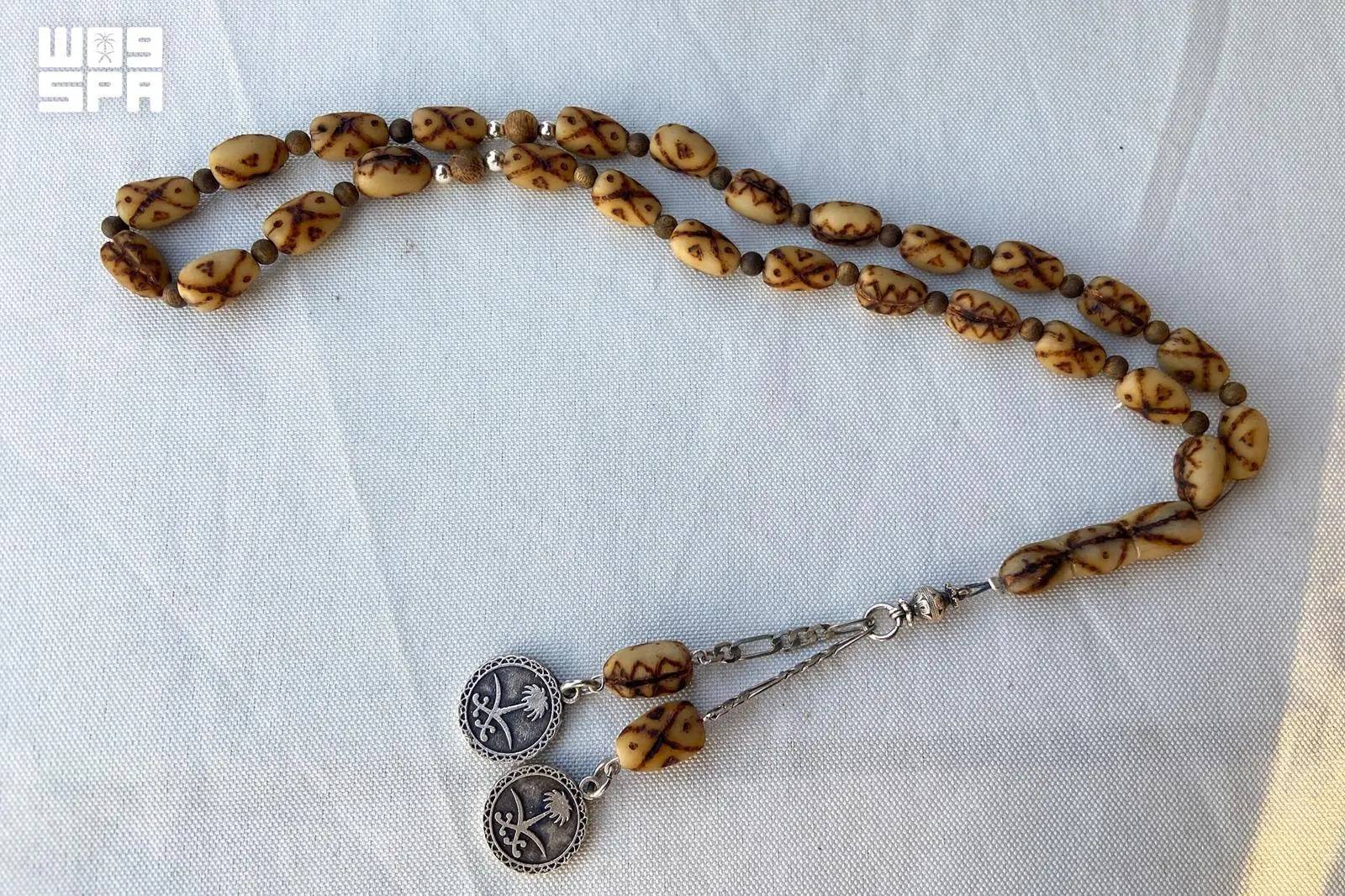

Qassim Artisans Repurpose Date Pits into Value-Added Prayer Beads

Qassim Region are converting discarded date pits into handcrafted prayer beads (subha)
TT

Qassim Artisans Repurpose Date Pits into Value-Added Prayer Beads

Qassim Region are converting discarded date pits into handcrafted prayer beads (subha)

In a creative convergence of traditional heritage, sustainable manufacturing, and resource efficiency, artisans in Qassim Region are converting discarded date pits into handcrafted prayer beads (subha), transforming an agricultural by-product into a high-value consumer item, the Saudi Press Agency reported.

The production journey involves a multi-stage process encompassing sorting, cleaning, drying, precise drilling, sanding, polishing, stringing, and final packaging. The resulting product retains the natural texture, color variations, and contours of the palm seed, reflecting the Kingdom's broader drive to foster innovative secondary industries across the date value chain.

The production journey involves a multi-stage process encompassing sorting, cleaning, drying, precise drilling, sanding, polishing, stringing, and final packaging.

Speaking to the Saudi Press Agency, artisan Noura Al-Harbi explained that the craft requires meticulous manual skill. She stated that after selecting pits of comparable size, artisans drill them for threading, buff rough contours, and polish the surfaces to showcase their organic aesthetic before assembling them with regional decorative motifs. Because no two date pits are identical, each finished rosary possesses a distinct texture and individuality.

Al-Harbi emphasized that the market value of date-pit rosaries is elevated by their symbolic connection to the date palm, a central fixture of Saudi agricultural and cultural identity. This narrative creates strong commercial potential within cultural tourism, corporate gifts, and keepsake sectors, allowing visitors to acquire a product directly tied to local heritage.

The enterprise embodies principles of the circular economy by repurposing agricultural waste from farms and processing plants into marketable craft products. Al-Harbi noted that integrating semi-automated tools for drilling and cutting with manual finishing could scale production volumes while maintaining artisanal quality.

Bridging agriculture, creative entrepreneurship, and tourism, the craft highlights how supporting local artisans and modernizing packaging can expand the economic footprint of the Kingdom's date sector beyond food consumption, creating new avenues for sustainable cottage industries.


Riyadh Art Brings Monumental Works by Saudi Artist Mohammed Al Saleem to its Permanent Collection of Public Art

Created by Saudi-based architecture and engineering consultancy Omrania, the Western Metro Station reinterprets desert sand dunes through earth-colored forms that define entrances - SPA
TT

Riyadh Art Brings Monumental Works by Saudi Artist Mohammed Al Saleem to its Permanent Collection of Public Art

Created by Saudi-based architecture and engineering consultancy Omrania, the Western Metro Station reinterprets desert sand dunes through earth-colored forms that define entrances - SPA

Riyadh Art announced the addition of seven monumental sculptures by pioneering Saudi artist Mohammed Al Saleem to the Riyadh Art permanent collection. Six works have been installed at Western Metro Station on Line 3 (Orange Line) in Riyadh, with the seventh scheduled for installation at a later date.

The sculptures bring an important part of Al Saleem's artistic practice into the city for which they were originally conceived.

Created in 1985 for a Riyadh Municipality public art competition but never installed, the seven works remained in Al Saleem's workshop for decades. In 2022, the Royal Commission for Riyadh City acquired the sculptures and undertook their restoration and conservation, supervised by his daughter, Najla Mohammed Al Saleem, and Al Saleem's foundation, Dar Al-Funoon Al-Sa'udiyyah, to preserve the artist's original vision, SPA reported.

The seven works are Al Showkah Al Khumasiyah (The Pentagon Thorn), Shurfa (Parapet Merlon), Al Kurah (The Ball), Al Mouthalathat (The Triangles), Bur'aum Al Zahrah (The Flower Bud), and Al Ahilla (The Crescents), all installed this August, with Al Nafourah Al Halazouniyah (The Spiral Fountain) due to be installed at a later date. Drawing on desert landscapes, Najdi architecture, geometric forms, and celestial references, the sculptures reflect Al Saleem's distinctive approach to abstraction and the influence of Riyadh and Najd on his practice.

Created by Saudi-based architecture and engineering consultancy Omrania, the Western Metro Station reinterprets desert sand dunes through earth-colored forms that define entrances, allow natural light, and provide shade for pedestrians. Located within Western Station's outdoor plaza, the works bring these references into a contemporary public setting shaped by movement and connection.

"Mohammed Al Saleem holds an important place in the history of modern Saudi art, and his work is deeply connected to Riyadh and the landscape and architecture of Najd," said Senior Director of Riyadh Art Bader AlShenaifi. "Bringing these works into the Riyadh Art permanent collection preserves an important part of Saudi Arabia's artistic heritage while giving Al Saleem's work a lasting presence in the public life of the city that inspired so much of his practice."

The works join the Riyadh Art permanent collection, a citywide collection of public artworks installed across neighborhoods, public spaces, and major transport corridors throughout the capital. The Riyadh Art permanent collection now comprises 82 artworks across the capital.


Paris’ Louvre and Other Top Museums to Close on Saturday Over Concern about Protest Violence

Visitors wait outside as protesters block the entrance to the Louvre Museum to express their support for the high school students' movement in Paris, France, 19 October 2026, two days after demonstrations and riots took place alongside nationwide cost-of-living protests. (EPA)
TT

Paris’ Louvre and Other Top Museums to Close on Saturday Over Concern about Protest Violence

Visitors wait outside as protesters block the entrance to the Louvre Museum to express their support for the high school students' movement in Paris, France, 19 October 2026, two days after demonstrations and riots took place alongside nationwide cost-of-living protests. (EPA)

The Louvre and several other major Paris museums will be closed on Saturday over concerns about potential violence during planned protests, France’s culture ministry said.

In a statement to The Associated Press, the ministry said the Orsay and Picasso museums were also among those that will close.

Protests last Saturday devolved into mayhem, with rioters setting fires, smashing shop windows, looting and clashing with police. The ministry called on all institutions under its authority to adopt any necessary measures to ensure “visitor safety, staff protection and the preservation of artworks,” according to the statement.

Others are taking the same tack. After two days when admission was invite-only, Art Basel Paris opened to the public on Friday — but only for the day, with the threat of unrest prompting organizers on Thursday to cancel the weekend program.

Paris’ Grand Palais is hosting 211 international galleries and their exhibitions for Art Basel, considered one of the world’s most prestigious contemporary art fairs.

“It’s kind of like the art Olympics,” New York-based artist Drake Carr, who is showing his work with Mariposa Gallery, said in an interview.

However, timing proved unfortunate, with the French capital gripped by social tension. The clashes and widespread looting over the weekend marked France’s most violent unrest in years.

A protest on Thursday afternoon in Paris was peaceful, and Art Basel's organizers announced the decision to close for the weekend around the same time. The protest planned for Saturday is expected to be much larger.

"This decision has not been taken lightly, and the safety of everyone involved in the fair remains our utmost priority," organizers said in a statement. Its website posted a similar announcement and said weekend ticketholders would be contacted.

Saloni Doshi, an art collector who travelled to Paris from India for the fair, grew worried last Saturday as she saw the fires and panicked people, and she received phone calls from friends asking whether Paris was safe. She agreed with the organizers' rationale to close.

“It's hard that something like this has to happen, but state activities and people's freedom have to continue,” she told the AP. “I cannot imagine that a bunch of elite, privileged people getting inconvenienced because of this should have a voice.”

Antoine Donzeaud and Elisa Rigoulet, the owners of the gallery exo exo, felt the same.

“We understand this decision, which we consider reasonable and consistent with the urgency of the social demands currently unfolding in France,” they said in a text message.