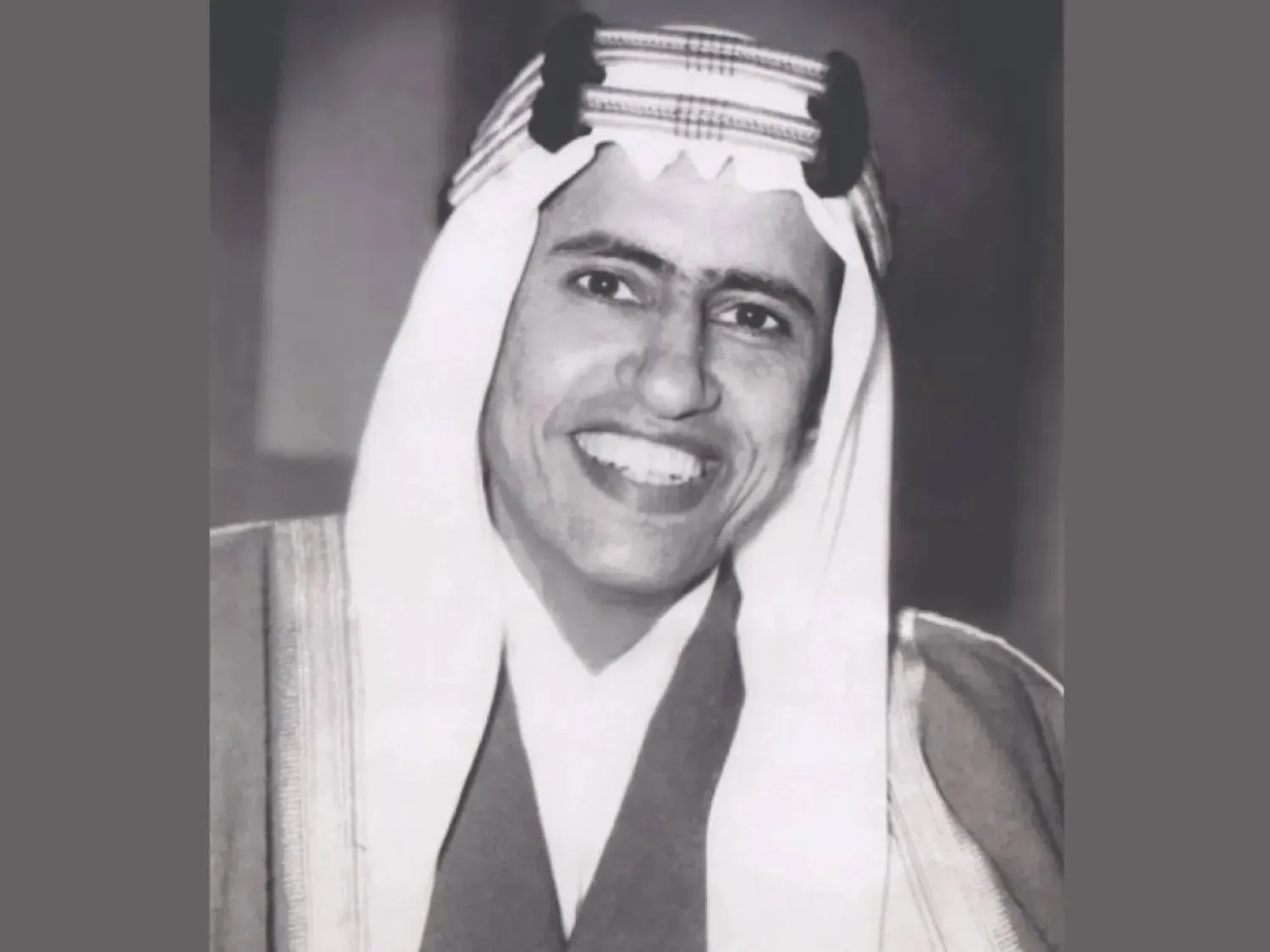
Musaid bin Abdulrahman: A Bridge Between the Imam’s Generation and the Institutional State

Prince Musaid bin Abdulrahman
TT

Musaid bin Abdulrahman: A Bridge Between the Imam’s Generation and the Institutional State

Prince Musaid bin Abdulrahman

A recent directive by Custodian of the Two Holy Mosques King Salman bin Abdulaziz, based on a proposal by Crown Prince Mohammed bin Salman, to name the Saudi Electronic University after Prince Musaid bin Abdulrahman comes as Saudi Arabia prepares to celebrate its National Day on Sept. 23.

In a historical coincidence, the 1965 Cabinet decision establishing Sept. 23 as National Day was issued when Prince Musaid was a Cabinet member. Now, his name is being given to the university as the Kingdom marks its anniversary.

The royal directive revives the memory of a major statesman and pioneer of Saudi political and administrative thought who died nearly 40 years ago, in December 1986, and showed little interest in publicizing his life, let alone writing memoirs.

Press archives contain little beyond official reports. Abdulrahman Al-Shubaili, who interviewed him for television and later published the interviews alongside testimonies from his contemporaries, produced what I believe is the only book devoted to Musaid’s life and career.

It is therefore unsurprising that many Saudis today know little about his political and administrative record. Some may first have heard of him when Crown Prince Mohammed bin Salman praised his foresight in a 2021 television interview, recalling Musaid’s decades-old proposal that the state, rather than the private sector, develop residential communities — an idea opposed by some ministers and officials at the time.

It is fitting that Musaid’s name should be given to a university whose establishment 15 years ago represented a forward-looking vision for education, just as Mohammed bin Salman revived his uncle’s forward-looking vision by establishing Roshn, a Public Investment Fund company.

It is as though the architect of Vision 2030 sought through this tribute to say that those who possess foresight and work tirelessly for their country will ultimately be recognized, even if the time for implementing their vision has not yet come.

Personally, I regard Musaid not merely as a minister and statesman but as one of the state’s thinkers, who contributed during a period of transformation that required restructuring government operations and decision-making.

Mohammed Aba Al-Khail, one of his most prominent aides and his successor at the Finance Ministry, recalled that Musaid viewed public office through principles rooted in Islamic law: a public servant was entrusted with applying general rules intended to achieve justice. He insisted on stating and defending his views clearly, then adhering precisely to whatever decision was ultimately reached, demanding the same discipline from those working with him.

Those who knew him described him as wise, farsighted, intelligent, honest and committed to justice, while shunning outward displays. They also cited his broad culture, extensive experience, realism, and analytical ability.

His education began at Ibn Musaybih’s traditional school before he studied under Riyadh scholars. Mohammed bin Jubair recalled that Musaid studied with several sheikhs, including Mohammed bin Ibrahim, attending their circles as a student or listener.

His intellectual formation extended further. He read widely, discussed ideas with scholars, politicians, intellectuals and historians who visited his library, and hosted intellectual gatherings at his home. His private library, first at his home in Riyadh’s Al-Hillah district and later in Al-Shumaisi, became in 1944 the first private library in Riyadh opened to the public. He stocked it with rare and varied books, periodicals and new publications, while continuing his own education through BBC recordings and educational programs.

This combination of religious study, early exposure to modern publications, intellectual debate and self-education produced a complex intellectual formation combining grounding in Islamic law, broad knowledge and openness to contemporary culture.

Despite his religious background - Aba Al-Khail described him as a jurist capable of independent legal reasoning - I observed in Musaid a combination of forceful argument and strong personality, authority and humility, simplicity and rigor.

I also saw two qualities in his thinking that were uncommon among many statesmen of his era.

The first was a legal sensibility, something I observed while attending some of his gatherings in Taif and listening to his discussions and views. It was also reflected in the organizational imprint he left on the institutions he headed, particularly the Board of Grievances, the General Auditing Bureau and later the Finance Ministry.

The second was a reformist inclination embodied in his ideas on reform, renewing thought and developing society. From an early age, he was concerned with the public good and the nation’s future. Nor was he merely a theorist: he sought to put his ideas into practice throughout his private life and in every public responsibility entrusted to him.

In 1940, while in his twenties, he wrote two essays setting out some of those ideas as part of a planned series titled, Advice to My Brothers in Religion and Kinship. They called for broad reform and social advancement, keeping pace with the times, developing education, teaching the arts and sciences, encouraging publishing, opening public clubs, establishing schools for girls and creating clubs for women.

Such ideas were not welcomed at the time, and he discontinued the series. What stands out is not only what he advocated but when: some of the educational and social changes he proposed in the early 1940s would take decades to materialize.

Al-Shubaili wrote that Musaid approached these subjects with the methodology of historians and sociologists, drawing lessons from the study of causes and influences, and that his enlightened ideas went beyond the era and environment in which they appeared.

Musaid’s political and administrative career began with his attendance at the councils of King Abdulaziz and later King Saud alongside senior advisers, without holding an official position.

He became head of the Board of Grievances in October 1954, assumed responsibility for state auditing in June 1957, and was appointed royal adviser, minister of state and Cabinet member in August that year. He became interior minister in July 1960 and finance and national economy minister in March 1962, serving until he requested to be relieved of his post in August 1975.

Three episodes particularly illustrate his intellectual abilities and political standing.

King Abdulaziz considered appointing him education minister, but Musaid recalled that resistance to educational reform and change prevented the plan from proceeding.

From October to December 1959, he served as acting prime minister while Prince Faisal, later King Faisal, was in Switzerland for medical treatment. I believe Musaid was the only prince to hold the title of acting prime minister.

He also chaired the committee established in 1962 to draft a Basic Law of Governance following the government’s 10-point program. It appears to me that the committee completed a draft, but circumstances were not conducive to its adoption.

This, then, was Prince Musaid, son of Imam Abdulrahman: a bridge between the imam’s generation and the generation of ministries; a minister in an institutional state; a thinker who helped establish principles of government administration that endure today; an early advocate of reform and education; an intellectual who opened his library to the public before public libraries existed; and a scholar deeply versed in Islamic law.

He established the Board of Grievances and auditing institutions before administrative justice and financial oversight became firmly established traditions, and managed the Kingdom’s finances for more than a decade during crucial years in the construction of its modern economy.

Without ever earning a university degree, he was himself a university from which leading statesmen graduated.


Riyadh Reiterates Need for Immediate End to Threats to Bab al-Mandeb, Hormuz Straits

Prince Mohammed bin Salman bin Abdulaziz Al Saud, Crown Prince and Prime Minister, chairs the Cabinet meeting in Riyadh. (SPA)
TT

Riyadh Reiterates Need for Immediate End to Threats to Bab al-Mandeb, Hormuz Straits

Prince Mohammed bin Salman bin Abdulaziz Al Saud, Crown Prince and Prime Minister, chairs the Cabinet meeting in Riyadh. (SPA)

The Saudi government reiterated on Tuesday the Kingdom’s support for efforts to achieve regional and international security and stability and to combat terrorist and its criminal militias.

Prince Mohammed bin Salman bin Abdulaziz Al Saud, Crown Prince and Prime Minister, chaired the Cabinet meeting that was held in Riyadh.

The government also underlined the need for an immediate end to all acts that threaten the security of navigation in the Red Sea and Bab al-Mandeb and Hormuz Straits.

At the outset of the session, the Crown Prince briefed the Cabinet on the outcomes of his talks with Bahrain’s King Hamad bin Isa Al Khalifa and Syrian President Ahmed al-Sharaa. He also briefed it on the message he received from Sierra Leone’s President Dr. Julius Maada Bio and on his phone calls with Canada’s Prime Minister Mark Carney and Greek PM Kyriakos Mitsotakis.

The talks covered Saudi Arabia’s bilateral relations with their countries and ways to strengthen them, and underscored the importance of continued coordination on regional and international issues of mutual interest.

The Cabinet welcomed the signing of the General Agreement on the GCC Railway Project to connect the member states of the Gulf Cooperation Council (GCC).

It commended ongoing efforts to advance strategic cooperation and economic and development integration and to continue implementing the Custodian of the Two Holy Mosques’ vision for strengthening joint GCC action, achieving shared objectives, and meeting the aspirations of the peoples of the GCC countries.

It praised the address of Custodian of the Two Holy Mosques King Salman bin Abdulaziz Al Saud at the opening of the sixth Hajj Conference and Exhibition. The address highlighted Saudi Arabia’s efforts to serve the Two Holy Mosques and pilgrims and its continued commitment to improving Hajj services by adopting the latest technologies and strengthening coordination among government agencies.

It also highlighted the expansion of the Direct Hajj Program to serve 133 countries and the announcement of new agreements and partnerships to make pilgrims’ journeys easier from their departure from their home countries until their return.

The Cabinet reviewed the overall performance of national sectors and systems in implementing strategies, programs, projects, and initiatives, and the progress achieved in development and prosperity indicators.

It hailed government agencies on winning dozens of international and regional awards across various fields, including health, infrastructure, digital government, and technological innovation, reflecting the state’s support and its commitment to providing these and other entities with every enabler to sustain leadership and excellence and achieve the targets of Saudi Vision 2030.


Saudi Arabia, Bahrain Discuss Efforts to Bolster Regional Security, Stability

Prince Mohammed bin Salman, Crown Prince and Prime Minister, and Bahrain’s King Hamad bin Isa Al Khalifa meet in Riyadh on Tuesday. (SPA)
TT

Saudi Arabia, Bahrain Discuss Efforts to Bolster Regional Security, Stability

Prince Mohammed bin Salman, Crown Prince and Prime Minister, and Bahrain’s King Hamad bin Isa Al Khalifa meet in Riyadh on Tuesday. (SPA)

Prince Mohammed bin Salman, Crown Prince and Prime Minister, held talks in Riyadh on Tuesday with Bahrain’s King Hamad bin Isa Al Khalifa. 

The talks focused on the latest regional developments and efforts exerted towards them to bolster stability and security. 

King Hamad had arrived in the Saudi capital earlier on Tuesday. He was welcomed at King Khalid International Airport by the Crown Prince. 

The talks between the two leaders also tackled the historic ties between their countries and aspects of cooperation and means to bolster and develop them. 

Crown Prince Mohammed underscored the Kingdom’s keenness on deepening the close fraternal relations with Bahrain in all fields. 

For his part, King Hamad hailed the efforts by Custodian of the Two Holy Mosques King Salman bin Abdulaziz and Crown Prince Mohammed to strengthen ties between their countries. 

He also praised the honorable historic Saudi stances taken towards Bahrain and its people on all occasions. 

He expressed his appreciation for the Saudi leadership’s efforts in developing collective Gulf work and its pioneering role in supporting the pillars of security, peace and stability in the region. 


What Does the Approval of an Advanced Command for the Unified Military Command in Kuwait Signify?

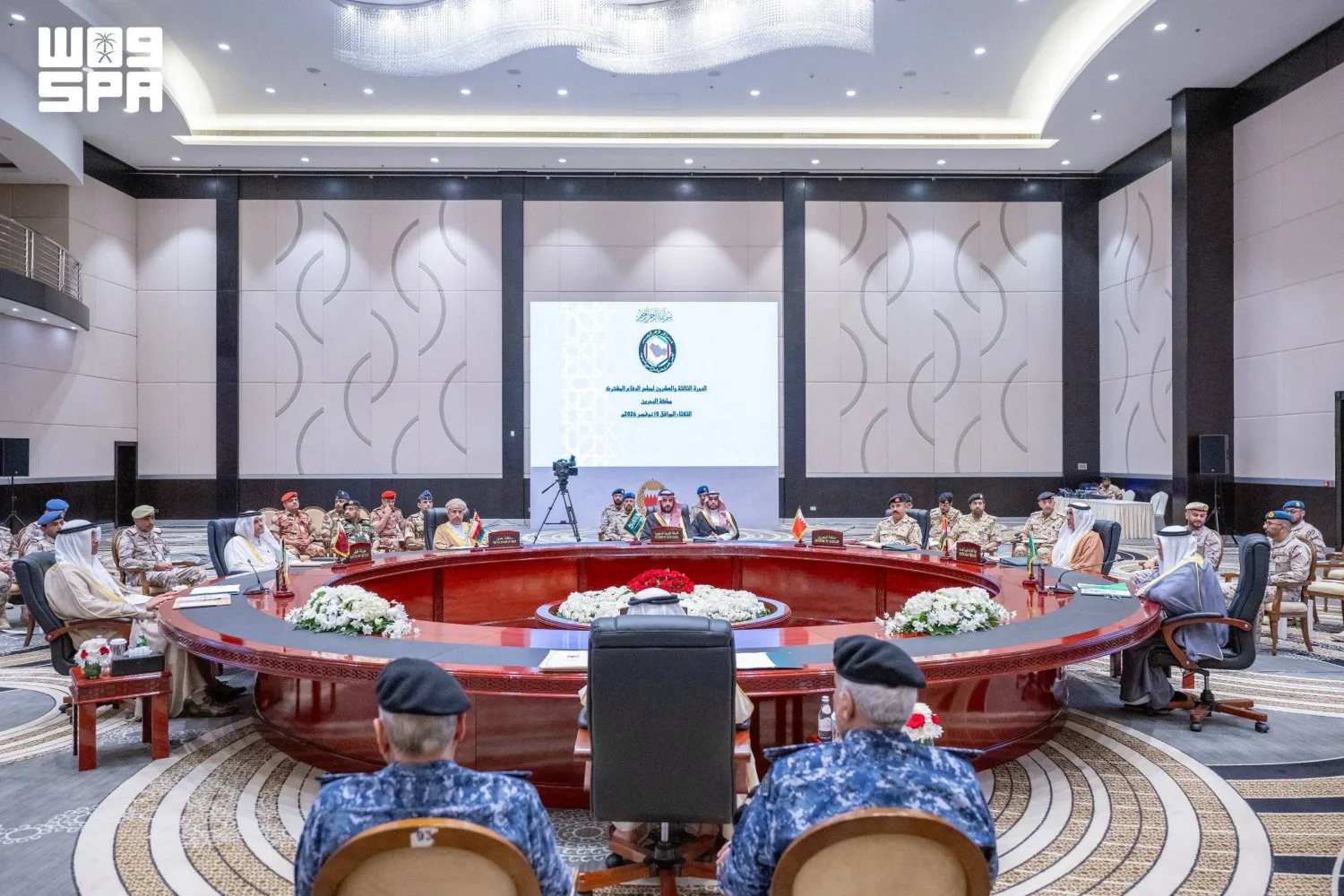
Saudi Defense Minister Prince Khalid bin Salman attends the 23rd meeting of the GCC's Joint Defense Council in Manama, Bahrain, November 10, 2026. (SPA)
TT

What Does the Approval of an Advanced Command for the Unified Military Command in Kuwait Signify?

Saudi Defense Minister Prince Khalid bin Salman attends the 23rd meeting of the GCC's Joint Defense Council in Manama, Bahrain, November 10, 2026. (SPA)

GCC defense ministers on Tuesday approved the launch of an advanced command for the Unified Military Command in Kuwait and allocated appropriate forces to it.

The ministers met at the 23rd session of the GCC Joint Defense Council in Manama, chaired by Bahrain's Minister of Defense Affairs and current session president, Lieutenant General Abdullah bin Hassan Al-Nuaimi.

Analysts and observers speaking to Asharq Al-Awsat viewed the step as a significant move toward strengthening joint Gulf security.

Political researcher Dr. Ayed Al-Manna said the announcement was a step that is both necessary and urgent to guarantee collective Gulf security through the presence of forces tasked with protecting GCC states, independent of any internal disputes or differences.

Al-Manna told Asharq Al-Awsat that unprovoked Iranian attacks against GCC states underscored the critical need for constant, comprehensive readiness to deter external aggression.

The Gulf faces multiple threats, led primarily by the Iranian axis and its regional proxies, including militias in Iraq, the Houthis in Yemen, and Hezbollah in Lebanon.

However, Al-Manna added that the security challenges extend beyond this, pointing to threats stemming from Israel and concerns surrounding the "Greater Israel" project.

He noted that the lack of stability in several regional countries and “ambitions” of targeting the Gulf, makes it imperative to boost military readiness and activate the unified Gulf force.

This step should have been taken a long time ago to bolster the security of all GCC states, he remarked.

He underscored the importance of equipping Gulf forces with the necessary military components and capabilities to enable them to deter and respond to any external aggression, meeting the collective security requirements of the council's member states.

Former Saudi officer Abdullatif Al Mulhem told Asharq Al-Awsat that establishing the Unified Military Command is a vital step in advancing joint Gulf military cooperation.

It is essential given the region's current security developments, which demand heightened coordination and readiness among the armed forces of the Gulf countries, he said.

Al Mulhem explained that the military significance of the decision lies in the GCC states strengthening the organizational structure of joint military action through an advanced command. This step is expected to boost coordination among Gulf forces and bolster their capacity to handle shared challenges and threats.

Saudi Arabia is expected to host the upcoming meeting of the Joint Defense Council as announced by Defense Minister Prince Khalid bin Salman at the Manama meeting.