
Battered Duerer Masterpiece Up for Five-year Revamp

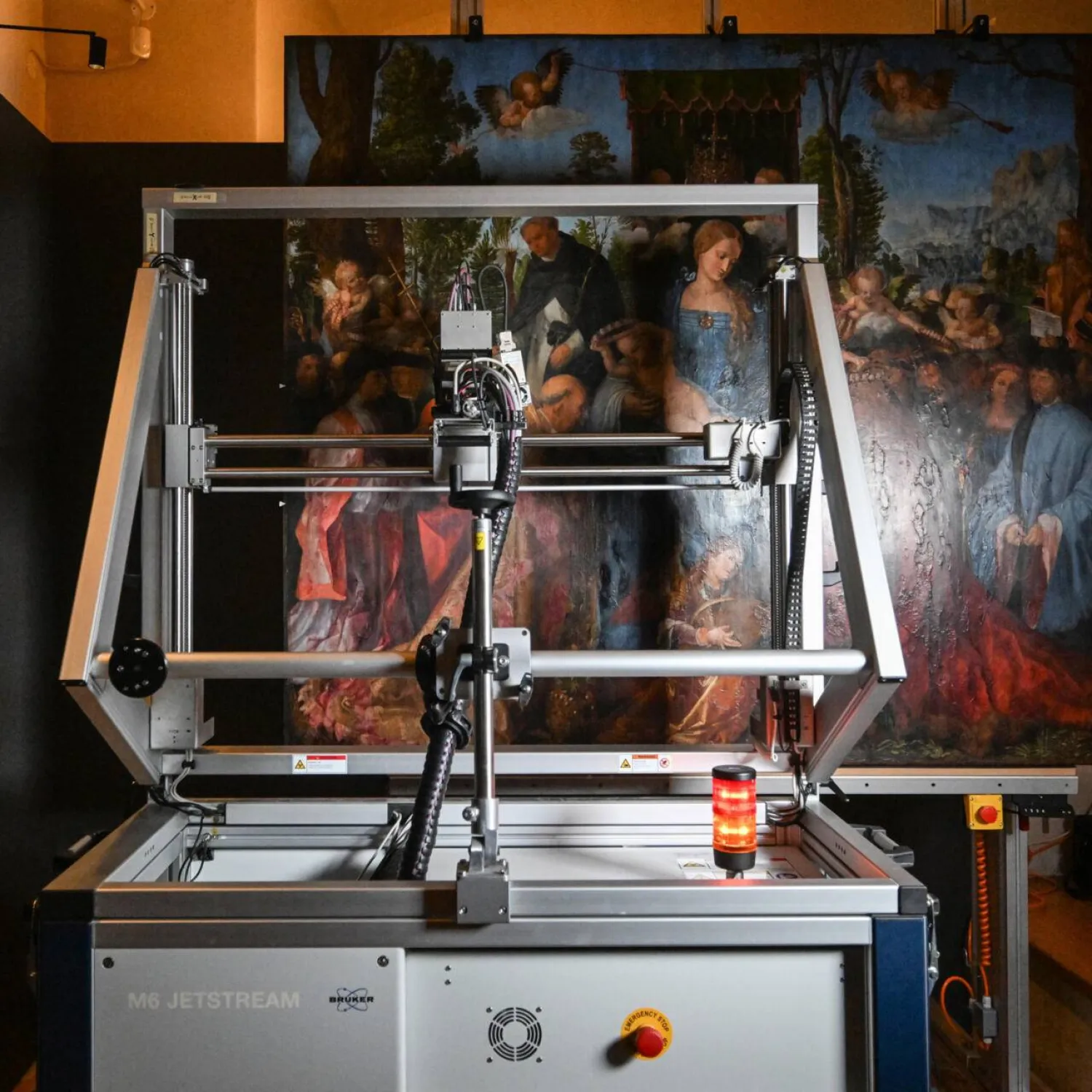
Prague's National Gallery expects to complete the reconstruction of Albrecht Duerer's "Feast of the Rosary" by 2031. Michal CIZEK / AFP
TT

Battered Duerer Masterpiece Up for Five-year Revamp

Prague's National Gallery expects to complete the reconstruction of Albrecht Duerer's "Feast of the Rosary" by 2031. Michal CIZEK / AFP

Albrecht Duerer's "Feast of the Rosary", a Renaissance gem of Prague's National Gallery, is facing a painstaking five-year reconstruction designed to set right five centuries of mistreatment and damage.

Experts have pointed out the poor condition of the colorful painting that the German master created for the San Bartolomeo church in Venice in 1506, said AFP.

"Its state of preservation has been poor since the late sixteenth century," University of Texas art historian Jeffrey Chipps Smith wrote in a 2007 review.

True to the Venetian technique, Duerer used oil on poplar wood to depict the Virgin Mary holding a baby Jesus handing out rose garlands to believers including future Emperor Maximilian I and Pope Julius II.

But the material did not last and countless repairs and moves caused damage requiring an extensive revamp, National Gallery head Olga Kotkova told AFP.

"People say paintings are an organism similar to people, and when someone lives a reprehensible life, it is reflected in their faces," she said.

"It's similar with works of art."

Also known as "The Feast of the Rose Garlands", the painting will undergo scans to reveal "the tiniest details", said Adam Pokorny, chief restorer at the National Gallery.

To map the composition of the painting, the gallery will use macro-XRF scanning employed in the ongoing reconstruction of Rembrandt's "The Night Watch" by the Rijksmuseum in Amsterdam.

"We are also planning to make a 3D model of the painting, which will be useful to understand the condition of the wooden base," Pokorny told reporters.

- The lost fly -

A book published by the National Gallery on the 500th anniversary of the painting details its history.

Commissioned by the Confraternity of the Most Holy Rosary, a Catholic association sheltered by the Dominican order, the painting was praised widely and drew crowds of German worshippers to Venice.

It was carried on foot to Prague in 1606 when Holy Roman Emperor Rudolph II bought it for his collection.

It escaped looting by the Swedish army during the Thirty Years' War but fell into oblivion as Rudolph's collection was plundered.

Described as "completely destroyed" in an 18th-century inventory, the painting changed hands several times before ending up at the Strahov monastery near Prague Castle in 1793.

It underwent the first repair before the move to Prague, and other attempts followed, crowned by the efforts in 1839-1841 of Czech painter Johann Gruss, who was criticized for changing its surface and appearance.

"The paint has begun to fall off on the border between the original Duerer and Gruss's repair, millimeter by millimeter. The revamp is essential," said Kotkova.

Over the centuries, the painting has also lost a disputed element -- a fly that Duerer painted on Mary's knee.

In 1934, the state bought it for 9.6 million koruna, a record price for an art purchase by the government at the time, after the monastery rejected even higher foreign offers.

It spent World War II hidden in shelters.

Kotkova said only 75-80 percent of the work in its current state was still Duerer's "beautiful painting".

Pokorny said its "visual rehabilitation", in consultation with an international committee, would involve fixing the paint, removing poor-quality retouches and repairing the wooden base.

"With this scenario, we are looking at completion in 2031," Pokorny said.


Van Gogh Work Unseen in Public for 60 Years on Show in Hong Kong

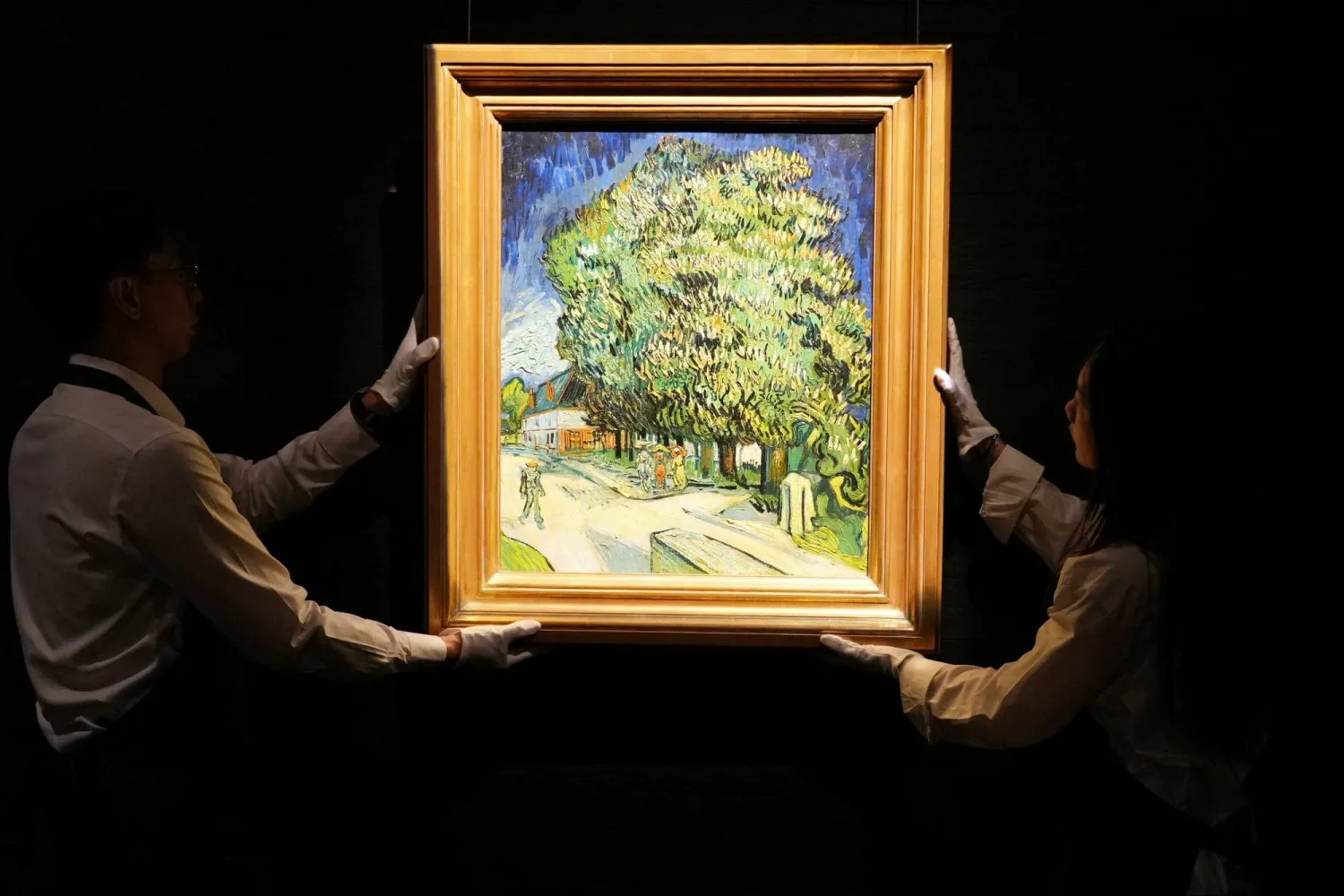
Staff members pose with Vincent van Gogh's "Chataigniers en fleurs" (Chestnut Trees in Blossom) at a media preview ahead of its auction in New York, at Sotheby's in Hong Kong, China, October 13, 2026. REUTERS/Joyce Zhou
TT

Van Gogh Work Unseen in Public for 60 Years on Show in Hong Kong

Staff members pose with Vincent van Gogh's "Chataigniers en fleurs" (Chestnut Trees in Blossom) at a media preview ahead of its auction in New York, at Sotheby's in Hong Kong, China, October 13, 2026. REUTERS/Joyce Zhou

Hundreds of people queued on Tuesday outside a Hong Kong gallery to see a Vincent van Gogh painting on public display for the first time in six decades.

The Dutch artist's "Chataigniers en fleurs" ("Chestnut Trees in Blossom") was on show in Hong Kong ahead of its November 18 auction in New York, where it is expected to smash records and fetch around $180 million, according to Sotheby's.

It was one of 12 works owned by late Argentine collectors Nelly Arrieta de Blaquier and Carlos Pedro Blaquier. Others by Claude Monet, Camille Pissarro and Paul Cezanne will also go under the hammer.

The van Gogh, which according to Sotheby's was unseen by the public for over 60 years, portrays a blossoming chestnut tree with a solitary man walking past three women in Japanese attire.

Completed in 1890, it is from the last two months of van Gogh's life.

"It's one of the last, most expressive and hopeful works by van Gogh in this final phase of his career," Scott Niichel, a vice chairman at Sotheby's, told AFP.

It is one of approximately 70 works van Gogh created after leaving the psychiatric asylum of Saint-Remy, where he had created his famous "The Starry Night.”

During these final days of his life, van Gogh was producing at a frantic rate -- averaging around one work a day.

He died shortly after at the age of 37, two days after shooting himself in the chest following well-documented mental health struggles.

"This manic frenzy of paint application suggests he has so much more to give, and he's just racing to put it to canvas," Niichel said, noting the thickness of the paint layers.

"Orchard with Cypresses" set the current record for a van Gogh price point, selling for $117.2 million in a 2022 auction.

Niichel said that "anything is possible" for who might claim the painting in November.

"Our revealing in Hong Kong suggests that Asia is certainly a possibility."


Egypt’s Fayoum Mummy Portraits to Travel Abroad for 1st Time after Restoration

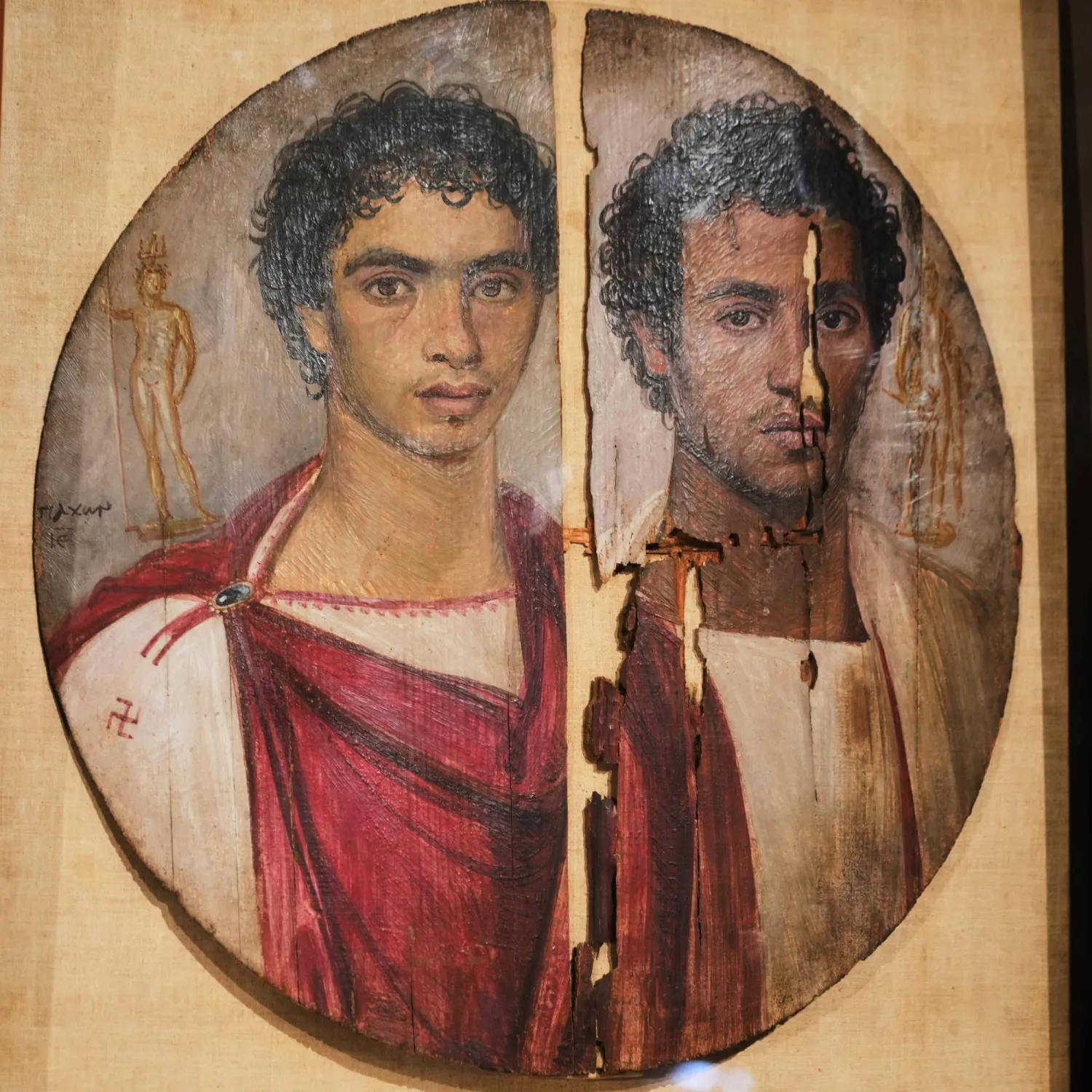
Fayoum portraits, "Tondo of the Two Brothers", Egyptian icons from the Greco-Roman period the 1st century BC, are displayed at the Egyptian Museum in Cairo, Egypt, Sunday, Oct. 11, 2026, after being restored. (AP Photo/Amr Nabil)
TT

Egypt’s Fayoum Mummy Portraits to Travel Abroad for 1st Time after Restoration

Fayoum portraits, "Tondo of the Two Brothers", Egyptian icons from the Greco-Roman period the 1st century BC, are displayed at the Egyptian Museum in Cairo, Egypt, Sunday, Oct. 11, 2026, after being restored. (AP Photo/Amr Nabil)

Egypt unveiled Sunday a restored version of the “Tondo of the Two Brothers,” a prized 2nd-century painting from the famed Fayoum portraits.

Specialists from Rome worked alongside conservators from the Egyptian Museum in Tahrir — where the collection is usually kept — for three weeks to restore the artwork, officials said at a press conference.

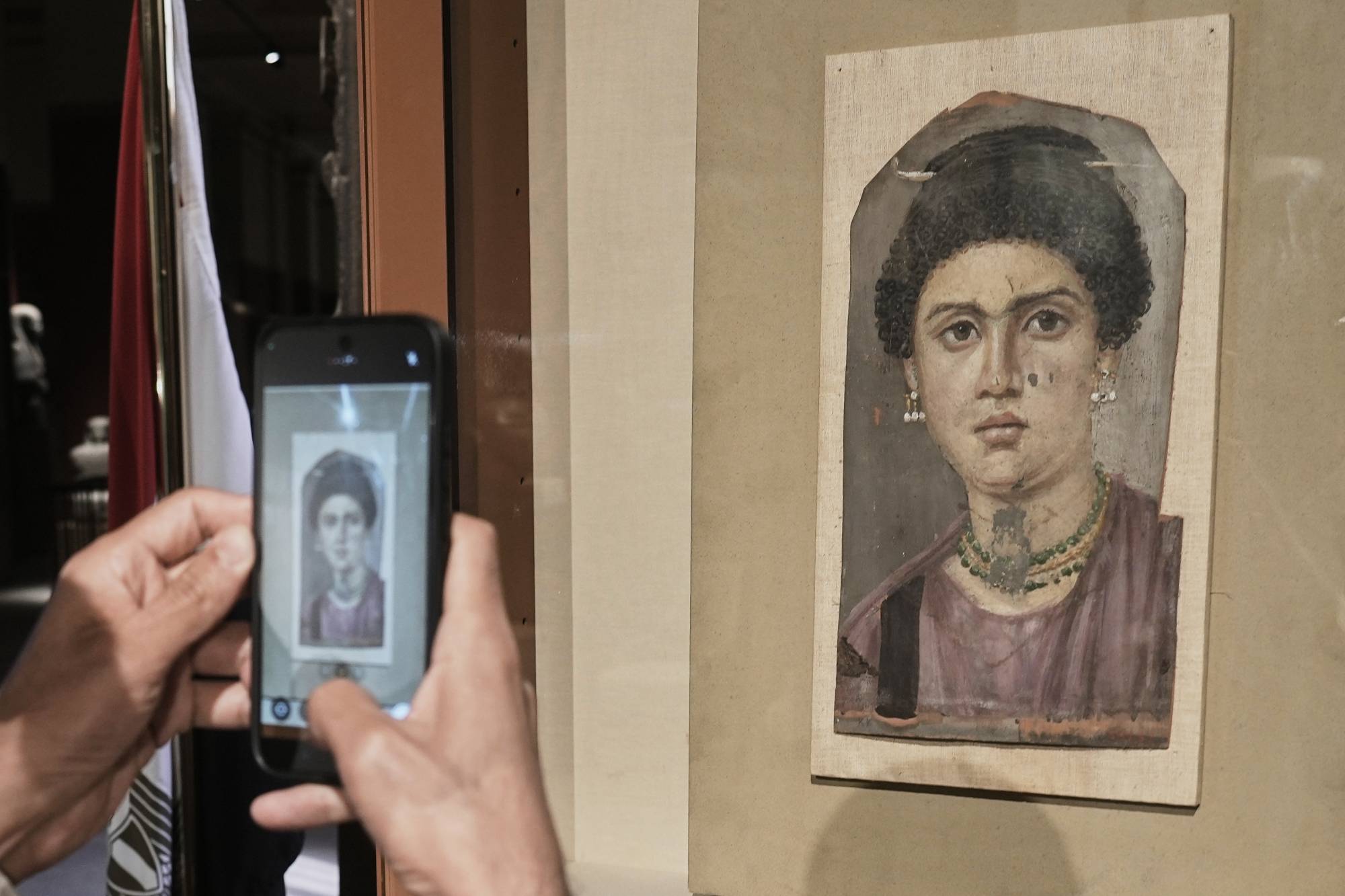
A visitor films one of Fayoum portraits, "Demos", from the Greco-Roman period the 1st century BC, at the Egyptian Museum in Cairo, Egypt, Sunday, Oct. 11, 2026, after being restored. (AP Photo/Amr Nabil)

Fayoum mummy portraits were painted primarily on thin wooden panels and placed over the faces of the deceased within mummy wrappings, combining Egyptian funerary traditions with artistic influences from the wider Greco-Roman world.

Egypt will lend a major part of the collection to a temporary exhibition in Rome, marking the first time it will travel abroad.

“The restoration of the Tondo of the Two Brothers is an important example of what can be achieved through international cooperation in the preservation and study of cultural heritage,” said Sherif Fathy, Egypt’s minister of tourism and antiquities. “Egypt and Italy share deep historical and cultural ties, and this project brings together Egyptian and Italian expertise to preserve an exceptional work of art for future generations.”

Experts describe the painting as unusual because of its circular shape and its depiction of two people instead of one, and rank it among the most vivid surviving portraits from Roman-era Egypt. It was painted using a technique in which pigments are mixed with molten wax, and restorers were able to recover the features of the brother on the right.

Aly Abdel Halim, director general of the Egyptian Museum in Tahrir, said the conservation required careful intervention because both the wooden support, damaged by termites, and the painted surface were fragile.

Fayoum portraits, "Tondo of the Two Brothers", Egyptian icons from the Greco-Roman period the 1st century BC, are displayed at the Egyptian Museum in Cairo, Egypt, Sunday, Oct. 11, 2026, after being restored. (AP Photo/Amr Nabil)

The portraits will be featured in an exhibition in Rome from November to May 2027, The Associated Press reported.

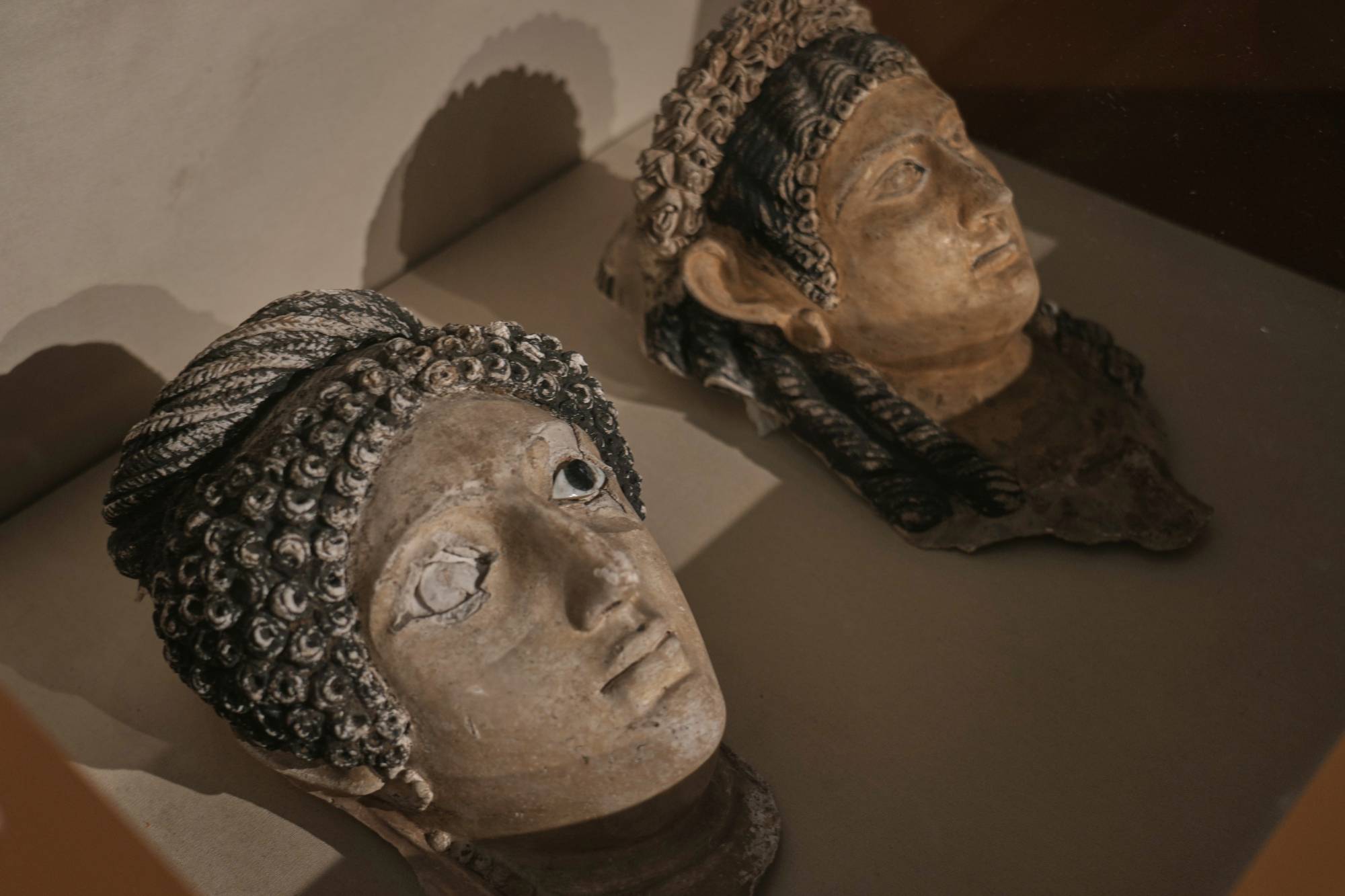
Tomaso Radaelli, chairman of MondoMostre, the exhibition’s organizer, said it will bring together more than 110 objects, including painted panels, funerary shrouds, masks, marble portraits, plaster casts and ancient jewelry.


Mayor: Two Renoir Paintings Stolen in France Recovered

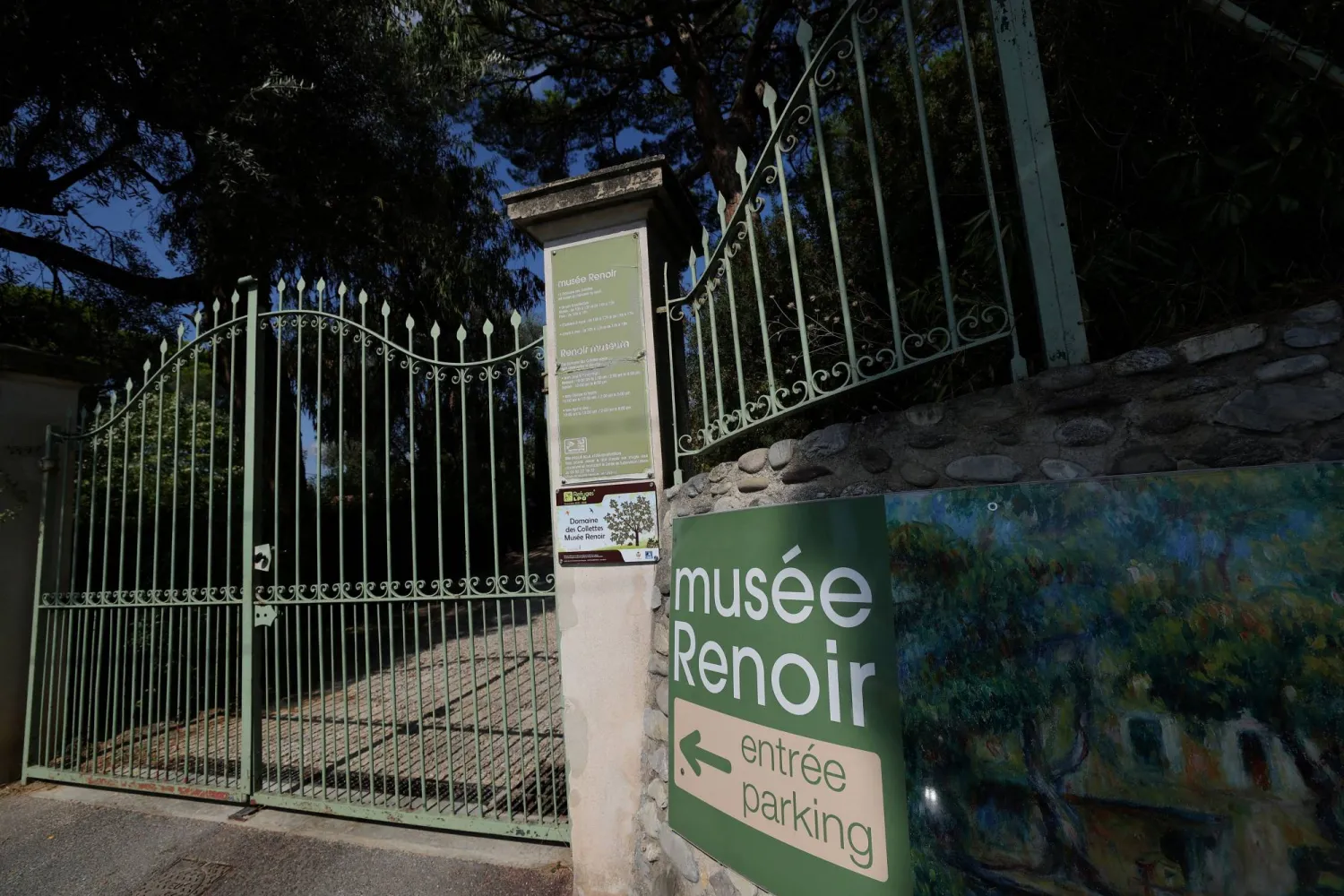
FILE PHOTO: A sign indicates the entrance of the Renoir Museum in Cagnes-sur-Mer, on the French Riviera, France, September 8, 2026. REUTERS/Manon Cruz/File Photo
TT

Mayor: Two Renoir Paintings Stolen in France Recovered

FILE PHOTO: A sign indicates the entrance of the Renoir Museum in Cagnes-sur-Mer, on the French Riviera, France, September 8, 2026. REUTERS/Manon Cruz/File Photo

Two paintings by French master Pierre-Auguste Renoir have been recovered a month after they were stolen from a museum in southern France, the town's mayor said Friday.

In September, thieves broke into the museum in Cagnes-sur-Mer and managed to escape with two works by the French impressionist painter, abandoning two others as they fled.

"These two paintings are not simply works of art. They are part of our city's history," said Bryan Masson, the mayor of Cagnes-sur-Mer.

"Knowing they have been recovered is an immense relief."

There has not yet been any statement from the police and Masson did not give any details regarding where the works were found or their condition.

The suspects cut through a fence to enter the museum's tree-lined grounds, smashed a window to get inside, and used an electric saw to cut through the frame mountings, Masson said at the time of the robbery in early September.

The theft took place in just a matter of minutes, shortly before 6:00 am (0400 GMT).
A source close to the probe told AFP earlier this week that police had arrested five people as part of the investigation.

According to Masson the museum alarm and police sirens forced the burglars -- which he described as "well equipped and well informed" about the museum -- to hurry.

They made off with a portrait titled "Madame Colonna Romano" and the depiction of a woman at a well called "Jeune femme au puits", his office said.

The paintings dropped during their escape include "Madame Pichon" and "Coco lisant", a portrait of Renoir's young son Claude reading.

The police said at the time of the robbery that it was clear that they were not first-time offenders, and that they had scoped out the premises before the crime.

The Renoir Museum lies a half-hour drive from the southern city of Nice, in Renoir's last home before he died aged 78 in 1919.

Its collection comprises nine paintings by Renoir, according to the museum.

It also includes several sculptures by him, as well as objects and furniture that belonged to the painter, such as his easel and wheelchair.

A spate of heists at French museums -- including at the Louvre -- has highlighted inadequate security in some cases and led to questions about whether criminal gangs see them as soft targets.

Crown jewelry valued at around $100 million was stolen in broad daylight from the Louvre in Paris last year.

The four suspected Louvre robbers have been arrested, but the jewels they are accused of grabbing in the seven-minute heist have still not been found.

Italian police in August said they had recovered paintings by Renoir, Cezanne and Matisse worth over $10.4 million that were stolen in a three-minute heist from a museum in March.
And earlier this week, a book featuring a cover made of bronze and designed by Spanish surrealist painter Salvador Dali was stolen from an art museum in central France.