India Takes Battle Against Junk Food to Shops Near Schools

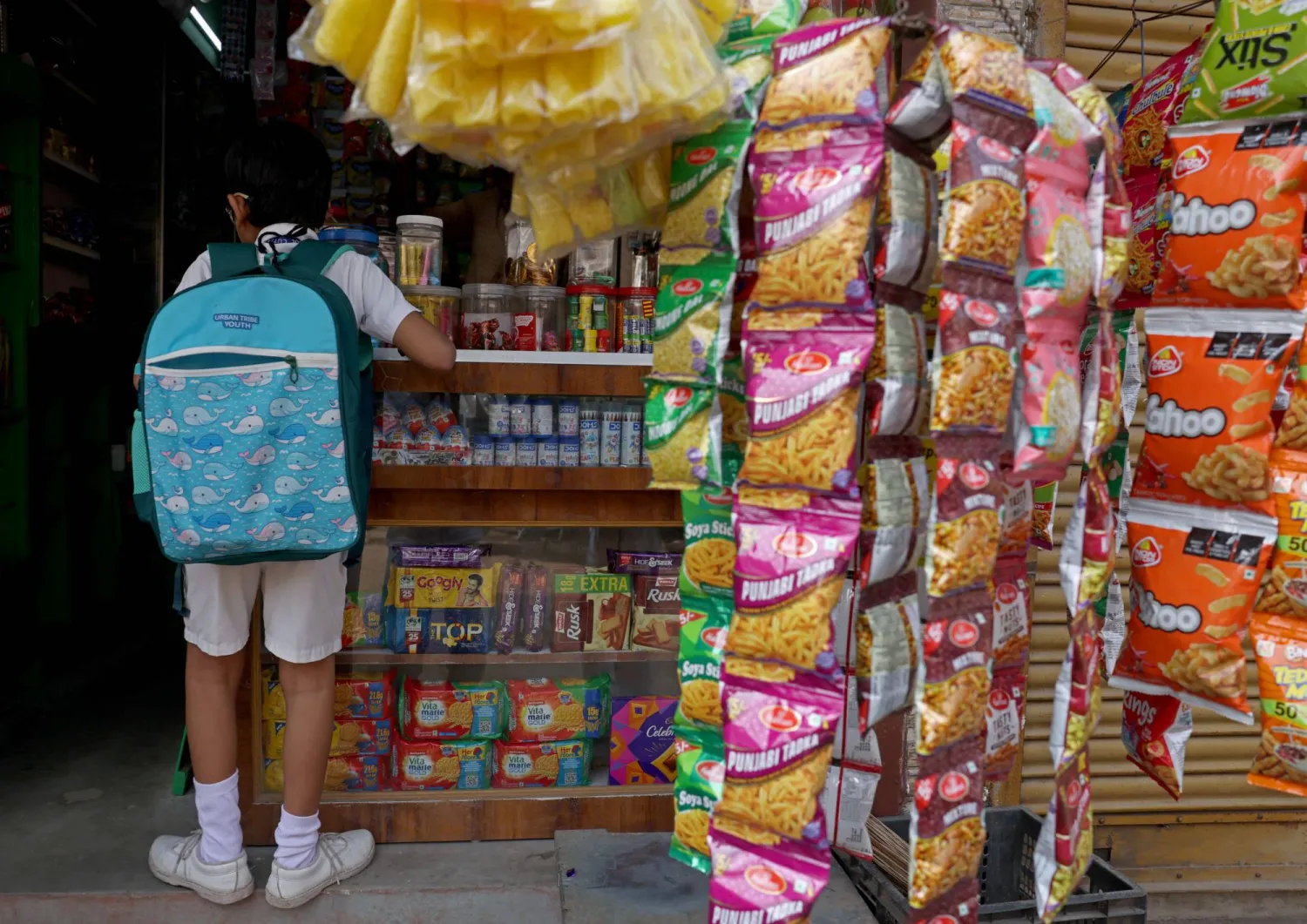
A schoolchild inside a grocery shop in Cuttack, Odisha, India, September 18, 2026. REUTERS/Priyanshu Singh
TT

India Takes Battle Against Junk Food to Shops Near Schools

A schoolchild inside a grocery shop in Cuttack, Odisha, India, September 18, 2026. REUTERS/Priyanshu Singh

India is moving closer to new regulations to restrict the sale of foods high in fat and sugar within a 50-meter radius of schools, the latest proposal to cut the consumption of junk food in a country battling growing rates of obesity, especially among children.

The rule would impact family-run stores, restaurants and food stands selling everything from sugary soft drinks and salty chips to greasy samosas and fatty pizzas or burgers close to India's 1.5 million schools.

It could prove another hurdle for multinationals such as PepsiCo, Coca-Cola, Mondelez and Nestle, which already face proposed rules to put red warning labels on products high in fat, salt and sugar (HFSS), bringing India into line with markets such as Chile and Mexico that have tougher food safety regulations.

Some Indian businesses and grocery shop owners near schools are already fretting. In Bhubaneswar city in eastern India, a dozen shopkeepers said sales could drop by a third or more, Reuters reported.

At one shop, 15-year-old Priyanshu Palei bought two packets of PepsiCo's popular Uncle Chipps, stuffing them into his backpack on the way to class. "I will have these during recess," he said, preferring them over his mother's packed lunch of rice and lentil stew.

That's the habit India wants to ⁠break.

Rajit Punhani, the ⁠chief executive of the Food Safety and Standards Authority of India, which is driving the changes, said the "safe food" schools plan aimed to steer children away from unhealthy habits early on.

"We have to discourage children from having these. We have to inculcate this habit," he told Reuters. "It will not have an impact on businesses in a major way. Shop owners can sell non-HFSS foods," he added, saying regulations are aimed at nudging companies to reformulate recipes.
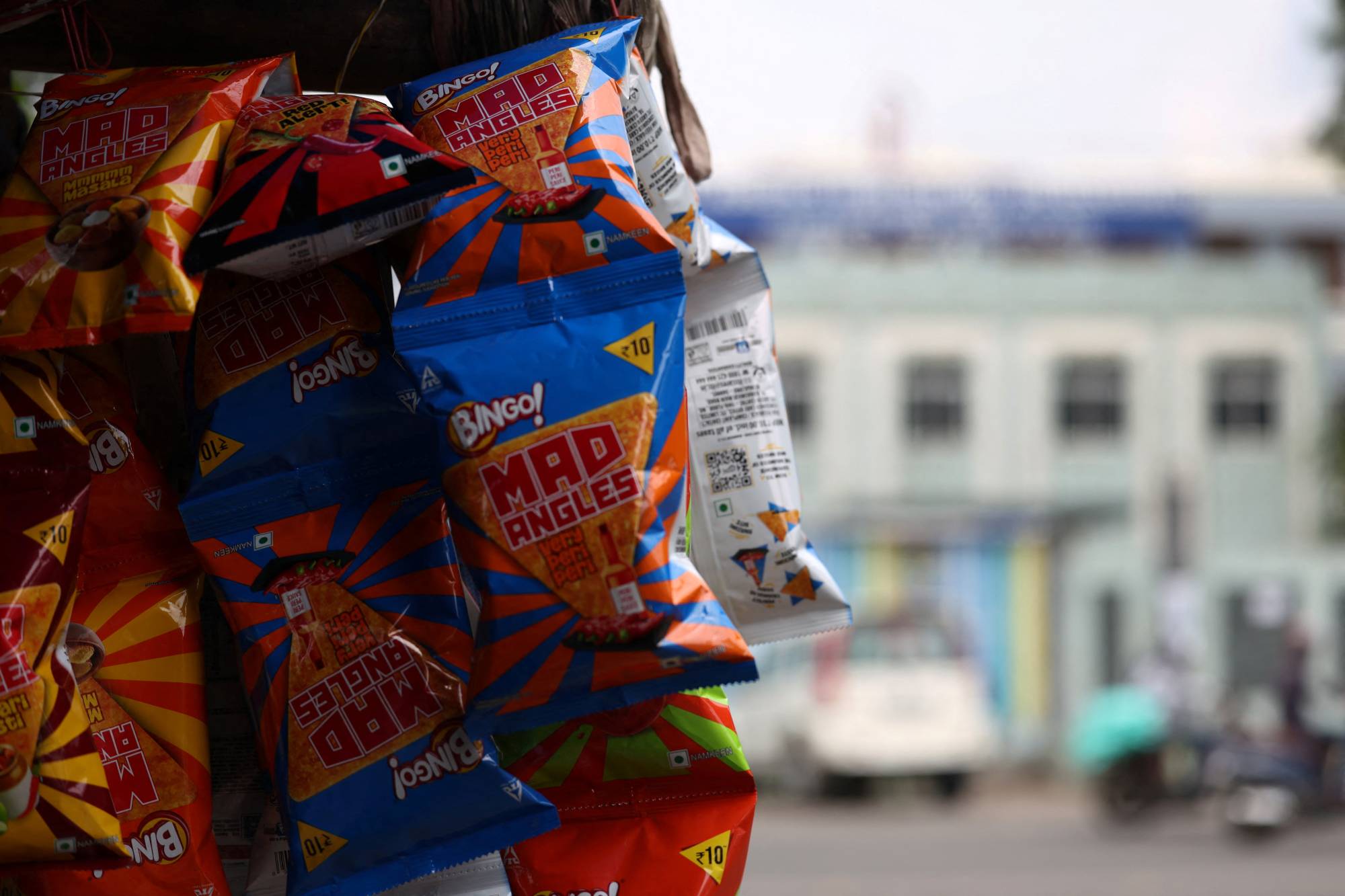
Packets of chips and snacks hang at a grocery shop in Bhubaneswar, Odisha, India, September 17, 2026. REUTERS/Priyanshu Singh

There is no fixed timeline for the law, first proposed in 2020. Amid a nationwide food safety crackdown, the authority in August published thresholds for fat, salt and sugar content that would trigger restrictions on sales near and inside schools, inviting public feedback until October 6.

In recent years, products ranging from Lay's chips to Cadbury chocolates and Maggi noodles have ⁠grown in popularity. Some Indians with lower incomes view buying foreign brands as a mark of an improving lifestyle, while also being drawn by cheap prices. In 2023, Domino's launched its cheapest pizza in the world in India, selling for just 49 rupees (50 US cents).

As diets changed, the number of Indian children aged 5-19 deemed overweight or obese has also climbed. From 28 million in 2015, it surged nearly 50% to 41 million by 2025 and will touch 56 million by 2040, World Obesity Federation data shows.

While India's federal law aims to block near-school shops from selling and advertising HFSS products only to schoolchildren, the western state of Maharashtra, home to Mumbai, has taken a stricter approach - no shop within 50 meters of schools can carry such products, state food safety commissioner Tukaram Mundhe told Reuters.

"There will be hundreds of such shops near schools. How will one regulate if they are selling to schoolchildren or not? Shops cannot stock these items," said Mundhe.

State data accessed by Reuters showed inspectors have so far found violations at 133 shops within 50 meters of schools, and ordered 51 to discontinue their business.

The Confederation of Indian Food Trade and Industry is concerned, saying compliance would be difficult as many schools are close to congested ⁠markets serving the general public, according to ⁠its confidential draft submission made to respond to the proposal, and reviewed by Reuters. The trade group did not respond to queries.

The law can cause "loss of business and livelihood," the document said, arguing restrictions should only apply inside schools.

Asked about the schools proposal, PepsiCo, which owns Lay's, referred Reuters to its global policy which limits what products it allows to be sold in schools. Nestle, which makes Maggi noodles, said it follows its global policy which only allows the sale in primary and secondary schools of products that meet specific nutrition criteria.

Coca-Cola and Mondelez, owner of Cadbury, did not respond to Reuters queries.

Rahul Khanna, a food regulations specialist at Indian law firm RAKLaw, said there was a "wave of concern" among his firm's clients, especially confectionery makers for whom children are an "important consumer segment". He did not name the clients.
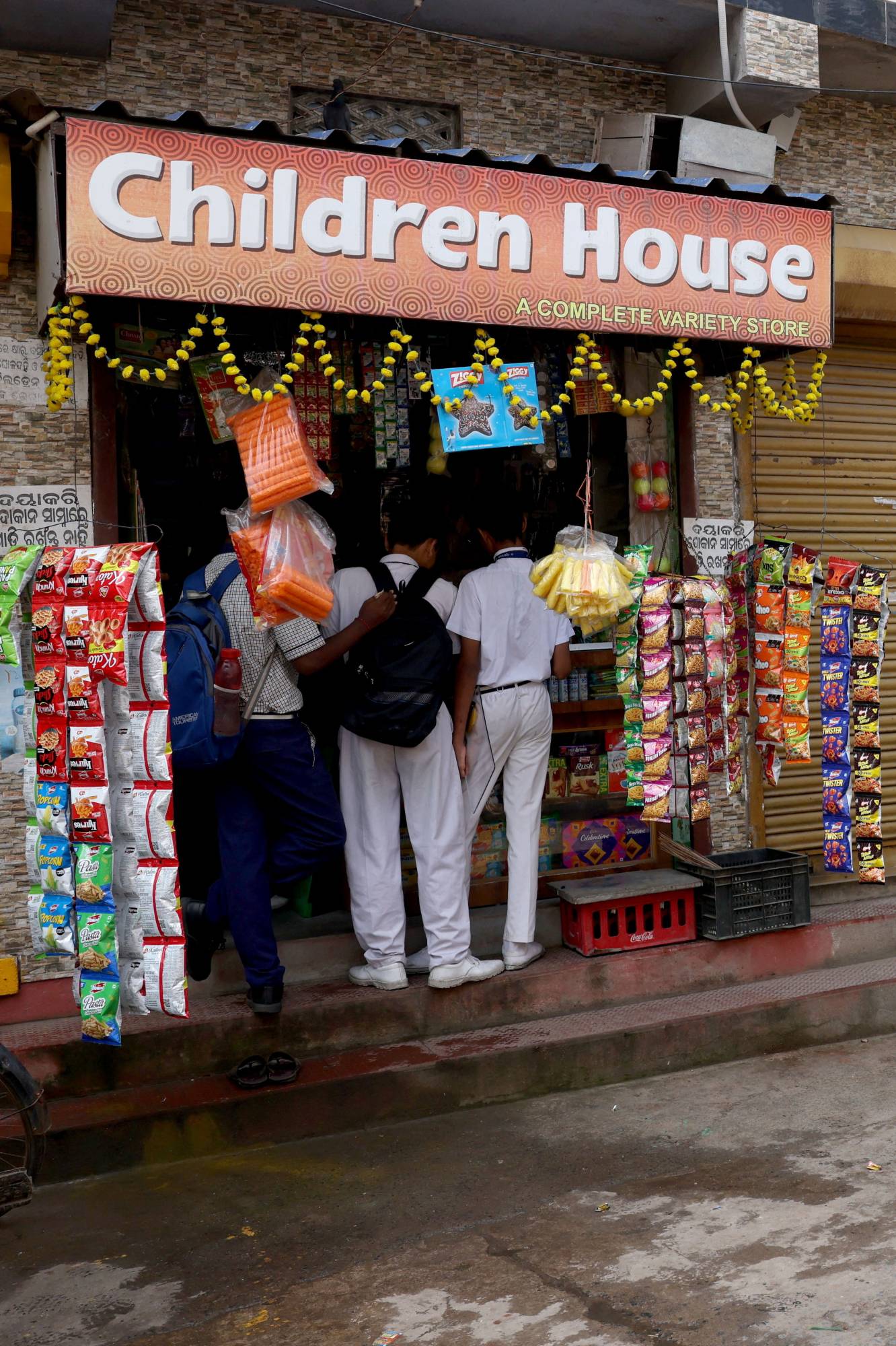
Schoolchildren stand at the front of a grocery shop in Bhubaneswar, Odisha, India, September 18, 2026. REUTERS/Priyanshu Singh

Around the world, five countries have proposed or implemented sale restrictions around schools, while 48 have restricted junk food sales inside schools, according to researchers at the University of North Carolina.

In 2016, Chile imposed new rules on warning labels and prohibited the sale and promotion of junk food in schools. A Lancet study this year said that 18 months of exposure to the law saw a 2.85% lower probability of excess weight among girls, and 2.4% among boys.

The law also pushed manufacturers to reformulate recipes of many products in Chile.

"If the law were ineffective and consumers did not change their behavior, producers would not push back," said Guillermo Paraje, a professor at Adolfo Ibáñez Business School in Chile.

"They know the law will make them reformulate as much as they can."


Ensnared Female Orangutan and Her Baby Rescued in Indonesia

A 20-year-old orangutan tries to escape as members of the BKSDA (Natural Resources Conservation Agency), the Borneo Orangutan Survival Foundation (BOSF) and the World Wide Fund for Nature (WWF) Indonesia evacuate it due to forest and land fire, in Hampangen Village, Katingan Regency, Central Kalimantan, on October 17, 2026. (AFP)
TT

Ensnared Female Orangutan and Her Baby Rescued in Indonesia

A 20-year-old orangutan tries to escape as members of the BKSDA (Natural Resources Conservation Agency), the Borneo Orangutan Survival Foundation (BOSF) and the World Wide Fund for Nature (WWF) Indonesia evacuate it due to forest and land fire, in Hampangen Village, Katingan Regency, Central Kalimantan, on October 17, 2026. (AFP)

Indonesian conservation workers rescued an orangutan ensnared in rope and her baby on the island of Borneo where the critically endangered animals are at risk from boar traps and wildfires, an official said Sunday.

The female orangutan named Gadis, about 25 years old, and her son Garis, 10 months, were found snared in a suspected trap early Friday near a village in Central Kalimantan province on the Indonesian part of Borneo.

"Gadis was found with the ropes tied to her upper right arm and lower left arms, and the wounds were bad because the ropes had torn deep into her flesh," local conservation official Muriansyah told AFP by telephone on Sunday.

"It looked like the ropes were set up as a wild boar snare trap," added Muriansyah, who like many Indonesians has one name.

Both were receiving treatment at the Orangutan Foundation International clinic near the village of Pangkalan Bun.

Wild boar hunting using rope snares is legal and common in parts of Indonesia as a pest control measure to protect crops, but illegal inside protected forests or national parks.

Officials have repeatedly cautioned that careless placement of snares near wildlife areas could instead trap endangered sun bears or orangutans.

Dozens of orangutans have also been rescued in recent weeks from rampant wildfires burning across Indonesia that have cloaked the Southeast Asian region in a toxic haze.

Two more were released in Ketapang, West Kalimantan on Saturday after being rescued from an oil palm plantation.

Orangutans are critically endangered and only about 120,000 remain in the wild in Borneo and Sumatra -- about half the number from a century ago, according to conservation group WWF.

Last month, the International Union for Conservation of Nature said fires were burning in habitats containing 52 percent of Borneo's orangutan population.


Cracking a Smile Regularly May be Good Not Just for Your Mood but for Your Health

FILE - A fan attends the performance by American singer Jon Batiste at the Rock in Rio music festival in Rio de Janeiro, Sept. 7, 2026. (AP Photo/Bruna Prado, File)
TT

Cracking a Smile Regularly May be Good Not Just for Your Mood but for Your Health

FILE - A fan attends the performance by American singer Jon Batiste at the Rock in Rio music festival in Rio de Janeiro, Sept. 7, 2026. (AP Photo/Bruna Prado, File)

Reminding yourself to smile often cannot only make more friendships but it can also make you feel better.

And rather than wait for a reason to smile, just making the physical change of literally turning that frown upside down could impact emotions, according to experts.

Research backs up the fact that smiling goes a long way.

Some older research has focused on this “facial feedback hypothesis,” according to Jeanne Tsai, a longtime psychology professor at Stanford University who runs the Culture and Emotion Lab. In one classic study in the late 1980s, researchers would have subjects put a pencil between their lips and adopt a smile or a frown while viewing a positive movie clip like a cartoon. Some subjects who smiled would feel the sensation of the smile more and be more amused.

“When we’ve done that demonstration in classes, it works,” Tsai said. “When you’re doing it in a room by yourself, you’re not doing it in a social interaction, maybe it’s making you remember, or it’s an effect of remembering some good thing that happened and that would put you in a better mood.”

At the Orange County Academy of Sciences and Arts in Southern California, the power of a smile is taken very seriously. An entire section on the charter school group’s website is dedicated to its philosophy that a smile can make a difference.

“Smiling creates a supportive classroom culture that makes students relaxed, active, and motivated,” according to the website. “It increases emotional well-being, lowers stress, and gives students confidence.”

How smiling can benefit health Dr. Judy Ho, a Los Angeles clinical and forensic neuropsychologist who also teaches at Pepperdine University, discusses smiling as a coping strategy with some patients suffering depression or anxiety.

“I'm not suggesting that that's the only way they can fix things,” Ho said. “It's just like another thing that you can add to your toolbox.”

Smiling can affect one's level of cortisol, a hormone the body releases partly to help regulate stress and mood, according to Ho. Smiling can affect brain chemicals that are associated with positive feelings including endorphins, dopamine and serotonin.

“People who smile during stressful tasks generally demonstrated lower heart rates during recovery than those maintaining neutral expressions,” Ho said. “Smiling also reduced aspects of the body's physiological stress response.”

The hope is if you smile enough, you will start feeling it emotionally.

“In some ways it's like a mediating effect,” she added.

The value of a smile varies culture to culture How smiling and even the openness of a smile are perceived are not universal. Tsai, the Stanford professor, has conducted research on how emotion in American culture puts value on trying to always feel positive and minimizing negativity and sadness. In East Asian cultures, emotion is more about balance.

“It’s like the positive and the negative emotions are braided together, and so you don’t want to feel too positive or too negative,” Tsai said. “You want more of a balance between the two.”

Her past studies also examined how European Americans and East Asians — including Taiwanese, South Koreans, Japanese and Hong Kong Chinese — look at a “neutral or a calm” smile versus a full-on grin. Subjects rated the differing facial expressions on warmth and trustworthiness. While some Americans saw the excited smiles as friendlier, some East Asians characterized those facial expressions as “emotionally unstable” or “unreliable."

“What kind of smile matters — whether it’s a calm, closed mouth smile more like the Dalai Lama or a big toothy excited smile like Julia Roberts,” Tsai said. “We’ve done some series of studies in Taiwan and other East Asian contexts. They don’t like the big, toothy, excited smile unless it’s really situationally appropriate.”

In Thailand — known as “The Land of Smiles” — smiling is embedded in the culture. There are nearly 30 Thai words for “smile.” Many teach-abroad programs where people can teach English as a foreign language in Thailand cite that smiling often with children and colleagues is key to showing respect, good manners and calmness.

At the OCASA charter schools, smiling is part of an effort to make children feel seen.

“I’ve always believed in wanting school to be a happy place for kids,” said RaNae Posey, principal of OCASA Capistrano Elementary School. “To actually help them form habits of looking at the bright side of things.”

Mandating smiles may lead to more frowns Women in recent years have smacked down the idea that they have to smile in the workplace while men do not. Smiling can feel like a Catch-22 for some women and sometimes for people of color who may be stereotyped as unapproachable or cold if they don’t smile enough.

Last year, retailer Target was ridiculed across social media for instituting a smiling policy. Workers had to smile and make eye contact if a customer was within 10 feet (3 meters) and personally greet them if they were within 4 feet (1.2 meters).

People do not like feeling like they have no “emotional autonomy,” according to Nicholas Coles, an assistant professor who runs the Social Science Collaboratory at the University of Florida in Gainesville.

“In those scenarios, what we find is that it’s more that you’re smiling your way to misery,” Coles said. “It’s only when it feels authentic and voluntary that I think it’ll have any real effect.”

With the holidays approaching, more people may have to muster smiles with family if sensitive topics like politics and religion come up. Those could be good times to see if smiling helps.

“If we were able to just smile and be like ’Look, this is somebody that historically cares about you and loves you,' maybe that would change the way that we respond to them even in a moment of tough conversation,” Ho said.


Six Flags Says it Will Install Seat Belts on Georgia Roller Coaster after Rider's Death

Six Flags Says it Will Install Seat Belts on Georgia Roller Coaster after Rider's Death
TT

Six Flags Says it Will Install Seat Belts on Georgia Roller Coaster after Rider's Death

Six Flags Says it Will Install Seat Belts on Georgia Roller Coaster after Rider's Death

The chief executive of Six Flags says the company will install seat belts on the Georgia roller coaster from which a rider fell to his death earlier this month.

The company's rides with similar restraints will also get the safety upgrade.

The theme park operator announced the extra safeguard less than two weeks after 42-year-old Hassan Jihad Ibn Kariem of Atlanta died after being ejected from his seat on the Goliath coaster at Six Flags Over Georgia.

“We are reinforcing safety precautions at our parks and taking additional measures, including adding seat belts on Goliath and other coasters with a similar restraint,” John Reilly, president and CEO of Six Flags Entertainment Corporation, said in a statement Friday.

Goliath remains shut down while state and local officials investigate the Oct. 12 death.

Reilly didn't specify which other Six Flags coasters will get seat belts. But it has temporarily closed eight additional roller coasters at five other parks in the US and Canada. Those rides all share the same manufacturer and a similar restraint system.

Six Flags hasn't said when those coasters are expected to reopen. Reilly's statement said Six Flags has enlisted independent engineers and inspectors to review safety procedures for all rides at its theme parks.

Investigators haven't said what went wrong on the Georgia coaster. Witnesses said they saw Kariem rise up out of his seat and fall headfirst back into the cart before being ejected. Some people who rode Goliath before him that day said they had concerns about its restraints.

All nine of the Six Flags coasters taken offline were manufactured by the Swiss company Bolliger & Mabillard. They also feature similar clamshell restraints that sit at the top of a vertical bar between each rider's knees. The bar locks a padded restraint into place over the rider's lap and upper legs.

The US patent granted to Bolliger & Mabillard for the restraint system in 2001 says it's designed to make each rider feel “that he is seated on a flying carpet or that he is at the controls of a kind of flying scooter, while still guaranteeing optimum security.”

Following the death in Georgia, non-Six Flags theme parks SeaWorld Orlando in Florida and La Ronde in Montreal, Canada, also temporarily closed one roller coaster apiece that use clamshell restraints.

SeaWorld reopened its Mako coaster Tuesday after it had been offline for a week. The Associated Press emailed the company Saturday asking if seat belts or other safety upgrades were planned for the coaster.

The AP also emailed a spokesperson for La Ronde seeking an update on its shuttered coaster.

In addition to Goliath in Georgia, eight coasters remain closed at Six Flags parks in Gurnee, Illinois; Jackson Township, New Jersey; Charlotte, North Carolina; Mason, Ohio; and Vaughan, Ontario.