


UAE Bars Iranian Airline Flights as US Sanctions Bite

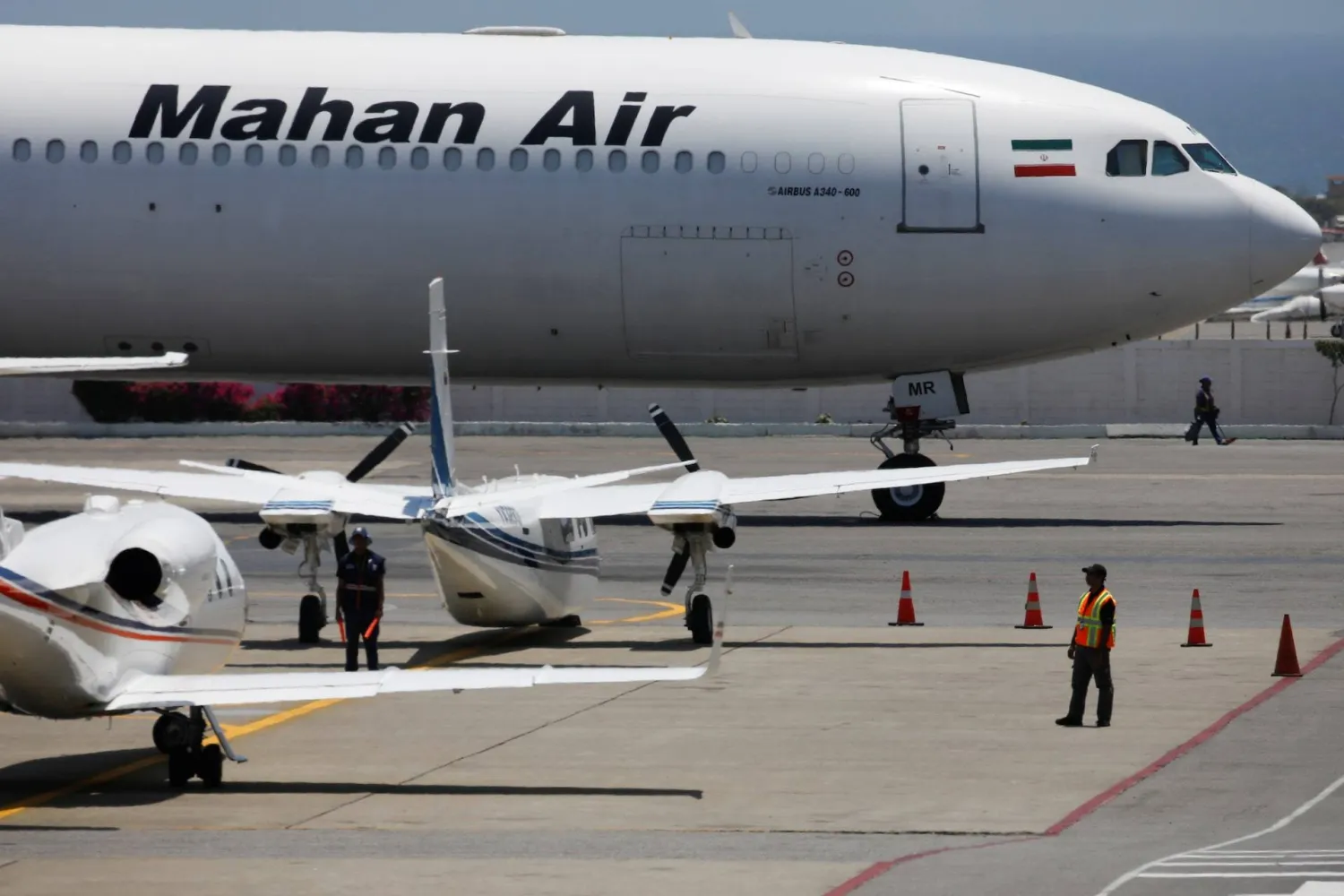
An Airbus A340-600 airplane of Mahan Air is seen at Simon Bolivar International Airport outside Caracas, Venezuela April 8, 2019. (Reuters)
TT

UAE Bars Iranian Airline Flights as US Sanctions Bite

An Airbus A340-600 airplane of Mahan Air is seen at Simon Bolivar International Airport outside Caracas, Venezuela April 8, 2019. (Reuters)

The United Arab Emirates said on Thursday it would no longer accept flights by Iranian airlines as it joins US sanctions aimed at raising economic pressure during the Middle East war.

Dubai, the UAE's commercial hub, is a major destination for Iran's carriers, with multiple daily flights, a large Iranian community and close business links.

Several other countries have suspended Iranian flights, although routes to Türkiye and China were among those that remained open.

"The General Civil Aviation Authority announced the suspension of all flights operated by Iranian airlines to and from the UAE," said a statement carried by the official WAM news agency.

The suspension, from Thursday, was "based on the US sanctions imposed on Iranian airlines preventing them from using airports around the world", the statement said.

The UAE was targeted by thousands of Iranian missiles and drones in the war's early stages. Last month, it suspended trade and financial exchanges with Iran.

On Wednesday, the UAE central bank blocked transactions to and from Iran by branches of Iran's Bank Melli, accusing it of violating laws on money laundering, terrorism and arms proliferation.

Iranian media had reported the UAE's suspension earlier on Thursday.

An Iran Airtour flight from Tehran to Dubai was cancelled shortly before its scheduled departure in the morning, after tickets had been issued, one passenger told AFP.

Dubai airport -- which offers connections to Europe, Asia and Africa -- often serves as a transit point for Iranian travelers, and is a common destination for business trips.

In early September, the US imposed sanctions on Iran's aviation sector and vowed to come down hard on companies that work with it.

Those companies had until Wednesday to comply -- by stopping refueling Iranian plans, for example -- or face the possibility of being cut off from the dollar-based financial system.

Starting on Wednesday, the main Iranian airlines were forced to cancel their international flights as neighboring countries adopted restrictive measures.

Turkmenistan also joined the list on Thursday, turning back a flight from Tehran to Dushanbe.

"Turkmenistan's refusal to allow the Iranian aircraft to pass through its airspace meant the flight could not continue on its route and had to return," Iran's Civil Aviation Organization spokesman Majid Akhavan told state news agency IRNA.

Regarding the UAE, he said "diplomatic and aviation talks are underway to remove the restrictions and restore flights" to the country.

Despite the sanctions, several small Iranian carriers continue to fly abroad, notably to China, which refuses to bow to US pressure, as well as to Armenia.

Iran has nearly 30 airlines, most operating domestic regional routes.

Iran Air, the national carrier, and Mahan, a private company, are the largest for international travel.



Civil Defense Announces Danger Has Passed in Five Saudi Cities, Including Makkah

Early Warning Sirens Activated in Makkah and Four Other Saudi Cities (SPA)
TT

Civil Defense Announces Danger Has Passed in Five Saudi Cities, Including Makkah

Early Warning Sirens Activated in Makkah and Four Other Saudi Cities (SPA)

Saudi Civil Defense announced on Thursday that the danger had passed in Makkah, Jeddah, Taif, Yanbu, and Tabuk, shortly after early warning sirens were activated as part of emergency procedures to warn of a potential danger.

Through its official account on the X platform, Saudi Civil Defense urged residents to continue following instructions, avoid gathering and filming altogether, and contact the emergency number 998 when necessary.

Earlier, Civil Defense had announced the activation of an alert through the National Early Warning Platform for Emergencies in Makkah, Jeddah, Taif, Yanbu, and Tabuk to warn of a potential danger, urging residents to remain calm and follow official instructions.

According to the safety guidelines issued by Civil Defense, residents were instructed to immediately move to the nearest safe location, either inside a building or in an interior room away from windows, and remain there until the danger had passed. They were also advised not to leave their homes or buildings during the warning period.

Civil Defense stressed the importance of staying away from open areas, windows, and glass, and of not standing on balconies or rooftops. It explained that anyone outside a building should enter the nearest building or seek shelter behind a solid barrier.

It also warned against gathering, filming, and approaching dangerous locations. Drivers who receive a warning message while driving were advised to pull over to the side of the road, away from bridges, tunnels, and high-rise buildings.

Civil Defense emphasized the importance of obtaining information from official sources and warned against circulating rumors or footage from unknown sources. It stressed the need to follow instructions issued by the relevant authorities through official channels.


Google Plans First Test of AI Chips in Space under Project Suncatcher

FILE PHOTO: A specially designed Google logo, during the opening of Google's new Artificial Intelligence (AI) centre in Berlin, Germany, March 5, 2026. REUTERS/Annegret Hilse//File Photo
TT

Google Plans First Test of AI Chips in Space under Project Suncatcher

FILE PHOTO: A specially designed Google logo, during the opening of Google's new Artificial Intelligence (AI) centre in Berlin, Germany, March 5, 2026. REUTERS/Annegret Hilse//File Photo

Alphabet's Google said on Thursday it will launch a prototype satellite next week in its first in-orbit test of Project Suncatcher, a research effort to explore whether space could potentially host large-scale AI computing infrastructure.

Companies including SpaceX and Starcloud are pursuing plans to deploy data centers in low Earth orbit, aiming to harness near-continuous sunlight to power energy-intensive AI computing and sidestep terrestrial constraints on electricity supplies.

The new mission, scheduled to fly on SpaceX's upcoming Transporter-18 rideshare launch in partnership with satellite company Planet Labs, will assess how Google's AI hardware withstands launch forces, radiation and extreme temperatures in LEO.

After the launch, it will send a prototype satellite carrying Google Tensor Processing Units into low Earth orbit to assess if the AI chips can operate reliably in space, according to Reuters.

Space radiation can disrupt or degrade electronics, including by causing data errors known as bit flips.

Google said it tested its TPUs while running AI workloads in a facility at the University of California, Davis, but that orbital testing was needed to understand how the hardware performs in the real environment.

The company will also evaluate its design to cool the power-intensive chips in the vacuum of space, where conventional airflow cooling is impossible, by combining heat pipes with radiators.

But experts have said that the concept remains years from being commercially viable given high launch costs, engineering constraints and satellite production bottlenecks.

The first Suncatcher mission is designed to gather in-orbit data and identify potential failure points, rather than demonstrate an operational orbital data center, Google said.

It aims to launch two satellites in 2027 to test the high-bandwidth laser links needed to connect future computing clusters.


Coalition: Six Ballistic Missiles Launched by Terrorist Houthi Militia Intercepted, Destroyed

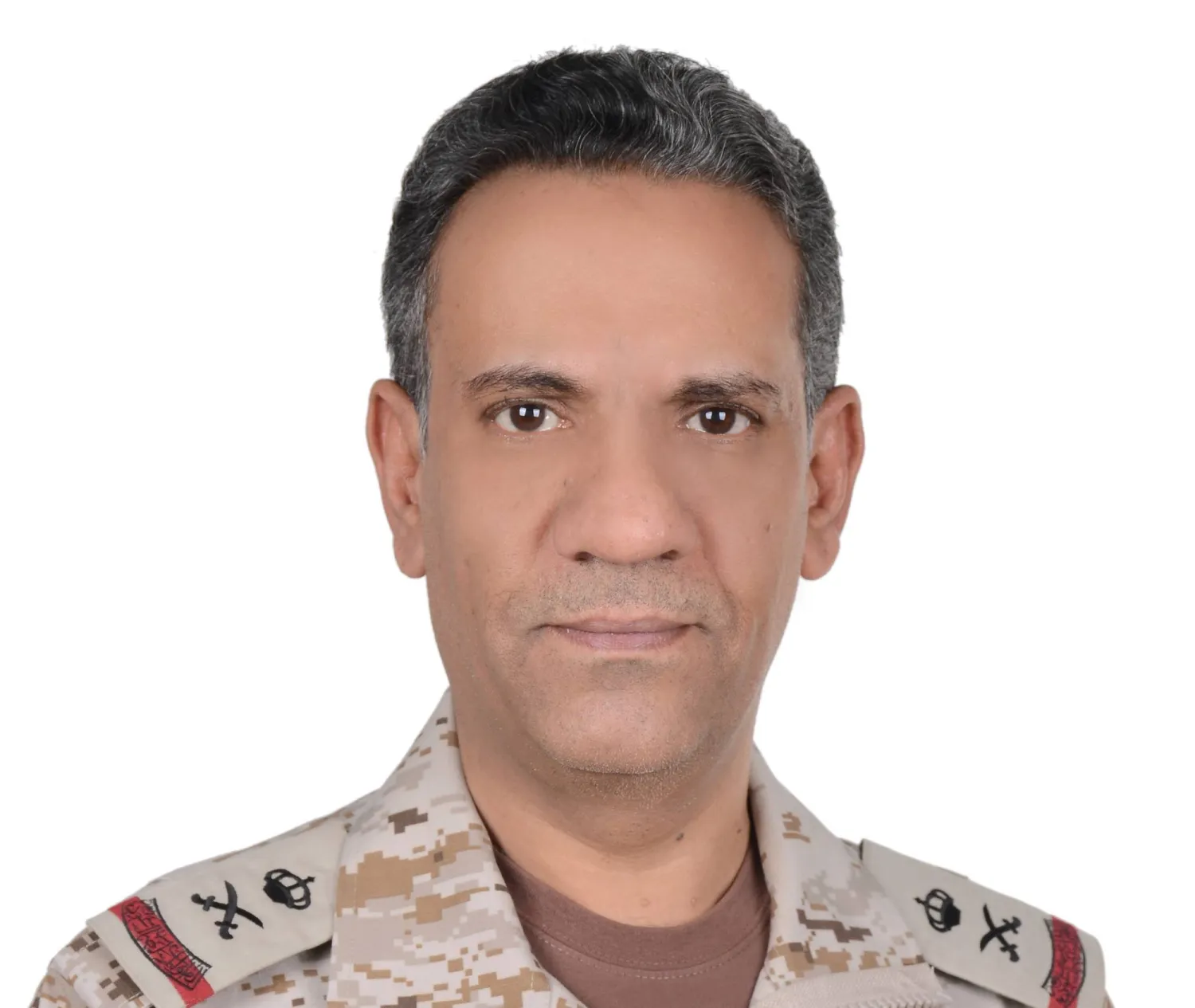
Coalition spokesman Major General Turki al-Malki. (SPA)
TT

Coalition: Six Ballistic Missiles Launched by Terrorist Houthi Militia Intercepted, Destroyed

Coalition spokesman Major General Turki al-Malki. (SPA)

Official Spokesperson of the Coalition to Support Legitimacy in Yemen Major General Turki Al-Malki stated that coalition forces intercepted and destroyed six ballistic missiles launched by the terrorist Houthi militia, and air defenses foiled an attempt to target Taif and Yanbu.

He said the escalation and violations by the terrorist Houthi militia will be dealt with firmly.