


‘Tripoli Cell’ Sparks Accusations Among Libya’s Rival Factions

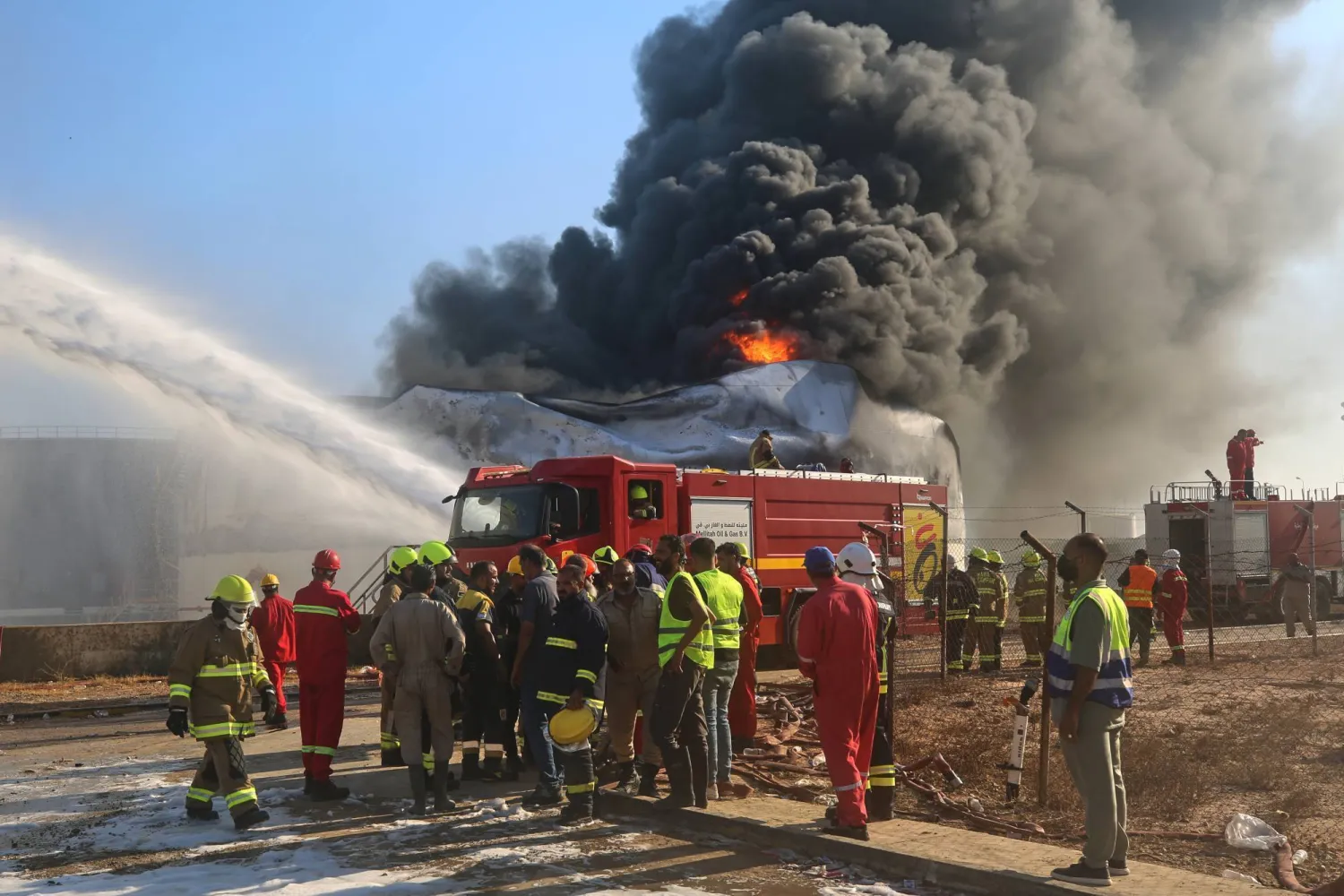
Firefighters fought to contain a blaze burning at an oil facility in Libya’s key western oil town of Zawiya, on Aug. 12, 2006, a day after a drone strike ignited a gasoline-storage tank. AP
TT

‘Tripoli Cell’ Sparks Accusations Among Libya’s Rival Factions

Firefighters fought to contain a blaze burning at an oil facility in Libya’s key western oil town of Zawiya, on Aug. 12, 2006, a day after a drone strike ignited a gasoline-storage tank. AP

The dismantling of the alleged “sabotage cell” in the Libyan capital, Tripoli, has sparked accusations between the parties to Libya’s conflict, with each side pointing fingers over who is supporting the group.

On September 6, the Government of National Unity (GNU) announced the arrest of a cell accused of carrying out drone attacks on oil storage facilities and a power station in Tripoli and Zawiya. Since then, however, no further details have been released regarding the results of the investigation with five Libyans and several foreigners.

Some allege that Saddam Haftar, deputy commander-in-chief of the Libyan National Army (LNA), was behind the cell, claims that political analyst Omar Bousaada dismissed as “absurd accusations that no longer deceive anyone.”

The GNU’s Ministry of Defense had stated that it had also thwarted additional plots, including plans to target the South Tripoli power station as well as vital infrastructure and political, security, and military figures.

With the Public Prosecutor’s Office maintaining secrecy over the investigation into the detained cell members, some public figures have adopted narratives circulated by foreign media outlets, leading to intense political exchanges.

Libyan activist Ahmed Al-Zarrouq claimed that the Tariq Ben Zeyad Brigade, affiliated with the LNA, was responsible for the “sabotage cell” that targeted key facilities in Tripoli with the aim of creating crises in the capital.

Al-Zarrouq, a cousin of Saif al-Islam Gaddafi, asserted that Saddam Haftar was behind the cell, which allegedly consisted of one Spaniard and four Libyans. He published their names and the roles they were assigned.

The Allibiya TV Channel, owned by the Al Ghad Media Group and considered close to Saif al-Islam Gaddafi, echoed Al-Zarrouq’s narrative. The channel also cited unnamed sources claiming that Tripoli authorities had released the Spanish suspect accused of involvement in the cell under pressure from Saddam Haftar.

A security source close to the LNA denied the allegations, telling Asharq Al-Awsat that Libya’s political, military, and security climate is moving toward greater stability and that ending the country’s division through elections is within reach.

The source, who requested anonymity because he is not authorized to speak to the media, argued that some factions in Libya benefit from division and fragmentation rather than stability. He questioned how such allegations could emerge at a time when military and security leaders in both Benghazi and Tripoli are publicly emphasizing the need to end the country’s split.

On September 19, Presidential Council Chairman Mohamed Al-Menfi revealed that Libya had formally approached the International Criminal Court (ICC) for technical, technological, and legal support to strengthen investigations into the cell.

Bousaada told Asharq Al-Awsat that “fabricated statements and frivolous accusations have become a trademark of failure” propagated by what he described as “factories of illusion,” which, he said, resort to manipulating narratives and manufacturing scenarios whenever they feel politically marginalized or operationally weakened.

He argued that linking Saddam Haftar to the cell “is not merely false, but a desperate attempt to obscure the reality that his camp is currently operating from a position of strength and possesses genuine negotiating leverage that has secured its presence in major regional and international decision-making capitals.”

In his statement, Al-Menfi said Libya had submitted its request to the ICC Prosecutor’s Office through official diplomatic channels, via the Ministry of Foreign Affairs and in coordination with the Ministry of Defense, to enhance cooperation in the ongoing investigation.

Meanwhile, the GNU Ministry of Defense insisted that the case remains under the jurisdiction of the Public Prosecutor’s Office and denied any attempt to negotiate with any party regarding the matter. The ministry reaffirmed that investigations are continuing to identify all individuals involved in the sabotage cell and any entities connected to it.



Iraqi Deputy Oil Minister Named as Witness in Corruption Trial

A photo released by Iraq’s judiciary shows Judge Faiq Zidan (second from left) inspecting gold bars seized in connection with the case of detained suspect Adnan al-Jumaili. 
TT

Iraqi Deputy Oil Minister Named as Witness in Corruption Trial

A photo released by Iraq’s judiciary shows Judge Faiq Zidan (second from left) inspecting gold bars seized in connection with the case of detained suspect Adnan al-Jumaili. 

Iraq’s judiciary has scheduled the trial of Muthanna al-Samarrai, leader of the parliamentary Azm Alliance, for next week on corruption charges, with Deputy Oil Minister Adnan al-Jumaili listed as a witness in the case.

According to a judicial document, the Central Criminal Court for Combating Corruption has set Monday, October 19, as the date for al-Samarrai’s trial.

The document, addressed to the Investigations Department of the Federal Commission of Integrity, indicates that al-Samarrai, who remains in custody, will be tried under Article 319 of Iraq’s Penal Code.

The provision covers offenses involving illicit gains, bribery or public officials benefiting, directly or through intermediaries, from works, contracts or undertakings connected to their official duties.

The court summoned the Oil Ministry’s legal representative, Adnan al-Jumaili, Mustafa Adnan al-Nuaimi, Safa Adnan al-Nuaimi, Ghassan al-Jumaili and Alaa al-Jumaili. All were listed as witnesses, while al-Samarrai was identified as a detained defendant.

The court also instructed the Military Intelligence Directorate to ensure the appearance of al-Samarrai and the witnesses, noting that they were being held by the directorate.

Iraqi authorities arrested al-Samarrai in June during a campaign of detentions known as Dawn Assault, based on information and confessions linked to the Adnan al-Jumaili case.

The operation, launched on June 28, 2026, on the orders of Prime Minister Ali al-Zaidi, who took office in May, initially involved a broad security and judicial crackdown on corruption. Its momentum soon slowed amid political pressure, according to local reports.

Contract mediation

Haider al-Mulla, a senior Azm Alliance official, told Asharq Al-Awsat that al-Samarrai had not denied allegations raised during questioning concerning his intervention on behalf of a businessman with former Prime Minister Mohammed Shia al-Sudani to secure the award of a commercial contract.

Al-Mulla maintained, however, that al-Samarrai had not subsequently interfered in the contract’s award process or its financial arrangements.

He described passing such requests to executive authorities as a common practice among politicians.

Al-Mulla stressed that the Azm Alliance respected judicial decisions and believed in the course of justice, adding that the evidence presented so far did not indicate allegations of unexplained wealth or other offenses beyond the mediation issue.

Asked whether the case would affect the alliance’s participation in the government led by al-Zaidi, he noted that Azm was entitled to two ministerial portfolios: planning and culture.

Legal implications

Legal expert Ali al-Tamimi explained that Iraq’s Code of Criminal Procedure allows one defendant to testify against another, after which the court may initiate separate proceedings for each.

Speaking to Asharq Al-Awsat, al-Tamimi described this as an established practice in investigative courts.

He added that a defendant’s testimony is recorded and considered in a separate official record, while the individual’s legal status as a defendant remains subject to judicial proceedings.


Lebanon Revokes Bank Saderat Iran’s License amid US Pressure

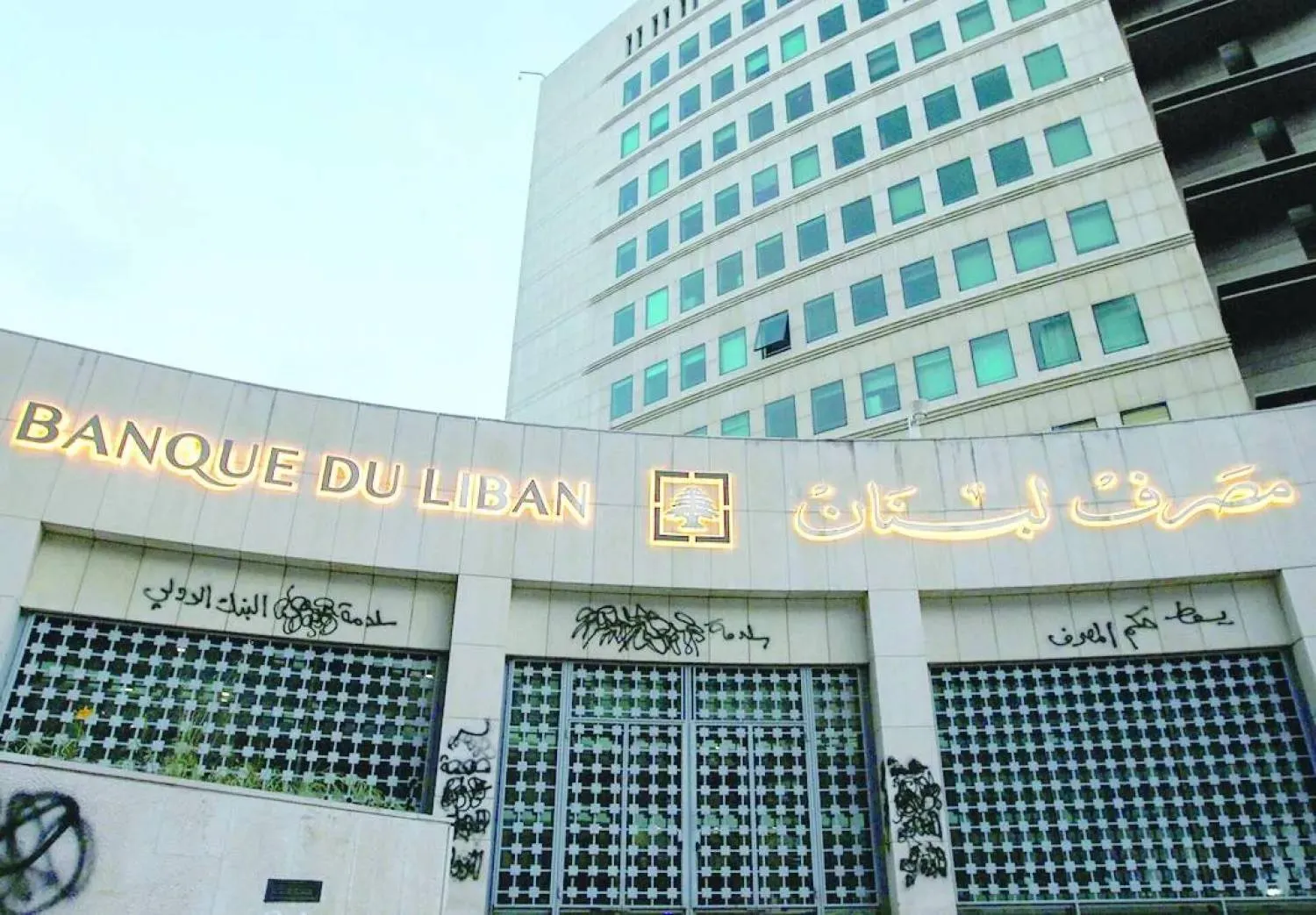
The Banque du Liban headquarters in Beirut (Banque du Liban). 
TT

Lebanon Revokes Bank Saderat Iran’s License amid US Pressure

The Banque du Liban headquarters in Beirut (Banque du Liban). 

Lebanon’s central bank has revoked the local license of Bank Saderat Iran, one of Iran’s largest banks, as Washington intensifies pressure on countries to sever commercial ties with Tehran.

Banque du Liban Governor Karim Souaid told Bloomberg that the decision, taken this week, was intended to demonstrate Lebanon’s determination to protect its banking sector from institutions that could expose it to financial and regulatory risks.

The move follows tighter restrictions imposed on Iran’s financial system by other regional central banks and coincides with mounting US pressure worldwide, according to the governor.

Bank Saderat is one of Iran’s oldest commercial banks, with several branches overseas. In Lebanon, however, it did not operate as a full-scale commercial bank serving the general public or offer the extensive retail banking services typically provided by major Lebanese lenders.

Its operations were largely confined to facilitating certain transfers and financial activities linked to specific networks or entities.

Sanctions targeting Iranian institutions had effectively isolated the bank from major international banking messaging networks, including SWIFT, and global payment systems.

Washington is pursuing a campaign to isolate Iran economically in an effort to force Tehran to accept US terms for ending the war.

Last month, Britain announced it would reject new license applications from Iranian banks subject to US sanctions, including Bank Saderat, which operates a branch near the Bank of England in London’s financial district.

Avoiding financial risks

Speaking on the sidelines of the International Monetary Fund’s annual meetings in Bangkok, Thailand, Souaid noted that larger economies, including the United Arab Emirates and Türkiye, had complied with similar demands to preserve their banks’ ties to the international financial system".

He stressed that Lebanon could not afford the risks associated with failing to take such measures.

The governor acknowledged that some decisions could be politically sensitive but maintained that protecting Lebanon’s banking sector from foreign sanctions and external pressure must take priority.

Souaid also emphasized the need for Lebanon to secure its removal from the Financial Action Task Force’s (FATF) gray list, where it was placed over shortcomings in combating illicit financial flows.

He called for eliminating illicit funds and money-laundering proceeds from the Lebanese economy.

The central bank has hired a specialized US firm to map Lebanon’s cash economy and identify suspicious financial activity, according to the governor.

For years, Bank Saderat and its operations had faced scrutiny from international financial authorities, particularly the US Treasury Department, which regarded it as a potential financial conduit for regional groups such as Hezbollah.

Despite that pressure, its Lebanese branch maintained a legal presence under a longstanding license issued by Banque du Liban, even as Washington repeatedly called for its closure and the complete severing of its financial channels.

IMF negotiations

Lebanon is seeking to revive its economy after a financial collapse that led it to default on approximately $30 billion in international bonds in 2020.

The country is holding talks with the IMF over a potential loan, seen as a crucial step toward economic recovery.

Souaid described efforts to clean up the financial sector as an important issue in those negotiations.

Although such measures are not among the IMF’s formal conditions for a potential support package, he explained that international lenders and donors participating in any program would nevertheless expect Lebanon to maintain a financial sector free of illicit activity.


China Says Israel Should Stop Its 'Forced Establishment' of West Bank Settlements

Cattle gather in an enclosure at a farm run by Israeli settlers near the Palestinian town of Duma in the Israeli-occupied West Bank, on October 13, 2026. (Photo by Ilia YEFIMOVICH / AFP)
TT

China Says Israel Should Stop Its 'Forced Establishment' of West Bank Settlements

Cattle gather in an enclosure at a farm run by Israeli settlers near the Palestinian town of Duma in the Israeli-occupied West Bank, on October 13, 2026. (Photo by Ilia YEFIMOVICH / AFP)

Chinese Foreign Minister Wang Yi told Israeli President Isaac Herzog that Israel should stop and reverse its "forced establishment" of West Bank settlements, China's foreign ministry said in a statement on Friday.

China has consistently held that the Palestinian question is the greatest historical injustice of this ‌century, Wang ‌told Herzog during a meeting ‌in ⁠Azerbaijan, the ministry ⁠added.

Wang had earlier said that promoting peace and reconciliation in the region is the "cornerstone" of China's Middle East policy

China believes that the "two-state solution" is the right path ⁠to a resolution and the ‌immediate priority ‌is to fully open access to the ‌Gaza Strip so a humanitarian "catastrophe" ‌is not allowed to spread, Wang added

At the same time, Israel should stop and reverse its forced establishment of ‌settlements in the West Bank, he said

China is ⁠willing ⁠to work with the international community to push all parties to return to dialogue and consultation as soon as possible and seek a political settlement of the conflict, Wang added

China has long been a supporter of the Palestinian cause and Beijing also has close ties with Israel's main regional foe, Iran.