


Golan Spat Exposes One Reason Israel-Syria Talks Stalled

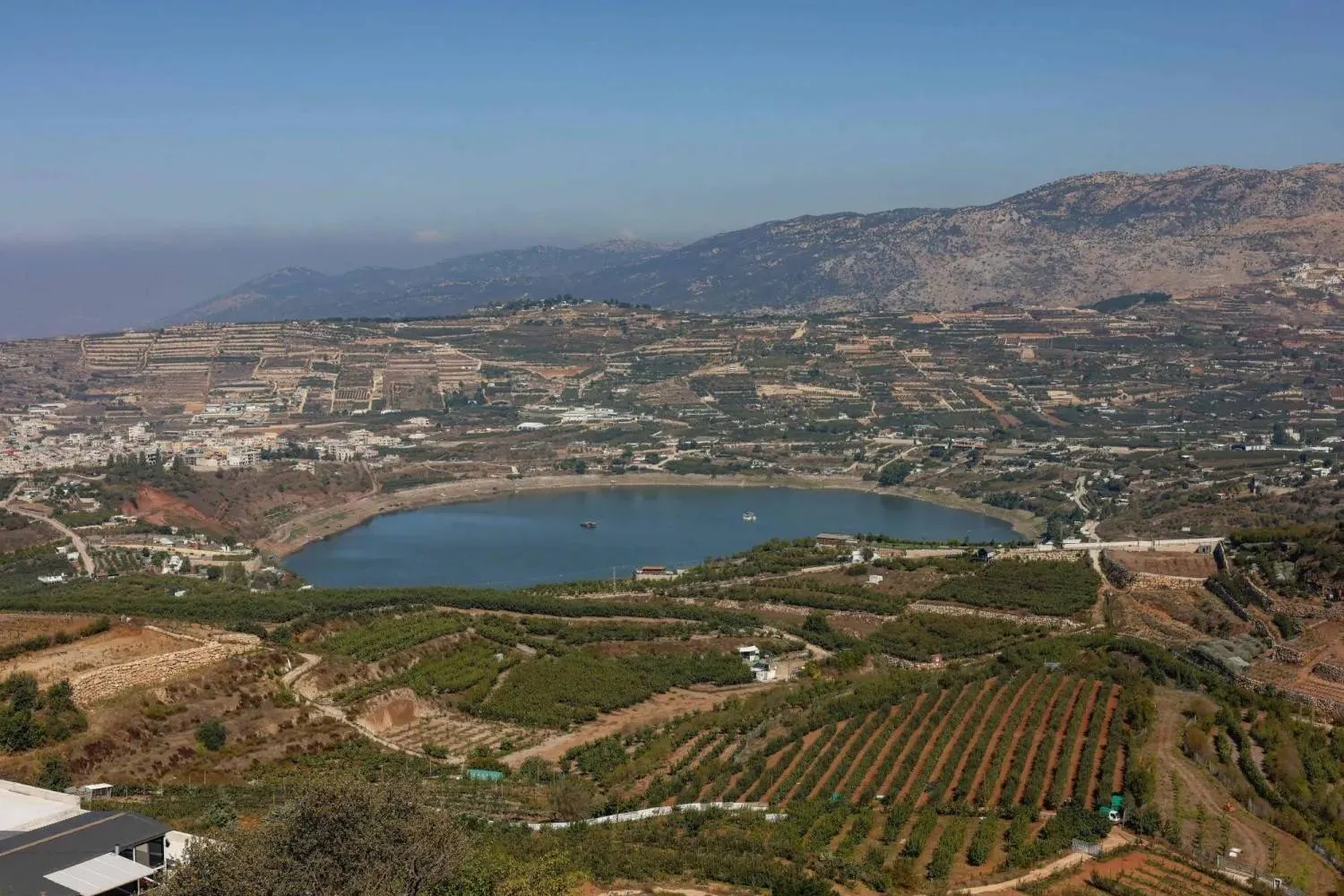
A lake near the Druze village of Majdal Shams in the Israeli-occupied Golan Heights, with Mount Hermon in the background (AFP)
TT

Golan Spat Exposes One Reason Israel-Syria Talks Stalled

A lake near the Druze village of Majdal Shams in the Israeli-occupied Golan Heights, with Mount Hermon in the background (AFP)

The exchange over the Golan Heights between Israeli Prime Minister Benjamin Netanyahu and Syrian President Ahmed al-Sharaa at the UN General Assembly exposed part of what has stalled talks between Israel and Syria.

The negotiations began two years ago but stopped after an Israeli attack on Abu al-Duhur airport in Idlib province a few weeks ago.

To Netanyahu’s critics, his hard-line stance at the United Nations revealed how wary Israel’s current leadership is of peace with Damascus.

Al-Sharaa told the General Assembly in New York that Syria wants peace, but at a price: the return of the Golan Heights, which Israel has occupied since 1967.

Knowing Israel is not ready to pay that price today, he pressed instead for security agreements that would pull Israeli forces out of areas they occupied after Bashar al-Assad’s fall in December 2024 and restore the framework of the 1974 disengagement agreement.

Israel knows Syria’s position from the talks held so far. Al-Sharaa’s government has signaled its willingness to keep negotiating, rebuild trust and eventually reach a full peace agreement, with embassies, good-neighborly relations, trade and cooperation across various fields, according to accounts circulating in Tel Aviv.

Israel’s leadership, unwilling to pay a price for peace, responded sharply. Defense Minister Israel Katz said that the Golan under Israeli sovereignty is an inseparable part of the State of Israel forever.”

Israel, he added, will not withdraw from Mount Hermon or the security zone. He also warned: “Any territory we take this time will remain ours forever, in accordance with the laws of war.”

Netanyahu followed from the UN podium with what appeared to be a history lesson for al-Sharaa, according to his own reading of that history.

“Mr. al-Sharaa, you should know the Jews have been on the Golan Heights since the days of Moses,” he said. “You can read it in the Bible.”

But the region’s history does not establish the claim Netanyahu sought to make. His remarks gave a religious and historical cast to Katz’s statements about occupation. Archaeological sites show that people inhabited the Golan long before the time of Moses and the Israelites.

Evidence of settlement dates to the Copper and Bronze Ages, alongside stone structures, burial sites and other remains left by communities that lived there thousands of years ago.

Critics of Netanyahu’s account say that even if Jews lived in the Golan, they did not live there alone; others may have outnumbered them.

Those critics also accuse Israeli governments of hiding a central fact about the Golan’s occupation: Israel displaced as much as 90% of the Syrian plateau’s population in 1967.

They say 140,000 people lived there at the time, compared with just 8,000 today. Israel still prevents disclosure of the reasons for their displacement, while people from the Golan recount crimes and massacres that drove them out, the critics say.

Under Assad, the Syrian government agreed to lease the Golan to Israel for 15 years, with an option to extend the lease.

Netanyahu now rejects even proposals he once accepted. He wants to use what he sees as a new balance of power and what Katz calls the laws governing the outcome of war. Yet al-Sharaa’s Syria did not start a war with Israel.

The Israeli military, instead, took advantage of Assad’s fall to launch thousands of strikes on Syria, destroy 85% of the Syrian military’s defensive capabilities and occupy new areas in the south.

Israelis confirm al-Sharaa’s assertion that the two sides had agreed on 90% of the issues in a proposed security arrangement.

They explain Israel’s retreat from the talks by claiming that Syria is becoming a sphere of Turkish influence and that Syrian territory could be used to attack Israeli settlements in the Golan, as Hamas attacked communities around Gaza on Oct. 7, 2023.

Syrians offered far-reaching security guarantees in the negotiations: demilitarization in southern Syria and a secure trade corridor that would allow Druze communities in Israel and the Golan to send aid to Sweida province.

They also agreed to joint security coordination under US supervision, including intelligence sharing and Jordanian participation in monitoring the entire border area.

Israel wanted more: to keep Mount Hermon’s peaks and parts of a security belt, and to retain the freedom to enter Syria in pursuit of armed cells.

The prevailing sense is that Israel has little interest in successful talks and entered them only because US President Donald Trump wanted it to. Trump alone is seen as stopping Netanyahu from using the situation in Syria to launch further military attacks.

The US president appears to be waiting for the Israeli election results before deciding where he stands on the government’s policies.

Trump issued a presidential proclamation in March 2019 recognizing Israeli sovereignty over the Golan Heights.

UN resolutions, however, affirm that the Golan is occupied territory and reject Israel’s declaration that it has imposed its laws and administration on the Syrian plateau.



Israeli Strike Kills Two Doctors Without Borders Staff in Gaza

Food stuff spills onto the road as Palestinians inspect the remains of a bus that was transporting food rations to displaced people after it was targeted by the Israeli army, killing three people, in Al-Sina'a Street in the Tel Al-Hawa area, west of Gaza City on November 21, 2026. (AFP)
TT

Israeli Strike Kills Two Doctors Without Borders Staff in Gaza

Food stuff spills onto the road as Palestinians inspect the remains of a bus that was transporting food rations to displaced people after it was targeted by the Israeli army, killing three people, in Al-Sina'a Street in the Tel Al-Hawa area, west of Gaza City on November 21, 2026. (AFP)

Doctors Without Borders (MSF) said Saturday an Israeli strike killed two staff members at a clinic in Gaza, with the Israeli army labeling the pair as Hamas "terrorists".

The Israeli army identified the men, who worked as security guards at the clinic, as Hamas artillery cell commander Moaz Yousef Alitsbach and Ahmed Sufyan Muhammad Ali Abu.

MSF said it was "devastated" by the killings and denounced "a direct hit" on the organization.

"Our premises were clearly marked with MSF logos, and their location had been communicated to and was known by the Israeli military," it wrote on X.

World Health Organization chief Tedros Adhanom Ghebreyesus slammed the attack.

"Attacks on health facilities, health workers and humanitarian personnel in #Gaza are outrageous and unacceptable," he posted on X.

The Israeli military denied targeting a hospital or damaging medical infrastructure.

"This is another example of the Hamas terrorist organization embedding itself within international organizations," it posted on Telegram.


Lebanon Fears Israel May Impose Maritime Buffer Zone in Southern Waters

Smoke rises from Israeli strikes on the border town of Naqoura, as seen from the southern Lebanese city of Tyre in April. (AFP file photo)
TT

Lebanon Fears Israel May Impose Maritime Buffer Zone in Southern Waters

Smoke rises from Israeli strikes on the border town of Naqoura, as seen from the southern Lebanese city of Tyre in April. (AFP file photo)

Israeli military warnings to Lebanese fishermen to stay clear of its naval forces and military vessels have fueled fears that Israel is seeking to extend its planned maritime buffer zone into parts of Lebanon’s territorial waters off the southern coast.

Israeli accusations

The Israeli military accused Hezbollah of using civilian fishing boats as cover for intelligence operations, citing information it said it had obtained during interrogations of military operatives active near the maritime border.

It said Hezbollah was sending operatives aboard fishing boats to approach Israeli forces in what it called the “maritime security zone in southern Lebanon” to photograph naval forces and gather intelligence.

The military urged Lebanese residents and fishermen operating in the area to “exercise extreme caution, refrain from entering areas where Israeli forces are deployed or operating, and stay away from military vessels operating in the area.”

A maritime ‘Yellow Line’

Maj. Gen. Abdul Rahman Shehaitly said the warnings could be laying the groundwork for Israel to propose a buffer zone in Lebanese waters during upcoming talks, mirroring the arrangements it seeks to enforce along the “Yellow Line” on land while retaining the right to patrol the area.

“Israel has long advocated establishing a buffer zone off-limits to everyone while retaining the right to patrol it,” Shehaitly told Asharq Al-Awsat. “It appears intent on establishing a similar zone at sea, modeled on the area it has demarcated with the Yellow Line on land, while retaining the right to conduct naval patrols.”

“All this is laying the groundwork for raising the issue in upcoming talks, with Israel proposing arrangements for the yellow zone on land and similar measures at sea within Lebanese waters,” he added.

Shehaitly suggested the maritime buffer zone could stretch along the coast between Mansouri and Naqoura, citing repeated Israeli strikes in the area.

Three-kilometer security zone

Retired Brig. Gen. Bassam Yassin also said the warnings could herald the establishment of a maritime buffer zone off Lebanon’s southern coast, adjacent to areas Israel occupies on land, without amounting to a naval blockade.

“The Israelis are warning fishermen against approaching areas occupied by their forces, from Naqoura to the outskirts of Bayyada, on the pretext of possible espionage,” Yassin told Asharq Al-Awsat.

“They are also warning them to stay away from military vessels, potentially making fishermen targets on suspicion of conducting reconnaissance for Hezbollah.”

Yassin said that when Israeli forces take up positions along the coast, they seek to establish a security perimeter extending some three kilometers out to sea, barring access to their forces and the areas they occupy.

“They may eventually draw a line at sea and prohibit anyone from crossing it,” he added.

Buffer zone, not a blockade

Yassin drew a distinction between a maritime buffer zone and a naval blockade.

“A naval blockade is different. It would require Israeli military boats to deploy along the entire Lebanese coast, intercept ships bound for Lebanese ports, inspect them and carry out checks. What we are discussing now is the possibility of a maritime buffer zone,” he said.

Yassin stressed that Israel had yet to establish such a zone and was, for now, only issuing warnings against approaching its forces.

“It could establish a maritime buffer zone off its coastal military positions, extending some three kilometers out to sea and barring fishermen, swimmers and others from entering,” he said.

“I believe it could stretch from Naqoura to Bayyada, covering about 12 kilometers, with a possible northward extension toward Qoleileh, bringing it to 15 kilometers.”

Yassin noted that the coastline between Naqoura and Bayyada was already inaccessible, but Israel could draw a line at sea off its coastal military positions, extending toward Qoleileh to create a maritime buffer zone.


French Plan for Post-UNIFIL Lebanon Calls for Phased Withdrawal of Int’l Forces

A UNIFIL peacekeeper stands beside a UN vehicle in the occupied Lebanese area of Naqoura in southern Lebanon last Tuesday (AP)
TT

French Plan for Post-UNIFIL Lebanon Calls for Phased Withdrawal of Int’l Forces

A UNIFIL peacekeeper stands beside a UN vehicle in the occupied Lebanese area of Naqoura in southern Lebanon last Tuesday (AP)

France is drafting a UN resolution to avert a security vacuum in southern Lebanon when the mandate of the United Nations Interim Force in Lebanon (UNIFIL) expires at the end of this year. Paris plans to present the draft to the Security Council's permanent members to head off a potential veto.

The proposed resolution would revise the withdrawal timetable for UNIFIL's military contingents, pushing back the deadline for its full withdrawal by six months.

European countries are backing Lebanon's bid to extend UNIFIL's mission by six months, a move opposed by Israel and the United States. Washington is demanding progress toward securing the Lebanese state's monopoly on arms and pressing for direct coordination between the Lebanese and Israeli armies, which Beirut rejects.

Securing Security Council Consensus

Lebanon previously asked the Security Council to extend UNIFIL's mandate by six months to a year as a transitional measure to avert a security vacuum in the south ahead of its expiration on December 31, 2026.

Lebanese sources following international consultations told Asharq Al-Awsat: “Everything being discussed today amounts to proposals to avert a security vacuum in the south. Nothing has been settled yet.”

Negotiations will focus on the Security Council's five permanent members — the United States, Russia, China, France and Britain — to secure an understanding that would avert a veto, the sources said.

“Diplomatic efforts have now begun in earnest. France is working on a draft UN resolution following consultations with international and Lebanese parties,” they added.

A proposal is taking shape and will serve as the basis for intensified diplomatic efforts and negotiations that will determine where the parties stand.

A Phased Withdrawal

The proposal is expected to be unveiled next week, with a draft already in the hands of relevant parties in Lebanon and abroad.

Lebanese sources familiar with international consultations said the emerging proposal would delay UNIFIL's withdrawal by up to six months through adjustments to its withdrawal timetable.

“There is consensus among the countries involved in Lebanon on the need to prevent a vacuum in the south, and they do not oppose extending UNIFIL's presence under an international mandate,” the sources said.

The proposal envisages a staggered withdrawal, allowing some military contingents to remain longer. As contingents gradually pull out, those remaining would continue carrying out their duties to prevent a security vacuum in their area of operations.

The plan would push back UNIFIL's final withdrawal by six months beyond the end of 2027, allowing the force to continue its duties throughout that period.

This would mark a departure from UN Security Council Resolution 2790, which stipulates that UNIFIL's mandate and operations in their current form end on December 31, 2026. A yearlong drawdown and withdrawal would then begin, with the force due to leave Lebanon entirely by the end of 2027.

US Conditions

Despite international momentum behind the proposed extension, there is no sign that all five permanent members of the Security Council are prepared to endorse it.

“Washington is making any arrangement to prevent a vacuum in the south conditional on Hezbollah handing over its weapons within a set timeframe,” the sources said.

Beirut considers that condition unfeasible for now, given Hezbollah's refusal to disarm before Israel withdraws from occupied Lebanese territory. Washington is also pushing for direct coordination between the Lebanese and Israeli armies, which Beirut continues to reject.

Several proposals put to Lebanon in recent weeks have failed to gain traction.

Among them was a proposal to merge Resolution 1701 with the US-sponsored tripartite framework agreement involving Lebanon and Israel.

The proposal fell through because it would require a new Security Council resolution, and securing both international and domestic consensus remains unfeasible.

The Shiite alliance of Hezbollah and the Amal Movement rejects the framework agreement outright and remains committed to Resolution 1701, arguing that it defines Lebanon's borders by reference to the 1949 Armistice Agreement and the Blue Line.

Another proposal envisaged deploying a multinational force to replace UNIFIL. Hezbollah said, however, that it would treat any international force operating outside the UN framework as an occupying force, effectively scuttling the proposal.