Power Cuts, Rubble: Millions Come Home to Find Sudan's Capital Unlivable

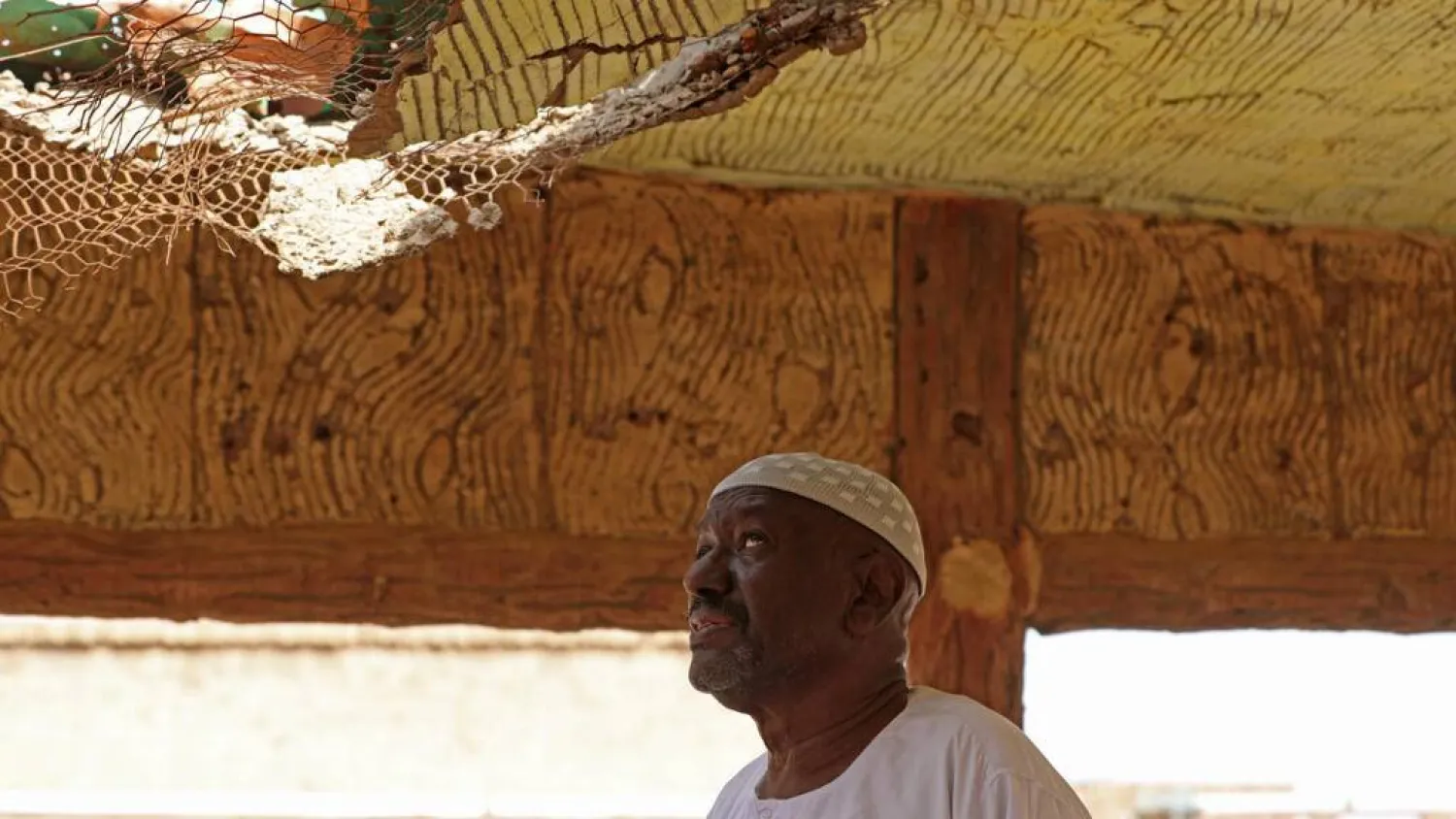
Millions have returned to Khartoum but the city is still reeling from Sudan's war. Ebrahim HAMID / AFP
TT

Power Cuts, Rubble: Millions Come Home to Find Sudan's Capital Unlivable

Millions have returned to Khartoum but the city is still reeling from Sudan's war. Ebrahim HAMID / AFP

They came home to a war-ruined city determined to rebuild their lives, but a chronic lack of power, water, jobs and medicine has left many residents of Sudan's capital wishing they had stayed away.

About four million people fled Khartoum after war broke out between the army and a paramilitary force in 2023, in fighting that reduced large parts of the city to rubble, said AFP.

But the estimated 2.7 million who have returned since the army recaptured Khartoum last year are caught between joy at being home and the harsh realities of living there.

Businessman Emad Khaled said he was sending his family back to Egypt, while he remains in Khartoum for his work.

"Bringing my family back was a mistake," the 43-year-old told AFP near the city center, which is filled with blackened, bombed-out buildings.

Multiple government officials, ordered back to Khartoum, told AFP they were also leaving their families outside the country.

Fighting between the armed forces and paramilitary Rapid Support Forces (RSF) is still raging elsewhere in Sudan, including in the Darfur, Kordofan and Blue Nile regions.

The army, strongly encouraging Khartoum's residents to return, rebuilt the airport and reopened it for domestic flights, and patched up infrastructure.

However, electricity and water still go out for days at a time. And while markets across the capital are open again, many people are unemployed and have little money to spend.

- 'Price goes up every day' -

By June, only one percent of Khartoum had been declared safe by the UN, with dozens of children killed and injured by booby-traps and unexploded shells lurking within walls and on street corners.

Nearly half a million people have returned from neighboring Egypt, where 1.5 million Sudanese sought shelter but faced soaring living costs, racial persecution, arrests and deportations.

Khartoum's working-class neighborhoods have seen the highest numbers of returnees, while most of those who can afford to stay away.

Consequently, upscale districts such as Khartoum 2 lie abandoned. Along tree-lined avenues, glass crackles underfoot and only birdsong fills the air between empty villas, entire corners of them blown out by missiles.

Thuraya Babiker, 86, thought she had returned for good. But three months later, "my husband, my youngest daughter and I are leaving for the United Arab Emirates", she told AFP.

"We don't want to leave," she said, explaining that the lack of medical care makes it impossible to stay.

As people started returning last year, Sudanese charities rushed to rebuild hospitals, some of which are now "better than before", health workers say.

But despite their best efforts, physician Haifa Omar says "some things just aren't available".

"We have to ask patients to buy some medicines on their own dime. I have a lump in my throat as I say it, we know how difficult people's situations are."

College professor Imam Babiker has to visit 10 pharmacies to find his father's blood pressure medication, "and every day it's a different price", he said.

The 34-year-old bought a refrigerator to store his diabetic mother's insulin, "but the electricity goes out for 12 hours a day, so it gets ruined," he told AFP.

Others like Souad Mohamed, 49, had her fridge stolen by looters and couldn't afford a replacement.

"So now I have to buy vegetables and meat every day, and the price goes up every day," she said.

- 'Things really aren't fine' -

Khartoum, once a major African capital home to more than eight million people, is a shell of its former self.

In the city center, a veteran UN official told AFP the level of destruction dwarfs every other crisis they had seen, including Ukraine.

Although occasional RSF drone strikes continue, Khartoum's university students have been told they must return, after authorities ended remote learning in July.

Khartoum University medical professors have threatened to resign en masse in protests, while students complain they are being forced back.

"The university's refusing to let me defend my thesis online, even though my supervisor is also in a different country and doesn't want to return," one master's student told AFP, requesting anonymity.

An undergraduate management student, who should be starting her senior year, said she missed in-person exams this summer and is now scrambling for scholarships in Egypt to restart college from scratch.

"They wouldn't listen to us, all they cared about was for people to return," she told AFP.

"To me it's political, they want people back to show that things are fine, when things really aren't fine."


Netanyahu Dismisses Claims That Israel Is Blocking Supplies to Gaza

A Palestinian child sits beside a pool of rainwater at a camp for displaced people in Deir al-Balah in the central Gaza Strip, Saturday, Nov. 7, 2026. (AP)
TT

Netanyahu Dismisses Claims That Israel Is Blocking Supplies to Gaza

A Palestinian child sits beside a pool of rainwater at a camp for displaced people in Deir al-Balah in the central Gaza Strip, Saturday, Nov. 7, 2026. (AP)

Netanyahu said Israel was not to blame for the worsening conditions for Palestinians in Gaza’s tent camps that have been hit with severe winter floods.

His remarks came after the US-created Board of Peace — established under US President Donald Trump's plan to end the Israel-Hamas war and oversee Gaza’s recovery — said Monday that Israel's delaying of the entry of winter supplies into Gaza had “exacerbated the consequences of a foreseeable humanitarian challenge.”

Torrential rain has battered the war-torn enclave in recent days, damaging tens of thousands of makeshift tents. Four people, including three children, were killed on Sunday when a large sandstone slab collapsed onto tents during the rains.

Netanyahu said the Palestinian group Hamas is to blame because it continues to refuse to disarm, a condition of the deal announced by Trump, and seizes humanitarian aid in order to use it for military purposes.

“Hamas alone is responsible for the suffering of the people of Gaza, and it is now cynically exploiting that suffering to shift blame onto Israel once again,” he said Tuesday.

British Foreign Secretary Ed Miliband said the situation in Gaza was “intolerable” and demanded Israel end “arbitrary restrictions” on aid.

In Washington, Sen. Brian Schatz of Hawaii, the top Democrat on the Senate's foreign spending subcommittee, called for Israel to immediately allow winter gear into Gaza.

“There are a lot of challenges when it comes to Israel and Palestine that are complicated, and fraught, and contentious,” Schatz said on the Senate floor on Tuesday. “But we should all be able to agree that repairing torn tents and helping people to dry out, and providing warmth to freezing children is a basic human obligation.”


Representatives of 3 Countries Receive Families of ISIS Fighters from Syria’s Roj Camp

Women and their children at the Roj camp in Syria. (AFP file)
TT

Representatives of 3 Countries Receive Families of ISIS Fighters from Syria’s Roj Camp

Women and their children at the Roj camp in Syria. (AFP file)

Representatives of Sudan, Somalia and Indonesia have received another group of their nationals from the Roj camp in Syria’s northeastern Hasakah province, the country’s last remaining camp housing families of ISIS fighters.

The handover took place three days ago during a visit by the foreign representatives, accompanied by Syrian government officials and members of the Internal Security Forces, according to a local activist.

The repeated visits by government security delegations suggest that Damascus is preparing to take over administration of the facility from the dissolved Kurdish Syrian Democratic Forces (SDF), the activist said.

Ibrahim al-Halabi, a resident of Hasakah, told Asharq Al-Awsat that the delegation met women living at the site who described their circumstances.

Located in the far northeast of Hasakah province, Roj houses around 2,200 women and children in 750 tents. Its residents hold various foreign and Arab nationalities, including Turkish, Russian, British, French, German, Australian, Indonesian, Sudanese, Somali and Tunisian citizenship. It became Syria’s last remaining camp for families of ISIS fighters following the closure of al-Hol, also in the Hasakah countryside.

Several groups of Sudanese, Somali and Indonesian nationals have already been repatriated since 2022.

According to Halabi, the latest handover included 12 Indonesian women and their children, 30 Somali women and between three and nine Sudanese women.

Dual citizenship complicates repatriation

Halabi explained that Sudanese and Somali nationals repatriated in previous operations held only one nationality. Others, however, have dual citizenship, including Sudanese-British and Somali-British nationals, complicating efforts to arrange their return.

Some women have refused to be handed over to Sudanese authorities, demanding instead that they be transferred to the British government. As a result, Sudanese and Somali women holding dual nationality have yet to be repatriated, Halabi noted.

He added that Syrian government Internal Security Forces had entered Roj several times recently, during which residents from Australia, Sudan, Somalia, Indonesia and Trinidad and Tobago were transferred out.

The latest visit brought considerable relief to residents.

Halabi also viewed the visits as a sign that Damascus would assume responsibility for managing the facility. However, he expected security arrangements to remain under the supervision of former SDF personnel integrated into the government’s Internal Security Forces under the January 2026 agreement between Damascus and the Kurdish-led force.

Roj's future

In February, the Syrian government took control of al-Hol, previously the country’s largest detention camp for families of ISIS fighters, after wresting it from the SDF, which had administered both facilities.

Al-Hol, described as the world’s most dangerous camp, had housed tens of thousands of families of various nationalities.

Following its takeover, Damascus began evacuating foreign residents and transferring them to another camp in the northern Aleppo province.

With al-Hol closed, Roj emerged as the most prominent remaining facility housing women and widows of ISIS members from different countries.

However, activists in northern Syria say it remains unclear when the camp will close or where its residents will be transferred afterward.


Iraq Reopens One Border Crossing with Iran, Closes Another as It Pursues Mediation

Iraqi Prime Minister Ali al-Zaidi. (INA)
TT

Iraq Reopens One Border Crossing with Iran, Closes Another as It Pursues Mediation

Iraqi Prime Minister Ali al-Zaidi. (INA)

Iraqi Foreign Minister Fuad Hussein confirmed Tuesday that Prime Minister Ali al-Zaidi’s secret visit to Iran was aimed at bringing Tehran and Washington closer together, as Baghdad reopened one border crossing with Iran and announced the temporary closure of another.

Speaking to the Iraqi News Agency (INA) on the sidelines of the Paris Peace Forum, Hussein described the visit as “an attempt to bring the Iranian and American positions closer together, alongside other efforts.”

He stressed Iraq’s interest in easing tensions, citing the economic impact of the closure of the Strait of Hormuz and casualties from the US war on Iran.

“We have strong relations with our neighbor Iran, as well as excellent relations with the United States,” Hussein said. “That is why Iraq can play this role, although other countries are also doing so.”

Request for time

A senior Iraqi government official told Asharq Al-Awsat that al-Zaidi had conveyed an American message to Tehran outlining a possible formula for resolving the conflict between the two countries.

The Iranian side, however, requested more time to respond, according to the official.

A source familiar with the visit confirmed to Iran’s Fars News Agency that al-Zaidi had traveled to Tehran last Friday for several hours and met Mohammad Bagher Ghalibaf, Iran’s parliament speaker and head of its negotiating delegation.

The agency reported that talks focused exclusively on Baghdad’s efforts to end the war.

Despite repeated official statements presenting the visit as a mediation effort, a source close to Iraq’s Coordination Framework suggested it might instead have been motivated by domestic concerns.

“Al-Zaidi’s recent policies, particularly the ban on Iranian flights and the closure of some border crossings, have caused considerable harm to Iran,” the source told Asharq Al-Awsat.

The visit may therefore have been intended to explain Baghdad’s position on those measures and avoid angering Tehran, it added.

It pointed to the recent public confrontation between al-Zaidi and Kataib Hezbollah, warning that tensions could lead to a direct clash. Given its influence and close ties with some armed factions, Tehran could help ease the dispute.

Regional role

Ihssan Shmary, an academic and head of the Political Thinking Center, believes al-Zaidi’s visit was primarily part of his efforts to establish a regional diplomatic role through an initiative he had previously presented to US President Donald Trump.

Speaking to Asharq Al-Awsat, Shmary said that the trip coincided with extensive Arab and regional efforts to reduce tensions and prevent renewed fighting between Washington and Tehran.

He described the trip as an attempt to break the deadlock between the two countries and secure a foreign policy achievement for Iraq.

Nevertheless, he questioned Baghdad’s ability to bring Washington and Tehran to the negotiating table.

“Iraq may be very far from being able to play the role of a country that brings the US and Iran together at a table of understanding,” he cautioned.

Al-Sheeb reopens, Mandali closes

In a separate development, Omar al-Waeli, head of Iraq’s Border Ports Authority, announced Tuesday the reopening of the al-Sheeb crossing with Iran, which had been closed since October 21.

Authorities also decided to temporarily close the Mandali crossing in the Diyala province beginning Friday.

Al-Waeli explained that al-Sheeb would resume operations following completion of the required technical procedures, while Mandali’s closure would allow similar technical requirements to be addressed.

The decisions followed earlier remarks by Foreign Minister Hussein revealing that the US Treasury Department had formally requested Baghdad to close all its border crossings with Iran except two.

Ban on Iranian flights remains in place

Meanwhile, Iran’s Football Federation announced Tuesday that Iraq had refused permission for a direct flight carrying the Iranian national team to land at Basra airport.

The team was scheduled to participate in a friendly tournament alongside Iraq, Lebanon and Palestine.

Iran’s Mehr News Agency quoted the federation as blaming obstacles imposed by the Iraqi government, particularly its refusal to authorize a direct flight to Basra.

As a result, the players traveled to the Iranian city of Abadan, from where they would continue to Basra by road.

An Iraqi Transport Ministry official told Asharq Al-Awsat that Iranian aircraft were permitted to land only at Najaf airport.

The Iranian side had chosen to fly the team to Abadan because it was closer to the stadium in Basra, the official explained.

He confirmed that Iraq remained committed to its ban on Iranian flights landing at Iraqi airports, with Najaf as the sole exception, to avoid US Treasury sanctions.