Iran Insists on Diplomatic Solution after Trump Rejects Peace Plan

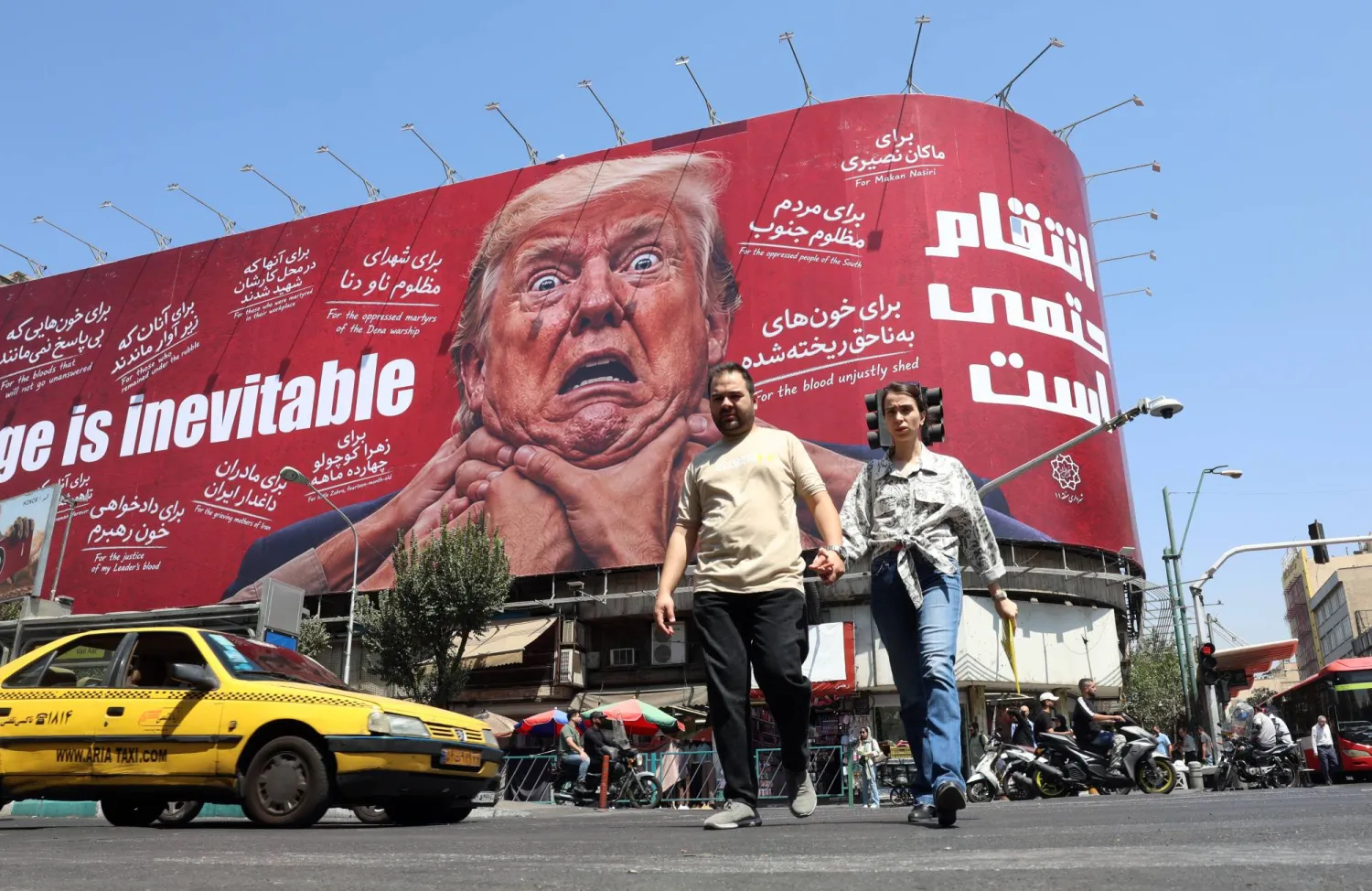
Iranians walk near an anti-Trump billboard in Tehran, Iran, 19 August 2026. EPA/ABEDIN TAHERKENAREH
TT

Iran Insists on Diplomatic Solution after Trump Rejects Peace Plan

Iranians walk near an anti-Trump billboard in Tehran, Iran, 19 August 2026. EPA/ABEDIN TAHERKENAREH

Iran on Sunday insisted that only diplomacy can solve its conflict with the United States and Israel after US President Donald Trump said he rejected an Iranian proposal to reopen the Strait of Hormuz and end fighting.

"Our conditions are clear, and any move toward reopening the Strait of Hormuz is contingent on these conditions being met," Iranian Foreign Minister Abbas Araghchi posted on social media. "Only a negotiated solution can get them out of this deadlock."

Iran announced a peace proposal last week at the UN General Assembly in New York, saying it had been transmitted to the Americans via Qatari mediators. Trump said on Saturday he rejected the plan and argued that desperation was driving the Iranians’ push for an agreement on the key waterway.

"They want to make a deal to open ‌the Hormuz Strait immediately ‌because they're losing so badly," Trump told reporters at the White House.

Despite Trump's public ‌statements, ⁠mediators facilitating Iran's talks ⁠with the United States have not officially relayed a US rejection of the plan, according to Araghchi.

"We are waiting for the mediators to convey the definitive views to us, and we will make a decision based on them," Araghchi posted.

The US has imposed an economic blockade on Iran to put pressure on Tehran to stop Iranian attacks on vessels in the Strait of Hormuz, which have drastically reduced shipping through the area even as Trump repeatedly asserts that the US controls the waterway.

The Wall Street Journal first reported that Trump had rejected the Iranian proposal, citing unnamed US officials.

It said Trump was privately skeptical that Iran ⁠would meet his demands and had told his staff that he sees a renewed bombing campaign ‌as likely after the November US midterm elections.

A US official had said ‌earlier that discussions with Iran through mediators were "positive and constructive".

CONFLICT HAS DISRUPTED OIL FLOWS, HARMED GLOBAL ECONOMY

Araghchi told reporters at the United Nations on Friday the proposed deal would trigger a seven-day countdown to reopening the strait and a pause in regional fighting.

"If there is seriousness on the US side to come to a deal and reopen the Strait of Hormuz, everything is now prepared," Araghchi said. If the US were to agree, ‌the warring parties could start wider talks "on mutually agreed subjects."

That could potentially include discussions of Iran's nuclear program. Trump has said Tehran must never acquire a nuclear bomb, while ⁠a senior Iranian official ⁠told Reuters that Iran would show no flexibility over its nuclear program even if the US accepted its peace deal.

Iran would grant no concessions over its rights, including enriching uranium or shipping its highly enriched uranium out of the country, the official said.

Iranian President Masoud Pezeshkian, in an interview with the CBS show "Face the Nation", said Tehran was ready for talks on its nuclear program and other issues, but would not accept "bullying or coercion".

"Iran is not seeking war, but will defend itself against pressure, threats and attacks,” Pezeshkian said, adding that it had already agreed that "we're not supposed to develop nuclear weapons".

Previous attempts at diplomacy have failed to end the war, which began on February 28 with US and Israeli attacks.

Since then the war has alternated between pauses and renewed strikes, killing thousands while degrading the conventional forces of Iran and damaging its already ailing economy.


Iran FM Says No Negotiations Since ‘Shock’ of US Midterms

25 September 2026, US, Bronx: Iranian Foreign Minister Abbas Araghchi delivers a statement during a press conference at Security Council encounter at UN Headquarters in New York. (dpa)
TT

Iran FM Says No Negotiations Since ‘Shock’ of US Midterms

25 September 2026, US, Bronx: Iranian Foreign Minister Abbas Araghchi delivers a statement during a press conference at Security Council encounter at UN Headquarters in New York. (dpa)

Iranian Foreign Minister Abbas Araghchi said on Sunday that mediators striving for a peace deal between the US and Iran had not travelled at all since the "shock" of the US midterm elections.

"We now have to see how long it will take for them to digest these results, in order to determine how we are going to move forward," the top Iranian diplomat told state TV following the elections in which the Republican Party of US President Donald Trump suffered heavy losses.

Various regional powers, including Qatar and Pakistan, have been trying for months without success to bring a definitive halt to the war launched by the United States and Israel in late February.

Outright fighting has largely subsided, but Iran continues in its efforts to blockade the Strait of Hormuz, vital to global energy supplies, while the US Navy maintains its own counterblockade of Iranian ports.

"For the past few days, there has been no more travel (by mediators), and the reason for this is the shock that the election results in the United States have caused to everyone."

He said it would "take some time before the atmosphere is favorable for the resumption of mediator travel" and called for patience.

Earlier, Aragchi posted on X: "American voters have made their choice. Time for the White House to make its own."

He called on Washington to accept previously articulated Iranian demands or "choose war, and see our alert and battle-hardened warriors rain down hell".

In September, Iran proposed a seven-day plan to reopen the strait, with demands including ending the war on all fronts, unfreezing Iranian assets, lifting oil sanctions and ending its counter-blockade of Iranian ports.

It later proposed doing so in just two days, an offer Araghchi repeated in his X post on Sunday.


Trump Says He Is Highly Unlikely to Order Iran Strikes if Talks Progress

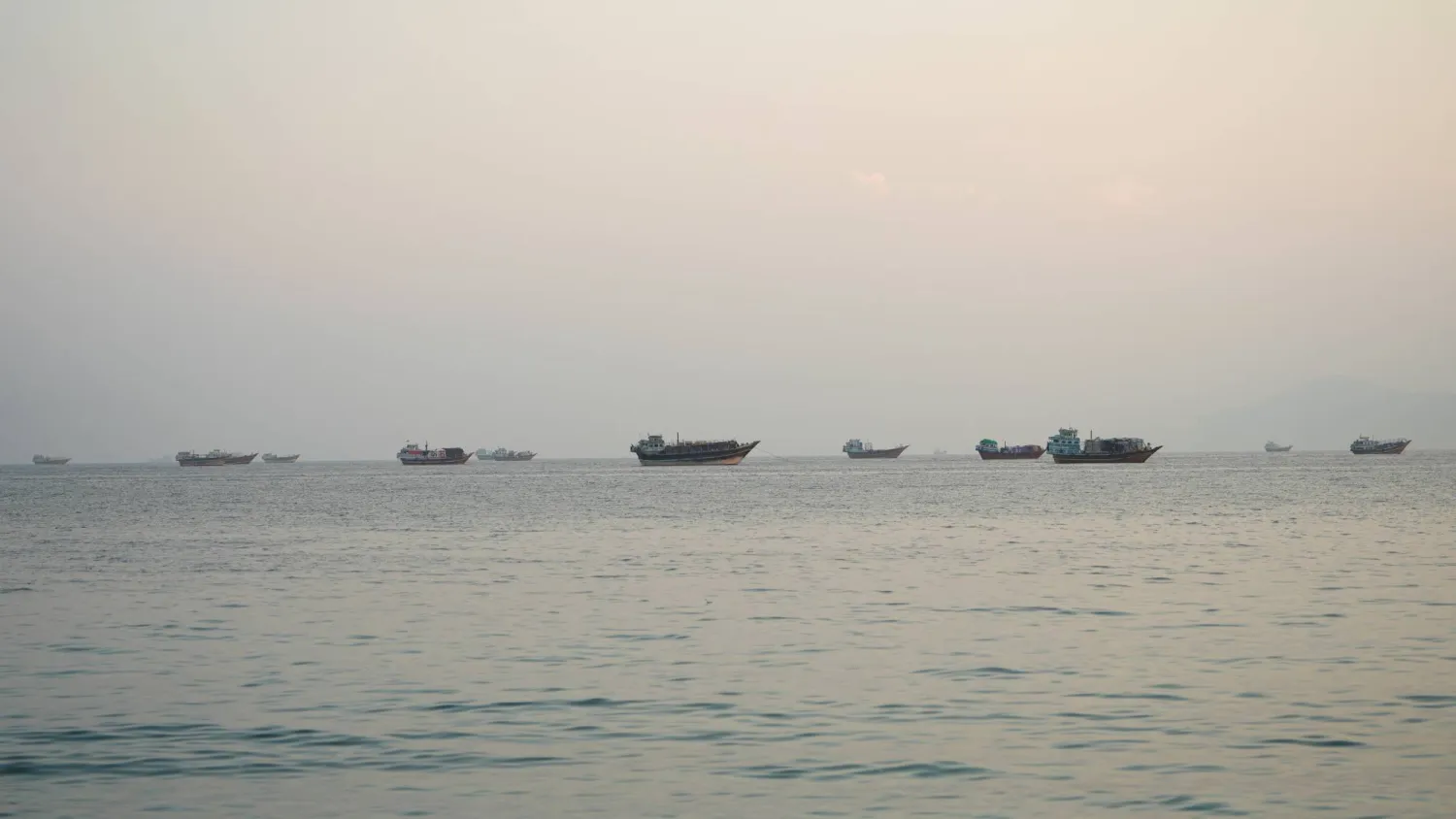
 Vessels at the Strait of Hormuz, as seen from Musandam, Oman, November 3, 2026. (Reuters)
Vessels at the Strait of Hormuz, as seen from Musandam, Oman, November 3, 2026. (Reuters)
TT

Trump Says He Is Highly Unlikely to Order Iran Strikes if Talks Progress

 Vessels at the Strait of Hormuz, as seen from Musandam, Oman, November 3, 2026. (Reuters)
Vessels at the Strait of Hormuz, as seen from Musandam, Oman, November 3, 2026. (Reuters)

US President Donald Trump on Sunday said he was highly unlikely to order fresh attacks on Iran as long as talks to end the conflict progress, even as both countries reported that shipping had been hit in or near the Strait of Hormuz. 

"It depends on whether or not they sign a very strong agreement," Trump told CNN in a phone interview. "The answer is, highly unlikely it's going to be necessary." 

CNN did not specify exactly what it had asked Trump, who also said that if strikes resume, the US has identified potential infrastructure targets, including 38 bridges "that we can knock down in literally one hour." 

Trump had hinted at renewing major attacks on Iran after last week's US midterm elections, but there has been no sign of a large-scale US military operation. Iran has said it would respond by striking US and Israeli targets. 

Iranian media suggested that explosions in southern Iran on Saturday were related to Iranian military activities ‌rather than US strikes. 

Iran's state ‌television said officials had not confirmed any missile strikes on Iranian territory following blasts heard ‌in several ⁠areas, including on ⁠Qeshm Island in the strait. 

Both the US and Iran have continued strikes on vessels in the Strait of Hormuz, however, restricting exports of energy and other commodities vital to the world economy. 

Iran's state television said the evening explosions might be related to Iranian military activity in the waterway, where Iran said two vessels had hit mines and a third had caught fire. 

The US said its air force had disabled a vessel in the Gulf of Oman beyond the strait. 

Tasnim news agency said two missiles had struck Qeshm Island, with no official information on possible damage. Neither Iran nor the US has commented on that report. Washington said on November 2 that it had struck the island in a limited defensive measure against ⁠Iranians using surface-to-air missiles against US assets. 

COMMERCIAL VESSEL, OIL TANKERS HIT 

Since the US and Israel began ‌attacks on Iran in February, Tehran has sought the upper hand by hitting vessels ‌in the Strait of Hormuz to block Gulf energy exports, while US forces began blockading movements to and from Iranian ports in April. 

The US military ‌said on Saturday evening that its air force had fired at the stern of a commercial vessel in the Gulf of Oman, ‌disabling it as it tried to get through the blockade. 

Iran's Revolutionary Guards Navy said two oil tankers had caught fire after hitting mines while attempting to pass through an "unauthorized route" in the Strait of Hormuz. A third tanker had also suffered an explosion and caught fire, the semi-official Fars news agency reported later. 

Reuters was not able to confirm any of the reported strikes. 

Monitors from the United Kingdom Maritime Trade Operations said a bulk carrier and military ‌forces were involved in an incident in the Gulf of Oman, approximately 18 nautical miles east of the United Arab Emirates' city of Khor Fakkan, with damage unknown. It was unclear if ⁠it was related to the reported US ⁠attack. 

Qatar, which has been mediating in talks to try to end the conflict that has shaken the world economy, on Saturday denied reports that the US and Iran had failed to reach a deal. 

The Qatari prime minister had affirmed that both sides were continuing to work toward an agreement, it said. 

Iran has submitted a nuclear proposal to Washington through Qatar, a senior Iranian official told Reuters on Thursday, saying the US was reviewing it but discussions would depend on Washington first meeting Tehran's seven demands. 

These include sanctions relief, access to frozen assets and war reparations, while Washington insists nuclear issues must feature in initial talks. 

On Saturday, the US military said it was launching a task force to crack down on the movement of advanced weapons and other sanctioned material to Iran via its land borders and the Caspian Sea — part of economic measures to try to pressure Tehran. 

The Revolutionary Guards dismissed the plan as "wordplay," saying it would not work because Tehran had made preparations and communicated closely with its neighbors. 


Trump Says Elections Were ‘Giant Step Back in History' for US

 US President Donald Trump speaks to members of the media at President Donald J. Trump International Airport in Palm Beach, Florida, US, November 6, 2026. (Reuters)
US President Donald Trump speaks to members of the media at President Donald J. Trump International Airport in Palm Beach, Florida, US, November 6, 2026. (Reuters)
TT

Trump Says Elections Were ‘Giant Step Back in History' for US

 US President Donald Trump speaks to members of the media at President Donald J. Trump International Airport in Palm Beach, Florida, US, November 6, 2026. (Reuters)
US President Donald Trump speaks to members of the media at President Donald J. Trump International Airport in Palm Beach, Florida, US, November 6, 2026. (Reuters)

President Donald Trump vowed Sunday to bounce back stronger from a massive midterm elections loss that he called a "giant step back in history" for the United States.

Democrats captured both chambers of Congress in last Tuesday's midterms that dealt historic losses for Trump's Republican Party in states they had dominated for decades.

"America took a giant step back in History with the results of the last Election," Trump said in a post on Truth Social, saying that the stock market that had grown during his tenure took a loss after the vote.

"But have no fear, we will be back, BIGGER AND STRONGER THAN EVER BEFORE!"

While Republican lawmakers have been licking their wounds over the setback, Trump has sounded defiant and on Friday appointed hardline advisor Stephen Miller as his new chief of staff, signaling a bare-knuckle fightback.

Democrats have pledged to hold the Trump administration to account and fight "every step of the way" against Miller, architect of Trump's tough immigration policy.