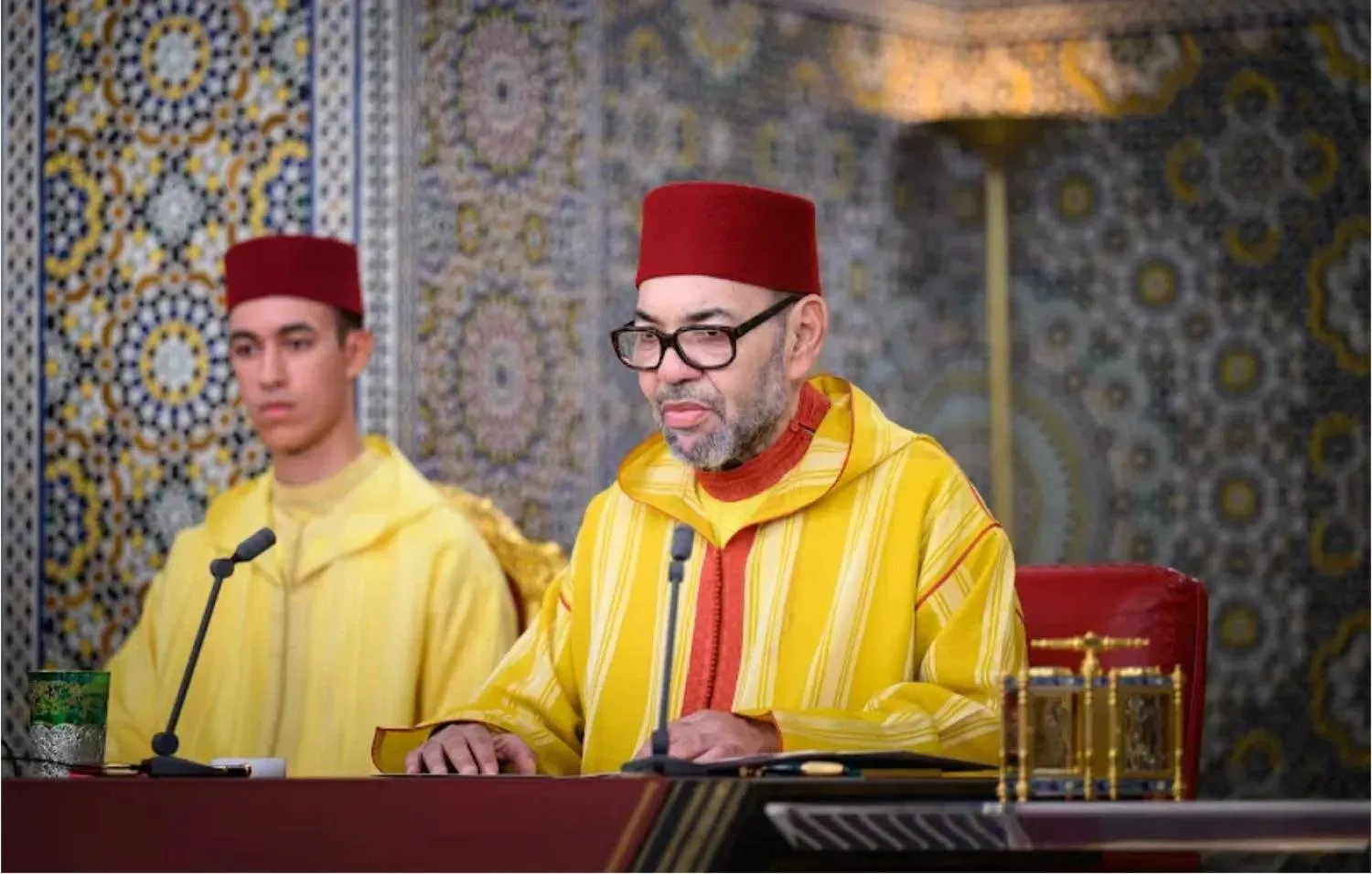
King Mohammed VI: Saudi Security is an Integral Part of Morocco’s Security

Moroccan King Mohammed VI (MAP)
TT

King Mohammed VI: Saudi Security is an Integral Part of Morocco’s Security

Moroccan King Mohammed VI (MAP)

Morocco’s King Mohammed VI, on his own behalf and on behalf of the Moroccan people, has condemned the repeated attacks carried out by the terrorist Houthi militias against Saudi Arabia.

The attacks targeted civilian and economic facilities, vital installations, cities, and residential areas.

The King affirmed on Sunday that what further deepens the condemnation is that the attacks have not been confined to targeting facilities and civilians. Rather, they have extended to desperate and criminal attempts to target the two holiest sites in Islam, revered by Muslims around the world: Makkah and Madinah.

In two cables addressed to Custodian of the Two Holy Mosques King Salman bin Abdulaziz Al Saud and Prince Mohammed bin Salman bin Abdulaziz Al Saud, Saudi Crown Prince and Prime Minister, the Moroccan King said: “Out of loyalty to the bonds of faith, history and shared destiny, and the strong ties of brotherhood that personally unite us, as well as our two families and our two brotherly peoples, I address you at this critical juncture facing your dear country, when our historical responsibility, religious values and strategic considerations require us all to stand united in defense of truth, sovereignty, security and the sacred sites of the Muslim Ummah.”

“These despicable attacks and desperate attempts to undermine the security, stability and well-being of the proud Saudi people are not merely an assault on the brotherly Kingdom of Saudi Arabia, its people and the Umrah performers there; they are also a blatant assault on the sentiments of more than 1.8 billion Muslims across the world. They also constitute a flagrant violation of the values and principles upon which the noble Islamic faith is founded, including peace, tolerance, and the sanctity of blood, honor and sacred sites,” he said.

“We express our condemnation of these criminal acts, for which the terrorist Houthi militias, as well as those who stand behind them, finance and arm them, bear full responsibility. We consider them all accountable before Allah Almighty, history and international law, with the international sanctions that should follow accordingly,” the Moroccan king said.

“The security and stability of the Kingdom of Saudi Arabia, like those of the other Gulf Cooperation Council (GCC) states, are an integral part of the security of the Kingdom of Morocco. Any attack on Saudi Arabia is an attack on Morocco, because we consider standing with our brothers in Saudi Arabia and in the brotherly Arab Gulf states to be standing for truth and legitimacy, while defending their vital interests is defending our shared strategic interests,” King Mohammed VI added.

He also affirmed his country's steadfast support for Saudi Arabia in confronting the risks it faces as a result of the actions of terrorist and separatist militias and the regional powers backing them, which target the security of their neighbors and the wider region with a short-sighted and destructive approach.

He indicated that these actions seek to undermine the security of the entire region, disrupt the stability enjoyed by its countries, and threaten vital maritime routes of paramount importance to the global economy and the security of international maritime navigation.

The King stressed that such attacks “constitute a flagrant violation of international law and relevant UN provisions, foremost among them Resolution 2216 (2015), which calls on the militias to withdraw, surrender their weapons and cease violence, and Resolution 2722 (2024), which calls on them to immediately cease attacks on maritime navigation.”

“The targeting of civilian areas, economic facilities and holy sites also constitutes a blatant violation of international humanitarian law and international conventions and norms, and cannot go without accountability or punishment,” he added.

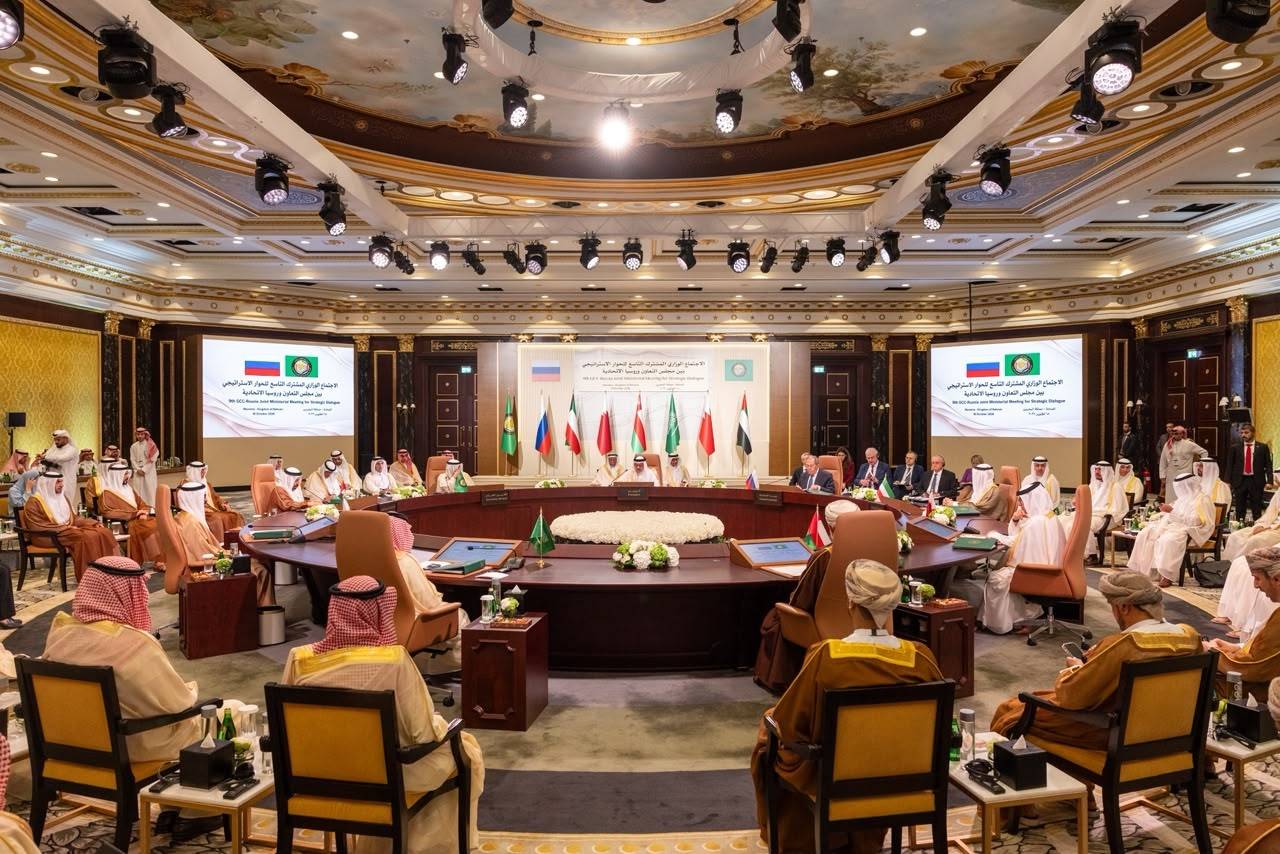

Gulf Calls on Russia to Play Role in Stopping Attacks by Iran, Starting Dialogue with it

GCC Foreign Ministers and Russian Foreign Minister Sergei Lavrov at the 9th Joint Ministerial Meeting of the Strategic Dialogue between the GCC and Russia in Manama on Sunday. (Russian Foreign Ministry)
TT

Gulf Calls on Russia to Play Role in Stopping Attacks by Iran, Starting Dialogue with it

GCC Foreign Ministers and Russian Foreign Minister Sergei Lavrov at the 9th Joint Ministerial Meeting of the Strategic Dialogue between the GCC and Russia in Manama on Sunday. (Russian Foreign Ministry)

Gulf Cooperation Council (GCC) countries called on Russia on Sunday to play an active role in urging Iran to cease its attacks on regional countries and to adhere to UN Security Council resolutions.

They also urged Iran to respect freedom of navigation in the Strait of Hormuz and to engage in a dialogue with Gulf states based on the principles of good neighborliness, respect for sovereignty, and non-interference in internal affairs.

Meanwhile, Russian Foreign Minister Sergei Lavrov stressed that Russia supports the peace efforts exerted by Arab countries to prevent the Middle East from sliding into a major war.

The call came during the 9th Joint Ministerial Meeting of the Strategic Dialogue between the GCC and Russia, which was hosted by the Bahraini capital, Manama. The meeting took place amid escalating regional tensions and ongoing threats facing the security of Gulf states, international navigation, and energy supplies.

Chaired by Bahrain’s FM Dr. Abdullatif bin Rashid Al Zayani, the meeting underlined the importance of working with Moscow in de-escalation efforts and addressing regional crises through political and diplomatic means.

Lavrov stressed the need to grant Gulf states a decisive role in determining regional security arrangements.

Officials are seen at the 9th Joint Ministerial Meeting of the Strategic Dialogue between the GCC and Russia in Manama on Sunday. (GCC)

Deepening contacts with the GCC remains a priority for Russian diplomacy, he added, pointing out that his country supports efforts to prevent the region from sliding into a large-scale war.

"We must give the Gulf states the decisive word and the firm decision in ensuring the security of the region," he remarked, expressing his country's determination to move forward in strengthening the strategic dialogue with the Gulf states.

In the same context, the Russian Ministry of Foreign Affairs announced that Moscow and Riyadh expressed their concern over the tensions in the southern Arabian Peninsula and the Bab al-Mandeb Strait.

The Bahraini Foreign Minister valued the Russian positions calling for de-escalation, stressing that the security of the GCC states is a pillar of international security.

Addressing crises requires respecting the sovereignty of states and refraining from interfering in their internal affairs, he noted.


Bahrain, UAE, Oman Offer Condolences to Saudi Arabia over Najran Helicopter Crash Victims

General view of Riyadh, Saudi Arabia. (SPA)
TT

Bahrain, UAE, Oman Offer Condolences to Saudi Arabia over Najran Helicopter Crash Victims

General view of Riyadh, Saudi Arabia. (SPA)

Bahrain, the UAE and Oman extended condolences to Saudi Arabia over the death of two officers in a helicopter crash in the Najran region due to technical failure, the Saudi Press Agency reported Monday.

In statements issued by their foreign ministries, the three countries expressed deep sympathy with Saudi Arabia's leadership, government, and people.
They affirmed full solidarity with Saudi Arabia in this painful loss, praying that Allah Almighty bestow His mercy on the two officers and grant their families patience and solace.

On Sunday, official Spokesperson for the Coalition to Restore Legitimacy in Yemen Major General Turki Al-Malki said in a ⁠statement that a Saudi AH-6i helicopter crashed in Najran due to technical malfunction, killing its two crew members.

The helicopter crashed in an area under the jurisdiction of the Saudi National ⁠Guard Ministry, the statement added.


Gulf Countries Demand to Be Included in Any Negotiations with Iran that Must Cover its Missile Program

Foreign ministers of the Gulf Cooperation Council (GCC) pose for a photo at the 168th GCC Ministerial Council in Manama on Sunday. (BNA)
TT

Gulf Countries Demand to Be Included in Any Negotiations with Iran that Must Cover its Missile Program

Foreign ministers of the Gulf Cooperation Council (GCC) pose for a photo at the 168th GCC Ministerial Council in Manama on Sunday. (BNA)

Foreign ministers of the Gulf Cooperation Council (GCC) called on Sunday for designating the Houthi group as a terrorist organization and halting the support that allows it to acquire missiles and drones.

Meeting in Bahrain for the 168th GCC Ministerial Council, they demanded that Iran cease its aggression against regional countries and compensate for the resulting damages.

The ministers stressed the need to involve Gulf states in any negotiations or arrangements affecting their security.

Any understandings with Iran must encompass its nuclear and missile programs, as well as its drones and support for regional proxies, while expressing support for diplomatic efforts aimed at de-escalation, they added in a statement.

They condemned the ongoing Houthi attacks against Saudi Arabia, including the targeting of the Two Holy Mosques, civilian airports, and vital installations, which resulted in civilian casualties. The council expressed its condolences to the families of the victims and wished the injured a speedy recovery.

The council underscored the full solidarity of the Gulf states with Saudi Arabia and backed all measures it takes to protect its security and sovereignty.

It stressed that any attack on a member state constitutes an attack on all council states under the Joint Defense Agreement, while emphasizing the council states' right to individual and collective self-defense under Article 51 of the United Nations Charter.

The ministers welcomed the presidential statement by the UN Security Council on October 15, which condemned the Houthi attacks on Saudi Arabia, including the targeting of Aramco facilities, and stressed the Kingdom's right to self-defense.

They also demanded the strict implementation of the arms embargo against the Houthis and expressed support for reaching a political solution to the Yemeni crisis in line with the three references.

On Iran, the Ministerial Council held Tehran fully responsible for the attacks on the Gulf states and Jordan. It demanded accountability for those responsible and urged that Iran be compelled to repair the resulting damages in accordance with Human Rights Council Resolution 61/1 of 2026.

The ministers stressed the importance of protecting navigation in the Strait of Hormuz, Red Sea, and Bab al-Mandeb Strait, warning against closing these waterways, obstructing navigation within them, targeting commercial vessels and their crews, or planting mines.

They rejected the imposition of unlawful fees or restrictions on the transit of ships, as well as subjecting transit passage to prior permission or mandated routes. Furthermore, they demanded the restoration of freedom of navigation and the return of conditions in the Strait of Hormuz to what they were prior to February 28.