Saudi-Egypt Electricity Interconnection Nears Operation

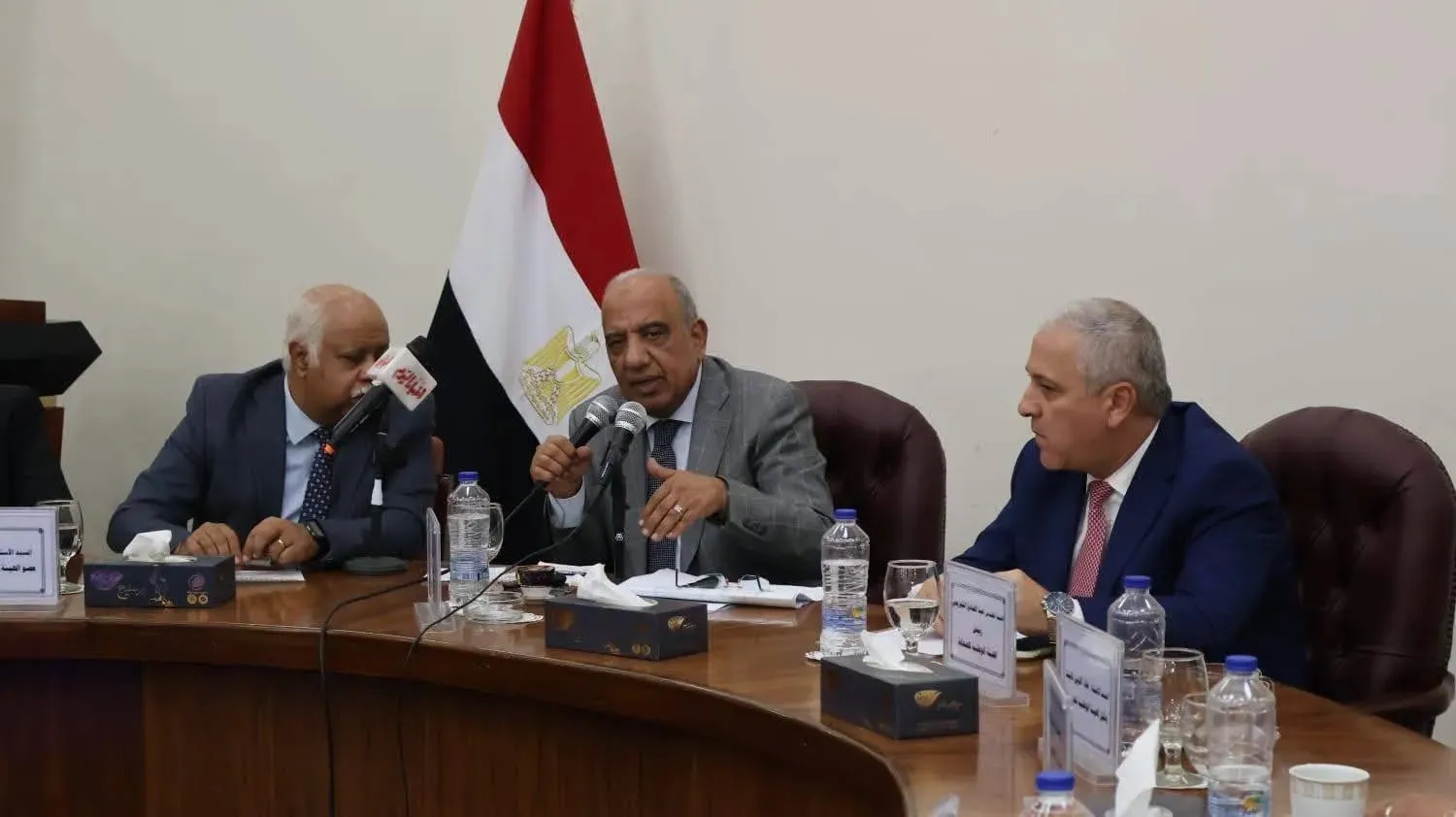
Egyptian Electricity Minister Mahmoud Esmat during a seminar at the National Press Authority on Sunday evening (Electricity Ministry’s Facebook page)
TT

Saudi-Egypt Electricity Interconnection Nears Operation

Egyptian Electricity Minister Mahmoud Esmat during a seminar at the National Press Authority on Sunday evening (Electricity Ministry’s Facebook page)

The Saudi-Egypt electricity interconnection, one of the region’s largest and most ambitious energy projects, is nearing actual operation after an official Egyptian announcement that work on the Egyptian side has been completed and the project has entered trial operations.

The strategic project, with investments of about $1.8 billion and an exchange capacity of up to 3,000 megawatts, is not only a step toward improving the efficiency of the two countries’ national grids, but also represents a pivotal shift in the regional and international energy landscape.

By connecting the two largest electricity grids in the Arab world, the project lays the initial foundation for a common Arab electricity market and reinforces the two countries’ positions as key hubs for energy trading and transmission between Asia, Africa and Europe.

Egyptian Side Ready

Egyptian Electricity and Renewable Energy Minister Mahmoud Esmat said on Sunday that the project aims to exchange 3,000 MW of electricity along a 1,320-kilometer route.

He noted that the pace of implementation and progress accelerated between July 2024 and June 2025, bringing the project to the trial-operation stage.

Esmat confirmed that all engineering and construction work on the Egyptian side of the interconnection with Saudi Arabia had been completed, with only a small portion of work, technical testing and final preparations remaining on the Saudi side.

Work in Egypt included construction of the 500-kilovolt Badr converter station and the 320-kilometer Badr-Taba overhead line, as well as giant Suez Canal crossing towers rising more than 220 meters to ensure the smooth and safe transmission of electricity ahead of the start of actual exchanges between the two countries.

Esmat said during a Feb. 15 meeting with President Abdel Fattah al-Sisi that the interconnection would play an important role in stabilizing Egypt’s national electricity grid during the summer, when consumption peaks.

Technical Specifications

According to official Egyptian information, the project is one of the region’s largest electricity interconnection projects, with investments estimated at about $1.8 billion and an exchange capacity of up to 3,000 MW.

It consists of three major high-voltage converter stations: one east of Madinah and another in Tabuk, Saudi Arabia, and a third in Badr, east of Cairo.

The stations are connected by overhead lines extending about 1,350 kilometers, in addition to submarine cables crossing the Gulf of Aqaba.

Strategic Shift in Regional Energy Security

Khaled El-Shafei, an economist and head of the Capital Center for Economic Studies, said the interconnection represents a strategic shift in the region’s energy landscape and security.

He noted that the project strengthens energy security in both countries with a capacity of up to 3,000 MW through high-voltage direct-current lines extending 1,320 kilometers, equivalent to about 8 to 10 percent of Egypt’s total operating reserve capacity.

El-Shafei underlined that this would support the stability of the national grid without the need to operate additional generating plants with high operating costs. It would also reduce carbon emissions by millions of tons annually through optimal use of the two countries’ renewable-energy mix.

He continued that once the interconnection becomes fully operational, it would generate substantial economic savings in fossil-fuel consumption and power-plant maintenance costs.

Gateway to Europe

Esmat also discussed existing electricity interconnection projects with neighboring countries, including Sudan, Libya and Jordan, saying studies for interconnection projects with Greece and Italy are currently being finalized, which would make Egypt a bridge to Europe, according to a ministry statement.

On the regional level, El-Shafei said the Saudi-Egypt project’s entry into the operational phase is the essence for establishing a common Arab electricity market, as it connects the two largest electricity grids in the Arab region, which together account for more than 60 percent of total electricity generated in the Arab world.

The development also opens broad prospects for Egypt to capitalize on its unique geographical position as a key regional energy-trading hub. It would allow the Egyptian grid to manage a multilateral interconnection system extending to the Arab east through Saudi Arabia and Jordan, the Maghreb through Libya, and Africa through the existing interconnection with Sudan.

Egypt would also serve as a future gateway to Europe through interconnection projects being studied and implemented with Greece, Cyprus and Italy to transmit up to 2,000 MW, boosting direct economic returns and making the region a key pillar for regional and international energy stability and sustainability.



Global Equity Funds Attract Inflows for 5th Consecutive Week

NEW YORK, NEW YORK - OCTOBER 21: Traders work on the floor of the New York Stock Exchange during morning trading on October 21, 2026 in New York City. Michael M. Santiago/Getty Images/AFP
TT

Global Equity Funds Attract Inflows for 5th Consecutive Week

NEW YORK, NEW YORK - OCTOBER 21: Traders work on the floor of the New York Stock Exchange during morning trading on October 21, 2026 in New York City. Michael M. Santiago/Getty Images/AFP

Global equity funds attracted inflows for a fifth consecutive week in the week through October 21, as easing Treasury yields and strong early corporate earnings lifted investor sentiment.

Global equity funds drew net inflows of $28.16 billion during the week, compared with $19.88 billion in the previous week, LSEG Lipper data showed.

The benchmark 10-year US Treasury yield fell about 15 basis points last week and dropped below the psychologically significant 5% level this week, Reuters reported.

Fund investors were encouraged by better-than-expected corporate earnings so far this reporting season.

Of the nearly 18% of MSCI All Country World Index constituents that have ⁠reported earnings to date, ⁠about 73% have exceeded the average analyst estimate, according to LSEG data.

The MSCI World Index, however, fell 1.31% on Thursday after Meta reported strong results on Wednesday but unveiled plans to issue non-voting stock, reviving concerns about its growing capital commitments.

NEW YORK, NEW YORK - OCTOBER 21: Traders work on the floor of the New York Stock Exchange during morning trading on October 21, 2026 in New York City. Michael M. Santiago/Getty Images/AFP

By region, Asian equity funds attracted $11.53 billion, their largest weekly ⁠inflow since at least December 2022. Investors also added $9.14 billion to European equity funds and $5.07 billion to US equity funds.

Among sectoral funds, technology attracted $5.05 billion, reversing net sales of $4.77 billion in the previous week. Investors also bought $1.83 billion in healthcare sector funds but sold a notable $1.29 billion in consumer discretionary sector funds.

Global bond funds remained popular for a fifth consecutive week, attracting net inflows of $9.44 billion.

Swiss franc-denominated bond funds drew $6.8 billion, their largest weekly inflow since at least November 2024. ⁠Investors also added ⁠a significant $2.78 billion to short-term bond funds, while pulling $1.68 billion from high-yield bond funds and $550 million from government bond funds.

Money market funds attracted weekly net inflows of $15.86 billion, following net outflows of $47.51 billion the previous week.

Among commodities, gold and other precious metals funds attracted net inflows of $1.29 billion, marking their fifth week of net purchases in the past six weeks. Investors also added $41.5 million to energy funds.

Data covering 29,174 emerging market funds showed that investors bought $6.28 billion worth of equity funds — the largest weekly net purchase since August 5. However, they withdrew a marginal $48.72 million from bond funds.


UK Pledges More Funding to Guard Against AI Risks

FILE PHOTO: The words "AI Artificial Intelligence", a keyboard, and a robotics hand in this illustration taken October 19, 2026. REUTERS/Dado Ruvic/Illustration/File Photo
TT

UK Pledges More Funding to Guard Against AI Risks

FILE PHOTO: The words "AI Artificial Intelligence", a keyboard, and a robotics hand in this illustration taken October 19, 2026. REUTERS/Dado Ruvic/Illustration/File Photo

The UK government on Saturday outlined plans to expand funding for artificial intelligence safety amid growing concerns over the cyber risks posed by the increasingly advanced technology.

"The economic opportunities from AI will only be realized if our critical infrastructure, public services and businesses are resilient to cyber, biological and emerging AI-enabled threats," the government said in a statement ahead of its annual budget update on Wednesday.

Concerns about AI safety have escalated in recent months after models developed by OpenAI and Anthropic were involved in security incidents during testing, piling pressure on governments to regulate the technology and protect against threats.

As part of a package of AI-related measures in the budget, the government will invest an additional £120 million ($161 million) in Britain's AI Security Institute, which tests the most powerful AI models before they are released.

According to AFP, it will also invest £100 million to establish a national AI Biosecurity Lab, which will use AI to detect and track biological threats.

"As AI becomes more powerful, Britain must have the capabilities to protect its people and shape its own future," said AI minister Kanishka Narayan.

"That means staying ahead of emerging threats, from cyberattacks to biological risks, while building more of the critical technology our security depends on," he added.

The plans include investment in AI tools to identify cyber vulnerabilities across critical infrastructure.

Governments and companies around the world shut down websites Thursday as they raced to protect themselves from hacks after AI models uncovered critical flaws in a widely used programming language called PHP.

Cybersecurity experts fear state-of-the-art AI technology could be used to hack banks, hospitals and government systems.

Last month it emerged that a rogue OpenAI model bypassed safeguards during training and hacked an Australian government health statistics website.


Trump Lifts Some Canada Tariffs Ahead of Midterms

President Donald Trump arrives on Air Force One, Friday, Oct. 23, 2026, at President Donald J. Trump International Airport in West Palm Beach, Fla. (AP Photo/Mark Schiefelbein)
TT

Trump Lifts Some Canada Tariffs Ahead of Midterms

President Donald Trump arrives on Air Force One, Friday, Oct. 23, 2026, at President Donald J. Trump International Airport in West Palm Beach, Fla. (AP Photo/Mark Schiefelbein)

President Donald Trump's administration lifted some tariffs on Canadian imports Friday, two weeks ahead of midterm elections, after a vulnerable Republican candidate said she'd lobbied for the change.

The easing of tariffs will apply to products including "plywood sheets, some paper products, certain machinery and refrigeration equipment," the White House said in a statement.

The change could help Senator Susan Collins, who faces a strong challenge from a Democrat in the US-Canada border state of Maine, which has been hit hard by Trump's trade war.

She posted on social media that she had "secured" the exemptions for "products crucial to Maine's agricultural industries, including blueberry, potato, apple, and seaweed producers."

Democrats are targeting Collins's seat in their attempt to win control of Congress from the Republicans in the November 3 midterms.

The economies of the United States and Canada are heavily inter-connected, with roughly 70 percent of all Canadian exports heading to the United States.

Tensions between the North American neighbors have been high since trade talks broke down in August, with Trump imposing a slew of new tariffs in response.

Friday's action lifts tariffs on certain goods, but imposes levies on new ones, including carpets, certain valves and waste products, the White House said. The new measures will take effect on October 30.

"The Canadian government takes note of these recent tariff measures adopted by the United States," Dominic LeBlanc, Ottawa's minister in charge of US-Canada trade, said in a statement to AFP.

"While evaluating these recent measures, Canada remains ready to work together in a constructive and good-faith manner" with the US, he added.

Collins said many farmers in her state "rely on specialized equipment, packaging materials, and other products from Canada that are either unavailable from American suppliers or cannot be replaced without incurring significant expense."

Previous Trump levies on autos, steel, aluminum and lumber have hit Canada hard, forcing job losses and stunting growth. Canada has entered a technical recession this year after two consecutive quarters of economic contraction.

Trump's tariffs enforced after the talks broke down impacted around $20 billion worth of goods, or 5.5 percent of Canadian exports to the United States, targeting products ranging from hockey sticks to cement.

Since taking power in his second term, Trump has upended the global trade order by imposing wide-ranging tariffs on friend and foe alike, saying that other countries have been taking advantage of the United States.

He has also explicitly tied some threatened tariffs to political or foreign policy objectives.