
The confrontation between the Yemeni government and the Iran-aligned Houthi group has entered a new phase, following Parliament's approval of a request by Chairman of the Presidential Leadership Council Rashad al-Alimi to declare a general mobilization.
Authorities said the move is aimed at strengthening the capabilities of state institutions and the armed forces in confronting the Houthi escalation, and protecting the republican system and the country's sovereignty.
The parliamentary decision came after an expanded meeting held by the council under the chairmanship of Speaker Sultan al-Barakani via videoconference to discuss military and political developments in the country, as well as al-Alimi's memorandum requesting approval for the declaration of general mobilization. The request was based on constitutional provisions and laws governing mobilization, general reserve, and civil defense.
Under the decision, general mobilization takes effect from the date it is announced and will remain in place until the reasons that prompted it have ended. It will be implemented in accordance with the constitution, the power transfer decision, and the laws governing the general reserve, the National Defense Council, and civil defense.
During a meeting with several governors, attended by Prime Minister Shaya al-Zindani and military and security leaders, al-Alimi presented general mobilization as a measure that goes beyond simply recruiting fighters or reinforcing the front lines. He said it encompasses human, material, and moral resources, as well as strengthening the ability of state institutions, the armed forces, and security forces to carry out their duties.
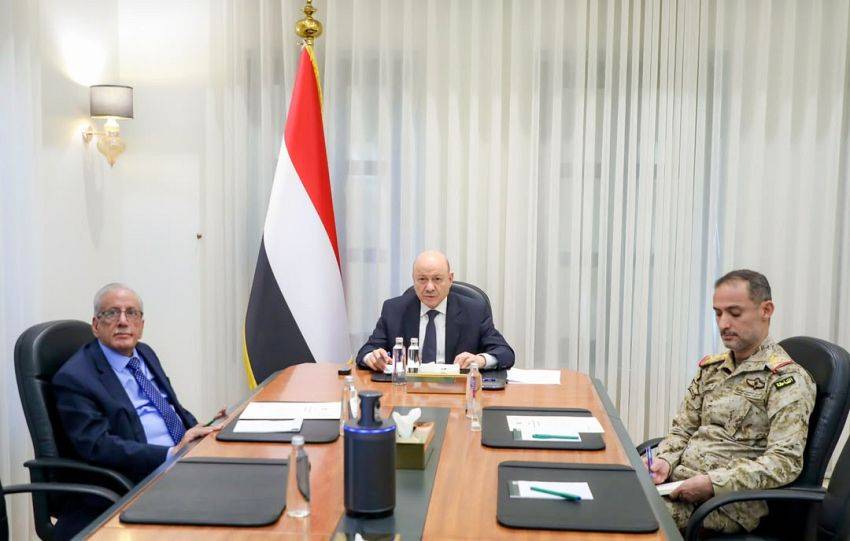
Al-Alimi praised Parliament's response to his request, saying that the legislature's approval reflects an understanding of the scale of the challenges facing the country and provides a constitutional framework for unifying the capabilities of state institutions in the coming phase.
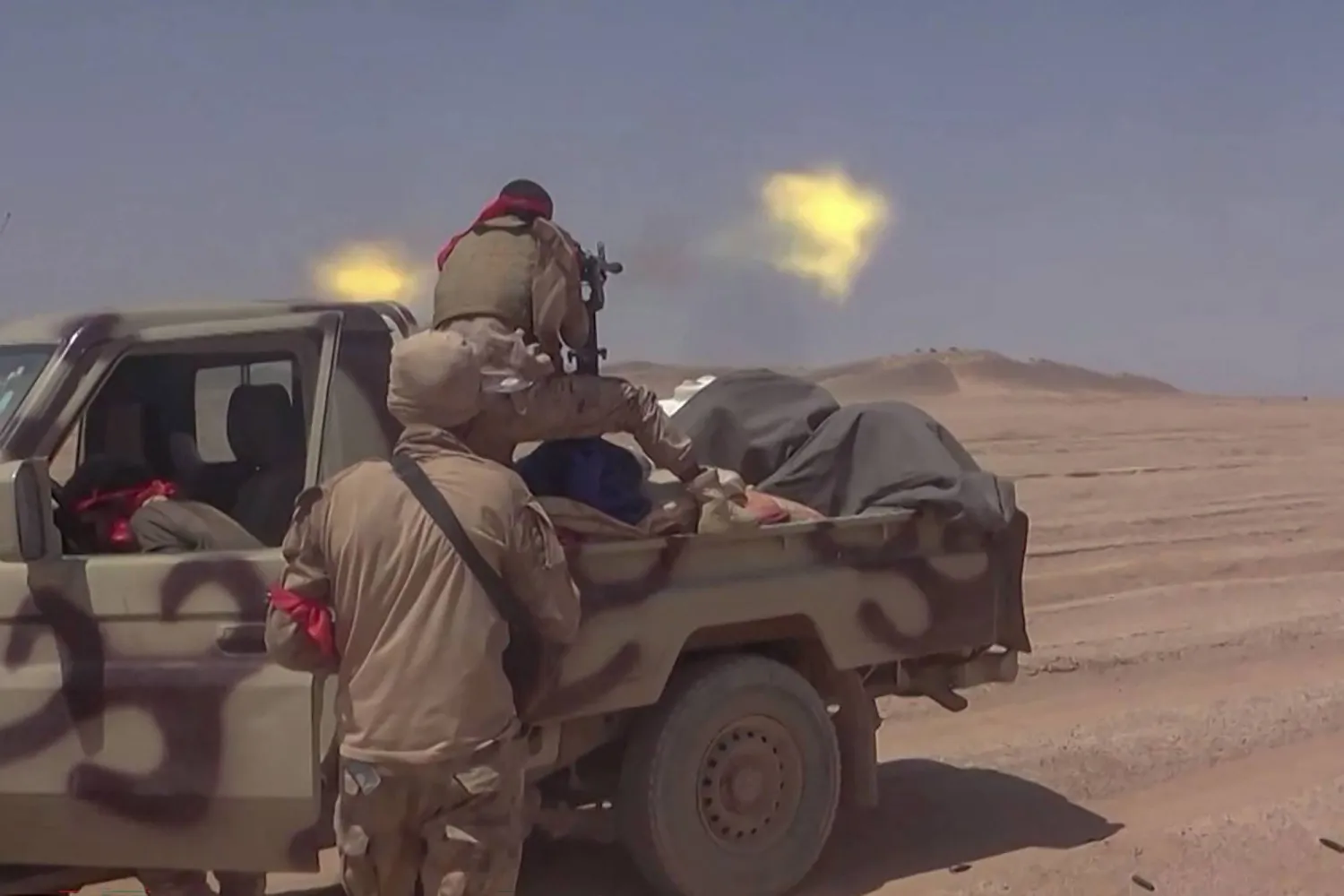
The decision comes amid a broad military escalation on several fronts, at a time when the government says its forces have regained the initiative in a number of areas. Fighting, however, continues in parts of Taiz, Lahj, Marib, Al-Jawf, and Al-Bayda, as well as on northern fronts.
"Safe Return"
Alongside the mobilization, al-Alimi proposed another course of action based on what he called a "safe return," urging residents of areas under Houthi control not to send their children to the battlefronts.
He said the state is asking them only to align themselves with the values of the republic and its institutions, stressing that the announced guarantees and procedures cover those who leave the group and stop fighting or working on its behalf.
He explained that the process also includes settling the status of members of the armed forces and security forces and safeguarding their legal rights, in an effort to open a channel for withdrawing from the Houthi ranks while simultaneously increasing military pressure.
The Yemeni Parliament based its decision on Article 37 of the constitution concerning the declaration of general mobilization, Article 38 concerning the National Defense Council, and Article 119 concerning the president's powers to declare a state of emergency and general mobilization in accordance with the law.
The council also cited the Law Establishing the National Defense Council, the General Reserve Law, and the Civil Defense Law.
The decision stipulates that the National Defense Council will remain in continuous session once general mobilization is declared and will oversee mobilization matters and its implementation in accordance with the relevant laws.
The measure follows a September 25 speech by al-Alimi calling for general mobilization, at a time when the government is seeking to rally state institutions and political and military forces behind a unified position in confronting the Houthis.
Parliament said its decision came amid what it described as risks threatening the lives and property of citizens, as well as their security and stability. It also pointed to the regional and international repercussions of the Yemeni conflict.
A Message to the Country and Abroad
The parliamentary decision also carried a political message extending beyond the military dimension. It called for overcoming divisions, unifying ranks, and coordinating with the coalition supporting the legitimate government, led by Saudi Arabia.
The council renewed its condemnation of Houthi attacks targeting Saudi Arabia, considering threats to the security and sovereignty of countries in the region to have repercussions for regional and international security and stability.
It also praised Saudi support for Yemen and the role played by the coalition in supporting the government and forces aligned with it.
Al-Alimi, meanwhile, stressed that the coming phase requires governors to treat residents of areas under Houthi control as part of Yemeni society, rather than as a party separate from the state. He emphasized that the government wants to restore its institutions, security, and stability in those areas.
Parliament's decision gives the general mobilization a formal framework for shifting the government's response from separate military measures to a broader institutional mobilization policy encompassing the armed forces, security forces, human and material resources, and state agencies.
The impact of the decision, however, will remain linked to the mechanisms for its implementation and the ability of government institutions and allied military forces to operate under more coordinated leadership, given the number of formations and forces on the ground and the differences in their areas of deployment.