Saudi Arabia Reaffirms Rejection of Using Vital Waterways to Harm States' Interests

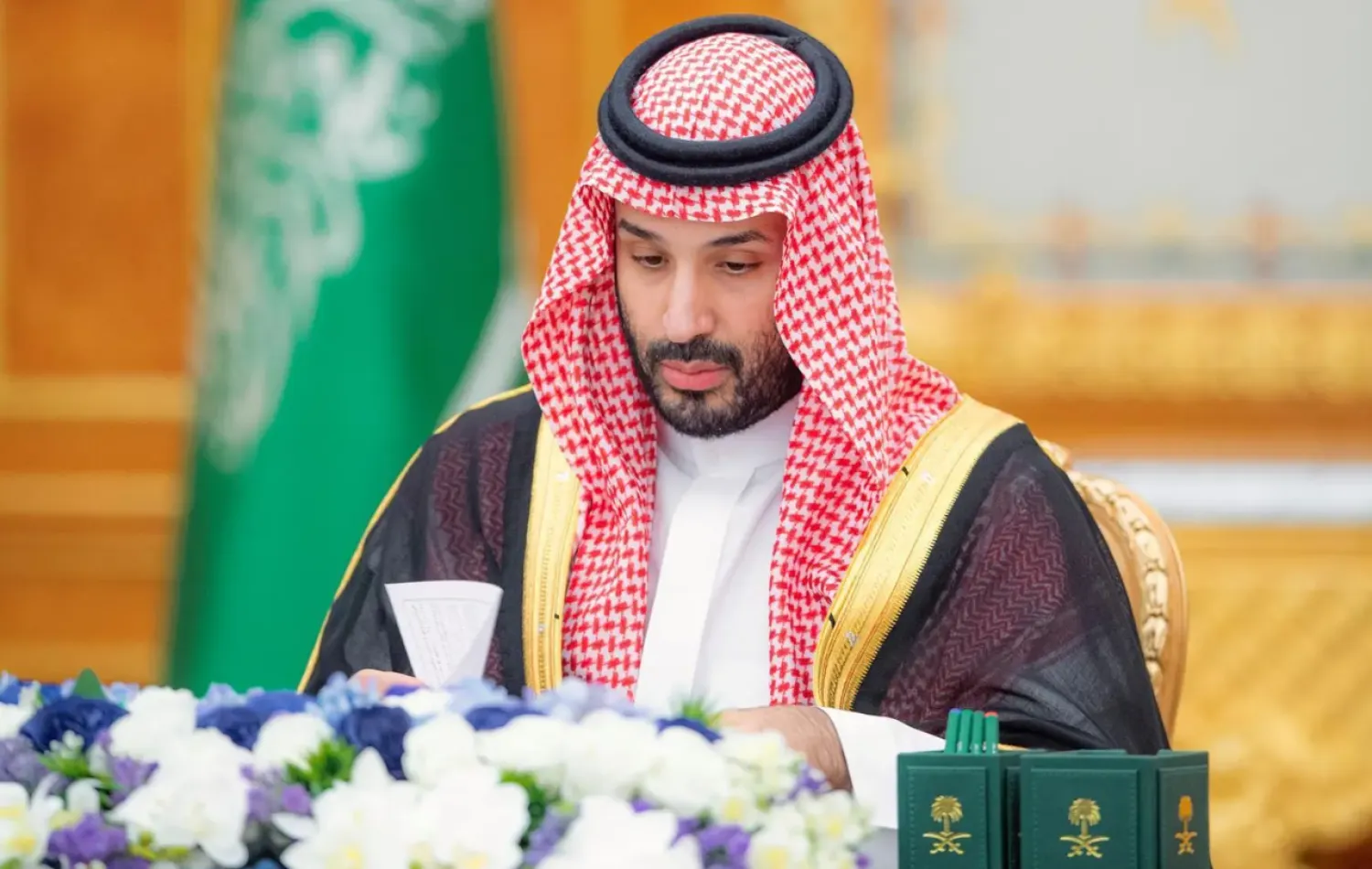
Prince Mohammed bin Salman bin Abdulaziz Al Saud, Crown Prince and Prime Minister, chaired the Cabinet session held Tuesday in Riyadh - SPA
TT

Saudi Arabia Reaffirms Rejection of Using Vital Waterways to Harm States' Interests

Prince Mohammed bin Salman bin Abdulaziz Al Saud, Crown Prince and Prime Minister, chaired the Cabinet session held Tuesday in Riyadh - SPA

Prince Mohammed bin Salman bin Abdulaziz Al Saud, Crown Prince and Prime Minister, chaired the Cabinet session held Tuesday in Riyadh.

At the outset of the session, the Crown Prince briefed the Cabinet on the contents of phone calls with President of the Russian Federation Vladimir Putin; Emir of the State of Qatar Sheikh Tamim bin Hamad Al Thani; and President of the Transitional Sovereignty Council of the Republic of Sudan Abdel Fattah Al-Burhan.

He also briefed the Cabinet on his meeting with United Arab Emirates Vice President, Deputy Prime Minister, and Chairman of the Presidential Court Sheikh Mansour bin Zayed Al Nahyan.

The discussions reviewed relations between the Kingdom of Saudi Arabia and these brotherly and friendly nations, as well as ways to strengthen and develop these ties across various fields. Additionally, the talks addressed regional developments and efforts to enhance security and stability at both regional and international levels.

In a statement to the SPA following the session, Minister of Media Salman Al-Dossary said that the Cabinet reviewed the outcomes of the Kingdom of Saudi Arabia's participation in the High-Level Week of the 81st session of the United Nations General Assembly.

In this context, the Cabinet praised the national efforts and the Kingdom's significant role in this global event, particularly its leadership and support for multilateral action at various levels. These efforts promote international peace and security, enhance dialogue and diplomacy, aid in addressing global crises and challenges, and strengthen responses to humanitarian needs.

The Cabinet viewed the Kingdom's financial support for the United Nations Counter-Terrorism Center's programs as an essential part of its ongoing efforts to combat terrorism in all its forms. This support underscores the importance of the center in enhancing national capacities, unifying global efforts, and strengthening international cooperation in this field.

The Cabinet noted the progress made in establishing the General Secretariat of the Makkah Joint Defense Agreement and forming its committees and working groups.

It also noted the steps taken at the meetings of the foreign ministers and chiefs of general staff of the Kingdom of Saudi Arabia, the Islamic Republic of Pakistan, and the Republic of Türkiye to advance coordination and integration among the three countries and begin translating the agreement's commitments into military cooperation that strengthens deterrence and collective defense.

The Cabinet followed developments in political issues at the regional and international levels, expressing its welcome for the statement issued by members of the United Nations Security Council (UNSC), which condemned the continued attacks by the Houthi terrorist militia against Saudi Arabia and commercial vessels, threats to the security of navigation in the Red Sea and the Bab al-Mandab Strait, and the undermining of efforts aimed at achieving peace in Yemen.

The Cabinet also stressed the importance of ensuring freedom of navigation in the Strait of Hormuz, the Bab al-Mandab Strait, the Red Sea, and the Gulf of Aden, and of restoring conditions in the Strait of Hormuz to those prevailing before February 28, while imposing no fees or restrictions.

It rejected the use of these vital waterways as a means of exerting pressure, issuing threats, or harming the interests of states, in line with international law and relevant UN resolutions.

Minister Al-Dossary said the Cabinet strongly condemned continued assaults by officials of the Israeli occupation authorities and extremist settlers on the sanctity of Al-Aqsa Mosque and its religious and historical status, as well as continued expansionist attempts to infringe upon the legitimate rights of the Palestinian people.

He also indicated that the Cabinet renewed Saudi Arabia's affirmation that a just and lasting peace can only be achieved through implementing the two-state solution and establishing an independent Palestinian state on the 1967 borders, with East Jerusalem as its capital.

The Cabinet also reviewed a number of reports on domestic affairs, commending the successive international recognition of the leadership of the “Saudi Model for Education and Training Quality” in building an integrated ecosystem of programs, tools, and measures, supported by a broad database of data and information.

This contributes to ensuring the adequacy of education outcomes, preparing national talent capable of competing globally, and fostering a culture of excellence and innovation, in line with the objectives of the Human Capability Development Program and Saudi Vision 2030.

Custodian of the Two Holy Mosques Receives Written Message from Emir of Qatar

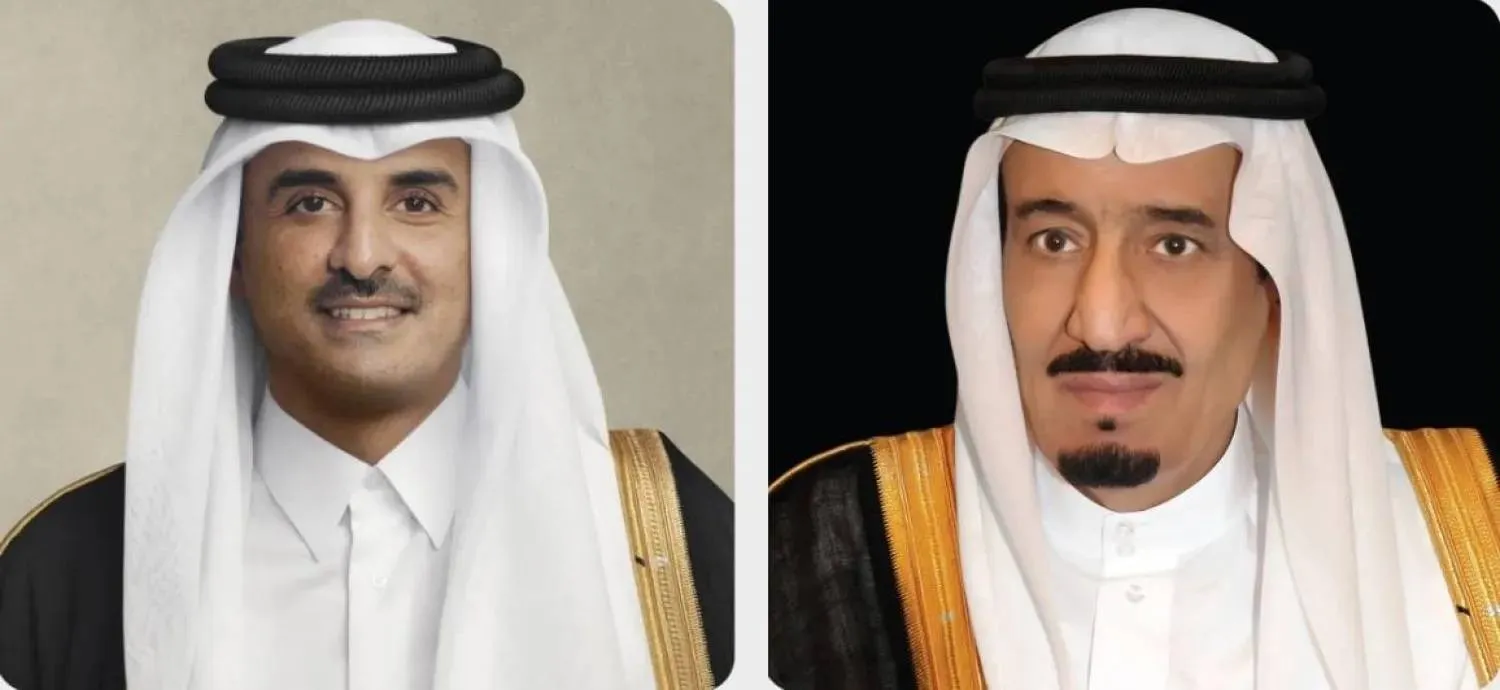
Custodian of the Two Holy Mosques King Salman bin Abdulaziz Al Saud and Emir of Qatar Sheikh Tamim bin Hamad Al Thani. (Asharq Al-Awsat)
TT

Custodian of the Two Holy Mosques Receives Written Message from Emir of Qatar

Custodian of the Two Holy Mosques King Salman bin Abdulaziz Al Saud and Emir of Qatar Sheikh Tamim bin Hamad Al Thani. (Asharq Al-Awsat)

Custodian of the Two Holy Mosques King Salman bin Abdulaziz Al Saud received on Monday a written message from Emir of Qatar Sheikh Tamim bin Hamad Al Thani on bilateral relations between their countries.

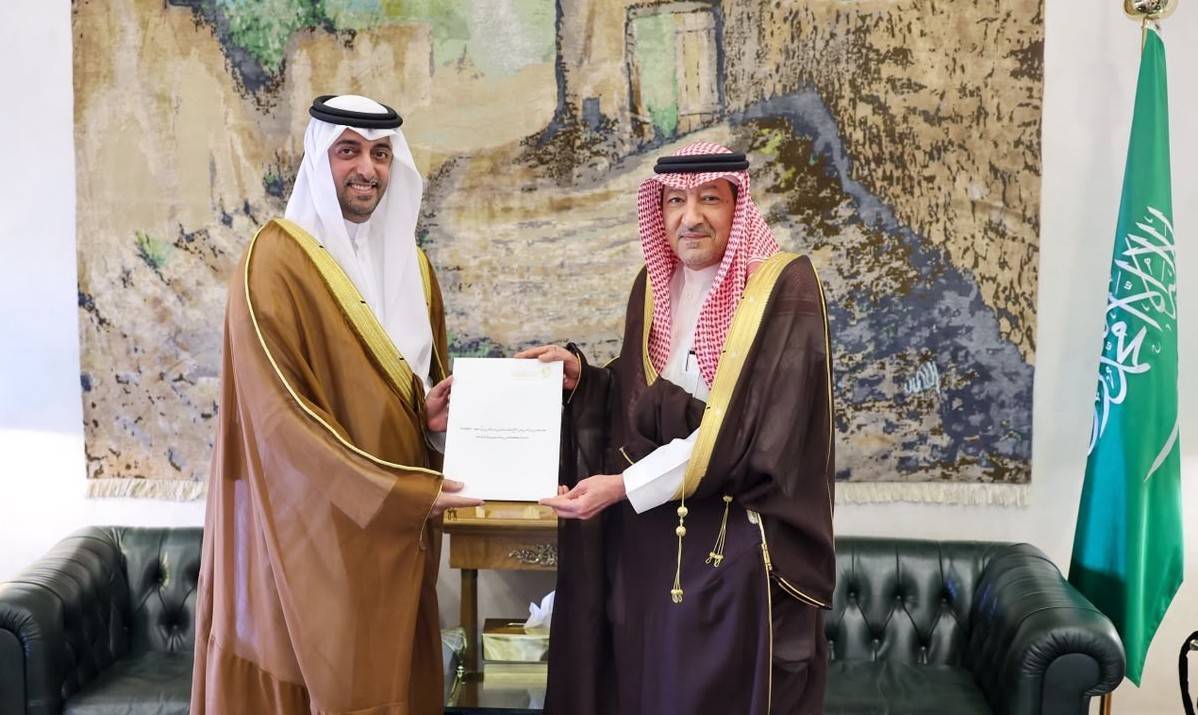
The message was received by Vice Minister of Foreign Affairs Waleed Elkhereiji during a meeting with Ambassador of Qatar to Saudi Arabia Bandar bin Mohammed Al Attiyah at the ministry's headquarters in Riyadh.

Vice Minister of Foreign Affairs Waleed Elkhereiji meets with Ambassador of Qatar to Saudi Arabia Bandar bin Mohammed Al Attiyah in Riyadh on Monday. (SPA)

The meeting reviewed bilateral relations between their countries, ways to boost them in various fields. They also discussed issues of common interest.


Qatar Calls for Non-Aggression Pact with Iran, Announces Plans to Strengthen Defense Industry

Qatari Deputy Prime Minister and Minister of State for Defense Affairs Sheikh Saoud bin Abdulrahman Al Thani attends the opening of the eighth Global Security Forum in Doha on Monday.
TT

Qatar Calls for Non-Aggression Pact with Iran, Announces Plans to Strengthen Defense Industry

Qatari Deputy Prime Minister and Minister of State for Defense Affairs Sheikh Saoud bin Abdulrahman Al Thani attends the opening of the eighth Global Security Forum in Doha on Monday.

Qatar has called for a regional dialogue involving the Gulf Cooperation Council (GCC) states and Iran, with the participation of Türkiye and Pakistan, aimed at reaching security understandings based on confidence-building measures and a non-aggression agreement.

The proposal comes as Doha prepares to unveil new defense partnerships and plans to establish a domestic military production center, part of efforts to strengthen its ability to counter missile threats, drones and cyberattacks.

The announcements were made by Sheikh Saoud bin Abdulrahman Al Thani, Qatar's Deputy Prime Minister and Minister of State for Defense Affairs, during the opening of the eighth Global Security Forum in Doha on Monday.

The forum, which runs through October 21 under the theme "The Future of Alliances", brings together officials and experts in international security and politics.

The Qatari minister said achieving lasting peace with Iran would require addressing mutual security concerns and building economic relationships that could help prevent renewed conflict.

He stressed that Qatar continues to maintain contact with Tehran despite the attacks it has suffered and supports mediation efforts led by Pakistan, in cooperation with Oman and other partners, to seek a settlement to the conflict between the United States and Iran.

On defense security, Sheikh Saoud revealed that Qatar is preparing to announce a partnership with regional parties to develop its air defense, counter-drone and cybersecurity capabilities.

He also announced plans to establish a domestic defense production center in cooperation with a regional partner and countries including the United States, the United Kingdom and France, either by localizing certain military industries or investing in specialized companies.

The minister explained that a defense review conducted by Qatar had identified air defense, cybersecurity and electronic warfare as priorities, following the threats witnessed across the region during the recent conflict.

He said Doha would soon announce the establishment of the domestic defense production center, explaining that Qatar is working with a regional partner, alongside the United States, Britain and France, to develop local defense capabilities or invest in companies operating in the sector.

Asked about the threats facing Qatar and other Gulf countries, particularly ballistic missiles, drones and cyberattacks, Sheikh Saoud said a new partnership with regional parties would be announced soon to launch an initiative aimed at building capabilities in those three areas and others.

The minister emphasized the importance of Qatar's military partnership with the United States, noting that defense cooperation and exchanges of expertise had helped intercept more than 90 percent of attacks during the conflict.

He also reaffirmed Qatar's commitment to the continued development of Al Udeid Air Base, describing it as a Qatari facility that hosts allied forces and supports multiple missions, including counterterrorism operations.

On energy security, Sheikh Saoud warned that the economic repercussions of disruptions to oil and gas supplies had not yet reached their peak, and that their effects on prices and consumers could continue over the coming months.

He also rejected the imposition of fees on vessels transiting the Strait of Hormuz, stressing the need for an agreement guaranteeing freedom of navigation and stability in energy markets.

The minister addressed the Israeli attack on Qatar, arguing that targeting a country engaged in mediation undermines confidence in diplomatic efforts.

He also referred to the apology issued by the Israeli prime minister following the attack.

Discussing Iranian attacks on Qatari facilities and interests, Sheikh Saoud said Doha had drawn lessons from the incidents to strengthen its defense preparedness, without abandoning dialogue with Tehran.

He stressed that mediation and military readiness are not mutually exclusive, explaining that preventing wars requires sustained diplomatic engagement alongside the development of capabilities necessary to protect national sovereignty.

The Global Security Forum, organized by the Soufan Center and the Qatar International Academy for Security Studies, is being held under the patronage of Sheikh Mohammed bin Abdulrahman Al Thani, Qatar's Prime Minister and Minister of Foreign Affairs.

The forum is examining the future of alliances and defense partnerships, maritime security and supply chains, cybersecurity challenges, and de-escalation diplomacy amid ongoing shifts in international relations.


Saudi Arabia, France Discuss Relations and Regional Developments

Saudi Minister of Foreign Affairs Prince Faisal bin Farhan bin Abdullah holding talks with Minister for Europe and Foreign Affairs of the French Republic Jean-Noël Barrot - SPA
TT

Saudi Arabia, France Discuss Relations and Regional Developments

Saudi Minister of Foreign Affairs Prince Faisal bin Farhan bin Abdullah holding talks with Minister for Europe and Foreign Affairs of the French Republic Jean-Noël Barrot - SPA

Saudi Minister of Foreign Affairs Prince Faisal bin Farhan bin Abdullah met with Minister for Europe and Foreign Affairs of the French Republic Jean-Noël Barrot.

During the meeting, they reviewed bilateral relations and the existing partnership across various fields, exploring ways to further strengthen them to serve mutual interests and support the aspirations of both friendly nations.

The ministers also discussed regional developments and efforts to mitigate the repercussions of ongoing events. Barrot expressed his country’s condemnation of the terrorist attacks carried out by the Houthi militia and affirmed France’s solidarity with Saudi Arabia.

The two sides also underscored the importance of intensifying diplomatic efforts to ensure the security and safety of regional waterways and freedom of navigation, as well as supporting diplomatic efforts to achieve comprehensive and sustainable solutions to ongoing regional crises, thereby enhancing security and stability across the region.