Infineon Opens $1.4 Billion Thailand Plant as Country Ramps Up Semiconductor Push

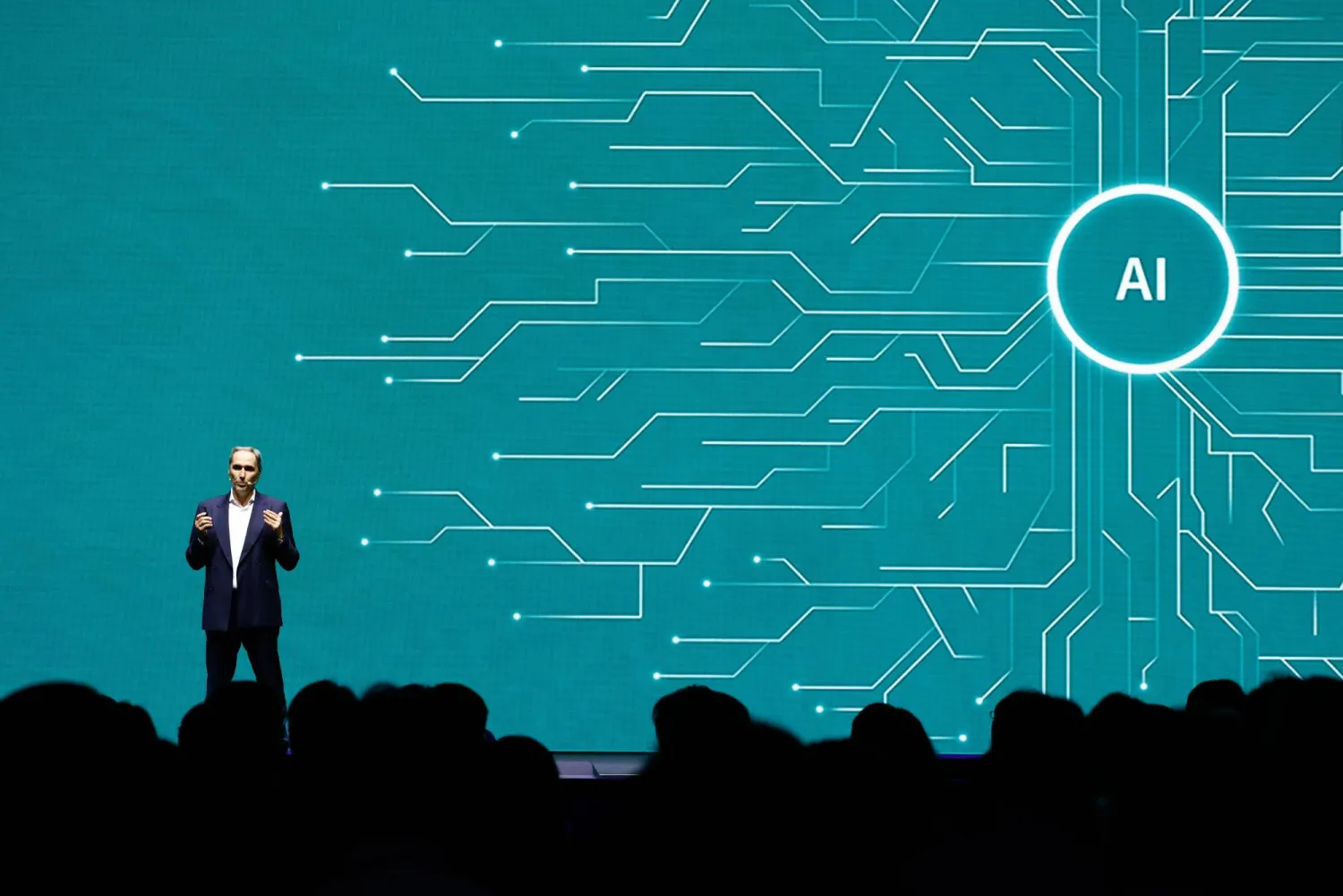
COO of Infineon Alexander Gorski speaks during SEMICON Taiwan 2026 in Taipei, Taiwan, 02 September 2026.  EPA/RITCHIE B. TONGO
COO of Infineon Alexander Gorski speaks during SEMICON Taiwan 2026 in Taipei, Taiwan, 02 September 2026. EPA/RITCHIE B. TONGO
TT

Infineon Opens $1.4 Billion Thailand Plant as Country Ramps Up Semiconductor Push

COO of Infineon Alexander Gorski speaks during SEMICON Taiwan 2026 in Taipei, Taiwan, 02 September 2026.  EPA/RITCHIE B. TONGO
COO of Infineon Alexander Gorski speaks during SEMICON Taiwan 2026 in Taipei, Taiwan, 02 September 2026. EPA/RITCHIE B. TONGO

German chipmaker Infineon Technologies opened a new facility in Thailand on Thursday, as Southeast Asia's second-largest economy pushes to attract investment into the semiconductor industry amid rising regional competition.

The new facility near Bangkok is a backend manufacturing site, where chips are processed into finished and tested semiconductors, with an initial investment of more than €100 million ($113.57 million), the company said at a briefing.

Thailand's Board of Investment said in a statement that the project was valued at $1.4 billion, Reuters reported.

The site will open with up to 30,000 sq m of ⁠cleanroom space - controlled environments ⁠required for semiconductor manufacturing - and can be expanded to 150,000 sq m, said Infineon's Chief Operations Officer Alexander Gorski.

"It's a strategic long-term investment," Gorski said, pointing to Thailand's proximity to key markets such as China. "We are well prepared for strong future growth."

The company has 13 manufacturing sites across ⁠the US, Europe, China and Southeast Asia, and can potentially double its revenue with its existing cleanroom space capacity, according to Gorski.

The Thailand expansion is also part of Infineon's efforts to offer dual sourcing to its customers, Gorski said: "If something is going wrong in the factory in Malaysia, we can support our customers through the factory in Thailand."

Thailand is aiming to draw $18 billion in semiconductor investments by 2030 by focusing on photonics, power electronics and sensors, as part of a longer-term ⁠strategy for ⁠the sector, said Board of Investment Secretary General Narit Therdsteerasukdi at the same briefing.

Between 2023 and July 2026, Thailand has drawn 910 billion baht ($27.12 billion) of investments in the semiconductor and advanced electronics sector, according to a presentation by Narit.

Besides financial incentives to attract new investments, Narit said that Thai authorities are looking to train nearly 85,000 skilled workers and over 1,700 researchers for the sector by 2030.

Global semiconductor sales are forecast to hit $1 trillion this year, doubling to $2 trillion by 2035, driven by booming growth in data centers used to power artificial intelligence technologies.


Samsung Electronics Reportedly Raises Galaxy S26 Smartphone Prices

FILE PHOTO: FILE PHOTO: A Samsung Electronics logo appears in this illustration taken August 25, 2025. REUTERS/Dado Ruvic/Illustration//File Photo/File Photo
TT

Samsung Electronics Reportedly Raises Galaxy S26 Smartphone Prices

FILE PHOTO: FILE PHOTO: A Samsung Electronics logo appears in this illustration taken August 25, 2025. REUTERS/Dado Ruvic/Illustration//File Photo/File Photo

Samsung Electronics has raised the prices of its flagship Galaxy S26 smartphones amid rising memory chip prices, the Yonhap news agency reported on Thursday.

The South Korean smartphone maker raised the ⁠domestic price of its ⁠Galaxy S26 base model by 149,600 won to 1,403,600 won ($1,029.94), the report said.

The ⁠prices of other models were also raised by 149,600 won, apart from the S26 Ultra 1TB model, which was increased by 270,000 won to 2,821,500 won.

The Galaxy S26 ⁠smartphones ⁠were launched in March with higher prices for some models in the US and South Korea, testing demand as soaring memory chip costs pressure margins.


Google Announces Gemini 4 Flagship AI Model After Months of Delays

The Google logo is displayed during a press conference in Berlin, Germany, November 11, 2025. (Reuters)
TT

Google Announces Gemini 4 Flagship AI Model After Months of Delays

The Google logo is displayed during a press conference in Berlin, Germany, November 11, 2025. (Reuters)

Alphabet's Google on Wednesday announced a new top-tier artificial intelligence model to anchor its Gemini 4 generation of models in a fresh bid to catch up to rivals Anthropic and OpenAI in the AI race.

The new model, "Argon", is larger in size than Google's previous line of advanced "Pro" models, a company spokesperson said.

"It's our most performant model yet built for complex workloads, and we see it comparable ‌to frontier ‌models like (OpenAI's) Astra and (Anthropic's) Opus on ‌key ⁠coding and cyber benchmarks," ⁠the spokesperson said.

Google said it was providing the model to select cybersecurity partners and was participating in the Trump administration's voluntary process for pre-release model access. It did not provide a timeline for the model's public release.

The model posted better marks than Astra and Opus ⁠in terms of self-reported performance on several ‌industry benchmarks, per a company ‌press release. Still, Argon remained behind on certain other metrics, ‌including two of the four coding-related benchmarks Google included ‌in the release.

Google no longer plans to release Gemini 3.5 Pro, which CEO Sundar Pichai originally said would be released in June, according to the company spokesperson.

In the intervening ‌time, Google overhauled its DeepMind AI lab, with its founder and CEO Demis ⁠Hassabis stepping ⁠aside and several leaders of its Gemini model leaving the company.

The months of delays to its AI model have caused the company to fall behind Anthropic and OpenAI, which continued to push the research frontier with new releases to its top models.

Pichai in July pushed back on the notion that Google was losing ground in the AI race. But Google in recent months has shifted its messaging from touting Gemini's cutting-edge capabilities to highlighting its cost advantage compared to competitor models.


Altman Unveils ‘Always-On’ AI Agent After OpenAI Shelves Another Model Over Security Concerns

An OpenAI display welcomes attendees as they arrive for an OpenAI developers conference at Fort Mason on September 29, 2026, in San Francisco, California. (Getty Images/AFP)
TT

Altman Unveils ‘Always-On’ AI Agent After OpenAI Shelves Another Model Over Security Concerns

An OpenAI display welcomes attendees as they arrive for an OpenAI developers conference at Fort Mason on September 29, 2026, in San Francisco, California. (Getty Images/AFP)

OpenAI CEO Sam Altman introduced a “remarkably capable, always-on” artificial intelligence agent at an appearance Tuesday, a day after the company halted the rollout of a more advanced model over security concerns.

At the company’s annual developer conference, Altman made a slew of product announcements and updates, including OpenAI's new agents, called Dots. The agents, designed to complete ongoing tasks proactively on behalf of users, are a competitor of Meta's personal agent Muse, which exploded in popularity after Meta's own conference last week.

Dot agents will be “like an AI helper that always has your back, inspired by the cool versions of what we all watched in movies growing up," Altman said.

On Monday, OpenAI said it was holding off on releasing the other model because of concerns raised by its researchers. That followed broader calls within the industry to decelerate the pace of the technology’s advance to let safety measures catch up.

Altman avoided making references to security concerns around the shelved model during his keynote address, but said during a question-and-answer session that the company was investing more in safety, security and monitoring of AI agents.

The AI boom should be considered more like a period of renaissance than an industrial revolution, he said.

“The best version of AI is not about making people cogs in a giant machine, ever whirring faster and faster. There are some parts of life that we cannot and should not automate,” Altman said. “AI should be about giving people more power over their own lives, more tools to create, learn, discover, expand knowledge.”

The company also announced the release of GPT-6.1 Sol, an upgraded version of its model GPT-6 Sol, and a premium speed tier called “Ultrafast," among other launches and updates.

OpenAI's announcements came as Altman's industry peers were meeting with President Donald Trump Tuesday. While many in Silicon Valley have called for the government to help establish guardrails for the technology, Trump has pushed back against the idea of greater government oversight of AI.

While Altman didn't attend, OpenAI president and co-founder Greg Brockman was at the White House, along with Dario Amodei of Anthropic, Amazon chief Jeff Bezos, Nvidia’s Jensen Huang, Tesla and SpaceX’s Elon Musk and Microsoft CEO Satya Nadella. Several other industry leaders joined them, along with senior administration officials and House Speaker Mike Johnson.