Oil Prices Rise 2% as China Suspends Fuel Exports

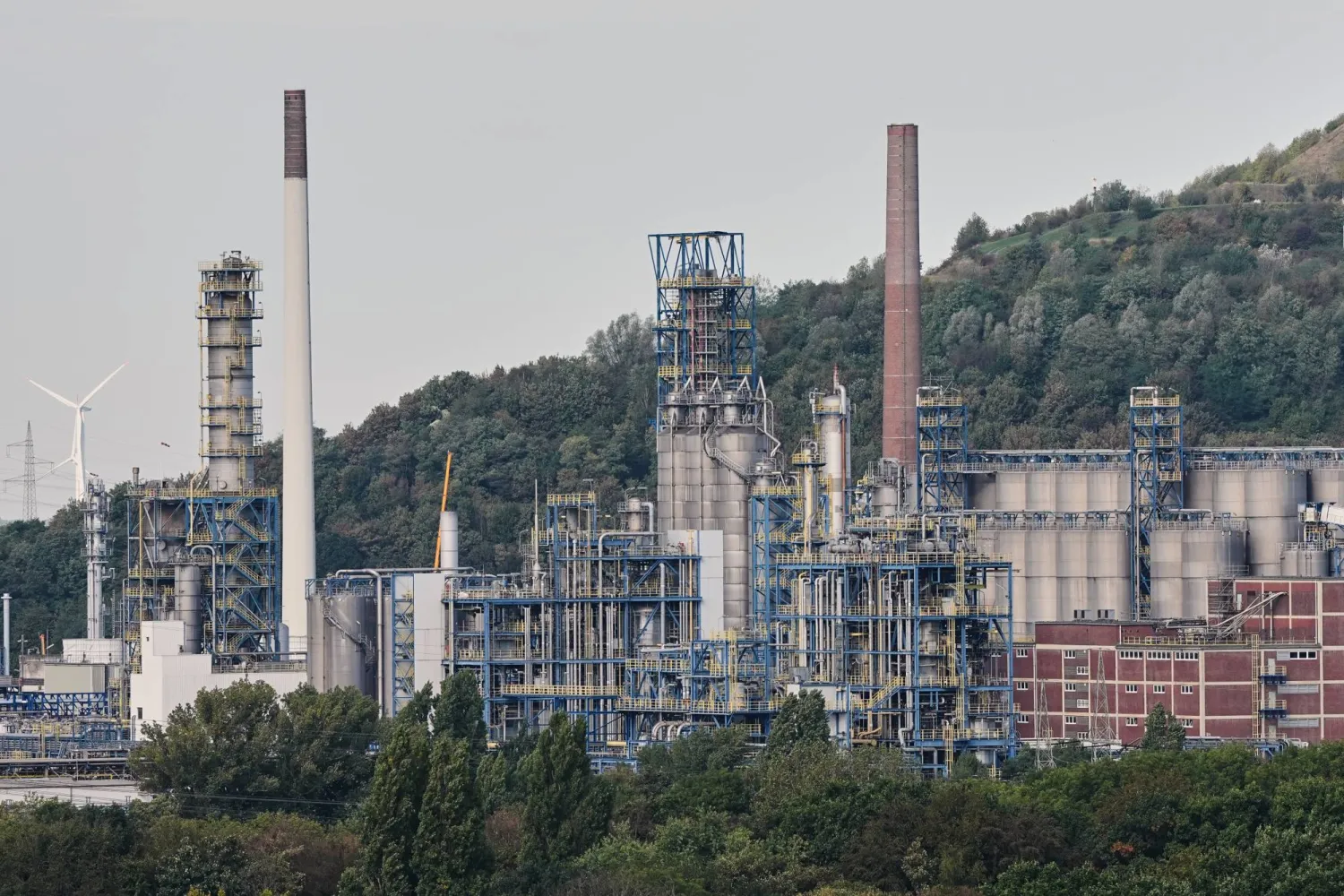
The Klesch oil refinery, formerly BP, produces petrol, diesel, and jet fuel in Gelsenkirchen, Germany, one day before the German government starts a fuel tax discount, Wednesday, Sept. 30, 2026. (AP Photo/Martin Meissner)
TT

Oil Prices Rise 2% as China Suspends Fuel Exports

The Klesch oil refinery, formerly BP, produces petrol, diesel, and jet fuel in Gelsenkirchen, Germany, one day before the German government starts a fuel tax discount, Wednesday, Sept. 30, 2026. (AP Photo/Martin Meissner)

Oil prices rose around 2% on Thursday after China suspended oil products exports, potentially tightening fuel markets already coping with supply shortages globally, while investors continued to assess renewed diplomatic efforts to end the US-Iran war.

The new front-month December Brent crude futures contract traded at $100.09 per barrel at 0829 GMT, up 2.1%, or $2.06, from Wednesday's close, Reuters reported.

The November contract expired on Wednesday, settling at $103.50 per barrel, marking a monthly gain of around 14% in September for the front-month contract.

US West Texas ⁠Intermediate crude was ⁠up $2.06, or 2.28%, to $92.48 a barrel.

Prices were volatile on Thursday, having slipped more than 1% in early trading, before rebounding.

Chinese refiners have suspended exports of oil products to regions beyond Hong Kong and Macau until further notice, four people briefed on the matter said on Thursday, a move that will further crimp war-constrained fuel markets.

"The Chinese export ban suggests concerns about domestic product availability," UBS analyst Giovanni Staunovo said, adding that it remains to ⁠be seen whether the measures will support higher crude imports after recent drawdowns in Chinese crude and fuel stocks.

Global diesel supplies have tightened as a result of falling refining capacity due to attacks linked to the Middle East and Ukraine wars, raising pressure on governments to intervene to shield consumers.

The Trump administration has told Germany and France to draw down emergency diesel inventories to help ease global fuel prices or face a potential US diesel export ban, three people close to the discussions said.

European diesel refinery profit margins were trading at around $80.05 per barrel at 0829 GMT, down around 4% from the previous session. The margin hit an all-time high of $95 per barrel on September 23.

Investors ⁠continued to watch ⁠diplomacy efforts and oil exports in the Middle East.

Saudi Arabia resumed oil tanker loadings from Yanbu, Reuters reported on Tuesday, after earlier restarting operations on its East-West Pipeline.

Iran said on Wednesday it had received a US response to its latest proposal to resurrect the collapsed ceasefire in the Gulf.

However, US President Donald Trump denied reports by Axios and CNN citing US officials as saying he was willing to give Iran sanctions relief and release frozen Iranian funds in return for "concrete" steps by Tehran on its nuclear program.


Saudi Stock Market Drops 2.3% to Lowest Close Since 2021

A person stands in front of a screen showing falling stock prices (Reuters)
TT

Saudi Stock Market Drops 2.3% to Lowest Close Since 2021

A person stands in front of a screen showing falling stock prices (Reuters)

Saudi Arabia's benchmark stock index ended Thursday's session down 2.3 percent, shedding 231 points to close at 9,696, its lowest closing level since 2021, with total trading turnover reaching approximately SAR 4.9 billion.

The Tadawul All Share Index (TASI) fluctuated between an intraday low of 9,640 points and a high of 9,888 points.

Thursday's decline brought the index's weekly losses to more than 400 points, or 4.1 percent, marking its eighth consecutive week of declines.

Most stocks fell during the session, led by Saudi National Bank, which dropped more than 5 percent to SAR 34.62, with approximately 9 million shares traded.

Saudi Aramco and Al Rajhi Bank each declined 1 percent, closing at SAR 25.40 and SAR 59.80, respectively, while Maaden fell 5 percent to SAR 55.90.

Shares of Retal, Al Yamamah Steel, East Pipes, Jahez, Gulf Training and Saudi Steel Pipe ended the session with losses ranging from 5 to 9 percent.

Meanwhile, Electrical Industries, Abo Moati, Umm Al-Qura Cement, Saleh Al-Rashed, Wafrah, Saudi Vitrified Clay Pipe and Watani Iron Steel each fell 10 percent.

On the upside, Al-Etihad rose 10 percent to SAR 6.16, followed by JAZADCO with gains exceeding 9 percent. Shares of Al Arabia, UCIC and Saudi Kayan advanced between 1 and 3 percent.


Barclays Bank to Cut about 5,000 Jobs amid AI Drive

Barclays says the job cuts are due to AI efficiencies. Paul ELLIS / AFP/File
TT

Barclays Bank to Cut about 5,000 Jobs amid AI Drive

Barclays says the job cuts are due to AI efficiencies. Paul ELLIS / AFP/File

British bank Barclays announced Thursday plans to cut around 5,000 jobs, or roughly five percent of its global workforce, by the end of 2026 in an AI efficiency drive.

The announcement came alongside an earnings update that showed Barclays' net profit grew 13 percent in the third quarter, fueled by surging income across its equities division, said AFP.

Barclays said in an earnings presentation that it was implementing "organizational simplification and technology change efficiency driven by AI".

"About 60 percent of the job losses relate to support functions, including fewer developers as AI makes our people more productive," it added.

The bank's profit after tax grew to £1.65 billion ($2.2 billion) in the third quarter from £1.46 billion in the July-September period a year earlier.

Barclays chief executive C. S. Venkatakrishnan noted "ongoing momentum of... operational and financial performance" and said the investment bank division "delivered strong equities performance".

Revenue from equities jumped 47 percent year-on-year, while total group income for the quarter climbed three percent to £7.37 billion.

Barclays' share price was up slightly following the news updates.

The AI "announcement comes as the company failed to match expectations with its third-quarter performance -- with the unveiling of a healthy share buyback failing to entirely ease investors' disappointment", noted AJ Bell investment director Russ Mould.

"Across the wider group, costs went up and Barclays shareholders are also having to contend with two major clouds over the business.

"The first being a widely expected increase in tax on the sector in next week's (UK) budget and the other being a reported probe into possible misrepresentation of risks in its private credit portfolio."


Norway Sovereign Wealth Fund Loses Over $30 Bn in 3rd Quarter

A view shows the building of Norway’s central bank (Norges Bank) in Oslo, Norway, June 23, 2022. REUTERS/Victoria Klesty/ File Photo
TT

Norway Sovereign Wealth Fund Loses Over $30 Bn in 3rd Quarter

A view shows the building of Norway’s central bank (Norges Bank) in Oslo, Norway, June 23, 2022. REUTERS/Victoria Klesty/ File Photo

Norway's sovereign wealth fund, the world's largest with assets of more than $2 trillion, on Thursday reported a negative return of 278 billion kroner ($31 billion) in the third quarter as it was weighed down by higher interest rates.

It posted a negative return of 0.5 percent in the quarter, dragged down by a negative return of 3.5 percent in its fixed-income investments, while its equity and property portfolios increased by 0.5 percent and 0.4 percent respectively.

"The fund's return was close to flat, ending slightly negative as rising interest rates led to weaker results on our fixed-income investments," the fund's deputy CEO Trond Grande said in a statement.

Invested primarily in equities, bonds and real estate across the globe, the fund reported a value of 22,014 billion kroner at the end of September.

Inflation around the world, fuelled in particular by soaring energy prices linked to the conflict in the Middle East, has led several central banks, including the US Federal Reserve and the European Central Bank, to raise interest rates in the third quarter.

"Equity returns were also close to zero, but there were large differences between sectors.

Energy companies rose the most, while interest-rate-sensitive sectors such as utilities and real estate fell," Grande said, according to Reuters.

Fueled by the Nordic country's oil revenues, the fund is invested in more than 7,100 companies spanning the globe, and holds around 1.5 percent of all listed companies worldwide, making it the world's largest single investor.