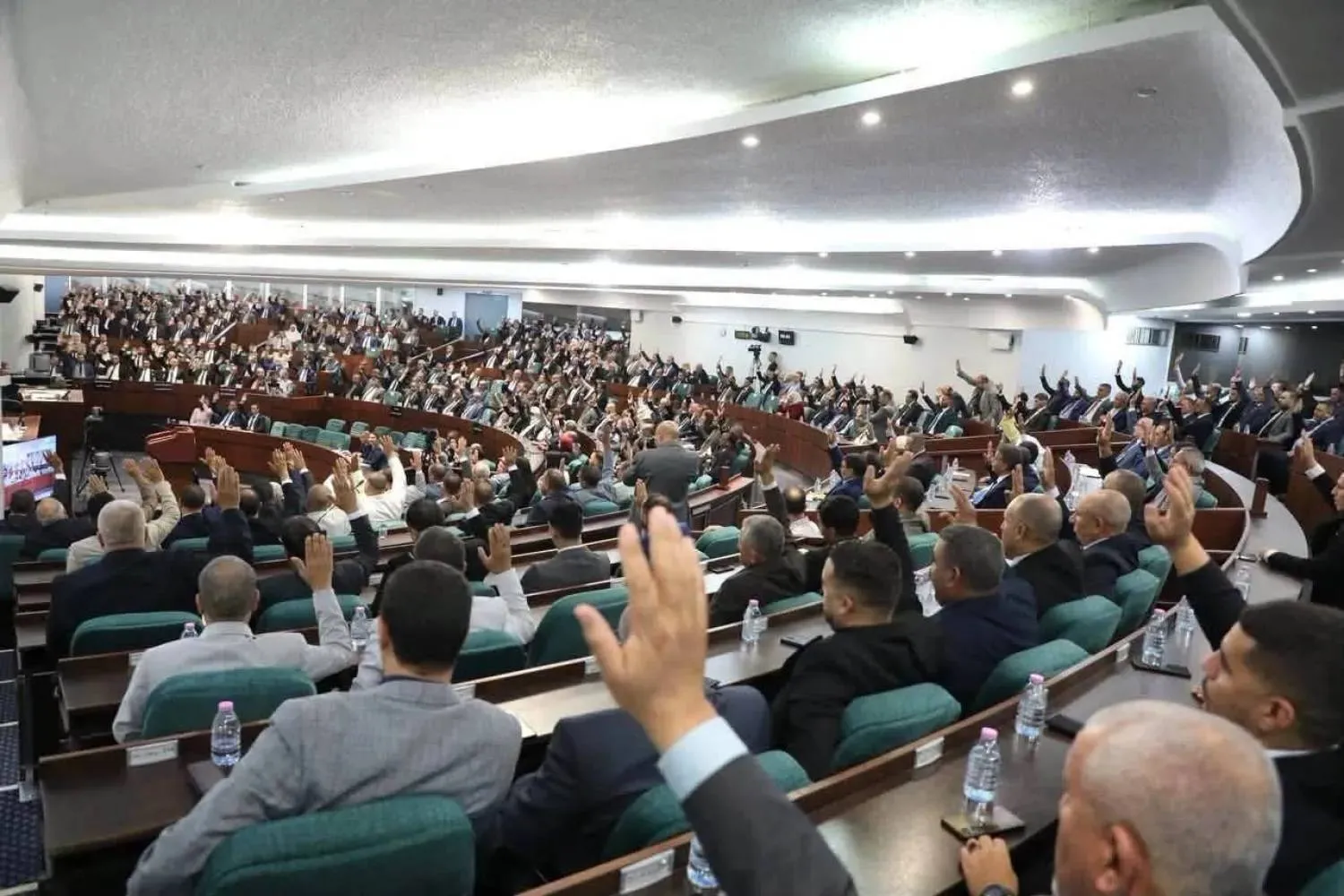

Algeria’s National People’s Assembly approved a bill on Thursday expanding the death penalty for arson and crimes against children, drawing opposition warnings about the irreversible consequences of judicial error.
The amendments to the penal code, passed by a large majority, provide for capital punishment for deliberately setting fire to forests and property, and for child abductions followed by murder or brutal abuse.
The measures aim to strengthen legal deterrence and protect society.
The government secured passage with support from lawmakers in the “presidential majority” — parties that back President Abdelmadjid Tebboune’s policies: the National Liberation Front, the Democratic National Rally, the Future Front and the National Construction Movement.
Islamist lawmakers from the Movement of Society for Peace, the Ennahda Movement and the Justice and Development Front also backed the bill on religious grounds, despite being in opposition.
Lawmakers from the Workers’ Party, the Socialist Forces Front and the Rally for Culture and Democracy voted against it. Their small numbers gave them little sway over the outcome.
Justice Minister Lotfi Boudjemaa attended the vote after presenting the bill to the assembly last Monday.
Tougher penalties, renewed debate
The bill, which has stirred considerable controversy in Algeria, contains eight articles, including new provisions on arson, attacks on property and child abduction.
Among the toughest is Article 395 bis, which prescribes the death penalty for “anyone who deliberately sets fire to forests, scrubland, fields, whether cultivated or uncultivated, trees or sections of forest.”
It also covers timber stored in piles or bundles within forest areas.
Article 396 bis 1 extends capital punishment to “the deliberate burning of any property, public or private” when committed “for the benefit of a foreign state or foreign entity, in connection with treason, collusion with the enemy or membership in an organized criminal group.”
Article 396 bis 2 targets anyone who “incites, encourages, finances, organizes or facilitates these acts,” including acts committed or incited through social media.
For crimes against children, Article 291 prescribes the death penalty for “anyone who abducts a child, tortures a child, sexually assaults a child or amputates one of a child’s limbs,” notwithstanding any conflicting penalty under existing legislation.
Those convicted of any of these crimes cannot benefit from mitigating circumstances, further tightening the penalties.
The government proposed the amendments in direct response to devastating fires that swept through parts of eastern Algeria this summer, killing dozens of people. The killing of children after their abduction has also become alarmingly more prevalent in recent years.
“Justice should not respond to death with death”
The opposition warned that the law could turn the judiciary into “an instrument of revenge,” instead of protecting victims’ rights and helping them secure redress while safeguarding defendants’ rights and guaranteeing a fair trial.
“We believe that true justice should not respond to death with death,” said Mohammed Abdoussi, a lawmaker from the Rally for Culture and Democracy.
“No one has the right to take another person’s life, and the state and the judiciary are no exception to this principle,” he told parliament in remarks reported by the media.
“Our position on the death penalty is therefore clear and rooted in principle, and we have expressed it on many occasions.”
He said his parliamentary group had proposed abolishing the death penalty and replacing it with life imprisonment in 2008.
During debate on the bill, the group raised the tragedy of the 2021 fires in Kabylie and the killing of Djamel Ben Ismail, who was brutally attacked after local residents wrongly accused him of starting the fires.
“Following this crime, 48 people were sentenced to death, before the number of death sentences was reduced to 38 on appeal,” Abdoussi said.
“This raises a crucial question: Had the initial sentences been carried out, 10 additional people could have lost their lives on the basis of rulings that were subsequently changed.”
“This example demonstrates the danger of a punishment that cannot be reversed once carried out,” he added. “Human justice, however accurate, remains susceptible to error, while a death sentence cannot be corrected after it has been carried out.”