Saudi Arabia Heads Into 2027 With Strong Recovery, More Diverse Growth Drivers

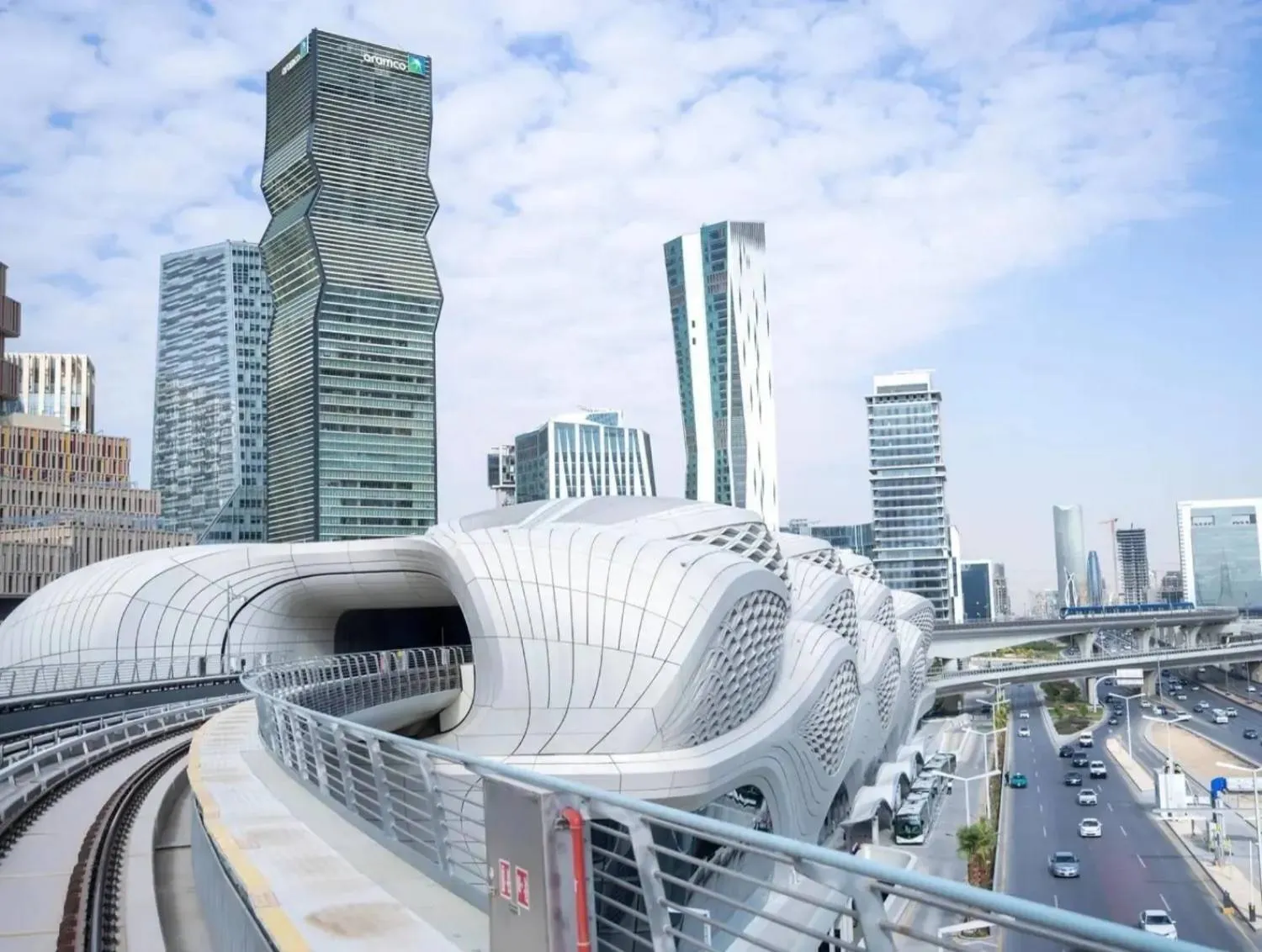
Saudi Arabia’s financial district (SPA) 
TT

Saudi Arabia Heads Into 2027 With Strong Recovery, More Diverse Growth Drivers

Saudi Arabia’s financial district (SPA) 

Saudi Arabia enters 2027 with a markedly different fiscal outlook, forecasting a strong economic recovery after a contraction linked to lower oil production, while its expanding non-oil economy increasingly cushions the impact of oil-related shocks.

The preliminary budget statement projects real GDP growth of 12.8 percent in 2027, following an expected contraction of 3.6 percent in 2026, alongside a budget deficit estimated at 3.6 percent of GDP.

The government plans to maintain investment spending and diversify growth sources while gradually reducing the deficit in the coming years.

Economists told Asharq Al-Awsat that the figures reflect a gradual shift in growth and revenue sources. Oil remains central to public finances and exports, but the economy now has a broader range of activities capable of generating growth and income.

Saudi Arabia projects expenditure of SAR 1.392 trillion ($371 billion) in its 2027 budget, against revenue of SAR 1.202 trillion ($320.5 billion), leaving an anticipated deficit of SAR 190 billion ($50.5 billion).

Three Revenue Scenarios

The preliminary budget outlines three revenue scenarios for 2027-2029, with annual government spending held at approximately SAR 1.392 trillion.

Under the baseline projection, revenue is estimated at SAR 1.202 trillion, producing a deficit of around SAR 191 billion. The higher-revenue estimate puts receipts at SAR 1.261 trillion and the deficit at SAR 132 billion, while the lower-revenue projection assumes revenue of SAR 1.134 trillion and a shortfall of SAR 259 billion.

The estimates reflect a broad range of possible fiscal outcomes amid uncertainty surrounding oil markets and the global economy. They also illustrate the government’s ability to accommodate revenue fluctuations through changes in the deficit rather than tying expenditure entirely to short-term shifts in revenue.

Spending and Fiscal Sustainability

Abdullah Almeer, assistant professor of economics at King Fahd University of Petroleum and Minerals, said maintaining elevated spending despite the projected deficit reflects a policy of using public finances to support growth and fund structural economic transformation.

He described the anticipated deficit of 3.6 percent of GDP as part of an effort to balance economic stimulus with fiscal sustainability, emphasizing that its implications depend on the nature of the expenditure it finances.

Infrastructure and development investment could strengthen growth and expand non-oil activities, he explained, whereas higher unproductive recurrent spending could increase debt burdens, financing costs and pressure on reserves.

Almeer estimated Saudi public debt at 30-33 percent of GDP, noting the government’s continued use of domestic and international financing instruments, including sukuk and bonds.

Expanding Non-Oil Revenue

Almeer highlighted the growing contribution of non-oil revenue, which covered approximately 17 percent of total expenditure in 2015, compared with 36 percent in 2025.

He attributed the shift to economic expansion, private-sector growth and investment in infrastructure, tourism and digital transformation.

Investments associated with the National Investment Strategy, the expansion of the Public Investment Fund and the Regional Headquarters Program have also stimulated non-oil sectors, he noted, estimating that more than 700 international companies have established regional headquarters in Riyadh.

External Risks

Almeer identified regional and global geopolitical developments as major risks to the 2027 budget, particularly through their effects on oil and commodity markets and shipping.

A global slowdown accompanied by higher energy prices could weaken demand for Saudi oil and non-oil exports, while persistent inflation and elevated interest rates could increase private-sector financing costs.

Higher global commodity, service and shipping costs could also feed into domestic prices. Saudi inflation is projected at 2.1 percent in 2026.

Almeer identified real non-oil GDP growth as the key indicator to monitor in 2027, alongside inflation, non-oil revenue coverage of expenditure, Saudi unemployment, private-sector contributions to GDP and the debt-to-GDP ratio.

Economic Transformation

Financial and Economic adviser Hussein Alattas said the 2027 budget figures demonstrate a focus on sustaining economic growth alongside fiscal sustainability, rather than merely controlling expenditure or reducing the deficit.

He stressed that continued investment in economic transformation projects aims to strengthen the private sector and increase non-oil contributions while maintaining spending levels capable of supporting growth.

Alattas further highlighted the rise in non-oil revenue from approximately SAR 166 billion in 2015 to SAR 505 billion in 2025 as evidence of structural economic change rather than a temporary increase in receipts.

The expansion of private enterprise, tourism, services, industry, technology and investment has broadened the economy’s capacity to generate income, he underlined.

Oil Remains a Pillar

Alattas argued that nearly a decade after the launch of Vision 2030, economic diversification has moved beyond planning and initiatives to produce tangible results in the economy and public finances.

However, reduced sensitivity to oil-price fluctuations does not mean oil has lost its importance. Crude remains a major source of government revenue and exports, leaving public finances exposed to changes in prices and production.

He explained that the difference lies in the expanding non-oil economy and its growing ability to generate income and growth.

The essence of Saudi Arabia’s economic transformation, Alattas concluded, is not abandoning oil but building an economy capable of continuing to grow and expand under varying oil-market conditions.


China, US Discuss Tariffs, Farm Trade at First Trade Council Meeting

US and Chinese flags are seen in this illustration taken March 20, 2025. (Reuters)
TT

China, US Discuss Tariffs, Farm Trade at First Trade Council Meeting

US and Chinese flags are seen in this illustration taken March 20, 2025. (Reuters)

China and the United States held their first trade council meeting under a bilateral economic and trade consultation mechanism via ‌video link ‌on Friday, China's ‌commerce ⁠ministry said on ⁠Saturday.

The two sides held "candid, in-depth and constructive discussions" on implementing outcomes ⁠from previous trade consultations, ‌including ‌tariffs, a reciprocal ‌tariff-reduction arrangement involving $30 ‌billion on each side, agricultural trade and other issues of ‌note, the ministry said.

Both sides will ⁠continue ⁠to use the council to address trade concerns, expand cooperation and reduce outstanding issues, it added.


IMF Says More Work Needed on Lebanon Reforms

A man walks past Lebanon's Central Bank headquarters in Beirut on November 10, 2026. (AFP)
TT

IMF Says More Work Needed on Lebanon Reforms

A man walks past Lebanon's Central Bank headquarters in Beirut on November 10, 2026. (AFP)

The International Monetary Fund said on Friday that more work was needed to reach an agreement on restructuring Lebanon's banking sector, one of the steps towards unlocking billions of dollars in financial assistance.

An IMF staff-level agreement reached in April 2022 laid out conditions to unlock assistance, including a law on the distribution of losses in the banking sector, known as the financial gap law, which parliament has still not voted on.

In a statement at the end of meetings that began on Tuesday, the IMF said "there was progress in further clarifying the approaches under consideration by the Banque du Liban (BdL) and the Government regarding banking sector reform, the draft financial regulation law and the recovery of deposits, and aligning them with international standards".

It however noted that "further work is needed to reach an agreement on a strategy for an effective and durable restructuring of Lebanon's banking sector, leading to a sound and resilient system".

The cabinet submitted a draft of the law to parliament in 2025, but the text is contested by the banking sector and political parties, preventing a vote.

Differences over estimates of losses and their distribution have stalled negotiations with the IMF.

In 2022, the government estimated losses resulting from the 2019 financial crisis at around $70 billion, a figure believed to have increased over the last seven years during which the crisis has remained unresolved.

Lebanese Finance Minister Yassin Jaber said during a news conference that he hoped to "achieve progress that would allow us to reach an agreement on a program with the IMF and sign it during the first quarter of next year, and by its end at the latest".

Lebanon's economic crisis, which the World Bank has ranked among the worst since 1850, has deprived depositors of access to all of their funds, destroyed confidence in the banking sector and led to greater reliance on cash liquidity in various economic and commercial activities.


Silver Demand Seen Down 5% This Year Due to Weaker Jewellery Purchases

Silver bars are stacked in the safe deposit boxes room of the Pro Aurum gold house in Munich, Germany, January 10, 2025. (Reuters)
TT

Silver Demand Seen Down 5% This Year Due to Weaker Jewellery Purchases

Silver bars are stacked in the safe deposit boxes room of the Pro Aurum gold house in Munich, Germany, January 10, 2025. (Reuters)

Silver demand is expected to fall by 5% in 2026 due to weaker jewellery demand and lower consumption in solar cells, where high prices have accelerated substitution, research showed on Friday.

Research done by consultancy Metals Focus for the Silver Institute puts demand at 1.08 billion troy ounces this year.

Silver, used in jewellery, electronics, electric vehicles and solar panels as well as for investment, is ‌down 59% ‌to $50 an ounce since retail buying drove prices ‌to ⁠a record high ⁠of $121.6 in January.

The base for that rally was created in 2025, when silver surged 147%, as massive inflows of the metal to US inventories due to tariff uncertainty and into silver-backed exchange-traded products (ETPs) tightened liquidity in the London market.

This year, expectations for higher interest rates, a stronger dollar and higher bond yields have weighed on investment ⁠sentiment.

Silver released through ETP selling, outflows from stocks ‌in the US and a smaller ‌market deficit improved liquidity in the physical market, the Silver Institute and ‌consultancy Metals Focus said on Friday.

Metals Focus sees net ETP ‌outflows of 45 million ounces this year after 278 million ounces of inflows in 2025.

As of early November, ETP holdings stood at 1.25 billion ounces.

Industrial demand is expected to fall by 3% in 2026 as installations ‌in photovoltaics have fallen short of expectations, particularly in China, while January's record silver prices accelerated ⁠substitution.

Meanwhile, demand ⁠for jewellery and silverware is forecast to decline by 22% and 17%, respectively, as higher prices and weaker rural spending in India encouraged purchases of smaller, lighter products.

Demand in China and the US is also subdued. Strong retail investment in late 2025 and early 2026 gave way to far more subdued buying from March as silver prices fell, Metals Focus said.

It expects global bar and coin demand to fall 2% this year, with US retail investment hitting its lowest level since 2010.