Lebanon PM Says Scale of War Recovery beyond State's Capacity

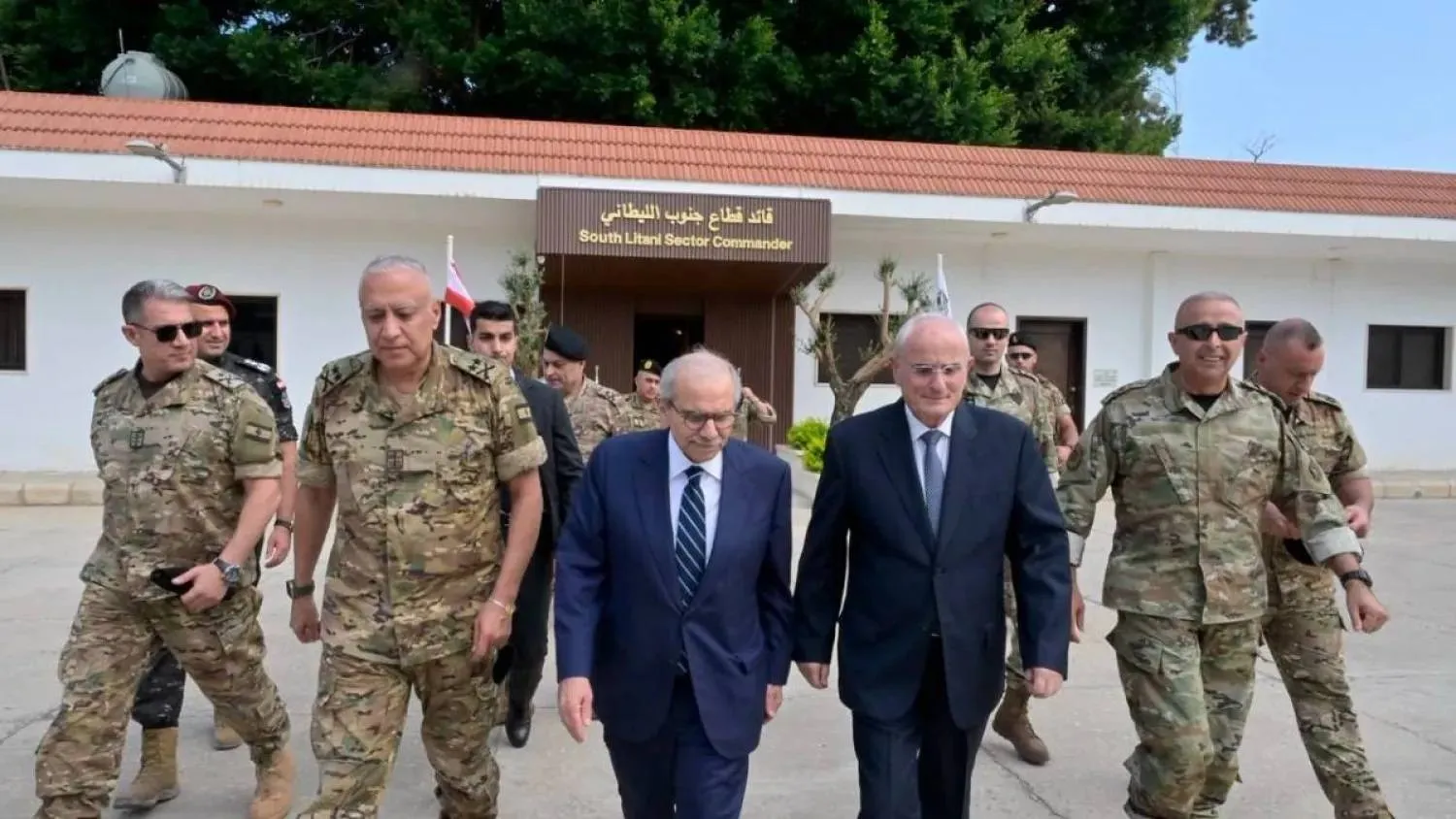
Lebanese Prime Minister Nawaf Salam during a visit to the Lebanese army in southern Lebanon, Aug. 21, 2026. (National News Agency)
TT

Lebanon PM Says Scale of War Recovery beyond State's Capacity

Lebanese Prime Minister Nawaf Salam during a visit to the Lebanese army in southern Lebanon, Aug. 21, 2026. (National News Agency)

Lebanese Prime Minister Nawaf Salam said Friday that rebuilding regions destroyed in the latest Israel-Hezbollah war was beyond the state's capacity, calling for funding as he visited the heavily damaged south.

"I am aware of the magnitude of the crisis" including the destruction, displacement and loss of livelihoods, Salam said in Nabatieh, a major southern city hit hard by Israeli airstrikes.

"But the scale of the needs exceeds the capacities of the Lebanese state and its ability to bear these burdens alone," Salam added. "We still need significant funding" for reconstruction, the prime minister said.

Lebanese militant group Hezbollah drew the country into the broader Middle East war in March by attacking Israel, which responded with massive airstrikes and a ground invasion.

The fighting followed another conflict that erupted in 2023 that led to an all-out war the next year. Lebanon has put the overall death toll from these conflicts at more than 8,900.

Hundreds of thousands of people remain displaced, mainly from the south, while Israel maintains troops in a self-declared "security zone" running around 10 kilometers (six miles) inside Lebanon along the border.

Last month, Salam said the estimated total cost of the two wars could exceed $27 billion.

"I am here today to affirm the return to work of state institutions," he said during Friday's visit.

Violence has decreased since a ceasefire following a US-Iran memorandum of understanding in June, while Lebanon and Israel concluded a US-sponsored framework agreement later that month.

But Nabatieh and surrounding areas in particular have seen continued Israeli attacks.

The Israel-Lebanon deal involves the disarmament of Hezbollah, a gradual withdrawal of Israeli forces from Lebanon's south and the deployment of the Lebanese army to the region, starting in test areas known as "pilot zones".

Salam said it was important to rally "all the capabilities and support we can to achieve a full Israeli withdrawal" and build a state that is the sole decision maker on war and peace.

"This is the path to avoid finding ourselves once again facing a new war or new pretexts to attack Lebanon, or a new expansion of the (Israeli) occupation," he added.

Hezbollah has rejected disarming.


Israel Strikes East Lebanon, Says Targeting Hezbollah Arms

Smoke rises from the site of an Israeli strike that targeted the southern Lebanese village of Kfar Tebnit on May 21, 2026. (AFP)
TT

Israel Strikes East Lebanon, Says Targeting Hezbollah Arms

Smoke rises from the site of an Israeli strike that targeted the southern Lebanese village of Kfar Tebnit on May 21, 2026. (AFP)

Israel struck a mountainous area in eastern Lebanon on Monday, according to Lebanese state media, with the Israeli military saying it was targeting a shipment of weapons headed for Hezbollah.

"Enemy aircraft launched a strike at dawn against the Al-Shaara region, in the highlands of the Anti-Lebanon mountain range, without resulting in victims or damage," Lebanon's official National News Agency (NNA) said.

The Israeli military said it "struck a weapons shipment transferred from Syria to Lebanon, intended for the Hezbollah terrorist organization".

Hezbollah, which is backed by Iran, emerged badly weakened from two successive wars with Israel since 2023.

The ousting in 2024 of Syrian president Bashar al-Assad, a key ally of the group, cut off a major weapons route.

Hezbollah lawmakers have nonetheless maintained that the group is rebuilding its military capacities, as fighting with Israel has wound down since June.

In October, Lebanese security forces seized a half-ton of explosives transported in a truck from east Lebanon towards Beirut.

Hezbollah acknowledged ownership of the explosives, saying they were intended for "resistance" against Israel.

Lebanese authorities have announced a plan to disarm Hezbollah, but the group has refused to lay down its weapons.


US Envoy Says Lebanon’s Hezbollah Should Disarm ‘Voluntarily'

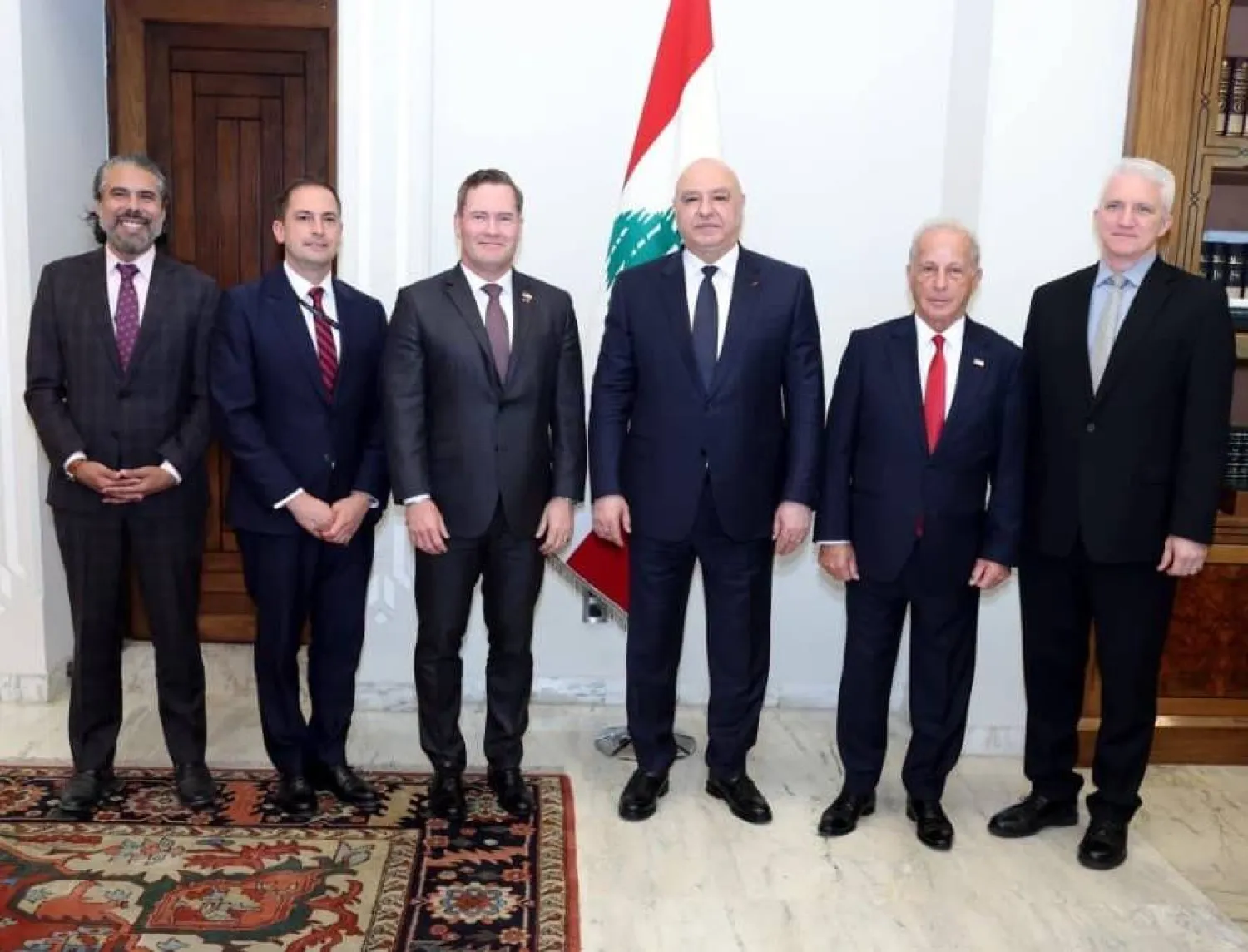
Lebanese President Joseph Aoun receives US envoy Mike Waltz at the Baabda presidential palace on Monday. (NNA)
TT

US Envoy Says Lebanon’s Hezbollah Should Disarm ‘Voluntarily'

Lebanese President Joseph Aoun receives US envoy Mike Waltz at the Baabda presidential palace on Monday. (NNA)

Iran-backed Hezbollah should "voluntarily" lay down its weapons and hand them over to the Lebanese state, visiting US envoy Mike Waltz said on Monday, adding that "no country can have two armies". 

"I think the message should be loud and clear, that Lebanese sovereignty must be fully restored," said Waltz, who is the US ambassador to the United Nations. 

"And the mechanism to do that will be the Lebanese armed forces." 

Waltz held separate talks in Lebanon with President Joseph Aoun and Prime Minister Nawaf Salam.

Hezbollah, which has fought successive wars with Israel, is under pressure to disarm. 

It was the only armed group that refused to hand over its weapons after Lebanon's civil war ended in 1990. 

"I appreciate every Lebanese soldier that steps forward to defend their country, to restore their sovereignty, to defend their people. This is a unique opportunity in history to do that, one," Waltz said. 

"And two, to Hezbollah and to their Iranian backers, no country can have two armies. I hope and pray Hezbollah will disarm. They should do that voluntarily." 


Syria Needs EU Support to Ensure Stability, Kallas Says

High Representative of the European Union for Foreign Affairs Kaja Kallas speaks prior to the Foreign Affairs Council meeting in Brussels, Belgium, 16 November 2026. (EPA)
TT

Syria Needs EU Support to Ensure Stability, Kallas Says

High Representative of the European Union for Foreign Affairs Kaja Kallas speaks prior to the Foreign Affairs Council meeting in Brussels, Belgium, 16 November 2026. (EPA)

European Union foreign ministers will discuss on Monday elevating their relationship with Syria as the war-torn country needs urgent support to ensure stability amid ‌escalating tensions ‌in the ‌region, ⁠the bloc's foreign policy ⁠chief said.

"We really see that Syria needs a lot of investments, to build ⁠up institutions and ‌its ‌reforms," Kaja Kallas ‌told reporters ahead of ‌a monthly foreign ministers meeting in Brussels.

"On the European side we ‌want to see Syrian refugees return but ⁠they ⁠need conditions to return. There's a lot we can do together because the stability of Syria is in our interest and the interest of region."