Saudi Address: Stability, Deterrence, and Accelerating Economic Reforms

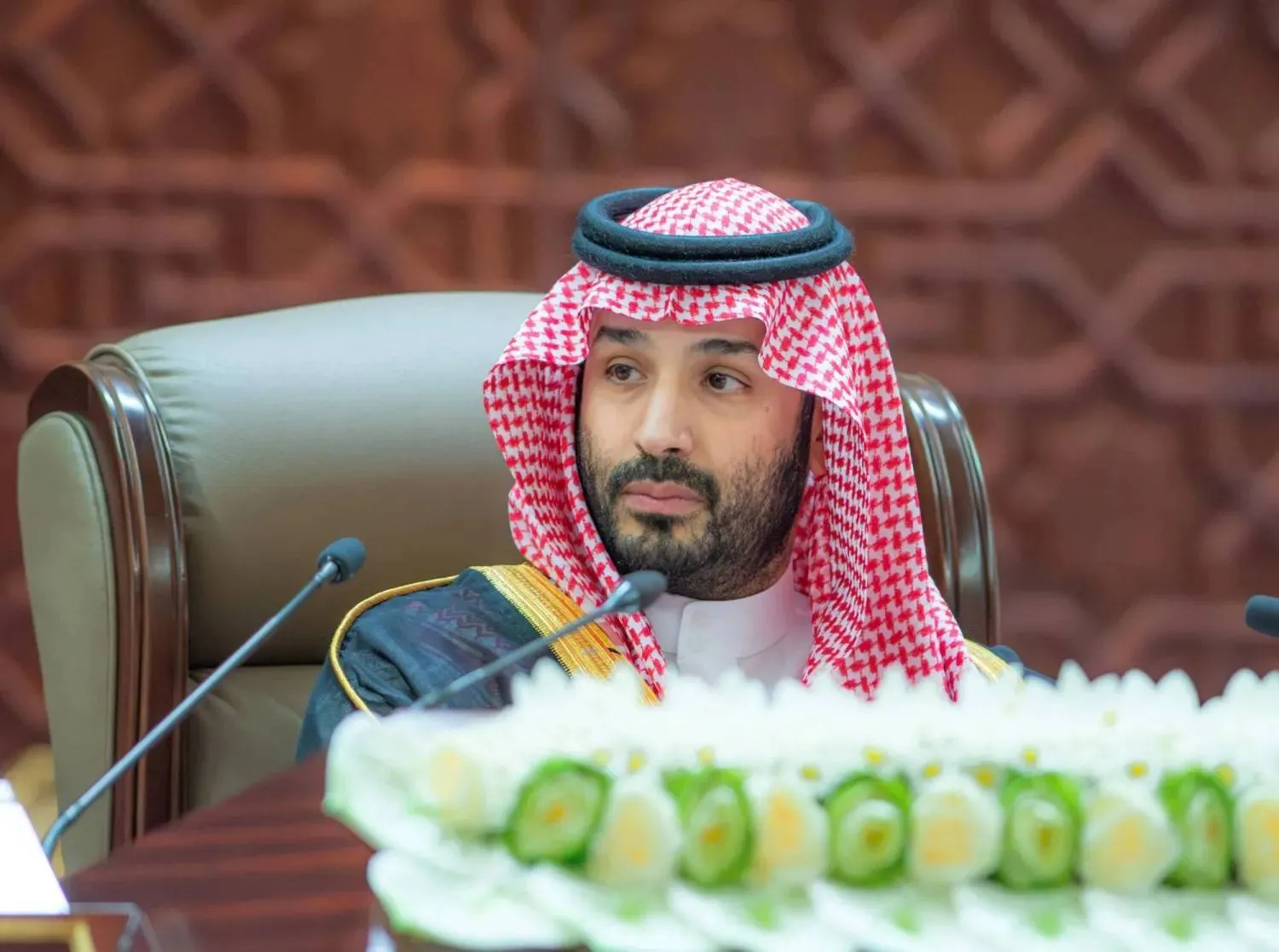
Saudi Crown Prince delivering the royal address (SPA)
TT

Saudi Address: Stability, Deterrence, and Accelerating Economic Reforms

Saudi Crown Prince delivering the royal address (SPA)

The Royal Address delivered by Saudi Crown Prince and Prime Minister Mohammed bin Salman on behalf of King Salman bin Abdulaziz, Custodian of the Two Holy Mosques, to the Shura Council on Wednesday conveyed several messages about Saudi Arabia’s approach to regional crises.

Analysts said the messages reaffirmed support for stability and political solutions, alongside the protection of sovereignty and national interests, while underscoring the continued implementation of rapid economic reforms under Saudi Vision 2030.

In the address, the Crown Prince stressed that Saudi Arabia was working to strengthen international cooperation, de-escalate conflicts and defuse tensions.

He said the Kingdom would not hesitate to respond firmly to any threat or attack against it.

He said Saudi Arabia supported the Yemeni government through the Arab Coalition “to extend its authority across the country, restore stability, and confront the attacks of the terrorist Houthi militias, which have chosen chaos and destruction and threats to the Yemeni people and the region.”

The Crown Prince said attacks targeting all Gulf states demonstrated that their security and stability were indivisible.

“We are working with our brothers to safeguard Gulf security and pursue strategic cooperation and economic integration,” he said.

He stressed that Saudi Arabia’s commitment to the rights of the Palestinian people was an unwavering position, backed by efforts that would continue until Palestinians secured their legitimate rights.

Six key points

Political analyst Munif al-Harbi said the Royal Address had six key points, foremost among them support for Yemen’s internationally recognized government to extend its authority over all Yemeni territory.

He said this indicated that reaching a political solution required “an effective change on the ground in favor of Yemen’s legitimate government.”

“Makkah Pact”

Harbi pointed to what he described as “clear Saudi satisfaction” with the Turkish and Pakistani roles in the Makkah agreement, which he said the Crown Prince had called the “Makkah Pact.”

He also highlighted the emphasis on the importance of the multinational maritime defense coalition, freedom of navigation and the international community’s responsibility in this regard.

“The Palestinian issue remains a Saudi foreign policy priority”

The inclusion of the Palestinian issue in the address, despite successive regional crises, reflected its continued place among Saudi foreign policy priorities, Harbi said.

He said this was evident in the assertion that peace in the Middle East required the establishment of a Palestinian state on the 1967 borders, with East Jerusalem as its capital.

On domestic affairs, Harbi noted that the address linked the response to political and security conditions with the continued implementation of Saudi Vision 2030.

He pointed to the Crown Prince’s statement that Saudi Vision programs had achieved 93% of their objectives, alongside a continued focus on development, national advancement, prosperity and quality of life.

A message about “Saudi human and military capabilities”

Harbi added that the address conveyed a message about Saudi Arabia’s human and military capabilities and its ability to respond to threats.

He also cited what he described as the Kingdom’s “advanced deterrence capability,” which enabled it to address challenges and turn them into opportunities.

Political researcher Faisal al-Shammeri said the address reflected Saudi Arabia acting “from the position of a confident state that knows its interests and approaches regional issues through stability and the responsible exercise of power.”

Shammeri said the political dimension of the address focused on the interconnected nature of Gulf security. Regional challenges were presented as parts of a single framework affecting the region’s security and stability, rather than as separate issues.

He added that, in his reading, the address balanced support for diplomatic solutions and de-escalation with a commitment to protecting sovereignty and national interests.

“Leaving no strategic vacuum”

Shammeri said the positions on the Palestinian issue, Red Sea and Gulf security, and Yemen’s stability reflected the continuity of Saudi policy on those issues.

He said the address’s overall message was that the Kingdom did not seek escalation but would not leave what he described as a “strategic vacuum” in its neighborhood.

International affairs researcher Ahmed al-Ibrahim said the address reflected Saudi Arabia’s continued policy of combining diplomatic action with the ability to protect national interests.

It also stressed that regional stability depended on supporting state institutions and preventing crises from becoming persistent sources of threats, he said.

Ibrahim added that linking regional developments with the continued implementation of Vision 2030 indicated that Riyadh viewed development as a strategic course that would continue through crises.

On regional affairs, he said Yemen, maritime security and the Palestinian issue stood out in a context that emphasized political solutions, alongside the Kingdom’s readiness to address threats to its security and regional stability.


UAE: Oil Spill from Tanker Affects Beaches in Umm Al Quwain

An image published by the UAE Ministry of Climate Change and Environment of one of the country's beaches. (UAE Ministry of Climate Change and Environment)
TT

UAE: Oil Spill from Tanker Affects Beaches in Umm Al Quwain

An image published by the UAE Ministry of Climate Change and Environment of one of the country's beaches. (UAE Ministry of Climate Change and Environment)

The UAE Ministry of Climate Change and Environment said on Friday that its monitoring and environmental assessment systems had detected marine pollution caused by an oil leak from a tanker.

The spill had affected beaches in the emirate of Umm Al Quwain, the ministry said.

It said in a statement that the leak had caused odors reported by residents of Sharjah, Ajman and Umm Al Quwain, adding that it posed no health concerns or risks to residents.

All beaches and coastal areas in Umm Al Quwain had been temporarily closed as a precautionary measure to ensure the safety of the marine environment while survey operations were completed, added the ministry.

Specialist teams had begun coordinating with the relevant authorities to contain the pollution, cordon off affected areas and launch cleanup and remediation operations to limit its environmental impact, the statement added.


European Parliament Resolution Condemns Houthi Attacks, Urges EU Terrorist Listing

 A supporter of Yemen's Houthis carries his rifle during a rally in support of the group in Sanaa, Yemen, Friday, Oct. 9, 2026. (AP)
A supporter of Yemen's Houthis carries his rifle during a rally in support of the group in Sanaa, Yemen, Friday, Oct. 9, 2026. (AP)
TT

European Parliament Resolution Condemns Houthi Attacks, Urges EU Terrorist Listing

 A supporter of Yemen's Houthis carries his rifle during a rally in support of the group in Sanaa, Yemen, Friday, Oct. 9, 2026. (AP)
A supporter of Yemen's Houthis carries his rifle during a rally in support of the group in Sanaa, Yemen, Friday, Oct. 9, 2026. (AP)

Members of the European Parliament have expressed solidarity with Saudi Arabia and support for Yemen's legitimate government, reaffirming their commitment to the security, sovereignty, and territorial integrity of both countries.

The position was set out in a resolution adopted on Thursday that strongly condemned Houthi missile and drone attacks on Saudi Arabia, as well as the military escalation inside Yemen.

The members described the attacks as flagrant violations of international law and international humanitarian law. The resolution highlighted that the attacks have killed and displaced large numbers of Yemeni civilians and exacerbated the country's humanitarian crisis.

The resolution called on the Council of the European Union to designate the Houthi group, including its political and military wings, leadership, and military and security apparatus, as a terrorist organization under the EU list of terrorist organizations.

It also called for dismantling the group's funding channels and freezing its funds, economic resources, and the assets of entities facilitating its activities.

The members of Parliament urged the Houthis to immediately cease all hostilities inside and outside Yemen and abandon any ambitions to seize territory.

The resolution also strongly condemned Houthi attacks targeting Saudi Arabia's energy infrastructure and commercial vessels in the Red Sea and the Bab al-Mandeb Strait.

The resolution further called for strengthening security and defense cooperation between the EU and its Gulf partners.


Saudi FM Discusses Regional Developments with Counterparts from Cyprus, Germany, Palestine, Iraq

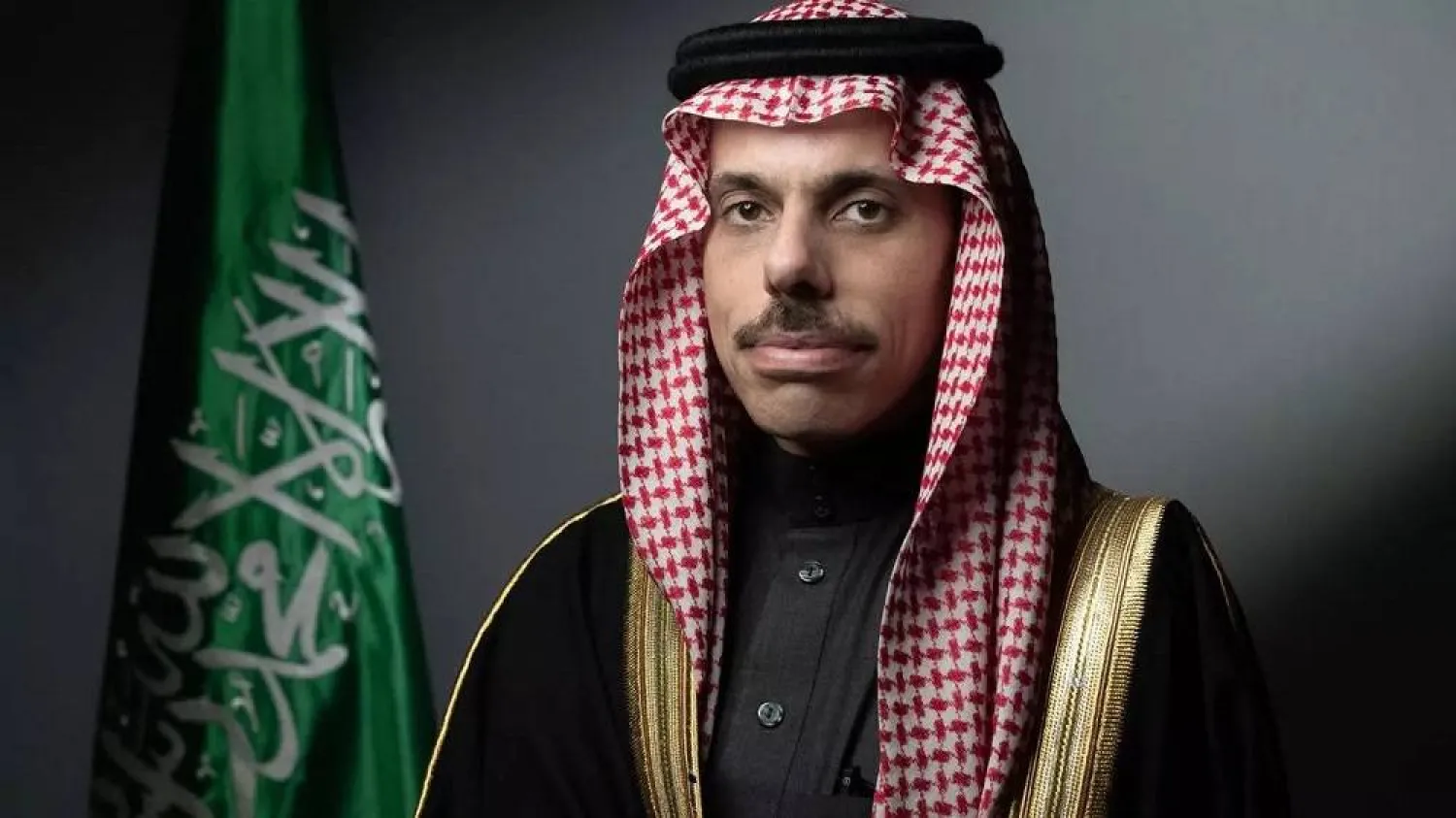
Saudi Minister of Foreign Affairs Prince Faisal bin Farhan bin Abdullah. (AFP)
TT

Saudi FM Discusses Regional Developments with Counterparts from Cyprus, Germany, Palestine, Iraq

Saudi Minister of Foreign Affairs Prince Faisal bin Farhan bin Abdullah. (AFP)

Saudi Minister of Foreign Affairs Prince Faisal bin Farhan bin Abdullah received on Thursday separate phone calls from his Cypriot counterpart Constantinos Kombos and German counterpart Johann Wadephul.

They discussed the latest regional developments and diplomatic efforts to de-escalate tensions and ensure safe and free navigation through the Strait of Hormuz and Bab al-Mandeb Strait with the aim of bolstering regional security and stability.

Prince Faisal also received a phone call from Vice President of the State of Palestine Hussein Al Sheikh, with whom he discussed the latest regional developments. 

Al Sheikh expressed Palestine's full condemnation of any aggression targeting the Kingdom of Saudi Arabia's security and stability, and its support for all measures the Kingdom takes to safeguard its security and territorial integrity. 

They also discussed the situation in the Palestinian territories and efforts to secure the legitimate rights of the Palestinian people, including an independent state with East Jerusalem as its capital. 

Prince Faisal earlier received a phone call from Iraqi FM Fuad Hussein for talks on relations between their countries and ways to strengthen cooperation in various fields, particularly security, to help address current regional challenges. 

The two ministers also addressed recent terrorist attacks that struck areas in Saudi Arabia.  

Hussein expressed the Iraqi government's condemnation of these attacks and its rejection of any harm to civilians and civilian facilities. He underlined Iraq's strong stance against using its territory for any attacks or actions that threaten the security of the Kingdom and countries in the region. 

Prince Faisal underscored Saudi Arabia's support for the Iraqi government's efforts to reduce tensions and continue working jointly with neighboring countries to help strengthen security and stability in the region.