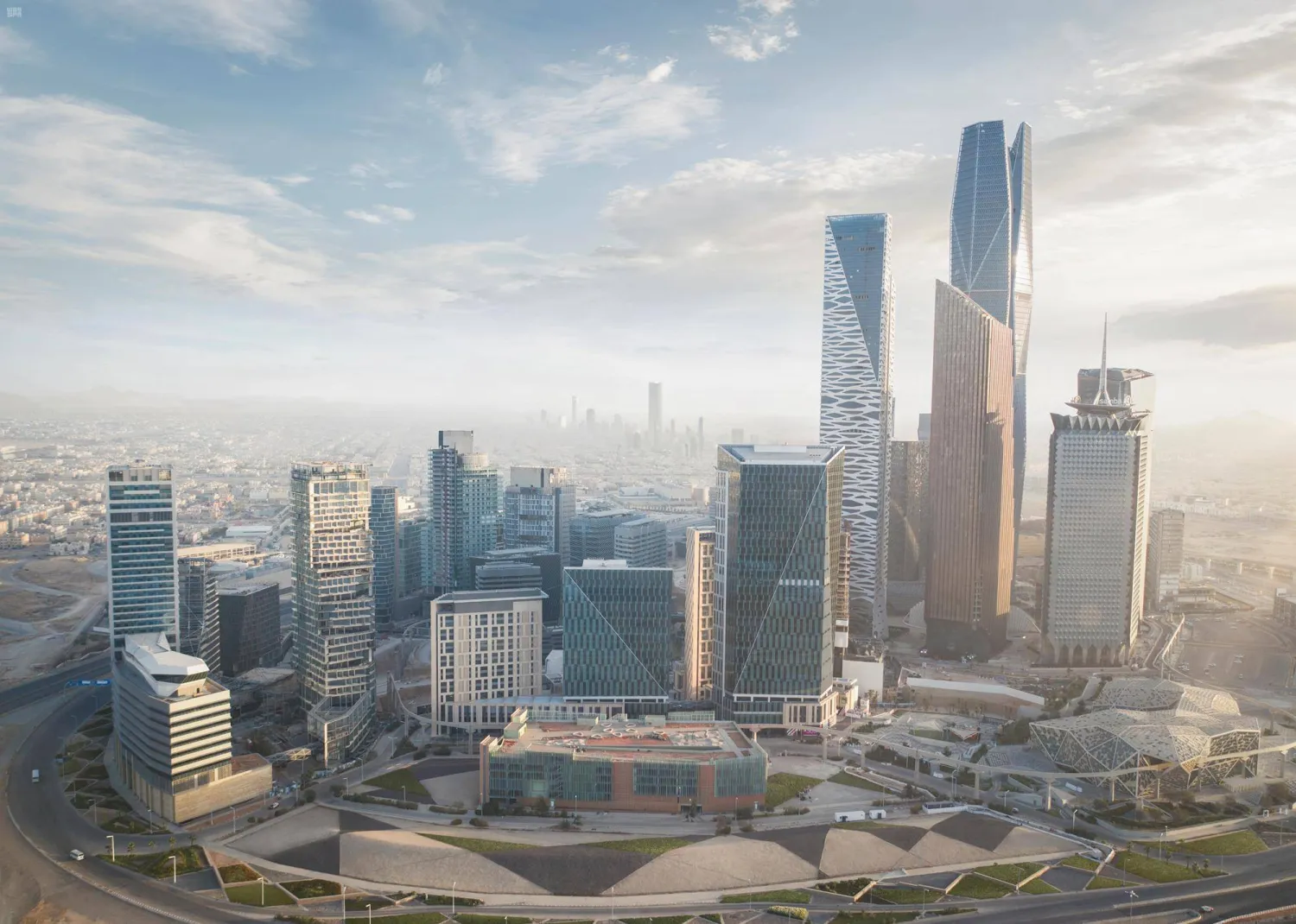
Saudi Non-Oil Sector Grows at Seven-Month High in September

The Saudi capital, Riyadh (SPA)
TT

Saudi Non-Oil Sector Grows at Seven-Month High in September

The Saudi capital, Riyadh (SPA)

Saudi Arabia's non-oil private sector recorded significant acceleration in September 2026, as the Riyad Bank Purchasing Managers’ Index (PMI), seasonally and economically adjusted and compiled by S&P Global, rose to 55.3 percent, up from 53.8 percent in August. This increase reflects the highest level for business conditions since February, surpassing the 50 percent neutral mark that separates growth from contraction.

Record Rise in New Orders

Report data showed that the sector's growth was primarily supported by a sharp rebound in new orders, which recorded their fastest rate of increase since last February, amid improving market conditions, increased domestic spending, and customer demand.

In response to this influx of orders, companies bolstered their operational and investment capacities, driving employment activity to accelerate to its highest level in seven months. Recruitment efforts specifically targeted supporting technical staff and expanding sales teams. Purchasing activity also saw robust growth, with purchases of production inputs recording their highest increase in seven months.

Decline in Foreign Sales

Despite the domestic rebound, the report indicated continued weakness in foreign demand, with new orders from international clients declining for the seventh consecutive month due to supply chain disruptions and regional geopolitical tensions.

Supply chain data also showed only a slight improvement in supplier delivery times, and at the slowest pace in five months. These delays and rising costs contributed to a slowdown in production growth to its lowest level in five months, coupled with an increase in backlogs for the first time since May.

Cost Pressures and Rising Selling Prices

Companies reported a continued sharp increase in input prices due to elevated material and transportation costs. To protect profit margins, establishments raised selling prices to customers at a high rate, marking the second fastest increase in over six years.

Regarding the outlook, the Future Output Index showed a decline in business optimism for the coming year to its lowest level since March, amid the prevailing uncertainty caused by regional disruptions and supply chains.

Commenting on these results, Dr. Naif Alghaith, Chief Economist at Riyad Bank, affirmed that September's results are consistent with the overall picture of the Saudi economy; where domestic consumption, investment activity, government projects, in addition to Public Investment Fund projects, and credit availability, continue to provide fundamental support for non-oil activity.

Alghaith added: “The increase in unfinished work, coinciding with the acceleration in employment and purchasing to a seven-month high, indicates that companies are building their operational capacities to meet sustained demand and expand their production capabilities, rather than merely offering temporary responses.”


UK’s Burnham Says He Is Open to Discussing EU Free Movement

 21 October 2026, United Kingdom, London: Britain's Prime Minister Andy Burnham leaves 10 Downing Street to attend Prime Minister's Questions at the Houses of Parliament. (dpa)
21 October 2026, United Kingdom, London: Britain's Prime Minister Andy Burnham leaves 10 Downing Street to attend Prime Minister's Questions at the Houses of Parliament. (dpa)
TT

UK’s Burnham Says He Is Open to Discussing EU Free Movement

 21 October 2026, United Kingdom, London: Britain's Prime Minister Andy Burnham leaves 10 Downing Street to attend Prime Minister's Questions at the Houses of Parliament. (dpa)
21 October 2026, United Kingdom, London: Britain's Prime Minister Andy Burnham leaves 10 Downing Street to attend Prime Minister's Questions at the Houses of Parliament. (dpa)

British Prime Minister Andy Burnham has said he wants a discussion about returning to the European Union's freedom of movement rules for workers, a key issue in the 2016 Brexit referendum which led to Britain leaving the bloc.

Building on previous comments about the need to rethink ties with Brussels, Burnham told the Sunday Times that the influx of EU workers into Britain before Brexit had posed very significant challenges. "But, at the same time, it ‌was a ‌type of immigration that perhaps wasn't as difficult (as now)," he ‌said.

"Revolving ⁠door migration where ⁠people would come and then go back is different. The balance of migration has changed, hasn't it, since then? I think we’ve just got to have an honest discussion about those things."

Official data has shown long-term net migration in 2025 fell to close to its level before a new post-Brexit immigration system was introduced at the start of 2021.

In September, two months after replacing Keir Starmer as Labour Party leader ⁠and prime minister, Burnham said Britain should consider options for ‌its relationship with the EU, including possibly rejoining ‌the bloc one day.

He had previously backed the pledges of Starmer's government which included no ‌return to freedom of movement which Brussels sets as a condition for being ‌part of the bloc's single market.

In his interview with the Sunday Times, conducted on October 19, Burnham said the issue of freedom of movement could be considered as part of a broader reset of Britain's relationship with the EU, including on data sharing and ‌migration.

"You've got to see it in the round, rather than just looking at freedom of movement on its own," ⁠he said.

Burnham, who ⁠is trying to find ways to speed up Britain's economy, is due to meet top EU officials for a summit on November 20.

He said he could not imagine recommending that Britain adopt the euro currency or the EU's border-free travel arrangements.

A new referendum would be needed to rejoin the EU but not necessarily to join the bloc's single market or a customs union, the Sunday Times quoted Burnham as saying.

Former Conservative finance minister Jeremy Hunt, who campaigned to stay in the EU in 2016, said it would be a mistake to reopen one of the fundamental debates of the referendum and he said relaxing immigration rules would hurt people in Britain.

"I think it will be a hammer blow to getting people off welfare and into work," Hunt told Sky News.


Sydney’s New International Airport Opens to Passengers

 A Jetstar aircraft departs on the inaugural commercial service from the newly-opened Western Sydney International Airport in Sydney on October 25, 2026, marking the start of regular passenger operations at Australia's newest international gateway. (AFP)
A Jetstar aircraft departs on the inaugural commercial service from the newly-opened Western Sydney International Airport in Sydney on October 25, 2026, marking the start of regular passenger operations at Australia's newest international gateway. (AFP)
TT

Sydney’s New International Airport Opens to Passengers

 A Jetstar aircraft departs on the inaugural commercial service from the newly-opened Western Sydney International Airport in Sydney on October 25, 2026, marking the start of regular passenger operations at Australia's newest international gateway. (AFP)
A Jetstar aircraft departs on the inaugural commercial service from the newly-opened Western Sydney International Airport in Sydney on October 25, 2026, marking the start of regular passenger operations at Australia's newest international gateway. (AFP)

Sydney's new ‌A$5.6 billion ($3.94 billion) airport opened to passengers on Sunday after more than a decade of planning, in what Prime Minister Anthony Albanese said was a milestone for the country's most populous city.

The new Western Sydney International Airport in Badgerys Creek, about 60 km (37.3 miles) west of central Sydney, will operate 24 hours a day, ‌giving airlines ‌access to a fast-growing and ethnically ‌diverse ⁠population center.

The current ⁠airport, located closer to Sydney's central business district, can host takeoffs and landings only until 11 p.m. and after 6 a.m., limiting airline scheduling options relative to other major Australian cities like Melbourne.

"For ⁠the first time in more ‌than 50 years, ‌Australia is opening a major new airport. It’s ‌a milestone that has been decades in ‌the making," Albanese said in a statement.

"I’m very proud to officially open it," he said.

Qantas' budget arm Jetstar was due to ‌operate the first outbound flight to the Gold Coast on Sunday, ⁠the ⁠airport said in a statement. The airport has capacity for more than 80 million passenger movements annually, it said.

The start of passenger services comes after cargo flights commenced at the facility in July.

Located on a 1,780-hectare (4,398-acre) site purchased by the federal government in the 1980s, the airport was completed in July 2025 after a seven-year build and 15 years of planning.


Trump Says Audi to Invest $4.2 Bn in Its First US Auto Plant

US President Donald Trump looks on as CEO of Audi AG Gernot Dollner speaks at a midterm election campaign rally at Guardian Centers of Georgia in Perry, Georgia on October 24, 2026. (AFP)
TT

Trump Says Audi to Invest $4.2 Bn in Its First US Auto Plant

US President Donald Trump looks on as CEO of Audi AG Gernot Dollner speaks at a midterm election campaign rally at Guardian Centers of Georgia in Perry, Georgia on October 24, 2026. (AFP)

US President Donald Trump announced on Saturday that German automaker Audi planned to invest $4.2 billion to build its first factory in the United States that will produce 200,000 vehicles a year.

Audi confirmed the investment in a release, saying the plant would create about 4,500 jobs.

"I'm thrilled to announce a massive auto manufacturing investment in the great state of Georgia by a fantastic company," Trump said at a campaign rally 10 days ahead of the November 3 midterm elections that will determine control of the US Congress.

"Audi has just committed to invest $4.2 billion dollars in nearby Macon, Georgia, to begin the construction next month on a massive plant that will produce 200,000 cars a year," Trump continued.

Audi, which is a unit of Volkswagen, said in its release that construction was scheduled to begin next year and production in the early 2030s.

"The planned investment intends to mark a long-term commitment to the United States and to establish North America as a third major pillar of Audi's global production network alongside Europe and China," it said.

VW, long a titan of German industry, has struggled with US tariffs, Chinese competition and patchy demand in Europe.

About 50,000 job cuts have already been agreed across the 10-brand Volkswagen Group -- mostly at VW, Audi and Porsche -- but the company has said another 50,000 could be required worldwide to slash costs.