AI Borrowing Binge Rattles US Markets

Tech giants are raising debt to finance the construction of data centers that power AI. Brandon Bell / GETTY IMAGES NORTH AMERICA/AFP
TT

AI Borrowing Binge Rattles US Markets

Tech giants are raising debt to finance the construction of data centers that power AI. Brandon Bell / GETTY IMAGES NORTH AMERICA/AFP

The world's richest companies can no longer rely on their massive cash piles alone to stay in the artificial intelligence race and have suddenly started borrowing massively in a shift that is sending repercussions across the world.

Rising US interest rates, including on the Treasury bonds that anchor the global economy, are sending tremors through the financial world, and some analysts point to the AI borrowing bonanza as one of the culprits, said AFP.

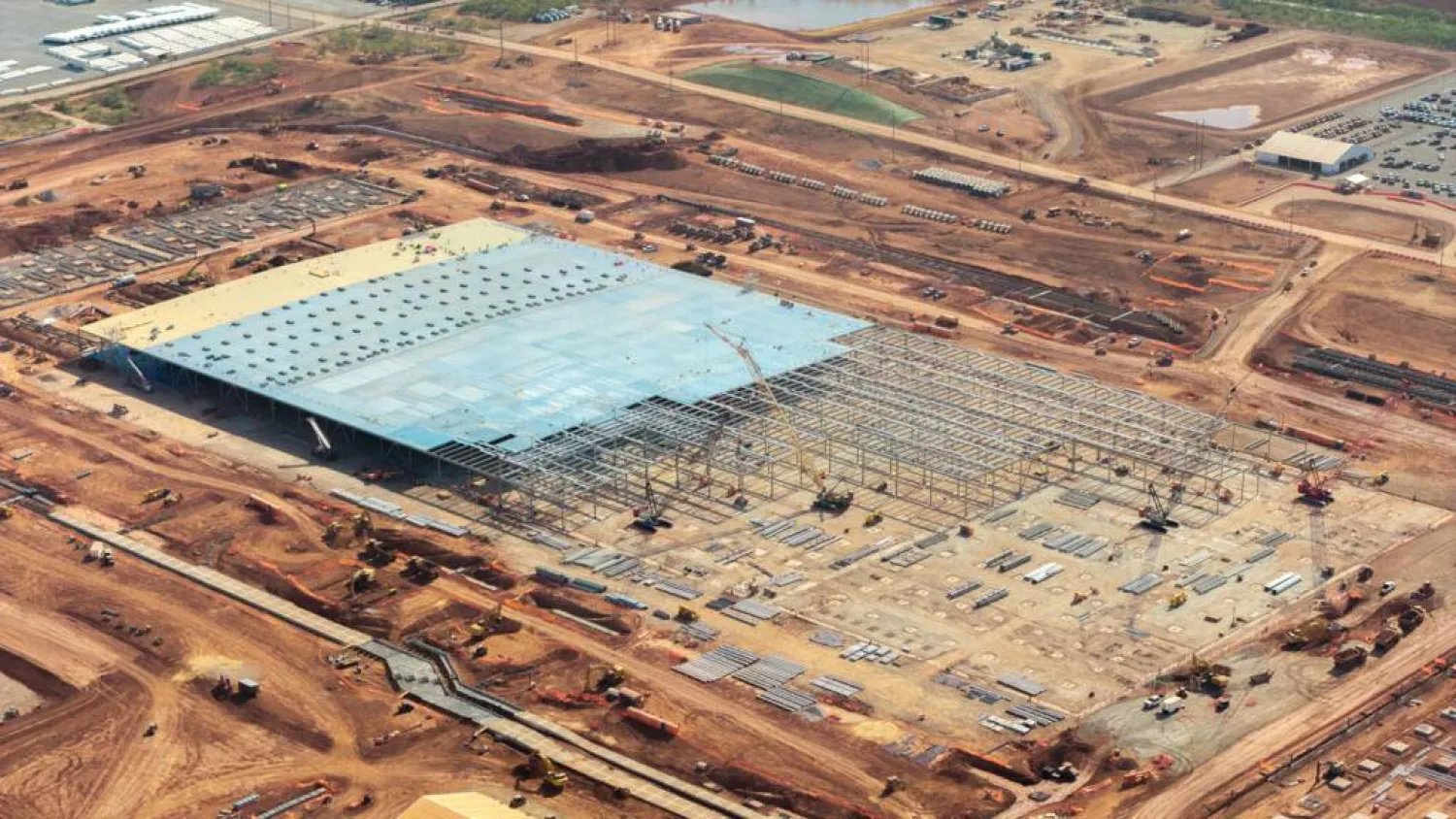
From next to nothing in 2024, tech sector borrowing has reached around $500 billion in the nine months since January, as Google, Meta, Amazon, Microsoft and others raise debt hand over fist to finance the chips, servers and data centers that power AI.

Goldman Sachs expects a further ramp-up in 2027, to $1.2 trillion.

"This is not something that we've seen before," said Chris Della Fave, senior vice president at fundraising advisory firm Post Oak Group, who estimates that AI now accounts for 25 percent of all corporate bond issuance, up from 4 percent two years ago.

In inflation-adjusted terms, the AI sector is expected to borrow more this year than US cable operators did to build out the entire internet, or than railroad companies did during the 19th-century US rail boom.

So far, investors have eagerly snapped up the chance to lend to the tech giants, but they have demanded returns that would have been unthinkable for such blue-chip companies not long ago.

Even Meta has had to offer more than 7 percent a year, while riskier cloud data center specialists have gone above 9 percent.

The impact reaches well beyond the companies building AI -- their debt is even starting to crowd out demand for the US government bonds that anchor the financial system.

An investor who might otherwise buy a US Treasury bond "might decide to buy Microsoft" instead, said Mark Malek, chief investment officer at Siebert Financial, referring to the tech giant's bonds.

That shift pushes up the rates Washington pays to borrow, he explained.

This adds to the other force driving up US borrowing costs: inflation, fueled by the war against Iran and high energy prices.

The interest rate on 10-year US government bonds -- Wall Street's benchmark and widely seen as the most important number in global finance, setting the tone for everything from mortgages to car loans -- is now above 5.30 percent, its highest level since 2002.

- 'Sharper correction' -

Adding to the volatility, hedge funds had piled into US government bonds like never before, holding 7 percent of all those in circulation at the end of 2025, though that share has since fallen.

Hedge funds, which place big bets on markets, move their money far faster than more cautious investors such as insurers and pension funds.

Even if the war and the oil situation stabilized, Della Fave said, "I wouldn't expect the yields to dramatically reduce, to be honest, because of this influence of the AI debt situation."

Beyond the rising cost of borrowing, some are questioning the risks of betting on an AI boom that could hit a wall, as the dot-com bubble did in 2000.

Even a moderate slowdown in the frenzied pace of construction, delays on certain projects or weaker-than-expected revenue growth could trigger a shock in financial markets, Malek warned.

In late September, the Bank of England's Financial Policy Committee warned that "the risk of a sharper correction persists," particularly if concerns about the pace of AI development or adoption hit earnings expectations.

In July, amid some second-guessing about the AI boom, the tech-heavy Nasdaq index fell nearly 7 percent.

Against this backdrop, cloud specialist Oracle is sometimes seen as a bellwether.

With massive debt ($125 billion), cash reserves that shrink every quarter and a possible delay on a huge data center project in New Mexico, several warning lights are flashing for Larry Ellison's group.

"Let's say Oracle has a problem... They can't pay for something," Malek said. Trouble with its debt "could trigger contagion" across AI finance as a whole, he added.



Aramco Begins East-West Pipeline Expansion to Boost Oil Export Flexibility

Aramco CEO Amin Nasser speaks at a press conference. (Reuters)
TT

Aramco Begins East-West Pipeline Expansion to Boost Oil Export Flexibility

Aramco CEO Amin Nasser speaks at a press conference. (Reuters)

Saudi Aramco President and CEO Amin H. Nasser said on Tuesday that preliminary engineering had already started on a planned expansion of the kingdom's vital East-West pipeline as part of plans to increase oil flows through existing infrastructure, assess alternative export routes and explore expanding crude storage capacity at major demand centers. 

"Preliminary engineering is underway for an expansion of the East-West pipeline," Nasser said in an earnings call. The CEO said last month that Aramco hoped to increase the capacity of the pipeline network from 7 million to 10 million barrels a day.

Aramco reported a 9% year-on-year increase in adjusted net profit to 117 billion riyals ($31.2 billion) in the third quarter of this year, beating analysts’ expectations of $30.66 billion.

Nasser said the pipeline played a key role in providing additional oil export options during the disruptions, adding that the company was also considering expanding crude oil storage capacity at major demand centers and along export routes.

He said the long-term value of the East-West Pipeline investment had become evident amid the current disruptions to regional trade, noting that the company had recovered the pipeline’s entire construction cost in about 15 days.

Production Capacity

Nasser said Aramco was exploring additional oil export routes and storage capacity outside the Kingdom, while using Gulf export terminals and ship-to-ship transfers to deliver supplies to customers.

He added that the company could raise its maximum sustainable production capacity above 12 million barrels per day if the government decides to do so.

Biggest Supply Shock in the Energy Industry

He described the regional conflict as the biggest supply shock in the energy industry, saying Aramco maintained customer commitments by diversifying export routes, restoring facilities and optimizing operations.

The company’s resilience, he said, stemmed from decades of planning, robust infrastructure, skilled employees, local supply chains and technological innovation, enabling it to continue delivering major projects safely and on schedule despite disruptions.

Zuluf Field Production Expansion

The CEO said work to expand production at the Zuluf field had begun as planned, with additional capacity of up to 600,000 barrels per day expected by the end of the year. He added that Aramco was continuing to advance major crude-to-chemicals projects both inside and outside the Kingdom.

He said the upstream segment delivered stable results, reflecting continued price strength despite a decline from the previous quarter. Meanwhile, adjusted earnings before interest and taxes (EBIT) in the downstream segment rose by more than $4 billion quarter on quarter.

Ability to Restore Production Within Weeks

Nasser said supplies had become indispensable, and demand remained strong, adding that Aramco could rapidly ramp up production. This capability positioned the company to generate significant financial gains.

More Than 90% of Restart Materials Sourced Locally

Aramco faced significant challenges during the disruptions but managed them through flexibility, speed, multiple options and operational excellence, he stated.

He explained that the company’s integrated response center coordinates management teams with specialized, multidisciplinary rapid-assessment teams, enabling a swift response to incidents and disruptions.

Nasser said Aramco’s local supply chains enabled the rapid sourcing and rerouting of critical materials to ensure operational continuity. The company also uses drones for real-time damage assessments, with more than 90% of restart materials sourced domestically. Independent benchmarks show Aramco completes emergency repairs six times faster than the industry average.

Capital Expenditure

Aramco remained disciplined in its capital spending, maintaining its 2026 capital expenditure guidance at $50 billion-$55 billion, Nasser undescored. The forecast includes costs to restore assets to service and a $2.6 billion cash investment in HUMAIN.

Aramco Invests $2.6 Billion in HUMAIN

He described Aramco’s 49% stake in HUMAIN, backed by a $2.6 billion cash investment and the transfer of key AI assets, as a strategic move to strengthen its competitive advantage and accelerate AI-driven growth.

The investment combines Aramco’s technology infrastructure, more than 90 years of operational experience and low-cost, lower-carbon energy to meet growing demand for AI computing.

HUMAIN aims to develop an integrated AI platform spanning data centers, cloud infrastructure, models and applications, with plans to reach 3 gigawatts of data center capacity by 2030 and become a leading global exporter of AI services.


Investors Ready for Possible Shake-up in Congress as Election Day Arrives

 A fountain near the US Capitol glows blue before sunrise on the day of the US midterm elections in Washington, DC, US, November 3, 2026. (Reuters)
A fountain near the US Capitol glows blue before sunrise on the day of the US midterm elections in Washington, DC, US, November 3, 2026. (Reuters)
TT

Investors Ready for Possible Shake-up in Congress as Election Day Arrives

 A fountain near the US Capitol glows blue before sunrise on the day of the US midterm elections in Washington, DC, US, November 3, 2026. (Reuters)
A fountain near the US Capitol glows blue before sunrise on the day of the US midterm elections in Washington, DC, US, November 3, 2026. (Reuters)

Investors are weighing the market ‌implications of a possible shift in control of US Congress in Tuesday's midterm elections, focused on whether a strong Democratic showing could pave the way for greater volatility in asset prices, particularly the AI trade which has been a main driver for markets.

The midterms come at a fragile time for markets, with a swoon in AI shares causing investor unease that could be exacerbated by the election results. Tuesday's outcome could hold broad implications for market-sensitive areas including the AI data-center buildout, the US fiscal outlook, defense spending, and regulation in areas such as healthcare, banking and cryptocurrencies.

President Donald Trump's Republican party has controlled both chambers of Congress during the first two years of his second term. Opinion polls ‌show the Democrats ‌are likely to take the House, while the Senate is ‌too ⁠close to call.

"While ⁠probabilities increasingly favor a Blue sweep, several tightly contested Senate races leave open some possibility of Republican control of the Senate or, conversely, a greater than expected Democratic foothold in the Senate," Scott Chronert, US equity strategist at Citigroup, said in a research note. "Equity market reaction is likely positive in the former case and negative in the latter."

Strategists at UBS Global Wealth Management have assigned a 50% probability of a Democratic sweep, a 40% chance ⁠of Democrats winning the House while Republicans retain the Senate, and ‌a 10% probability that Republicans hang onto both ‌chambers.

"The most visible effects of a change in congressional control would likely be greater oversight of ‌the administration and more difficult fiscal negotiations," Mark Haefele, chief investment officer at UBS ‌Global Wealth Management, said in a note on Monday.

A Democratic-led Congress could exert greater scrutiny over AI companies, in part due to growing public opposition to data centers, a risk for a market that has been lifted by such investment spending. While analysts doubt any viable legislation would severely ‌undermine the data-center buildout regardless of the election outcome, they expect a Democratic sweep to lead to investigations into the technology ⁠sector.

Many investors have ⁠said they are eager to get past the elections, which have hung over the markets for the last several weeks. Since 1970, in midterm election years, the S&P 500 index has gained in every six-month period following the election, according to Edward Jones.

While equity volatility has increased in recent sessions, option-market traders are nonetheless not bracing for a massive stock market move following the election results.

Options on the S&P 500 index are priced for a move of about 0.8% in either direction on Wednesday, slightly higher than the 0.6% average implied daily move over the past month, according to ORATS data.

"We could see some volatility come out once there is a clear result, but I wouldn’t assume all that uncertainty disappears Wednesday morning," said Joe Tigay, portfolio manager at Equity Armor Investments. "Election hedges can expire; geopolitical risk doesn’t have an expiration date."


Europe Entering Winter with Lowest Gas Reserves Since 2013, Says IEA

07 July 2025, Rehden: Technical facilities for the injection and withdrawal of natural gas, including several process water tanks, are located on the grounds of the Rehden natural gas storage facility operated by SEFE Storage GmbH. (dpa)
TT

Europe Entering Winter with Lowest Gas Reserves Since 2013, Says IEA

07 July 2025, Rehden: Technical facilities for the injection and withdrawal of natural gas, including several process water tanks, are located on the grounds of the Rehden natural gas storage facility operated by SEFE Storage GmbH. (dpa)

Europe is entering winter with its lowest level of natural gas reserves since 2013, which could extend pressure on the international market into 2027, the International Energy Agency warned Tuesday.

Europe's natural gas storage reservoirs were 75 percent full at the end of October, well below the minimum target of 80 percent fixed by the European Union and at its lowest level in more than a decade, the IEA said.

Several factors explain the situation.

Natural gas liquefaction facilities in the Gulf have been damaged in US-Iran war, while transit through the Strait of Hormuz has been reduced.

Moreover, European nations are filling their storage reservoirs from low levels at the end of the heating season in the spring.

Buyers had initially held off buying stocks in the hope prices would fall.

Deliveries stepped up in August, September and October, but not enough to make up for the delay, the IEA said.

The amount of gas injected into storage reservoirs this season was about four percent below the average of the past five years, it added.

That makes European nations more dependent upon securing deliveries of additional supplies of LNG to meet peak demand.

It could also make more vulnerable if the winter is colder than usual, there are technical problems in the gas network, or supply problems, said the IEA.

Germany insisted Monday that it would have enough gas for the winter despite missing a storage target.

German gas storage facilities are on average 61 percent full, according to the federal agency that oversees Germany's energy infrastructure and markets.

That is below a legally mandated target for 70 percent by November 1. It also lags behind the European Union average of nearly 75 percent, according to the storage tracking platform AGSI.