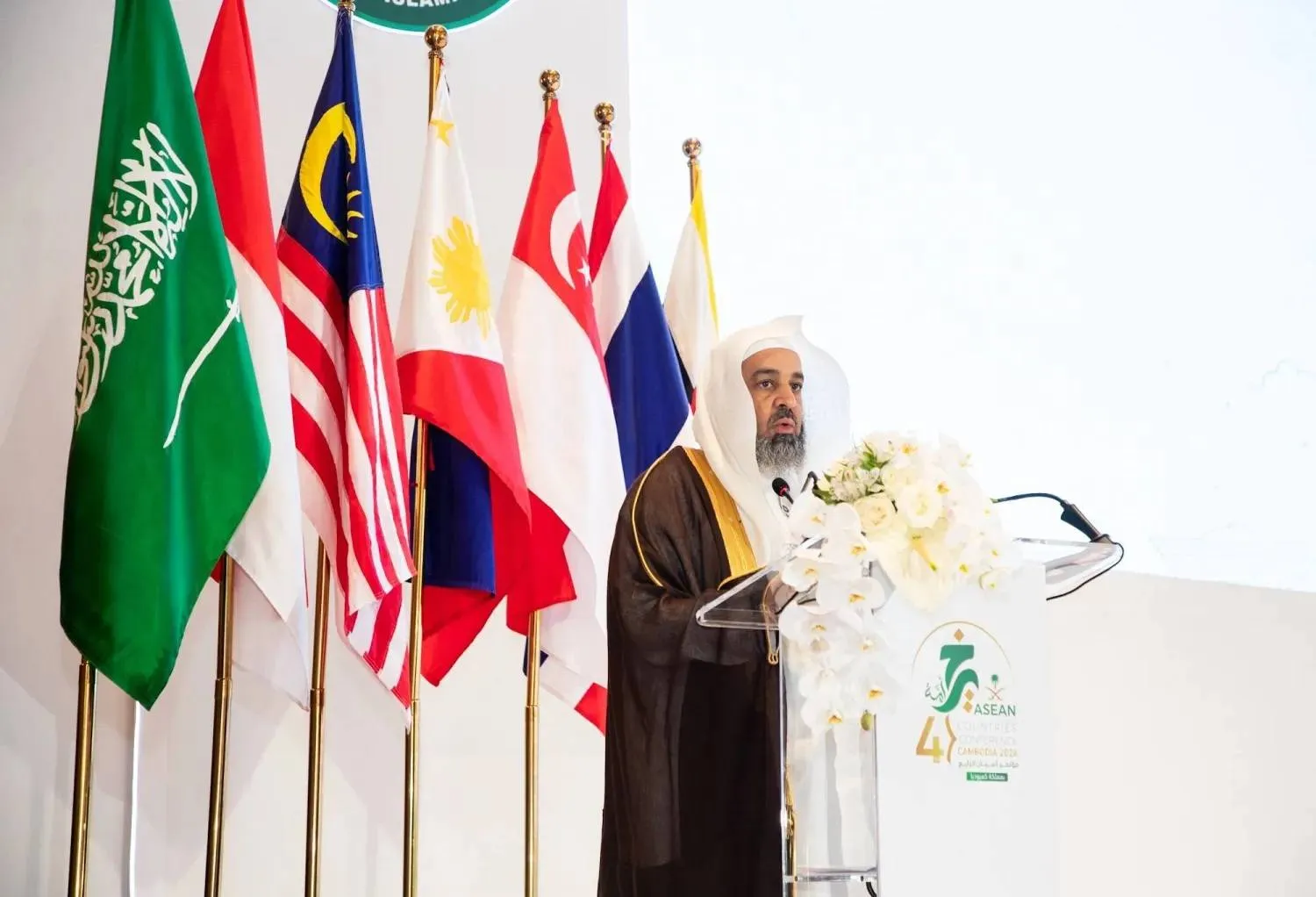
ASEAN ‘Khair Ummah’ Conference Condemns Houthi Attacks on Makkah and Madinah

The conference condemned the Houthis’ targeting of Makkah, Madinah and civilian sites in Saudi Arabia (SPA).
TT

ASEAN ‘Khair Ummah’ Conference Condemns Houthi Attacks on Makkah and Madinah

The conference condemned the Houthis’ targeting of Makkah, Madinah and civilian sites in Saudi Arabia (SPA).

Participants at the fourth international conference of ASEAN countries, “Khair Ummah,” condemned on Tuesday the Houthi militia’s launch of drones and missiles toward Makkah and Madinah and its targeting of civilian sites in Saudi Arabia.

ASEAN rejected the Houthi’s actions saying it threaten Islamic holy sites and the safety of civilians.

In the conference’s final statement, the participants denounced what they said are criminal acts targeting Muslim holy sites and civilian targets in Saudi Arabia.

The statement praised Saudi Arabia’s efforts to promote unity and strengthen solidarity by hosting and supporting the conference, emphasizing its role in serving Islam and Muslims and promoting a moderate and balanced approach.

Participants called for moderation, tolerance and efforts to counter extremism, saying such values help build safe and stable societies.

The final statement said Islam rejects injustice, aggression and terrorism, and called on scholars and preachers to promote sound Islamic teachings and tolerant values, including through modern technology and artificial intelligence.

Participants also called for continued cooperation among scholars and Islamic institutions in ASEAN countries to counter extremism and promote unity.

The Cambodia-hosted conference was organized by Saudi Arabia’s Ministry of Islamic Affairs, Dawah and Guidance in the Cambodian capital Phnom Penh.

It brought together about 130 scholars, researchers and Islamic figures from Saudi Arabia and ASEAN countries for eight sessions on Muslim unity, moderation and cooperation.


Bahrain Intercepts Iranian Air Attacks

A general view of the skyline in downtown Manama, Bahrain, June 22, 2025. REUTERS/Hamad I Mohammed
TT

Bahrain Intercepts Iranian Air Attacks

A general view of the skyline in downtown Manama, Bahrain, June 22, 2025. REUTERS/Hamad I Mohammed

Bahrain said it intercepted on Tuesday Iranian air attacks.

Bahrain's armed forces intercepted "Iranian aerial attacks in the kingdom's skies,” according to state television.

Earlier, Bahrain warned of an unspecified threat and urged citizens and residents to head to the ⁠nearest ⁠safe location.

On Sunday, Bahrain said its air defenses had intercepted several Iranian aerial attacks.


Oman, Iran Discuss Safeguarding Maritime Corridors

Vessels at the Strait of Hormuz, as seen from Musandam, Oman, November 17, 2026. REUTERS/Stringer
TT

Oman, Iran Discuss Safeguarding Maritime Corridors

Vessels at the Strait of Hormuz, as seen from Musandam, Oman, November 17, 2026. REUTERS/Stringer

Oman and Iran discussed safeguarding maritime corridors and ensuring the smooth flow of global shipping and trade, the Omani foreign ministry said in a statement on Tuesday, as shipping through the Strait of Hormuz continued to be disrupted.

The talks took place during a visit by Iran's Foreign Minister Abbas Araghchi to Oman, which holds the southern coast of the Strait of Hormuz, a key shipping route for global energy, and has played a role as mediator in the crisis that broke out when the US and Israel attacked Iran on February 28.

Araghchi and Oman's Foreign Minister ⁠Badr Albusaidi talked about ⁠revitalizing channels for dialogue and negotiation to prevent escalations.

"These efforts aim to expand areas of mutual understanding among the concerned parties and prevent the widening of the crisis and its repercussions," the ministry said.

Attacks on tankers in the strait have increased as Tehran continues to disrupt shipping in the vital waterway while Washington maintains a ⁠naval blockade on Iran in response.

The Strait of Hormuz carried one-fifth of global energy supplies before the conflict and remains a sticking point in negotiations aimed at ending the nine-month-old war.


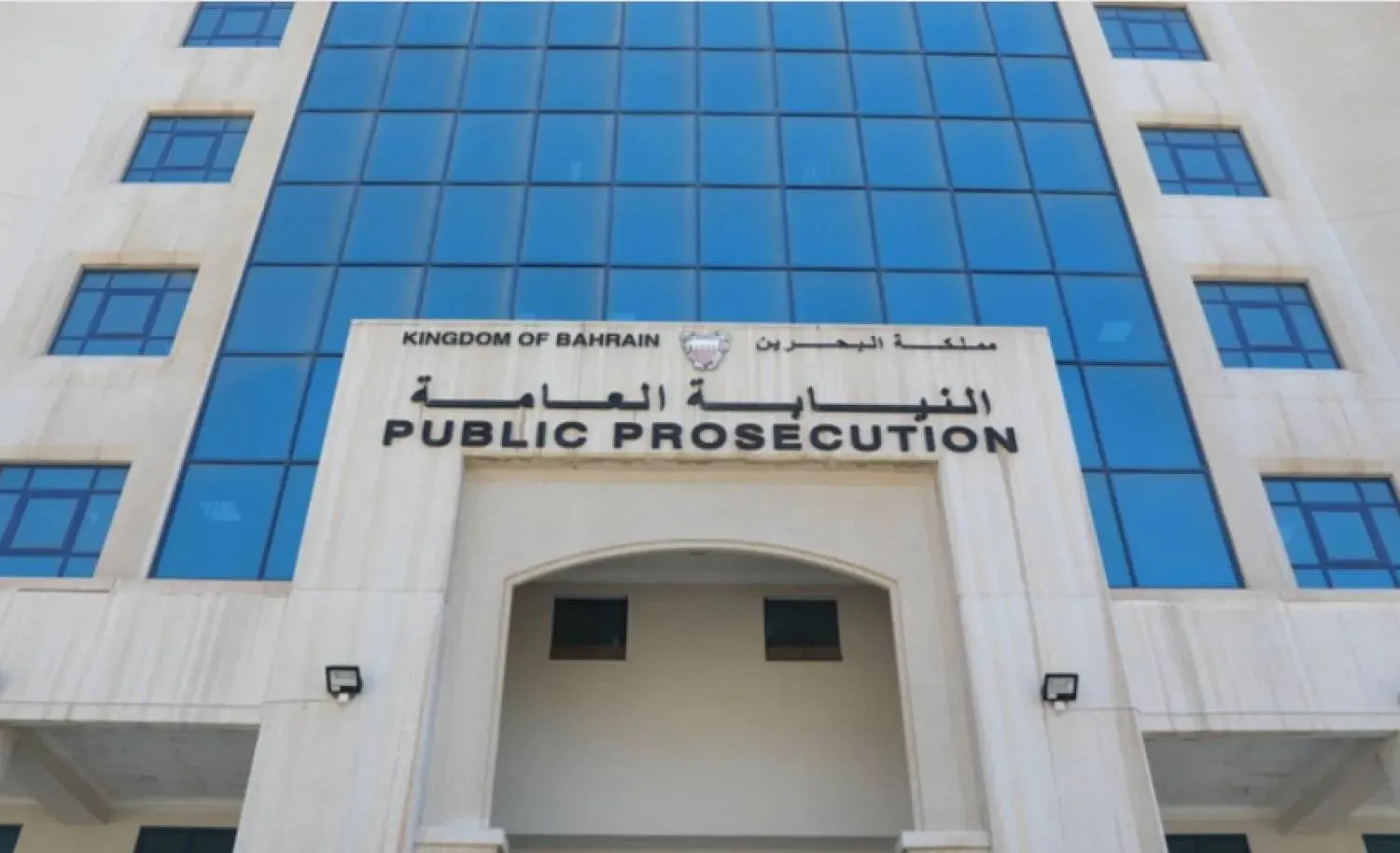
Bahrain Sentences 15 to Prison for Forming Terror Cell Linked to Iran’s IRGC

The court convicted all defendants, both those in custody and at large, handing down sentences ranging from 15 years to life in prison. (BNA)
TT

Bahrain Sentences 15 to Prison for Forming Terror Cell Linked to Iran’s IRGC

The court convicted all defendants, both those in custody and at large, handing down sentences ranging from 15 years to life in prison. (BNA)

Bahrain’s High Criminal Court issued a verdict on Monday in a case involving the establishment of a terrorist group linked to Iran’s Revolutionary Guard Corps (IRGC) that sought to suspend the constitution and overthrow the government.

The court convicted all defendants, both those in custody and at large, handing down sentences ranging from 15 years to life in prison. It also imposed fines of 100,000 dinars, ordered the confiscation of more than eight million dinars for charitable purposes, and ordered the confiscation of other seized items.

The Advocate General, head of the Terrorist Crimes Prosecution, said the defendants were referred to trial after investigations revealed they had formed the group, used terrorism to achieve its goals, and raised funds to support its activities.

Several defendants were also found to have colluded with Iran and the IRGC to harm the kingdom's interests and overthrow the government by force and unlawful means.

The Advocate General, added that “they had sought to change the system of government by force and unlawful means through incitement to commit terrorist acts, riots and sabotage, and through efforts to spread and entrench the ideology of the so-called Wilayat al-Faqih, which seeks complete political subordination to the Iranian regime and calls for allegiance to it rather than to the homeland and its fundamental institutions.”

“This was done through domination of places of worship and what they claim to fall under their authority, and the exploitation of those places to disseminate that ideology and undermine national allegiance, as well as through infiltration of a number of social, charitable and educational institutions to spread the notion of allegiance to the Iranian regime,” he said.

“They worked to politicize the sermons of clerics and religious reciters (rawadid) in that direction, to incite against the system of government and call for rebellion against it, to entrench ideas hostile to it, and to support acts of sabotage aimed at destabilizing the country,” he continued.

The prosecution's case relied on evidence from security and financial inquiries, alongside seized publications, documents, and electronic devices. Additional evidence included roughly 935,000 dinars found in the defendants' possession, unauthorized fundraising used to finance the group, recorded speeches inciting the execution of its objectives, and confessions from some defendants during questioning.

He noted that the group was formed by members of the dissolved Ulema Council, which had been dissolved by court order, and that its leaders communicated with IRGC operatives and Iranian intelligence to receive assignments, directives, and funding.

The Advocate General stressed that the Public Prosecution acted with impartiality and objectivity, guaranteeing all legal rights for the defendants. The trial proceeded in the presence of defense lawyers for all detained defendants, with full fair-trial guarantees upheld.