
Netanyahu, 'Dodging Responsibility,' Battles the Curses of October 7

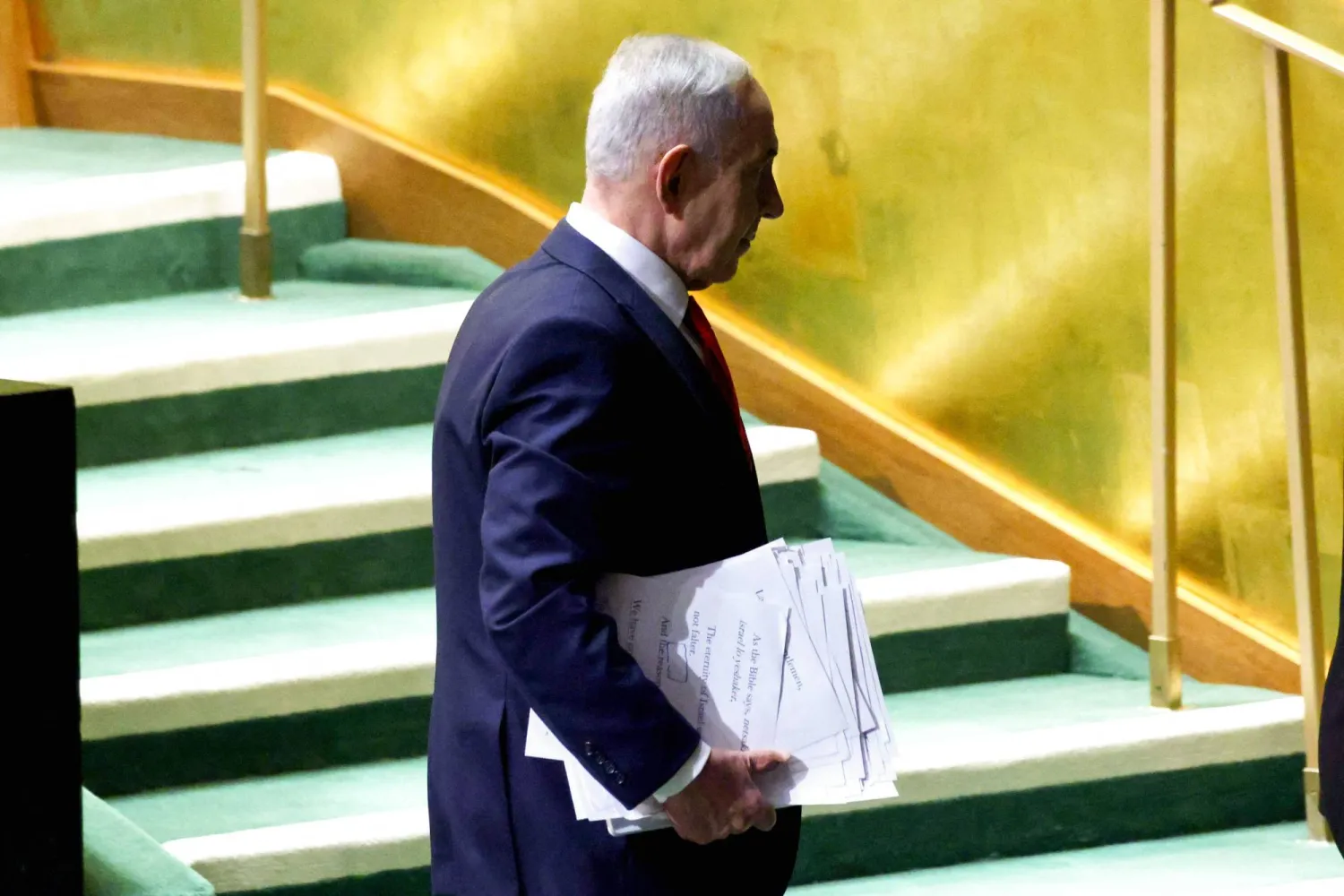
 Israel's Prime Minister Benjamin Netanyahu leaves after addressing the 81st United Nations General Assembly at UN headquarters in New York on September 24, 2026. (Photo by Leonardo Munoz / AFP)
Israel's Prime Minister Benjamin Netanyahu leaves after addressing the 81st United Nations General Assembly at UN headquarters in New York on September 24, 2026. (Photo by Leonardo Munoz / AFP)
TT

Netanyahu, 'Dodging Responsibility,' Battles the Curses of October 7

 Israel's Prime Minister Benjamin Netanyahu leaves after addressing the 81st United Nations General Assembly at UN headquarters in New York on September 24, 2026. (Photo by Leonardo Munoz / AFP)
Israel's Prime Minister Benjamin Netanyahu leaves after addressing the 81st United Nations General Assembly at UN headquarters in New York on September 24, 2026. (Photo by Leonardo Munoz / AFP)

If Israeli Prime Minister Benjamin Netanyahu could erase October 7 from the calendar and wipe it from history, he would not hesitate for a moment. That date began as a curse that turned his life and many of the ideas surrounding him upside down. As it returned year after year, it became a series of accumulated curses that would require a divine miracle to escape.

On that day, three years ago, the sky fell on his head. When he was awakened at 6:40 a.m., 11 minutes after the Hamas attack on Israeli communities and military positions in the south began, and was told what had happened, he could not comprehend it. When he was given the initial details, that “a large number of people had been killed and wounded, and hostages had been taken to Gaza,” he was psychologically shocked.

In testimonies published by Ben Caspit, a writer for Maariv, people close to Netanyahu who saw him firsthand during those hours said that “Netanyahu’s lower jaw seemed slack, his face was pale, he spoke little, and something obsessive and delirious had entered his behavior.” “Why did they do this?” he asked, referring to Hamas’s leaders.

Even Gadi Eisenkot, who met Netanyahu four days after the attack, testified that he saw him frustrated and stunned.

He Devoted Himself to “Erasing Gaza”

In practice, Netanyahu left the management of the state’s response to the attack and the retaliation to the army and the other security agencies. The positions he announced when he appeared before the media were little more than parroted repetitions of what he was hearing from those commanders.

The army chief of staff at the time, Herzi Halevi, revealed that when he was about to leave his home at 6:30 a.m., his wife asked him where he was going. He replied: “To erase Gaza completely.” The phrase became an operational plan, and then a new military doctrine for the army and the entire Israeli state. Netanyahu began translating it into political language.

But according to an investigation by Ilana Dayan on the Israeli Channel 12 television program Uvda, the initial reactions were panicked and showed that Netanyahu’s first concern was to distance himself from responsibility for the October 7 failure. The investigation quoted his aide Eliezer Feldstein, who described Netanyahu’s state during the first days of the attack as “panicked” and “extremely frustrated.” Rather than focusing on the broader strategic implications of the event and issuing appropriate directives, he assigned his media team its “first and immediate task”: to devise an immediate plan to contain the media storm and evade political responsibility, repeatedly asking in frustration whether the news was still talking about his personal responsibility for the failure.

The Moment He Woke Up

Many observers of Netanyahu’s personality say that what pulled him out of his own frustration was the frustration he saw among his staff and close ministers, turning him into a roaring lion. It was no coincidence that he embraced the names “A People Like a Lion” and “The Lion’s Roar” for the two wars against Iran. He considers himself Israel’s “Mr. Security.” He feared that the public would discover the weakness that had afflicted him and his team and demand his removal. He began shouting at them: “Get out of this mindset. Read what they are writing about us,” meaning “about me,” “and respond to them. Terrible things are being written here instead of blaming the army and intelligence.”

From that point on, the government’s political line became one of blaming the military leadership for having been asleep on guard duty and failing to gather intelligence and prevent Hamas from attacking. The security agencies tried to defend themselves. They acknowledged part of the responsibility, conducted internal investigations, and punished some officials. All the heads of these agencies resigned, including Halevi from the army, Ronen Bar, head of the Shin Bet, and David Barnea, head of the Mossad, along with dozens of other generals.

On the Israeli street, there is a widespread belief that the army and the other security agencies do bear responsibility for the failure, but people also want Netanyahu to bear responsibility for it. He refuses. Not only that, he has also refused to establish an official commission of inquiry headed by a judge to investigate what happened. He insists that he is “the inspired leader whom God blessed the people of Israel with at the right time,” as his wife said in several media interviews.

Deep Sleep

Today, Netanyahu sees the general election scheduled for October 27, 2026, as decisive, not for the people of Israel, as political and media circles say, but for him personally. October 7 is the central issue. Despite all his attempts to move beyond it, his many opponents in politics, the media, academia, and the deep state insist on reminding the public of that date.

He has yielded to their pressure and begun addressing their accusations. He says: “If they had woken me half an hour earlier, the outcome would have been different.” Ben Caspit wrote about this on September 8, 2026: “Today, three years later, he dares to say: ‘If they had woken me, this would have looked completely different.’ But in reality, it can be said that even if they had actually woken him that night, nothing would have happened. Absolutely nothing.”

It is not difficult to reach this conclusion. Sadly, no one could have woken him in the middle of the night and told him that Hamas was about to launch an unprecedented attack on the south, with 6,000 militants crossing the barrier and taking over communities and bases. But, unfortunately, they did not know. It was an unprecedented intelligence and operational failure. Everyone responsible took responsibility for it and resigned.

In reality, they had tried to wake him for weeks and months. Who did not warn him? The army chief of staff tried to warn him, but he did not want to listen. The head of the Military Intelligence Directorate, Aman, sent him three letters, but he did not want to read them. (“There is exaggeration in this,” said Linnon Megil.) Avigdor Lieberman warned him. Yair Lapid warned him. His defense minister, Yoav Gallant, tried to wake him. Gadi Eisenkot sent him a letter saying that the situation was more dangerous than it had been on the eve of the Yom Kippur War. Nothing worked. Now he complains that they did not wake him that morning. No alarm bell went unheard. He simply did not want to wake up.

The Pitfall of a “Decisive Election”

Netanyahu believes he can convince voters of his position and win the election. He tells himself and his team: “I must win the election. Losing is not an option. It cannot happen. This is extremely dangerous.” What he means is that if he loses the election, the first consequence will be the establishment of an official commission of inquiry.

More than anyone else, and more than the investigators themselves, he knows that an impartial investigation would reveal how deeply he was involved in the failure. He was the one who forced the security agencies to accept the transfer of millions of dollars in cash to Hamas. He was the one who used to say that “Hamas is a treasure. By maintaining it and keeping it strong, we prevent the establishment of a Palestinian state.” He even convinced the most extreme members of his government of this theory, including Minister Bezalel Smotrich.

If he loses power, he will face the ongoing corruption trial against him, another corruption trial concerning the submarines that may follow, and perhaps a third trial over his role in the failures of October 7. His fate could be prison.

For that reason, Netanyahu will do everything in his power to prevent this danger, even if it means a war that would postpone the election.


Eisenkot: The Commander Who Saved Netanyahu, Only to Become His Target

Former Israeli military chief Gadi Eisenkot, Yashar opposition party leader, visits a roadside bomb shelter on the third anniversary of the deadly Hamas-led October 7 2023 attack, near Reim in southern Israel, October 7, 2026.  REUTERS/Nir Elias
Former Israeli military chief Gadi Eisenkot, Yashar opposition party leader, visits a roadside bomb shelter on the third anniversary of the deadly Hamas-led October 7 2023 attack, near Reim in southern Israel, October 7, 2026. REUTERS/Nir Elias
TT

Eisenkot: The Commander Who Saved Netanyahu, Only to Become His Target

Former Israeli military chief Gadi Eisenkot, Yashar opposition party leader, visits a roadside bomb shelter on the third anniversary of the deadly Hamas-led October 7 2023 attack, near Reim in southern Israel, October 7, 2026.  REUTERS/Nir Elias
Former Israeli military chief Gadi Eisenkot, Yashar opposition party leader, visits a roadside bomb shelter on the third anniversary of the deadly Hamas-led October 7 2023 attack, near Reim in southern Israel, October 7, 2026. REUTERS/Nir Elias

When Gadi Eisenkot decided to appeal to the Israeli public and seek its trust in a bid to become prime minister, Prime Minister Benjamin Netanyahu felt he was in trouble. He was facing a figure unlike his previous rivals, Naftali Bennett, Yair Lapid, Tzipi Livni, and even Shimon Peres and Ehud Barak.

The new challenger, Eisenkot, is not only a former army chief of staff with a strong military record, but also possesses distinctive personal qualities. He is the complete opposite of Netanyahu. Israeli analysts describe him as “straight as an arrow,” which is why his colleagues named their new party Yashar, meaning “straight.” He is a decent man. He does not swear, play political games, wage battles against the press, or engage in conspiracies. He is said to be made of a different mold from Israel's new generation of politicians. Some compare him to Yitzhak Rabin.

The Opposite of Netanyahu

Eisenkot is not a conventional opposition politician. When Israel was caught off guard by the Hamas attack on October 7, 2023, and suffered a psychological shock, Eisenkot approached Netanyahu carrying a lifeline. Instead of pushing him to resign over the massive failure, Generals Eisenkot and Benny Gantz came to his support. They joined his government four days after the disaster and placed their experience and determination at his disposal to wage a war of retaliation.

Eisenkot is also not one of those leaders whose lives are riddled with flaws and scandals that opponents can exploit against them in political battles. His life is modest. His wife stays far from the spotlight. He is not known for extravagance, greed, or avarice. He does not accept gifts.

Nor does he belong to the Ashkenazi elite that has ruled, and continues to rule, Israel since its establishment. He comes from a family of Moroccan roots, and he takes pride in that heritage.

And that is not all. Eisenkot is a bereaved father. Just two years ago, his son was killed in the war in Gaza. His sister's son and his brother's son were also killed.

So how does Netanyahu conduct his electoral battle against such a figure? How can he turn against a man who stood beside him and supported him at his most difficult moments?

But these perfectly legitimate questions seem naive when faced with a figure like Netanyahu. He wants to win the election at any cost. He therefore wages his electoral battle without mercy, tearing down every word of praise for Eisenkot and inventing attributes, statements, and actions to pin on him.

For example, in a series aired by Channel 14, which is affiliated with Netanyahu, titled “Eisenkot” and aimed at undermining the man's stature and character, political correspondent Moti Kastel says: “Gadi Eisenkot is a man of the left. I also spoke with many people who were in the cabinet. When difficult decisions were on the table, they told me: ‘Gadi Eisenkot thinks like the left and says what he thinks.’ Gadi Eisenkot is a beloved, pampered teddy bear, gentle, at least in his appearance and demeanor. He is not fit to be prime minister in a country engulfed in wars.”

He adds: “Eisenkot is not an ordinary man of the left. He is deeply on the left. When a Palestinian girl carrying scissors approached a group of soldiers, he ordered them not to shoot her. He said: If there is a 13-year-old girl holding scissors or a knife, and there is a barrier between her and the soldiers, I will not accept a soldier opening fire and emptying a magazine of ammunition into such a girl, even if she is carrying out a very dangerous act. When Hamas fired 500 rockets at us, he justified not responding with a war by saying: ‘If, for every rocket that is fired, we go to war, we will end up in a Hundred Years' War.’ Is this a commander? He is someone who can be shaped like a PlayStation game. Others can decide on his behalf what he says, and they can decide on his behalf what he does. I believe Ehud Barak is behind him. He sees him today as someone capable of bringing down Netanyahu and moving Israel's leadership and government to the farthest left, the most liberal, the most progressive position. Yes, he has such foundations. Yes, he is committed to those people.”

A Defensive Position

It is clear that Netanyahu's electoral campaign is based on directing a series of accusations at Eisenkot. It does not matter whether they are true or based on lies. The goal is to undermine his image in the eyes of the public. But this is a familiar tactic in election campaigns. He wants Eisenkot to remain constantly occupied with defending himself. He does not want to give him room to breathe.

Netanyahu, who is prime minister and, by virtue of that position, should be the one facing scrutiny, criticism, and attacks, leaves no room for Eisenkot and keeps him constantly explaining, justifying, and defending himself. He has succeeded in doing so. Anyone who visits Eisenkot's social media accounts finds a prominent headline: “10 Lies.” It is a defense against the series of lies contained in Netanyahu's campaign.

Within this campaign, it is clear that Eisenkot has fallen into its trap and is trying to prove that he is the true liberal right. Netanyahu accuses him of planning to form a government based on Arab parties, so Eisenkot says that after October 7, he will not form a government with Arabs. He accuses him of supporting the establishment of a Palestinian state, and Eisenkot responds that he has never once said that he supports such a state, pointing out that Netanyahu was the one who had declared his support for the two-state solution. Netanyahu accuses him of promoting the theory of reducing the army, “a small and smart army,” which turned it into “a large and stupid army.”

Eisenkot tries to prove that he was the one who shut down wasteful and unnecessary military units and established a commando unit that operates far behind enemy lines. Netanyahu accuses him of advocating a policy of avoiding war in the fight against terrorism. Eisenkot responds that he was the one who crushed the Second Intifada when he was commander of the army in the West Bank, and that he was the one who etched the “Dahiya doctrine” into history when he carried out the strikes that destroyed Beirut's southern suburbs in 2006.

The biggest problem is that Eisenkot is not fighting Netanyahu alone. He is also facing his allies, Naftali Bennett, Yair Lapid, and Avigdor Lieberman. Supposedly, they are on the same side and want to bring down Netanyahu because he is responsible for the biggest security and strategic failure in Israel's history. Yet they openly say they do not trust Eisenkot to lead the alternative camp, even though he is winning the highest number of seats in the polls.

He has proposed a modest, practical solution: “Let us agree that whoever wins the largest number of seats becomes our collective candidate for prime minister.” But they rejected it, with each demanding the position of prime minister for himself. The latest poll gives Eisenkot 22 seats, compared with 13 for Bennett and Lapid and nine for Lieberman.

Eisenkot, who was an opposition lawmaker on October 7 and rushed to help prevent the government from collapsing, helping transform Israel from a stunned and traumatized state into a state waging a fierce war against the Palestinians, paid a heavy personal price in the process. He lost his son, his sister's son, and his brother's son. Today, he and his party are putting forward a plan to make Israel a normal state that ends wars through political agreements and improves its standing in the world.

Yet he now finds himself in the defendant's seat before Netanyahu. He is fighting to make people remember the qualities that made him a popular figure for so long. He is trying to prove that he is not a “beloved, pampered teddy bear,” nor “someone who can be shaped like a PlayStation game,” but a leader carrying out a national duty to save Israel from itself. There is no doubt that it is a difficult battle, and its success is not necessarily guaranteed.


Yahya Sinwar: A Public Image Haunted by Scenes of Destruction

A banner in Tehran displays a portrait of late Hamas leader Yahya Sinwar. (EPA)
TT

Yahya Sinwar: A Public Image Haunted by Scenes of Destruction

A banner in Tehran displays a portrait of late Hamas leader Yahya Sinwar. (EPA)

On April 30, 2022, Yahya Sinwar (1962–2024), then head of Hamas' political bureau in the Gaza Strip, warned of a broad “regional religious war” if Israel continued its attacks on the Al-Aqsa Mosque compound and Jerusalem.

He urged representatives of Palestinian factions and their armed wings to prepare and remain ready. Yet no one imagined those preparations would be for what unfolded 18 months later, on Oct. 7, 2023.

It is difficult to say with certainty whether Sinwar had already conceived of Oct. 7 as the world would come to know it. But in the same speech, he pledged to “empty the prisons of all Palestinian prisoners and completely break the blockade.”

He reiterated that message in December 2022, telling Israelis: “We will come at you with a roaring flood ... We will come at you with countless rockets ... We will come at you with an endless flood of soldiers ... We will come at you with millions from our nation, wave after wave.”

In an investigation published in Haaretz last September, Israeli journalists Shlomi Eldar and Ruth Yuval said Sinwar had tried to convey a warning to Israel through a Fatah intermediary before the attack.

The investigation forms part of their recently published book, “Hostages: 843 Days of Abandonment.”

They said an agreement between Israel and Hamas, including a prisoner exchange and a prolonged period of calm, had been ready for signing several weeks before the attack. But Israeli Prime Minister Benjamin Netanyahu backed away and stalled its approval. His stance angered Sinwar, who decided to launch the attack, first warning the Israeli government of “a response that will cause an earthquake.”

The authors recount how, in early September 2023, Sinwar abruptly severed all contact with the team conducting the negotiations. “He disappeared completely from our radar,” a senior official in Israel's Shin Bet security service said.

The prospect of a major deal with Israel had collapsed, while the blockade of Gaza, which began in 2006, continued and restrictions tightened. Sinwar decided to unleash what he imagined would be an earthquake, setting the flood in motion.

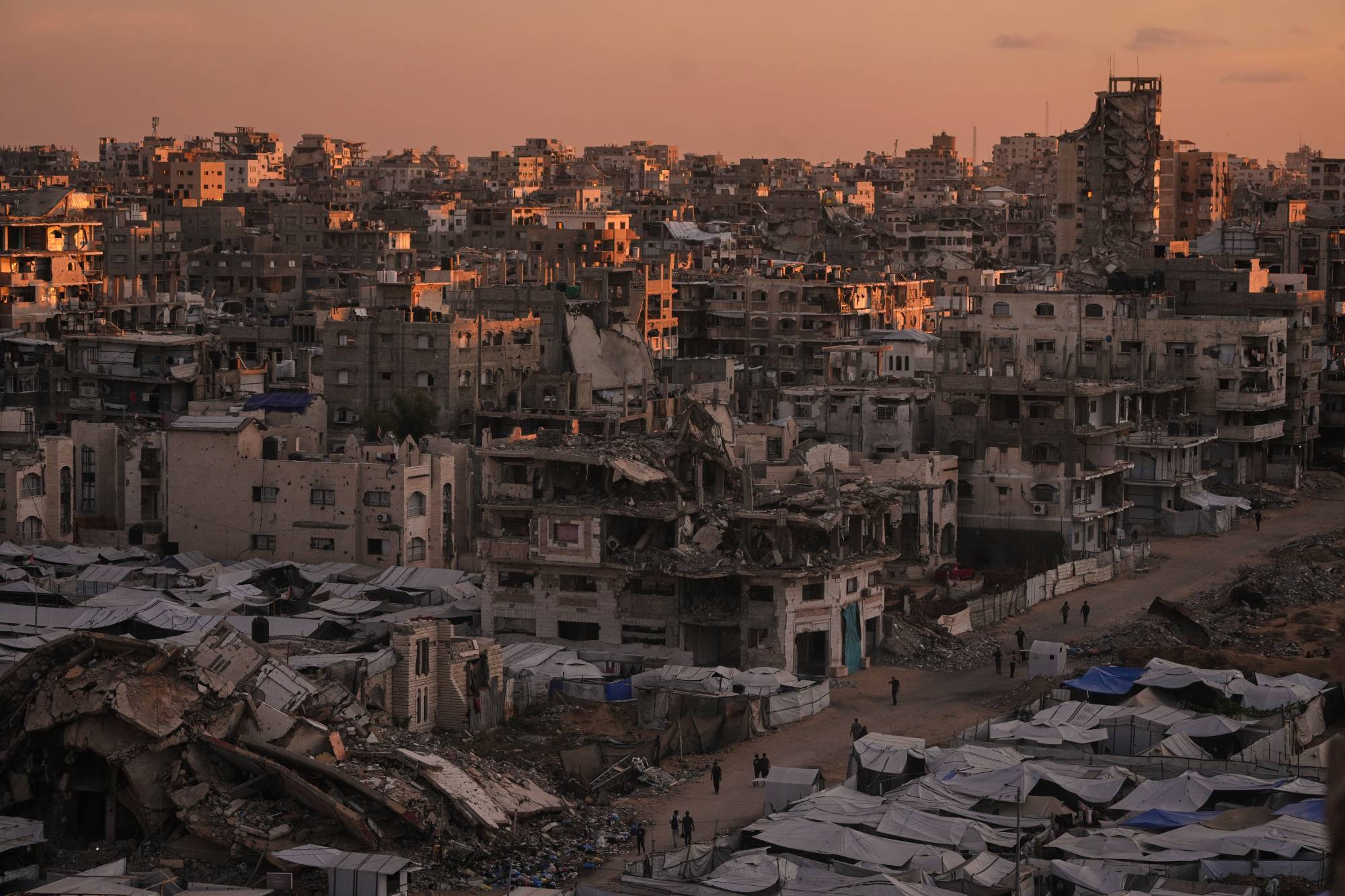
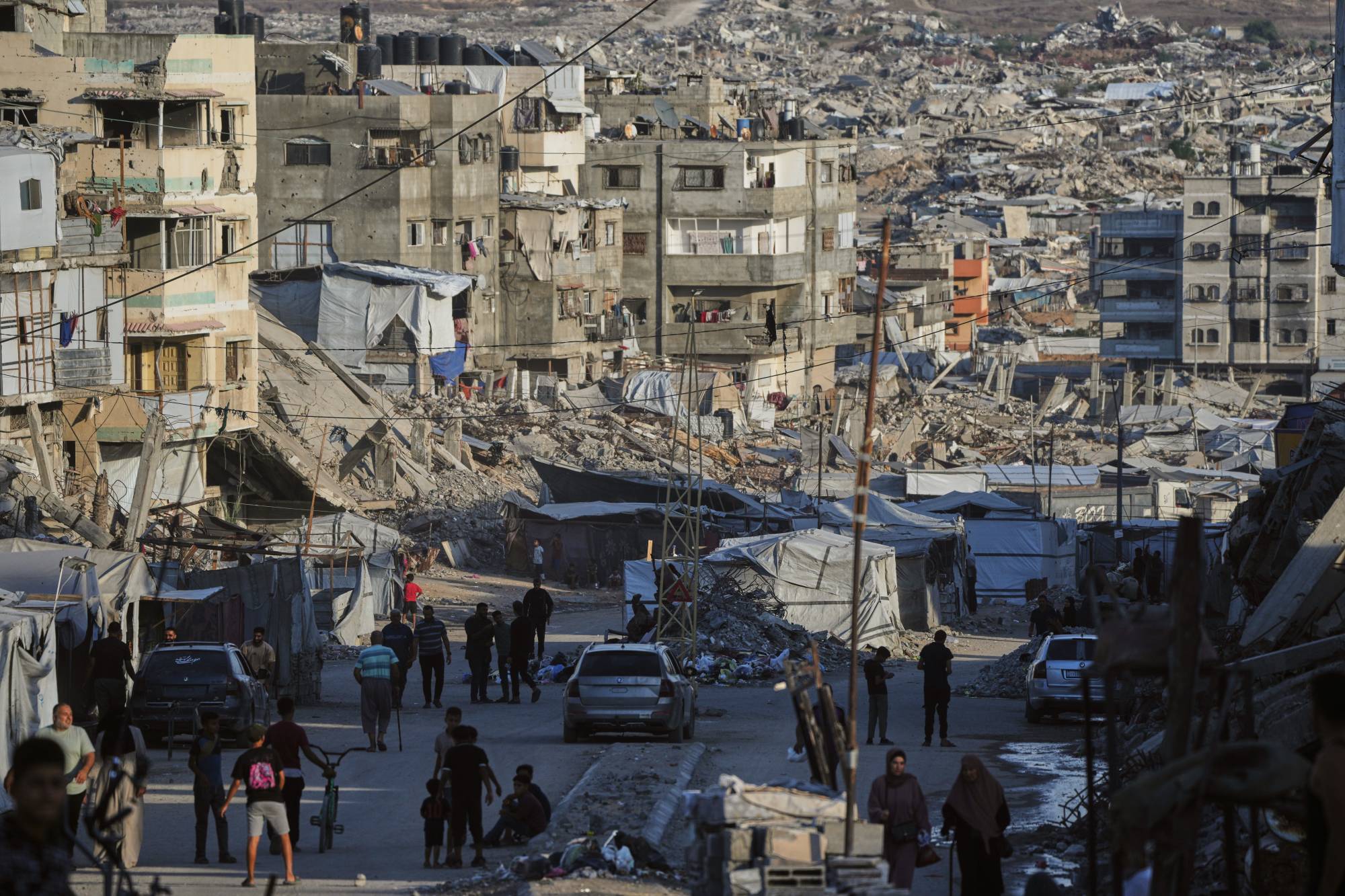
Palestinians walk along a street surrounded by buildings destroyed in Israeli military strikes during the Israel-Hamas war in Gaza City, Tuesday, Oct. 6, 2026. (AP)

Sinwar’s killing

Israel responded with full force to Sinwar and his attack, launching an indiscriminate bombing campaign across the Gaza Strip and carrying out an unprecedented series of assassinations. These reached a peak at the time with the killing of Hamas political bureau chief Ismail Haniyeh in July 2024 in a complex operation in Tehran.

A Hamas source said “the movement's decision to choose Sinwar as Haniyeh's successor amounted to a mandate for him, reflecting a vote of confidence by the movement and its leadership in his popularity and support for his course.”

The al-Qassam Brigades, Hamas' armed wing, were still confronting Israel and inflicting losses commensurate with the fighting on the ground, setting aside Israel's overwhelming advantage in airstrikes and missile bombardment.

Around the first anniversary of the continuing war in Gaza, Sinwar was suddenly killed in October 2024 in an encounter Israel had not planned. But the scene of his death was not the final chapter.

Israel sought to wipe out Gaza through what UN commissions have described as “genocide.” In its war on the territory, it wholly or partially destroyed 82% of its buildings and 90% of its infrastructure and killed 74,000 of its residents. Reconstruction costs are estimated at about $71 billion.

The immense cost of Israel's war left its mark on Sinwar's image even after his death, and on Hamas despite its signing of a ceasefire agreement in October 2025.

Among Gaza's residents, perceptions of Sinwar have undoubtedly changed considerably. Even among Hamas supporters who are not members of the movement, videos, testimonies and local discussions in recent months have shown attacks on Sinwar's decision and criticism of a man who has become the target of numerous accusations.

But a Hamas source told Asharq Al-Awsat: “The insults, harsh criticism and other attacks directed at Sinwar throughout the war were unfair. A man cannot be judged for seeking to take an important step aimed at making everyone feel what Gaza had been suffering: a blockade and daily killing by Israel.”

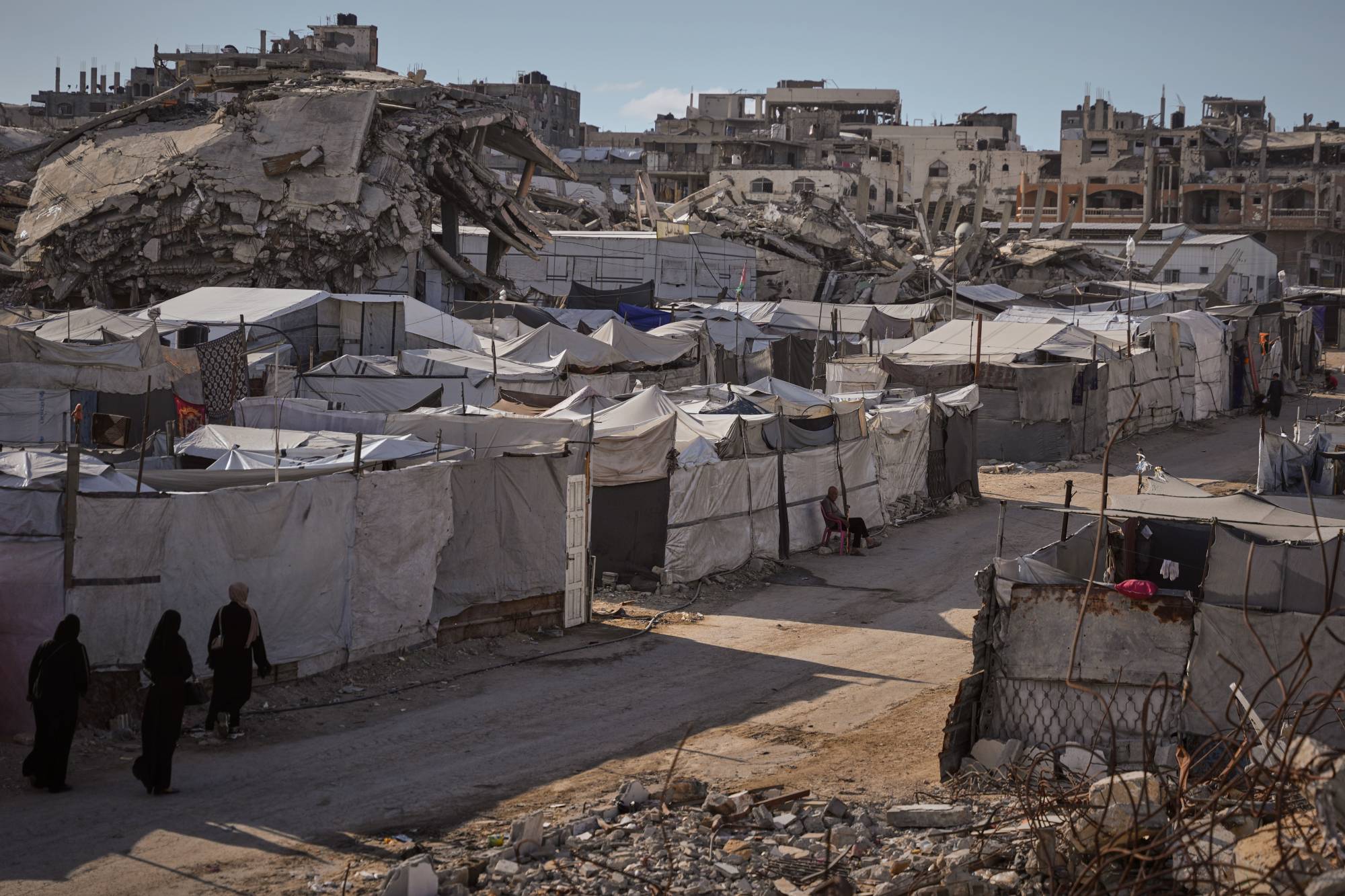
Palestinians walk along a street lined with tents sheltering displaced people and buildings destroyed by Israeli military strikes during the Israel-Hamas war in Gaza City, Tuesday, Oct. 6, 2026. (AP)

Polls and declining support

Palestinians did not arrive at a relative decline in support for the Oct. 7 attack overnight, according to two polls conducted by the Palestinian Center for Policy and Survey Research.

A poll released in March 2024 showed that overall support for Oct. 7 remained high, but had fallen by 11 percentage points in the West Bank and risen by about 14 points in Gaza.

The March report attributed the rise in support to another motive: “Three-quarters of Palestinians believe the attack put the Israeli-Palestinian issue at the center of attention and ended years of neglect.”

But another poll by the same center, released in September 2024, recorded a shift in support for the attack. Support fell by 13 percentage points overall across the West Bank and Gaza, with a larger decline of 18 points in Gaza, following a 14-point drop recorded in the June poll.

A further poll conducted by the center last August showed support for Hamas falling to 24%, compared with 35% in its October 2025 poll. Support for Fatah remained at 24% in both surveys.

The center's findings showed that support for Hamas in the West Bank fell from 32% in October 2025 to 18% in August 2026. In Gaza, it declined from 41% to 33%.

A poll released last August by the Jerusalem Media and Communication Centre, in cooperation with the Friedrich Ebert Foundation, pointed to a similarly marked decline in Hamas' standing and popularity.

The proportion of respondents who trusted the movement fell to 6.7%, from 12% in June 2022. Trust in Fatah also declined, to 22.3% from 28.8%.

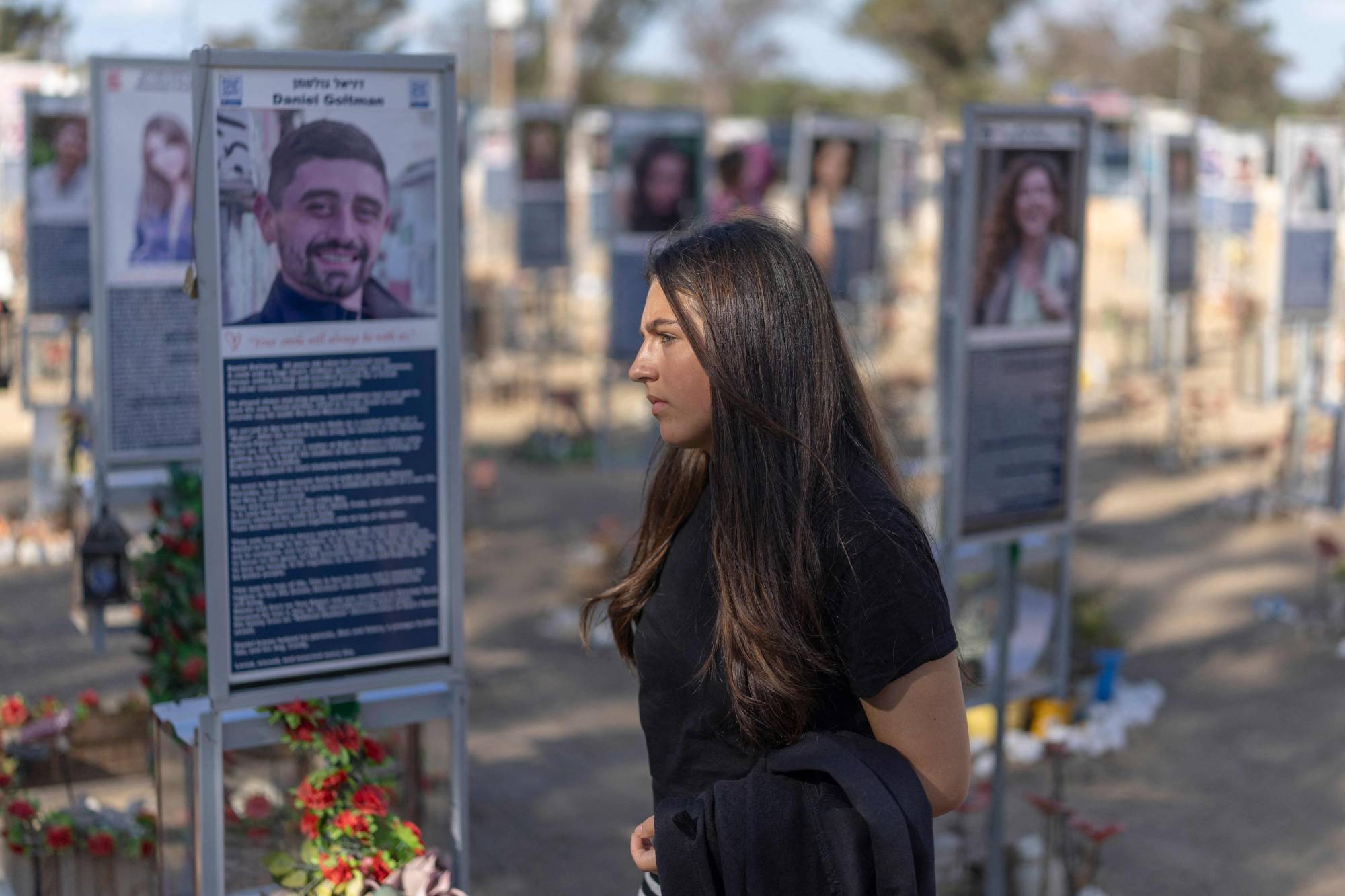
An Israeli woman pays her respects at the memorial to the victims of the 2023 Hamas attacks at the Nova festival site in Reim, southern Israel, on October 6, 2026. (AFP)

Has Hamas reviewed Sinwar's decision?

Three years after Oct. 7, three Hamas sources inside Gaza and a fourth outside the territory said: “There have been no reviews of what happened, and none of the leaders has criticized it. Although many knew nothing, or had varying degrees of knowledge, they have not changed their positions.”

But a fifth source outside Gaza said: “Support within Hamas exists only at the official level. Some criticism was occasionally voiced in private meetings among leaders at different levels. But it concerned certain aspects, as happened with negotiations and other matters, rather than the substance of the attack itself. There were differing views over its broad scope and the failure to properly anticipate Israel's response.”

The latter source, who lives outside Gaza, said: “Despite the destruction, Palestinians gained considerable international support and exposed Israel's true nature and criminality. This increased solidarity with Palestine and brought its cause back into focus around the world.”

Mustafa Ibrahim, a Palestinian political analyst based in Gaza, said: “Public criticism of Sinwar and anger over the decision he took without properly studying it continue, compounded by what residents of the territory endured and the loss of their homes and possessions.”

“Palestinians and others outside Gaza may support what Sinwar did simply because they did not experience the same destruction, killing, displacement and other conditions,” he added.


How Oct. 7 Attack Led Abbas to Reshape the Palestinian Authority

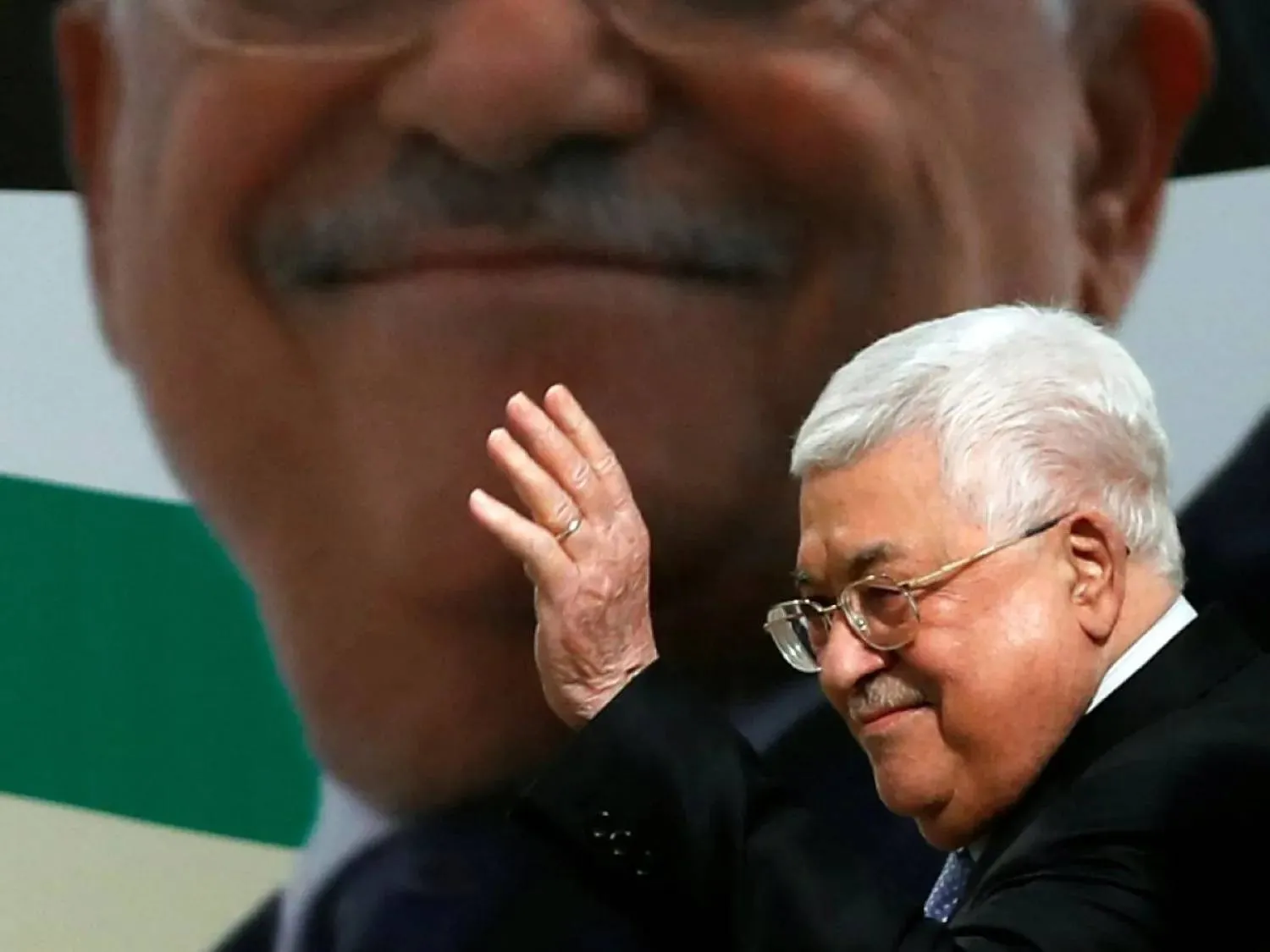
Palestinian President Mahmoud Abbas waves during a ceremony marking the 55th anniversary of Fatah's founding in Ramallah in the West Bank in 2019. (Reuters)
TT

How Oct. 7 Attack Led Abbas to Reshape the Palestinian Authority

Palestinian President Mahmoud Abbas waves during a ceremony marking the 55th anniversary of Fatah's founding in Ramallah in the West Bank in 2019. (Reuters)

Soon after becoming Palestinian Authority president in 2005, Mahmoud Abbas met Fatah cadres in Bethlehem. They had accused a particular official of corruption over his support for Israeli projects. Abbas asked for any evidence so he could hold the official to account at once.

His message was clear: he had come to reform the authority, which he too had accused of corruption as prime minister. And he had his own way of doing it.

Over the years, Abbas repeated that pledge to leaders near and far, to the Fatah movement he leads, to other factions, to the international community and to local civil society groups. He set up an anti-corruption commission, but there were no clear results on the ground.

Reform was underway, without doubt. But it was long, slow, difficult and complicated, like everything else in the Palestinian territories. Then came Oct. 7, 2023, after 18 years of Abbas's rule. Everything changed.

Palestinians walk along a street surrounded by buildings destroyed in Israeli military strikes during the Israel-Hamas war in Gaza City, Tuesday, Oct. 6, 2026. (AP)

Reform as the price of survival

Abbas had spoken of reform thousands of times and promised it thousands more. After Oct. 7, he faced a different demand for the first time: sweeping, difficult reforms as the price of survival.

"They asked for a lot of reforms," a senior Palestinian official told Asharq Al-Awsat. "After the war in the Gaza Strip, they used that label — reforms — to include demands that had nothing to do with real reform ... cutting salaries and changing curricula. They also demanded presidential and legislative elections. All of this was a condition for engaging with the authority and supporting it ... and we said ‘yes’."

"We have a thousand objections to US President Donald Trump's plan for the Gaza Strip, and we said ‘yes’. We have a thousand objections to the reform plan linked to it, and we said ‘yes’," he added.

"They treat us as if we are the only country that needs reforms. And we accepted. We went ahead because we want to stop the war, remove the pretexts and launch a political process. This was not a situation we chose. But we agreed and moved forward. Will they now move forward and fulfill their obligations?"

Abbas needed little pressure. He understood the implications of Oct. 7 and soon launched sweeping reforms that began to reshape the entire Palestinian Authority.

After the war, everyone disagreed on everything except one thing: the authority had to be reformed.

A source familiar with the matter said Abbas began making major changes early, seeking to present the Palestinian Authority as a new administration and a credible political partner in a changing region.

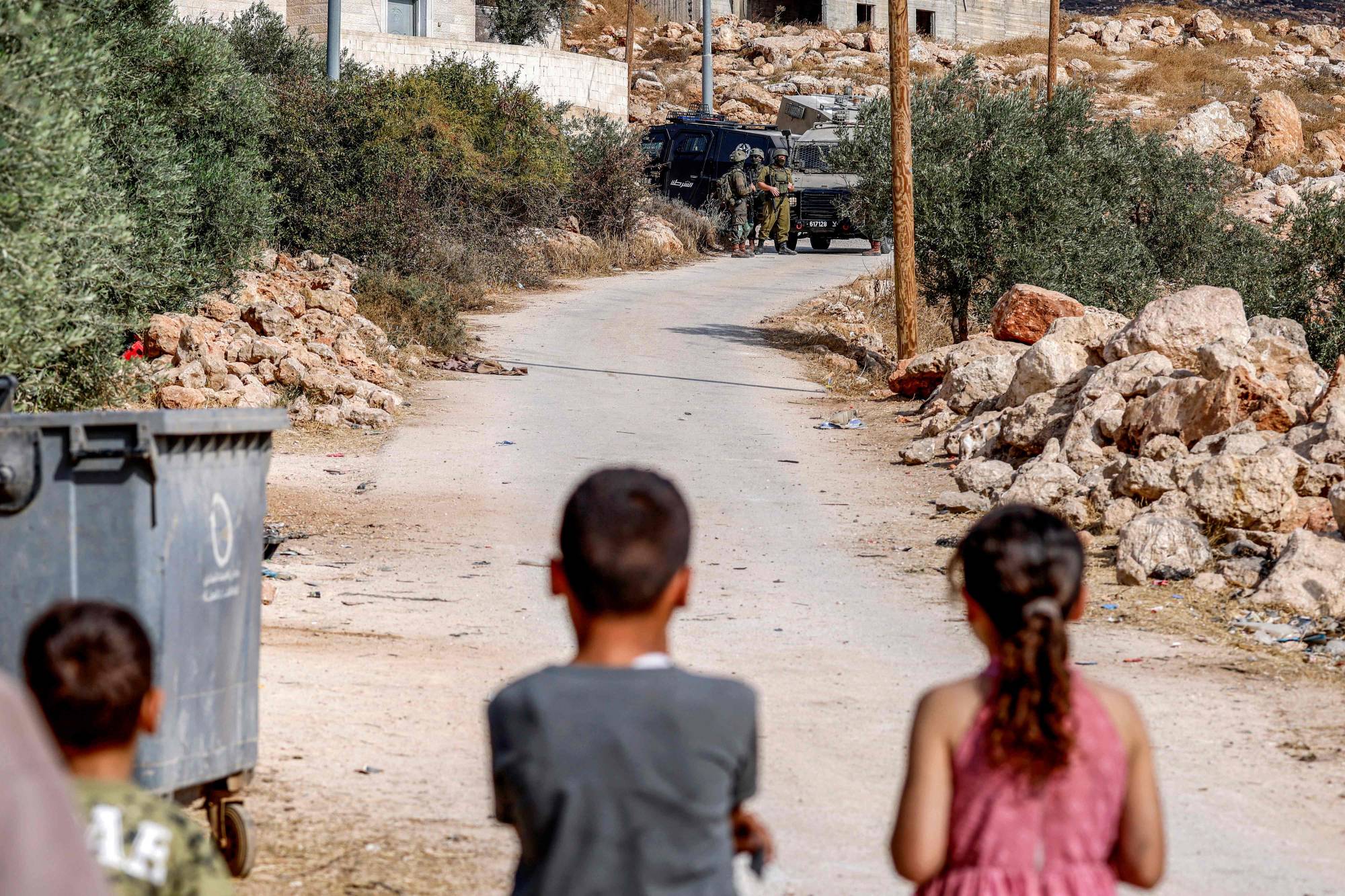
Children watch as Israeli security forces deploy nearby in the Palestinian village of al-Mughayyir, near Ramallah in the Israeli-occupied West Bank, on September 29, 2026. (AFP)

Securing a role after the war

The question of the day after the war loomed large. According to the source, everyone told Abbas that without reform and change, he would have no role as a partner or participant in anything. No authority. No Gaza. No future state.

That was precisely what Israeli Prime Minister Benjamin Netanyahu wanted. After Oct. 7, he sought to get rid of Abbas, the PA and Oslo Accords.

Abbas understood this from more than his conversations with others. Netanyahu's war against the PA and in the West Bank, followed by his declaration that the Oslo Accords were "Israel's big mistake," confirmed it. Since Oct. 7, 2023, Israel has effectively treated the PA as if it did not exist.

Israel escalated its operations in the West Bank. The army attacked cities, refugee camps and towns, permanently occupying some. It killed Palestinians in airstrikes, made arrests and destroyed infrastructure. Settlers were given free rein to kill, attack and seize vast areas by force.

Israel then withheld funds from the PA and amended laws on control, governance and jurisdiction in several areas in the heart of the West Bank. The aim was to eliminate its role and reshape control of the territory.

The PA was at its lowest point. Its very survival was at stake. Abbas had few choices: fight Israel, dissolve the authority or respond to the world and his allies.

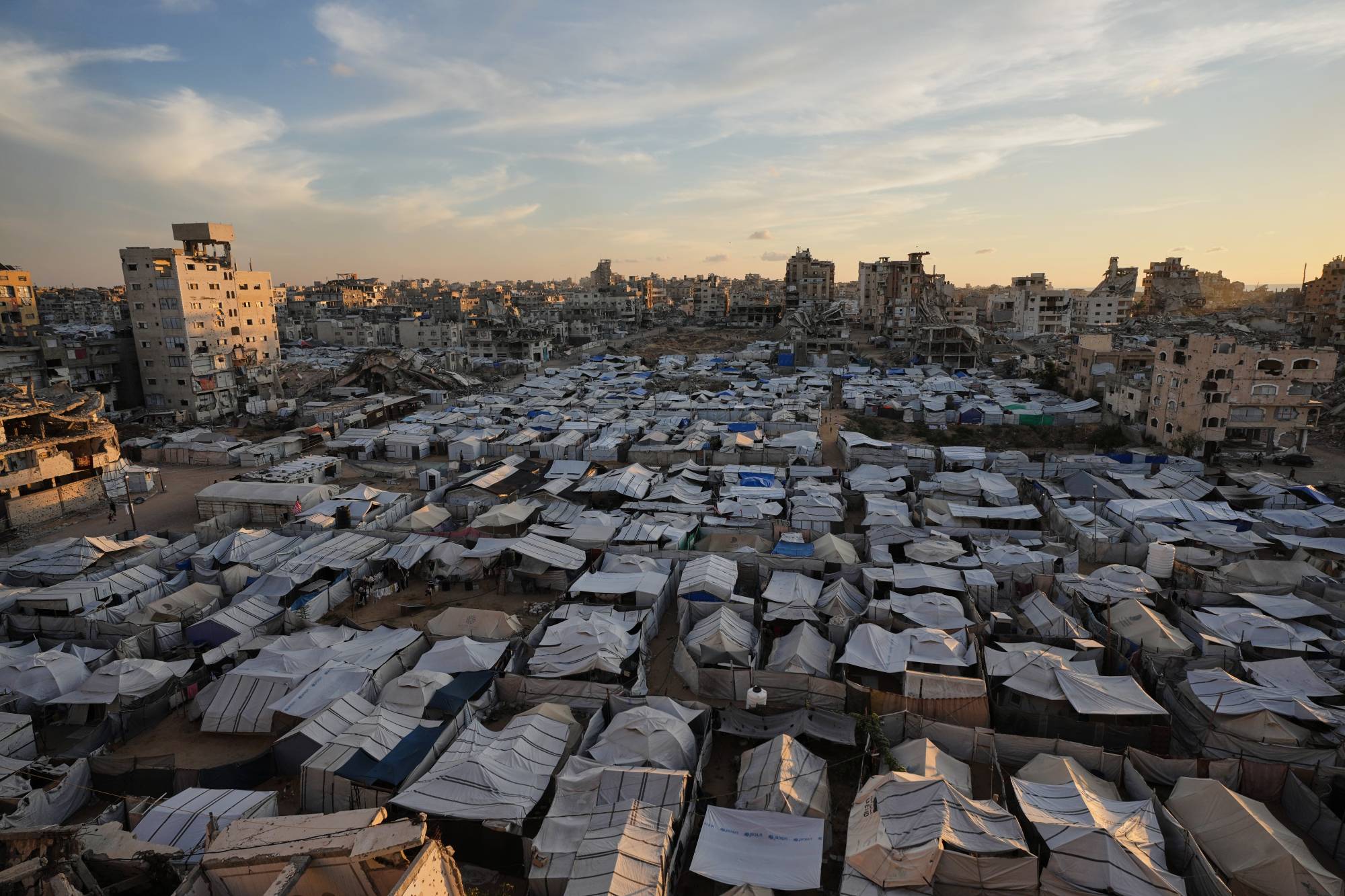
A makeshift tent camp for displaced Palestinians who lost their homes during the Israel-Hamas war stretches across Gaza City, Tuesday, Oct. 6, 2026. (AP)

From 'authority' to 'state'

War was off the agenda. The PA was not considering dissolving itself. Abbas set about changing what he could. In February 2024, just four months after the war began, he accepted the resignation of Mohammad Shtayyeh's government. He later formed a government headed by Mohammad Mustafa.

It immediately pledged institutional reform, a fight against corruption, greater transparency and accountability, and reforms of the judiciary, public finances and security. It also promised to unify institutions in the West Bank and Gaza Strip.

That was Abbas's first step toward reform. It soon grew into a broader transformation of the PA.

He issued a decree reconstituting the Central Elections Commission, then a constitutional declaration governing the transfer of the PA presidency if the post became vacant.

Next came a decree-law restructuring social assistance, including ending salary payments to Palestinian prisoners and fighters. He then created the posts of deputy chairman of the Palestine Liberation Organization's Executive Committee and vice president of the State of Palestine.

He formed a committee to draft an interim constitution for the transition from "authority" to "state."

A new constitutional declaration followed. It stipulated that, if the PA presidency became vacant, the deputy chairman of the PLO Executive Committee, who also serves as vice president of the State of Palestine, would temporarily assume presidential duties.

Abbas then initiated local elections in the West Bank and Gaza, called for Palestinian National Council elections and set legislative elections for Nov. 28. Presidential elections were scheduled for the first quarter of 2027.

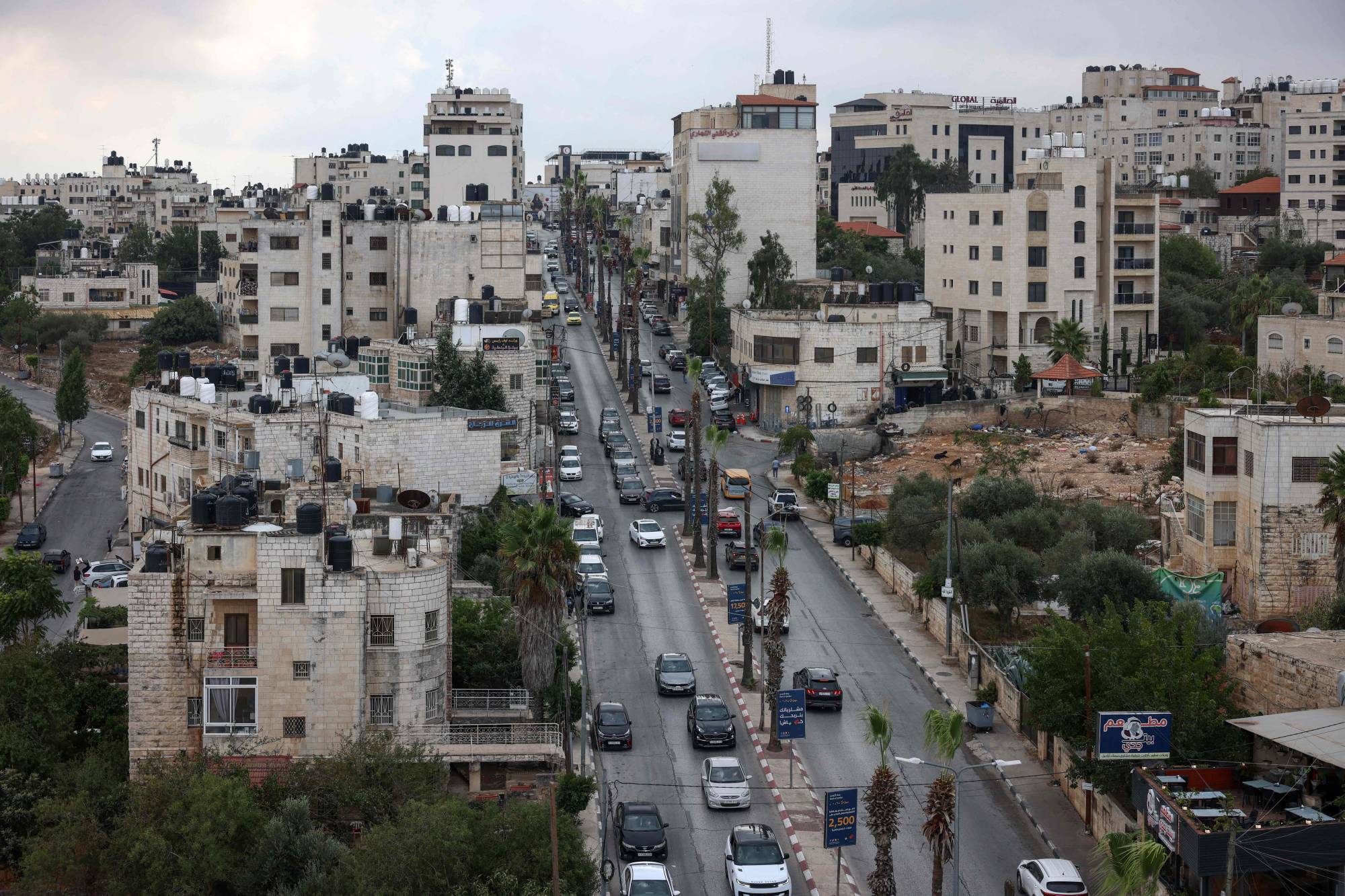
A general view shows the Palestinian city of Ramallah in the Israeli-occupied West Bank on September 28, 2026. (AFP)

Fatah elections and sweeping change

Fatah's elections were part of the wider push for change. One of the most significant steps came last year, when Abbas elevated Hussein al-Sheikh to vice president of the State of Palestine and deputy chairman of the PLO Executive Committee.

This year, he also elevated Sheikh to Fatah's deputy leadership after the movement held its eighth congress and elected a new Central Committee.

His rise to all these posts in just two years established Sheikh as a potential successor to Abbas. He is acceptable to the Americans, who contact him regularly. He is also very close to influential Arab officials and leaders and has channels of communication with Israeli officials.

His rise followed major changes within the PA. The heads of almost all its security agencies were replaced, and hundreds of officers holding the rank of brigadier general were retired by presidential decree.

Work is also underway to change Palestinian school curricula.

"Abbas wanted to put the internal house in order while responding to demands for reform," a source familiar with the matter said. "To put the PA's affairs in order and ensure a peaceful, smooth transition. That serves everyone — those at home first, then others.”

If Abbas follows through and holds legislative and presidential elections, he will have kept his promises on democratic renewal and reform. But whether the elections will be held or postponed remains unclear.

Sources said any postponement would be agreed through consultations with the Arab group.

"It would not be an open-ended postponement, but one tied to another specific date," the sources told Asharq Al-Awsat.

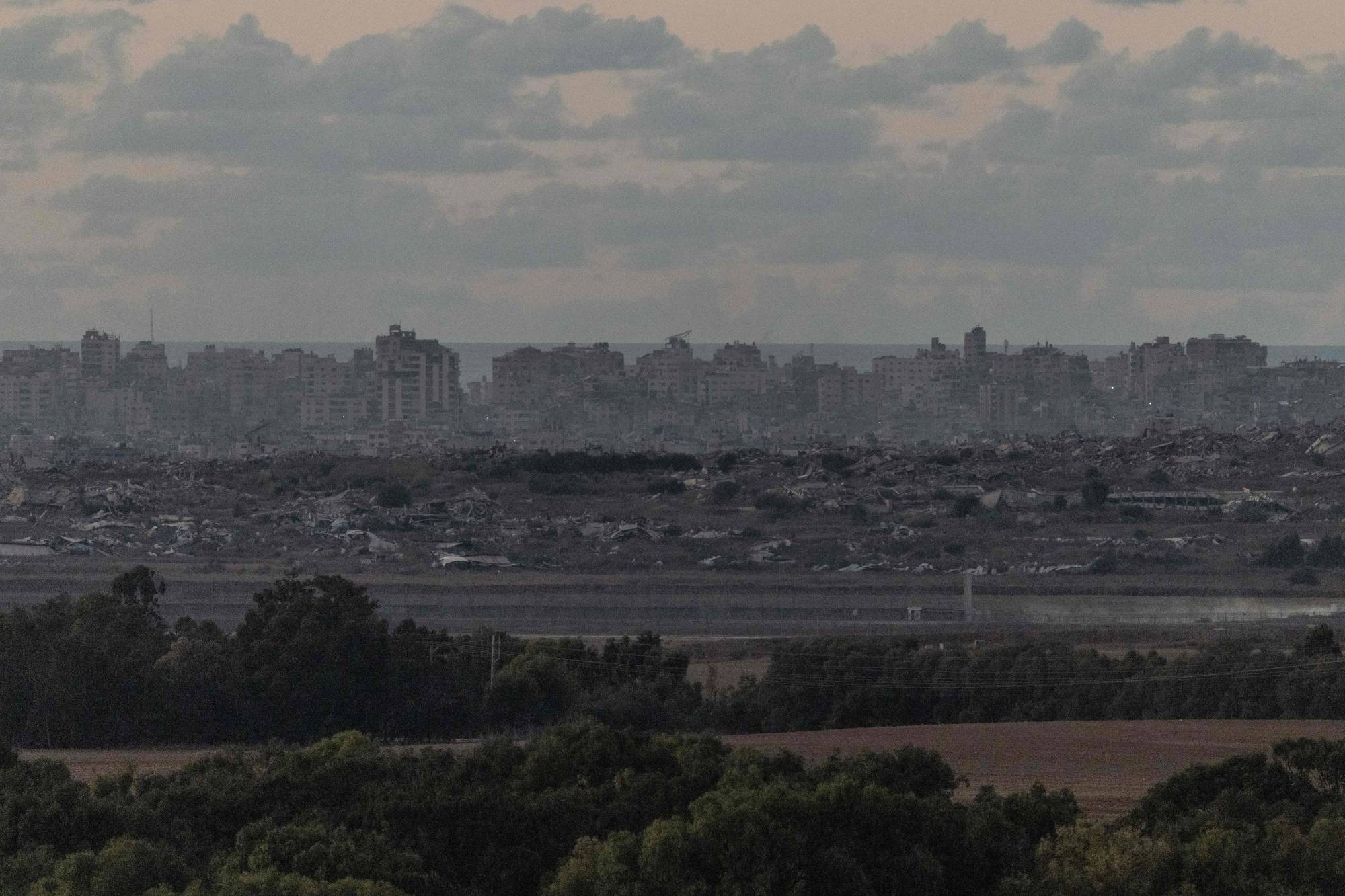
A photograph taken from the Israeli kibbutz of Nahal Oz shows part of the northern Gaza Strip on October 6, 2026. (AFP)

‘We kept our promises. What about you?’

Whatever happens with the elections, the PA is trying to make its case: it has met every demand for political and financial reform and the transfer of power, down to salaries and curricula. What more is required?

In a recorded address to the United Nations last month, after the Americans barred him from entering their country, Abbas told the world: “We completed the national reform program to which we had committed before our people and the international community. We strengthened institutional governance, public financial management, transparency, accountability, anti-corruption measures, and the rule of law.”

“We established a unified needs-based national system for social protection and social welfare, abolished the previous laws and regulations on this matter, and obtained an independent international audit confirming the validity of our measures,” he added.

“We also continue to reform the education system and develop criteria and curricula in accordance with international standards and in cooperation with UNESCO in a manner that promotes the values of peace, tolerance, and respect for others while preserving our national identity and the rights of our people,” he said. “We also proceeded along the path of democratic revival and the empowerment of women and youth.”

“We have held local council elections and elections for the General Union of Palestinian Students. We are headed towards our legislative elections on November 28. And this will be followed by the completion of the renewal of the institutions of the Palestinian National Council, followed by the Palestinian presidential elections.”

It was as if Abbas were saying: “I have done everything you asked. Will you now give me something I am asking for?”