From ‘Ahmed the Japanese’ to ‘Sinwar’s Flood’: A Tale of Torment and a River of Graves

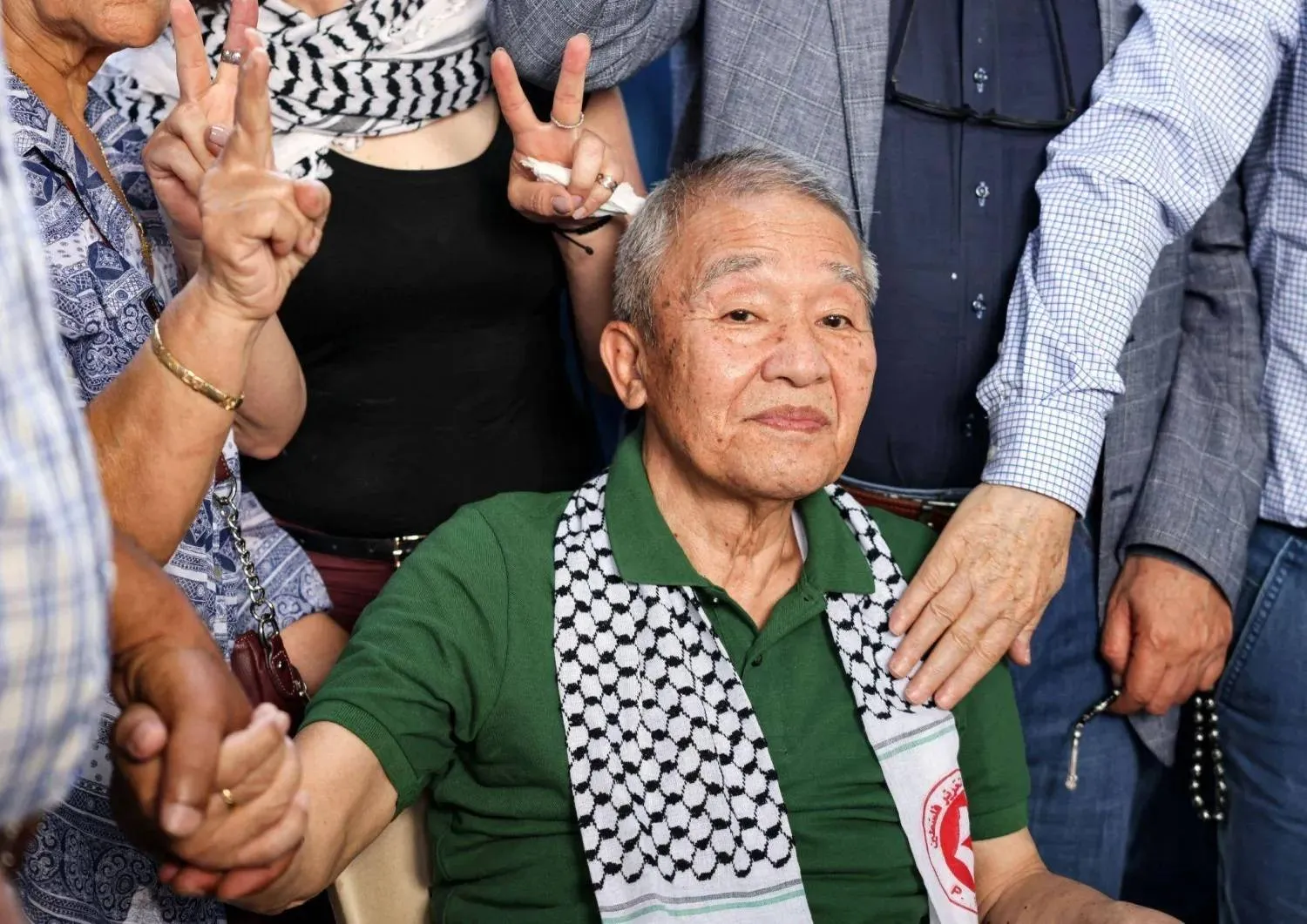
Okamoto stands before his two comrades’ graves during a commemoration of the 50th anniversary of the Lod Airport attack in 2022. (AFP)
TT

From ‘Ahmed the Japanese’ to ‘Sinwar’s Flood’: A Tale of Torment and a River of Graves

Okamoto stands before his two comrades’ graves during a commemoration of the 50th anniversary of the Lod Airport attack in 2022. (AFP)

The cemetery caretaker was kind and friendly. Perhaps he was glad that those whose graves he tended had not slipped into total oblivion, that someone still visited or asked about them. He led me through Beirut’s Cemetery of the Martyrs of the Palestinian Revolution.

Many names stopped me, including Balqis, the wife of poet Nizar Qabbani, killed in a bombing at the Iraqi Embassy in Beirut. Lines from his searing elegy adorned her grave.

Chance sometimes decides destinies. Stories can begin with an unintended spark. Here are two such coincidences.

Hazem Jawad, who led Iraq’s Baath Party to power in 1963, told me a revealing story. In 1959, a group within the party leadership decided to assassinate Iraqi leader Abdul Karim Qasim.

They selected a team, but one member withdrew after agreeing to take part. Short of time, the leadership asked a party official whether he knew a young replacement. He gave them a name: Saddam Hussein.

Saddam joined the failed assassination attempt and was wounded in the leg. He fled to Syria, where he met party founder Michel Aflaq. Impressed by the young man, Aflaq gave him opportunities a few years later to climb the party ranks.

Around the same time, associates of Palestinian leader Dr. Wadie Haddad told me of another coincidence. Haddad was planning the Lod Airport attack, carried out on May 30, 1972, which killed dozens of people, most of them tourists.

According to their account, a young man due to take part drowned while swimming off Beirut’s Raouche district. Intelligence services overlooked the incident and the dead man’s role. Haddad, however, decided to accelerate the operation.
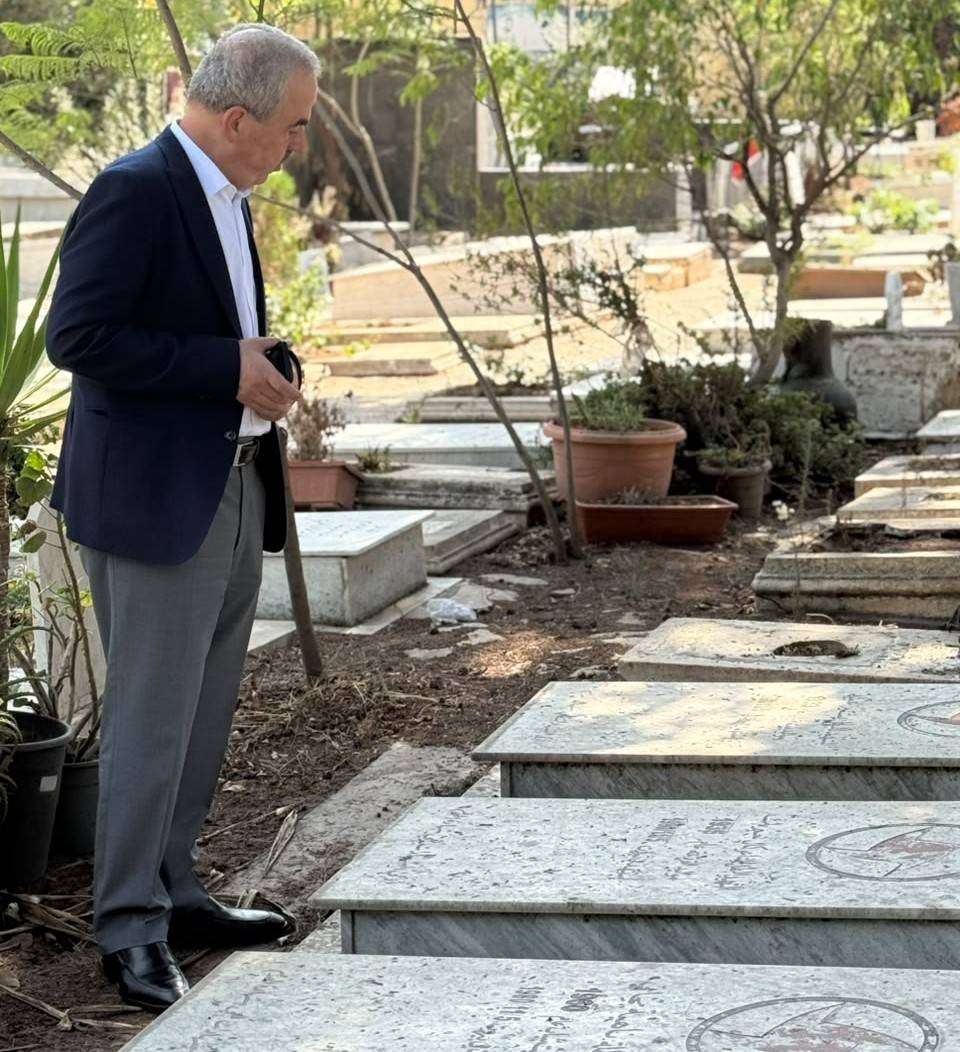
Ghassan Charbel among the graves at the Palestinian Revolution Cemetery (Asharq Al-Awsat)

Together with the Japanese Red Army group, he sought a replacement. They chose Kozo Okamoto, known as “Ahmed the Japanese” within the Popular Front for the Liberation of Palestine’s external operations branch.

Haddad met the team and gave them instructions after their training in Baalbek, in Lebanon’s Bekaa Valley. They left Beirut for a European stopover, then traveled to Rome and boarded an Air France flight to Israel’s Lod Airport.

It was a suicide mission. None of the attackers was expected to survive. Chance intervened: two were killed; Okamoto was wounded and captured.

For years, he grieved “because he had been unable to leave his body in the soil of Palestine” and “because he had not become a star in the sky like his two comrades,” in keeping with his Japanese beliefs.

Okamoto endured unprecedented torture in his Israeli prison. He was confined in a dog cage, his hands bound. For years, he had to wait for a dog to howl, then howl back before a soldier brought him food. The soldier never asked him a question or spoke a word.

In that deadly isolation, he lost the ability to use his hands, or even to think of using them. Perhaps he expected to grow old and die there. Then an event changed his life.

The Popular Front for the Liberation of Palestine-General Command, led by Ahmed Jibril, was holding three Israeli soldiers after Israel’s 1982 invasion of Lebanon.

In the mid-1980s, the group entered arduous indirect negotiations with Israel, helped by Austrian Chancellor Bruno Kreisky. The talks lasted about two years. Jibril insisted that the exchange include prominent prisoners in Israeli jails.

The deal was ready. The exchange took place on May 20, 1985. My profession brought me there. Our plane left Damascus for Geneva, carrying one of the three Israeli soldiers. After the successful exchange, it flew us to Tripoli. Jibril also wanted to dedicate the victory to Col. Muammar Gaddafi, who had supported him generously in every way.

Among the most prominent prisoners released were Sheikh Ahmed Yassin, the leader of Hamas; Ziad al-Nakhalah, who later became secretary-general of Islamic Jihad; and the well-known Palestinian leader Jibril Rajoub. The fourth was Okamoto. A different chapter of his life began.

After a brief stay in Libya, he went to Syria. He most likely slipped into Lebanon around 1987 and lived with comrades in the Bekaa Valley, changing residences from time to time. In 1997, Lebanese authorities arrested a group of Japanese nationals there. Okamoto was sentenced to three years for entering the country illegally.

The group was released in 2000. But he could not return to Japan, where he was wanted.

The Popular Front for the Liberation of Palestine organized protests with several parties and public figures to secure permission for him to stay in Beirut. Salim al-Hoss was prime minister, Maj. Gen. Jamil al-Sayyed headed General Security, and Gen. Emile Lahoud was president.

In an unprecedented step, Lebanese authorities granted Okamoto political refugee status, on condition that he undertake no activities on Lebanese soil.

The Popular Front took it upon itself to repay the Japanese fighter, covering his living expenses, medical treatment and rehabilitation. His only public activity was laying an annual wreath at the memorial to those killed carrying out the Lod attack, in the martyrs’ cemetery.

He renewed his pledge to his two comrades to become a star in the sky.

Okamoto left his Israeli prison shattered.

He resembled “the remains of a man.” His back was bent, his hands unusable. He ate directly with his mouth, without using his hands. He did not know how to bathe or make coffee.

He dared not switch off the light.

He did not want to revisit the Lod attack. His caregivers avoided discussing it in ways that might reopen his wounds.

Trusted doctors helped him. From 2008 to 2021, Samih Rizk cared for him, becoming “a father, brother, friend and comrade.”

After Samih died, Fouad Daher, who oversaw the Popular Front’s social work in Lebanon, took over. His friendship with Okamoto had begun during Samih’s lifetime.

Okamoto loved the sea at Tyre. His caregivers took him there. He regained a measure of normal life. He liked fish, meat and chicken, and sometimes fancied a glass of wine or a bottle of beer. Occasionally, he asked for a falafel or shawarma sandwich. His Arabic was poor. So was his English.

His movements were never announced in advance. His caregivers saw no sign that Israel had tried to reach him again. Years earlier, the United States had announced a $5 million reward for information on his whereabouts. The Popular Front did not tell him.

In his final years, he lived with a family he loved and who loved him. He never married, had no girlfriend and showed no interest in either. No relative in Japan tried to visit or write to him.

“Okamoto is part of something larger,” Fouad Daher says.

“Yesterday, I visited the graves of the martyrs of the Palestinian revolution. I told someone I met there that the cemetery reflects the international character of the Palestinian cause, which embraces different nationalities and religions.”

“There are Japanese, French, Turkish, Italian, Iranian and Iraqi people buried there. Go to the caretaker and he will show them to you. The grave of Kamal Nasser, a Christian, is next to those of Mohammed Youssef al-Najjar and Kamal Adwan.”

Last July, Okamoto’s health deteriorated. On July 23, he died at Al-Rassoul Al-Aazam Hospital.

His story stirred me. I decided to visit the martyrs’ cemetery. I walked among the graves of Ghassan Kanafani, Abu Hassan Salameh, Kamal Nasser and Balqis, the wife of poet Nizar Qabbani. I also saw the graves of the “foreign martyrs.”

Chance played its part. I had not planned to write about Okamoto. I visited Beirut’s Mar Elias refugee camp to gauge the mood on the eve of the third anniversary of “Sinwar’s Al-Aqsa Flood.” I saw the misery of life in the camp. Then I spotted Okamoto’s photograph on a wall, and the story took another turn.

The caretaker led me to Ghassan Kanafani’s grave. A member of the Popular Front for the Liberation of Palestine’s political bureau, he was assassinated in direct connection with the Lod Airport attack and what Okamoto and his two comrades had done.

He was the official spokesman for the Popular Front, which claimed responsibility.

Haddad’s associates told me they had feared for Kanafani. They urged him to change his residence and car. He refused, “because he feared being accused of behaving like a bourgeois.”

Mossad soon reached him. On July 8, 1972, a bomb exploded in his car, killing him and his niece, 17-year-old Lamis Najm. The titles of his novels came to mind: “Umm Saad,” “Men in the Sun” and “Returning to Haifa.”

In this quiet place lies a man who lived loudly: Abu Hassan Salameh. Born into a wealthy family, he followed his father’s example in resisting occupation. He loved the struggle, life, women and late nights.

Beirut was long captivated by his marriage to Georgina Rizk, Miss Lebanon and Miss Universe. He founded Force 17, the military unit charged with protecting Yasser Arafat. He was close to the leader’s office and heart.

Salameh helped oversee overseas operations against Israeli interests. After a long pursuit, Israel’s Mossad assassinated him in Beirut on Jan. 22, 1979. Many stories surrounded the “Red Prince,” including that he was killed over his connection to the attack on the Israeli team at the 1972 Munich Olympics.

He had no part in conceiving or carrying out that attack, Mohammed Oudeh, known as Abu Daoud, told me. Oudeh brought the attackers into the Olympic Village with weapons Salah Khalaf, known as Abu Iyad, had personally brought to Munich.

Others believe Salameh, whom a Mossad operative had managed to approach, was killed “because he succeeded in opening a channel to the CIA, which caused Israel grave concern.”

We passed the grave of Palestinian leader and writer Majed Abu Sharar.

Mossad booby-trapped his bed in a Rome hotel, where he was staying while attending a conference in solidarity with the Palestinian people alongside the great poet Mahmoud Darwish.

I recalled Mahmoud’s poem “Good Morning, Majed,” which opens: “Rise, recite the surah of the returning one, and hasten toward a country we lost in a traffic accident.”

Nationalities lie side by side here, the caretaker said. So do religions.

He pointed to the grave of Kamal Nasser, the Christian Palestinian leader, beside those of Kamal Adwan and Abu Youssef al-Najjar. Nasser, a poet, had been “envious” of Kanafani’s funeral. “How magnificent,” he said.

“This is what a martyred writer’s wedding should be.”

Nasser, Adwan and Najjar were assassinated on April 10, 1973, in the Israeli army’s nighttime raid on Beirut known as the Verdun operation. One of the officers who took part in the three assassinations was disguised as a woman. His name was Ehud Barak. He would later become prime minister.

Another grave was no less painful. On Dec. 15, 1981, a car bomb rammed into the Iraqi Embassy in Beirut. Among the dead was diplomat Balqis al-Rawi, the wife of the great poet Nizar Qabbani. A passage from his poem adorned her grave:

Balqis...

O fragrance in my memory,
my wife... my beloved... my poem.

Sleep in God’s keeping,
my beautiful one.

For after you, poetry is impossible...
and femininity is impossible.
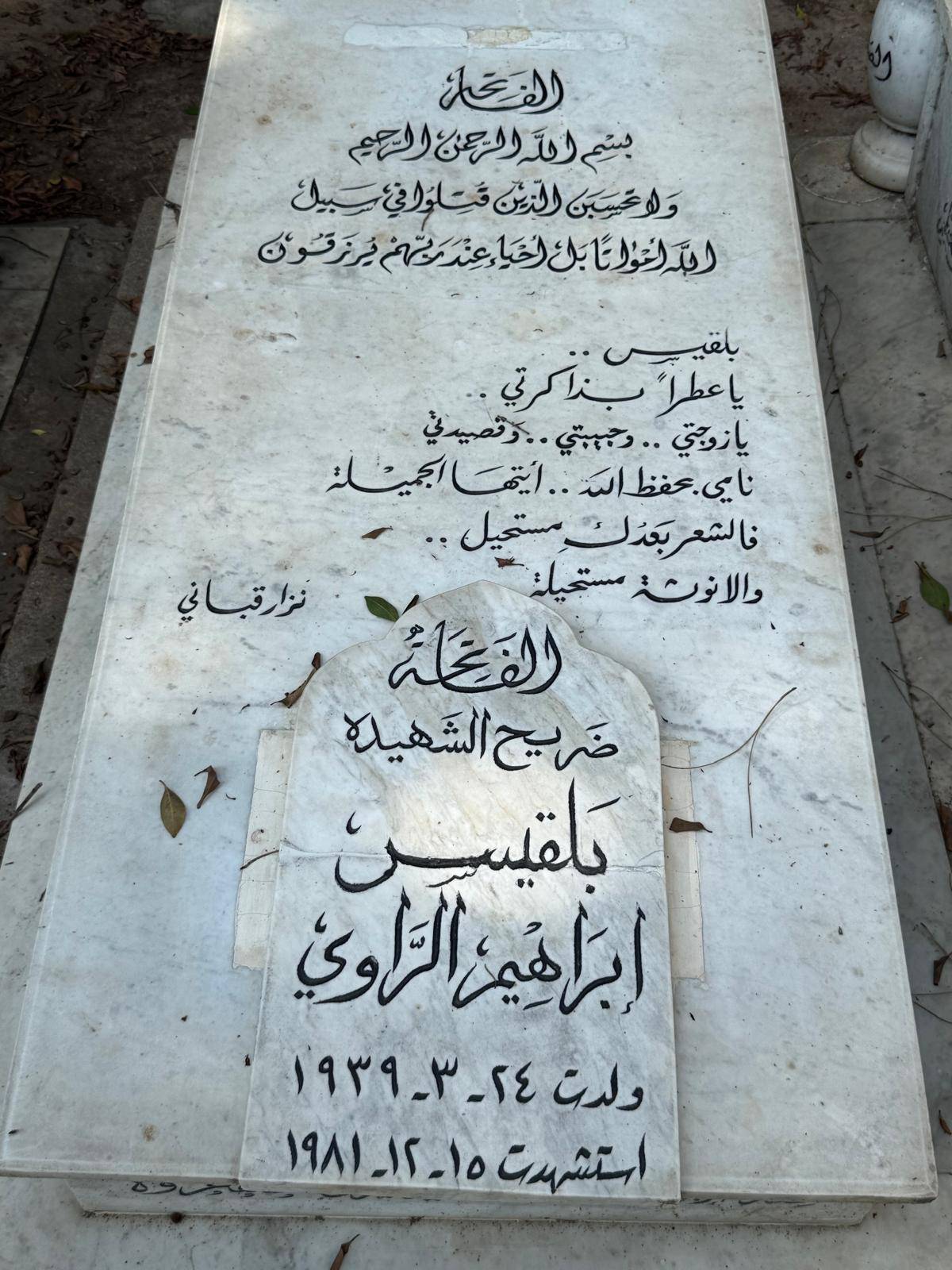
Nizar Qabbani’s verses on Balqis’s tombstone (Asharq Al-Awsat)

The caretaker wanted no photograph and no words. “I am only a caretaker,” he said. “The story belongs to those who lie in these graves.” I asked who paid his salary. Fatah, he replied.

On the way back, I remembered Mahmoud Darwish, who defies forgetting. I remembered Yasser Arafat, too, and his dream of a grave in a free Palestine. I returned weighed down by a “river of graves.”

Xi-Putin-Trump Summit: What Comes Next?

19 November 2026, China, Shenzhen: (L-R) Russian President Vladimir Putin, Chinese President Xi Jinping and US President Donald Trump pose for a photo as they arrive for a trilateral meeting at Kylin Villa, on the sidelines of the APEC Summit. (Kremlin/dpa)
TT

Xi-Putin-Trump Summit: What Comes Next?

19 November 2026, China, Shenzhen: (L-R) Russian President Vladimir Putin, Chinese President Xi Jinping and US President Donald Trump pose for a photo as they arrive for a trilateral meeting at Kylin Villa, on the sidelines of the APEC Summit. (Kremlin/dpa)

An unprecedented summit between Chinese, US and Russian leaders this week in Shenzhen was light on substance but immensely symbolic, analysts say.

From nuclear weapons to reforming the United Nations and cancelling international arrest warrants, AFP looks at what was announced, its significance and what might come next:

- Substance or hot air? -

The three leaders jointly declared lofty goals to "reduce nuclear risks" and reform the United Nations, as well as commitments to immunity for state officials.

Their "Declaration toward Peace" also said the countries plan to boost oil supply and reaffirmed the importance of "stable energy flows".

The promise of dialogue on nuclear risks and non-proliferation "creates an opening for cooperation despite disagreements over arsenal reductions", said Sun Chenghao, senior fellow at the Center for International Security and Strategy at Tsinghua University.

"Implementation is now the main test," he told AFP.

Progress could be signaled by dates for nuclear talks or the appointment of designated officials.

Beijing previously rebuffed Trump's invitations to nuclear arms talks, arguing the US and Russia should first cut their giant arsenals before it agreed to discuss its smaller stockpiles.

The four-point declaration contains few details on future actions, with Germany's Chancellor Friedrich Merz calling the meeting a "photo op".

The "fairly sparse" points were "least common denominators" among the leaders, said Ryan Hass at the Brookings Institution.

Trump told reporters he would give a press conference on Friday, where he may provide more details.

- A new Yalta? -

The symbolism of three powerful leaders gathering to discuss global security issues -- including Putin's invasion of Ukraine and Trump's war with Iran -- had raised comparisons to the 1945 Yalta Conference.

Then-leaders of Britain, the United States and the Soviet Union met to hash out the post-World War II settlement and re-draw European borders.

Ukraine's Volodymyr Zelensky and European powers worried Thursday's summit would push for a peace settlement favorable to Moscow without them at the table.

The format "suggests the creation of conditions where Beijing, Moscow, and Washington call the shots for the rest of the world", said Chong Ja Ian, an associate professor at the National University of Singapore.

But "a functioning 'G3' would require much greater agreement among the three countries and cooperation from many other governments," Tsinghua University's Sun told AFP.

"The Yalta analogy also overlooks today's economic interdependence and the influence of regional actors," he said.

- Should Europe, others worry? -

Other US allies such as Japan, South Korea and Taiwan -- which unlike China and Russia are vibrant democracies -- will also have eyed the summit with unease.

"From South Korea's perspective, this inevitably raises questions about whether it can continue to rely on its alliance with the United States," said Lee Jae-mook, a political science professor at Hankuk University of Foreign Studies.

"The pillars of South Korea's foreign and security policy that it has long taken for granted are being shaken," Lee told AFP.

Japan, too, may reconsider its relationships with China and the US.

"If China and Russia really draw the United States together, I think Japan will have a huge pressure to... make a better relationship with China," said Tzeng Wei-feng, an associate research fellow at Taiwan's National Chengchi University.

However, Tokyo and Washington maintain a bilateral defense pact, so there will likely be "no substantial change" in their ties, he added.

The US has roughly 54,000 military personnel stationed in Japan -- whose relations with China are poor -- and 28,500 in South Korea.

Despite the bonhomie between Xi, Trump and Putin displayed in Shenzhen, major strategic differences remain between their countries.

Washington has curbed Beijing's access to US technologies, while Moscow is fighting a Ukraine that still relies in large part on American intelligence.

Diverging national interests between China, the US and Russia means the rest of Asia won't be "overly concerned" yet, according to Dylan Loh of Singapore's Nanyang Technological University.

The format may not stick, especially after Trump leaves office in two years, he said.

- What next? -

"Perhaps the most noteworthy aspect is the absence of any commitment to reconvene or continue meeting at the leader-level," said Brookings' Hass.

With no follow-up announced, eyes will turn to next month's G20 summit in Miami, where Xi and Trump are due to hold their fourth meeting of the year, and Putin could make his first appearance at the grouping since his war in Ukraine began.

He has been shunned by most Western leaders since Russia's full-scale invasion in 2022.

Still, "there is little chance that such a meeting will be held again", said Shen Dingli, a Shanghai-based scholar of international relations.

International Criminal Court (ICC) members -- which exclude the US -- are obliged to detain Putin if he travels to their territory after the court issued a warrant for him for war crimes associated with the Ukraine invasion.

"Putin has been ruled an international criminal by the ICC, and most APEC and G20 members are signatories to the Rome Statute. So, there are few opportunities for the three countries' leaders to convene," said Shen.


Turkish Investments in Egypt Strengthen Ties Despite Political Differences

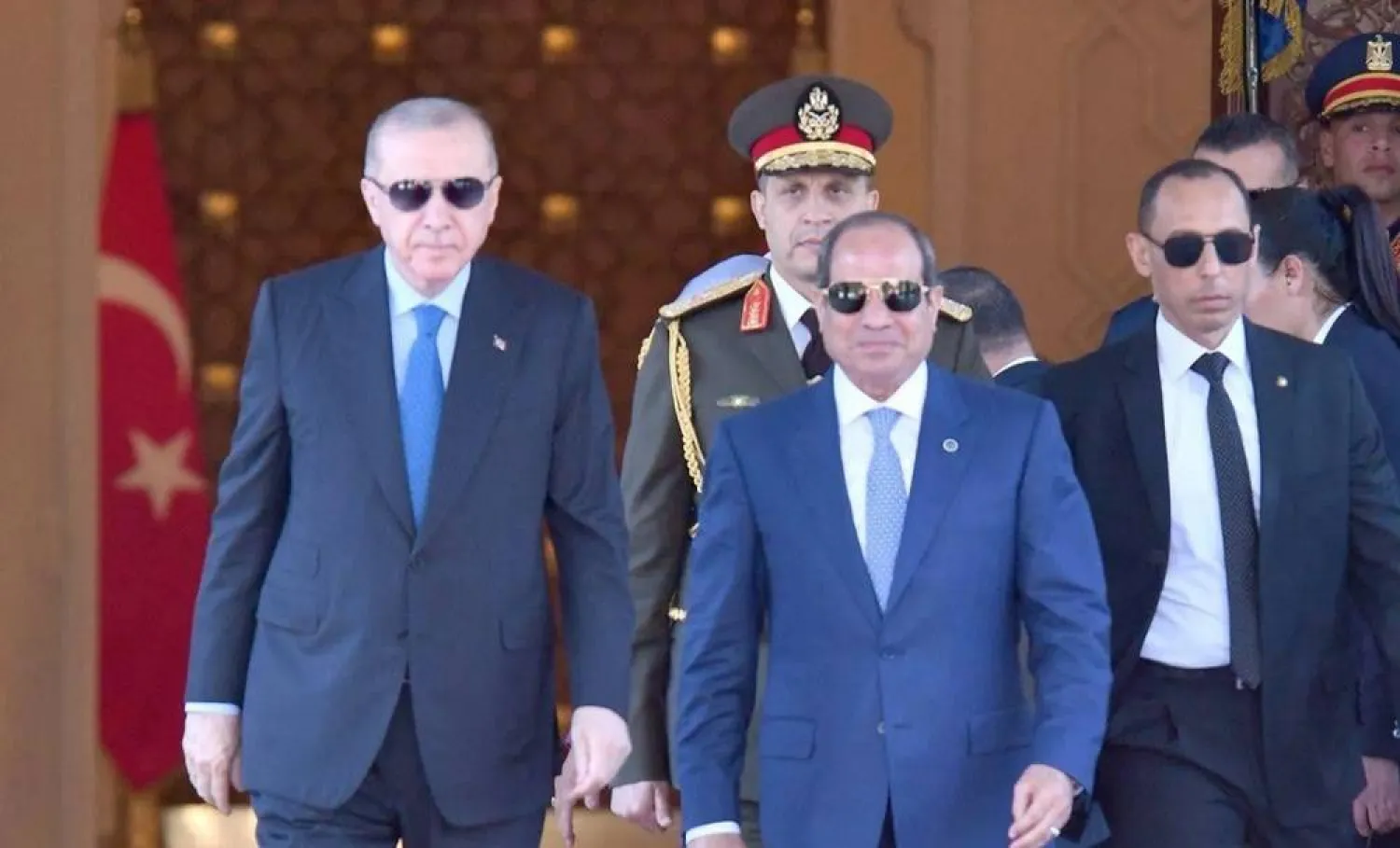
Egyptian President Abdel Fattah al-Sisi welcomes his Turkish counterpart Recep Tayyip Erdogan in Cairo last February. (Egyptian Presidency)
TT

Turkish Investments in Egypt Strengthen Ties Despite Political Differences

Egyptian President Abdel Fattah al-Sisi welcomes his Turkish counterpart Recep Tayyip Erdogan in Cairo last February. (Egyptian Presidency)

Growing Turkish investment in Egypt is strengthening economic ties between Cairo and Ankara despite ongoing disagreements over a maritime deal between Türkiye and Libya, according to analysts.

The Egyptian government highlighted the expanding Turkish business presence in the country on Wednesday, releasing figures that analysts interpreted as a sign of both sides’ determination to deepen economic cooperation while managing political disputes.

According to the Egyptian Cabinet’s Media Center, Turkish investment has expanded across manufacturing, trade, services and other economic activities in recent years. Turkish companies have contributed around $921.5 million in investment through 1,869 businesses established in Egypt, creating around 43,900 jobs.

Annual Turkish investment inflows surged 393.2% over eight years, reaching $175.1 million in the 2024-2025 fiscal year, compared with $35.5 million in 2016-2017.

The increase came despite a period of strained relations before Cairo and Ankara restored ambassador-level diplomatic ties in 2023.

Bilateral trade rose 44.7%, reaching $6.8 billion in 2025, up from $4.7 billion in 2016, according to the government figures, which highlighted major Turkish projects in the garment and food-processing industries.

Economic interests

Bashir Abdel Fattah, a Türkiye affairs specialist at the Al-Ahram Center for Political and Strategic Studies, said the growth in Turkish investment reflects Ankara’s determination to strengthen its strategic partnership with Cairo.

Speaking to Asharq Al-Awsat, Abdel Fattah described economic cooperation as a key component of the rapprochement, adding that Türkiye is seeking to capitalize on investment opportunities in Egypt while broadening the partnership across multiple sectors.

Egypt also provides Turkish companies with access to Arab and African markets through trade arrangements, including the free trade agreement with members of the Common Market for Eastern and Southern Africa (COMESA), enabling businesses to manufacture goods in Egypt for export across the continent.

Hani al-Gamal, deputy director of the Tafkir Center for Political Affairs, said that the government figures demonstrate how closely Turkish capital has become integrated into Egypt’s economy, particularly in manufacturing, employment and exports, generating benefits for both countries.

While acknowledging the importance of investment in strengthening bilateral cooperation, al-Gamal cautioned that economic ties alone could not resolve geopolitical disputes.

He attributed the broader improvement in relations to political and regional circumstances that have also facilitated closer military cooperation and notable progress in defense industries.

Military cooperation

Egyptian and Turkish naval forces participated in the Sea of Friendship exercises this month. The Egyptian military described the drills as part of growing cooperation between the two countries’ armed forces, aimed at sharing expertise and strengthening naval coordination.

The exercises took place despite Cairo’s repeated rejection of the Libyan parliament’s ratification in October of a maritime boundary agreement with Ankara.

Egypt and Türkiye have nevertheless continued consultations aimed at reducing regional tensions.

Abdel Fattah identified the separation of contentious political issues from areas of cooperation as a key factor behind the recent improvement in relations.

Disagreements over maritime boundaries and the Libyan crisis have not prevented Cairo and Ankara from developing ties in other sectors, he explained.

He viewed this approach as evidence of political maturity and a shared determination to avoid a return to tensions.

He said that rapprochement and cooperation could build confidence, narrow disagreements and create more favorable conditions for resolving outstanding issues.

Al-Gamal similarly emphasized that translating political rapprochement into tangible economic interests could deepen mutual trust and broaden the foundations of cooperation.


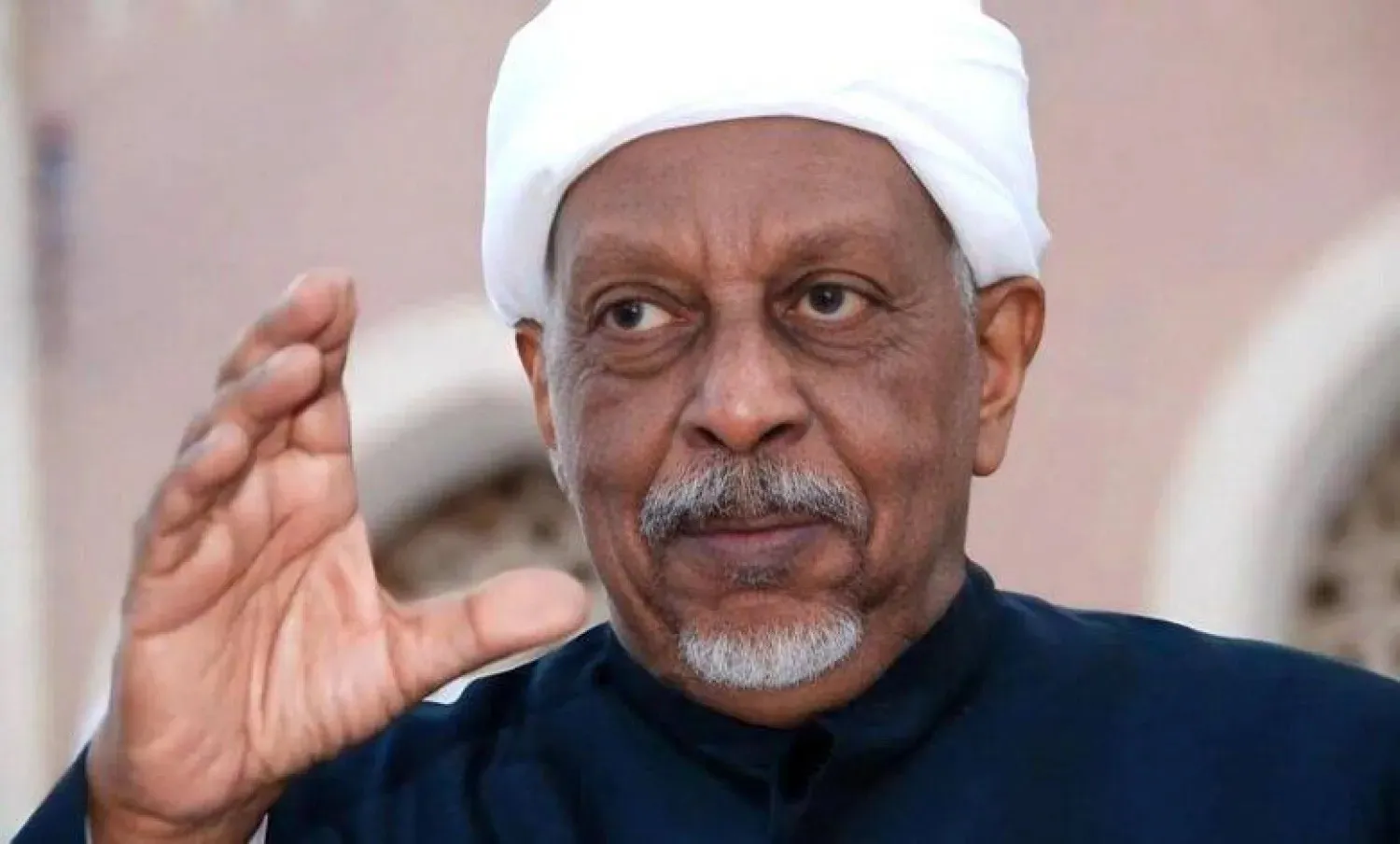
Al-Mirghani: A Statesman of Peace

Mohammed Osman al-Mirghani, the late leader of Sudan’s Democratic Unionist Party.
TT

Al-Mirghani: A Statesman of Peace

Mohammed Osman al-Mirghani, the late leader of Sudan’s Democratic Unionist Party.

November 16 was no ordinary date in Sudan’s collective memory. It was the day Mohammed Osman al-Mirghani was laid to rest in Khartoum North. It was also the anniversary of the Sudanese Peace Initiative he signed 38 years earlier with Dr. John Garang in Addis Ababa, an accord known as the Mirghani-Garang Agreement.

It was as though history had chosen the day of his farewell to remind Sudan of the defining conviction he carried throughout his life: that the country could not be saved through war, but through dialogue.

This is not to place al-Mirghani, leader of the Democratic Unionist Party, beyond criticism or to dismiss the disputes and disagreements that marked his political career. But fairness demands recognition of his unwavering commitment, at decisive moments, to peace, consensus and national unity. That is why he deserves to be called a man of peace.

On November 16, 1988, al-Mirghani and Garang made political history with a remarkably brief document: barely a page long and fewer than 400 words. But its significance was immense.

The agreement called for a ceasefire, the suspension of the provisions on hudud punishments and related articles of the September 1983 laws pending a national constitutional conference, the lifting of the state of emergency, cancellation of military agreements affecting national sovereignty, and formation of a national committee to prepare for the constitutional conference.

Its central premise was fundamental: the war was not an isolated southern problem, but a manifestation of a broader Sudanese crisis that could be resolved only through dialogue on equal terms among all political and social forces.

The agreement faced open opposition from the National Islamic Front before the Constituent Assembly approved it on April 3, 1989. Then came the June 30 coup, cutting short the process before it could be completed.

It would be wrong to attribute the coup solely to the Mirghani-Garang Agreement, just as it would be impossible to assert that peace was guaranteed had democracy been allowed to run its course. But it is entirely reasonable to say that Sudan lost a genuine opportunity for peace, one that would not be forgotten.

Instead of the swift peace envisioned in a single-page document, the war continued for roughly another 16 years after the coup. It claimed hundreds of thousands of lives, forced millions from their homes and into exile, and saw the proliferation of armed groups and militias.

Ultimately, Sudan needed years of negotiations and volumes of protocols and agreements to reach the 2005 Comprehensive Peace Agreement. That accord, in turn, opened the way to self-determination, the 2011 referendum and the secession of South Sudan.

This contrast is what makes the Mirghani-Garang initiative a living document to this day. One page had outlined a broad political vision for a united country. Years later, Sudan required seemingly endless documents to reach an outcome in which it lost a cherished part of its territory and people.

Jaafar Hassan, a leading figure in the Unionist Alliance and spokesman for the Sumoud coalition, told Asharq Al-Awsat that the late al-Mirghani was “one of Sudan’s pillars and one of the few men of sound judgment.”

Hassan said al-Mirghani had pursued peace early on, drawing on his position as head of the Democratic Unionist Party and leader of the Khatmiyya Sufi order.

Al-Mirghani had put his considerable popularity among his followers at the service of peace, recognizing early the dangers of allowing the war in South Sudan to continue. He was behind the landmark agreement between the Democratic Unionist Party and the Sudan People’s Liberation Movement led by John Garang.

“Had it not been for the National Islamic Front’s coup in 1989, Sudan would still be united today,” Hassan said.

He stressed that al-Mirghani’s commitment to peace and national unity was not a fleeting political position, but of principles on which he refused to compromise.

Milestones in the pursuit of peace

The 1988 initiative was not the only landmark in al-Mirghani’s record. At least six major milestones can be identified in his pursuit of peace.

The first was his agreement with Garang. The second was his leadership of the National Democratic Alliance after the coup, bringing together political parties, trade unions and armed movements of differing orientations under one umbrella.

The third was the 1995 Asmara Conference on Fundamental Issues, which placed war, democracy, identity and the relationship between religion and the state at the heart of the national dialogue.

The fourth came at the alliance’s second conference in Massawa in 2000, when it affirmed that Sudan’s problems could be resolved only through “serious and sustained dialogue among all Sudanese political forces” in a democratic environment.

The fifth milestone came through negotiations in Jeddah and Cairo, culminating in the 2005 Cairo Agreement between the government and the National Democratic Alliance under al-Mirghani’s leadership. The agreement opened the door to ending a prolonged political confrontation and allowing opposition forces to return to political life.

In Darfur, al-Mirghani sought to narrow differences between the government and armed movements that had not signed peace agreements. He encouraged those movements to unify their positions so they could join negotiations from a stronger position.

In 2022, he again proposed an initiative for comprehensive national dialogue and returned to Khartoum after a long absence, making another attempt to bring Sudanese factions together before the country descended into its current war.

Not everyone agreed with all his political choices. But at the time of his passing, there was broad agreement that his name had been closely associated with national unity and dialogue.

Political analyst Mohamed Latif told Asharq Al-Awsat that al-Mirghani’s political record might be a subject of disagreement for some, “but it is difficult to dispute that he was one of the leaders of Sudan’s two largest religious communities.”

“He succeeded in preserving the cohesion of the Khatmiyya order inside and outside Sudan, as well as its peaceful religious mission, far removed from violence and extremism,” he added.

The Mirghani-Garang Agreement was among the most significant moments not only in al-Mirghani’s life but also in Sudan’s modern history, he went on to say.

The agreement came after more than five years of fierce war between the Sudan People’s Liberation Movement and the Sudanese army, despite repeated attempts to bring the fighting to an end.

Latif said Sudanese collective memory preserves two contrasting images from that period: the enormous crowds that welcomed al-Mirghani upon his return to Khartoum after signing the agreement in the Ethiopian capital, Addis Ababa, and the subsequent attempt to assassinate him at his home in the Khartoum 2 neighborhood.

The two episodes seemed to offer early signs of the struggle between the desire for peace and the path of violence that would later come to define Sudan.

The most meaningful tribute to al-Mirghani lies not in words of mourning alone, but in drawing lessons from his life and Sudan’s recent history.

Whenever the door to dialogue has been closed, the doors to war have opened wider. Whenever the illusion of a military solution has prevailed, the Sudanese people have paid the price in bloodshed, displacement and division.

Sudan once squandered the opportunity presented by a brief agreement that might have opened a different path. It must not squander today’s opportunity to end this devastating war.

Peace is not weakness. Negotiation is not betrayal. Ending the war is not merely one political option among many, but a national and moral duty to save what remains of Sudan.