Trump Says He Deserves Nobel Peace Prize but Has Doubts He Will Get Ithttps://english.aawsat.com/world/5327174-trump-says-he-deserves-nobel-peace-prize-has-doubts-he-will-get-it
Trump Says He Deserves Nobel Peace Prize but Has Doubts He Will Get It
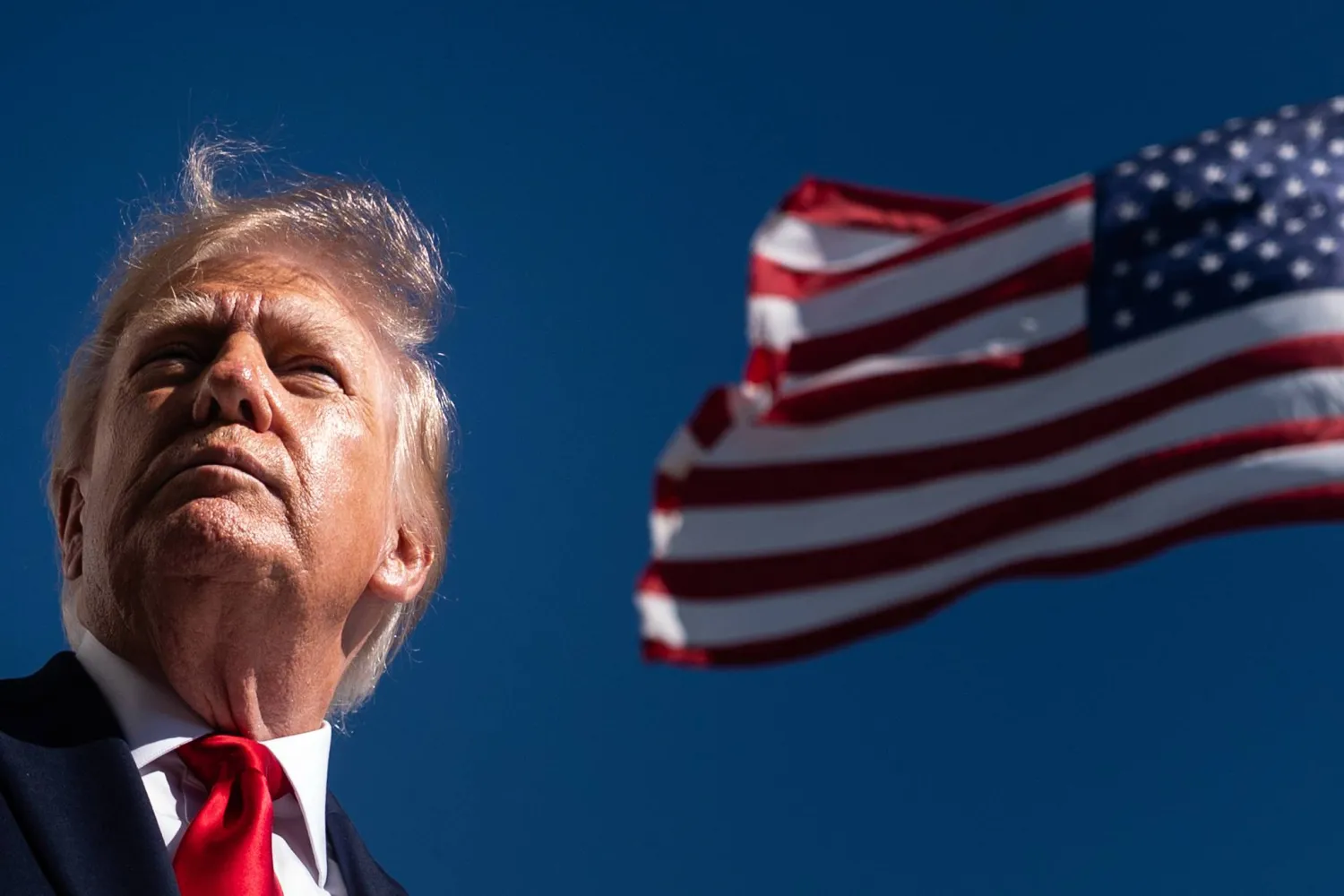
President Donald Trump speaks with reporters before boarding Marine One on the South Lawn of the White House, Wednesday, Oct. 7, 2026, in Washington. (AP)
TT
TT
Trump Says He Deserves Nobel Peace Prize but Has Doubts He Will Get It
President Donald Trump speaks with reporters before boarding Marine One on the South Lawn of the White House, Wednesday, Oct. 7, 2026, in Washington. (AP)
US President Donald Trump, who waged war with Iran and has yet to broker peace in Ukraine, said on Wednesday that he should win the Nobel Peace Prize but acknowledged doubt about his chances.
"I don't know what their decision is going to be," Trump said of the 2026 award, which the Norwegian Nobel Committee will announce on Friday. "They have a reputation for maybe not giving it to people like me."
Since his return to the White House last year, Trump has repeatedly said he deserves what may be the world's most prestigious award.
"It is about that time," Trump told reporters in the Oval Office. "But I was very honored to receive it indirectly last time by the recipient, who said nobody in history deserves it more than President Trump."
Venezuelan opposition leader Maria Corina Machado gave her 2025 Nobel Peace Prize medal to Trump in January as she sought US support for her efforts in Venezuela.
Trump said he should get the prize after wading into eight conflicts since taking office last January.
The leaders of Cambodia, Israel and Pakistan have said they nominated Trump, though there is no way of verifying that.
Parties to some conflicts Trump claims to have resolved dispute the US president's diplomatic role, and fighting has flared again in some of those regions, including the Democratic Republic of Congo and along the border between Cambodia and Thailand.
A resolution to Russia's war in Ukraine has eluded Trump, who promised to end it on the first day of his second White House term. US-Israel strikes on Iran have led to a seven-month simmering conflict that has upended global energy supplies and driven gas prices up before November's midterm elections.
Pope Leo, the International Criminal Court, the special rapporteur for the Palestinian Territories, are among the favorites to win this year.
Nearly a Quarter of World's Children Live in Conflict Zone
Palestinian children play at a displacement camp in Deir al-Balah, central Gaza Strip, Thursday, Nov. 19, 2026. (AP Photo/Abdel Kareem Hana)
Nearly a quarter of the world's children are currently living in a conflict zone, a record rate since statistics were first recorded in the 1990s, the charity Save the Children said on Thursday.
"Almost one in four children worldwide are now living in conflict zones, the highest number since records began in 1990," the London-based charity said, according to Reuters.
"The figure represents an increase of more than 50% in a decade, jumping from 378 million in 2015 to 589 million in 2025," it added.
The report was titled "Stop the War on Children: Changing the Odds" and drew on statistics from the Peace Research Institute Oslo (PRIO).
The percentage of children living in conflict zones has doubled from 10 percent in the mid-1990s to 23.4 percent in 2025.
"These record-high figures are a stark reminder that conflict is devastating the daily lives, education, health and future prospects of hundreds of millions of children," said Gudrun Ostby, a research professor at PRIO.
"Unless greater efforts are made to protect children in conflict settings, the consequences of today's wars will be felt for decades to come," he added.
The report defines conflict zones as areas existing within a 50-kilometer radius in which at least one armed attack took place.
Africa has the largest number of children living in conflict zones, at about 260 million, or 44 percent of the total across the globe, the report found.
Rates have surged in the Middle East as well, from 52 million children in 2024 to 67 million in 2025, a 29 percent increase.
An average of two in five children in Africa and the Middle East are living in conflict zones, it added.
"The scale of this crisis is rapidly growing, and the systems meant to protect children are being pushed to breaking point," said Inger Ashing, chief executive of Save The Children International.
China and Russia Say they and US Agree on Boosting Fuel Supplies, Dialogue on Nuclearhttps://english.aawsat.com/world/5343113-china-and-russia-say-they-and-us-agree-boosting-fuel-supplies-dialogue-nuclear
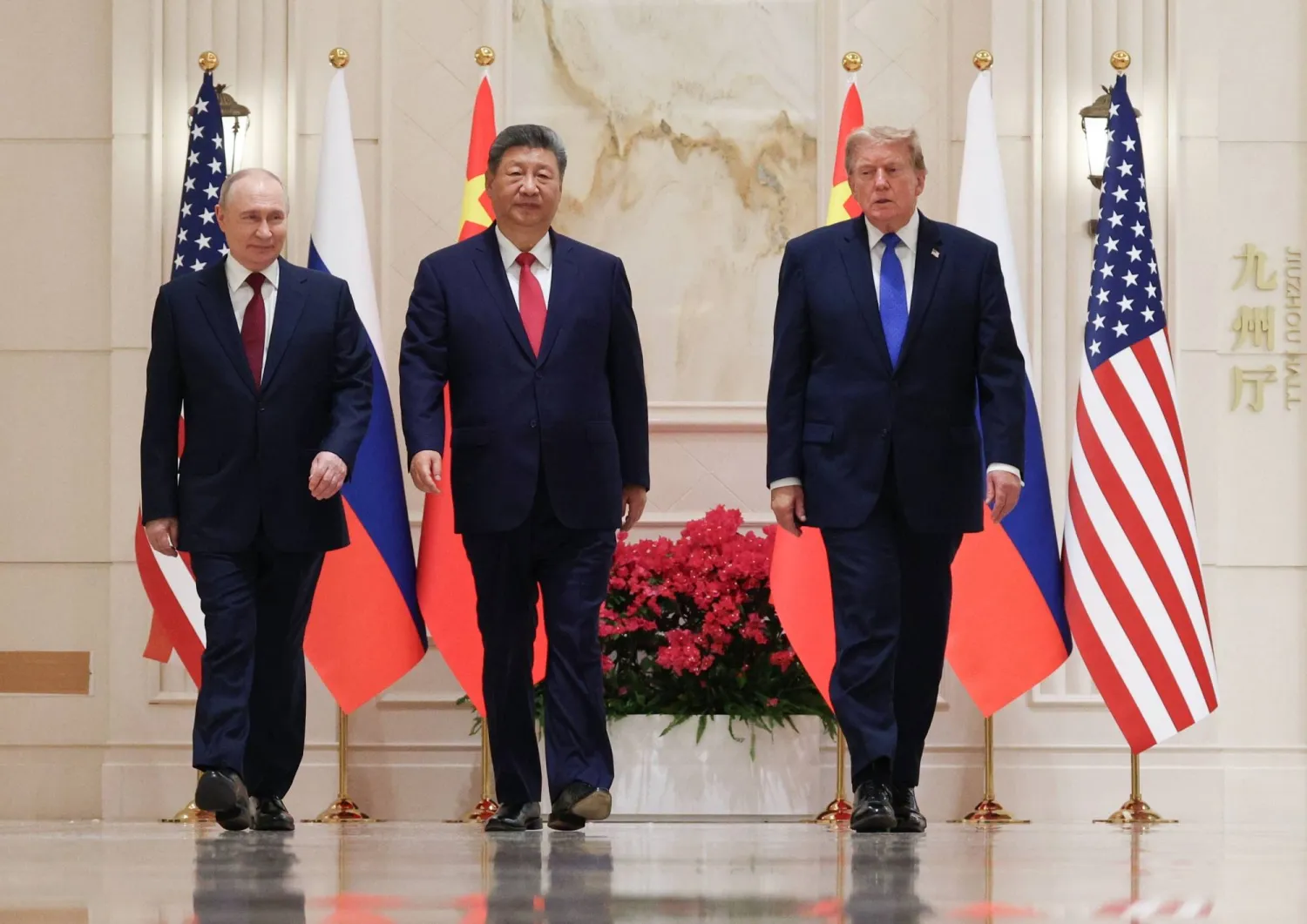
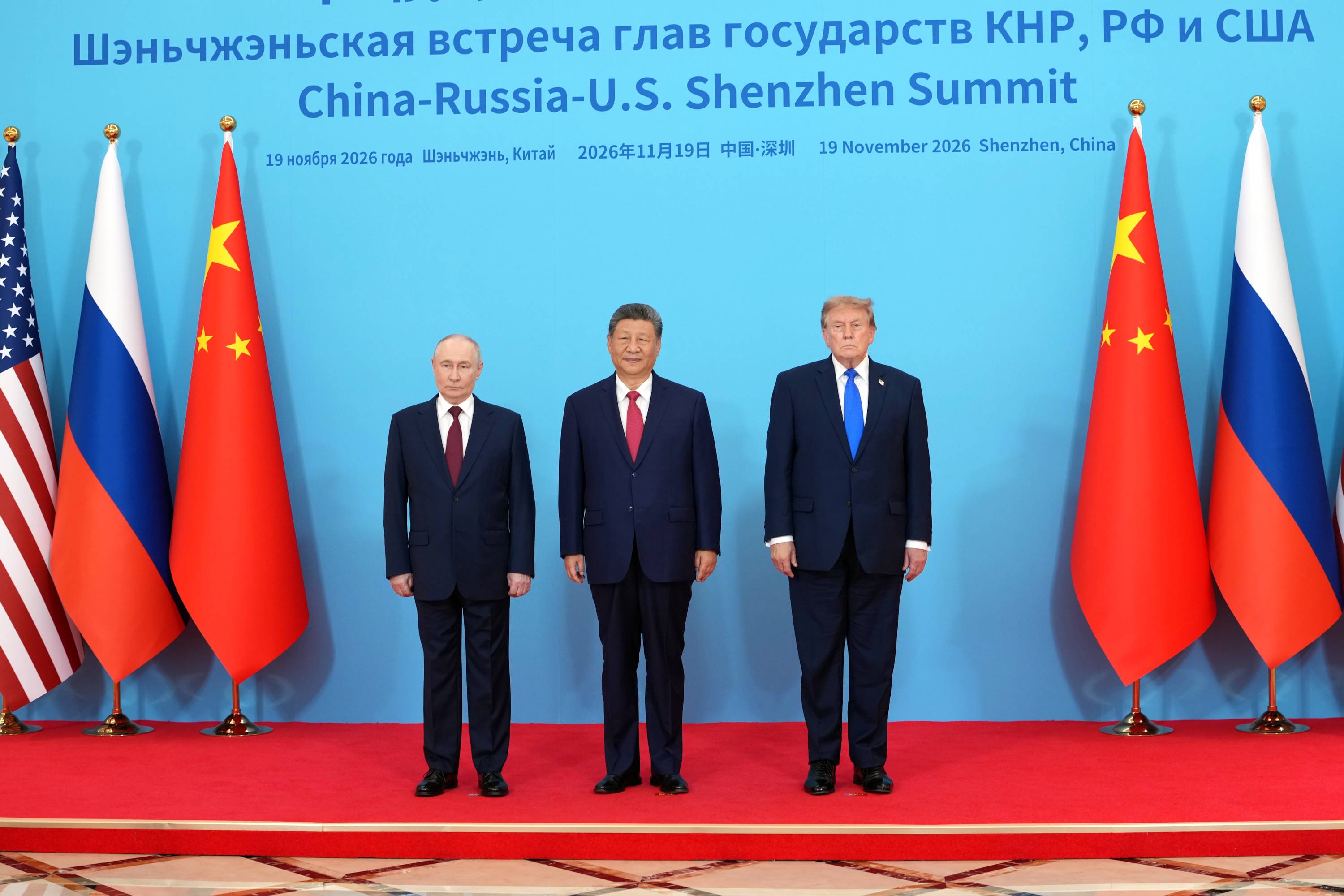
(L-R) Russian President Vladimir Putin, Chinese President Xi Jinping and US President Donald Trump arrive to attend a trilateral meeting on the sidelines of the Asia-Pacific Economic Cooperation (APEC) summit at the Qilin Shanzhuang State Residence in Shenzhen, China, 19 November 2026. EPA/VYACHESLAV PROKOFYEV/SPUTNIK/KREMLIN POOL
China and Russia Say they and US Agree on Boosting Fuel Supplies, Dialogue on Nuclear
(L-R) Russian President Vladimir Putin, Chinese President Xi Jinping and US President Donald Trump arrive to attend a trilateral meeting on the sidelines of the Asia-Pacific Economic Cooperation (APEC) summit at the Qilin Shanzhuang State Residence in Shenzhen, China, 19 November 2026. EPA/VYACHESLAV PROKOFYEV/SPUTNIK/KREMLIN POOL
China, Russia and the US agreed Thursday to seek reforms at the United Nations, increase oil supplies and engage in dialogue to reduce nuclear risks at a three-war meeting, according to Chinese and Russian officials.
The declaration followed a historic meeting among US President Donald Trump, China’s Xi Jinping and Russia’s Vladimir Putin in Shenzhen.
The declaration did not mention the wars in Ukraine or Iran, two issues that Trump said he raised with the leaders earlier in the day. The US has not released the document.
Xi later called the meeting positive, constructive and “fruitful.”
The statement said the leaders are committed to advancing UN reforms “to more effectively address global challenges," to increase the production and supply of oil products to ensure a stable flow of energy, and to work to reduce nuclear risks and prevent nuclear proliferation.
“We are really making history,” Trump said. “The United States, Russia and China are uniquely positioned to discuss how to reduce the number of nuclear weapons on Earth and also to lessen the risk of those weapons being used."
Xi, meanwhile, earlier said the meeting would focus on "promoting world peace.” Putin, for his part, harkened back to the three countries’ shared history as “victors in World War II,” saying that “we hold joint responsibility for maintaining international peace.”
The last nuclear arms pact between Russia and the United States, known as New START, expired in February, and Trump has said he wants “a new, improved and modernized” deal that includes China. But China has less motivation to accept limits given that its arsenal of more than 600 warheads is far smaller than the more than 5,000 warheads believed to be in each of the US and Russian stockpiles.
Before the three-way meeting — which lasted more than an hour on the sidelines of the Asia-Pacific Economic Cooperation Summit — the US president had a separate one-on-one with Xi, their third substantial meeting this year.
The US president praised their friendship and their shared interest in having oil shipped through the Strait of Hormuz, a key waterway for oil shipments from the Middle East that was repeatedly shut because of attacks in the Iran war. Trump suggested he would push Xi to buy more agricultural products from America.
Xi said that relations between the US and China have been “generally stable and improved” during Trump's presidency. The official Chinese news agency Xinhua reported that Xi discussed Taiwan with Trump and said the two countries needed to improve communication on economic and trade issues.
Trump also added a separate sit-down with Putin, marking the first time the leaders have held talks since their discussions in Alaska last year that failed to broker a deal on Russia’s war in Ukraine.
“Wonderful things can come out of this — or at least start,” Trump said, calling Putin “my friend."
“We’ve had a great relationship for many years,” Trump said after shaking hands with Putin. Their meeting lasted roughly 40 minutes.
Trump, Xi, Putin Begin Historic Meeting with Ukraine War on Agendahttps://english.aawsat.com/world/5343062-trump-xi-putin-begin-historic-meeting-ukraine-war-agenda
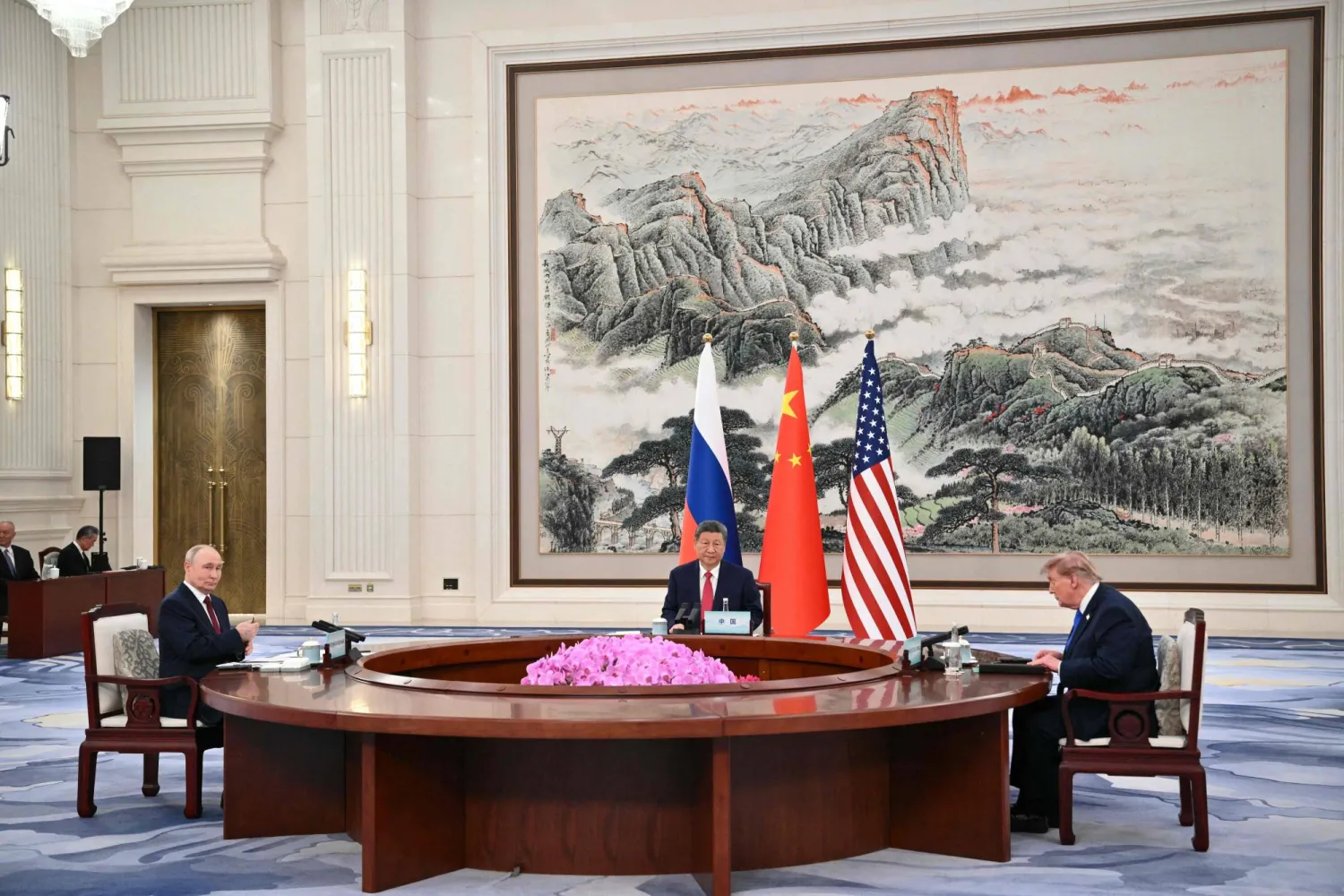
China's President Xi Jinping (C), US President Donald Trump (R) and Russia's President Vladimir Putin (L) take part in a trilateral meeting at Kylin Villa on the sidelines of the Asia-Pacific Economic Cooperation (APEC) Summit in Shenzhen, in China's southern Guangdong Province, on November 19, 2026. (Photo by Mandel NGAN / AFP)
Trump, Xi, Putin Begin Historic Meeting with Ukraine War on Agenda
China's President Xi Jinping (C), US President Donald Trump (R) and Russia's President Vladimir Putin (L) take part in a trilateral meeting at Kylin Villa on the sidelines of the Asia-Pacific Economic Cooperation (APEC) Summit in Shenzhen, in China's southern Guangdong Province, on November 19, 2026. (Photo by Mandel NGAN / AFP)
US President Donald Trump and Chinese and Russian counterparts Xi Jinping and Vladimir Putin began an unprecedented three-way meeting on Thursday, where they said they will discuss the war in Ukraine and nuclear arms control.
Sat around a big round table in a villa in the southern Chinese city of Shenzhen, on the sidelines of an Asia-Pacific summit, the leaders of the world's biggest nuclear powers took turns to give opening remarks.
"We are really making history," Trump said. "The three of us have a great deal to discuss.”
“No peace was ever forged by declining opportunities for engagement.”
Putin said the three countries have "numerous shared interests in the settlement of regional conflicts, including obviously the conflict in Ukraine.”
Unlike Trump and Putin, Xi - who Chinese state media said was presiding over the meeting - did not make a reference to Ukraine, but said: "History tells us that when major powers live in harmony, the world is at peace. When major powers clash, the world falls into turmoil."
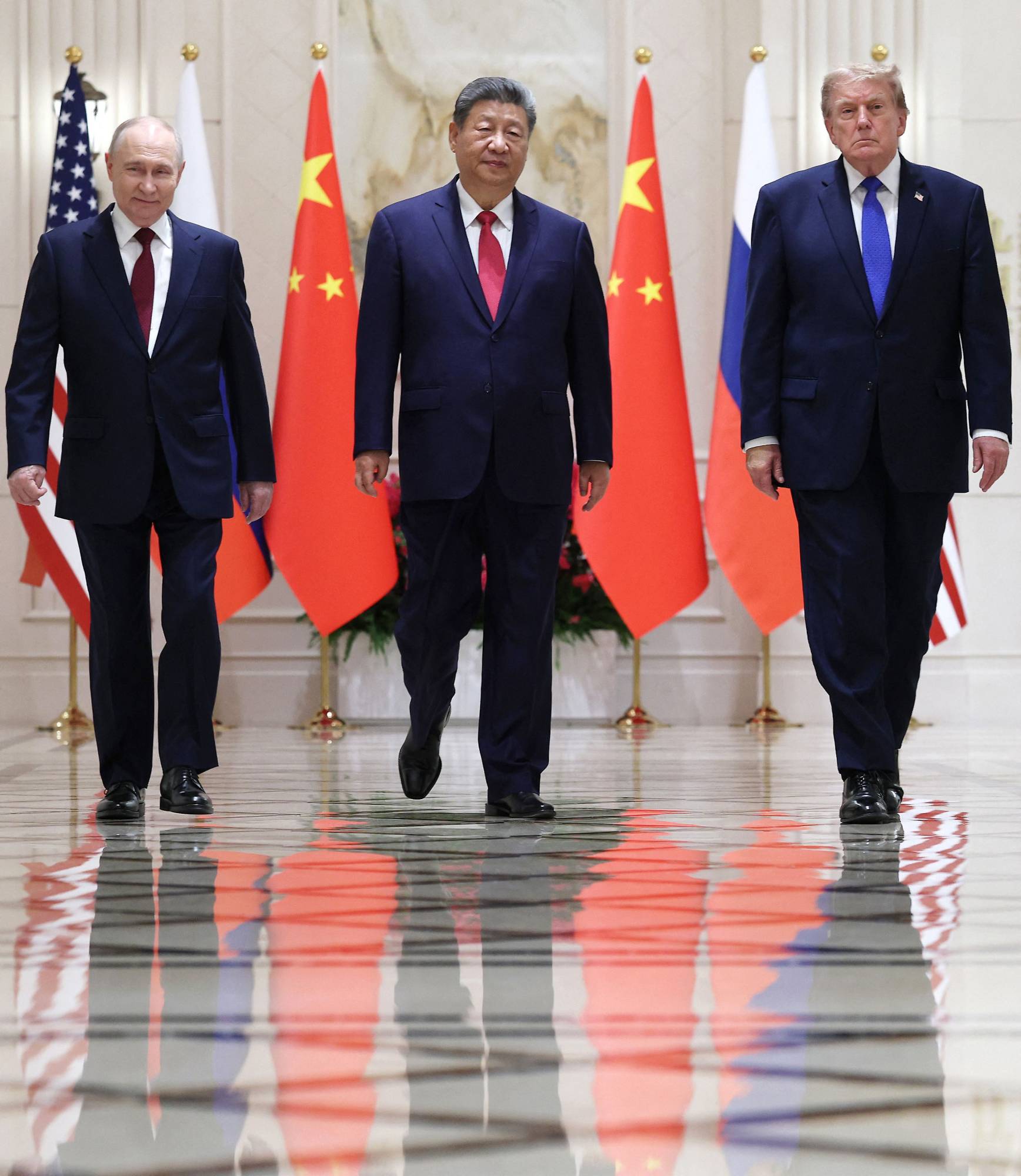
China's President Xi Jinping (C), US President Donald Trump (R) and Russia's President Vladimir Putin (L) arrive for a trilateral meeting at Kylin Villa on the sidelines of the Asia-Pacific Economic Cooperation (APEC) Summit in Shenzhen, in China's southern Guangdong province, on November 19, 2026. (Photo by Win McNamee / POOL / AFP)
The trilateral is unlikely to produce major agreements, analysts say, given deep differences over Ukraine, Iran, nuclear weapons and trade. But it has unnerved smaller countries that fear their interests might be disregarded.
Before the meeting, Trump met Xi and Putin separately, referring to both as friends, Reuters reported.
Trump said both he and Xi felt strongly about oil having to flow through the Strait of Hormuz, which has been disrupted by the Iran war. Xi has not mentioned Ukraine or Iran in any of his remarks during the two-day summit so far.
Patricia Kim, foreign policy fellow at the Brookings Institution, said China would not want to be seen as brokering a deal over Ukraine, given the "problematic optics" of Kyiv and European leaders not taking part.
"Xi has characterized the Russia-Ukraine war as fundamentally a European problem, making Beijing even less inclined to assume responsibility for resolving it," Kim said.
Speaking to Fox News earlier, Trump highlighted the pomp surrounding his arrival for the summit, which contrasted with the more muted greeting of other leaders, including Putin. Japanese Prime Minister Sanae Takaichi landed without any welcoming ceremony.
Japan's relations with China have soured since Takaichi's remarks in 2025, when she said Japan could deploy its military if a Chinese move on Taiwan also threatened its territory.
Takaichi, who cut an isolated figure throughout the summit, said Tokyo's position on Taiwan had not changed since 1972.
Japan and Taiwan this week reported Russian military aircraft incursions as Moscow displayed it can still project power in Asia despite being busy in Ukraine. On Taiwan, Xi told Trump the US must "do the right thing" to avoid major setbacks in their relationship.
Xi greeted Trump at the airport, the first time he has done so with any visiting leader since becoming president, reciprocating his counterpart's gesture at Joint Base Andrews in September when they last met. The leaders also briefly hugged.
"This is a great president, one of the great presidents of China, and he's never gone to the airport to meet somebody," Trump said.
"And not only that, the fanfare, the beauty, the pageantry, the thousands of people, the young children, the soldiers, the whole thing. It was great respect, and I appreciate that. That's a big win for us. It's a big win for China too."
President Donald Trump, right, Chinese President Xi Jinping, center, and Russian President Vladimir Putin, pose for photo, prior to their trilateral meeting, at the Kylin Villa in Shenzhen, China, Thursday, Nov. 19, 2026. (Doug Mills/Pool Photo via AP)
Trump arrived after Xi and Putin delivered pointed speeches denouncing Western trade "protectionism" and sanctions.
During Thursday's APEC proceedings, Xi called for "free and open" trade. Western leaders say China's growth model favoring industrial strength over consumers is unfair and creates destabilizing global trade imbalances.
Putin, fresh from a setback in his war against Ukraine after the crippling of a key bridge linking Crimea to Russia, said Russia was key for food and energy security in the Asia-Pacific.
Trump, reeling from a mid-term election loss and the Nvidia spy scandal, told the audience the US has been a Pacific power for hundreds of years.
Trump has insisted nuclear arms control be a central topic of the summit, despite China's repeated objections to joining talks with Washington and Moscow, which have far larger nuclear arsenals.
“It’s not an easy thing to do - give them up,” Trump told Xi and Putin at the start of their meeting.
The leaders have plenty of reasons to appear together but far fewer to agree on substance, given differences over Ukraine, Iran, nuclear weapons, trade and China's military buildup, said Craig Singleton of the Foundation for Defense of Democracies.
"A photograph could serve all three men well," Singleton said, adding that he thought the "agenda is much harder to agree on."
Trump's talks with Xi come after an extension of their trade truce this month, but also amid growing tension over reports of Nvidia chips being diverted to China through Southeast Asia, raising questions about the effectiveness of US export curbs and the future of Chinese access to advanced technology.
"This is Beijing's worst nightmare. China wants chip access that it can negotiate with the president. It may get chip restrictions written into law by both parties," Singleton said.
لم تشترك بعد
انشئ حساباً خاصاً بك لتحصل على أخبار مخصصة لك ولتتمتع بخاصية حفظ المقالات وتتلقى نشراتنا البريدية المتنوعة