Sudan’s Burhan Rules Out Talks with RSF or ‘Any Other Party’

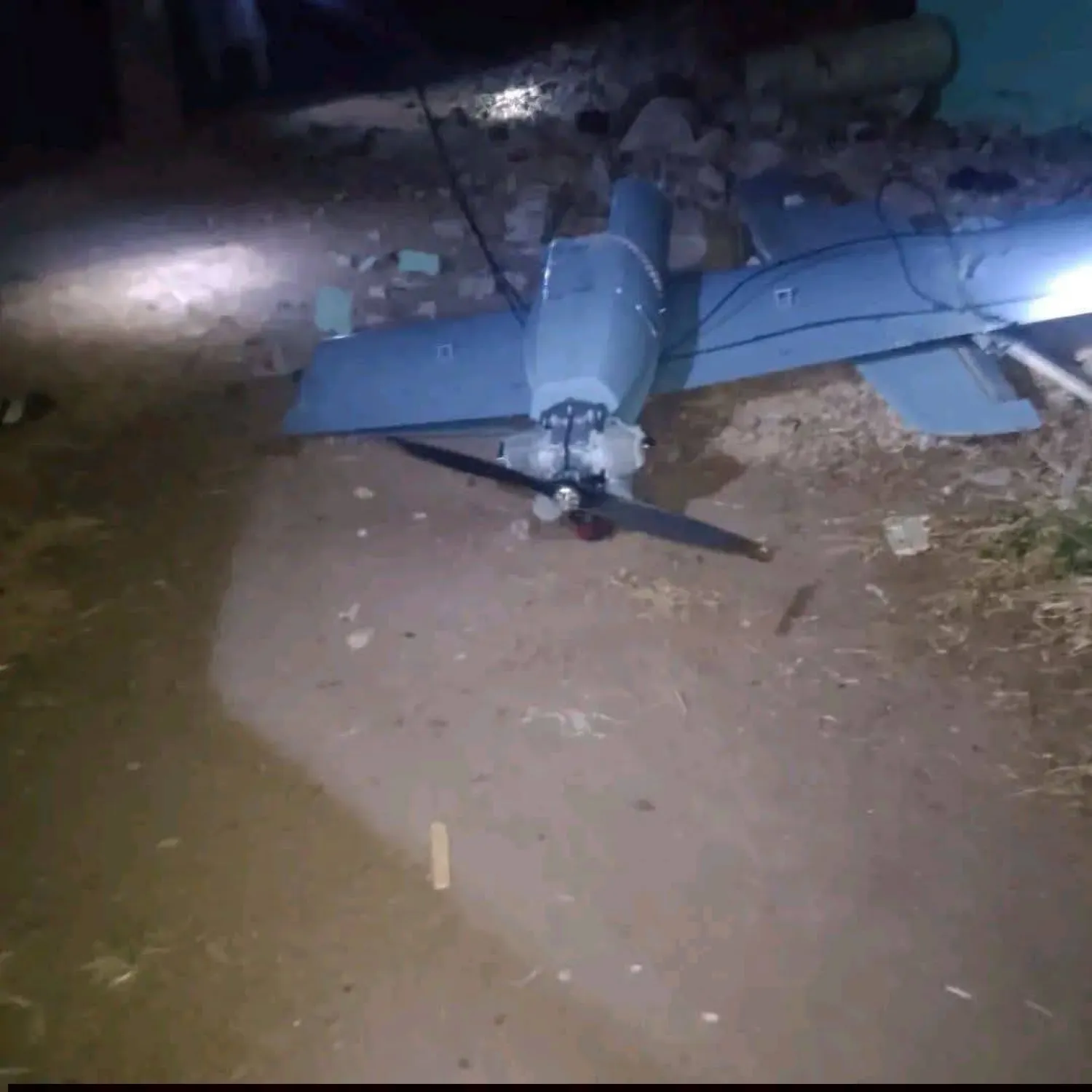
Wreckage of a drone allegedly used in an attack on Damazin (activists’ Facebook pages). 
TT

Sudan’s Burhan Rules Out Talks with RSF or ‘Any Other Party’

Wreckage of a drone allegedly used in an attack on Damazin (activists’ Facebook pages). 

Sudan’s army chief Abdel Fattah al-Burhan has reiterated his refusal to negotiate with the paramilitary Rapid Support Forces (RSF) or “any other party,” vowing to continue military operations despite renewed US efforts to secure a political settlement.

His remarks came after Massad Boulos, US President Donald Trump’s senior adviser for Arab and African affairs, announced that he had met Burhan in Egypt earlier this week.

Meanwhile, a drone attack on Damazin, the capital of Blue Nile state, killed four women and wounded dozens of civilians, according to a Sudanese human rights group.

Addressing residents of Amri locality in Northern state on Tuesday, Burhan declared: “There will be no negotiations with the rebels or with any other party,” without specifying whom else he meant.

“We are a state of institutions. Decisions on negotiations, peace and war are therefore made by the Security and Defense Council,” he added, according to a statement from the Sovereignty Council’s media office.

Burhan, who heads the Sovereignty Council and commands the armed forces, reaffirmed his determination to continue what he described as efforts to defeat and eliminate the rebellion.

He also praised Amri residents for supporting the army and the Popular Resistance, reiterating the military’s commitment to what it calls the “Battle of Dignity.”

Deadly drone attack

Hours after Burhan’s remarks, Emergency Lawyers, a volunteer human rights organization, reported that drones belonging to the RSF had struck civilian sites in Damazin early Wednesday.

The strikes hit homes and a mosque, killing four women in the Al-Hijra neighborhood and wounding dozens of civilians, the group alleged.

Its statement provided no further details about the wounded or how it had established responsibility for the attack.

Emergency Lawyers warned against continued attacks on civilian sites, stressing that deliberately targeting them constitutes a serious violation of international humanitarian law.

The organization demanded an end to the attacks and accountability for those responsible, urging all parties to the conflict to respect civilian protections and avoid endangering lives.

Neither the army nor the RSF issued a comment, although platforms aligned with the paramilitary group reported that the drones had targeted the homes of the finance and information ministers.

In a separate statement, Damazin Technical College condemned a two-drone attack on its campus, reporting damage to classrooms, administrative offices, laboratories, and other infrastructure.

Diplomatic efforts

Burhan’s rejection of negotiations came less than a day after Boulos announced that he had attended a lunch hosted by Egyptian President Abdel Fattah al-Sisi in New Alamein, on the sidelines of an African Union coordination meeting, where he met the Sudanese leader.

In a post on X on Monday, Boulos reaffirmed Washington’s commitment to working with regional and international partners toward a political settlement that would help end Sudan’s war and alleviate the country’s humanitarian suffering.

He emphasized US support for Sudan’s unity, sovereignty and territorial integrity.

According to Boulos, the diplomatic efforts aim to restore security and stability, begin reconstruction and development, and facilitate a transition to a civilian-led government through an inclusive national dialogue owned and led by the Sudanese people.

In a television interview last September, Boulos maintained that Washington engaged with both sides in Sudan’s conflict without formally recognizing either.

He also stressed that his meetings with Burhan did not constitute recognition of the Sudanese government.

However, in his latest X post, Boulos referred to Burhan by his official title, “Chairman of Sudan’s Transitional Sovereignty Council,” wording that some interpreted as tacit recognition.

Boulos has argued that maintaining contact with both warring parties is essential to reaching a peaceful settlement and facilitating humanitarian aid deliveries.

His remarks followed a Sept. 22 statement by US State Department spokesperson Tommy Pigott, who declared that neither the Sudanese army nor the RSF and their leaders represented a legitimate constitutional government of Sudan.

Pigott also affirmed Washington’s readiness to work with partners committed to peace.

The diplomatic exchanges coincided with Washington’s refusal to grant Burhan a visa to attend the United Nations General Assembly meetings in New York.

Reuters reported at the time, citing a Sudanese diplomatic source and a Western analyst, that Burhan’s participation had been made conditional on his acceptance of a 90-day truce proposed by Boulos. The US State Department declined to comment.

Lebanese Military Court Judge Charges 13 People Over Hezbollah Explosives Truck

The charges marked the latest sign of a dramatic shift in relations between Hezbollah and Lebanon after two wars between the Iran-backed group and Israel in the past three years. (AFP/Getty Images)
TT

Lebanese Military Court Judge Charges 13 People Over Hezbollah Explosives Truck

The charges marked the latest sign of a dramatic shift in relations between Hezbollah and Lebanon after two wars between the Iran-backed group and Israel in the past three years. (AFP/Getty Images)

A Lebanese military court has charged 13 people in connection with a seized truck carrying explosives belonging to Hezbollah, state media reported on Friday.

The charges marked the latest sign of a dramatic shift in relations between Hezbollah and Lebanon after two wars between the Iran-backed group and Israel in the past three years.

For decades, Hezbollah moved weapons freely in parts of Lebanon. That changed in March, when the government declared the group’s military activities illegal following the outbreak of the latest war.

Two defendants were arrested when authorities seized the shipment earlier this month and remain in custody. The other 11 remain at large and were charged in absentia. Five were identified only by nicknames because their real names remain unknown.

The cases were referred to the military court’s investigative judge, Claude Ghanem.

The charges include crimes against internal state security, possession of weapons and explosives, and forming illegal associations aimed at undermining state authority, the state-run National News Agency said.

Hezbollah did not immediately comment.

The truck was stopped at a checkpoint on the main highway linking Beirut to the eastern Bekaa Valley earlier this month. It carried 780 kilograms (1,720 pounds) of explosives, including 250 kilograms (550 pounds) of TNT and 250 kilograms (550 pounds) of C-4 plastic explosives, according to judicial officials.

The seizure sparked heated public debate, with many accusing Hezbollah of planning to assassinate domestic opponents as it faces mounting pressure to disarm.

Hezbollah later acknowledged owning the explosives, saying they were intended for use against Israeli forces in southern Lebanon. It said it had asked Lebanese authorities to return the shipment and release the two detainees.

The government outlawed Hezbollah’s military activities hours after the group fired rockets into northern Israel, triggering a war that has killed nearly 4,000 people in Lebanon and left Israeli forces occupying a large swath of the country’s south. Hezbollah fired the rockets two days after Israel and the United States launched a war on Iran, its main backer.

Hezbollah has refused to recognize the government’s decision.


Egypt Keeps Communication Channels Open Over Mediterranean Maritime Disputes

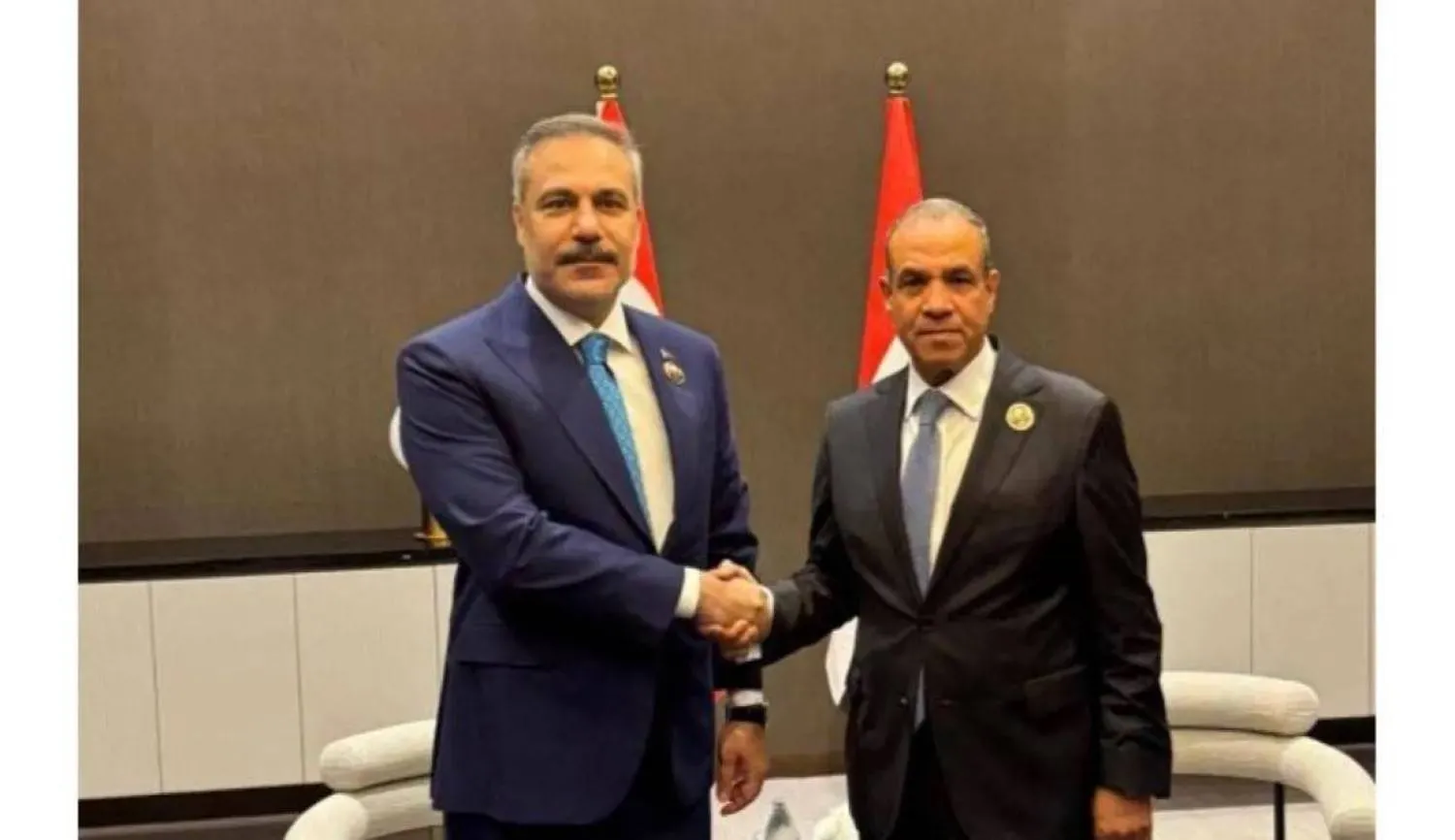
Egyptian Foreign Minister Badr Abdelatty and his Turkish counterpart Hakan Fidan during a previous meeting (Egyptian Foreign Ministry). 
TT

Egypt Keeps Communication Channels Open Over Mediterranean Maritime Disputes

Egyptian Foreign Minister Badr Abdelatty and his Turkish counterpart Hakan Fidan during a previous meeting (Egyptian Foreign Ministry). 

Egypt said it remains in contact with Türkiye, Libya, Cyprus and Greece to resolve maritime boundary disputes through dialogue and international law, despite its rejection of a disputed Turkish-Libyan maritime agreement.

Cairo’s remarks came after Ankara renewed its offer to negotiate a maritime boundary agreement with Egypt that would serve both countries’ interests. The proposal followed Egypt’s rejection of the Libyan parliament’s ratification last week of a maritime memorandum signed with Türkiye in late 2019.

Egyptian Foreign Ministry spokesman Ambassador Nader Zaki told Asharq Al-Awsat that Cairo believes maritime differences must be resolved through “serious dialogue, adherence to international law and mutual respect for sovereign rights.”

“Channels of communication remain open with all parties, including Cyprus, Greece, Türkiye and Libya,” he said, citing Egypt’s commitment to its longstanding ties with countries on both shores of the Mediterranean.

Zaki stressed that those relations must be built on respect for international law and sovereign rights that “cannot be compromised,” while avoiding disputes that could undermine stability and relations among Mediterranean states.

Cairo Reaffirms Rejection of Turkish-Libyan Agreement

Libya’s House of Representatives voted last week to approve two agreements with Türkiye covering maritime boundaries and security cooperation, prompting Cairo to reiterate its rejection of the maritime deal as “absolutely null and void.”

Zaki said Egypt’s latest objection was consistent with its position since 2019, arguing that the memorandum infringes on its sovereign rights in the exclusive economic zone and continental shelf.

“Egypt’s position on this invalid memorandum is based on national interests and the rejection of any infringement upon them,” he said.

The spokesman also challenged the agreement’s legal basis, saying it violates several binding principles of international law, including the principle that treaties do not create obligations for third parties.

“An agreement signed by two states is not binding on other states,” he explained.

Zaki also cited the prohibition against infringing on the rights of third countries and the principle of equitable maritime delimitation, arguing that the memorandum disregards these established legal rules.

“Egypt’s legal position is extremely strong and is shared by many countries,” he said.

Erdogan Calls for Regional Dialogue

The Turkish-Libyan memorandum has also drawn objections from Greece, Cyprus and the European Union.

Responding to criticism on Monday, Turkish President Recep Tayyip Erdogan said Ankara was not seeking political gains at the expense of any party in the Eastern Mediterranean.

He called for dialogue with all countries in the region and pledged to maintain Türkiye’s relations with all parties involved in Libya.


Türkiye, Egypt to Hold Naval Drills Amid Eastern Mediterranean Tensions

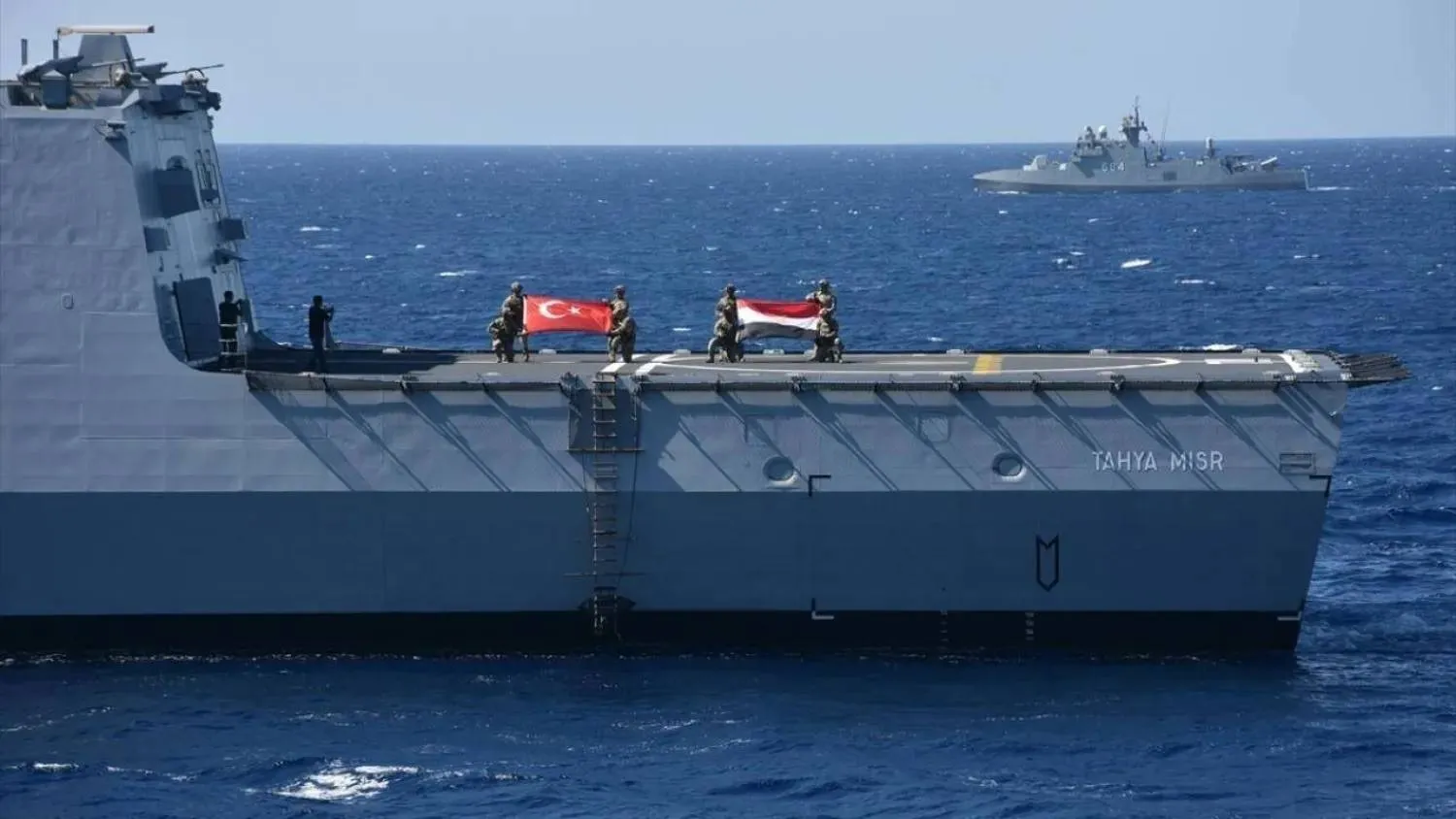
Egypt and Türkiye resumed the Sea of Friendship naval exercises in September 2025 after a 13-year suspension. (Turkish Defense Ministry)
TT

Türkiye, Egypt to Hold Naval Drills Amid Eastern Mediterranean Tensions

Egypt and Türkiye resumed the Sea of Friendship naval exercises in September 2025 after a 13-year suspension. (Turkish Defense Ministry)

Türkiye and Egypt will hold joint naval exercises in Alexandria from November 4 to 9, Ankara announced, amid renewed tensions over a disputed maritime boundary agreement between Türkiye and Libya.

The announcement follows the Libyan parliament’s ratification of the 2019 agreement, drawing objections from Egypt, Greece, Cyprus, the European Union and Israel.

The Turkish Defense Ministry said the Sea of Friendship 2026 exercises would involve naval units and personnel from both countries in surface warfare, anti-submarine operations, air defense and underwater assault training involving combat divers.

Defense Ministry spokesman Zeki Akturk said the Turkish warship TCG Burgazada would visit Alexandria from November 1 to 3, following a port call in Souda, Greece, from October 25 to 28.

Growing military cooperation

The exercises reflect expanding military cooperation between Cairo and Ankara, including defense industry agreements, technology transfers, high-level military exchanges and joint training.

Turkish Land Forces Commander Gen. Metin Tokel visited Egypt on October 26 and 27, although the ministry provided no details about his meetings or itinerary.

The two countries resumed the Sea of Friendship exercises in September 2025 at the Aksaz naval base in Mugla, southwestern Türkiye, following a 13-year suspension amid tensions over the ouster of Egypt’s Muslim Brotherhood government. Cairo designates the Brotherhood a terrorist organization.

The drills had previously been held annually from 2009 to 2013.

Following the normalization of relations in 2024, Egypt and Türkiye signed a letter of intent on defense cooperation in July 2026 during Egyptian Defense Minister Ashraf Salem Zaher’s visit to Ankara.

Zaher held talks with his Turkish counterpart, Yasar Guler, on expanding military cooperation, particularly in joint training, defense manufacturing, technology transfer and exchanges of expertise.

The two countries have since conducted several joint exercises, including Golden Eagle, involving Egyptian paratroopers and commandos alongside Turkish special forces, as well as air force training.

Egyptian aircraft also participated in the annual Anatolian Eagle 2026 exercise in Konya, central Türkiye, in June, alongside Azerbaijan and a NATO airborne early warning aircraft.

Regional tensions

The exercises come against a backdrop of renewed tensions following the Libyan House of Representatives’ October 20 ratification of a maritime boundary memorandum signed on November 27, 2019, between Türkiye and Libya’s former Government of National Accord, led by Fayez al-Sarraj.

The agreement remains contested by neighboring countries and the European Union.

Ankara has renewed its offer to negotiate maritime boundaries with Egypt, saying that an agreement with Türkiye would give Cairo more than 15,000 additional square kilometers of maritime jurisdiction compared with a potential deal with Greece.

Greek Foreign Minister Giorgos Gerapetritis rejected the proposal’s underlying approach, telling the newspaper Kathimerini that maritime zones were “not up for auction.”

He reaffirmed Greece’s strategic ties with Egypt and their shared commitment to international law, warning that disregarding maritime rules could have repercussions for global trade, food and energy security, and ocean protection.

Gerapetritis also pointed to a joint statement issued Monday by the UN representatives of Egypt, Greece, Cyprus, Bahrain, the United Arab Emirates and the European Union opposing the Türkiye-Libya agreement.

He noted that Egypt’s permanent representative to the United Nations stood alongside him in New York as he delivered the statement.

Despite the maritime dispute, Türkiye and Greece are continuing military confidence-building efforts.

Akturk said the commander of Greece’s Tactical Air Force and an accompanying delegation would visit Türkiye’s Combat Air Force Command from November 3 to 5 under the two countries’ confidence-building plan.