

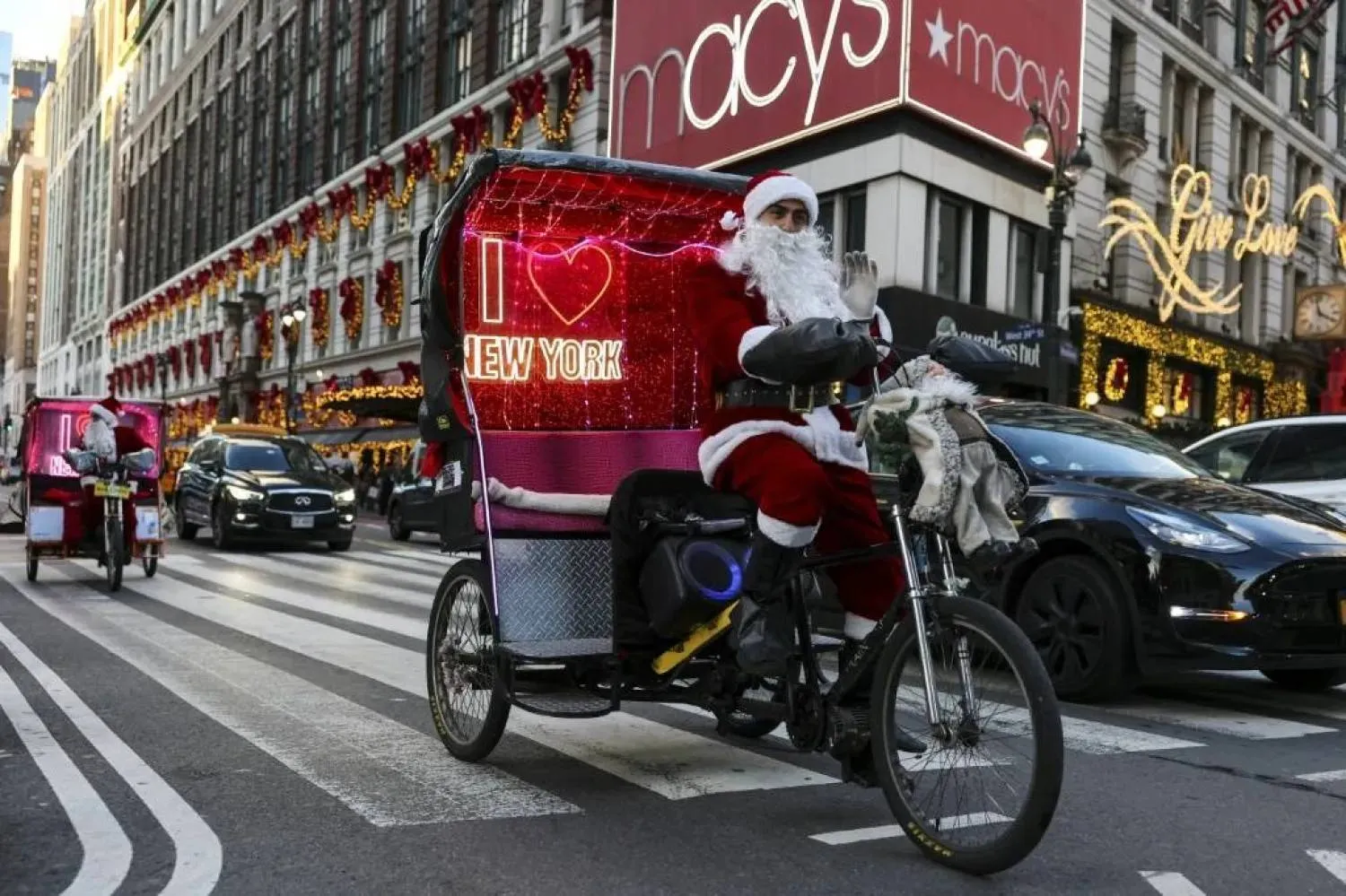

$1,000 for 20 Minutes: New York’s Tourist Pedicabs Spark Outrage

Pedicabs operate throughout tourist-rich areas of New York City — ANGELA WEISS / AFP
TT

$1,000 for 20 Minutes: New York’s Tourist Pedicabs Spark Outrage

Pedicabs operate throughout tourist-rich areas of New York City — ANGELA WEISS / AFP

New York lawmakers mulled a bill Wednesday to regulate pedicabs, which swarm touristy areas like Times Square and Central Park and have drawn criticism for overcrowding, excessive noise and extortionate pricing.

The city council is considering a series of measures designed to regulate the three-wheeled vehicles, often adorned in neon lights and blasting music as they shuttle visitors around Manhattan, according to AFP.

The number of pedicabs authorized in New York is capped at 840 but, according to figures shared at a council hearing, around 1,500 are currently operating -- only 330 of which are licensed.

Meanwhile, price gouging can mean unsuspecting tourists can be charged upward of $1,000 for rides that last just 20 minutes.

City Council Member Gale Brewer, who is behind a large part of the proposed measures, said the city received 172 complaints in 2025 related to pedicabs.

“Half, 86, involved overcharging, and another 35 involved unlicensed operators, and there were probably more because often tourists don't complain," she said.

Brewer is pushing for “clearer rules” on the sector and wants to place it under the oversight of the city's Taxi and Limousine Commission.

“Passengers need to know what they are being charged and who is responsible for the pedicab they are riding in,” she said, adding that vehicles should be equipped with meters displaying the cost of rides.

Another proposed regulation would introduce a fixed per-minute rate.

Brewer is also calling for driver training focused on current regulations and safety.

Meanwhile, council member Harvey Epstein relayed noise complaints from theater companies.

“It's not working for the Broadway productions that are interrupted by loud noise blaring from pedicabs outside their theaters,” he said.

Among the new rules proposed is a ban on stopping within 15 meters of the entrances and exits of these venues.



Seals and Sea Lions Get Hearing Tested at Australia Zoo

This undated handout photo taken by Curtin University professor and lead researcher Christine Erbe and received on October 9, 2026 shows a sea lion during a hearing test at Taronga Zoo in Sydney. (Photo by Handout / Christine ERBE / AFP)
TT

Seals and Sea Lions Get Hearing Tested at Australia Zoo

This undated handout photo taken by Curtin University professor and lead researcher Christine Erbe and received on October 9, 2026 shows a sea lion during a hearing test at Taronga Zoo in Sydney. (Photo by Handout / Christine ERBE / AFP)

Scientists in Australia trained sea lions and seals to respond to a hearing test for research into how the marine mammals are affected by human-made noise.

Keepers at Sydney's Taronga Zoo trained two sea lions and two fur seals to listen to sounds and press a paddle when they heard a tone.

They were rewarded with fish for the right answers, AFP reported.

"Before we can understand whether a noise is affecting an animal, we need to know whether it can hear that noise in the first place," Curtin University professor and lead researcher Christine Erbe said on Thursday.

"These hearing tests give us that baseline and allow us to start asking how noises from ships, boats, aircraft and coastal construction might affect seals and sea lions."

The peer-reviewed study found the pinnipeds were most sensitive to sounds around 3.2 kilohertz.

"The research is particularly important for the endangered Australian sea lion, which has an estimated population of only about 12,000 animals and relies on hearing for communication, finding food, navigation and detecting threats," Erbe said.

Noise pollution is known to have a major negative impact on wildlife.

A study released in February found it was affecting bird behavior across the globe, disrupting everything from courtship songs to their ability to find food and avoid predators.

Taronga Conservation Society Australia Behavioral Biologist Benjamin Pitcher said the research on sea lions and seals would have real world impact.

"The findings could help inform environmental impact assessments and noise management as shipping, coastal development and offshore industries expand," he said.

"We now know what these animals can hear in air. The next step is to understand how noise affects them underwater, and when it begins to interfere with their behavior or hearing."


Australian Shark Attack Survivor Says he Hit at the Predator's Eye in Effort to Fight it Off

Shark attack survivor Mel Ismail looks out at Glenfield Beach near Geraldton, Australia, on Oct. 7, 2026. (Chris Lewis/Australian Broadcasting Corp via AP)
TT

Australian Shark Attack Survivor Says he Hit at the Predator's Eye in Effort to Fight it Off

Shark attack survivor Mel Ismail looks out at Glenfield Beach near Geraldton, Australia, on Oct. 7, 2026. (Chris Lewis/Australian Broadcasting Corp via AP)

Shark attack survivor Mel Ismail jabbed at the eye of the predator that severed his leg in an effort to fight it off before struggling back to shore, the surfer and professional firefighter said in an interview that revealed new details of his near-death encounter.

The professional firefighter was surfing at Glenfield Beach near Geraldton on Australia's west coast when he was attacked on Sept. 14. He lost his right leg below the knee.

Ismail recalled in an Australian Broadcasting Corp. interview broadcast on Thursday that he was sitting out the back of the surf break and spotted a pod of about 20 dolphins before being hit by something big. It was the first time he has spoken publicly about the attack.

“I thought I got hit by a dolphin, initially,” The Associated Press quoted Ismail as saying.

“And suddenly — bang — something grabbed me and dragged me down into the water. And I knew it was a shark,” Ismail added.

Ismail said it looked like the shark winked at him before it bit his leg.

“I got to a point where I saw its eye ... a big black eye,” Ismail said.

“But it was winking back at me — I was trying to get my fingers in its eye and just pushing its eye as I was being dragged,” Ismail added.

Many sharks, including the white shark and mako shark, do not have eyelids, but when attacking prey, they roll their eyeballs backward into their sockets as a protective measure, exposing a tough layer of white cartilage. Authorities have yet to determine the species of shark that attacked Ismail.

Alone and bleeding at the back of the surf break, Ismail caught a wave that took him about 20 meters (66 feet) closer to shore.

Ismail said he was out of breath and losing strength when he spotted surfer Shannan Dunn coming down the dunes on to the beach.

Dunn went to Ismail’s rescue, helping the shark victim on to Dunn’s board.

Ismail described Dunn having “eyes like saucers.”

“The first thing he (Dunn) said to me is, ‘Where’s the shark?'” Ismail said.

“I said ‘I don’t know. I've got a bit going on here,'” Ismail added.

Once they returned to the beach, an onlooker crafted a tourniquet for Ismail using a leg rope and another onlooker phoned for an ambulance.

A pair of teenagers helped Ismail climb into Dunn's SUV and they drove along the beach to meet an ambulance.

“I had a heap of people laughing, keeping me alive, keeping me positive in the back,” Ismail said.

“I gave a few knuckles to the people there, because I was feeling good,” Ismail added. “I started to feel like I (was) going to make it.”

Four days after Ismail was attacked, 63-year-old swimmer Greg O’Neill was fatally mauled by a large white shark. O’Neill was attacked off Sorrento Beach in Perth’s northern suburbs, around 400 kilometers (250 miles) south of Geraldton.

Ismail said he intends to return to the surf as a bodyboarder.

There have been five fatal shark attacks in Australia this year.

Three spearfishing divers were killed by sharks off the Australian coast in four weeks over May and June. In January, a 12-year-old boy died in a hospital days after he was mauled by a bull shark in Sydney Harbor.

Australia has averaged between two and three fatal shark attacks a year since 2000, according to the Australian Shark Incident Database, a partnership including Taronga Conservation Society Australia, Flinders University and the New South Wales state government.


Malaysia Closes Schools in Capital, Parts of Country Due to Haze

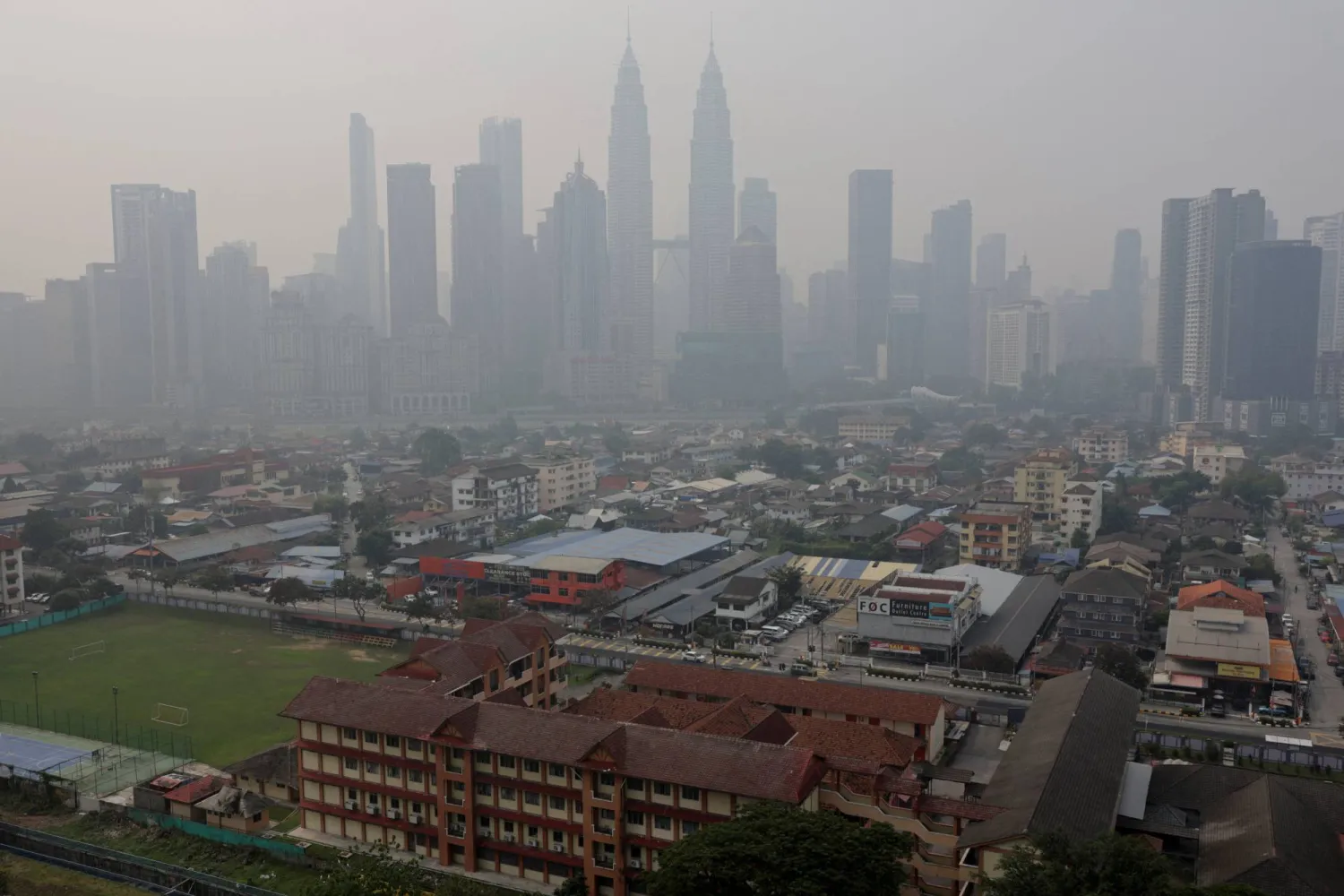
Kuala Lumpur's skyline shrouded in haze from regional wildfires, in Kuala Lumpur, Malaysia, October 9, 2026. REUTERS/Hasnoor Hussain
TT

Malaysia Closes Schools in Capital, Parts of Country Due to Haze

Kuala Lumpur's skyline shrouded in haze from regional wildfires, in Kuala Lumpur, Malaysia, October 9, 2026. REUTERS/Hasnoor Hussain

Malaysia closed schools in Kuala Lumpur and other parts of the country on Friday, as haze from fires in neighboring Indonesia again plunged local air quality to among the world's worst.

Toxic smoke from peatland and forest fires has shrouded cities in the region for more than a month, sending respiratory complaints skyrocketing.

The school closures came as Malaysia's leader discussed the choking smoke with his Indonesian counterpart and called for an urgent regional meeting.

Air quality in Kuala Lumpur has been firmly in "unhealthy levels" this week, with a Swiss-based air quality monitor ranking the Malaysian capital among the world's most polluted cities on most days.

Malaysia's Education Minister Fadhlina Sidek said she has instructed whole school closures in four states and two federal territories as well as one partial closure in the central Pahang State.

"In the future, we will ensure that any decision to close schools is notified in advance so that parents have sufficient time to prepare," Fadhlina said late on Thursday.

Malaysia's King Sultan Ibrahim weighed in on the matter on Thursday, saying schools should be closed as air quality readings reached 150 or higher on the Air Pollutant Index (API).

Under Malaysian guidelines, API readings above 100 are classified as unhealthy, above 200 as very unhealthy, above 300 as hazardous, while readings beyond 500 constitute the threshold for declaring a local emergency.

Kuala Lumpur on Friday showed a reading of around 170 API.

The city was the second-most polluted globally behind neighboring Singapore on Friday morning, Swiss-based air monitor IQAir said.

Malaysia's Prime Minister Anwar Ibrahim said Thursday he discussed the fire situation with the Indonesian leader Prabowo Subianto.

"The haze issue is indeed at a worrying level. And I have personally contacted President Prabowo," AFP quoted Anwar as saying.

"And he also agreed to take the necessary steps," Anwar said, without going into specific details.

He said Malaysia has been taking measures to combat the haze, including increasing attempts to trigger rain via cloud seeding.

Experts said the flames are being fanned by a turbo-charged El Nino weather phenomenon, causing the worst pollution conditions in years.

Anwar said he asked Malaysia's Foreign Minister Mohamad Hasan to contact the 11-nation Association of Southeast Asian Nations' secretariat for an urgent meeting between environmental ministers to discuss the matter.

"So these are all the steps we are taking, but we are monitoring and will try the measures that we ought to take next," Anwar said.

Singapore's air quality levels too dipped into the "very unhealthy" range with a reading of 205 on the Air Quality Index, according to the IQAir website.

The AQI converts measurements of pollutants into a single figure indicating air quality and potential health risks.

Readings above 150 are classified as unhealthy, while levels above 300 are considered hazardous.