Mayor: Two Renoir Paintings Stolen in France Recovered

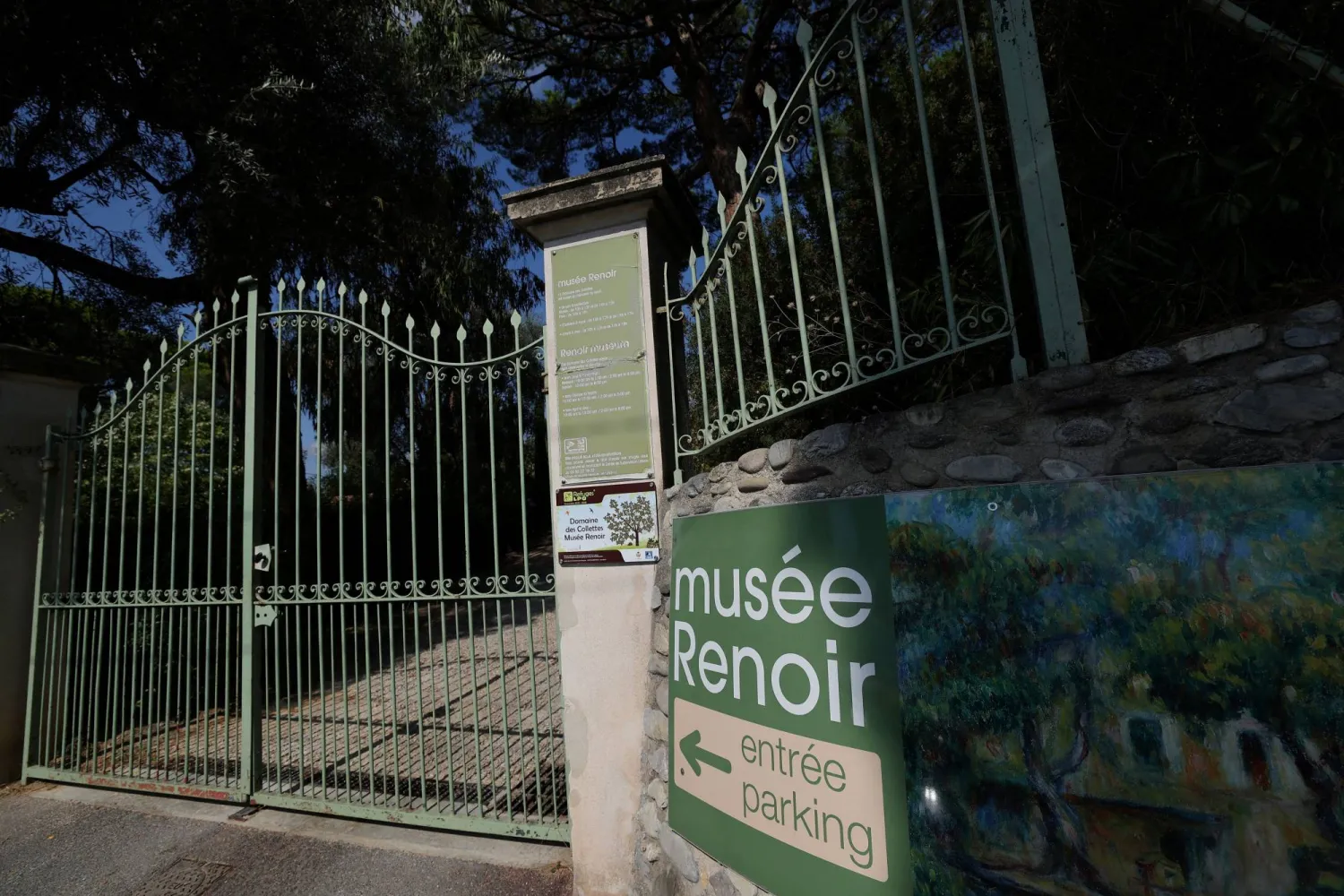
FILE PHOTO: A sign indicates the entrance of the Renoir Museum in Cagnes-sur-Mer, on the French Riviera, France, September 8, 2026. REUTERS/Manon Cruz/File Photo
TT

Mayor: Two Renoir Paintings Stolen in France Recovered

FILE PHOTO: A sign indicates the entrance of the Renoir Museum in Cagnes-sur-Mer, on the French Riviera, France, September 8, 2026. REUTERS/Manon Cruz/File Photo

Two paintings by French master Pierre-Auguste Renoir have been recovered a month after they were stolen from a museum in southern France, the town's mayor said Friday.

In September, thieves broke into the museum in Cagnes-sur-Mer and managed to escape with two works by the French impressionist painter, abandoning two others as they fled.

"These two paintings are not simply works of art. They are part of our city's history," said Bryan Masson, the mayor of Cagnes-sur-Mer.

"Knowing they have been recovered is an immense relief."

There has not yet been any statement from the police and Masson did not give any details regarding where the works were found or their condition.

The suspects cut through a fence to enter the museum's tree-lined grounds, smashed a window to get inside, and used an electric saw to cut through the frame mountings, Masson said at the time of the robbery in early September.

The theft took place in just a matter of minutes, shortly before 6:00 am (0400 GMT).
A source close to the probe told AFP earlier this week that police had arrested five people as part of the investigation.

According to Masson the museum alarm and police sirens forced the burglars -- which he described as "well equipped and well informed" about the museum -- to hurry.

They made off with a portrait titled "Madame Colonna Romano" and the depiction of a woman at a well called "Jeune femme au puits", his office said.

The paintings dropped during their escape include "Madame Pichon" and "Coco lisant", a portrait of Renoir's young son Claude reading.

The police said at the time of the robbery that it was clear that they were not first-time offenders, and that they had scoped out the premises before the crime.

The Renoir Museum lies a half-hour drive from the southern city of Nice, in Renoir's last home before he died aged 78 in 1919.

Its collection comprises nine paintings by Renoir, according to the museum.

It also includes several sculptures by him, as well as objects and furniture that belonged to the painter, such as his easel and wheelchair.

A spate of heists at French museums -- including at the Louvre -- has highlighted inadequate security in some cases and led to questions about whether criminal gangs see them as soft targets.

Crown jewelry valued at around $100 million was stolen in broad daylight from the Louvre in Paris last year.

The four suspected Louvre robbers have been arrested, but the jewels they are accused of grabbing in the seven-minute heist have still not been found.

Italian police in August said they had recovered paintings by Renoir, Cezanne and Matisse worth over $10.4 million that were stolen in a three-minute heist from a museum in March.
And earlier this week, a book featuring a cover made of bronze and designed by Spanish surrealist painter Salvador Dali was stolen from an art museum in central France.


After Louvre Heist and String of Thefts, Europe’s Smaller Museums Are on Guard

People visit The Orsay Museum in Paris, on August 30, 2023. (AFP)
TT

After Louvre Heist and String of Thefts, Europe’s Smaller Museums Are on Guard

People visit The Orsay Museum in Paris, on August 30, 2023. (AFP)

Two men wearing head torches climbed through a forced-open window ‌at the Fondazione Magnani Rocca museum near Parma on the night of March 22 and calmly lifted artworks by Cézanne, Renoir and Matisse from the walls.

Within three minutes, they had passed the works, valued at about €9 million ($10 million), to an accomplice and fled. At the museum's main gate, a fourth man discharged a fire extinguisher when the alarm sounded, distracting the custodian.

"Whatever could go wrong, did," said Stefano Roffi, director of the private foundation that runs the museum.

The raid was one of a string of museum thefts in France, Italy and Spain since last year's heist at the Louvre in Paris, raising concerns that criminals are increasingly targeting smaller institutions with fewer resources to protect valuable collections.

"This is where we see the 'Louvre effect'," said Marc Balcells, a Barcelona-based researcher specializing in crimes against cultural heritage. "If the Louvre was so easy to rob, just imagine a tiny museum in a rural area or a smaller town."

Works by Antonello da Messina vanished from a museum in his Sicilian hometown in August, while two Renoirs were stolen from Cagnes-sur-Mer on the French Riviera the following month.

In Spain, thieves stole hundreds of historic gold coins from museums in Badajoz and Albacete and made off with a Bronze Age treasure in Villena, near Alicante.

A 2024 survey by France's Culture Ministry found only one in four cultural institutions had an emergency and risk-prevention plan, while nearly half lacked video surveillance.

WHO CHECKS WHEN THE ALARM GOES OFF?

A French parliamentary report in May said museums lacked ‌the resources and preparation ‌to adequately protect artworks and artifacts.

In Italy, the challenge is amplified by the way the country's cultural heritage is spread across ‌hundreds ⁠of towns and institutions, ⁠a legacy of centuries of fragmented rule.

"That is also what makes our system distinctive: works remain in the places where they were created,” said Antonella Pinna, president of the Italian committee of the International Council of Museums. "But we need to make life harder for criminals."

The council worked with Italy's Culture Ministry and the Carabinieri on museum security guidelines published in 2015, but Pinna said technology alone was not enough.

"If an alarm goes off, someone has to make sure it is checked," she said.

In a narrow street in the Tuscan town of Sansepolcro, the civic museum displays four works by Renaissance master Piero della Francesca, born just steps away in the 15th century.

The Louvre theft "affected us deeply because cultural heritage is central to Sansepolcro's identity. It is our soul," culture councilor Francesca Mercati told Reuters.

After the Louvre raid, officers from the Carabinieri's cultural heritage protection unit recommended more cameras, longer retention of CCTV footage and tighter controls on bags and bulky ⁠clothing.

"We immediately implemented those recommendations," Mercati said.

A VAST NETWORK TO PROTECT

The scale of the challenge is daunting.

Italy has more than ‌4,400 museums and similar institutions, according to national statistics agency ISTAT. Spain has about 1,500 museums, while France has more ‌than 1,200 institutions carrying the official "Musees de France" designation, alongside hundreds of smaller collections.

Protecting such a broad network is particularly difficult for smaller institutions that depend on local funding.

Florence Imbert, a Paris-based ‌security consultant for cultural institutions, said 85% of small French museums were run by local authorities with limited financial resources.

"The budget is key to winning the war," she ‌said.

France's Culture Ministry announced a 33-point security plan in July, backed by €30 million over three years for local museums.

Recent figures suggest concern is warranted. The Carabinieri art squad recorded 17 thefts from Italian museums and galleries in 2025, up from 14 a year earlier.

Europol said in an August report that museum thefts were becoming more forceful and increasingly focused on precious metals, gemstones and other high-value artifacts.

A FAST BUCK?

Unlike gold or jewellery, which can be broken up or melted down, a well-known painting is difficult to turn into quick cash.

Celebrated works such as those by Renoir can rarely be ‌sold openly, Pinna said. Instead, stolen art is more likely to be hidden, used as leverage in ransom attempts or offered privately.

Even when works are recovered, museums can face significant costs linked to investigations, recovery efforts and upgraded security.

The recent thefts have ⁠also reignited debate about insurance.

Most major state-backed museums in ⁠Western Europe rely on government indemnity schemes rather than commercial cover, but some institutions have begun reassessing the risks, said Filippo Guerrini-Maraldi, a private wealth and fine art insurance specialist at broker Howden Specialty.

"And for the first time, really, in my 40-year career, I've seen art theft now becoming more of a major, major risk. It was always the minor risk," he said.

Insurers are also turning to technology. Beazley is exploring how AI can be used to analyze CCTV footage to identify suspicious behavior in museums and galleries, helping security staff spot threats sooner, said fine art underwriter Dishni Mahendran.

SECURITY VS ACCESS

For museum directors and cultural officials, the challenge is how to tighten security without cutting collections off from local communities or diminishing the visitor experience.

"Ultimately, museums must remain easy to access," Imbert said. "People should be able to enter without having to pass through 50 security checks."

Julien Volper, a conservator at Belgium's Africa Museum, said particularly vulnerable treasures should only be displayed when adequate security measures are in place.

"I'm not saying that's the ultimate solution, but it seems better than displaying replicas," he said. "We're not at Disneyland."

In August, the Carabinieri recovered the three artworks stolen from the Parma museum from a cardboard box hidden in an apartment. Five Moldovan nationals were arrested in connection with the theft.

Investigators said wiretaps indicated the suspects had unsuccessfully tried to find buyers in Eastern Europe and Russia.

The works have since returned to the museum in what Roffi called a "homecoming party".

"The theft triggered an outpouring of solidarity in Italy and abroad," he said. The museum now has round-the-clock guards funded by a local cheese consortium.

"It was seen not simply as a theft from a museum, but as an attack on art as a shared cultural heritage."


European Film Festival Returns to Riyadh for Fifth Edition with 16 Films

File photo of the Saudi capital Riyadh - File/AAWSAT
TT

European Film Festival Returns to Riyadh for Fifth Edition with 16 Films

File photo of the Saudi capital Riyadh - File/AAWSAT

The Delegation of the European Union to Saudi Arabia, in collaboration with the embassies of its member states and with the support of the Film Commission, has announced the fifth edition of the European Film Festival in Riyadh, featuring 16 films from 16 European countries, SPA reported.

The festival will begin on November 2, with public screenings running from November 3 to 10, building on the success of its four previous editions.

The program includes a diverse selection of cinematic works reflecting the variety of European film schools and traditions. All films will be presented with Arabic and English subtitles.


‘Rashrash’: A Silver Necklace Reflecting Jazan’s Traditional Women’s Jewelry Heritage

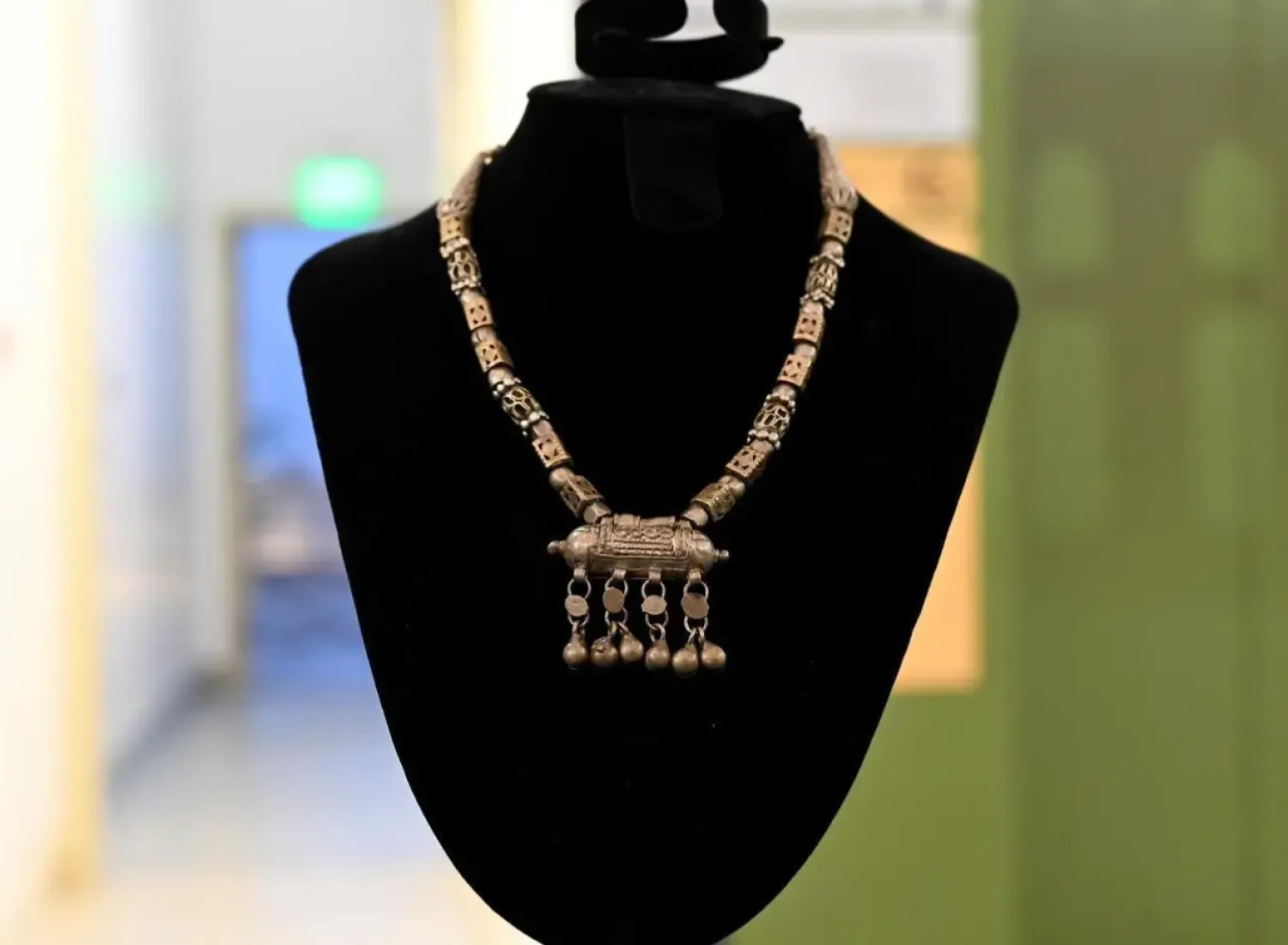
Adornment was not limited to silver jewelry but also included the use of kohl, henna, perfumes and hair-care products - SPA
TT

‘Rashrash’: A Silver Necklace Reflecting Jazan’s Traditional Women’s Jewelry Heritage

Adornment was not limited to silver jewelry but also included the use of kohl, henna, perfumes and hair-care products - SPA

Traditional jewelry in Jazan Region preserves part of the memory of women and reflects aspects of their social lives in the past.

Among these ornaments is the Rashrash necklace, a silver piece worn around women’s necks, valued for its aesthetic appeal and cultural significance, which are deeply rooted in the community’s customs and heritage.

According to SPA, silver held a prominent place in traditional Jazan women’s adornment, with jewelry ranging from necklaces, earrings and bracelets to decorative pieces worn on the upper arms and feet.

The Rashrash was among the ornaments worn by women in Jazan and was one of the pieces worn by brides as part of traditional wedding customs. Together with other jewelry, it formed the bride’s adornment for the occasion, reflecting the attention women paid to aesthetic details and the variety of silverwork used for personal adornment.

Adornment was not limited to silver jewelry but also included the use of kohl, henna, perfumes and hair-care products.

Women also used local plants and flowers to adorn their hair on special occasions. These practices were closely linked to the natural environment, which provided the plants and materials women used in their daily lives and social gatherings.