


Israeli Media: Israel Threatened to Cut Intelligence Cooperation with Britain Amid Jerusalem Consulate Crisis

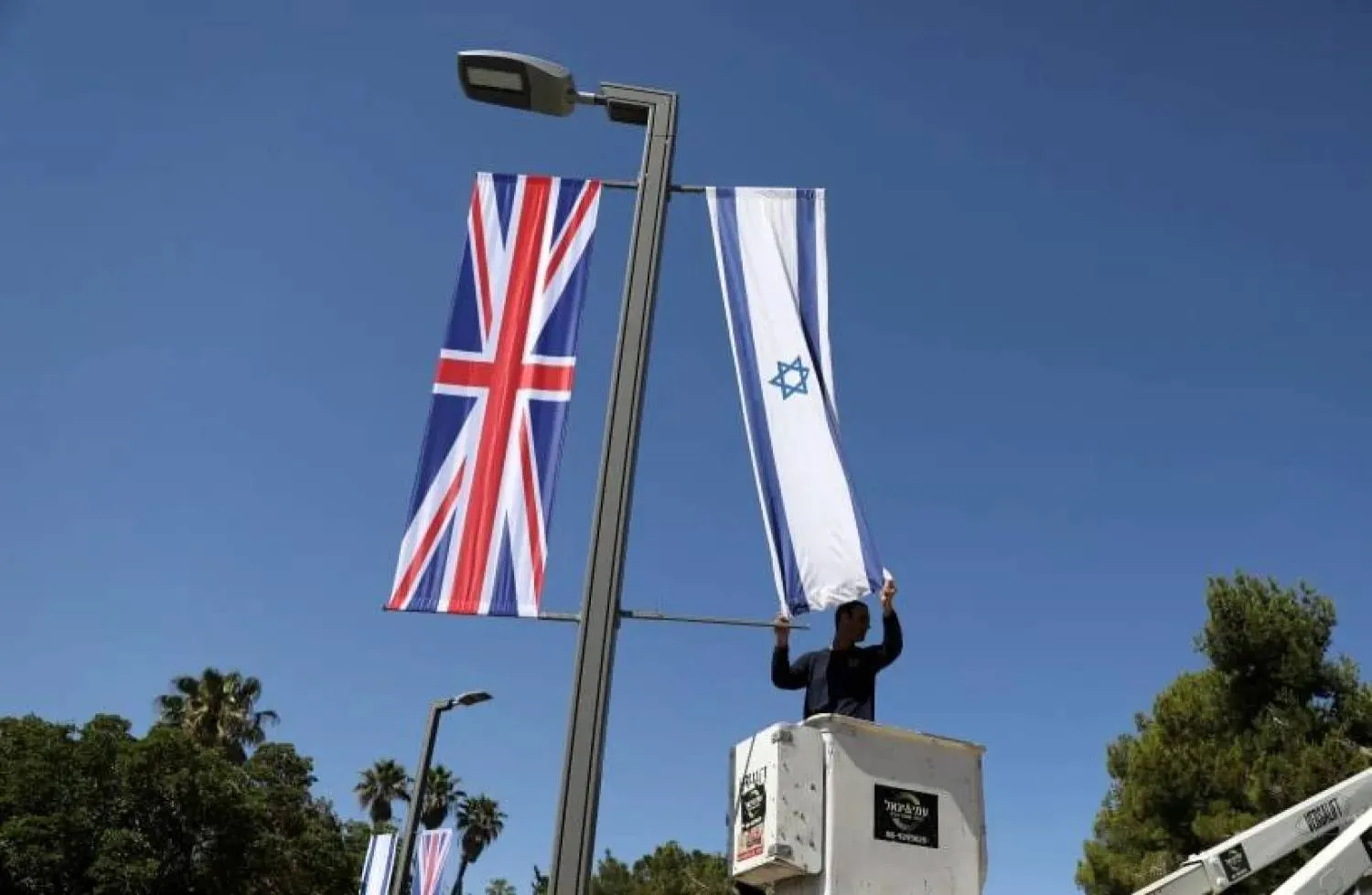
A Jerusalem municipality worker hangs an Israeli flag next to the British flag, the Union Jack, as he stands on a platform near Israel's presidential residence in Jerusalem ahead of the upcoming visit of Britain's Prince William, June 25, 2018 (Reuters)
TT

Israeli Media: Israel Threatened to Cut Intelligence Cooperation with Britain Amid Jerusalem Consulate Crisis

A Jerusalem municipality worker hangs an Israeli flag next to the British flag, the Union Jack, as he stands on a platform near Israel's presidential residence in Jerusalem ahead of the upcoming visit of Britain's Prince William, June 25, 2018 (Reuters)

The right-wing Israeli newspaper Israel Hayom revealed on Sunday details of an agreement reached between Israel and the United Kingdom following a diplomatic row over Tel Aviv’s decision to suspend operations of the British consulate in Jerusalem, which handles Palestinian affairs.

“Israel and the UK have reached a compromise over Britain’s diplomatic presence in Jerusalem, ending a standoff that had threatened to further strain relations between the two countries,” the newspaper wrote.

It said Britain had backed down from imposing measures against Israel, including the expulsion of Israeli diplomats from the UK.

The decision came after security agencies in London warned the government of the risks of further escalating the crisis. The agencies informed the government that Israel was threatening to sever security cooperation with British intelligence, a move that would seriously undermine national security, according to Israel Hayom.

Last Thursday, Britain announced its consulate in Jerusalem, which began operating in the city nearly 200 years ago, would continue its work on a more limited scale under the title “UK Mission, Jerusalem.” The decision came after Israel ordered the closure of the British consulate in response to the UK's sanctions on Israeli settlements.

Israel Hayom, which is close to Prime Minister Benjamin Netanyahu’s government, claimed that “in recent weeks, Israel has shared highly sensitive intelligence that enabled the foiling of Palestinian and Iranian terrorist plots in Britain, including at the military base hosting US fighter jets.”

Therefore, the two countries agreed to continue a dialogue to address the points of contention and prevent further deterioration in relations, while Israel backed down from imposing tough conditions.

Also under the reached agreement, the British consul general and 19 other diplomats will leave, while seven diplomats will remain, Israel Hayom wrote.

Although the British Consulate General in Jerusalem will no longer have a sign at the building's entrance bearing that title, it will retain its status as an official diplomatic mission serving Palestinians with a scaled-down presence, rebranded as “UK Mission, Jerusalem” and reporting directly to the UK Foreign Office.

The newspaper said the remaining consular services that will no longer be provided at the Jerusalem office will be made available to Palestinians through the British Embassy in Jordan, where most of the diplomats have relocated.

Israel on September 8 ordered Britain to close the East Jerusalem consulate within 30 days and remove its diplomats from the city, after Britain said it would impose a ban on trade of goods made in Israeli settlements in the occupied West Bank, including a ban on trade in goods produced there.

Israel had been adamant that the consulate will close even as Britain sought to keep it open, including sending the country’s top national security adviser to Israel last week for talks.

Britain’s consulate was founded in 1839, more than a century prior to the establishment of the State of Israel in 1948. The closure order does not affect Britain’s embassy in Tel Aviv, which handles diplomatic relations with Israel’s government.

The consulate, in the Sheikh Jarrah neighborhood of East Jerusalem, handles Britain’s relations with Palestinians in Jerusalem, as well as in the West Bank and Gaza. It also provides consular services to Palestinians.

Shortly before the 30-day deadline for Britain to close the consulate ended last Thursday, Reuters said Britain was likely to expel Israeli diplomats if Israel carries out its order to shut the British consulate in East Jerusalem.

It noted that if the consulate is closed, Britain is likely to respond ‌by expelling ⁠a similar number ⁠of Israeli diplomats from Israel's embassy to the United Kingdom, the sources said, speaking on the condition of anonymity.

But the two sides reached an 11th-hour compromise after the Israeli Foreign Ministry authorized the British to operate a reduced task force of just seven diplomats at the site.

The two countries also agreed to continue a dialogue to address the points of contention and prevent further deterioration in relations, with Britain, under the understandings, refraining from taking any further response measures, according to Israel Hayom.

In a post on X, Israeli Foreign Minister Gideon Sa'ar announced an agreement with London on the continuation of dialogue between the governments, within which both sides will be able to raise issues important to them.

“We believe in dialogue and will continue to believe in dialogue. Unfortunately, in recent years, no genuine dialogue has taken place with the Labor Government. This is despite good relations with Britain, reflected, among other things, in security and intelligence cooperation,” he wrote.

The minister added that “relations between Israel and Britain are important and have repeatedly proven their value also in protecting the lives and interests of British citizens.”



Two Migrants Die, Hundreds Rescued off Greek Islands

Migrants who arrived from North Africa walk towards a controlled area at the port of Heraklion, on the island of Crete, Greece, Saturday, Nov. 28, 2026. (Image On Line via AP)
TT

Two Migrants Die, Hundreds Rescued off Greek Islands

Migrants who arrived from North Africa walk towards a controlled area at the port of Heraklion, on the island of Crete, Greece, Saturday, Nov. 28, 2026. (Image On Line via AP)

Two migrants died and more than 400 others were rescued in less than 24 hours off the islands of Gavdos and Crete, the Greek coastguard said Saturday.

South of Gavdos, rescuers found two bodies and rescued 41 people trying to reach the European Union in a joint operation by the Greek authorities and the EU border agency Frontex, according to the ANA news agency and port officials.

The coastguard also reported six rescue operations since Friday evening off Gavdos and Crete, in which 391 migrants were brought to safety.

In one operation on Saturday, 102 migrants, including 16 women and five minors, were transferred to the port of Heraklion, Crete's main city.

Authorities gave no details on the migrants' nationalities or point of departure, though most crossings in the area originate from Libya.

Shipwrecks and accidents have become increasingly common off Crete as migrants attempt the dangerous sea crossing, often in rough weather and high winds.

Earlier this month, at least 22 people died in migrant boats trying to reach the island, according to port authorities.

The UN's International Organization for Migration has said the growing number of attempted crossings from Libya to Crete has exposed gaps in search and rescue capabilities.


At Risk of Losing Power, Netanyahu Makes Long-Shot Unity Appeal to Rival Eisenkot

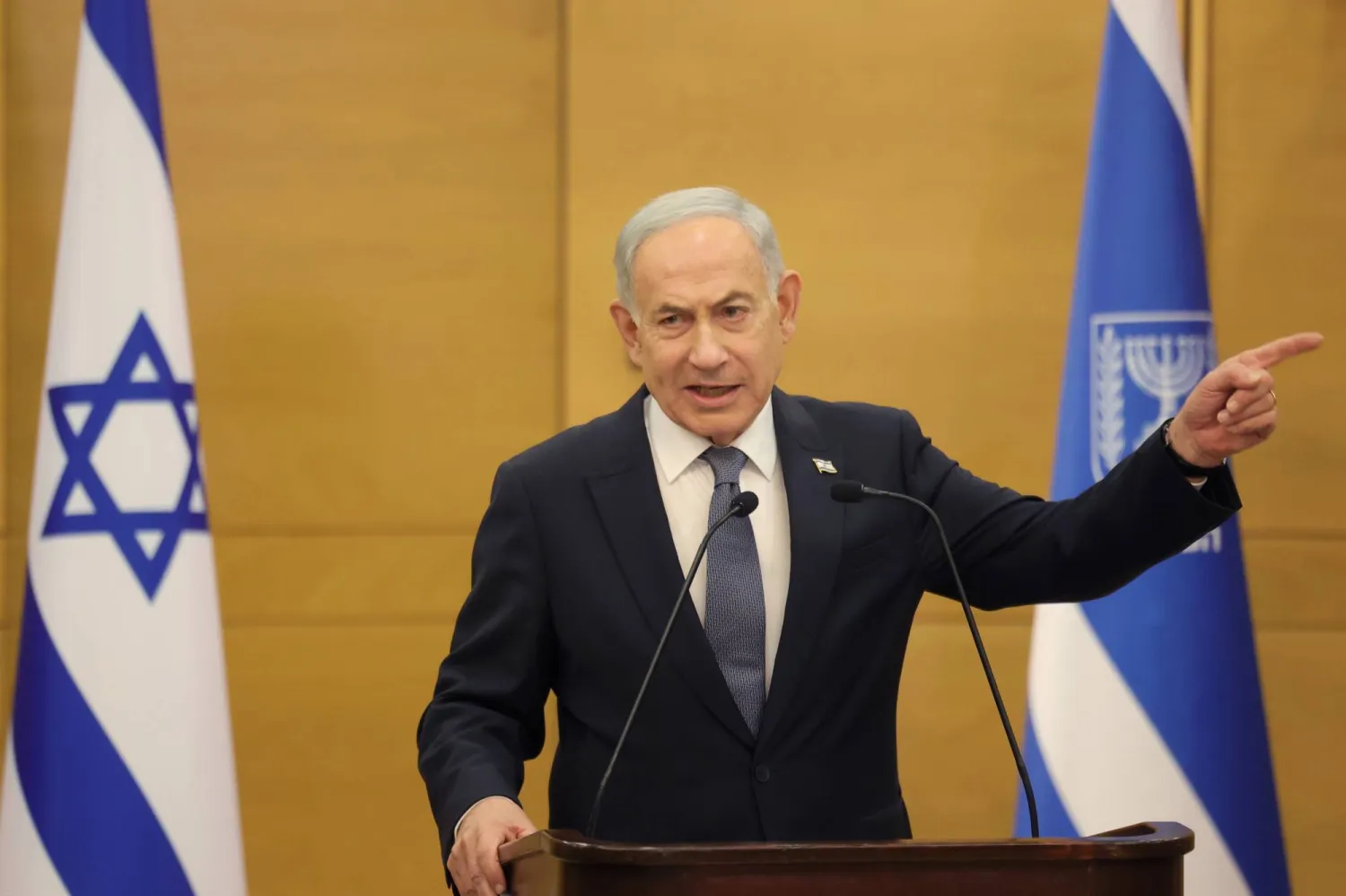
Israeli Prime Minister Benjamin Netanyahu delivers a media statement at the Knesset, the Israeli parliament, in Jerusalem, 25 November 2026. (EPA)
TT

At Risk of Losing Power, Netanyahu Makes Long-Shot Unity Appeal to Rival Eisenkot

Israeli Prime Minister Benjamin Netanyahu delivers a media statement at the Knesset, the Israeli parliament, in Jerusalem, 25 November 2026. (EPA)

Israeli Prime Minister Benjamin Netanyahu said on Saturday he would be willing to relinquish his role in a unity government led first by ‌Gadi Eisenkot, the ‌latest sign that the former ‌military ⁠chief may be close ⁠to forming an opposition-backed coalition intent on ousting Netanyahu. 

Netanyahu’s announcement underscores the pressure Israel’s longest-serving leader is under as Eisenkot wins support from potential partners that could hand him a governing majority or allow him to form ⁠a coalition government. 

Netanyahu offered to ‌go second in ‌a rotation agreement with Eisenkot in a proposed unity ‌government agreement between their two parties. 

Eisenkot was ‌tapped by Israel’s president to try to form a government after an inconclusive October 27 election that left neither him nor Netanyahu with a ‌clear path to power. 

This week, Eisenkot signed coalition deals with two ⁠left- and ⁠right-wing partners whose support could bring him closer to a majority. 

A spokesperson for Eisenkot's Yashar party did not immediately respond to a request for comment. 

Netanyahu said in a statement that he should lead the Israeli government but "given the magnitude of the existential threat and the possibility that a government could be formed that isn’t able to deal with this danger," his "responsibility as a leader" required he "put everything aside." 


Iran Rial Falls to Near 3 Million to US Dollar as Sanctions, Blockade Weigh

Iranians shop at a street market in Tehran, Iran, 23 November 2026, as the country faces an economic crisis amid ongoing US-Iran tensions. (EPA)
TT

Iran Rial Falls to Near 3 Million to US Dollar as Sanctions, Blockade Weigh

Iranians shop at a street market in Tehran, Iran, 23 November 2026, as the country faces an economic crisis amid ongoing US-Iran tensions. (EPA)

Iran's currency plunged ‌to a record low on Saturday, approaching the psychological threshold of 3 million rials to the US dollar, amid rising inflation, hardening US sanctions and a widening embargo.

The US dollar was sold at around 2.990 million rials, up from 2.938 million on Friday, according to free-market tracking website bon-bast.com, while alanchand.com reported 2.997 million rials per dollar, up 1.77%.

Iran is facing one of its worst inflation surges in decades, driven by the nine-month-old Iran war, with ‌a particularly sharp ‌rise in food prices.

The US reimposed ‌its ⁠naval blockade on ⁠Iranian ports in July, and earlier this month announced Task Force Iron Gate to restrict the movement of weapons and sanctioned materials across Iran's land borders and the Caspian Sea.

“Iran’s economy is underwater, and its leaders are panicking,” US Treasury Secretary Scott Bessent said in a statement ⁠earlier this week after imposing new sanctions ‌aimed at isolating Iran from ‌the global economy and disrupting its shadow banking networks.

Iranian Central Bank ‌Governor Abdolnaser Hemmati said on Saturday that Iran had ‌sufficient hard currency to pay for basic goods and medicine for months to come, but added that the foreign exchange market was affected not only by economic fundamentals but also by ‌psychological factors.

"Foreign exchange is affected by many factors such as the economy, expectations and ⁠politics... We ⁠are trying to stabilize the market as much as we can," Hemmati told state television.

Many Iranians seeking safe havens for their savings have been buying dollars, other hard currencies or gold.

Consumer prices in Iran in October were 88.7% higher than a year earlier, while annual average inflation accelerated to 76.8%, according to the Statistical Centre of Iran. Food and beverage prices rose 112.6% year-on-year.

Iran’s currency plunged to a record low in August, crossing the threshold of 2 million rials to the US dollar, while annual inflation reached 66% in July.
