Baghdad Accuses Tehran, Washington of ‘Strangling’ the Iraqi Economy

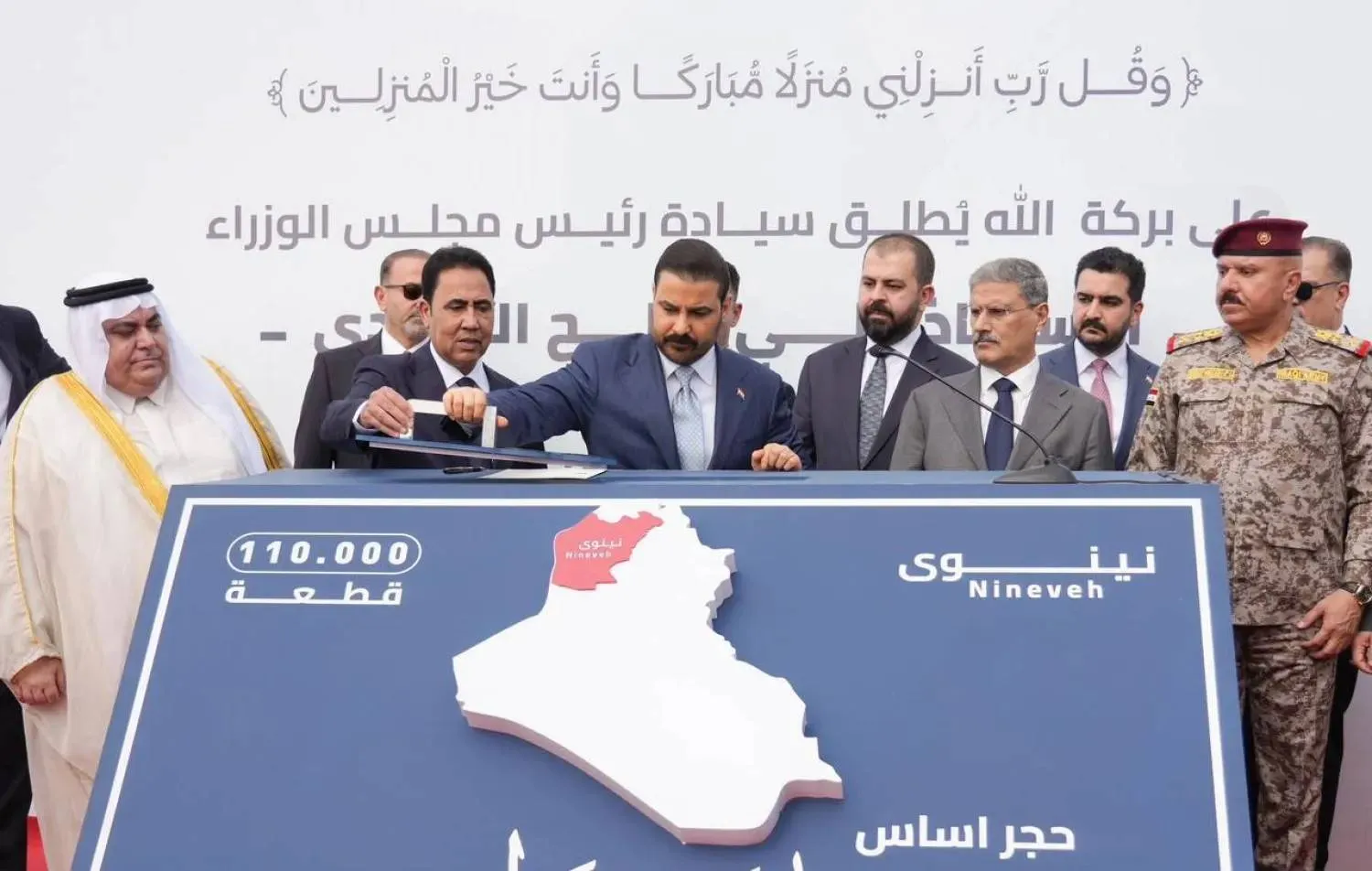
The Prime Minister lays the foundation stone for the “Watan Initiative” in Nineveh on Monday (PM's Media Office)
TT

Baghdad Accuses Tehran, Washington of ‘Strangling’ the Iraqi Economy

The Prime Minister lays the foundation stone for the “Watan Initiative” in Nineveh on Monday (PM's Media Office)

Iraqi government spokesman Haider Al-Aboudi has accused both Iran and the United States of “strangling” Iraq’s economy by failing to grant exemptions that would allow Iraqi oil exports through the Strait of Hormuz.

In a television interview, Al-Aboudi said: “Iraq’s economy is living under the burden of a suffocating blockade, with a complete absence of any Iranian or American response to granting exemptions for oil exports.”

Al-Aboudi also launched a sharp attack on the government of former Prime Minister Mohammed Al-Sudani, accusing it of causing losses of nearly 36 trillion Iraqi dinars to the state treasury through its 2023 decision to reduce the exchange rate from 1,470 dinars per U.S. dollar to 1,320 dinars per dollar.

His remarks come as the current government seeks to counter criticism over its decision, announced last Tuesday, to devalue the dinar to 1,520 per dollar.

The decision to alter the exchange rate continues to generate significant debate as the government has failed to close the gap between the official rate of 1,520 dinars per dollar and the parallel market rate of 1,630 dinars. This discrepancy has contributed to substantial increases in the prices of many essential goods, including food items.

The exchange-rate issue has also sparked broad political reactions. Nouri Al-Maliki, leader of the State of Law Coalition, called in a post on X for citizens not to use the dollar exchange-rate adjustment as a pretext for stirring concern.

Despite measures introduced by the government to curb soaring prices, including injecting additional dollars into the market and offering construction materials to citizens through installment-payment schemes, prices have remained high. This has exposed the government to further public and political criticism.

Legal Challenge

Observers do not rule out the possibility that Prime Minister Ali al-Zaidi could face legal scrutiny. Saud al-Saadi, head of the parliamentary Huqooq Bloc, has filed an official appeal before the Federal Supreme Court, challenging Cabinet Resolution No. 544 concerning the exchange rate of the US dollar against the Iraqi dinar.

Speaking to the press on Monday, al-Saadi said that the Court had received the appeal and informed him that an official hearing date would be scheduled at a later time.

Denial of Pursuing Currency Speculators

In a related development, Al-Aboudi stated that the prime minister had “categorically rejected any intervention by security agencies or the use of police measures to regulate the market.”

The denial came in response to an audio recording in which a citizen called the Interior Ministry’s complaints hotline and asked whether complaints or reports could be filed against exchange companies selling dollars at the parallel-market rate of 1,650 dinars, compared with the official rate of 1,520 dinars per dollar. A complaints official reportedly answered in the affirmative.

On Sunday evening, both the Security Media Cell and the Ministry of Defense quickly denied that the complaints official’s response reflected government policy.

In a statement, the Security Media Cell said that directives from Commander-in-Chief Ali al-Zaidi emphasized that the dollar exchange-rate issue is a financial and economic matter, not a security matter.

The statement stressed that exchange rates are governed by market mechanisms and the laws of supply and demand and fall under the jurisdiction of financial and monetary authorities, foremost among them the Central Bank of Iraq.

The statement further underscored that there are no instructions for security forces to intervene in market activity or influence exchange rates, noting that their role is limited to enforcing the law and carrying out judicial orders issued by competent authorities.

It added that any action taken against violators or individuals engaged in illegal foreign-currency transactions would be conducted in accordance with established legal and judicial procedures and in coordination with the Central Bank of Iraq, which is responsible for supervising financial and banking institutions, regulating exchange companies, monitoring compliance with relevant regulations, and taking the necessary administrative measures to safeguard financial transactions and support duly licensed firms.

The Security Media Cell called on citizens, merchants, exchange companies, and market participants to remain reassured and continue conducting their lawful financial and commercial activities normally.

The complaints official’s remarks had reportedly alarmed exchange companies, which often have to deal according to prevailing market rates rather than the official rate. Some industry workers said the comments actually contributed to driving exchange rates higher in the parallel market rather than lowering them.

Personal Conduct

As a result of the confusion and concern caused by the audio recording, the Interior Ministry issued a statement clarifying the circumstances surrounding the phone call made by a citizen to an employee of the Central Response and Control Directorate (911), who had been asked about dollar buying and selling rates at exchange companies.

The ministry stated that the employee’s response constituted “a personal action” and did not represent the ministry’s official position, as he was not authorized to provide information or statements on matters outside the scope of his assigned duties and responsibilities.

The ministry also confirmed that it had taken the necessary legal measures against the employee in accordance with applicable regulations and instructions, reaffirming its commitment to professional discipline within the public service.


Israel Army Withdraws After Hebron Operation, Says Military Official

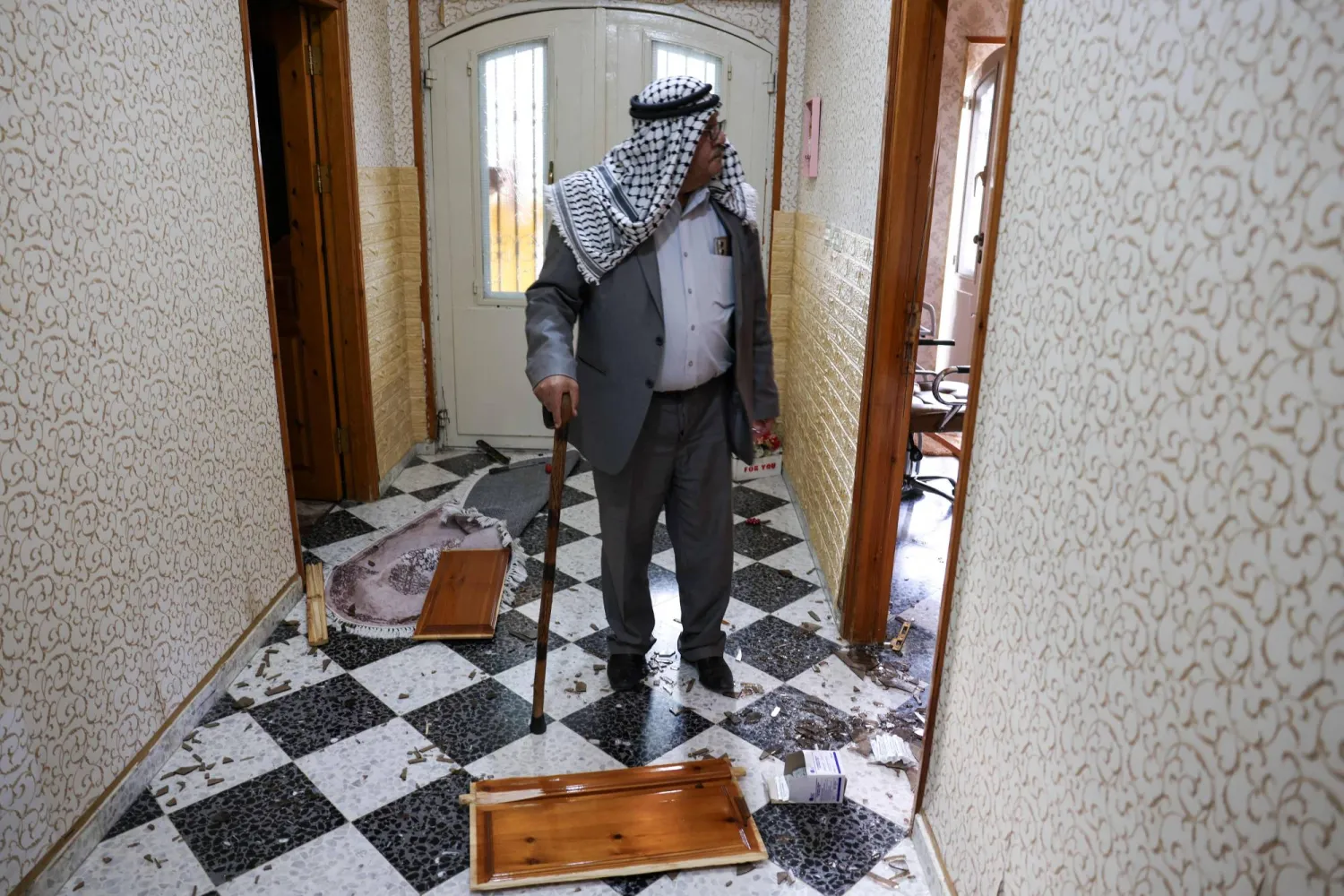
A Palestinian man inspects the damage to his home in the Deir Baha area of Hebron in the occupied West Bank, on November 2, 2026, after returning following his displacement in an Israeli military operation last week. (AFP)
TT

Israel Army Withdraws After Hebron Operation, Says Military Official

A Palestinian man inspects the damage to his home in the Deir Baha area of Hebron in the occupied West Bank, on November 2, 2026, after returning following his displacement in an Israeli military operation last week. (AFP)

The Israeli army has pulled back following an operation in the occupied West Bank city of Hebron, launched in the wake of an attack that killed two soldiers in late October, a military official said Monday.

The operation had emptied a neighborhood in the West Bank's largest city where the two gunmen had lived. AFP journalists witnessed residents returning to their homes on Monday after the military left.

"This morning, following the completion of all operational activities, the soldiers withdrew from the area of operation in Hebron. Counterterrorism activities throughout Judea and Samaria continue," the official said, using the biblical name for the Palestinian territory.

On October 23, days ahead of close-fought Israeli elections, two Palestinian gunmen attacked an army checkpoint near Hebron, killing two soldiers and prompting promises of a major retaliatory operation from senior officials, including Prime Minister Benjamin Netanyahu.

By the following morning, the military had cleared out the residents of the assailants' neighborhood, displacing more than 3,000 people, according to the municipality.

The military official said that "soldiers conducted thorough searches of multiple locations, detained and questioned suspects, and located and confiscated four weapons, several vests, and additional military equipment".

They also demolished the two attackers' homes and "sealed an underground space located next to" one of them.

Muhannad al-Tamimi, whose house was occupied by soldiers since the operation began, told AFP his family came back to a trashed apartment with furniture and clothing strewn on the floors, mattresses overturned and a child's bicycle broken.


Drone Strikes Hit 15 Power Stations Across Sudan in Days

Damage at the Al-Markhiyat power station north of Omdurman following a drone attack on October 28 (AFP). 
TT

Drone Strikes Hit 15 Power Stations Across Sudan in Days

Damage at the Al-Markhiyat power station north of Omdurman following a drone attack on October 28 (AFP). 

Sudan’s Rapid Support Forces (RSF) have continued drone attacks on electricity infrastructure in army-controlled areas, targeting power generation plants and substations across the country, causing widespread electricity and water outages and raising fears of a partial collapse of the national grid.

The escalating strikes have also threatened hospital operations and agricultural projects, with warnings of severe consequences if the attacks continue at their current pace.

Reports indicate that around 15 stations were targeted between October 20 and November 1, while the Emergency Lawyers group said Sunday that 15 facilities had been attacked in October alone.

Early Sunday, drones launched simultaneous strikes on the Abu Hamad substation in River Nile State and the Al-Dabbah station in Northern State, according to eyewitnesses. Local sources said fuel facilities in Northern State were also hit.

River Nile State Governor Mohammed al-Badawi said after inspecting the site that a drone strike had completely destroyed the Abu Hamad substation, cutting electricity supplies across the state.

The attacks came less than 24 hours after drones targeted the Haya substation, still under construction in Red Sea State, along with oil transportation facilities.

Warnings of a Nationwide Blackout

Former Sudanese Energy Minister Adel Ibrahim warned that most major electricity substations had been bombed and taken out of service, leaving, by his estimate, only three principal stations: Merowe Dam and Atbara in northern Sudan, and Maranjan in Wad Madani, the capital of Al-Jazira State.

“If electricity stations continue to be targeted at this rate, complete darkness will engulf the country,” Ibrahim told Asharq Al-Awsat.

He cautioned that repairing the damage and restoring operations could take considerable time, while replacing destroyed transformers and other equipment would involve substantial costs.

Substations play a critical role in connecting power generation facilities to consumers. Their destruction can therefore leave entire cities and states without electricity even when generating plants remain operational.

Ten States Affected

Reports show that the attacks have spread to 10 of Sudan’s 18 states, with White Nile and Gedaref recording the highest number of targeted facilities, at three each. Five states in Darfur under RSF control were not targeted.

In White Nile State, drones struck the Tendelti, Mashkoor and Um Dabakir thermal power stations. In Gedaref, attacks hit Al-Hawata and Al-Faw, along with other electricity facilities cited in reports.

Al-Jazira State saw strikes on the Al-Junayd and Al-Managil stations, while Shendi and Abu Hamad were targeted in River Nile State.

In Sennar State, the Singa station came under attack. Other strikes hit Al-Markhiyat, northwest of Omdurman in Khartoum State; Haya in Red Sea State; and Al-Dabbah in Northern State.

There were also reports of an attack on an electricity facility in Kadugli, South Kordofan State.

White Nile and Gedaref thus topped the list in terms of sites mentioned in the reports, although the absence of standardized technical data makes it impossible to rank states by the scale of damage or duration of outages.

The wave of attacks began on October 20 with a strike on Tendelti before expanding on October 26 to Singa, Al-Hawata, Al-Faw, Mashkoor and Al-Junayd.

Al-Markhiyat was hit the following day, followed by Al-Managil on October 28, Um Dabakir on October 29, Shendi on October 30 and Haya on October 31.

The latest strikes targeted Abu Hamad and Al-Dabbah early Sunday.

Accusations Against Ethiopia

The Sudanese government has accused the RSF of carrying out the attacks and Ethiopia of allowing its territory to be used to launch drones against facilities inside Sudan.

On Saturday, the Foreign Ministry briefed diplomatic missions on the allegations, identifying locations inside Ethiopia that it said were being used to support drone operations.

During a recent visit to Moscow, Sudanese Foreign Minister Mohieddin Salem also accused Ukrainian military personnel of assisting the RSF and training its members to operate drones.

The expanding geographical reach, frequency and precision of some strikes suggest that the paramilitary group possesses substantial numbers of long-range drones and increasingly sophisticated operational capabilities.

Emergency Lawyers said the attacks had disrupted electricity and water supplies and threatened healthcare services, worsening civilian suffering.

On Saturday, UN Secretary-General Antonio Guterres condemned the escalation of drone attacks by both sides in Sudan’s war, expressing shock at their devastating impact on civilians.

His spokesperson, Stephane Dujarric, said the strikes had killed hundreds of civilians, including women and children, across Sudan and the Abyei region.

Guterres stressed the need to protect civilians and critical infrastructure, including healthcare facilities, and urged both parties to immediately cease hostilities and engage seriously in mediation efforts to end the war.

The attacks have raised growing concerns about hospitals’ ability to operate medical equipment, maintain drinking water supplies and keep irrigation projects running, particularly as the winter agricultural season approaches.

Sudan’s electricity sector has suffered extensive damage since the war erupted in April 2023, affecting thermal generation units, transmission stations, transformers and power lines.

The latest strikes have placed further strain on an already weakened grid struggling with equipment shortages, maintenance difficulties and limited funding.


Israeli Reports Heighten Lebanese Fears of Another War

Israeli heavy machinery bulldozes houses in Mansouri, as seen from Hinniyeh, Southern Lebanon, September 19, 2026. (Reuters)
TT

Israeli Reports Heighten Lebanese Fears of Another War

Israeli heavy machinery bulldozes houses in Mansouri, as seen from Hinniyeh, Southern Lebanon, September 19, 2026. (Reuters)

Israeli reports of military preparations for a possible offensive in South Lebanon have heightened fears among Lebanese officials and residents of another war, amid continuing Israeli attacks, mounting domestic political tensions and uncertainty over Hezbollah’s response to any renewed regional confrontation.

Lebanon faces the prospect of a third war, with concerns that Hezbollah could once again draw the country into a conflict in support of Iran, as it has done in the past.

Israel’s Maariv newspaper reported that the Israeli military was preparing for the possible occupation of three major cities in South Lebanon - Tyre, Sidon and Nabatieh - if war with Iran resumes and Hezbollah joins the fighting.

Israeli assessments believe that Tehran could activate several fronts simultaneously, including Lebanon, it said.

Tel Aviv was taking the possibility of Hezbollah’s involvement seriously, despite assessing the group’s military capabilities as weakened, and was preparing to deploy “extremely heavy firepower,” it added.

The scenarios outlined by Maariv include intensified strikes across large parts of Beirut’s southern suburbs, a naval blockade of the ports of Beirut and Tripoli, and attacks on coastal cities followed by possible ground advances.

Lebanese concerns

Lebanese ministerial sources expressed alarm over the reports, warning that another Israeli offensive could not be ruled out.

“There is no doubt that the situation is worrying. We cannot exclude the possibility of Israel launching another war against Lebanon, particularly if Hezbollah fails to honor its promise, as it has done before, and once again enters the conflict,” the sources told Asharq Al-Awsat.

“Israeli threats are nothing new. Officials in Tel Aviv have repeated them many times, placing us before a genuine danger. Unfortunately, we may reach the point where the plans being discussed in the media are carried out,” they added.

Riad Kahwaji, a researcher specializing in security and defense affairs, said the Maariv report should be taken seriously.

“The threat clearly concerns the entire South, without distinguishing between areas north and south of the Litani River. It extends to the occupation of all of South Lebanon and, inevitably, parts of the western Bekaa if Hezbollah decides to join the fight,” he told Asharq Al-Awsat.

Kahwaji noted that Israel was already preparing for such an operation because it expects Hezbollah to intervene. “Israel fully understands that Hezbollah will enter the confrontation and is preparing for an operation of this kind,” he said.

“Hezbollah has not disappointed the Israelis so far, particularly Benjamin Netanyahu and his government. Each time, it acts as the other side expects, allowing Israel to expand the territory under its occupation,” he remarked.

He warned that any subsequent Israeli withdrawal would take place on Israel’s terms, leaving Lebanon to accept the conditions imposed.

Kahwaji urged the Lebanese government to accelerate efforts to bring all weapons under state control and called on Shiite community leaders to take a decisive position on Hezbollah and its arsenal.

“This threat must serve as an incentive for the Lebanese government to speed up its work and become more active on the issue of bringing weapons under state control,” he noted. “We cannot ignore this threat and wait for disaster to strike again.”

Looking ahead, Kahwaji predicted that another war appeared inevitable after the US elections, citing remarks Saturday by Iranian supreme leader Mojtaba Khamenei reaffirming the unity of regional fronts.

His statement contradicted reports that Hezbollah would stay out of any future confrontation, added Kahwaji.

Al-Rahi calls for Lebanon to stay out of regional conflicts

Amid growing fears of a third war, Lebanese figures have renewed calls to keep the country out of regional confrontations.

Maronite Patriarch Beshara al-Rahi stressed during Sunday Mass that preventing Lebanon from being dragged into another war had become a major national responsibility.

He warned that the Lebanese people could not withstand another conflict and insisted that decisions on war and peace must rest with the state rather than multiple competing authorities.

Al-Rahi also reiterated the need to place weapons exclusively under the control of the state and its legitimate institutions.

The warnings come as Israeli attacks continue across South Lebanon, maintaining military pressure despite concerns over a wider escalation.

Social Affairs Minister Haneen Sayed visited the town of Froun in the Bint Jbeil district to inaugurate a center and hand over several prefabricated housing units intended to shelter displaced families.

While delivering remarks at the inauguration ceremony, Israeli warplanes struck the town of Qoussair with two missiles. Sayed interrupted her speech upon hearing the explosion and recorded the strike on her phone before resuming her address.

She stressed the importance of supporting displaced people, strengthening humanitarian and social assistance, and providing shelters and essential supplies to affected families.

Israeli artillery also shelled the outskirts of Aita al-Jabal, the Baraashit-Kounine area and Bani Hayyan.