

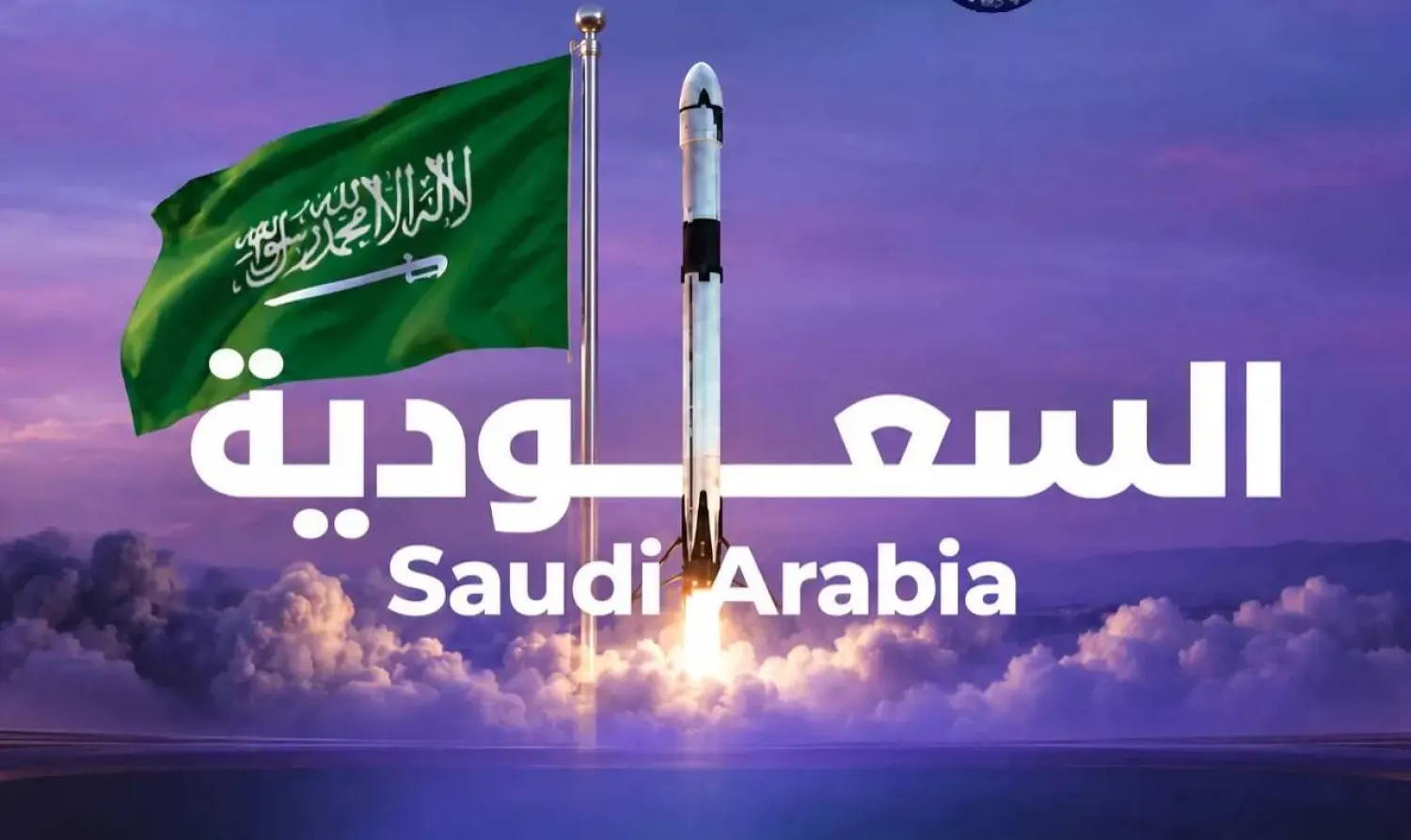

Saudi Arabia Launches First Biological Samples from the Middle East to Space

The milestone strengthens the Kingdom's role in microgravity research and expands the use of space science and technology in health and life sciences research. (Saudi Space Agency)
TT

Saudi Arabia Launches First Biological Samples from the Middle East to Space

The milestone strengthens the Kingdom's role in microgravity research and expands the use of space science and technology in health and life sciences research. (Saudi Space Agency)

Saudi Arabia, represented by the Saudi Space Agency (SSA) and King Abdullah University of Science and Technology (KAUST), has launched the first biological samples of their kind from the Middle East to space as part of the BioGravity-1 mission aboard SpaceX CRS-35 to the International Space Station, with support from NASA. The launch is part of a long-term research program supporting scientific efforts against Alzheimer's disease and multiple sclerosis through three consecutive missions.

The milestone strengthens the Kingdom's role in microgravity research and expands the use of space science and technology in health and life sciences research, reported the Saudi Press Agency on Wednesday.

The mission marks the program's first phase. It sends reference human samples from healthy donors to space to establish a scientific baseline for later phases, and uses the unique properties of microgravity to study cellular changes associated with aging and neurodegenerative diseases. The biological experiments developed by KAUST include two experiments, SSA-1 and SSA-2.

The program is carried out through an international scientific partnership with the US-based National Stem Cell Foundation (NSCF) and Axiom Space, with support from NASA, alongside national scientific participation from the Saudi Space Agency and KAUST, connecting national capabilities with the global research community.

General Supervisor of Microgravity Research at the Saudi Space Agency and Saudi Astronaut Rayyanah Barnawi said: “The launch of these samples is an important scientific step toward harnessing the space environment to serve human health, and reflects the growth and readiness of national capabilities to take part in advanced research.”

“Through the BioGravity program, we aim to turn knowledge gained in orbit into research opportunities that deepen our understanding of diseases and support the development of future therapies,” Barnawi added.

Professor of Bioscience at KAUST Professor Imed Gallouzi, who is also the lead scientist of the project, said the mission enables researchers to test disease models in an environment that cannot be replicated on Earth, and strengthens the university's contribution to discoveries that benefit patients in the Kingdom and around the world.

Scientific Advisor to the National Stem Cell Foundation and Global Head of Biomanufacturing and Biotechnology at Axiom Space Dr. Pinar Mesci said: “I am especially excited about this mission, as the NSCF team will test the 'Brain Organoid Village' concept in microgravity for the first time. Combining multiple individual cell lines within a single organoid enables population-level studies and makes it possible to run what could be described as clinical trials in a dish.

The mission included samples from Saudi Arabia through a collaboration with the Saudi Space Agency and KAUST.

The program spans three interconnected research missions: the first studies healthy reference samples, the second will study models derived from patients with Alzheimer's disease and multiple sclerosis, and the third will focus on therapeutic responses and explore potential drug targets in microgravity.

The BioGravity program is part of the SSA's efforts to build national capabilities in microgravity research and life sciences, expand international scientific partnerships, and harness space science and technology to serve human health, contributing to a knowledge-based economy, innovation and quality of life in line with Saudi Vision 2030.


Turkish Authorities Say Animal Spotted in Istanbul Woodland Was Not a Lion

Turkish gendarmerie officers block a road as police and animal welfare teams search for an alleged lioness spotted roaming in Sariyer district in Istanbul, Türkiye, Monday, Nov. 23, 2026. (Ahmet Faruk Sarikoc/IHA via AP)
TT

Turkish Authorities Say Animal Spotted in Istanbul Woodland Was Not a Lion

Turkish gendarmerie officers block a road as police and animal welfare teams search for an alleged lioness spotted roaming in Sariyer district in Istanbul, Türkiye, Monday, Nov. 23, 2026. (Ahmet Faruk Sarikoc/IHA via AP)

A major operation in woodland north of Istanbul to track down a suspected lion found the animal was neither a lion nor any other type of big cat, the Istanbul governor's office said.

On Sunday evening, a sighting on surveillance cameras of "an animal resembling a lion" ‌by personnel ‌at a police station ‌in the ⁠Zekeriyakoy area, north of ⁠the European side of Istanbul, sparked a search by Turkish security and wildlife personnel.

Turkish television broadcast surveillance and thermal camera footage showing what appeared to be a large cat walking ⁠through undergrowth and teams searching through ‌woodland in outer Istanbul's ‌Sariyer district, which borders the Bosphorus strait and ‌the Black Sea.

The Istanbul governor's office ‌said late on Monday that the area was scanned from the air with drones equipped with thermal cameras and on the ground ‌by search teams. Additionally, bait was placed, and motion-activated camera traps ⁠were deployed, ⁠it said.

"No concrete evidence indicating the presence of a lion was found during the field operations," the Istanbul governor's office said.

It said that based on new footage, captured from various angles, "it has been determined that the animal in the footage is neither a lion nor any other species of big cat."


Egypt Recovers Remains of Napoleon's Sunken Fleet Off Alexandria

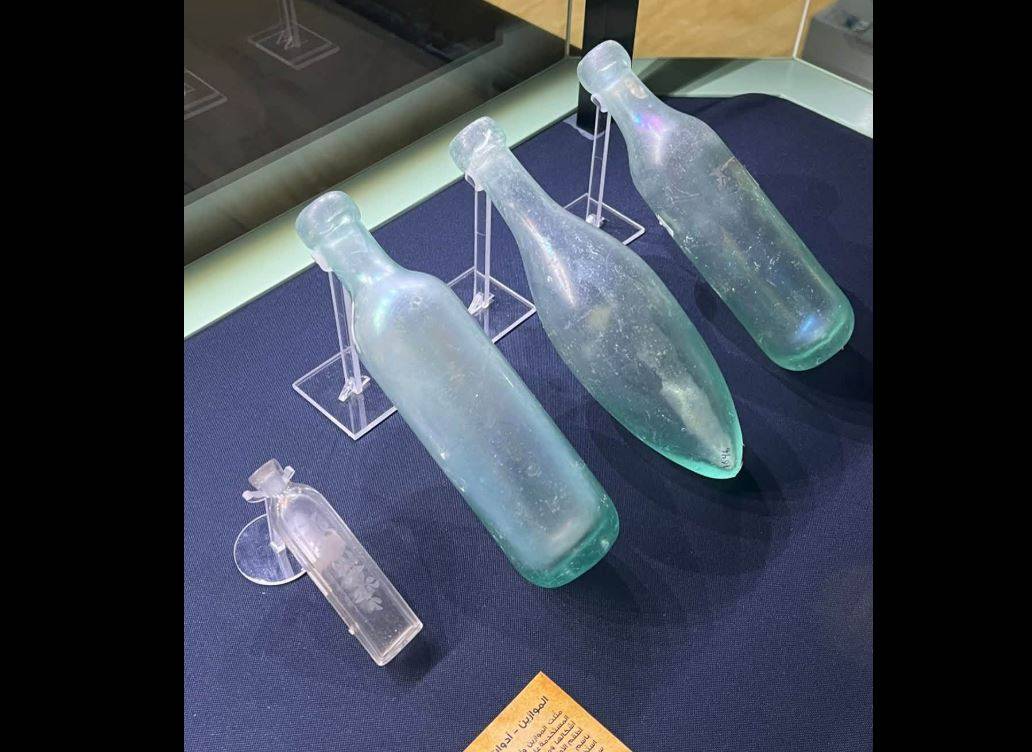
Tableware from Napoleon's sunken fleet (Egyptian Ministry of Tourism and Antiquities)
TT

Egypt Recovers Remains of Napoleon's Sunken Fleet Off Alexandria

Tableware from Napoleon's sunken fleet (Egyptian Ministry of Tourism and Antiquities)

Egypt marked World Underwater Cultural Heritage Day with an exhibition titled "Napoleon's Fleet: Tales Told by the Sea" at the National Museum of Egyptian Civilization (NMEC), highlighting one of the most significant historical events associated with the country's underwater archaeological heritage.

The exhibition tells the story of the French fleet that sank off the coast of Alexandria during Napoleon Bonaparte's campaign in Egypt. Through a collection of archaeological artifacts, it sheds light on the events surrounding the fleet's sinking while offering insights into the daily lives and activities of sailors aboard the ships.

The exhibition features approximately 235 artifacts displayed for the first time, including objects recovered from the wrecks of Napoleon's fleet and selected from the collections of the Department of Underwater Antiquities.

Some artifacts from the sunken fleet (Ministry of Tourism and Antiquities)

Other exhibits come from several museums, including the Maritime Museum, the Alexandria National Museum and the National Museum of Egyptian Civilization, according to a statement issued Monday by Egypt's Ministry of Tourism and Antiquities.

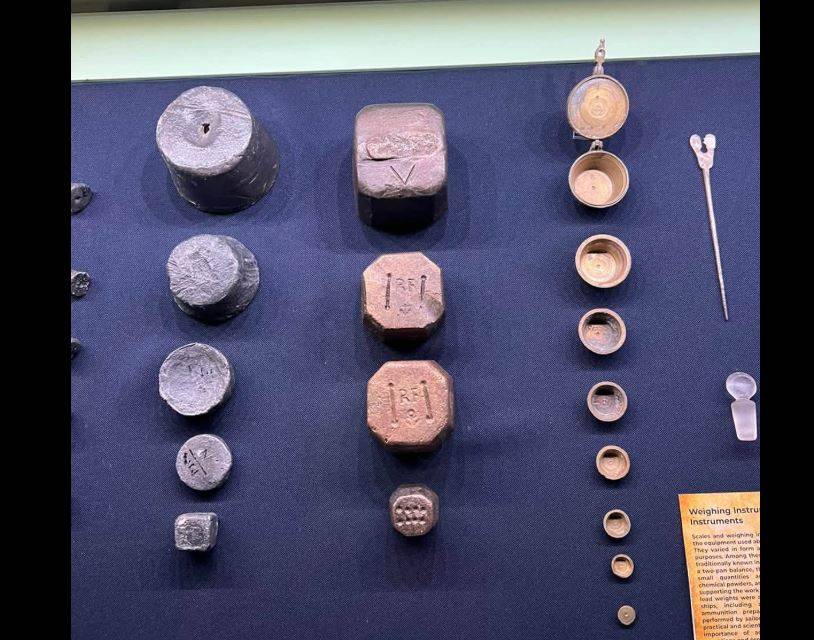
Among the exhibits are gold coins, navigation and writing instruments, cooking utensils used by crew members, and weapons recovered from the shipwreck sites. Together, the objects provide a comprehensive picture of maritime and military life during that period.

The exhibition will run for three months in the Egyptian Textile Hall at the National Museum of Egyptian Civilization.

It forms part of the ministry's efforts to highlight the importance of underwater cultural heritage as a rich source of physical evidence documenting historical events, figures and civilizations.

Such discoveries also contribute to archaeological research and scholarship, allowing historians to reexamine aspects of the past through evidence recovered from the sea.

The exhibition offers visitors an opportunity to explore a distinctive part of Egypt's heritage through original artifacts preserved underwater for centuries, each providing evidence of a significant historical period and revealing stories of maritime life at the time.

Archaeologist Dr. Hussein Abdel-Bassir, director of the Antiquities Museum at the Bibliotheca Alexandrina, said the exhibition's significance lies in its ability to bring back an entire world that disappeared beneath the water, leaving behind details waiting to be rediscovered and interpreted.

Some of the weighing scales used aboard the fleet (Ministry of Tourism and Antiquities)

"On August 1, 1798, Abu Qir Bay witnessed one of the most important naval battles in modern history," Abdel-Bassir explained.

"Napoleon's French expedition had arrived in Egypt just weeks earlier, pursuing an ambitious military, political and scientific project. But the French fleet suffered a devastating blow at the hands of the British fleet under Admiral Horatio Nelson in the Battle of the Nile."

He said the French ships were reduced to wreckage, shattering France's ambitions to dominate the Mediterranean, while the waters off Alexandria preserved the remains of that historic moment.

"What is fascinating is that the sea, which witnessed the struggle between empires, preserved not only the remains of ships and cannons but also details of the everyday lives of the men aboard them," he said.

"A small artifact can sometimes tell history more effectively than a grand monument. A coin, a personal belonging, a piece of tableware or part of a ship's equipment allows us to see history from a human perspective, rather than through the eyes of rulers and generals."

Abdel-Bassir said perhaps the most important lesson offered by Napoleon's sunken ships is that history never truly disappears.

"Sometimes history simply changes its location. It may leave the pages of books for the seabed, or transform from a written account into a silent artifact. But it remains there, waiting for someone to discover it, understand it and bring it to life for new generations," he said.

The archaeologist also described the celebration of World Underwater Cultural Heritage Day, coinciding with the 30th anniversary of Egypt's General Department of Underwater Antiquities, as an important opportunity to reconsider the future of the field.

Three decades of archaeological work, he said, provide an opportunity to assess what has been accomplished and develop an ambitious vision for what should be achieved in the decades ahead.


Denmark to Propose Mobile Phone Ban in Schools in 2027

22 October 2026, Schleswig-Holstein, Kiel: A man's hand reaches for a smartphone. (dpa)
TT

Denmark to Propose Mobile Phone Ban in Schools in 2027

22 October 2026, Schleswig-Holstein, Kiel: A man's hand reaches for a smartphone. (dpa)

Denmark will propose a ban on mobile phones in its primary and lower secondary school system as well as content filtering on the schools' network starting from the new academic year in 2027, the Danish education ministry said ‌on Monday.

Countries ‌including the Netherlands, ‌South ⁠Korea and Italy have ⁠banned smartphones in schools due to concerns over their impact on concentration and behavior, while Poland and the Czech Republic in June proposed ⁠a similar ban.

"Children ‌should be ‌able to go to school ‌without constantly being distracted by ‌things like social media, online shopping, and gaming," Education Minister Magnus Heunicke said in a statement.

The ‌ban also includes other private electronic devices with internet ⁠access.

⁠Content filters will be implemented to block websites that have no educational or pedagogical relevance, including social media, gaming and shopping sites, during lesson time.

It will be up to each municipality and school to decide which websites should be blocked.
