


Tetteh Affirms ‘Broad Support' For Libyan Agreement … Warns of Disrupting Elections

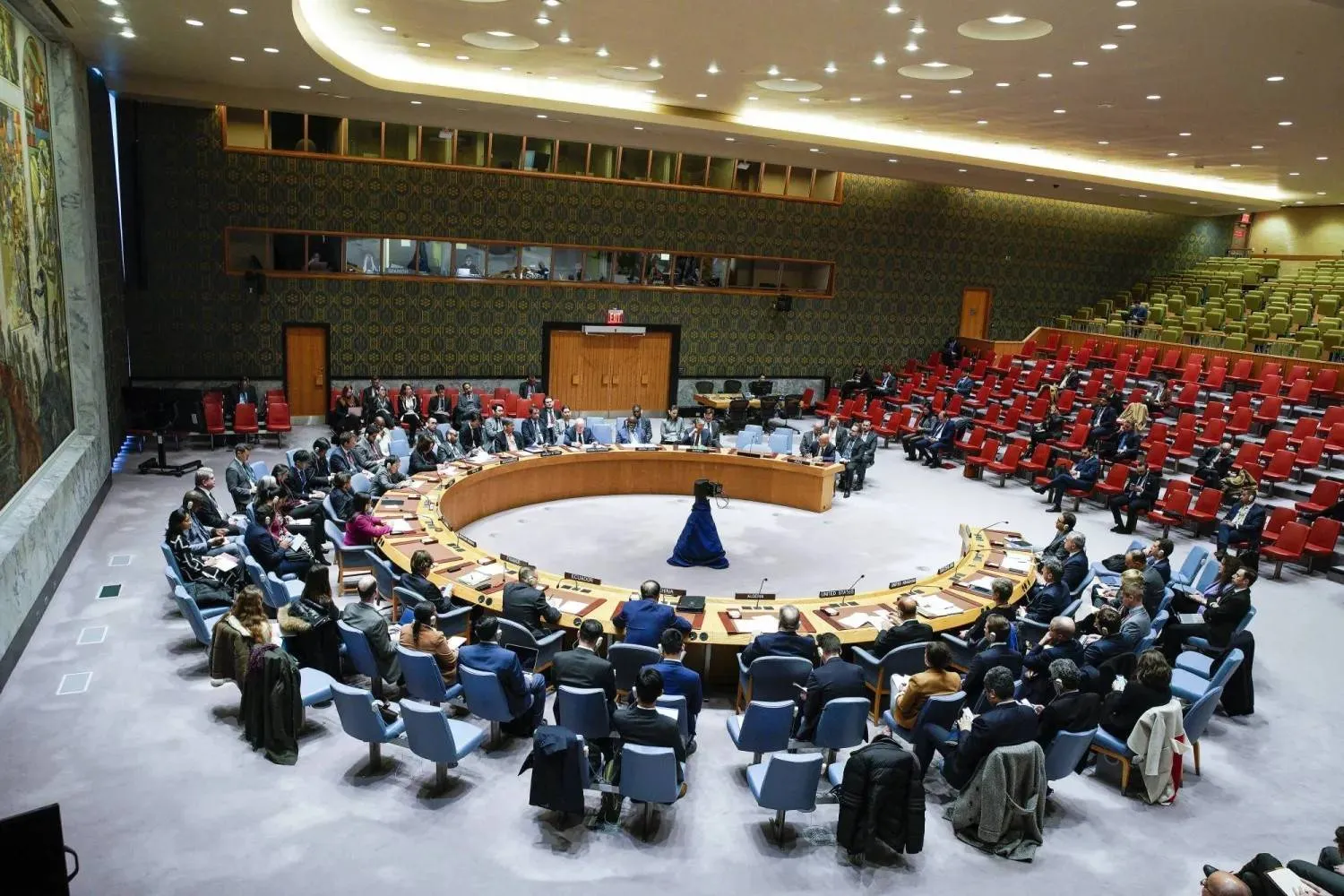
A session of the UN Security Council on Libya (UN Security Council)
TT

Tetteh Affirms ‘Broad Support' For Libyan Agreement … Warns of Disrupting Elections

A session of the UN Security Council on Libya (UN Security Council)

UN Special Representative of the Secretary-General for Libya (UNSMIL), Hanna Tetteh, told Security Council members on Wednesday that a deal she brokered to break the political deadlock in the North African country enjoys broad support. However, she warned that rejection by either of Libya’s two legislative bodies could derail elections scheduled to take place within the next two years.

‘Viable Pathway’

In a briefing to the UN Security Council in New York on Wednesday, Tetteh said that following four months of deliberations, on 30 August, the parties to the Smaller Convening signed an Agreement in Tripoli marking a break in the prolonged political and institutional deadlock.

The agreement established a viable pathway for legislative and presidential elections under a single unified executive authority within a period of 24 months.

Also, it provides for the reconstitution of the board of the High National Elections Commission (HNEC) and for resolving long-standing contentious issues in the constitutional and legal framework that could negatively impact efforts to conduct peaceful credible and inclusive elections.

According to the UN representative, the Agreement was welcomed by the Government of National Unity, the Libyan National Army, the House of Representatives, and Vice President of the Presidential Council Mousa Al-Koni, among others.

However, she said, the High Council of State rejected the Agreement on 5 October along with the laws and decisions communicated by the Speaker of the House of Representatives, citing approaches that would bypass the constitutional, legal and consensual frameworks governing the political process or undermine the prerogatives assigned to the two institutions.

“Their rejection continues to reflect the limited willingness of some of its members to engage constructively in this process, which has been a feature of the ongoing engagement with this chamber,” Tetteh warned.

In this regard, the UN representative revealed that several HCS members have indicated their willingness to engage in the Agreement and have requested additional time to consult amongst themselves on moving the process forward.

“I will further consult the parties to the Smaller Convening in our meeting later this month, including by examining the option of proceeding to a national mechanism of broad representation as provided for in Article 5 of the Agreement and in consultation with this Council,” she said.

Impact of Political Fragmentation

Tetteh said that institutional and political fragmentation have continued to impact negatively on the economic and security situation in the country.

While global oil prices should have generated a significant windfall for public revenues to benefit all, many Libyans are instead seeing their purchasing power eroded by rising food prices, a weaker dinar and inflation right now above 14%, while access to essential public services remain unreliable.

Also, food prices alone further rose by 3.8% in August, with the pressure particularly acute in the West and South, where food costs increased sharply over the summer.

Tetteh noted that between January and September 2026, fuel imports totalled 8.15 million metric tons, at a cost of $8.9 billion, of which between 30 and 50% of these imports are estimated to be lost to smuggling, worth between $2.4 and $4.4 billion.

She said the recent disruptions to oil infrastructure demonstrate the wider economic cost of political and security fragmentation to impact strategic national assets.

Petroleum Facility Guards from Zintan blocked the Hamada-Zawiya pipeline from 15 to 20 September, followed by the Sharara-Zawiya pipeline from 21 to 26 September reportedly due to disputes over appointments from within that region.

“The disruptions resulted in around one million barrels of lost production, worth approximately $100 million, and risked affecting salary payments and electricity generation,” she said.

At the security level, Tetteh said the overall situation remains fragile.

She welcomed positive steps toward enhanced military cooperation between Eastern and Western military and security institutions, adding the Mission continues to encourage confidence-building measures at the technical level between both sides.

Tetteh also referred to the follow-up meeting of the Eastern and Western maritime, air force and air defense commanders in Sirte on 9 September to discuss practical cooperation towards reunifying these sectors.

Elsewhere, the UN representative expressed concern over the execution over the last two months, in Benghazi of 58 individuals convicted of prior crimes related to terrorism offenses, including alleged membership in proscribed terrorist groups or involvement in the killing of military and civilian personnel.

She also condemned the ongoing wave of misinformation, disinformation, hate speech and incitement targeting refugees, migrants, including those with an irregular status, humanitarian actors and UN agencies and personnel in Libya, including colleagues who are Libyan nationals.

Tetteh asked the Security Council’s continued support to the UNSMIL-facilitated political roadmap and to ensure Libyan leaders promptly meet their obligations to fulfil their people’s ultimate aspirations for peace, stability, inclusive and democratic governance that they so deserve.

“The path to a stable, unified, and prosperous Libya remains long, but our destination remains within reach,” she said.


Hezbollah Aid to Displaced Families Raises Questions Over Funding Sources

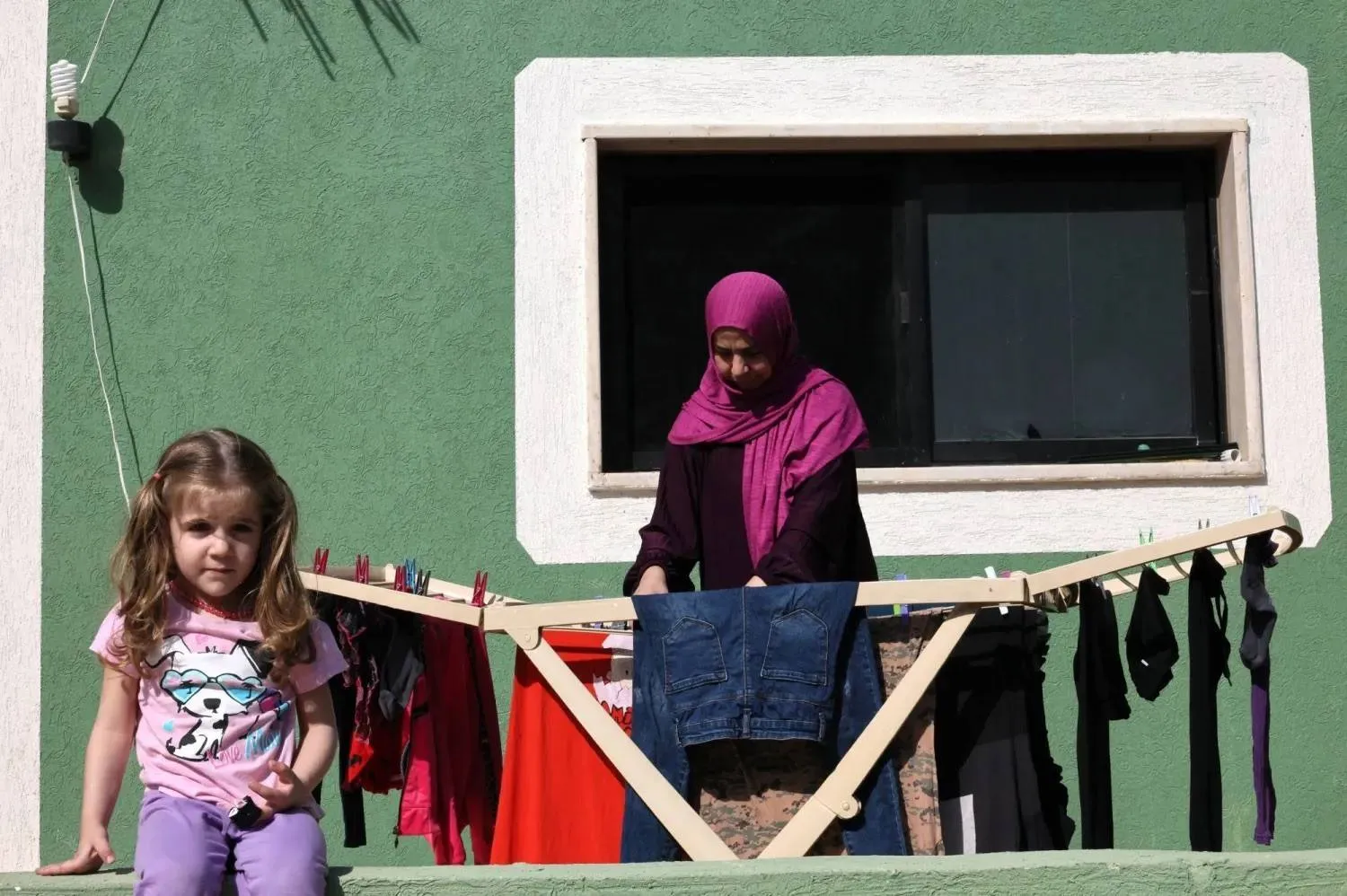
A woman and her daughter, displaced from their home in the South Lebanon village of Aita al-Shaab in 2023, live in a rented apartment in the southern town of Maarakeh (EPA). 
TT

Hezbollah Aid to Displaced Families Raises Questions Over Funding Sources

A woman and her daughter, displaced from their home in the South Lebanon village of Aita al-Shaab in 2023, live in a rented apartment in the southern town of Maarakeh (EPA). 

Hezbollah’s announcement of financial assistance for displaced Lebanese families and those affected by the fighting with Israel has raised questions about where the money comes from and how it is transferred and distributed, amid US sanctions on Iran and tighter Lebanese oversight of funding channels.

The announcement also comes as Lebanese authorities move to place all weapons under the control of legitimate state forces.

Meanwhile, President Joseph Aoun received a telephone call from Iranian Foreign Minister Abbas Araghchi to discuss regional developments. According to the Lebanese presidency, the two agreed on the need to support diplomatic solutions as the best way to end conflicts in the region.

Hezbollah’s funding sources

Hezbollah has traditionally relied on direct Iranian support, donations from sympathizers abroad and commercial activities, as well as illicit sources that US authorities accuse the group of exploiting.

Lebanese authorities, meanwhile, are seeking to strengthen financial regulations and oversight, particularly through proposed amendments to Law No. 44 on combating money laundering and terrorist financing.

The changes aim to identify the beneficial owners of companies and commercial ventures, trace the origins and destinations of funds, and tighten supervision of currency exchange dealers and money transfer companies.

US questions reported Iranian funding

A US State Department spokesperson has questioned, for a second time, reports of money reaching Hezbollah from Iran.

“The money supposedly arriving from Iran simply does not exist,” the spokesperson was quoted as saying.

The official accused Hezbollah of relying on criminal activities, including drug trafficking and partnerships with Latin American drug cartels, to compensate for funds it was not receiving from Tehran.

No detailed public evidence was provided to substantiate the allegations.

The spokesperson described Hezbollah’s aid announcement as an attempt to salvage its reputation rather than help those it had drawn into war. The official also accused the group of dragging Lebanon into war in a “suicidal” manner, arguing that even if Hezbollah had the money, it would use it to purchase weapons to threaten Israel and intimidate its opponents.

Hezbollah’s weapons, the spokesperson added, had brought Lebanon nothing but misery and destruction.

The official said Washington was working with Gulf and European partners on a plan to make billions of dollars available for Lebanon’s reconstruction, without specifying a final amount or implementation timetable.

Disarming Hezbollah was an essential part of efforts to restore stability and prevent renewed conflict, he stressed.

On Tuesday, Hezbollah announced a financial assistance program for displaced families whose homes had been destroyed or damaged and who had no alternative accommodation.

The program covers rent and furniture expenses of up to $14,000, payable over one year.

The announcement came days after Reuters reported that Hezbollah had received $200 million from Iran to assist displaced Lebanese families, a claim also questioned by Washington.

Questions over alternative funding channels

Sami Nader, director of the Middle East Institute for Strategic Affairs, told Asharq Al-Awsat that US skepticism suggested Washington was closely monitoring Hezbollah’s potential funding sources.

However, he did not rule out the possibility that Iran and Hezbollah had recently developed new methods of transferring money, including cryptocurrencies or gold.

Nader said US trade monitoring and tighter financial restrictions posed challenges to such channels, potentially explaining the latest round of sanctions. He stressed the need for Lebanon to enforce its financial laws across all sectors.

“The Lebanese state must enforce the laws as it did with Al-Qard Al-Hassan, and oversight must cover all areas,” he said.

Nader called for scrutiny of cryptocurrency exchange offices to determine whether they complied with Lebanese regulations, adding that new legislation might be needed to address emerging financial mechanisms.

Concerns over Lebanon’s financial standing

Lebanese Forces lawmaker Razi al-Hajj accused Hezbollah of trying to project the same strength it possessed before the two wars, while disregarding the deaths, injuries and economic collapse that followed.

He also accused the group of attempting to shift responsibility onto the government, which he said had already shouldered more than it could manage. While affirming that those affected by the fighting were entitled to assistance, al-Hajj said the central issue was enforcing laws against money laundering and terrorist financing.

He warned that failures in this area could damage Lebanon’s financial standing and international relations.

The deputy argued that Hezbollah’s funding, which he characterized as generally originating from illicit sources, posed a threat to state stability and ties with the international community.

He also warned that Lebanon could move from the Financial Action Task Force’s gray list to its blacklist.

Transparency must apply to everyone

Lawmaker Fouad Makhzoumi said demands for transparency and verification of funding sources, transfer methods and distribution mechanisms should apply to everyone without exception.

Writing on X, he warned of the risks of money laundering and terrorist financing, particularly given Lebanon’s inclusion on the gray list of the Financial Action Task Force (FATF).

Makhzoumi also urged the government to assume responsibility for providing shelter and assistance to displaced families, stressing that no Lebanese citizen should be left to face hardship alone.


Sudan's Famine Risk Worsened by Conflict, Drought and Funding Shortages

A Sudanese farmer plants seeds in an agricultural field in Gedaref State, eastern Sudan, on July 18, 2026. (Photo by AFP)
TT

Sudan's Famine Risk Worsened by Conflict, Drought and Funding Shortages

A Sudanese farmer plants seeds in an agricultural field in Gedaref State, eastern Sudan, on July 18, 2026. (Photo by AFP)

Conflict and drought are worsening food insecurity across parts of Sudan’s Darfur and Kordofan regions, a global food crisis monitor warned on Monday.

There is a “deteriorating humanitarian situation” across greater Darfur and Kordofan, including areas identified as at risk of famine, as well as other locations, according to the Integrated Food Security Phase Classification, or IPC.

Severe drought linked to El Niño is affecting more than half of Sudan, causing localized crop failures and depriving households of food and income, it said.

In May, nearly 19.5 million people — more than 40% of the population — were facing high levels of acute food insecurity, according to an IPC assessment. Of those, 135,000 were in Phase 5, the most severe classification, characterized by extreme food shortages, starvation, very high levels of malnutrition and deaths from disease or acute malnutrition.

Sudan’s war erupted in April 2023 when tensions between the military and the paramilitary Rapid Support Forces, or RSF, escalated into open fighting in the capital, Khartoum, before spreading across the country. The conflict has killed at least 150,000 people, according to conflict monitor ACLED, though aid groups say the true toll is likely higher.

The war has also displaced about 13 million people and pushed parts of the country into famine.

Farmers’ livelihoods have been affected, and they're now relying more on assistance, the IPC said. Without a quick and significant increase in assistance to Sudan, “food insecurity, acute malnutrition, and excess mortality will likely intensify," the group said.

Poor levels of growth have affected 64% of croplands in North Darfur and about half in South Darfur, West Kordofan and South Kordofan.

The IPC reported worsening acute malnutrition in additional areas, including Nyala, where children accessing nutrition services who were admitted for severe acute malnutrition doubled from approximately 5% to 11% between January and August. Two displacement camps in South Darfur also recorded global acute malnutrition above famine thresholds.

In North Darfur, delayed rains that impacted crop cultivation and “critically low” food stocks have worsened food insecurity. Meanwhile, Western Kordofan is experiencing one of its worst droughts since 2004, the IPC said, citing rainfall levels.

Humanitarian organizations have repeatedly said that ending the conflict and ensuring safe, sustained humanitarian access are essential to improving conditions across Sudan. But repeated efforts to achieve peace have yet to bring the war to an end.

In the latest bout of violence, an airstrike killed at least 72 civilian miners in a border area between Sudan and Egypt where artisanal and small gold mining is widespread, local rights group Emergency Lawyers said Sunday.

The group, which tracks violence across Sudan, said without providing evidence that Egyptian warplanes targeted the miners in Sudan’s North Wadi area.

The Egyptian Armed Forces released a statement late Monday saying that they had launched the latest wave of a "large-scale campaign to confront illegal mining in the Eastern Desert” by dropping “warning leaflets” on citizens. They did not provide any further details or explanation.

In June, Egyptian security forces detained hundreds of people, including foreigners, on the border with Sudan, accusing them of illegal gold mining and smuggling.

Separately, the Egyptian Foreign Ministry also announced the death of two Egyptian truck drivers in the Sudanese capital of Khartoum after a gunman opened fire. The statement said the shooter has been apprehended by the authorities.


Tunisian Journalists Fear Jail Again as Freedoms Erode

Tunisian journalists participate in a rally called by the Tunisian journalists' union to demand the release of journalist Mohamed Yousfi, a vocal critic of President Kais Saied, in Tunis, Tunisia. September 8, 2026. REUTERS/ Jihed Abidellaoui
TT

Tunisian Journalists Fear Jail Again as Freedoms Erode

Tunisian journalists participate in a rally called by the Tunisian journalists' union to demand the release of journalist Mohamed Yousfi, a vocal critic of President Kais Saied, in Tunis, Tunisia. September 8, 2026. REUTERS/ Jihed Abidellaoui

In the garden of the independent outlet ‘Nawaat,’ about half a dozen journalists sit smoking, trading jokes and discussing investigations they plan to publish on subjects ranging from the quality of drinking water to conditions of prisons.

They know that any of the stories ⁠could lead to prosecution.

A Hard Test

Journalists in Tunisia who enjoyed a burst of press freedom after the 2011 Arab Spring are once again looking over their shoulders in the knowledge their work may land them in prison.

The 2011 overthrow of Zine El-Abidine Ben Ali unshackled Tunisia's media, but a decade later President Kais Saied's seizure of sweeping powers began eroding those gains.

Some 20 journalists face criminal charges over their reporting or social media posts, with four already imprisoned, according to Zied Dabbar, head of the National Syndicate of Tunisian Journalists, who called the situation unprecedented.

In return, Saied has said he is not a dictator and that journalists are free to criticize authorities and frequently do.

Authorities say prosecutions are impartial judicial matters and that no one is above the law.
The Tunisian prime minister's press office did not respond to Reuters’ requests for comment.

Now, independent media face a full-on crackdown, rights groups say, and Tunisia has tumbled more than 50 places in the past five years to 137th in Reporters Without Borders' press freedom index.

Shifting Minefield

“We are living in a grey area, as if we were in a shifting minefield, and we pay the price every day,” said Aymen Rezgui, editor-in-chief of Nawaat, reflecting on how at least limits were clear pre-2011 versus current uncertainty.

Rezgui said Nawaat regularly receives threats — anonymously or from government supporters on social media branding him a traitor — over reporting on issues ranging from prisons to power cuts and water shortages.

The outlet has also faced judicial restrictions, including a government order suspending activities for a month last year.

Journalists in Jail, Others Choose Exile

Many other journalists report similar pressures.

Last month, Mohamed Yousfi, editor-in-chief of independent news website Al-Qatiba, was arrested on his way to a private radio station for a live program. A judge has charged him with illicit enrichment, which he says is a fabrication.

Other jailed journalists and media figures include prominent broadcasters Mourad Zeghidi and Borhen Bsaies, who were first convicted of spreading false news and insulting the president, and later of tax evasion. ⁠They deny the charges and say they have been framed.

For some, leaving Tunisia has become the only option to avoid a similar fate, despite the personal cost.

In December 2025, Khaoula Boukrim, founder of independent website Tumedia and a prominent critic of the president, left for France fearing imminent arrest.

Months later, she was sentenced in absentia to four years in prison over writings critical of the judiciary and a system of governance she described as authoritarian.

Journalist Haythem Mekki has also left Tunisia after receiving a prison sentence following public comments he made denouncing conditions in a hospital morgue.

Beyond prosecutions, journalists are frequently prevented by police from working in public and are sometimes detained for hours, the journalists' syndicate says.

Most ministries no longer have press offices, while several international correspondents have been denied accreditation, further restricting independent coverage.

Political and critical programs have disappeared from many private radio stations. State media has ⁠increasingly marginalized dissenting voices, the syndicate says, though the TAP state news agency remains a rare exception, continuing to cover protests, opposition activities and civil society initiatives.
