


IMF Expects Middle East Economies to Rebound to 6.6% Growth in 2027

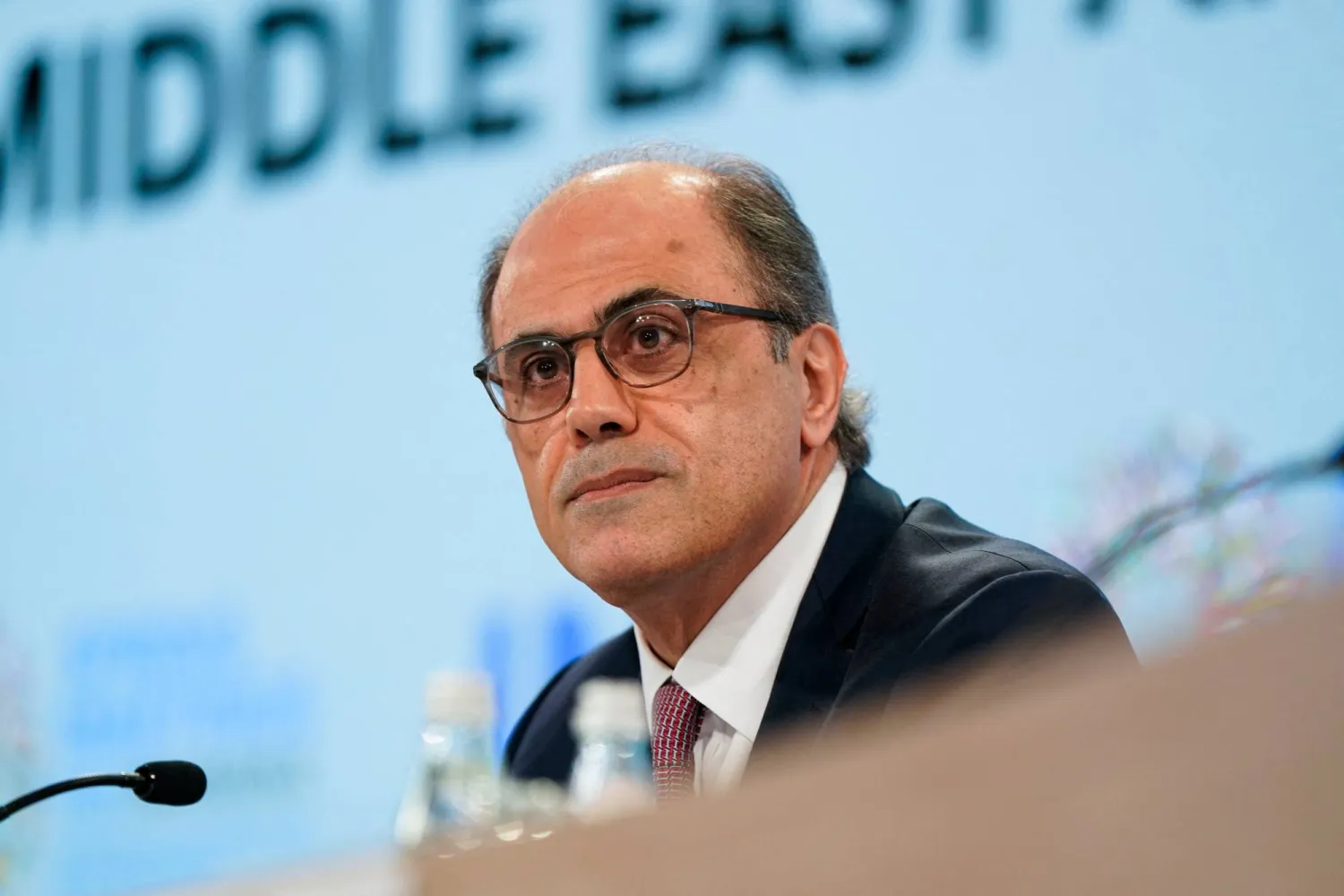
Jihad Azour, Director of the Middle East and Central Asia Department at the International Monetary Fund (IMF) attends a press conference at the IMF/World Bank 2026 Spring Meetings in Washington, D.C., US, April 16, 2026. REUTERS/Elizabeth Frantz
TT

IMF Expects Middle East Economies to Rebound to 6.6% Growth in 2027

Jihad Azour, Director of the Middle East and Central Asia Department at the International Monetary Fund (IMF) attends a press conference at the IMF/World Bank 2026 Spring Meetings in Washington, D.C., US, April 16, 2026. REUTERS/Elizabeth Frantz

The International Monetary Fund expects the economies of the Middle East, North Africa and Pakistan to rebound to growth of 6.6 percent in 2027, following a projected contraction of 1.3 percent this year, amid the economic fallout from the regional war and disruptions to energy production and trade, which have affected countries across the region to varying degrees.

Jihad Azour, the IMF's director for the Middle East and Central Asia, said economies directly affected by the conflict are facing severe pressures, while other economies in the region, along with most countries in the Caucasus and Central Asia, have shown greater resilience.

He explained that the path of the recovery will depend largely on how quickly energy production and trade return to normal and on countries’ ability to maintain macroeconomic stability.

The forecasts come after the economies of the Middle East, North Africa and Pakistan grew by 3.3 percent in 2025, illustrating the scale of the shock expected this year before a strong rebound next year.

Azour stressed, however, that the overall projections mask significant disparities among the region’s economies and that the recovery will not be uniform across countries.

Oil Exporters and Importers

Azour said oil-exporting countries directly affected by disruptions to energy production and trade will experience a marked contraction in 2026, although higher oil prices will provide some support to their fiscal and external positions.

A gradual recovery in production and trade is expected to drive a strong rebound in GDP growth in 2027, although output levels will remain below the trajectory projected before the outbreak of the conflict.

By contrast, economic activity in the region’s oil-importing countries has remained relatively resilient during 2026 and is expected to continue doing so. Workers’ remittances, tourism revenues, favorable financial conditions and government support have helped cushion the immediate impact of the shock, although the policy space available to governments is narrowing.

The IMF expects inflation in these economies to rise moderately in 2026 before gradually easing thereafter.

The Chinese-flagged container shipping vessel Hui Fa transits the Gulf of Oman on October 13, 2026. (Photo by AFP)

Lower Inventories, Greater Risks

Azour noted that the impact of the energy shock has been less severe than initial estimates suggested, thanks to surpluses accumulated before the war, production by non-Gulf countries, alternative transportation routes, adjustments in demand and drawdowns from inventories.

He cautioned, however, that these factors have provided time for adjustment but are not sustainable resources. Available inventories have declined and spare production capacity has narrowed, leaving markets more vulnerable to larger price increases should disruptions recur.

Azour identified a prolonged war as the most significant risk to the outlook, warning that further disruptions to energy production, shipping routes or critical infrastructure would weaken economic activity among Gulf oil exporters, increase inflationary pressures and exacerbate fiscal and external strains across the region.

He also warned that tighter global financial conditions could weaken demand, raise borrowing costs and increase pressure on currencies, particularly in economies with substantial sovereign debt-financing needs or a heavy reliance on external financing.

Low-income and fragile economies remain the most vulnerable to these risks because of their dependence on food imports and limited fiscal space, at a time when official development assistance is also declining.

Call for Targeted Support and Rebuilding Fiscal Buffers

Azour urged policymakers to prioritize price stability and fiscal sustainability, using monetary policy as the first line of defense when inflationary pressures emerge, complemented by prudent fiscal policy, particularly in countries with limited financial resources.

He stressed the importance of rebuilding fiscal buffers to withstand future shocks by strengthening domestic revenues, improving spending efficiency and developing stronger fiscal frameworks. He cautioned against broad-based subsidies, favoring instead temporary and targeted cash assistance for the groups most affected, helping keep the cost of intervention within budgetary limits.

Over the longer term, Azour emphasized the importance of strong institutions, credible monetary frameworks and central bank independence, alongside greater trade diversification, deeper regional integration and a stronger capacity to adopt new technologies, including artificial intelligence, to boost productivity and support growth.

Azour noted that the IMF has approved approximately $48 billion in financing for countries in the region since 2020. During fiscal year 2026, it also carried out around 437 technical assistance and capacity-building projects in 31 countries.

The IMF is scheduled to release its full regional report in Dubai on October 22, providing a more detailed assessment of economic developments and policy priorities.



Crown Prince: 2027 State Budget Maximizes Saudi Vision 2030 Impact, Turns Achievements into Sustainable Economic Strength

Saudi Crown Prince Mohammed bin Salman bin Abdulaziz Al Saud - SPA
TT

Crown Prince: 2027 State Budget Maximizes Saudi Vision 2030 Impact, Turns Achievements into Sustainable Economic Strength

Saudi Crown Prince Mohammed bin Salman bin Abdulaziz Al Saud - SPA

On the approval of the State's General Budget for fiscal year 1448/1449 AH (2027), Prince Mohammed bin Salman bin Abdulaziz Al Saud, Crown Prince, Prime Minister, and Chairman of the Council of Economic and Development Affairs, affirmed that the 2027 budget embodies the government's commitment to placing the nation's advancement and the interests of its citizens at the forefront of its priorities, and preserving development gains for current and future generations.

He noted that the achievements realized thus far are the result of the directives of Custodian of the Two Holy Mosques King Salman bin Abdulaziz Al Saud and the efforts of Saudi Arabia's citizens.

The Crown Prince stated that work in the third phase of Saudi Vision 2030 builds upon the reforms and accomplishments achieved during the previous two phases, stating: "We are maximizing the impact of the Vision on people's lives, transforming its achievements into a sustainable strength for our economy and renewed opportunities for future generations."

He emphasized the continued expansion of development opportunities, investment in the capabilities of Saudi citizens, and the building of a more diverse and competitive economy whose impact extends beyond 2030, SPA reported.

The Crown Prince affirmed that the 2027 budget is part of a long-term financial plan that balances supporting sustainable growth, implementing development priorities, and strengthening public finance sustainability, while maintaining flexibility in resource allocation and continued funding for programs and projects with economic and social impact. He noted that enhancing the effectiveness of the social support and protection system—by directing spending to those most in need and raising living standards and quality of life—remains a core priority within Saudi Arabia's fiscal and economic policy, alongside continued investment in infrastructure and essential services for citizens, residents, and visitors, and the development of transport and logistics networks to strengthen regional connectivity, enhance investment appeal, improve the efficiency of goods movement, and bolster economic resilience against shifts in global supply chains.

According to SPA, the Crown Prince underscored the importance of increasing spending efficiency, measuring its outcomes, aligning resource allocation with national strategies, and maximizing returns from government assets and investments. He stressed that government entities are responsible for ensuring high-quality monitoring, execution, and transparency, as well as achieving targeted project outcomes that support medium- and long-term development. He further noted that economic reforms and policies supporting economic activity have broadened the economic base and enhanced competitiveness, pointing out that 2026 estimates indicate a 2.5% growth in real GDP from non-oil activities, reflecting progress in economic diversification plans.

The Crown Prince stated that financial sector growth, underpinned by strong regulatory frameworks, supports economic financing and private sector expansion, and that maintaining the strength of Saudi Arabia's financial position facilitates access to financial markets and diversifies funding sources while keeping public debt at sustainable levels and maintaining substantial government reserves to navigate changes and sustain development.

He commended the private sector's role in driving economic growth amid ongoing regulatory and structural reforms aimed at developing the business environment, enhancing investment stability and attractiveness for local and international investors, expanding investment opportunities, increasing the private sector's economic contribution, and supporting small- and medium-sized enterprises (SMEs), local content development, non-oil exports, and job creation.

The Crown Prince affirmed that the Public Investment Fund (PIF) continues to develop strategic and promising sectors aligned with development priorities and economic diversification by strengthening partnerships with the private sector and supporting SMEs through investments that localize knowledge, develop national talent, enhance local content in the fund's operations, and expand investment opportunities in domestic and global markets.

Complementing this role, the Crown Prince said that the National Development Fund, through its affiliated development funds and banks, continues to enhance financing efficiency, direct funding toward national priorities, expand financing opportunities for development sectors and projects, and incentivize private sector participation to support the budget and maximize the developmental impact of available resources.

Internationally, the Crown Prince stressed that Saudi Arabia has demonstrated its capability and standing as a sustainable and reliable global supplier in securing world energy supplies, backed by strategic investments in energy and logistics infrastructure to ensure the flow of oil and non-oil exports by utilizing the East-West Pipeline and ports along the western coast. He reaffirmed the Kingdom's commitment to continued cooperation with producing countries, expanding economic partnerships, and contributing to efforts supporting regional and global development and stability, in line with Saudi Arabia's international standing and responsibility.

The Crown Prince stated that current geopolitical developments have demonstrated the resilience of the Saudi economy and its high capacity to adapt to changing circumstances through flexible fiscal policies and effective coordination among entities. He noted that the Kingdom closely monitors all regional and global developments, including uncertainty in the global economy, stressing that national security and stability are the foundation for preserving development achievements and continuing to develop military and defense capabilities. He expressed his pride in the officers and personnel of the armed forces and security sectors, including those stationed along the nation's borders, for their efforts and sacrifices in defending the Kingdom and its assets.

Concluding his statement, the Crown Prince affirmed that the Kingdom of Saudi Arabia, under the leadership and directives of the Custodian of the Two Holy Mosques, continues to expand opportunities for its citizens, safeguard its stability, security, and inviolable sovereignty, and defend its assets with strength and determination, while pursuing comprehensive growth and development across all sectors and reinforcing its active role in the global economy and in establishing the foundations of peace and stability in the region and the world with wisdom and objectivity.


Aljadaan: Saudi Arabia Implemented 200 Policy and Regulatory Measures This Year

Saudi Finance Minister Mohammed Aljadaan at a press conference on the Kingdom's 2027 state budget (Asharq Al-Awsat)
TT

Aljadaan: Saudi Arabia Implemented 200 Policy and Regulatory Measures This Year

Saudi Finance Minister Mohammed Aljadaan at a press conference on the Kingdom's 2027 state budget (Asharq Al-Awsat)

Saudi Finance Minister Mohammed Aljadaan said the Kingdom had implemented around 200 measures this year in response to disruptions affecting the region. These included policy, procedural and regulatory measures, public awareness initiatives and interventions by national development funds.

The funds provided financing facilities to borrowers and supported businesses requiring funding and working capital liquidity to import additional goods, including food and essential supplies, as well as production inputs. The measures were aimed at addressing challenges affecting not only Saudi Arabia but the wider region, many of which have also had global repercussions.

Speaking at a press conference on Saudi Arabia's 2027 state budget, Aljadaan said the government had taken several steps to cushion the impact of shocks during an exceptional year. These included facilitating the use of airports and ports, expanding transportation and shipping capacity, monitoring the flow of goods and the availability of production inputs, and strengthening the Kingdom's ability to meet demand.

Other measures included establishing a marine insurance pool and the wage support announced Tuesday for Saudi employees at affected businesses through the SANED unemployment insurance program, helping ease employers' wage burdens.


US Tech Stock Rebound Opens Opportunities for Saudi Companies, with HUMAIN in Spotlight

A stock market screen displays Nvidia shares (Reuters)
TT

US Tech Stock Rebound Opens Opportunities for Saudi Companies, with HUMAIN in Spotlight

A stock market screen displays Nvidia shares (Reuters)

Rapid developments in the US technology sector, led by Nvidia, have restored momentum to global stock markets following Jensen Huang's return as the company's chief executive. The move has revived confidence in artificial intelligence stocks and raised questions about how the new wave of investment could affect Gulf markets, particularly Saudi Arabia.

The announcement sparked a strong rally in Nvidia shares, with gains spreading across US equity markets as optimism over AI investment and digital infrastructure returned. The rebound has also brought renewed attention to companies and sectors linked to the AI ecosystem worldwide.

The recovery has extended to the Saudi stock market, where the benchmark Tadawul All Share Index (TASI) rose in early Tuesday trading as investors monitored global market developments and assessed how improving risk appetite could affect local equities.

Mohammed Al Farraj, Senior Director and Head of Asset Management at Arbah Capital, said the renewed momentum in US technology stocks should not be viewed merely as a temporary rebound in share prices, but as a clear indication of a revival in the global investment cycle associated with digital infrastructure.

Speaking to Asharq Al-Awsat, Al Farraj explained that the momentum would not necessarily translate into an automatic rise in Saudi Arabia's benchmark index, given the market's dependence on domestic drivers, including oil prices, government spending and corporate earnings.

He said the impact would be felt through three main channels: improved global liquidity and risk appetite, increased capital expenditure on infrastructure, and a revaluation of local companies connected to the AI ecosystem.

HUMAIN and the AI Value Chain

Discussing the Saudi sectors most likely to benefit from renewed global investment in artificial intelligence, Al Farraj said opportunities span interconnected industries that together form an integrated value chain.

He explained that this would allow Saudi Arabia to move beyond consuming technology toward securing a share in its production.

The opportunities begin with telecommunications and technology services companies such as solutions by stc and extend to the data center sector, driven by major initiatives including Public Investment Fund-backed HUMAIN, which is developing an integrated cloud ecosystem.

Al Farraj added that the benefits would also extend to the energy and electricity sectors, including ACWA Power, Saudi Electricity Company and Saudi Aramco, given the substantial need for reliable power supplies and advanced cooling systems to operate data centers.

Other potential beneficiaries include digital companies such as Elm and supporting industrial sectors that stand to gain from the localization of manufacturing for transformers, cables and backup power equipment.

Contracts and Cash Flow Key to Sustaining Gains

On the sustainability of the rally, Al Farraj stressed the importance of distinguishing between sustained investment in artificial intelligence and continued increases in stock valuations.

He noted that sharp gains in US markets reflect investors' sensitivity to developments in the sector but are not, on their own, sufficient evidence that returns will be sustainable.

He said the real measure of Saudi companies' performance in the sector would not be their announcements of AI adoption, but their ability to meet three fundamental financial conditions.

These include converting contracts into genuine earnings growth, generating returns on invested capital that exceed the cost of capital, and, most importantly, producing tangible free cash flow that is not consumed by substantial capital expenditure.

Ultimately, Al Farraj believes Saudi Arabia has a strategic opportunity to localize supply chains and translate the global investment cycle into added value for its domestic economy.

He emphasized that the strongest investment opportunities would not necessarily lie with companies that merely promote their AI strategies, but with those that possess the infrastructure and assets needed to turn the technological transformation into sustainable profits and cash flows.