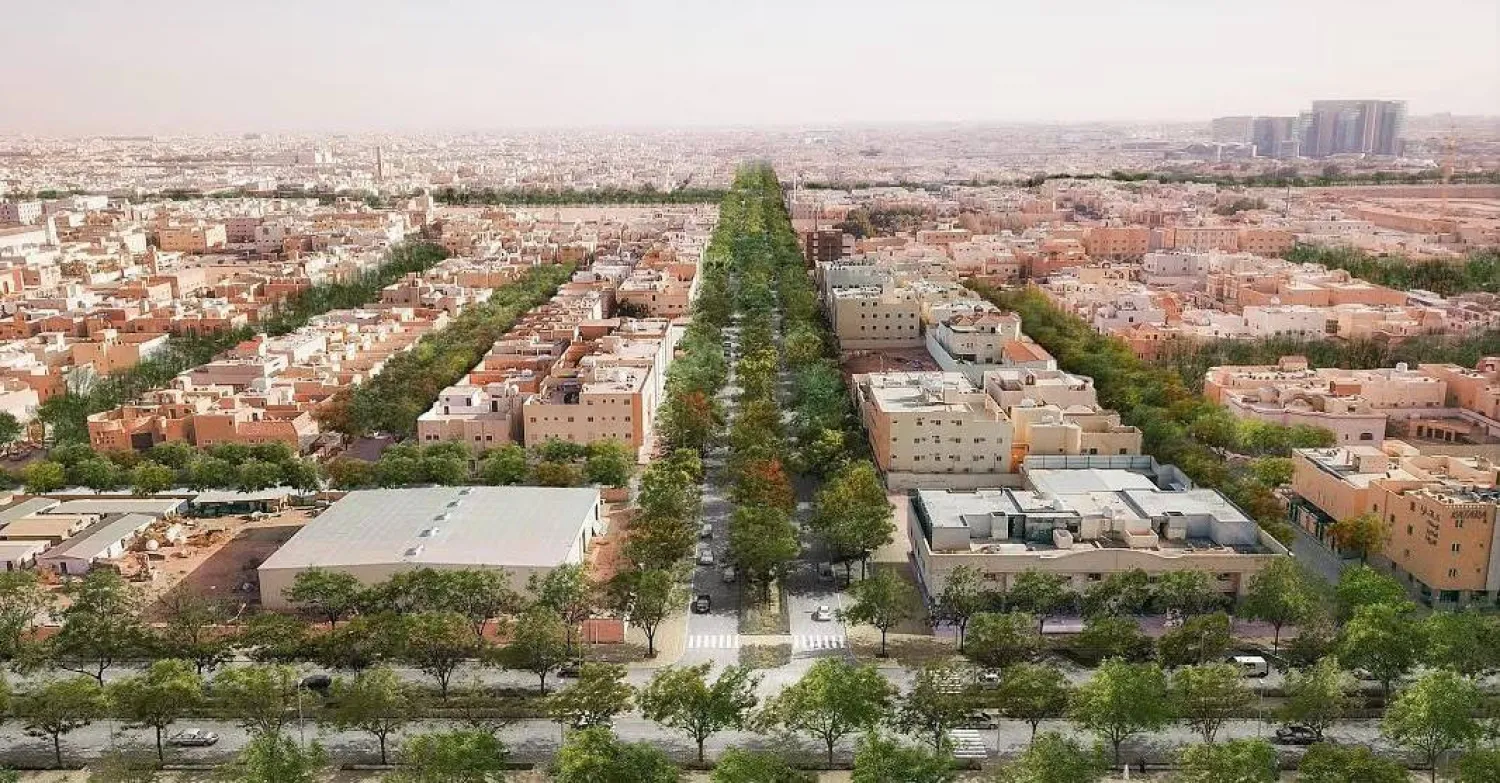
Three Riyadh projects received international recognition at the 2026 World Smart City Awards, held during the Smart City Expo World Congress in Barcelona, Spain, with one winning its category and two reaching the finals.
The Riyadh Infrastructure Projects Center (RIPC) was named among four finalists for the Governance & Economy Award for its "Infrastructure in One Source" initiative, which uses an Integrated Infrastructure Coordination Plan to improve infrastructure planning and coordination.
Riyadh Metro was also among four finalists for the Mobility Award, while the Real Estate Balance Program (Tawazoun) won the Infrastructure & Building Award.
The awards attracted 533 entries from 68 countries worldwide.
The Integrated Infrastructure Coordination Plan aims to improve infrastructure project quality across Riyadh Region by establishing a comprehensive framework for planning and coordination among government agencies, private-sector organizations and service providers.
The initiative seeks to improve project execution, minimize conflicts between construction activities and strengthen coordination during the planning and implementation stages.
Riyadh's recognition also extended to public transportation, with Riyadh Metro reaching the finals of the Mobility Award for its development of an integrated public transportation network that contributes to more efficient and sustainable mobility in the Saudi capital.
Smart cities and residents' quality of life
Dr. Maher Shirah, Director General of the Smart Cities General Department at the Royal Commission for Riyadh City (RCRC), told Asharq Al-Awsat that the value of smart cities lies in their impact on residents' lives.
He said housing, access to opportunities, efficient public services and confidence in urban development management were essential elements of a city offering a higher quality of life.
Shirah said Riyadh's experience with real estate balance demonstrated the importance of addressing these priorities together, as the Tawazoun program seeks to correct imbalances in the property market and facilitate homeownership amid the capital's rapid growth.
He confirmed that Tawazoun had won the Infrastructure & Building Award at the 2026 World Smart City Awards, an achievement separate from RIPC's selection as one of four finalists for the Governance & Economy Award.
Shirah said the relationship between real estate balance and smart cities rested on three main dimensions.
The first is understanding the city through data. Monitoring the real estate market, analyzing differences between neighborhoods and comparing current housing supply with future demand provide a clearer picture of urban challenges and help authorities develop more effective interventions.
Using data to manage urban development
The second dimension involves translating knowledge into practical action, Shirah said.
He explained that data delivers value when it informs decisions on land development, infrastructure provision, housing initiatives and market monitoring, strengthening institutions' ability to respond to complex urban challenges.
The third dimension focuses on outcomes that matter to residents.
Shirah said access to housing was a fundamental part of how people experience their city and assess its performance, noting that the IMD Smart City Index measures residents' perceptions of their ability to find housing at affordable rents.
He added that international frameworks take a comprehensive approach to smart cities.
The Cities in Motion Index, developed by IESE Business School, covers urban planning, governance, technology, the economy and social cohesion, while the International Telecommunication Union's United for Smart Sustainable Cities (U4SSC) framework links digital transformation to quality of life, inclusion, infrastructure and sustainability.
Shirah said the Tawazoun program's long-term impact would be measured by improvements in housing accessibility, service efficiency, the quality of decision-making and residents' experiences.
Building a smart city requires institutions capable of translating information into coordinated action and turning that action into tangible improvements in residents' lives, he said.
Riyadh's presence at the World Smart City Awards
The recognition came during the Smart City Expo World Congress, held in Barcelona from Nov. 3 to 5, with the World Smart City Awards ceremony taking place on Nov. 4.
The awards recognize cities, public agencies and organizations developing innovative solutions and initiatives to make urban areas smarter, more sustainable and better places to live.
They highlight pioneering approaches to using technology and innovation to address urban challenges and improve the efficiency of public services and infrastructure, while allowing cities and participating organizations from around the world to exchange expertise and experiences.
The Riyadh Infrastructure Projects Center achieved similar recognition in 2025 when its "Road Resurfacing Governance" initiative was selected among four finalists for the Governance & Economy Award.
The initiative sought to establish a unified framework for governing work procedures, improving coordination, planning and implementation, raising safety standards and reducing conflicts and disruptions associated with infrastructure projects.
Riyadh's participation in the awards reflects the diversity of its smart city initiatives, spanning infrastructure project management, urban planning, public transportation and real estate market balance.
These initiatives highlight efforts to improve public services, increase urban efficiency and enhance residents' quality of life.
According to the Royal Commission for Riyadh City, this international recognition builds on efforts by authorities across Riyadh Region to develop and manage infrastructure projects and adopt smart, sustainable solutions in support of Saudi Vision 2030, while improving quality of life and the efficiency of urban projects and services.