25th WPC Energy Congress in Riyadh Draws Record Attendance of More than 33,000 Visitors

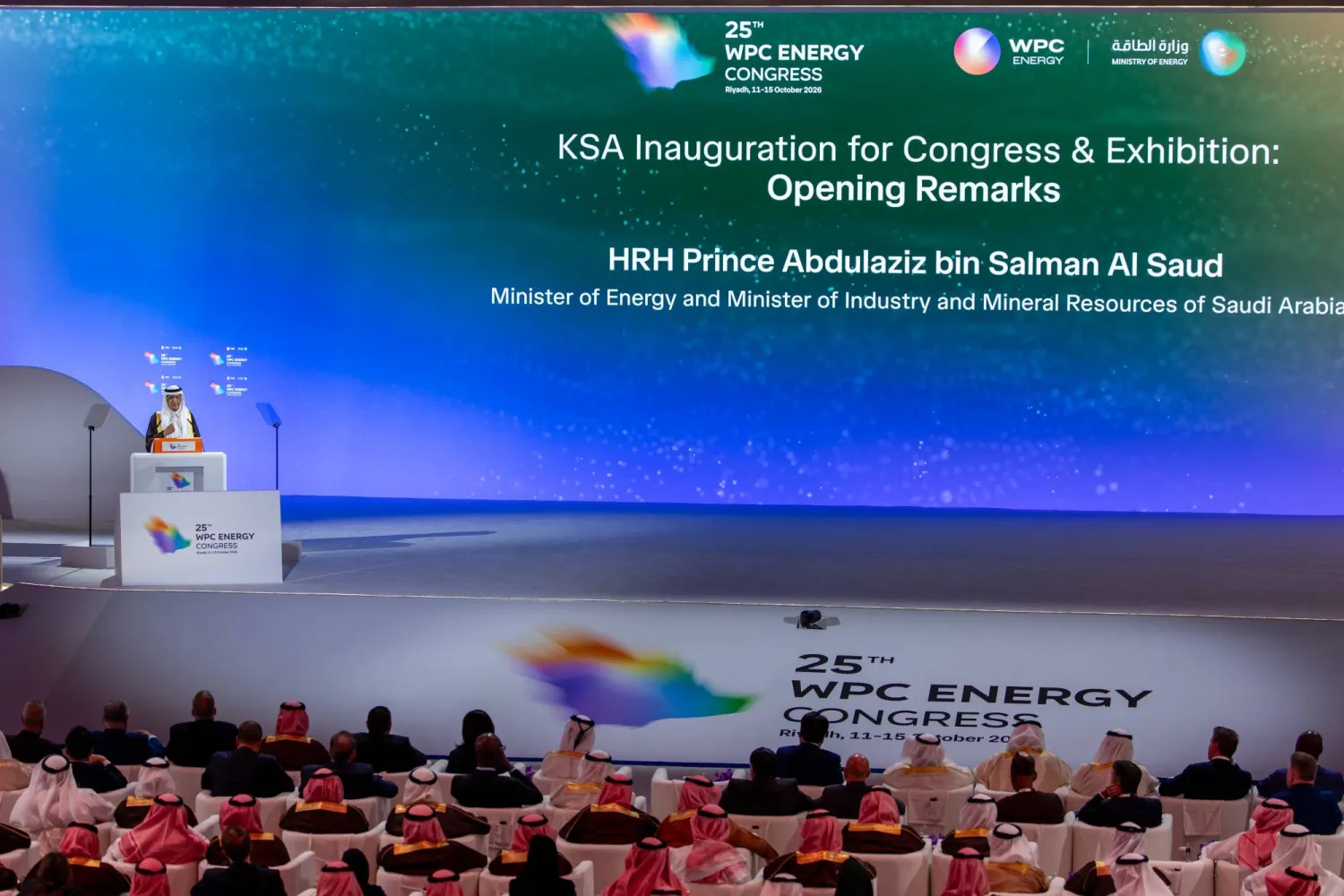
Prince Abdulaziz bin Salman during the opening of the World Petroleum Congress in Riyadh (Asharq Al-Awsat)
TT

25th WPC Energy Congress in Riyadh Draws Record Attendance of More than 33,000 Visitors

Prince Abdulaziz bin Salman during the opening of the World Petroleum Congress in Riyadh (Asharq Al-Awsat)

The 25th WPC Energy Congress in Saudi Arabia drew a record audience of more than 33,000 visitors, alongside participants from 135 countries and 489 media representatives, making it the most attended edition in the event’s more than 90-year history.

Saudi Arabia hosted the congress for the first time from October 11 to 15 as part of Riyadh Energy Week, under the theme “Pathways to an Energy Future for All.” The event brought together ministers, officials, company executives and energy experts to discuss supply security, investment, innovation and the future of oil and gas markets.

Prince Abdulaziz bin Salman bin Abdulaziz, Minister of Energy and Minister of Industry and Mineral Resources, officially opened the congress alongside Pedro Miras, president of the WPC.

The sessions explored key issues shaping the future of the energy sector, including artificial intelligence, digital transformation, energy efficiency, transport technologies, financing and resilient infrastructure. Discussions also examined the policies and investments needed to enhance energy security and foster international partnerships across the energy value chain.

Ministerial discussions also examined the future of global oil and gas markets, priorities for developing Saudi Arabia’s energy sector under Vision 2030, and ways to build more resilient systems capable of responding to crises and meeting the needs of different countries.

In recognition of achievements in the sector, the Dewhurst Award was presented to Vicki Hollub, a board member and former chief executive of Occidental Petroleum, making her the first woman to receive the award, according to the statement.

The congress also hosted the inaugural Energy Hackathon, launched by the Ministry of Energy as part of Riyadh Energy Week, attracting more than 6,700 participants from over 40 Saudi cities. Prince Abdulaziz bin Salman honored six winning teams across three categories: operational efficiency, innovative vision and smart control.

Alongside the congress, Riyadh hosted the 16th meeting of the Arab Ministerial Council for Electricity, which discussed updates to the two agreements governing the Arab Common Electricity Market and a pilot electricity exchange project involving Saudi Arabia, Egypt and Jordan. The meeting also addressed cooperation in renewable energy, energy efficiency, and clean hydrogen.

Riyadh Energy Week also featured the 17th Clean Energy Ministerial (CEM17) and the 11th Mission Innovation Ministerial (MI-11), as part of efforts to strengthen international cooperation in the energy sector.

At the close of the congress, Kazakhstan was named host of the 26th edition, which will take place in the capital, Astana, from June 11 to 15, 2028. It will mark the first time the congress has been held in Central Asia.


50-Year Contracts Open New Horizons for Real Estate Investment in Saudi Arabia

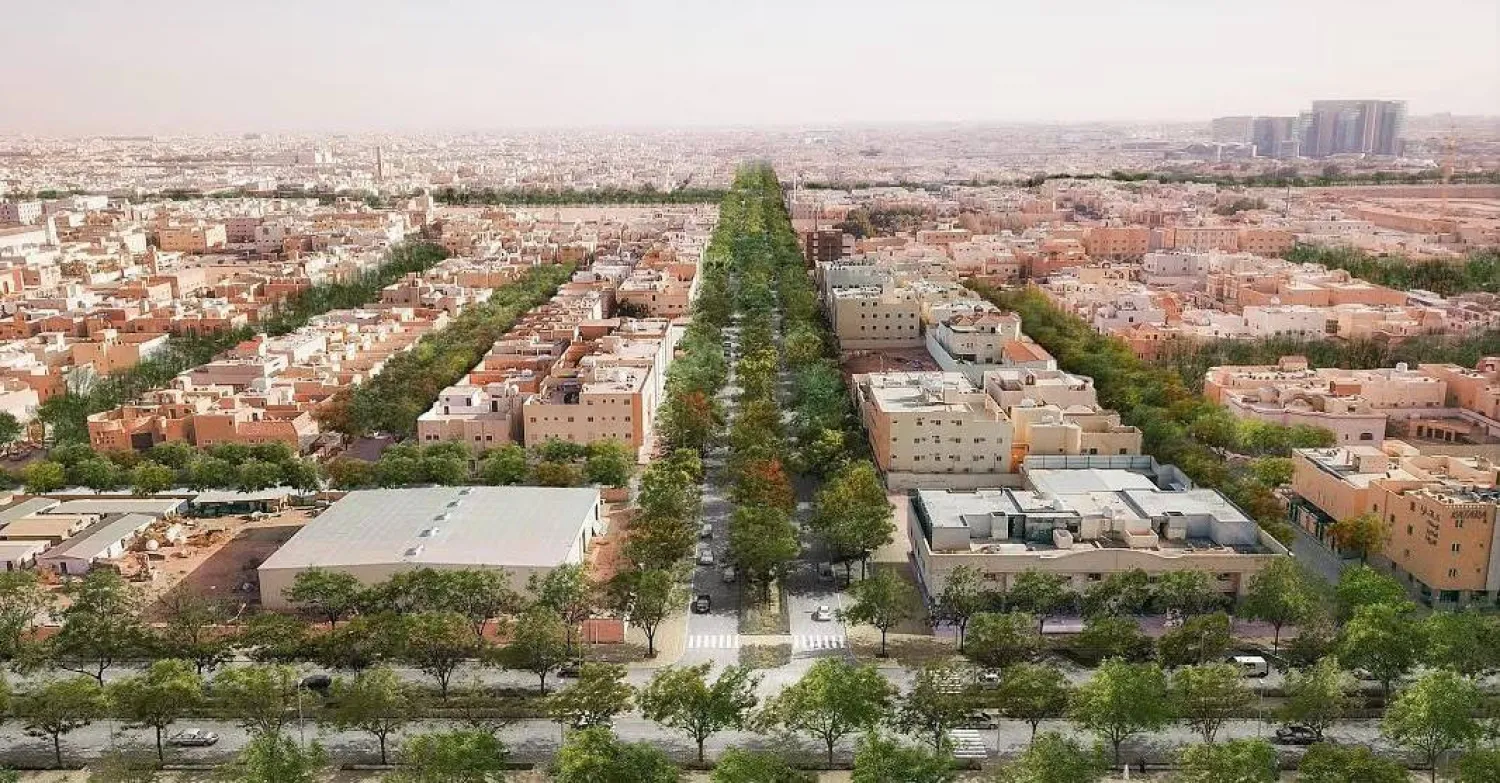
A neighborhood in the Saudi capital, Riyadh (SPA)
TT

50-Year Contracts Open New Horizons for Real Estate Investment in Saudi Arabia

A neighborhood in the Saudi capital, Riyadh (SPA)

Long-term real estate investment models are opening new opportunities for Saudi Arabia's private sector, as the Kingdom seeks to expand partnerships with investors to develop municipal assets and transform them into mixed-use projects.

The approach is expected to enhance the appeal of the real estate market, create investment opportunities spanning decades, and attract domestic and international capital to urban development. It also aims to improve land-use efficiency, maximize the economic value of municipal assets and increase housing supply.

Riyadh Region Municipality, the Ministry of Municipalities and Housing, and the National Center for Privatization & PPP (NCP) announced the launch of the expression of interest, prequalification and proposal submission phases for a joint land investment project in northern Riyadh.

The project involves developing a plot of municipal land under a 50-year partnership with the private sector, marking the municipality's first initiative under this joint investment model.

The private-sector partner will be responsible for designing, constructing, operating and maintaining all project facilities.

Located on Zaid bin Asim Street, the strategically positioned 30,015-square-meter site benefits from flexible urban planning regulations that allow for mixed-use development, including residential, commercial, office and recreational facilities.

The project aims to deliver high-quality developments that meet growing demand, serve local residents and community needs, and strengthen Riyadh's urban infrastructure.

Long-Term Investment Strategies

Offering investment opportunities through contracts extending up to 50 years represents a shift in how Saudi Arabia develops government-owned real estate assets.

The model gives private-sector investors a longer timeframe to develop projects and implement long-term investment strategies, overcoming some of the limitations associated with short- and medium-term contracts.

It also strengthens investors' ability to undertake financial and operational planning, allowing them to recover development costs and generate investment returns over a longer period.

This could make such opportunities more attractive to real estate companies and institutional investors.

The project forms part of Riyadh Region Municipality's strategy to improve the efficiency of municipal asset management, expand private-sector participation in urban development and attract high-value investments.

These efforts are intended to promote sustainable urban development, keep pace with the capital's rapid growth and advance Saudi Vision 2030 objectives, in line with the municipality's ambition to help create a prosperous, sustainable Riyadh with a higher quality of life.

Project Sustainability

Real estate expert Khaled al-Mobid said the launch of a 50-year investment project in Riyadh's Al-Narjis district represents an important step toward enabling the private sector to develop real estate assets and transform them into sustainable projects with substantial economic value.

Speaking to Asharq Al-Awsat, he explained that the extended investment period encourages developers to improve construction quality and services while enhancing the financial viability of projects.

He added that the model could help diversify real estate offerings and increase supply in one of the capital's most expensive neighborhoods.

Al-Mobid said the project's significance lies less in its immediate impact on property prices than in its potential to establish a replicable investment model.

Such a model, he noted, could gradually increase supply, strengthen competition and contribute to greater price stability across Riyadh's real estate market.

Diversifying Real Estate Supply

Real estate developer Ahmed Omar Basoudan said the importance of these contracts extends beyond simply making land available to investors.

They also create opportunities to develop integrated real estate assets combining residential, commercial, office and recreational uses, increasing the economic value of land and improving its utilization.

Speaking to Asharq Al-Awsat, Basoudan explained that bringing design, construction, operation and maintenance together under a single investment framework allows for more integrated developments.

It also creates a stronger link between construction quality, operational efficiency and long-term sustainability.

At the broader market level, he said, the model could help diversify real estate offerings, particularly in major cities experiencing rapid urban expansion and rising demand for residential, commercial and office space.

The participation of new developers and operators could also strengthen competition and improve the quality of projects and services.

Moreover, the approach could create integrated mixed-use urban destinations that meet residents' needs and support economic activity, rather than relying solely on conventional real estate development.


Replicating the Model


According to Basoudan, the success of this investment model will depend on how effectively contracts are structured, how risks are allocated between government entities and investors, and how clearly development, operation and maintenance obligations are defined.

Equally important, he said, is striking an appropriate balance between investment returns and the public interest.

Basoudan believes extending the model to other municipalities and regions could create an additional channel for attracting domestic and international investment.

It could also strengthen private-sector participation in urban development, in line with Saudi Vision 2030 objectives to diversify the economy and improve the efficiency of government asset management.


Gold Rallies as Dollar, Treasury Yields Soften after US Midterm Results

Gold chips displayed at a state-owned gold retail store in Surabaya, East Java (AFP)
TT

Gold Rallies as Dollar, Treasury Yields Soften after US Midterm Results

Gold chips displayed at a state-owned gold retail store in Surabaya, East Java (AFP)

Gold climbed to its highest level in over two weeks on Thursday as the fallout from the US midterm election results rippled through the global financial and oil markets.

Spot gold rose 1.6% to $4,124.89 per ounce by 0752 GMT. It touched $4,146.63 per ounce, its highest level since October 20, earlier in ‌the session.

Bullion ‌climbed about 3.4% on Wednesday, its biggest ‌daily gain ⁠since August 19.

US ⁠gold futures for December delivery climbed 1.5% to $4,135.40, Reuters said.

A weaker dollar and lower Treasury yields have helped gold recover above the key $4,000 level, though holding above that threshold remains crucial for the recovery outlook, said Linh Tran, market analyst at XS.com.

"If investment flows and yield movements continue to provide support, gold could stabilize ⁠above $4,000, also opening up an opportunity for a ‌recovery toward $4,200, followed by $4,400."

Oil prices ‌were slightly higher after earlier falling for a fourth day on ‌expectations that the losses US President Donald Trump's Republican Party ‌suffered in congressional elections this week may reduce the risk of further escalation of the US-Israeli war with Iran.

Lower energy prices ease inflationary pressures, reducing expectations that the central bank will keep interest rates higher ‌for longer, supporting the appeal of non-yielding bullion.

The dollar slid to its lowest in more ⁠than a ⁠month, and 10-year US Treasury yield fell to its lowest since September 10.

A weaker dollar makes greenback-priced bullion more affordable for holders of other currencies.

Market participants now await the US non-farm payrolls report on Friday to further gauge the Federal Reserve's monetary policy outlook.

Meanwhile, Citi has a 0-3 month price target of $4,500 per ounce for gold, the brokerage said on Wednesday, as it sees substantial upside potential if the Strait of Hormuz reopens and the Yemen/Saudi conflict de-escalates.

Among other metals, spot silver rose 0.8% to $52.63 per ounce, platinum gained 1.2% to $1,514.20 and palladium climbed 2.2% to $1,026.83.


Tech Hit by New AI Worries on Positive Day for Most Markets

Hong Kong stocks rallied more than three percent on a broadly healthy day for Asian markets. Leung Man Hei / AFP
TT

Tech Hit by New AI Worries on Positive Day for Most Markets

Hong Kong stocks rallied more than three percent on a broadly healthy day for Asian markets. Leung Man Hei / AFP

Tech firms tumbled Thursday as investors contemplated the outlook for the AI boom after Democrats swept the US midterms, partly on the back of growing anger over the rapid building of data centers across the country.

However, broader markets mostly rallied and oil plunged after Donald Trump's Republicans were dealt a historic defeat that was blamed on high prices, tariffs and the Iran war.

The result stoked hopes he will look to wind down the Middle East conflict, which would help temper inflation and even soften his stance on trade.

But AI-linked firms came under the cosh amid fears for planned data center construction projects as well as renewed scrutiny from newly installed Democrats on Capitol Hill.

The sector had already been in the crosshairs of investors owing to questions about the vast sums pumped into new facilities, R&D and chip development, and when any companies would see a profit.

Charu Chanana at Saxo Markets said the vote was accelerating a reassessment of AI that was already under way.

"A Democratic Congress introduces another layer of uncertainty: regulatory scrutiny," she wrote, adding that the three main risks were more oversight, data center restrictions and capital spending uncertainty.

"The congressional scrutiny could accelerate demands for AI safety standards, independent model evaluations and greater accountability for data center developers," she added.

However, she also said: "This is not the same as an outright anti-AI policy agenda. AI is strategically important for US competitiveness, particularly against China, and there remains considerable bipartisan interest in maintaining American leadership."

Chip firms were hammered in Asia, with South Korea's SK hynix off more than seven percent and Samsung 5.5 percent down.

Tokyo-listed Kioxia dived more than 13 percent and Advantest tanked 14.7 percent, while Tokyo Electron lost more than nine percent and SoftBank 6.8 percent.

US Nasdaq futures fell more than one percent.

Broader markets performed better as investors rotated into other sectors including finance, auto, mining and manufacturing names.

Seoul, the poster child of the AI-led surge in the first half of the year, shed more than five percent, while Taipei lost more than three percent. Tokyo gave up 1.8 percent.

But there were healthy gains in Hong Kong, helped by hopes for an easing of trade tensions between the US and China, with tech titans including Alibaba, JD.com and Tencent leading the way amid a shift into beaten-down regional stocks.

Shanghai, Sydney, Singapore, Wellington, Mumbai, Jakarta and Manila also advanced.

Oil continued to fall after diving more than eight percent Wednesday on the US result amid optimism Trump will seek a deal to end the Iran war, which has been a key driver of the inflation spike that has hammered US consumers.

Hopes were given a boost when Vice President JD Vance said in a social media post that the Republican defeat was due to the unpopularity of the eight-month-old conflict.

The drop in crude prices -- both main contracts are now below $100 for the first time since the start of October -- has also tempered inflation worries and, in turn, Treasury yields, which dipped again Thursday.

The lower cost of borrowing has also been helped by the prospect that gridlock on Capitol Hill would lead to less spending.

That also weighed on the dollar, which held losses against its peers in Asian trade.