


UN: Millions May Be Forced to Move as Climate Change Hits South Asia

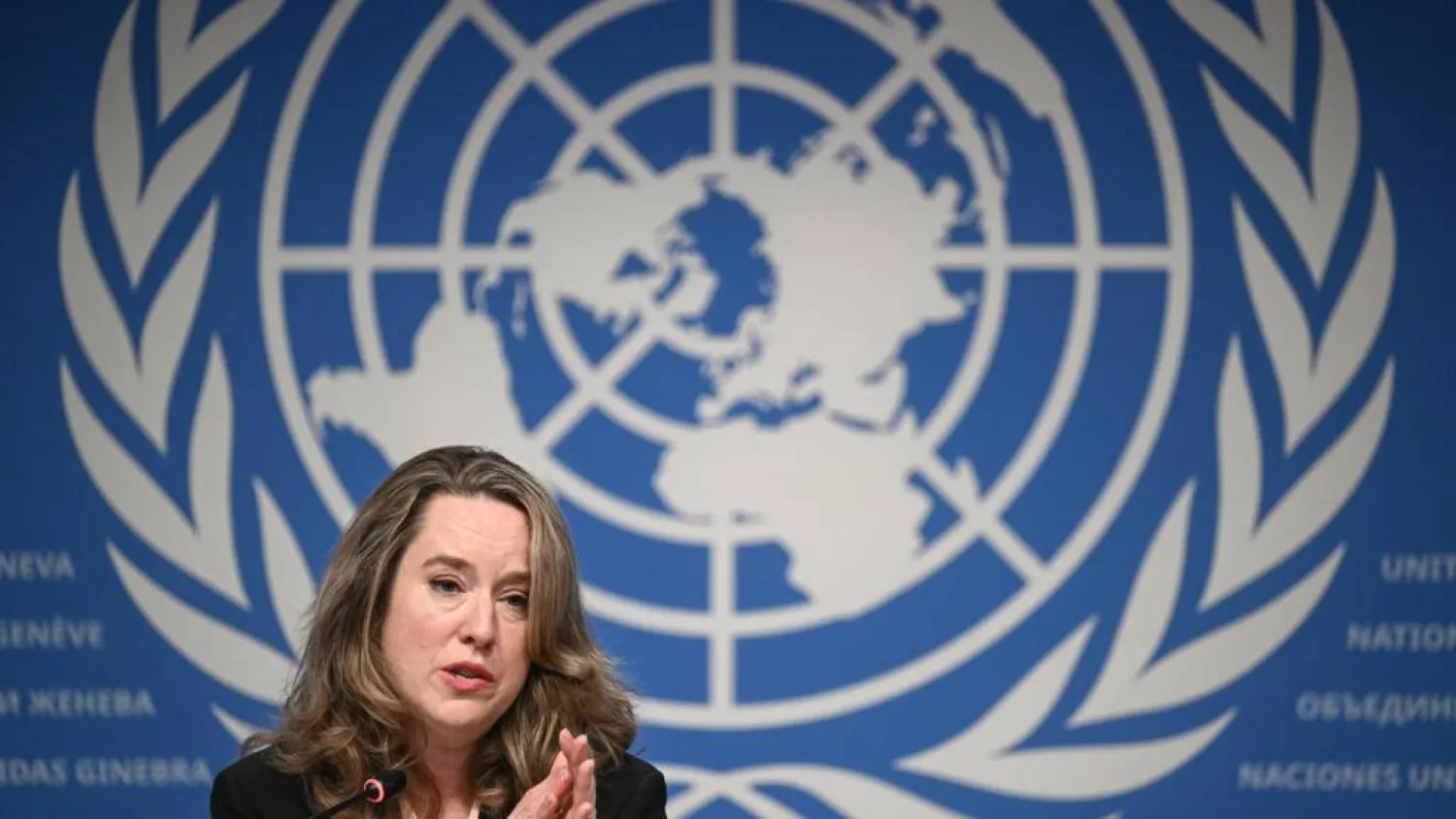
International Organization for Migration (IOM) chief Amy Pope, seen here in 2023, warned of a lack of urgency globally about the risks that vulnerable communities are facing. Fabrice COFFRINI / AFP
TT

UN: Millions May Be Forced to Move as Climate Change Hits South Asia

International Organization for Migration (IOM) chief Amy Pope, seen here in 2023, warned of a lack of urgency globally about the risks that vulnerable communities are facing. Fabrice COFFRINI / AFP

Climate change is threatening livelihoods and forcing people from their homes across South Asia, but technology and government action could help limit the damage, the UN migration chief told AFP on Friday.

Rising seas, flooding and drought threaten homes and farmland, Amy Pope, Director General of the International Organization for Migration (IOM), said during a visit to New Delhi.

In the Himalayas, she pointed to Nepal's August 26 disaster, when a mountain and glacier collapse triggered deadly flooding, where IOM sent humanitarian aid to help.

In a worst-case scenario, up to 40.5 million people in South Asia may be forced to move by 2050, according to IOM.

"When they can't produce food, when they can't feed their livestock, it increases the likelihood of displacement," said Pope. "The first adaptation is often for people to move."

Pope said climate change was also accelerating urbanization in India.

"As people seek shelter from heat, they're going into urban centers," she said.

- 'Migration as a tool' -

The risks are particularly acute in South Asia, where vast populations and limited resources leave many communities vulnerable.

"There's a lack of urgency globally about the risks that vulnerable communities are facing," Pope said, warning that funding to help residents prepare for climate change remained inadequate.

"The cost of a humanitarian disaster is in the billions. The cost of investing in some of the resilience measures can be far less," she said.

Better data and artificial intelligence could help governments identify communities at risk before disaster strikes, Pope said.

"With the advancements in AI forecasting, you can now better anticipate those communities that are at high risk of displacement," Pope said.

By combining weather forecasts with information about local livelihoods, authorities can identify which communities most need help.

"If you know a community is at risk, we don't need to wait until they're displaced to respond," she said.

Measures could include improving farming methods, training people for other jobs and, where necessary, relocating communities repeatedly hit by floods or drought.

Finding the money for such programs is a major obstacle, Pope said, with governments often struggling to navigate the systems available to fund climate adaptation.

India's investments in early-warning systems, disaster response and technology offer grounds for optimism, she said. But no government can meet the scale of the challenge alone.

International migration can also help people earn a living while filling labor shortages abroad.

South Asia already has established migration routes, offering opportunities to build on existing links.

"Here we have government partners who recognize both the threats to their communities but they're also using migration as a tool for development," Pope said.

She warned that growing demand for workers must be matched by safe, legal routes to employment.

Otherwise, migrants risk exploitation by traffickers and smugglers, including through fraudulent overseas job offers.

India's technological capacity could also help its workers compete internationally as artificial intelligence reshapes employment, Pope said.

AI could threaten some jobs, particularly those involving routine analysis of documents and reports, but other sectors still rely heavily on human labor.

"If we can marry that capacity with the labor mobility, so that the workers are being skilled for those jobs as they're emerging, they will be ahead," Pope said.

"This is a place where I have more optimism than in places where we're dealing with the most acute crises," she said.



Iran Guards Say Tanker Hits Mine Near Strait of Hormuz

In this handout photo provided by the Lewis Pugh Foundation, taken from a boat accompanying endurance swimmer Lewis Pugh, smoke rises from a burning liquefied petroleum gas tanker in the Strait of Hormuz off the Musandam Peninsula, Oman, Tuesday, Nov. 17, 2026. (Lewis Pugh Foundation via AP)
TT

Iran Guards Say Tanker Hits Mine Near Strait of Hormuz

In this handout photo provided by the Lewis Pugh Foundation, taken from a boat accompanying endurance swimmer Lewis Pugh, smoke rises from a burning liquefied petroleum gas tanker in the Strait of Hormuz off the Musandam Peninsula, Oman, Tuesday, Nov. 17, 2026. (Lewis Pugh Foundation via AP)

A tanker was hit by an explosion after striking a mine ⁠while attempting to ⁠cross the Strait of Hormuz ⁠through what the Revolutionary Guards’ navy called an unauthorized route, the Guards said in ⁠a ⁠statement carried by the state broadcaster IRIB on Friday.

The Guards said on Thursday that two tankers had exploded and caught fire after hitting sea mines north of Oman's Khasab port.

One of the vessels was a supertanker carrying more than 2 million barrels of crude oil, the Guards said in a statement carried by the semi-official Tasnim ⁠news agency.

Iran has ⁠long said that vessels cannot safely transit the Strait of Hormuz without coordinating with Tehran, citing the threat of sea mines among other risks.

Maritime security agencies, however have frequently reported incidents involving ships in the region as strikes by unknown projectiles, although ⁠they tend to cover fewer incidents than the number reported by the Guards and do not always align.


UN Warns Famine Risks Rising as Hunger Hotspots Increase

FILE PHOTO: Internally displaced Somali woman, Adar Hassan Abdulahi, helps her child feed on Plumpy'nut after being vaccinated, at the Tawakal 2 camp in Baidoa, southwest Somalia, June 24, 2025. REUTERS/Feisal Omar/File Photo
TT

UN Warns Famine Risks Rising as Hunger Hotspots Increase

FILE PHOTO: Internally displaced Somali woman, Adar Hassan Abdulahi, helps her child feed on Plumpy'nut after being vaccinated, at the Tawakal 2 camp in Baidoa, southwest Somalia, June 24, 2025. REUTERS/Feisal Omar/File Photo

Hunger is set to worsen significantly in 16 global hotspots over the coming six months, with famine threatening parts of Africa, two United Nations agencies warned on Friday.

The Food and Agriculture Organization (FAO) and World Food Programme (WFP) said Sudan, South Sudan, Somalia, northern Nigeria and Yemen faced the gravest threats, driven by conflict, displacement, economic hardship and extreme weather.

The number of hunger hotspots has risen from 13 in the previous report released in June, with Chad, Uganda, and parts of both southern Africa and Central America added to the list, while Lebanon was removed.

In the latest joint report covering December 2026 to May 2027, the agencies warned ⁠that shrinking humanitarian ⁠funding was undermining efforts to avert catastrophe.

Aid for the five countries facing the gravest hunger threats fell by two-thirds between 2022 and 2025, said Conor Elliott, a senior official in FAO's emergencies and resilience office.

"These are huge changes in international support," he said, warning that the cuts were also undermining the collection of data needed to assess ⁠the scale of the crisis.

According to Reuters, the report said armed conflict and violence were driving hunger in 12 of the 16 hotspots, while soaring food, energy and transport costs were further eroding people's ability to feed themselves.

The agencies said the developing El Niño weather pattern could aggravate the crisis, bringing drought and extreme temperatures to southern Africa and parts of central America, and potentially destructive flooding to parts of eastern Africa.

"There's going to be a very, very strong El Niño effect," said Elliott, warning that some areas were likely to ⁠swing from drought ⁠conditions to heavy rains in the coming months.

In Sudan, famine is a risk in 13 areas of North Darfur and South Kordofan through January 2027, with fighting disrupting food production, markets and aid deliveries.

The agencies also identified famine risks among displaced people in Somalia's Baidoa region and in parts of South Sudan, where escalating violence has compounded an already desperate humanitarian situation.

Afghanistan, Haiti, the Democratic Republic of Congo and the Palestinian enclave Gaza were also classified as areas of very high concern.

Gaza was downgraded from the highest level of concern following improvements in food security since an October 2025 ceasefire, although the agencies warned that conditions remained severe and fragile.


Trump Insists Nvidia CEO Not a Security Threat

US President Donald Trump speaks to servicemembers on Thanksgiving Day at his Mar-a-Lago club in Palm Beach, Florida, on November 26, 2026. (Photo by Kent NISHIMURA / AFP)
TT

Trump Insists Nvidia CEO Not a Security Threat

US President Donald Trump speaks to servicemembers on Thanksgiving Day at his Mar-a-Lago club in Palm Beach, Florida, on November 26, 2026. (Photo by Kent NISHIMURA / AFP)

US President Donald Trump has said that he had seen sufficient information that Nvidia's Jensen Huang was not a security threat, while touting his administration's intervention to save the scandal-plagued CEO's job as "a great thing" for the world.

"I think he's absolutely fine," Trump told reporters at his Mar-a-Lago estate.

Asked by AFP how he could be sure when the Justice Department would not confirm it had conducted a thorough investigation into Huang, Trump said his belief was based on "information I have, which is a lot of information."

Huang, a key figure in the AI revolution, was forced to resign earlier this month after revelations that he had an affair with a business executive who reportedly has ties to Chinese intelligence and whose company may have helped China obtain advanced chips in violation of US export controls.

His sudden resignation saw the stock price of Nvidia plummet, before a shock decision by the board to reinstate him saw a partial rebound.

Trump revealed that he and other officials in his administration have worked behind the scenes to push for Huang to be reinstated, in a highly unusual intervention by the government into a top company's decision making.

"I just thought, I saw that what was happening with the company, what was happening with the stock, and I think it's a great thing that he's going back," Trump said Thursday.

"So I really... think I did a great thing for our country and even for the world," Trump said of the effort to back Huang.

Asked if he had spoken with Huang since his reinstatement was announced, Trump said no, but then later said: "When I did speak to him, he is so happy to be going back. He calls it his second term."

He also praised Huang's wife as "phenomenal."