
17,000 Strikes on Houthis Since Launch of Operation Dawn of Yemen

Fighters loyal to Yemen’s government on one of the front lines against the Houthis (AP)
TT

17,000 Strikes on Houthis Since Launch of Operation Dawn of Yemen

Fighters loyal to Yemen’s government on one of the front lines against the Houthis (AP)

Yemen’s armed forces said air and ground strikes carried out with support from the Coalition to Support Legitimacy had topped 17,000 since the launch of Operation Dawn of Yemen, as government forces repelled fierce Houthi attacks in Taiz and Lahj.

More than 1,250 strikes were carried out in the past 24 hours, neutralizing about 700 Houthi fighters and destroying or disabling more than 150 vehicles and pieces of military equipment, the armed forces said.

The heaviest fighting centered on western Taiz, where government forces said they repelled a Houthi assault that lasted about 12 hours, along with attacks in Al-Dhabab, Al-Aqrud and Al-Shaqab. Clashes also erupted on the Al-Mudaraba and Al-Wazi’iya fronts in Lahj province.

Colonel Majid al-Nuzaili, spokesman for Yemen’s armed forces, said operations over the past day targeted positions, fortifications, trenches, firing points, observation and reconnaissance posts, forward command-and-control centers, and Houthi assembly and supply areas.

He said the strikes were aimed at weakening the group’s defensive lines and limiting its ability to launch attacks, with a particular focus on the Taiz fronts.
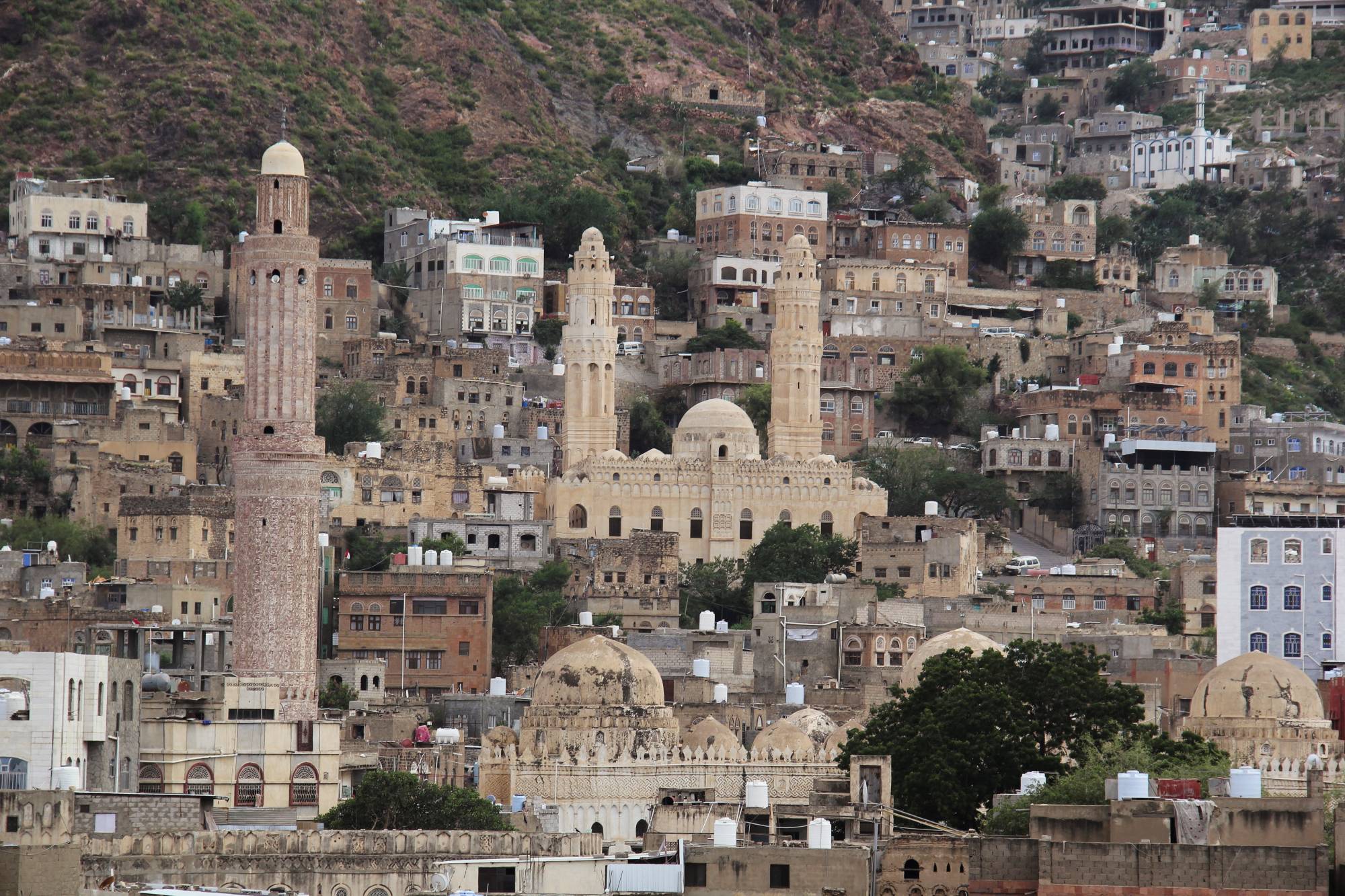
Buildings stand in the southwestern city of Taiz, Yemen, October 15, 2026. REUTERS/Anees Mahyoub

Heavy fighting broke out west of Taiz city after a large-scale Houthi attack around Jabal Han that lasted about 12 hours, according to field accounts from government forces.

The forces said they repelled the assault and forced the attackers to withdraw from positions they had tried to seize.

Clashes spread to the old airport area, Ghurab and Bir Basha, with heavy and medium weapons, artillery and rockets used in the fighting. Confrontations also continued around the Republican Palace east of the city, amid reports of Houthi shelling of residential neighborhoods in the old airport area.

Government forces said they held their positions at Jabal Han and recaptured sites infiltrated by the attackers.

In southern Taiz province, government forces repelled Houthi attacks on the Al-Aqrud and Al-Shaqab fronts, while airstrikes hit a convoy of tanks and military vehicles in the Ras al-Najd area of Al-Misrakh district.

Other strikes targeted Houthi positions on Sofitel Hill east of Taiz city, as well as a tank and a military vehicle on the Al-Dhabab front to the west.

Government forces said the clashes and airstrikes killed or wounded dozens of Houthis. No independent casualty figures were available.

Reinforcements and attrition in Lahj

In western Lahj province, along the border with Taiz, the Southern Giants Brigades, led by Presidential Leadership Council member Abdulrahman al-Muharrami, sent reinforcements from the 6th Infantry Division and support units to the Al-Mudaraba front.

The deployment was aimed at reinforcing forces in the area and countering Houthi infiltration attempts.

The Giants Brigades said they destroyed Houthi military vehicles and equipment while repelling infiltration attempts.

Their media outlets also said the last company of the group’s 11th Reserve Brigade had been eliminated, describing it as part of the losses suffered by Houthi formations during the fighting.

The moves came as fighting continued on the Al-Wazi’iya front west of Taiz, where government forces are seeking to thwart attacks and prevent the Houthis from making gains toward areas bordering Lahj province.

The forces are also seeking to prevent the Houthis from outflanking government troops at Bab al-Mandab in an effort to break the siege of Houthi pockets.

Alongside the ground fighting, local authorities in Marib said the Houthis fired nine ballistic missiles and seven other projectiles at residential neighborhoods in the city on Thursday evening.

The authorities warned against continued attacks on populated areas and called on the international community and the United Nations to act to halt them.

In Aden, the death toll from a missile attack targeting the presidential Maashiq Palace and the Al-Buraiqa area west of the city rose to five, with 16 wounded, according to Public Health and Population Minister Qasem Buhaibeh.

He said the casualties included security personnel and civilian employees.
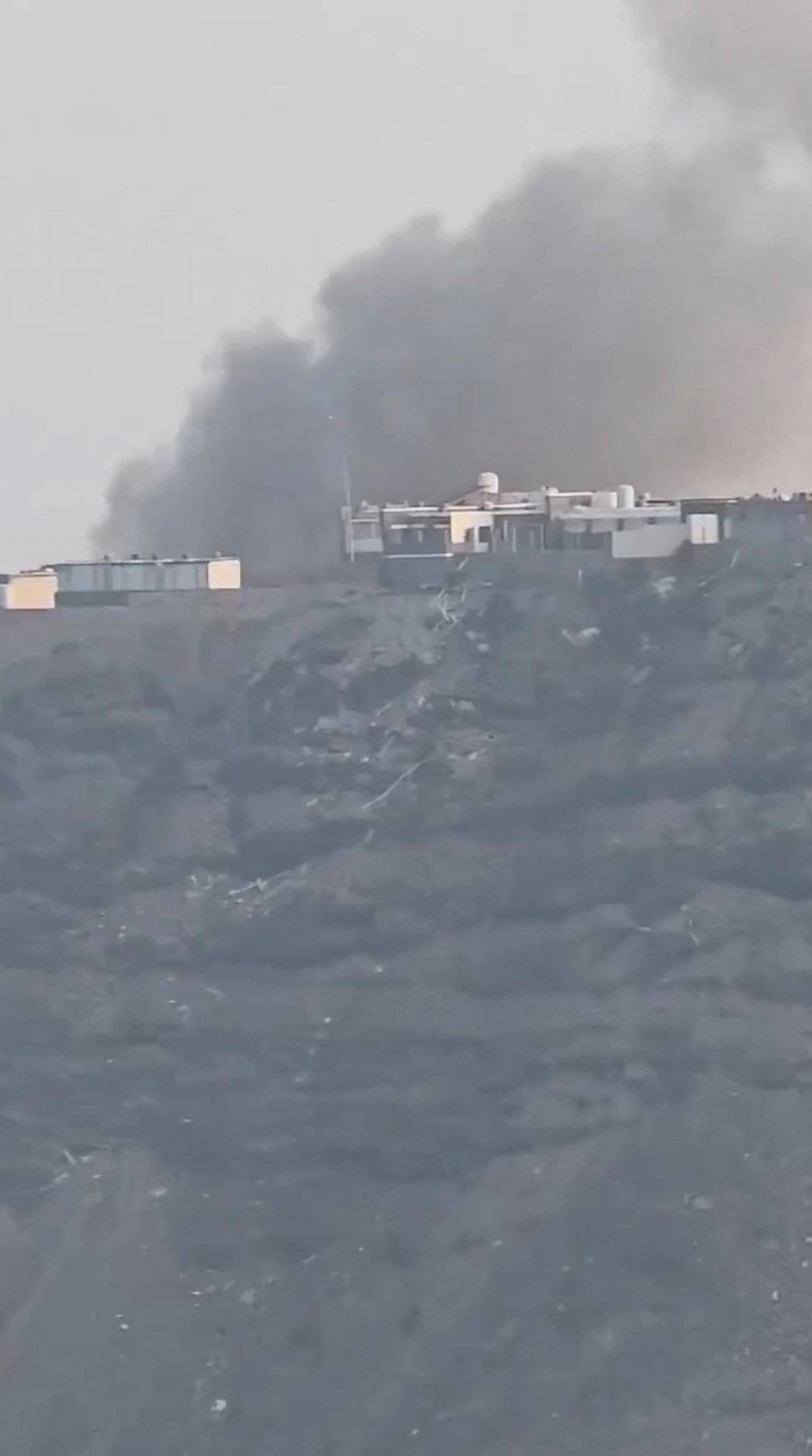
Smoke billows from the presidential palace complex following an attack by Yemen's Houthis, according to government officials, in Aden, Yemen, October 15, 2026, in this screen grab obtained from a social media video. Social Media/via REUTERS

Operation continues

Chairman of Yemen’s Presidential Leadership Council Rashad al-Alimi reviewed developments in Operation Dawn of Yemen and fighting across the various fronts during briefings from senior military and local officials.

The briefings were delivered by Defense Minister Lieutenant General Taher al-Aqili, Chief of the General Staff and Commander of Joint Operations Lieutenant General Sagheer bin Aziz, Commander of the Fourth Military Region Major General Hamdi Shukri, and the governors of Taiz and Lahj.

According to the briefings, the armed forces, with support from the Coalition to Support Legitimacy, had carried out more than 17,000 air and ground strikes since the operation began, targeting Houthi positions, concentrations and military capabilities across multiple fronts.

Al-Alimi praised the performance of the armed forces, military formations and popular resistance forces, and commended Saudi Arabia’s support and the role of the Coalition to Support Legitimacy in backing the Yemeni state and its armed forces.

He said the operation would continue in line with its stated objectives of restoring state institutions and extending state authority across all Yemeni territory, ultimately reaching the capital, Sanaa.

The briefings also covered humanitarian and public service conditions in Taiz and Lahj, including measures to respond to waves of displacement and secure basic services and supply routes amid the military escalation.

Al-Alimi accused the Houthis of imposing coercive measures in areas they had infiltrated in Taiz province, including forced recruitment, ideological mobilization and attempts to alter the identity of educational and community institutions.

He warned of the consequences of such practices and said the state was responsible for protecting citizens and holding those involved in violations accountable.


Jordan Says Security Officer Killed in Amman in Stabbing Attack

Jordan's capital, Amman (AFP)
TT

Jordan Says Security Officer Killed in Amman in Stabbing Attack

Jordan's capital, Amman (AFP)

Jordanian authorities said a security officer was stabbed to death in the country's capital Amman on Thursday, calling it a "terrorist attack".

"The Public Security Directorate mourned the martyrdom of Corporal Jawad Ali Khalaf Al-Salaytah, who was killed in a cowardly terrorist attack," the directorate said in a statement.

Another officer was injured in the incident, it added.

Authorities said the attack took place in front of the Sri Lankan embassy, where the victim was stabbed with a "sharp object".

The officer was rushed to hospital but later died from his injuries, the directorate said.

A nearby police patrol responded immediately and arrested the attacker, it added.

The second officer wounded in the incident sustained injuries to their face as he tried to intervene and is in a stable condition.

Security agencies were investigating, the directorate said.


Egypt, US Sign Strategic Objective Agreement to Expand Cooperation

Egypt and the US seek greater cooperation across multiple sectors (Egyptian Foreign Ministry). 
TT

Egypt, US Sign Strategic Objective Agreement to Expand Cooperation

Egypt and the US seek greater cooperation across multiple sectors (Egyptian Foreign Ministry). 

Egypt and the United States signed a Strategic Objective Framework Agreement on Enhancing Mutual Prosperity on Wednesday, aimed at expanding cooperation across several sectors, according to the Egyptian Foreign Ministry.

Egyptian Foreign Minister Badr Abdelatty attended the signing ceremony alongside the ministers of finance, supply and internal trade, and higher education and scientific research.

The agreement was signed by Egypt’s Deputy Foreign Minister for International Cooperation, Dr. Samar El-Ahdal, and US Chargé d’Affaires in Cairo Robert Silverman.

Foreign Ministry spokesman Ambassador Nader Zaki said the framework agreement aims to strengthen cooperation with the United States to achieve tangible economic growth in Egypt.

He explained that its objectives include expanding cooperation in key sectors and adopting US institutional and technological innovations to improve the efficiency of Egypt’s water, energy and infrastructure systems.

The agreement also seeks to modernize education, healthcare and governance, develop the skills of Egyptian professionals and create more jobs, particularly in areas of shared strategic interest such as water management, artificial intelligence and energy.

Another objective is to strengthen Egypt’s food security through science-based agriculture.

The signing comes amid repeated statements by both sides emphasizing the strategic nature of relations between Cairo and Washington and their longstanding ties.

Former US Ambassador David Satterfield identified three main reasons behind Washington’s strategic view of Egypt: preserving the Egyptian-Israeli peace treaty, ensuring access to and transit through the Suez Canal, and maintaining stability within Egypt itself.

Satterfield told Asharq Al-Awsat that the peace treaty “remains, even in light of the Abraham Accords, the cornerstone and fundamental pillar of stability and peace in the broader Middle East.”

He explained that the United States considers its engagement with and support for Egypt vital to preserving the treaty.

“Egypt’s geographical location gives it particular importance to the United States because of the Suez Canal,” he added.

A Congressional Research Service report updated on February 25, 2026, supports this assessment, linking Egypt’s importance to US national security to its geographical position, population and diplomatic influence.

The report notes that facilitating the passage of US naval vessels through the Suez Canal provides Washington with a significant advantage when it needs to deploy forces rapidly to the Gulf and Indian Ocean.

US interests, however, extend beyond the canal and the peace treaty.

Satterfield warned that instability in Egypt, whether driven by economic or political factors or both, “would threaten not only US interests but those of the broader Middle East.”

In his assessment, Egypt’s stability is therefore a strategic interest in its own right, rather than merely a desired outcome of bilateral cooperation.

Ben Fishman, a researcher at the Washington Institute for Near East Policy and former director for North Africa at the US National Security Council, agreed.

He told Asharq Al-Awsat that the United States maintains a longstanding strategic relationship and strong military partnership with Egypt, while the peace agreement with Israel “remains a pillar of regional stability.”

The two countries’ interests also converge in Gaza. Washington needs a regional partner to help negotiate and implement security arrangements, while Cairo requires US cooperation to support a resolution to a crisis affecting its borders and security.

The Congressional Research Service notes that Egypt played a key role, alongside other partners, in mediating the October 2025 Gaza ceasefire and hosted the Sharm el-Sheikh summit in support of the agreement.

Despite the importance of their relationship, Cairo and Washington do not agree on every issue.

Fishman explained that US and Egyptian interests converge in some conflicts and diverge in others, which is natural in a relationship based on mutual interests.

Satterfield echoed that assessment, stressing that such differences do not undermine the strategic nature of bilateral ties.

“Disagreements also exist between the United States and NATO countries, but they do not diminish the fact that both sides view the relationship as strategic,” he said. “That is the nature of international relations.”

In a related development, Abdelatty discussed the latest regional developments with Massad Boulos, senior adviser to the US president for Arab and African affairs, during a telephone call on Wednesday.

According to the Egyptian Foreign Ministry spokesman, the discussion addressed intensive efforts to promote de-escalation.

Abdelatty stressed “the importance of all parties showing the necessary flexibility to reduce tensions and allow a return to the political track, rather than moving toward a resumption of military operations, whose grave dangers to the region and the world President Sisi has warned against.”

The call also covered “the need to maintain full support for efforts to unify the Libyan government in a way that achieves the security and stability sought by the Libyan people.”

The two officials also discussed the situation in Sudan, emphasizing the importance of ending the ongoing war and launching a Sudanese-owned political process.


Lebanon: Four Former Army Generals Questioned as Defendants in Beirut Port Blast Probe

Families of victims of the 2020 Beirut port explosion and ambassadors from several countries commemorate the sixth anniversary of the blast (File photo: AFP). 
TT

Lebanon: Four Former Army Generals Questioned as Defendants in Beirut Port Blast Probe

Families of victims of the 2020 Beirut port explosion and ambassadors from several countries commemorate the sixth anniversary of the blast (File photo: AFP). 

The investigation into the Beirut port explosion took a new turn on Wednesday as judicial investigator Judge Tarek Bitar questioned four former Lebanese Army generals as defendants, expanding the scope of legal proceedings ahead of an indictment expected before the end of the year.

The hearing also marked the first attendance of a representative of the Public Prosecutor’s Office at the Court of Cassation, Judge Mohammad Saab.

Those questioned during the lengthy session were former Lebanese Army Chief of Staff Maj. Gen. Walid Salman, former Deputy Chief of Staff for Equipment Brig. Gen. Manuel Karjian, former head of the Ammunition Department Brig. Gen. Georges Moussa, and former director of the Equipment Directorate Brig. Gen. Munir Abou Zeid.

Their defense lawyers, lawyers representing the civil claimants and Cassation Advocate General Judge Mohammad Saab attended the hearing.

A judicial source told Asharq Al-Awsat that the officers had been summoned based on a substantive submission prepared by Saab, in which he brought allegations against them over suspicions that they had prior knowledge of the presence of ammonium nitrate at Beirut port.

The source explained that the questioning focused on “the suspicions outlined in the submission, in preparation for further investigation and a determination of the judicial position regarding each defendant, without the allegations necessarily establishing responsibility.”

Judicial Cooperation

Saab’s attendance marked the first time a representative of the Public Prosecutor’s Office at the Court of Cassation had participated in an investigative hearing before Bitar in the case.

It also signaled cooperation between the judicial investigator and the prosecutor’s office, which had previously boycotted Bitar and suspended cooperation with him when Judge Ghassan Oueidat headed the office.

The questioning ended without any decision on whether the four officers would be detained or released, leaving their legal status unresolved.

“Bitar did not issue an arrest warrant against any of them, nor did he decide to release them or require them to sign a residence undertaking, leaving the matter unresolved,” the judicial source explained.

The source did not disclose the content of the officers’ statements or their responses to the allegations.

Previously Questioned Defendants to Be Summoned Again

Bitar’s next steps will extend beyond the four former officers.

According to the same judicial source, the investigator is preparing to summon all those he previously questioned without issuing decisions concerning their cases.

They include former Prime Minister Hassan Diab, former Interior Minister Nohad Machnouk, former General Security Director-General Maj. Gen. Abbas Ibrahim and former State Security Director-General Maj. Gen. Tony Saliba, as well as judges and senior officials.

The move will bring previously deferred decisions back before Bitar as he continues investigating the allegations against the four officers.

The upcoming summonses will involve individuals whose procedural status remains unresolved, making the next round a crucial step in determining the measures to be taken before the indictment is finalized.

Those facing allegations will remain in a state of uncertainty over the judicial measures that await them.

Indictment Expected Before Year-End

Meanwhile, the Public Prosecutor’s Office at the Court of Cassation will prepare a supplementary substantive submission concerning the four officers and forward it to Bitar as soon as possible, according to the judicial source.

The supplementary submission will be added to the case file Bitar is reviewing as he prepares his indictment, taking into account the latest questioning sessions and the statements obtained.

The source stressed that Bitar “is committed to issuing the indictment before the end of this year,” adding that he would soon devote his attention to reviewing the case file and drafting the indictment.