


Morocco Retains Key Ministers in New Government, Names Seven Women

Morocco’s King Mohammed VI presides over the appointment ceremony for members of the new government at the Royal Palace in Rabat on Friday (MAP). 
TT

Morocco Retains Key Ministers in New Government, Names Seven Women

Morocco’s King Mohammed VI presides over the appointment ceremony for members of the new government at the Royal Palace in Rabat on Friday (MAP). 

Morocco’s King Mohammed VI appointed a new government on Friday, retaining several key ministers while naming the country’s first female head of government and giving women seven positions in the cabinet.

The 32-member government, headed by Fatima Ezzahra El Mansouri, was sworn in at the Royal Palace in Rabat following parliamentary elections held on September 23.

The new administration combines experienced ministers with newcomers from political parties and technocratic backgrounds, reflecting an effort to balance continuity with fresh leadership as it seeks to accelerate reforms and improve public services.

Among the most prominent appointments was Fouzi Lekjaa, who was named minister of economy, finance and public sector performance after serving for years as minister delegate in charge of the budget.

His promotion, widely anticipated by political observers, reflects continued confidence in his ability to manage public finances and oversee major economic reforms.

In his previous role, Lekjaa gained extensive experience preparing annual budgets, monitoring their implementation and managing fiscal reforms.

He now faces the challenge of mobilizing resources, encouraging investment and financing social programs while maintaining macroeconomic stability.

His responsibilities will also include shaping the government’s fiscal policies and ensuring that development priorities remain compatible with sustainable public finances.

Key ministers retain portfolios

Nine ministers retained their positions in the new government, according to the Royal Cabinet’s announcement.

They include Interior Minister Abdelouafi Laftit, Foreign Minister Nasser Bourita, Justice Minister Abdellatif Ouahbi and Minister of Endowments and Islamic Affairs Ahmed Toufiq.

Nizar Baraka also remains minister of equipment and water, with forests added to his portfolio after previously falling under the Agriculture Ministry.

The appointments signal a preference for continuity in key government departments, even as other portfolios have been assigned to new figures.

Seven women in new cabinet

The government includes seven women, among them El Mansouri, who becomes the first woman to lead Morocco’s government.

The other six hold ministerial or minister delegate positions, giving women responsibilities across economic, social and administrative sectors.

Charafat Afailal was appointed minister of energy, mines and sustainable development, while Najwa Koukouss takes charge of family affairs, social development and equality.

Kouloub Faitah was named minister delegate to the head of government in charge of relations with parliament and civil society.

Madiha Khayr becomes minister delegate for vocational training and qualification, working under the minister of national education, preschool education, vocational training and qualification.

Fatima Saadi was appointed minister delegate for housing and urban policy under the minister responsible for national territorial planning, urban development, housing and urban policy.

Aicha Kelaa takes charge of administrative reform as minister delegate under the minister of artificial intelligence, digital transformation and administrative reform.

The appointments place women in positions spanning energy, social policy, parliamentary affairs, vocational training, housing and public administration.

El Mansouri’s historic appointment, alongside the broader female representation in the cabinet, has renewed debate over women’s participation in political leadership and government decision-making in Morocco.


UN: Sudan’s Warring Parties Show No Serious Commitment to a Settlement

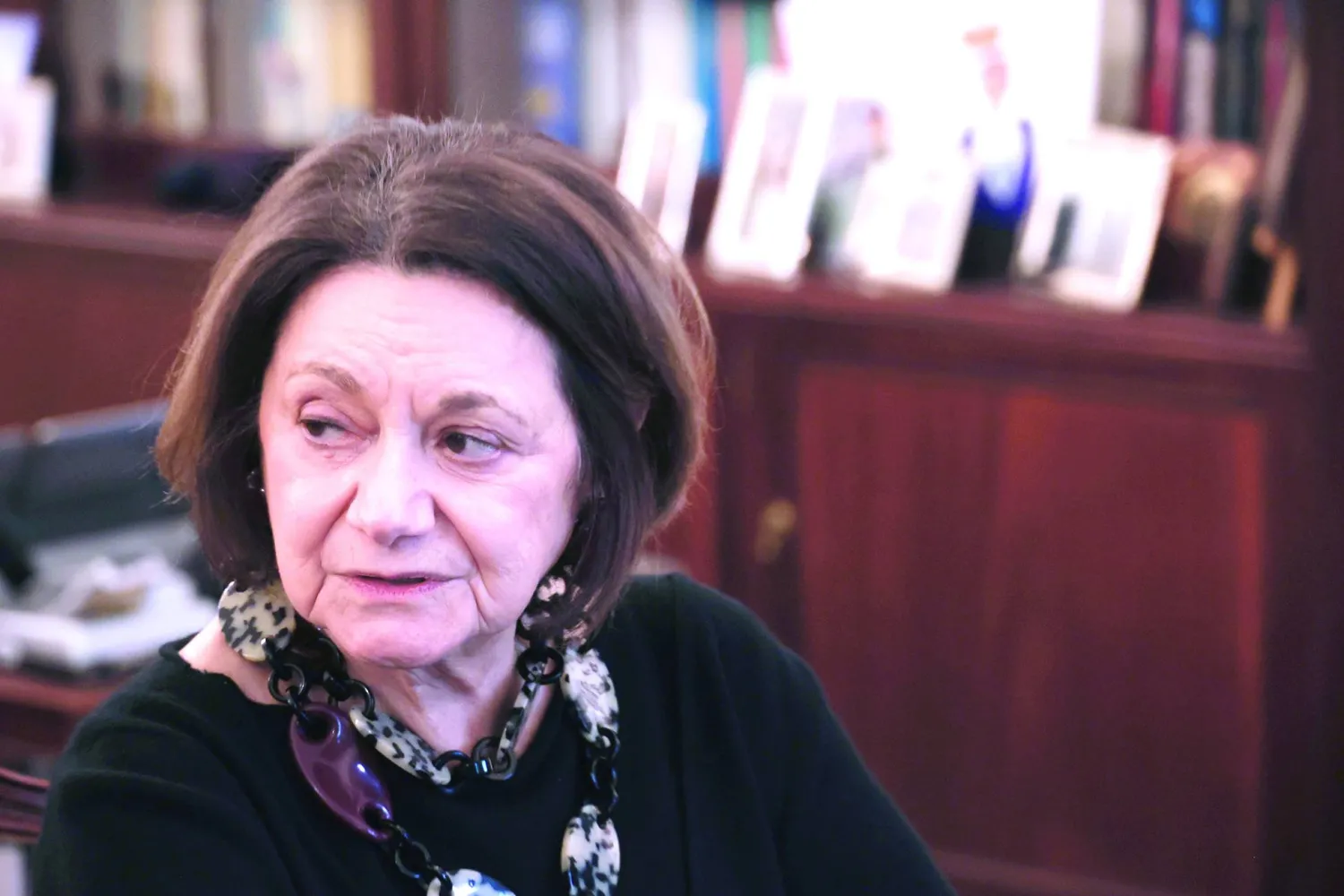
Rosemary DiCarlo, UN Under-Secretary-General for Political and Peacebuilding Affairs (AP)
TT

UN: Sudan’s Warring Parties Show No Serious Commitment to a Settlement

Rosemary DiCarlo, UN Under-Secretary-General for Political and Peacebuilding Affairs (AP)

Rosemary DiCarlo, UN Under-Secretary-General for Political and Peacebuilding Affairs, said Friday that Sudan’s warring parties showed no serious commitment to a negotiated settlement despite neither side being capable of securing a military victory, raising fears of further escalation in the coming months.

Briefing the Security Council, the UN under-secretary-general for political and peacebuilding affairs painted a bleak picture of a conflict fueled by continued arms supplies, recruitment and foreign support.

Her assessment came a day after Sudanese army chief Gen. Abdel Fattah al-Burhan disclosed that he had sent a message to US President Donald Trump expressing Sudan’s commitment to Washington-backed peace efforts.

Washington has not publicly responded to Burhan’s remarks. The army chief met Trump’s senior adviser for Arab and African affairs, Massad Boulos, in Egypt earlier this month.

Civilian toll mounts

DiCarlo told the council that conditions in Sudan continued to deteriorate, with little prospect of a breakthrough and no significant improvement in recent months.

Fighting had been particularly fierce in North Kordofan, South Kordofan and Blue Nile states, but violence was spreading well beyond those front lines.

Drone strikes and air raids had killed civilians at a displacement camp in Blue Nile, an artisanal gold mine in Red Sea state and several locations in North Kordofan, including schools, a courthouse, university accommodation and a shelter for displaced families.

She condemned a drone strike on two clearly marked World Food Program (WFP) trucks carrying food aid through an area subjected to repeated attacks by the Rapid Support Forces (RSF) and the Sudan People’s Liberation Movement-North (SPLM-N).

One driver was killed in the attack.

DiCarlo identified drone strikes as the leading cause of civilian casualties this year, calling for an immediate halt to such attacks and tighter restrictions on drone use.

She expressed concern that weapons continued to flow into Sudan while both sides recruited fighters, increasing the likelihood of further escalation.

Rather than seeking dialogue, military leaders appeared convinced they could make greater gains on the battlefield and achieve their objectives through force, provided foreign backing continued.

She urged the warring parties to abandon that calculation and called on outside powers to use their influence to end the conflict rather than fuel it.

DiCarlo also drew attention to growing insecurity along Sudan’s borders, particularly given the fragility of several neighboring countries.

Preventing the war from developing into a broader regional crisis must remain a collective priority, she stressed.

Diplomatic efforts continue

Despite the deadlock, DiCarlo reported continued UN coordination with the Quad, which is seeking to secure a humanitarian truce.

The United Nations stood ready to help implement any agreement, she stressed, emphasizing that further delays were unacceptable.

She also pointed to modest progress through the efforts of the UN secretary-general’s personal envoy for Sudan, Pekka Haavisto.

Both warring parties had established committees to consider the unilateral release of detainees and had negotiated prisoner exchanges.

Haavisto was also working with UNICEF to ensure that Sudanese students could take a unified, nationally recognized 12th-grade examination, while talks continued with Chad over arrangements for Sudanese refugee students.

Partners from the Quintet visited Khartoum in early September to consult Sudanese stakeholders, who consistently called for an end to the war and the restoration of civilian rule.

DiCarlo welcomed growing international engagement, citing the first joint meeting between the Quintet and the Quad during the UN General Assembly’s high-level week in September.

A Sudan Consultative Group meeting scheduled for Geneva next week would bring together both diplomatic groupings and other mediators.

Referring to the anniversary of the fall of El Fasher, DiCarlo called for much greater pressure on the warring parties and their supporters to end the fighting.

She emphasized that accountability was essential after the immense suffering endured by Sudanese civilians, who deserved peace and a genuine prospect of a better future.

US urges humanitarian truce

US Deputy Representative Jeff Bartos called for a humanitarian truce and an end to weapons flows into Sudan, pledging continued efforts to expand sanctions.

He described the Quintet’s work as the most credible path toward a peaceful political transition under civilian leadership.


Qatar Offers Comprehensive Plan to Ease Lebanon’s Electricity Crisis

Lebanese President Joseph Aoun welcomes Qatari Prime Minister and Foreign Minister Sheikh Mohammed bin Abdulrahman bin Jassim Al Thani in Beirut (AFP/Lebanese Presidency). 
TT

Qatar Offers Comprehensive Plan to Ease Lebanon’s Electricity Crisis

Lebanese President Joseph Aoun welcomes Qatari Prime Minister and Foreign Minister Sheikh Mohammed bin Abdulrahman bin Jassim Al Thani in Beirut (AFP/Lebanese Presidency). 

Lebanon and Qatar are close to reaching an agreement to overhaul Lebanon’s electricity sector, with Doha set to finance, develop and operate the project without requiring any upfront investment from the Lebanese treasury, Prime Minister Nawaf Salam announced Friday.

The announcement came during a visit to Beirut by Qatari Prime Minister and Foreign Minister Sheikh Mohammed bin Abdulrahman Al Thani, who unveiled plans for a major energy investment and broader cooperation, including energy interconnection projects linking Lebanon with Syria and Iraq.

Energy dominated the talks, alongside Israeli attacks in South Lebanon and Qatar’s continued support for the Lebanese Army.

Aoun calls for pressure on Israel

Al Thani began his visit at Baabda Palace, where President Joseph Aoun praised Qatar’s Emir Sheikh Tamim bin Hamad Al Thani and the Qatari leadership for their efforts to ease regional tensions and restore stability.

Aoun urged Doha to work with Arab and friendly countries to press Israel to halt its attacks in South Lebanon and implement the framework agreement reached through US-sponsored negotiations with Lebanon.

He described the mounting toll of Israeli operations, including casualties and widespread destruction in southern villages, and called for intensified diplomatic efforts to secure an Israeli withdrawal.

Aoun also reiterated Lebanon’s condemnation of attacks on Gulf countries, most recently Saudi Arabia, and reaffirmed solidarity with Gulf states.

Welcoming stronger bilateral ties, he highlighted Qatar’s willingness to help address Lebanon’s longstanding electricity crisis.

For his part, Al Thani reaffirmed Doha’s support for the Lebanese government’s efforts and called for Israel to withdraw from occupied Lebanese territory and hand over those areas to the Lebanese Army.

Qatar to finance and operate electricity project

At a joint news conference at the Grand Serail, Salam announced that the two governments were nearing an agreement to rehabilitate, develop and modernize Lebanon’s electricity generation infrastructure.

The proposed project would cover various sources of power generation and the infrastructure needed to support them, with the aim of providing a more reliable electricity supply at a lower cost.

Salam explained that the initiative would follow a build-operate-transfer (BOT) model, under which Qatar would finance, implement and operate the project before ownership is transferred.

Crucially, Lebanon would not have to provide any upfront capital investment, helping overcome the financial obstacles that have long hindered improvements to electricity supply.

Salam outlined the government’s priorities as increasing production, reducing costs and improving management, stressing that reliable electricity at affordable prices would encourage investment and help revive the economy.

The discussions also covered securing gas supplies and preparing an intergovernmental agreement to pave the way for a comprehensive solution to the electricity crisis.

Broader energy partnership

Al Thani confirmed that both countries had agreed on a comprehensive framework for energy cooperation, including a major investment project intended to benefit Lebanon’s economy and participating Qatari companies and institutions.

He reaffirmed Qatar’s commitment to standing alongside the Lebanese people during a difficult period for the region and expressed hope for closer cooperation across other sectors.

Turning to regional security, the Qatari prime minister urged all parties to implement UN Security Council Resolution 1701, called for Israel’s withdrawal from all occupied positions and stressed the importance of respecting existing agreements.

He also revealed that Doha was coordinating with Washington on reconstruction efforts in South Lebanon to enable displaced residents to return to their homes.

Qatar would continue supporting the Lebanese Army as a national institution responsible for safeguarding the country’s security and stability, he added.

Berri stresses support for army

Al Thani also met Parliament Speaker Nabih Berri to discuss political and security developments in Lebanon and the region, continued Israeli attacks and bilateral relations.

Berri expressed appreciation for Qatar’s longstanding support, particularly for South Lebanon, and its commitment to Lebanese sovereignty, the withdrawal of Israeli forces and the return of displaced residents.

He welcomed Doha’s willingness to contribute to economic recovery and reconstruction.

Both leaders agreed on the importance of strengthening national unity and supporting state institutions, particularly the Lebanese Army and security forces, as guarantors of stability and sovereignty.


Lebanon Steps Up Diplomacy to Stay Out of Regional Escalation

Lebanese President Joseph Aoun (AFP)
TT

Lebanon Steps Up Diplomacy to Stay Out of Regional Escalation

Lebanese President Joseph Aoun (AFP)

Lebanon has stepped up diplomatic efforts to avoid being drawn into a wider regional conflict, amid fears of fresh Israeli military action and uncertainty over security arrangements in the south.

Lebanese ministerial sources told Asharq Al-Awsat that President Joseph Aoun had intensified contacts with friendly countries in recent days and kept Parliament Speaker Nabih Berri informed of the discussions.

The diplomatic push reflects concerns that Israeli Prime Minister Benjamin Netanyahu could escalate military operations before or after Israel's parliamentary elections later this month.

Berri serves as the main intermediary between the presidency and Hezbollah, while Aoun’s domestic contacts and Foreign Ministry efforts are aimed at keeping Lebanon out of regional hostilities, the sources explained.

They warned that avoiding another confrontation would depend largely on Hezbollah staying out of any escalation involving Iran, citing fears of a forceful Israeli response if the group intervened.

Aoun discussed the situation with US Secretary of State Marco Rubio in a phone call Thursday evening, including continued Israeli attacks on villages in South Lebanon.

According to the Lebanese presidency, Aoun urged Washington to press Israel to halt its attacks, respect the framework agreement, stop land-clearing operations and allow farmers to reach their fields without interference.

Fears of Israeli escalation

Lebanese officials are particularly concerned about Netanyahu’s next move ahead of the Israeli elections, fearing he could order an operation against Iran or Lebanon if he believed it would improve his electoral prospects. Those concerns are believed to have been raised during the call with Rubio.

Sources familiar with the discussions indicated that Washington’s message was that Lebanon should avoid giving Netanyahu a pretext to intensify Israeli strikes, particularly by preventing Hezbollah from joining any confrontation between Iran and Israel.

Hezbollah explosives shipment

The conversation also addressed Lebanon’s efforts to curb illegal weapons and smuggling.

Aoun assured Rubio that the army and security forces were enforcing restrictions on armed displays, confiscating weapons and ammunition, and combating smuggling.

He cited recent security operations, apparently referring to the interception of explosives and weapons being smuggled and transported from Syria into Lebanon.

The president also pledged that judicial authorities would pursue all cases referred to them and that offenders would face legal action without leniency or favoritism.

A US State Department official confirmed that Rubio had raised seizure issue of hundreds of kilograms of explosives belonging to Hezbollah.

Rubio urged Lebanon to hold accountable those who ordered, financed and directed the shipment, stressing that the seized explosives must not be returned to Hezbollah.

Push for direct military contacts

Another key issue was the stalled effort to expand pilot zones in South Lebanon, where disagreements over verification arrangements remain unresolved.

The verification process for southern Lebanon involves a multi-step sequence managed through a trilateral framework to monitor the clearance of non-state armed groups and the redeployment of forces

Israel has rejected the participation of outside parties in the verification process, complicating plans to extend the initiative.

Lebanese sources familiar with the call reported that Rubio had informed Aoun that Washington was continuing efforts to resolve the dispute and identify countries willing to join a verification force.

Some countries had agreed to participate, while others declined, although the sources did not identify them.

According to a State Department official, Rubio also urged direct communication between the Lebanese and Israeli armies to prevent clashes, reduce the risk of miscalculation and advance the phased implementation of the trilateral framework.

Israel has pressed for such contacts for months, but the Lebanese Army has resisted, insisting on coordination through the US-led Military Coordination Group for Lebanon (MCG4L). That mechanism remains the channel for military communication.

Uncertainty over UNIFIL

The US proposal comes amid American and Israeli opposition to extending the mandate of the United Nations Interim Force in Lebanon (UNIFIL), fueling concerns about a security vacuum in the south.

Lebanese Foreign Minister Youssef Rajji discussed the future international presence with UN Under-Secretary-General for Peace Operations Jean-Pierre Lacroix as preparations begin for the end of UNIFIL’s current mission.

Lacroix emphasized the need to prepare for the next phase, with the Security Council expected to begin negotiations soon.

He reaffirmed the UN’s commitment to playing a constructive role while respecting Lebanon’s position.

Both officials agreed to intensify efforts to overcome the remaining obstacles and preserve an international presence under UN auspices in South Lebanon.